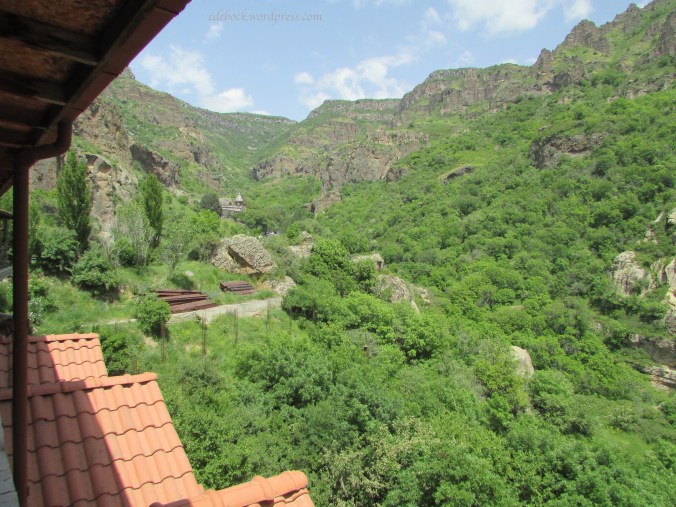
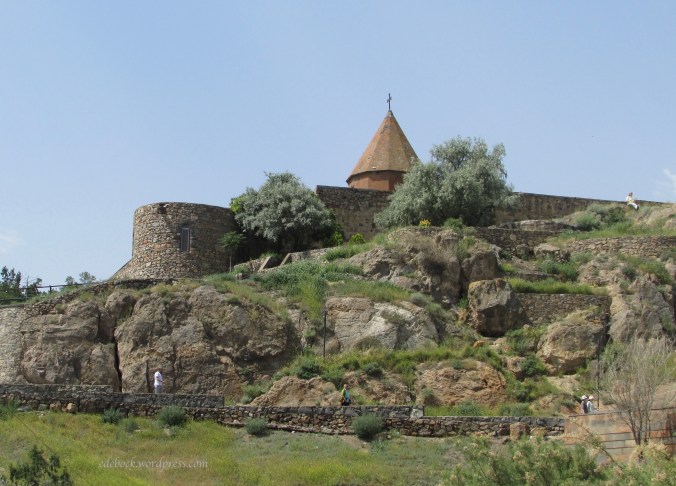
Geghard Monastery, declared a World Heritage Site in 2000, is nestled into the dramatic Azat River Gorge, approximately 35 km (22 miles) east of Yerevan, the capital city of Armenia. Can you spot it in this photo taken from the open air restaurant where we stopped for a delicious lunch.
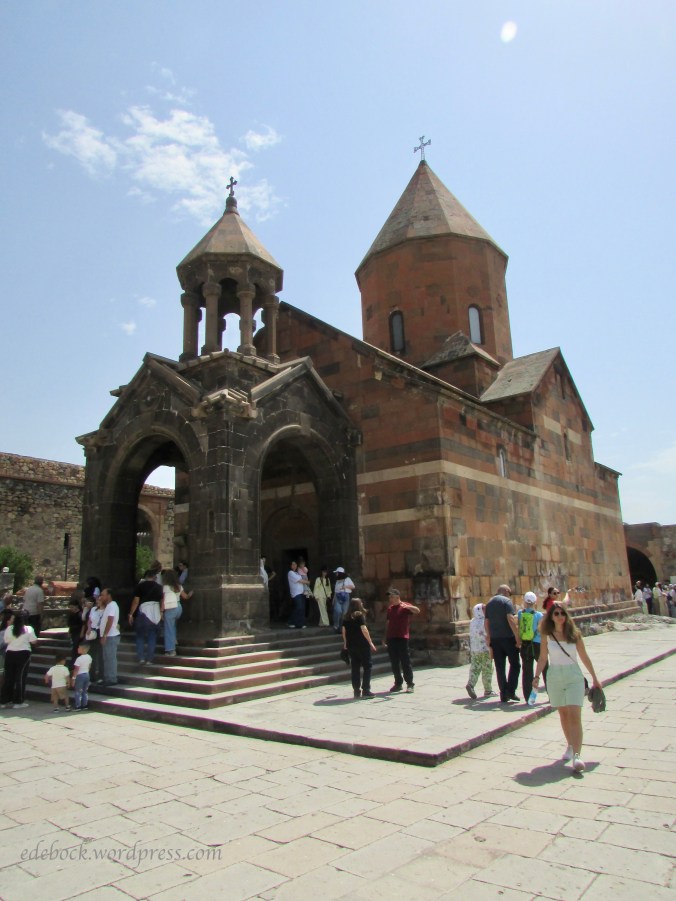
Here’s a closer look.

Views of the gorge from the restaurant were absolutely spectacular. We could hear the river in the bottom of the canyon, but lush growth obscured our view of it.
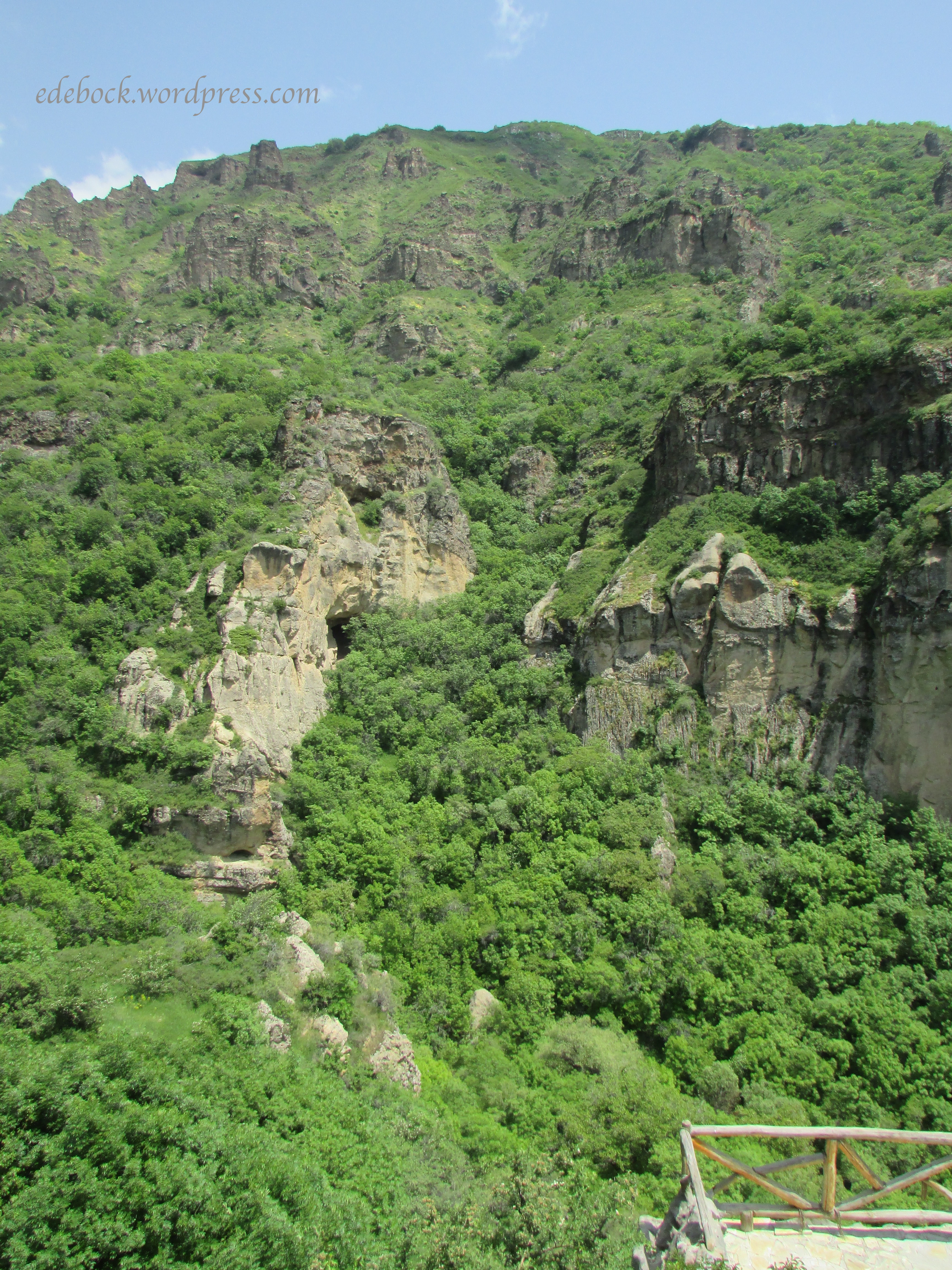

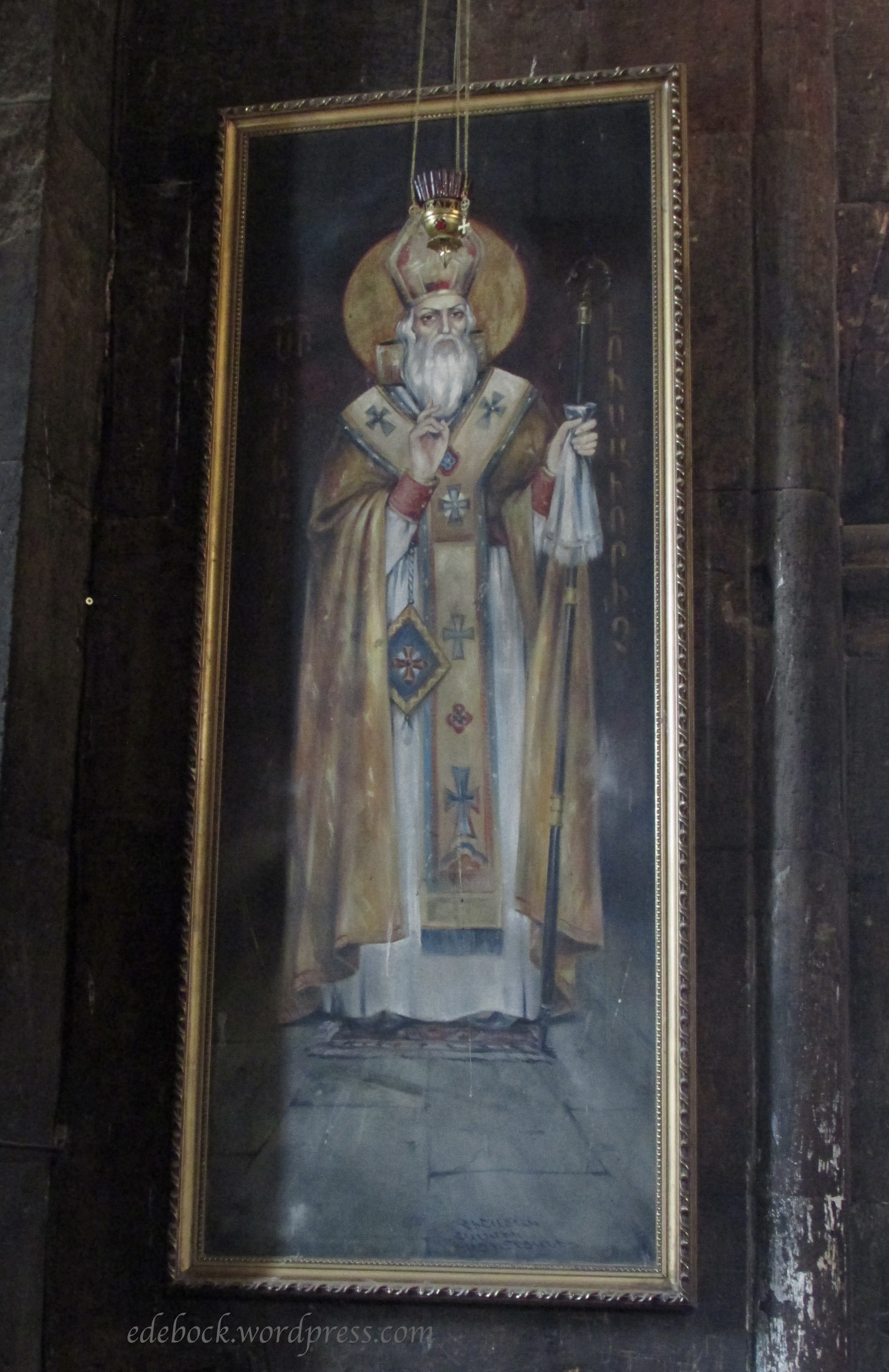
One of the oldest Christian monasteries in the world, Geghard is one of the country’s most visited tourist destinations. It is believed to have been founded in the 4th century by Saint Gregory the Illuminator, following Armenia’s adoption of Christianity in 301 AD. Until the 13th century, the monastery consisted of churches, chapels, and chambers cut into the rock.
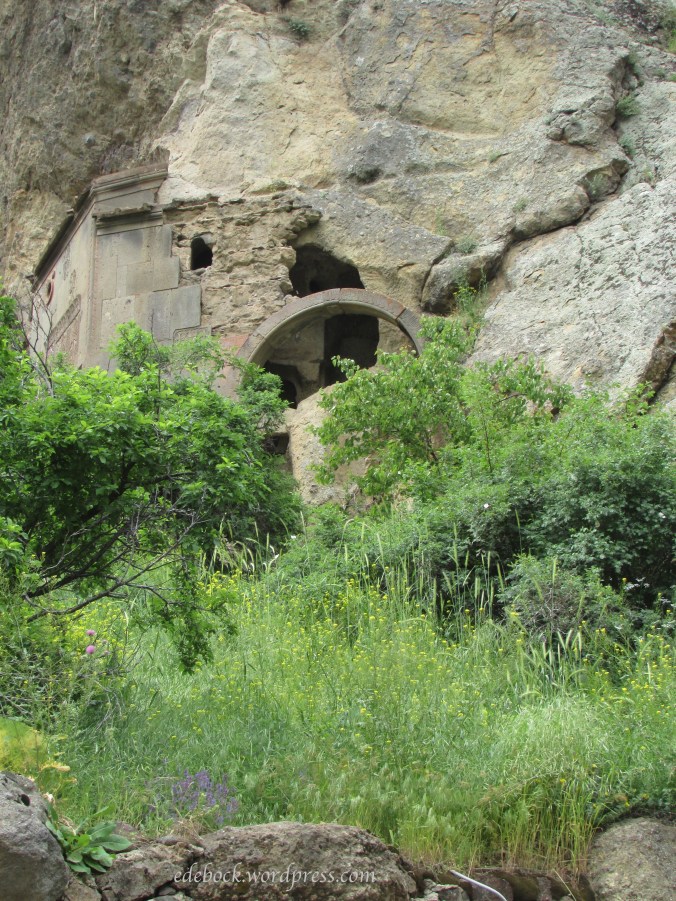
The main cathedral was built during the 13th century and is an exceptionally well-preserved example of medieval Armenian architecture. The entire complex blends seamlessly into the surrounding mountainous terrain.


Geghard Monastery was an important spiritual and cultural hub during the Middle Ages housing numerous monks and scholars. It also became a destination for pilgrimages because it was believed that the spear that pierced the side of Christ during His crucifixion was stored there for a period of time. Geghard means “spear” or “spearhead” in Armenian.
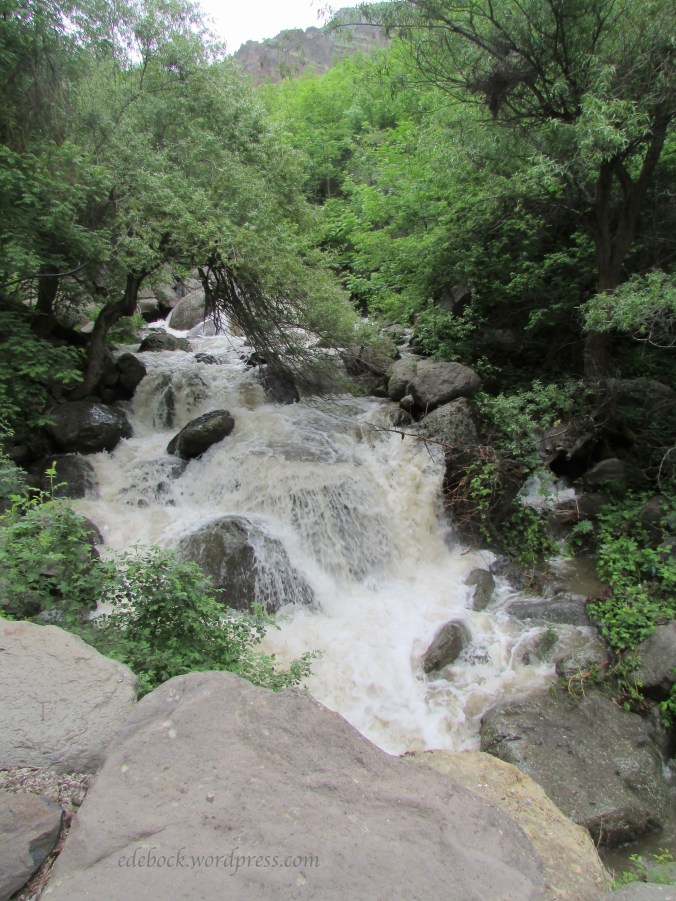
A unique feature of monastery is a spring flowing from the rock inside the church. Believed to be holy water, it has worn a groove into the rocky floor over many hundreds of years. Outside, a very short walk from the main church takes one to a stream tumbling down the rocky mountainside.
Tomorrow we depart for an undisclosed location where we will engage in the ministry that is the main reason for this trip. The blog will continue when we complete that work and resume travelling as tourists.










 This book is really three stories in one, each distinct, but all connected. Deborah Birch is a seasoned hospice nurse assigned to care for an embittered and lonely history professor whose career ended in academic scandal. As his life slowly ebbs away, the professor, an expert in the Pacific Theater of World War II, begrudgingly puts his trust in Deborah and begins to share with her an unpublished book that he wrote. As she reads to him from his story about a Japanese fighter pilot who dropped bombs on the coastline of Oregon, he challenges her to decide if it is true or not.
 If you are one who usually reads my blog on Fridays, you will have noticed that there wasn’t a new post this week. We spent Good Friday with family and it was indeed a good day. In the morning, we attended a solemn service commemorating the final 24 hours leading up to our Lord’s crucifixion. I don’t think there’s any better way to explain the significance of Good Friday than by sharing the B.C. comic. It says it all. Jesus took my place. He took your place. And He did it willingly. Thankfully though, that wasn’t the end of the story.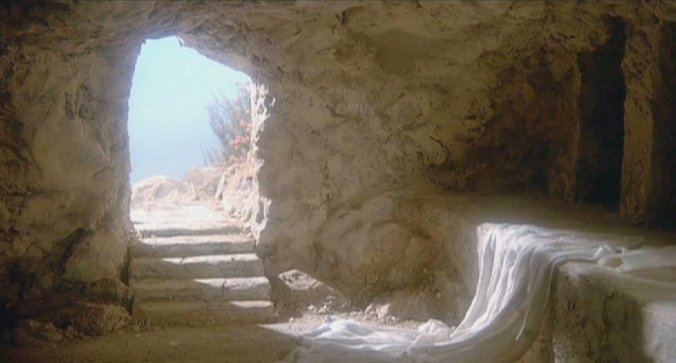
 After writing about heavier topics the past couple of Fridays, I wanted to write something lighter this week and I really felt like it was time for another fashion related post. Earlier in the week, I was still thinking about what to write when Pam Lutrell shared a link to an article on her blog,


 Following Augustine