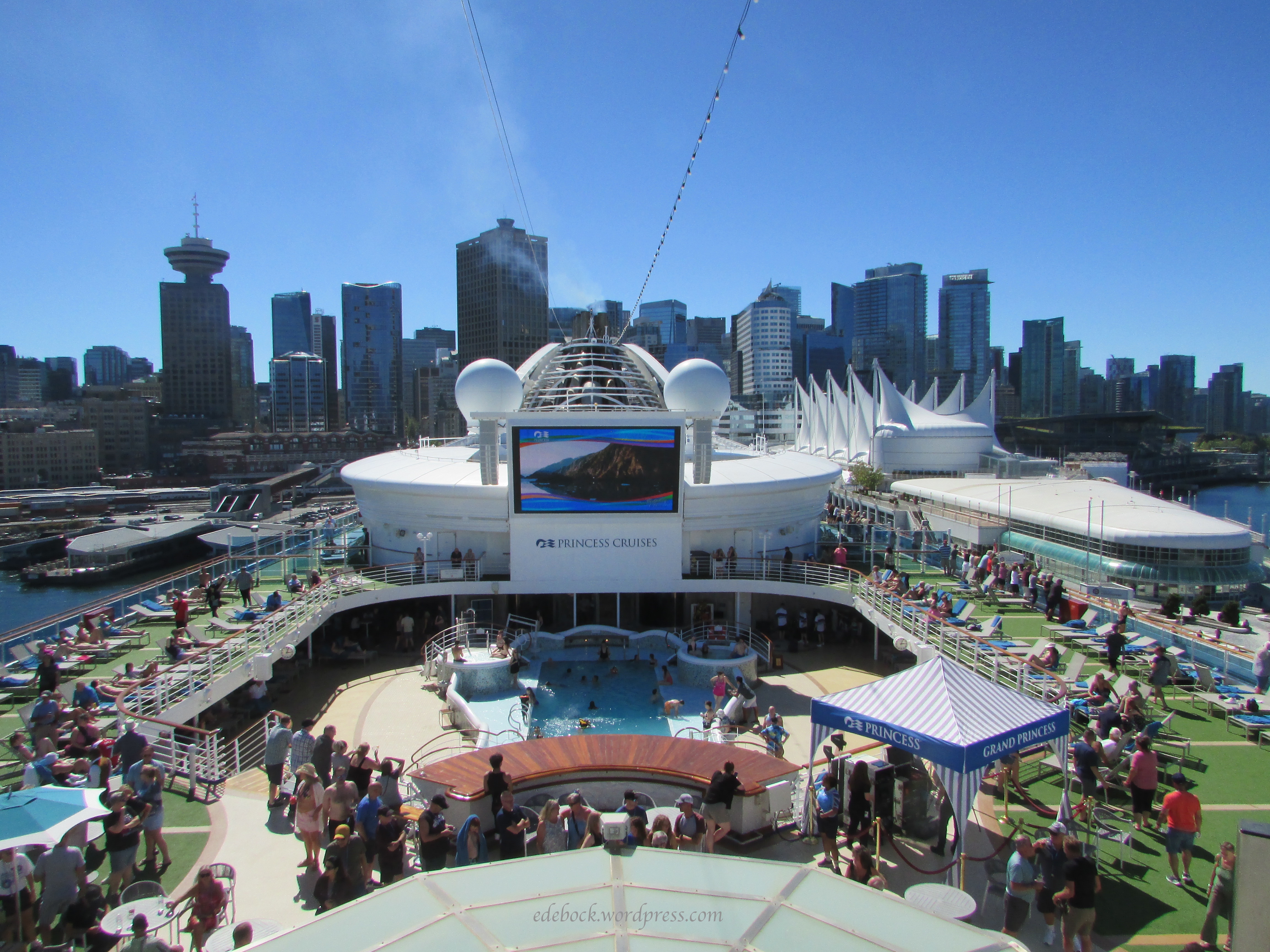
As I mentioned in my last post, our 7-Day round trip Alaska cruise from Vancouver stopped at Juneau, Skagway, and Ketchikan and also included a side trip up Endicott Arm to see Dawe’s Glacier.
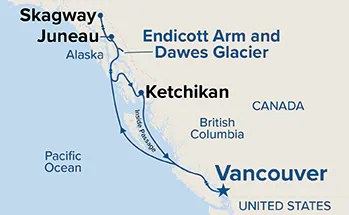
There were a vast number of possible shore excursions to choose from at each location, but we chose only one, the White Pass Scenic Railway at Skagway. Rather than purchasing other shore excursions, I did what I usually do when we travel. I researched each location and planned our own self-guided tour.
Juneau, Skagway, and Ketchikan all depend heavily on tourism in the summer and each has what my sister-in-law refers to as “trinket alley”, a street close to the cruise ship wharf that’s lined with shops selling souvenirs. We wanted to go beyond those areas to see more of each community.
Juneau
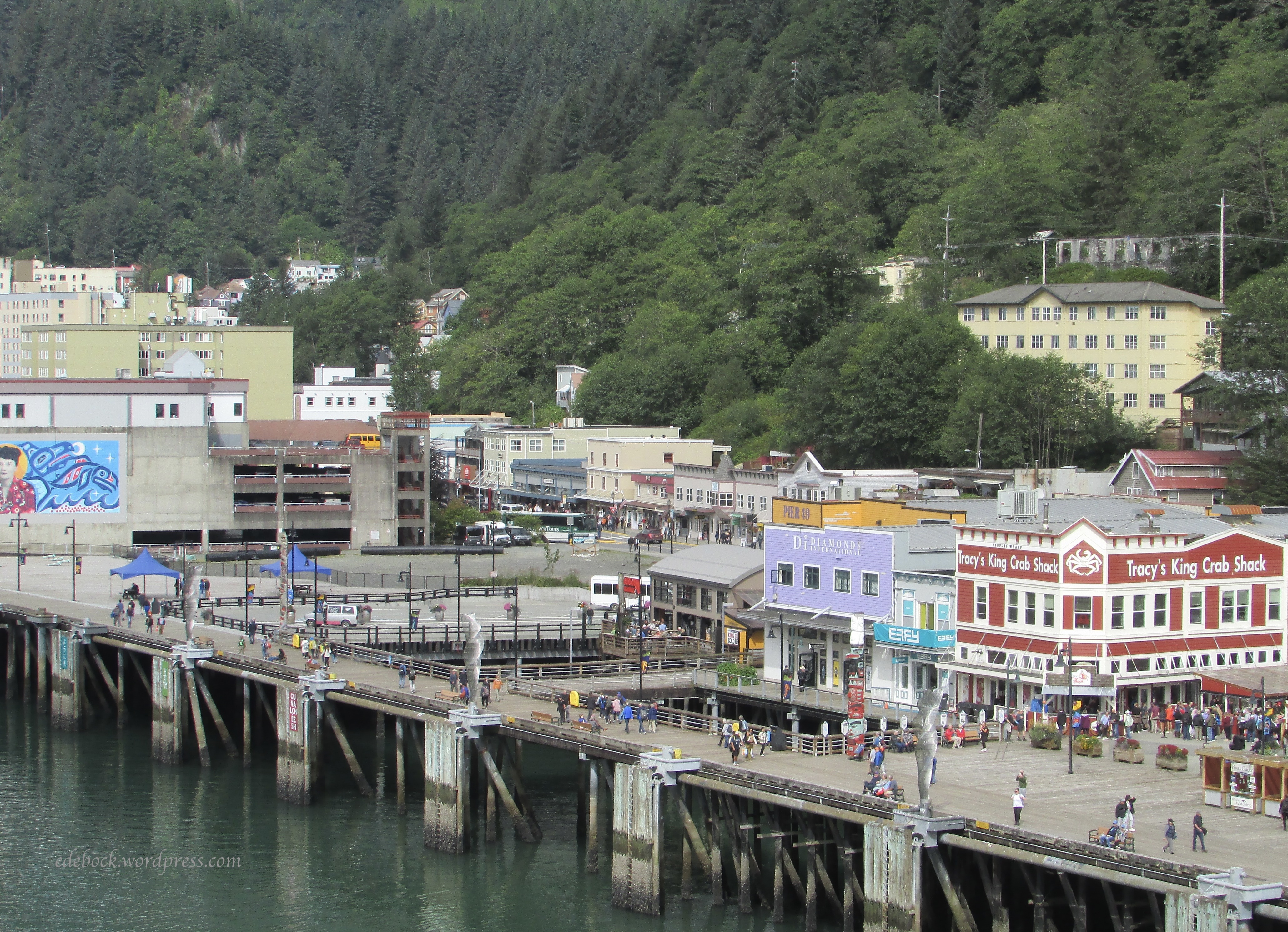
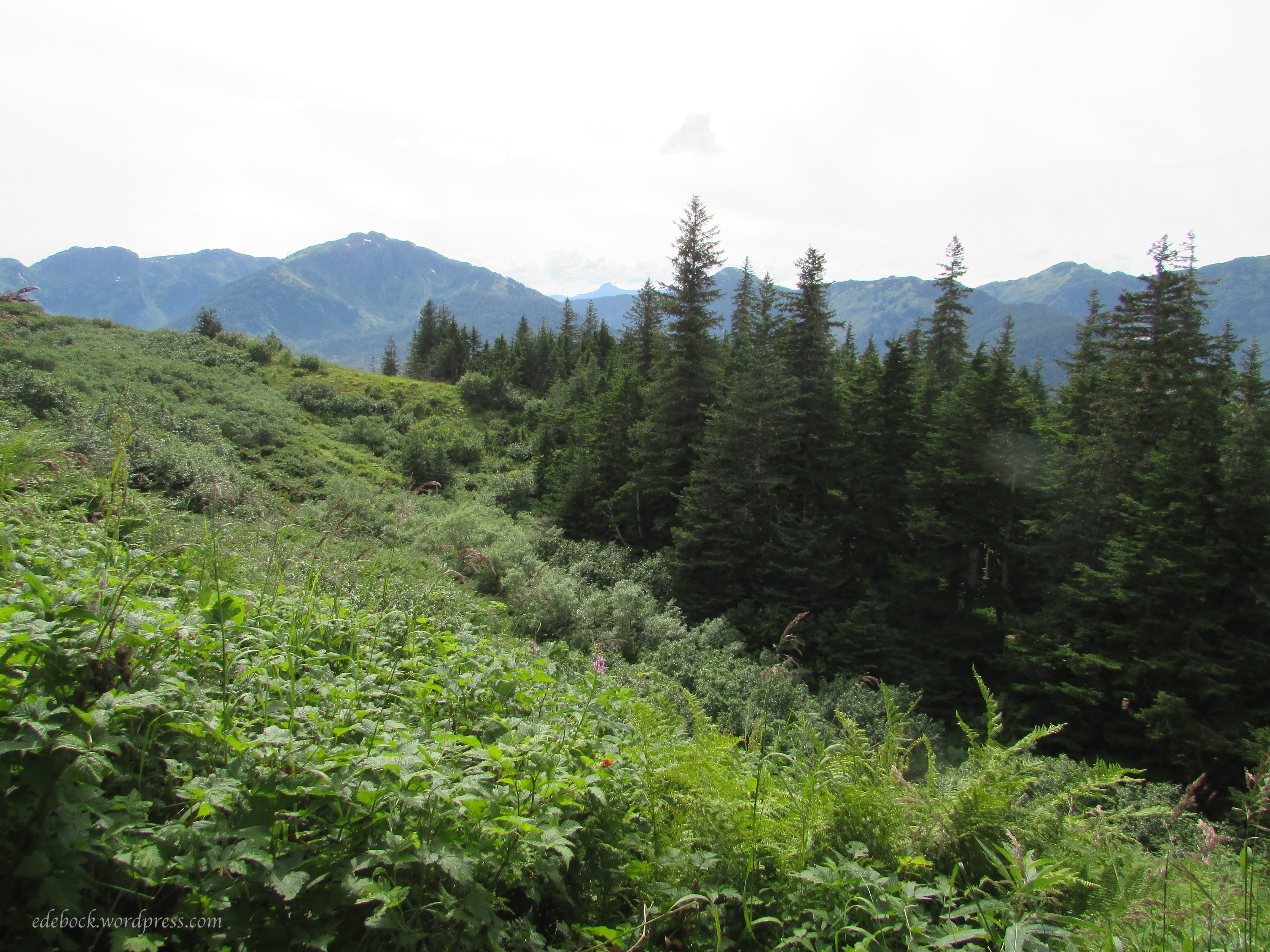
After 48 hours at sea, we docked at Juneau, the capital city of Alaska. As soon as we disembarked, we headed for the Goldbelt Tram, just steps from the cruise ship dock and took a six minute ride up Mount Roberts to a height of about 550 metres (1800 feet).

There we did a short hike and enjoyed the spectacular views. That’s our cruise ship, the Grand Princess, in the bottom left corner of the first photo. She didn’t look as big from up there!



Before descending and beginning to explore the town, we watched Seeing Daylight, an 18-minute award-winning film on Tlingit history and culture, in the Chilkat theatre. The Tlingit are one of three Indigenous people groups living in Southeast Alaska. The other two are the Tsimshian and the Haida. I was particularly interested in the fact that these groups are matrilineal societies.
In the heart of downtown Juneau, we visited the Sealaska Heritage Institute. Dedicated to perpetuating and showcasing the Tlingit, Tsimshian, and Haida cultures, it houses a cedar clan house and an exhibit gallery. I love Northwest Coast Indigenous art and was amazed by the stunning glass screen at the front of the clan house. Made by Tlingit glass artist Preston Singletary, it is apparently the largest glass screen in the world.

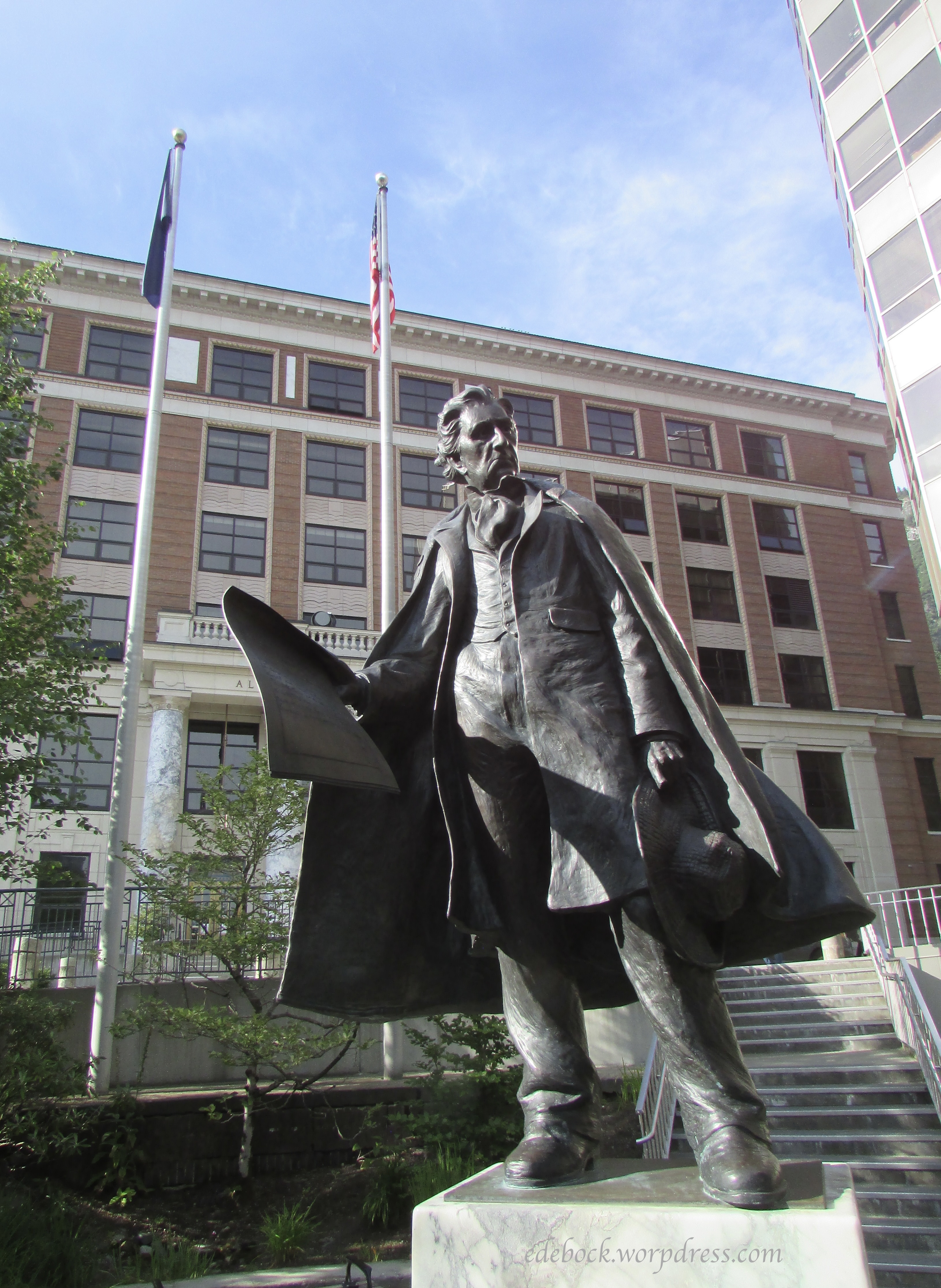
Like most coastal towns, Juneau is built on a hillside. We walked up a few steep blocks to see the Alaska State Capital building and the nearby statue of U.S. Secretary of State William Henry Seward who orchestrated the purchase of Alaska from Russia in 1867.

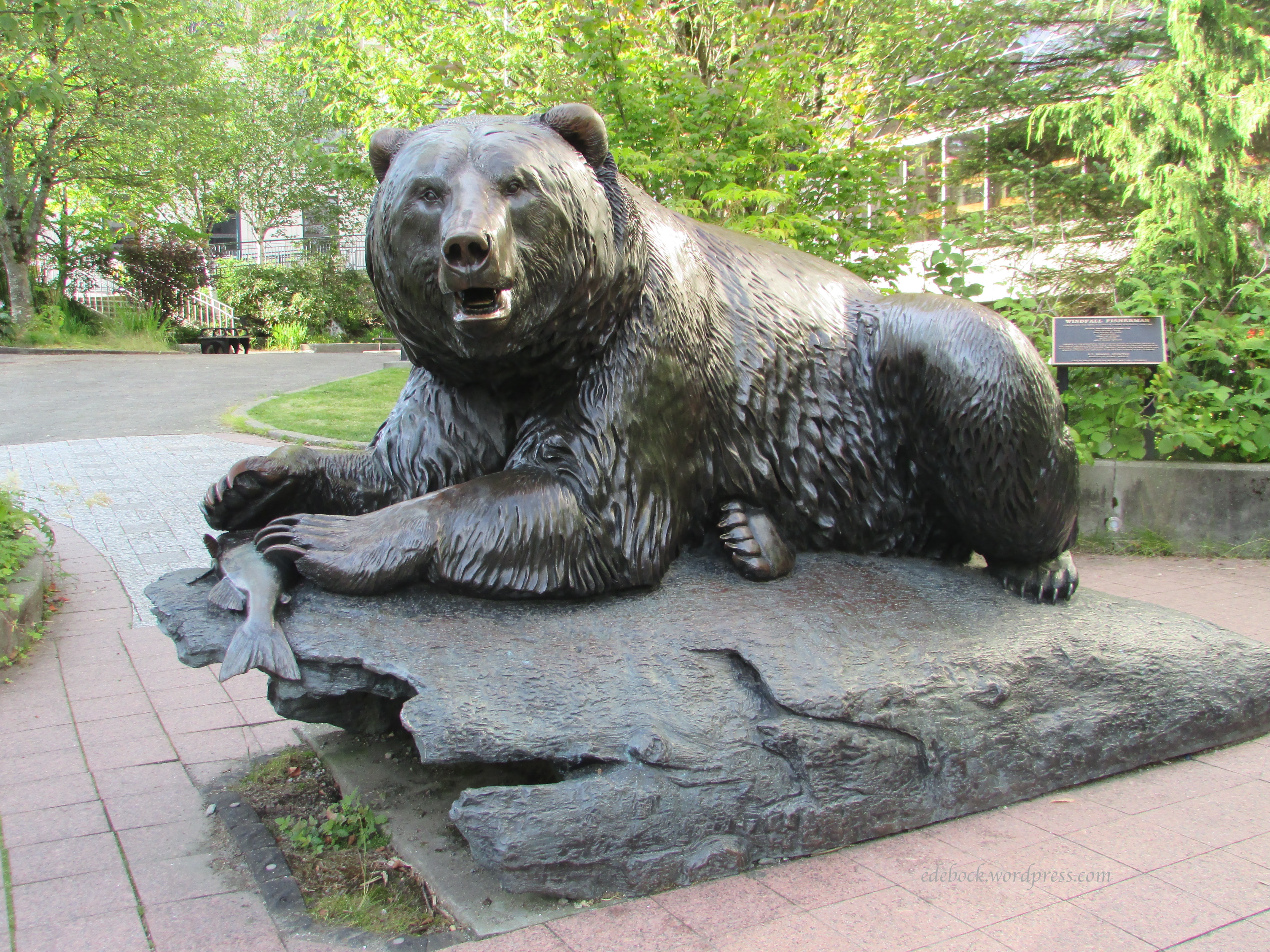
Close by was another bronze statue called Windfall Fisherman, a life-sized and very realistic brown bear by artist R.T. Wallen.
Hubby’s feet were getting sore by this point, so we headed back downhill toward the waterfront and the seawalk where many of the city’s totem poles are found. Here’s just one example, the Ishkahittaan pole by Tlingit carver, Jon Rowan. At the top is Raven with the Box of Daylight. According to oral tradition, Raven opened the box and released the sun, bringing daylight to the world. Below Raven, you can see Frog and Sea Lion.

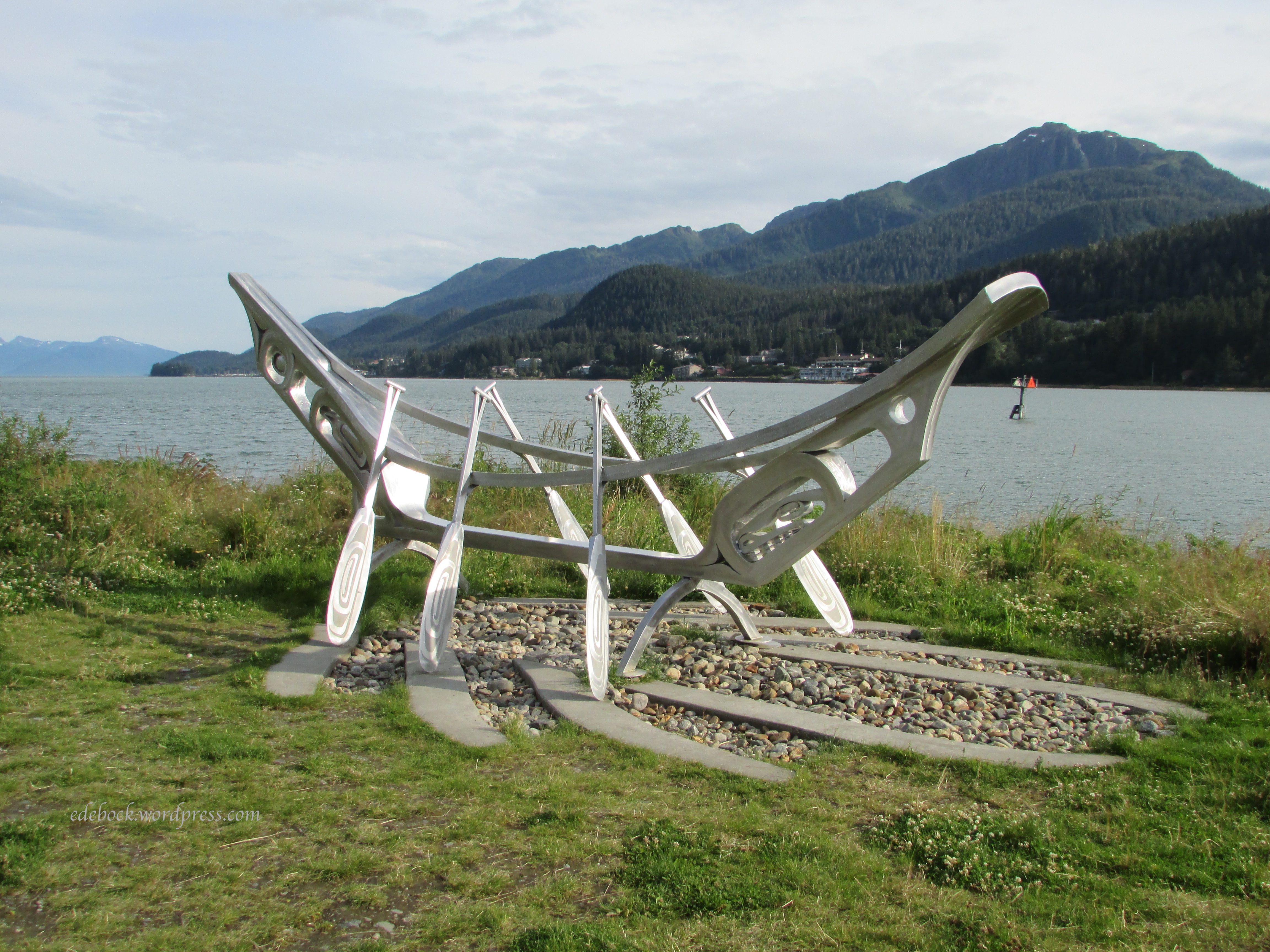
I loved the aluminum sculpture of a 20-foot 9-inch canoe, Yaadachoon, by native artist Robert Mills. The name means “straight ahead” in the language of the Tlingit.
Although we didn’t see any whales close up while on our cruise, we did see Tahku, the life-sized bronze sculpture depicting a breaching humpback whale, also by artist R.T. Wallen, at the end of the seawalk.

Skagway
I awoke very early the next morning to the haunting sound of the ship’s horn warning others of our presence. Standing on our stateroom balcony breathing in the heavy fog that surrounded us, I was transported back to my childhood on the waterfront. Crawling back into bed I fell back to sleep to the familiar sound of the foghorn. Later, when I woke again, the sky had cleared, the sun was shining, and we were docking at Skagway.
Skagway is rich in Klondike Gold Rush history. 1897 and early 1898 saw tens of thousands of fortune-seekers pile off steamships, eager to head overland to the Yukon gold fields via the White Pass Trail from Skagway or the Chilkoot Trail from nearby Dyea.
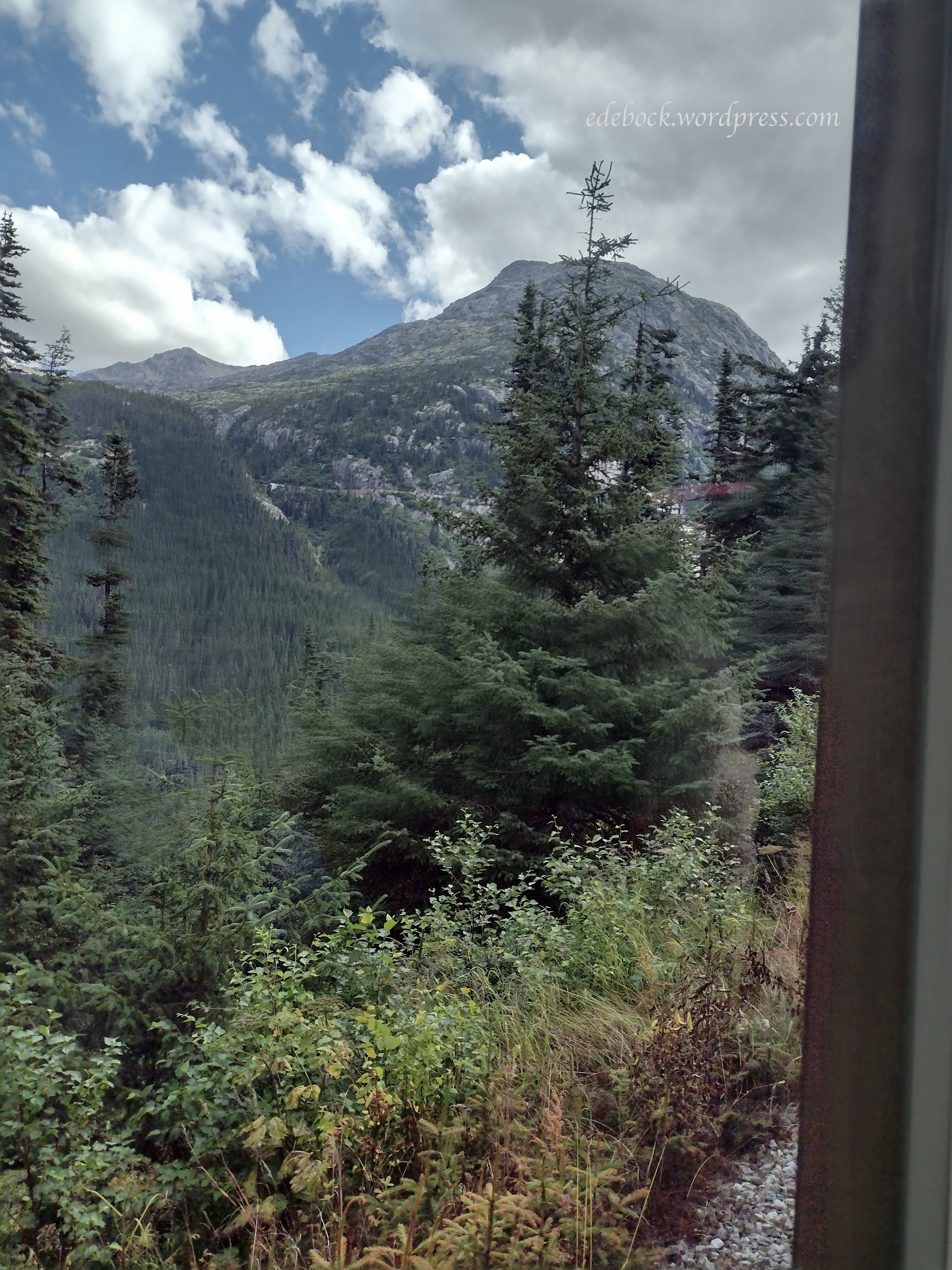
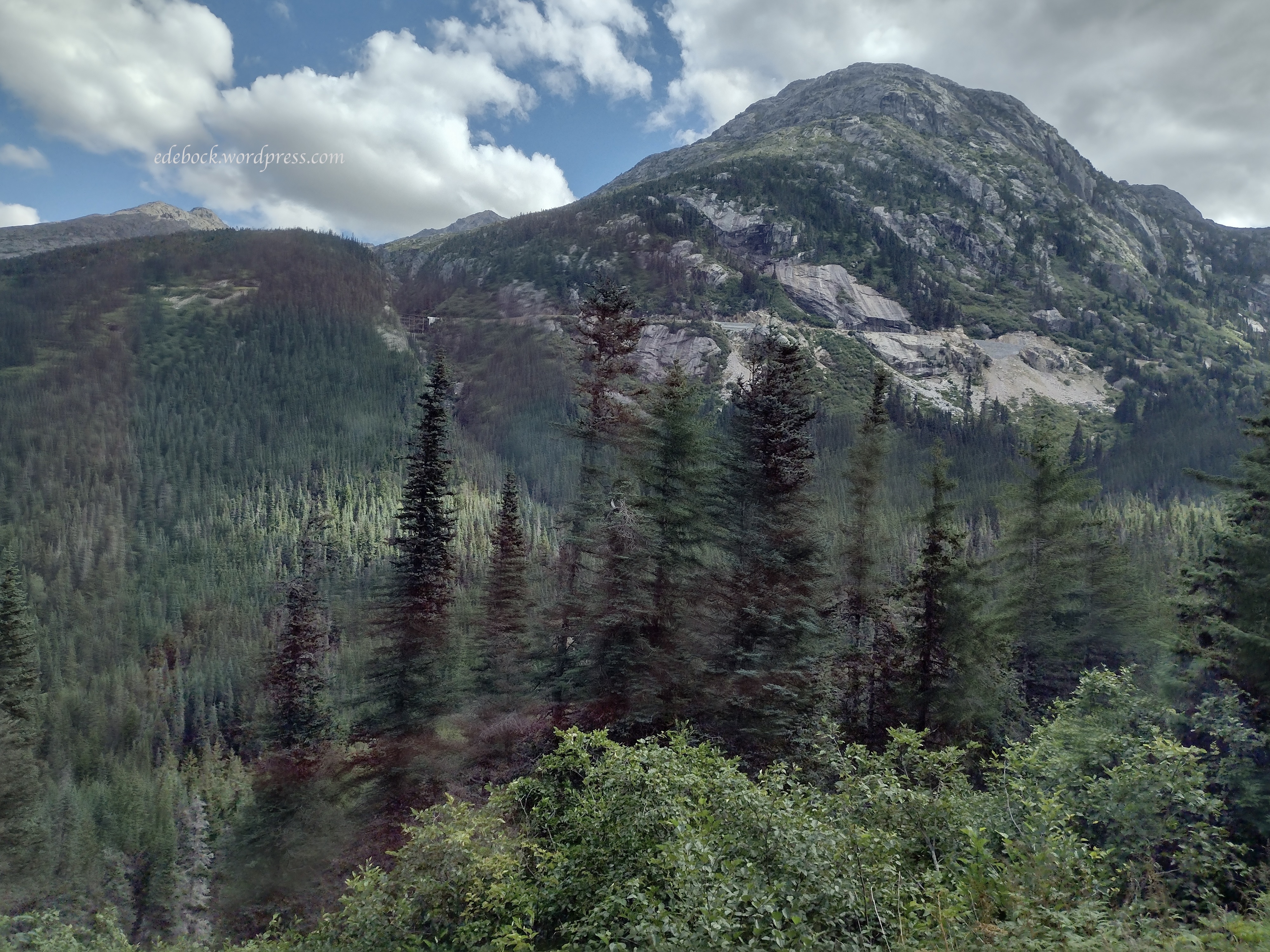
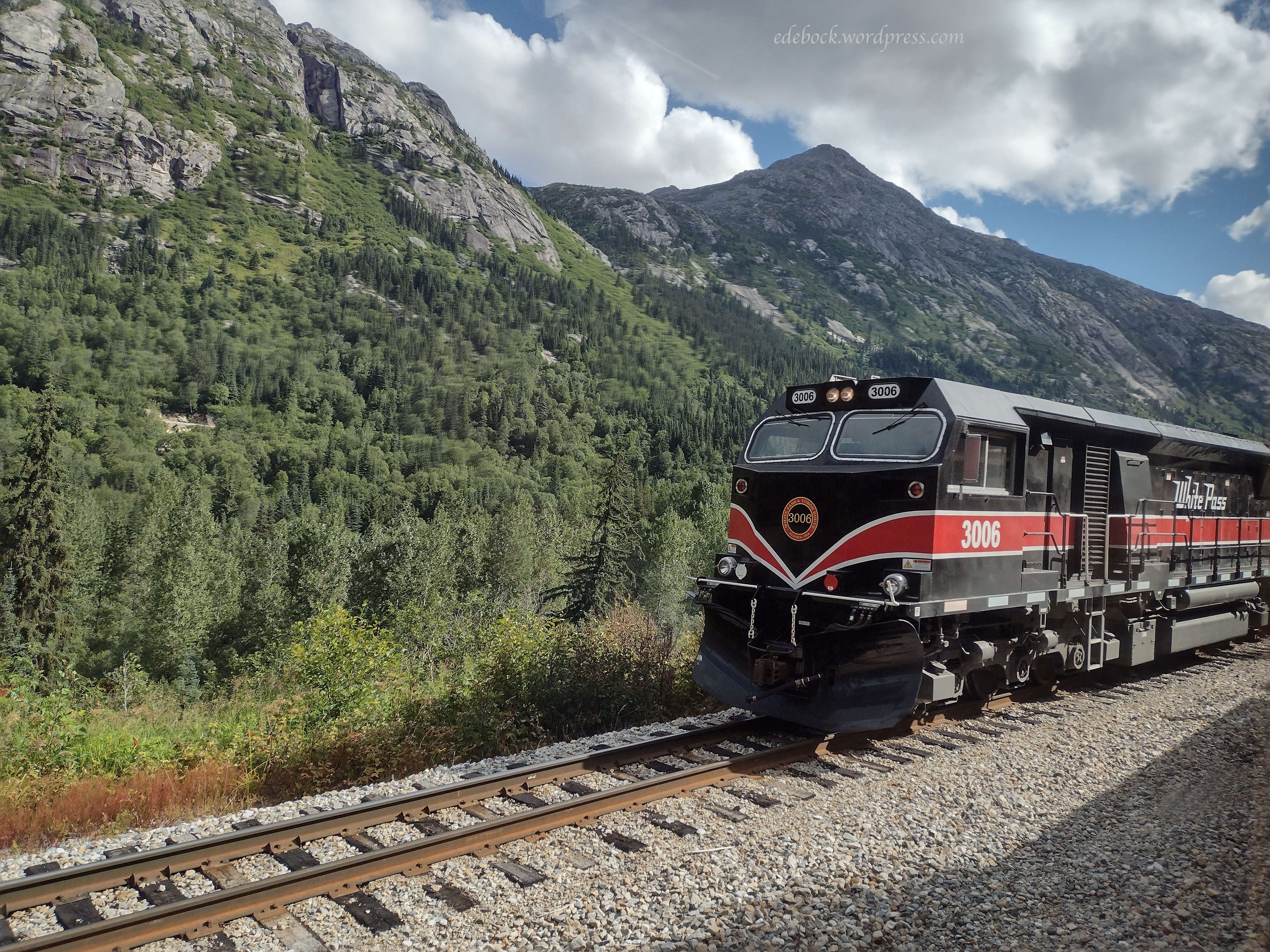
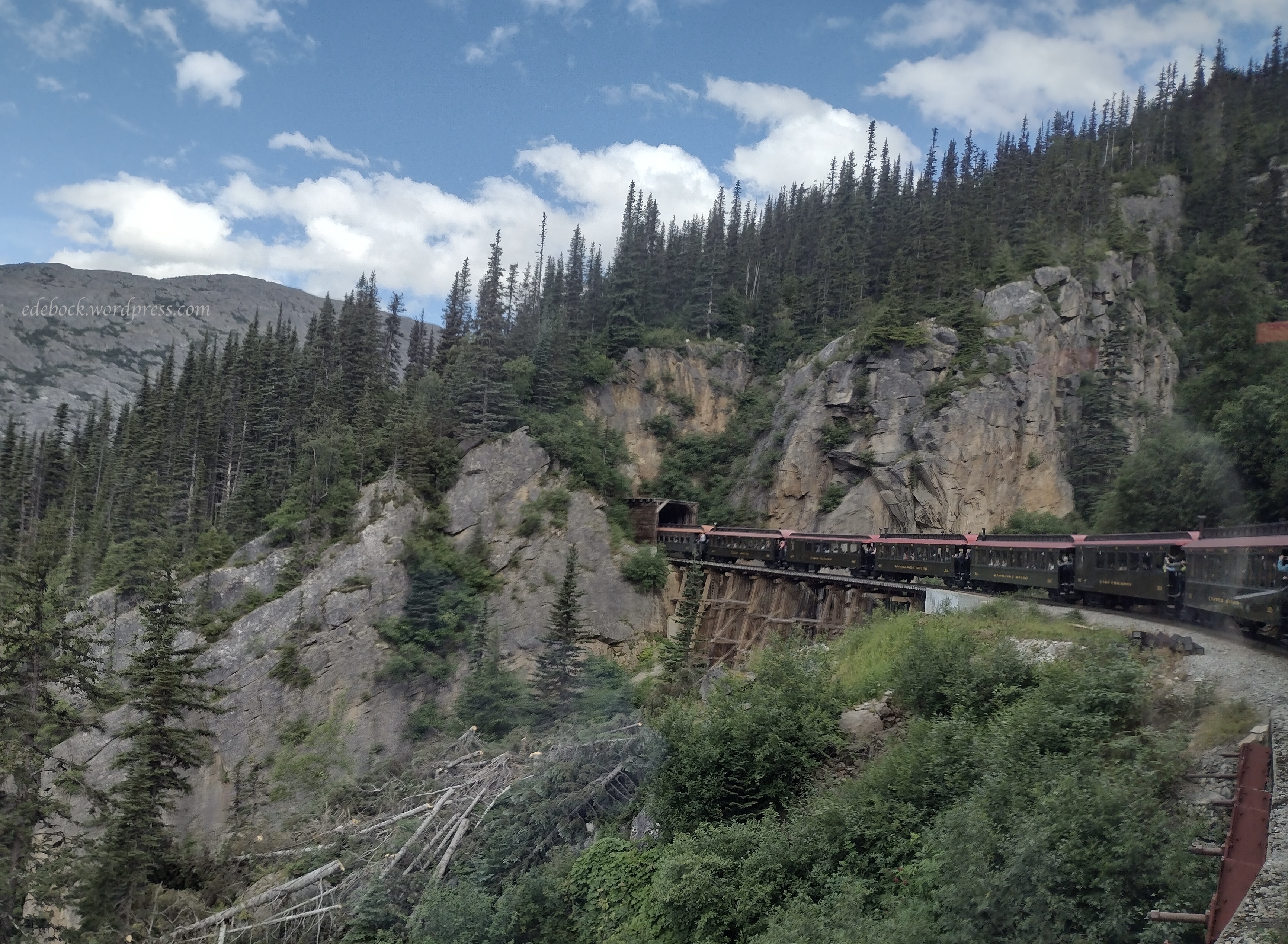
It was from Skagway that we took the scenic White Pass rail excursion, a 40 mile, 2 hour and 45 minute round trip to the White Pass summit. Considering how long this post is becoming and how much I still have to share, I’m going to save that for a separate post.
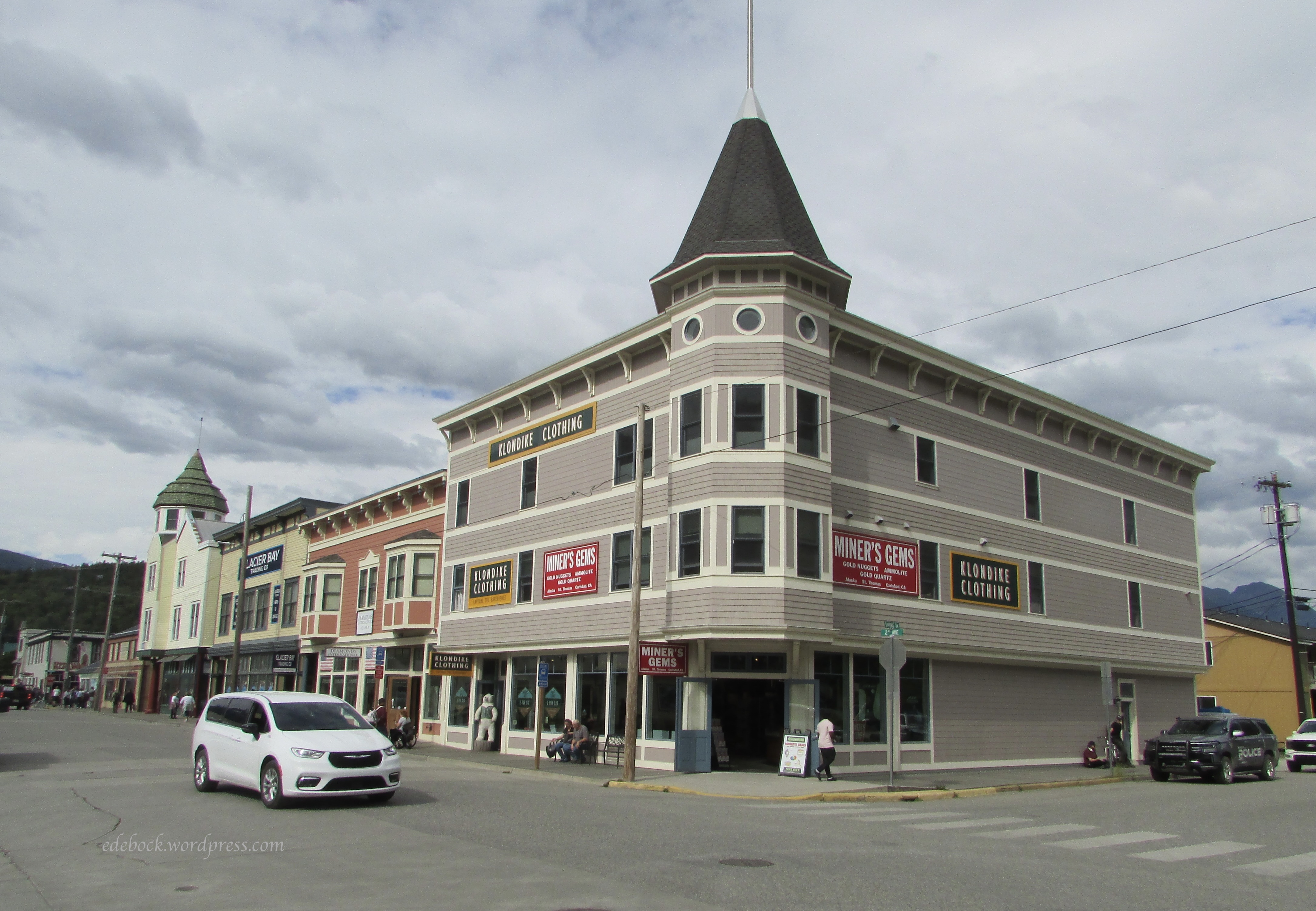
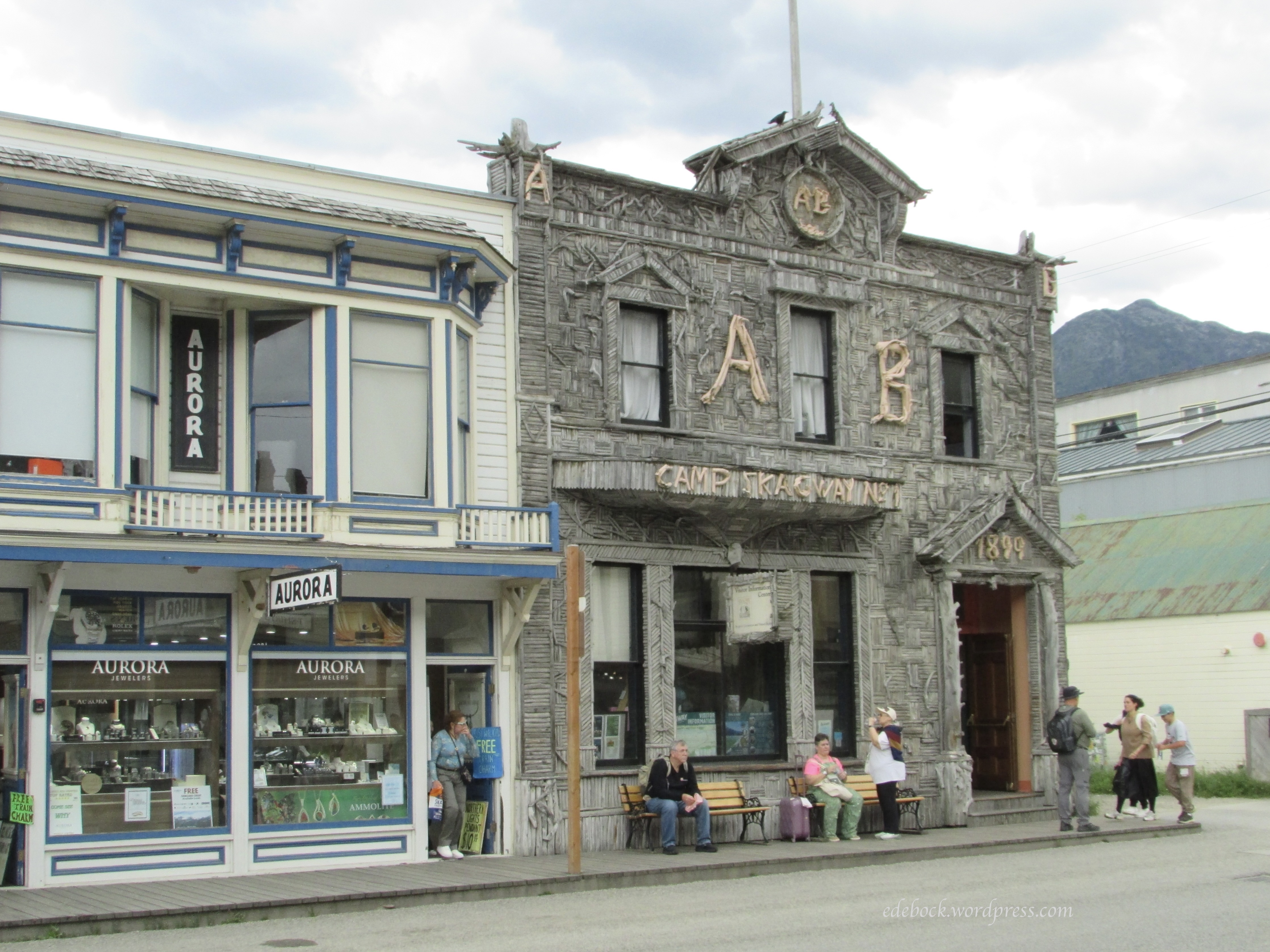
When we disembarked from the train, we were met by hubby’s sister and her husband who live across the Canadian border near Whitehorse in the Yukon. They drove about two hours each way to spend the afternoon with us. They took us to their favourite fish and chips restaurant for lunch and then we just walked around town while we visited. Hubby and I had been to Skagway by road many years ago and were well versed in gold rush history from our previous visits to the Yukon, so I didn’t take very many photos. Here are just a few to show you what the town, which has a year round population of about 1200, looks like. Most of the shops that cater to tourists are closed during the winter months.

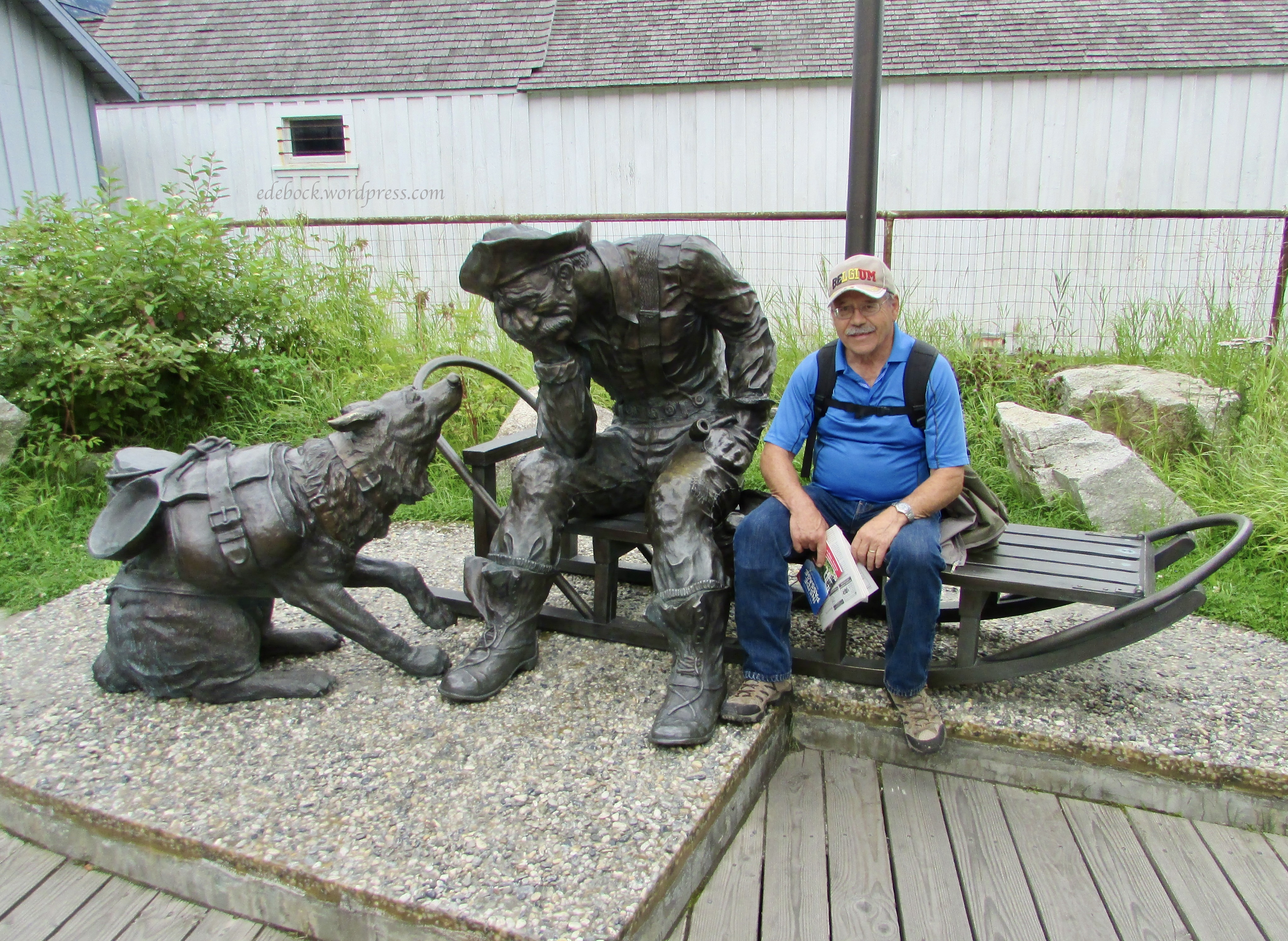
Here’s hubby hanging out with an exhausted gold seeker and his dog.
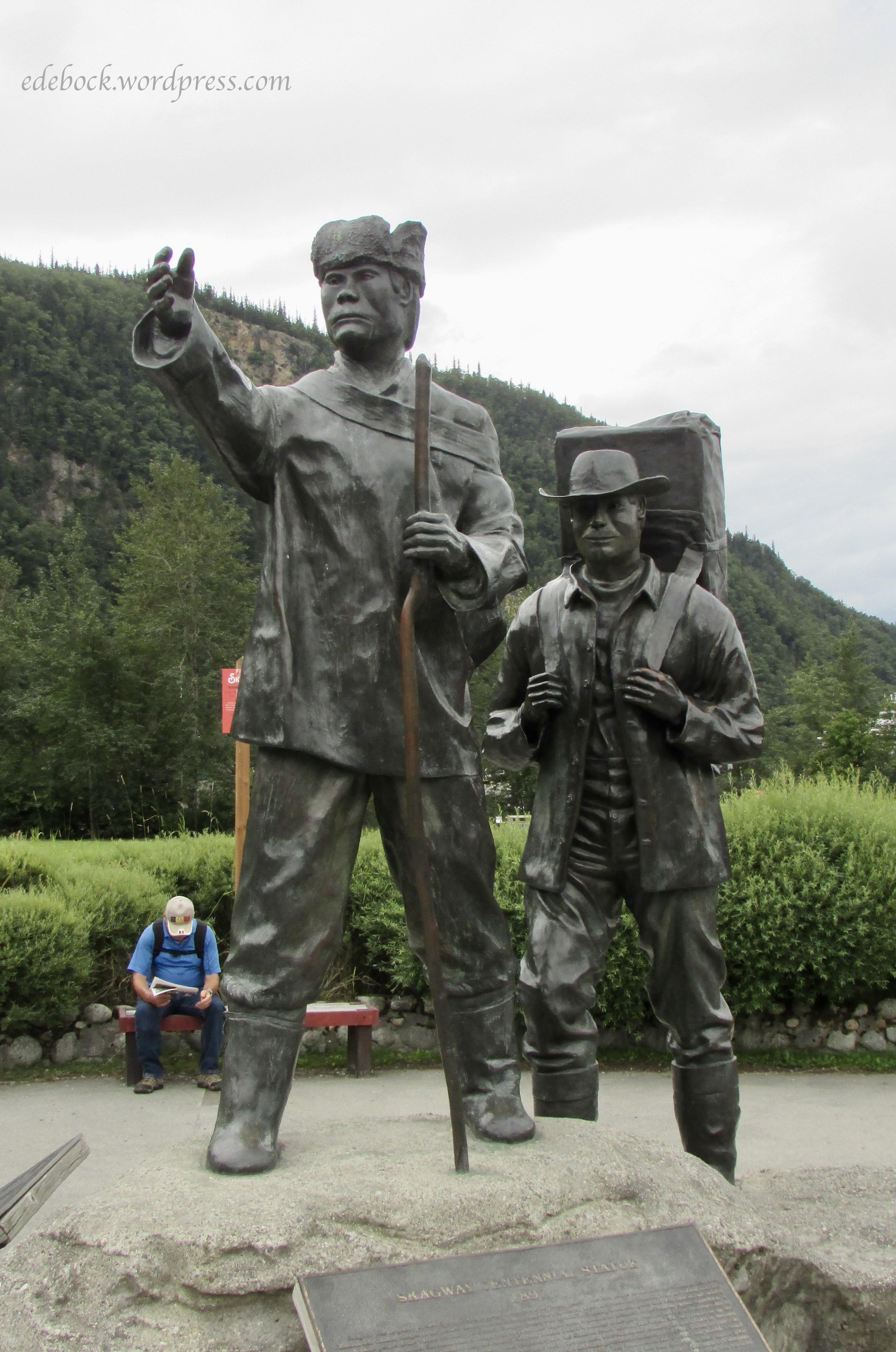
And perhaps you can spot him in this photo too. This is the Skagway Centennial Statue erected in 1997 in a park close to the train station.
Endicott Arm and Dawes Glacier
Next on our itinerary was a scenic cruise up Endicott Arm to view the Dawes Glacier. The further up the beautiful Arm we cruised, the more and bigger chunks of ice we began to see in the water.


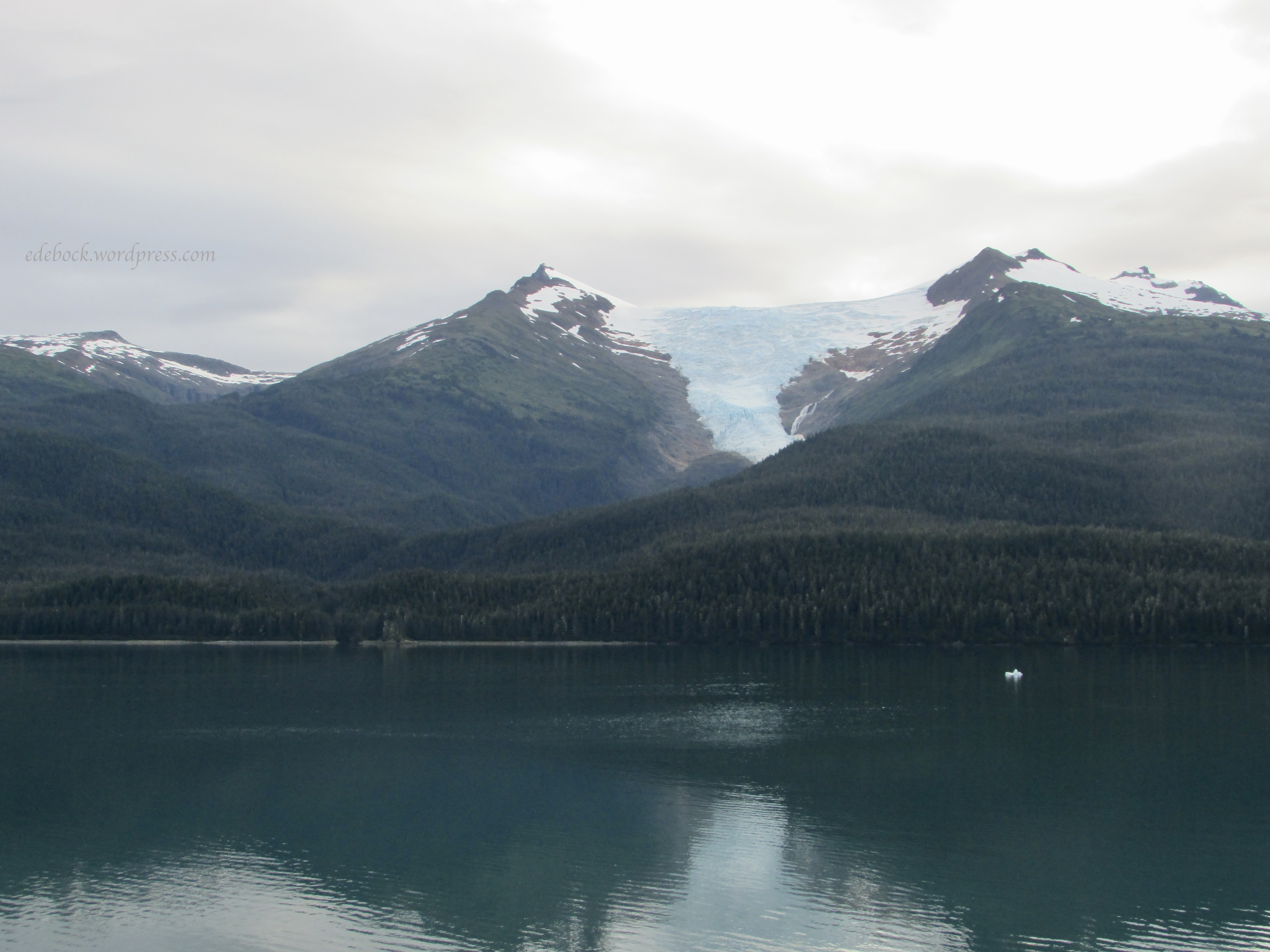
There were other glaciers like this one along the way, but they were high in the mountains and far from the shore.
Eventually Dawes came into view.

Because of the enormous size of our ship, we couldn’t get as close to the glacier as smaller ones could, so this was one of the times that we were very happy to have binoculars with us. The captain turned the ship in a complete slow circle so that everyone on either side could get a good view and lots of photos.
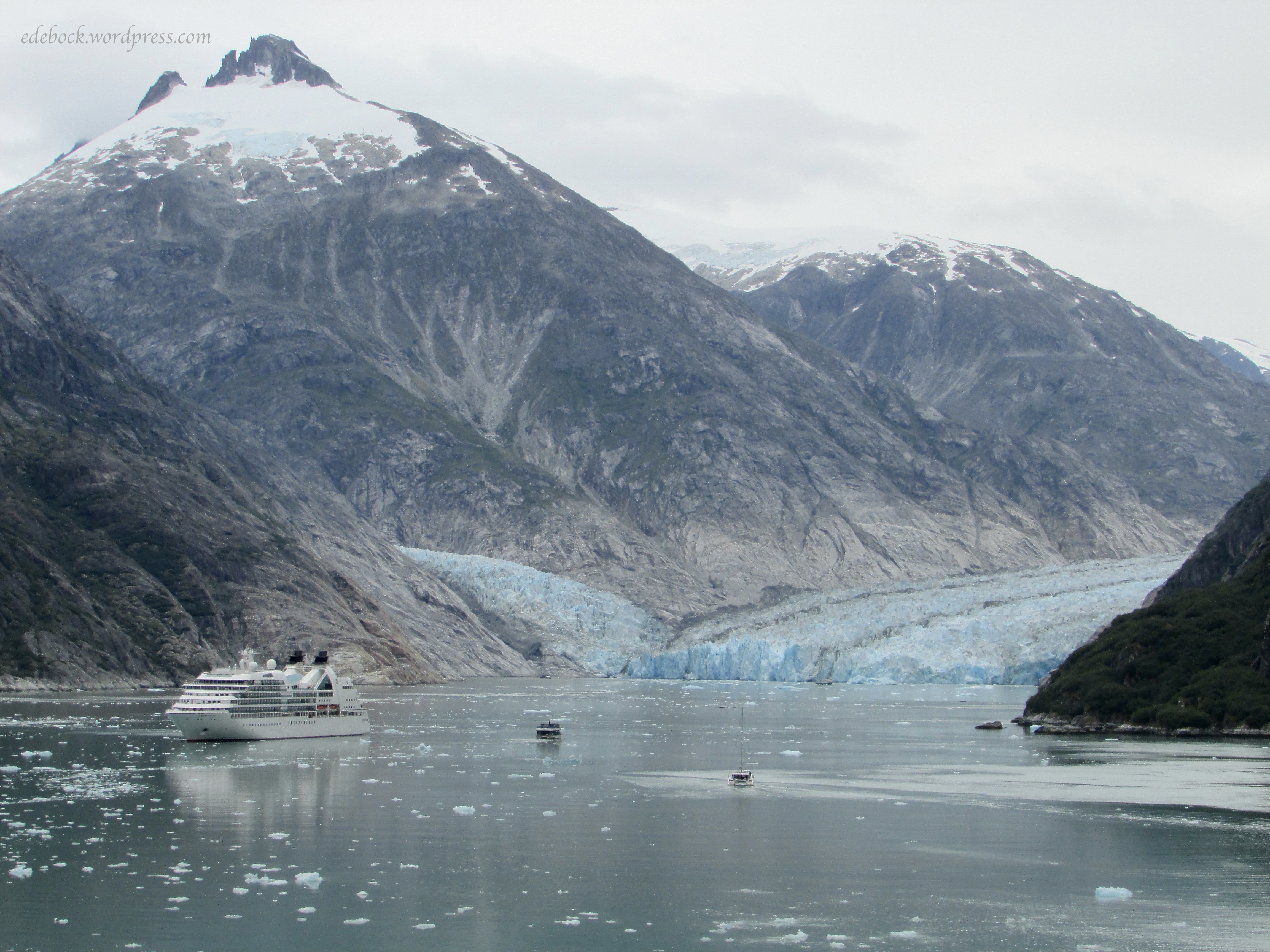
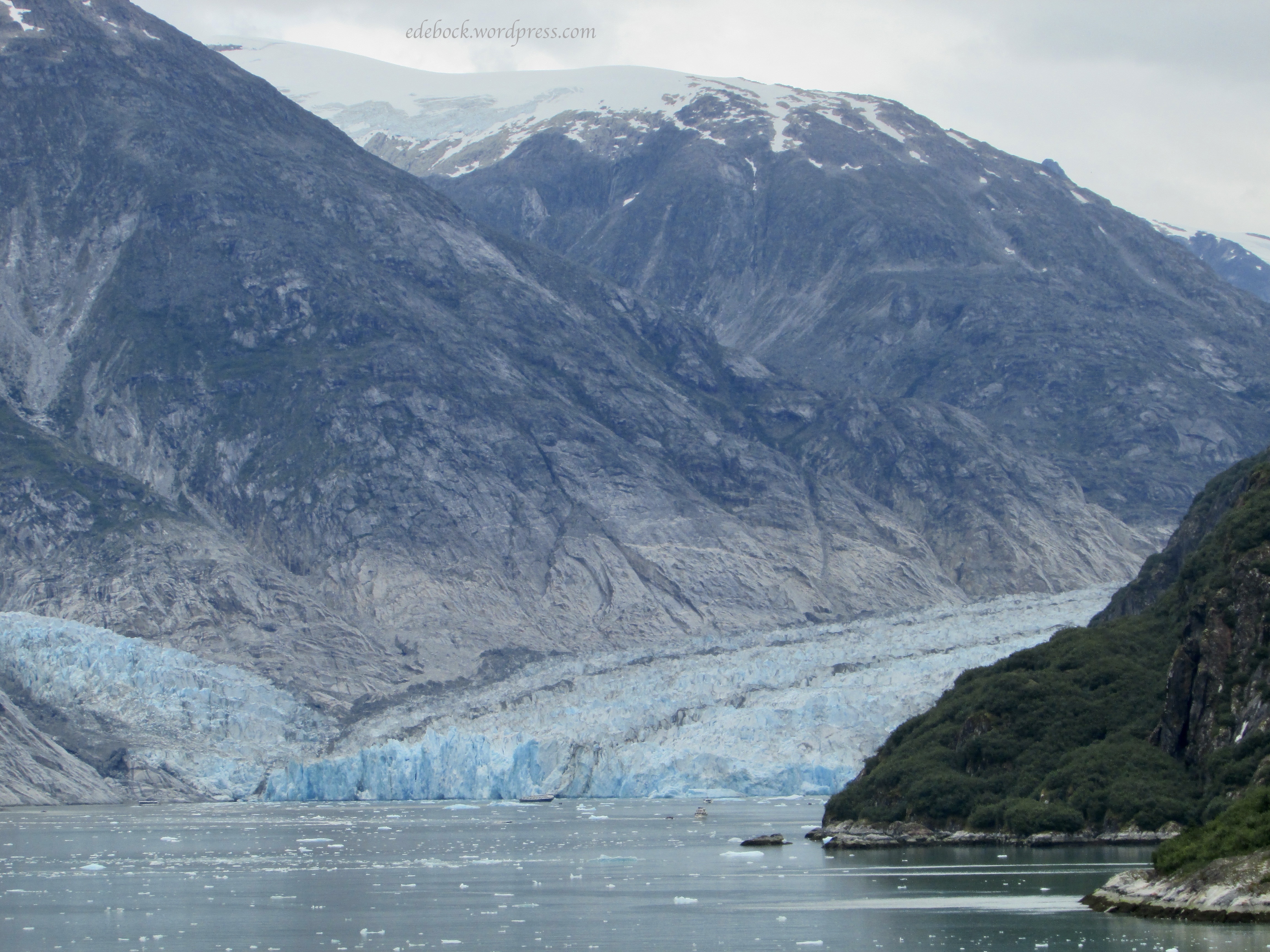
Why is the glacier blue, you ask? The naturalist on board explained that that’s because the ice is incredibly dense, having lost almost all of its air over time due to the immense weight of snow that compacted it. This dense ice absorbs most of the long-wavelength colours of white light, such as red and green, while allowing the short-wavelength blue light to pass through or scatter, which is what we see.
Ketchikan
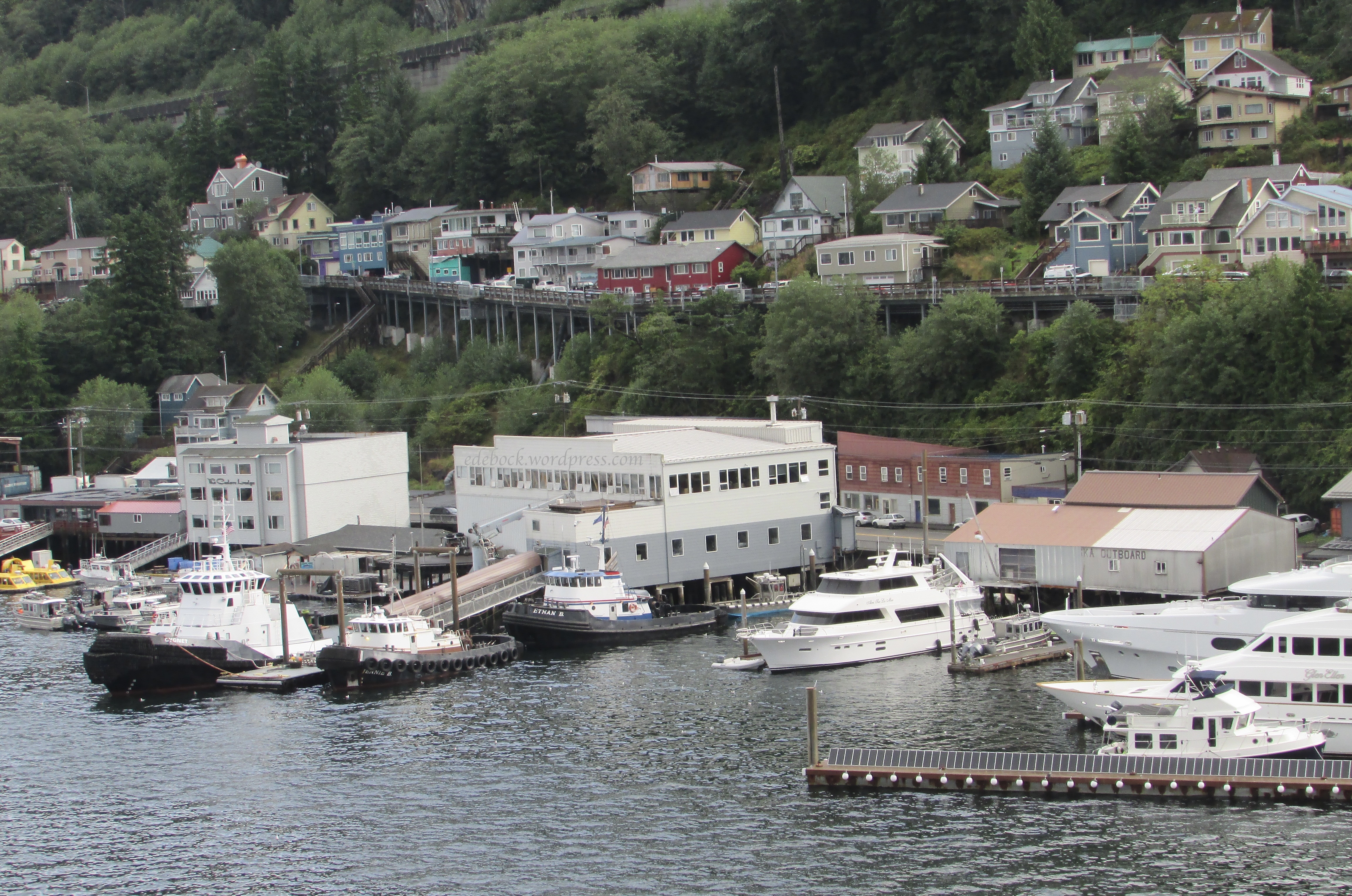
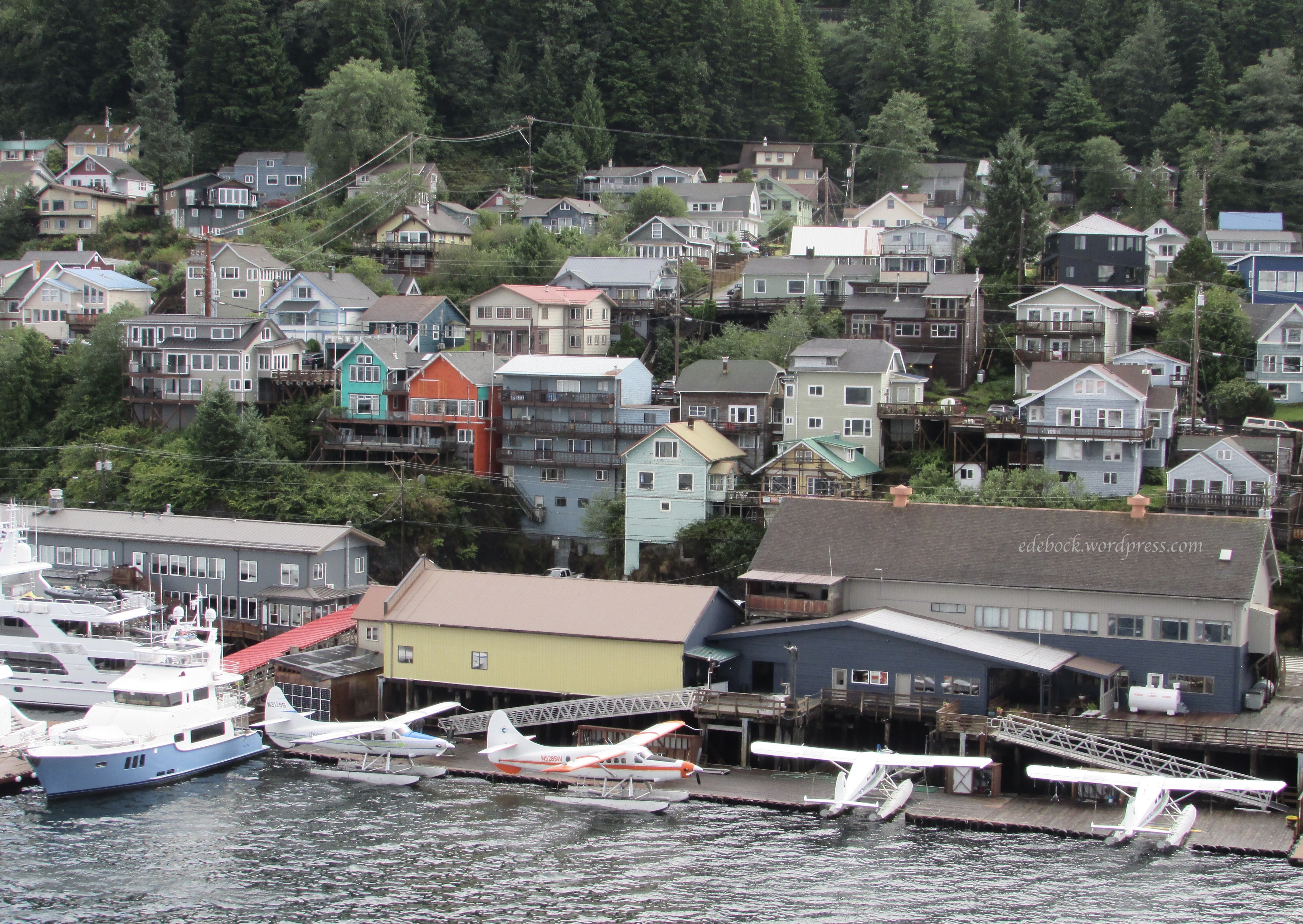
Ketchikan, with a permanent population of about 8000, was our last port of call. Like Juneau, it is inaccessible by road. It receives an average of approximately 150 inches of rainfall a year. Some of that fell while we were there, but we didn’t let that put a damper (pun intended) on our once in a lifetime opportunity to be there and see the sights.
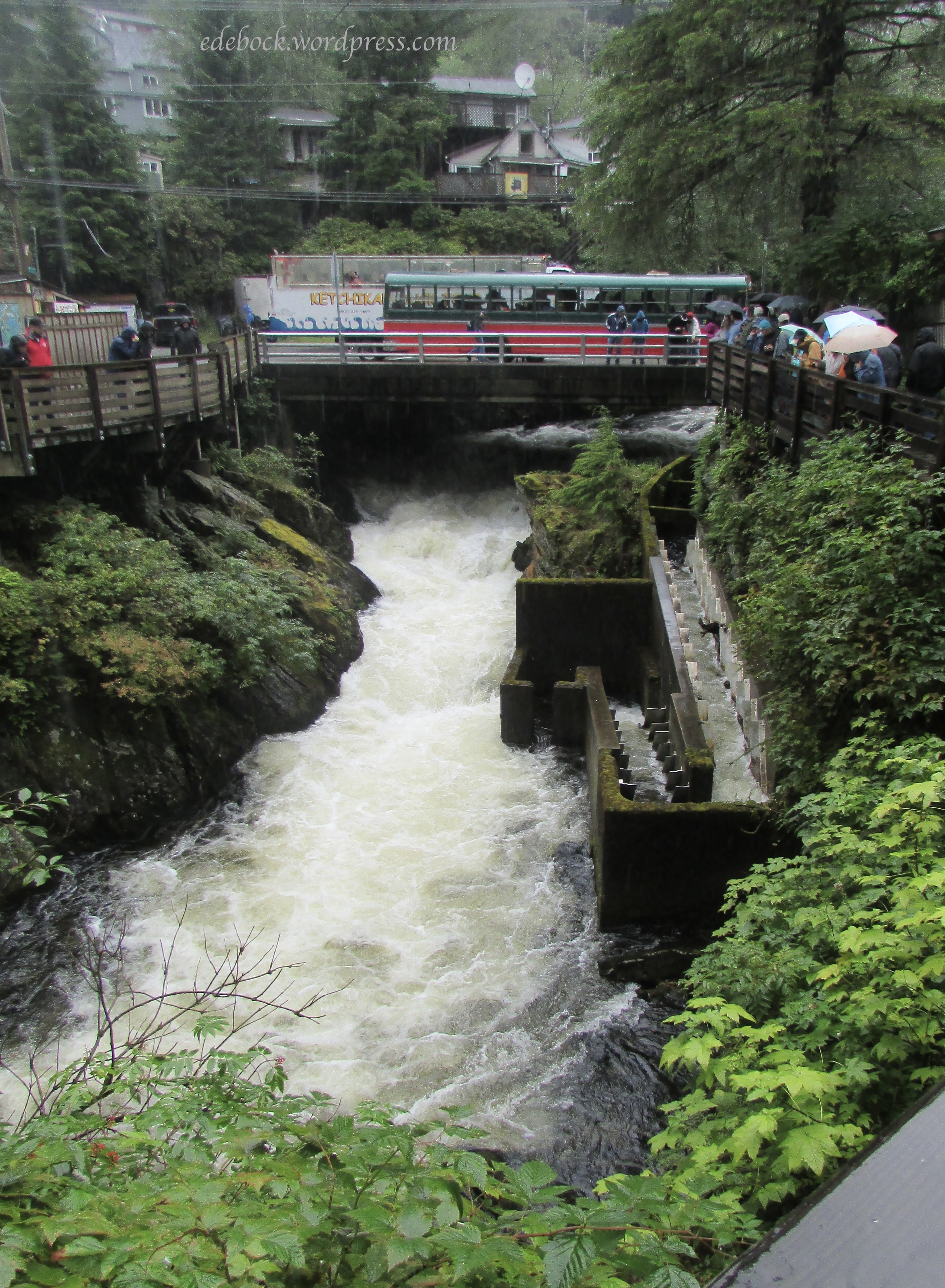
We started by walking the 1.5 mile (2.4 km) Salmon Walk which is dedicated to the importance of salmon to the area and to encouraging good stewardship of the fish and their habitat. The walk upstream along Ketchikan Creek in the direction that the salmon swim took us past a fish ladder and a hatchery, then along a forest trail before continuing back into the downtown area.
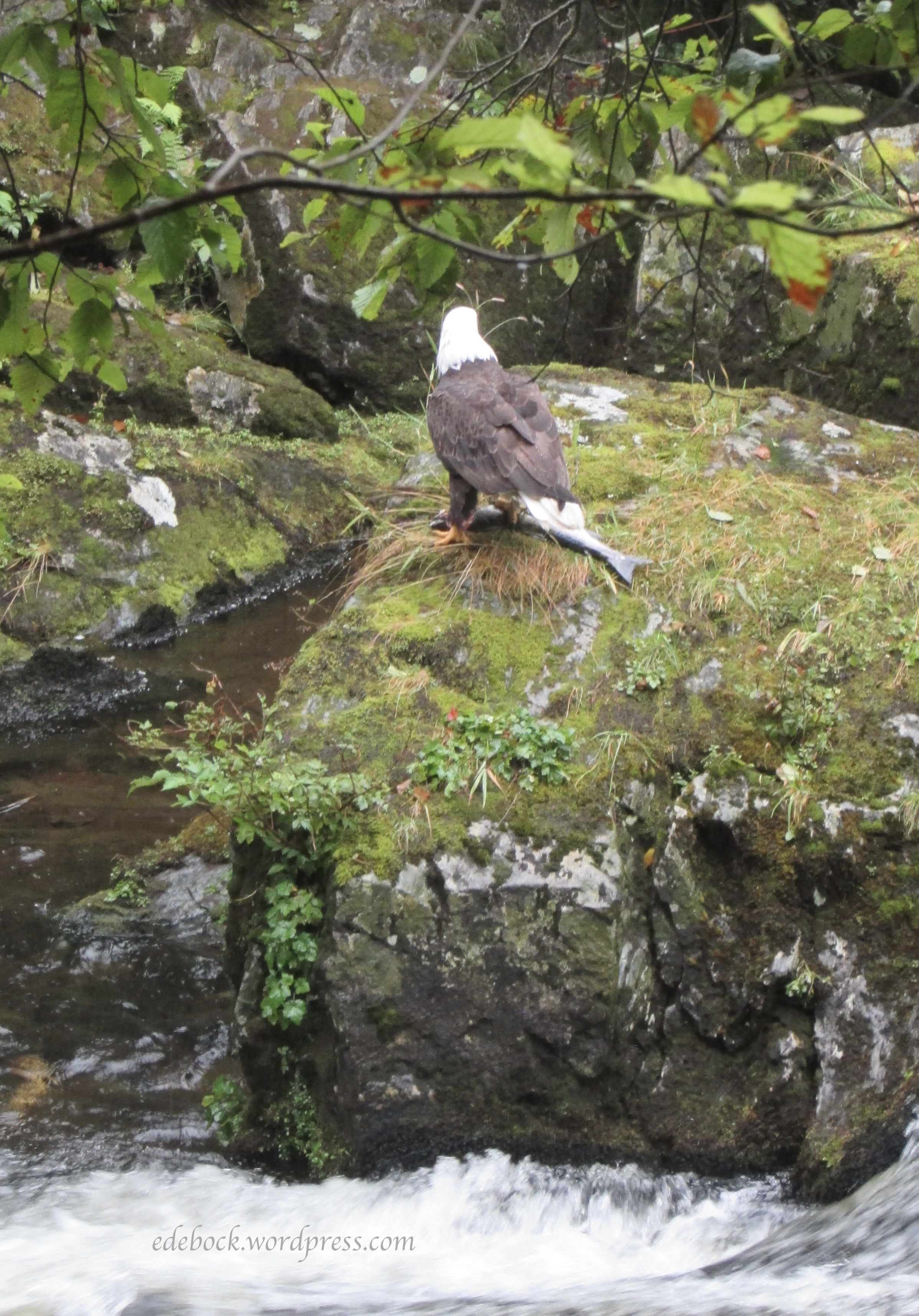
Along the way, we stopped to watch a bald eagle eating a freshly caught salmon. Unfortunately, it wouldn’t turn around and pose for me!
Halfway through the walk, we stopped at the Totem Heritage Center which houses an invaluable collection of 19th century poles retrieved in the 1970s from some of the nearby islands. It was a good place to escape the rain for a little while!
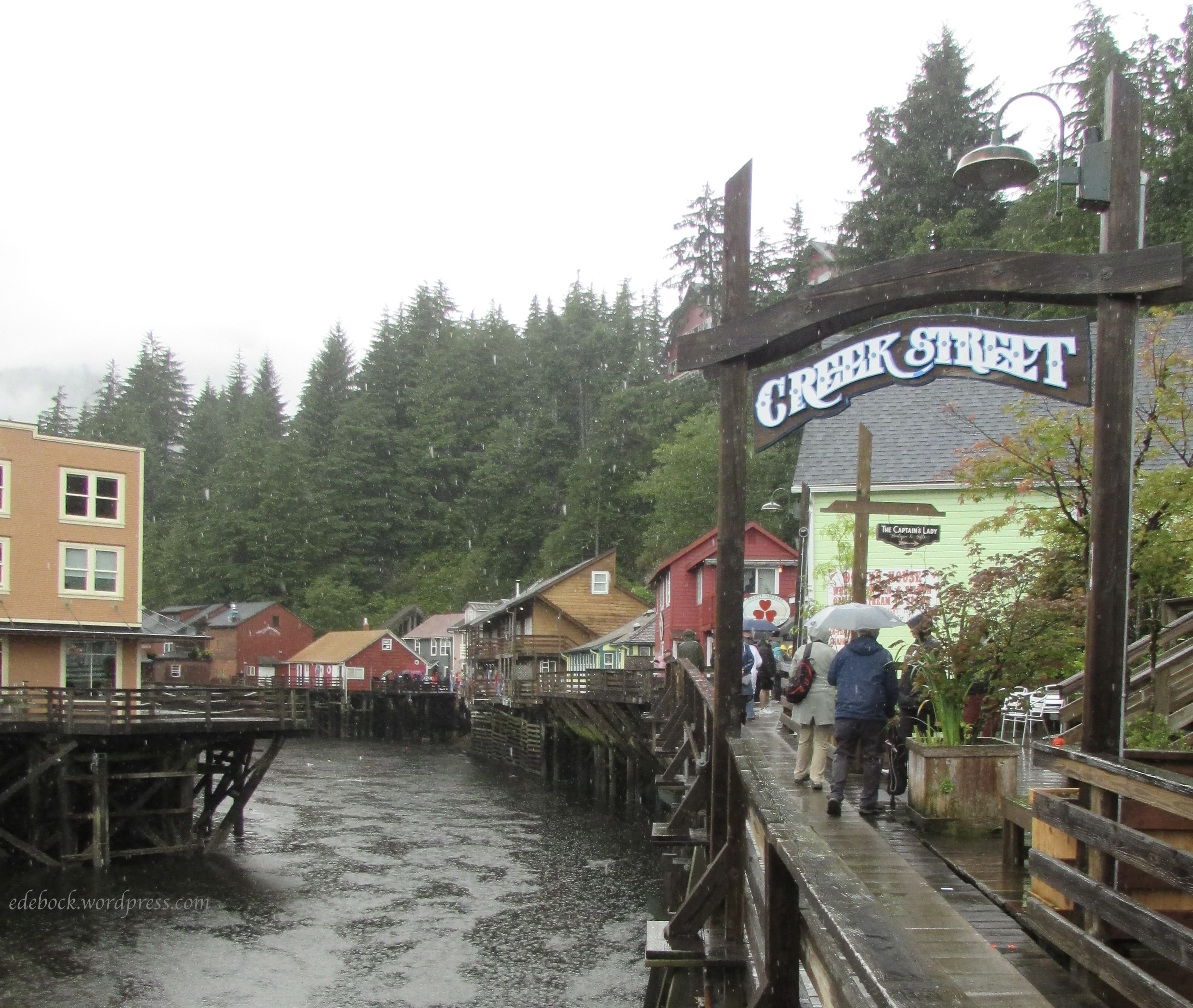
Our walk ended with a stroll along Creek Street, once the town’s red light district, but now a charming historic area known for it’s picturesque boardwalk built over the creek. We watched a couple of seals cavorting in the water there.

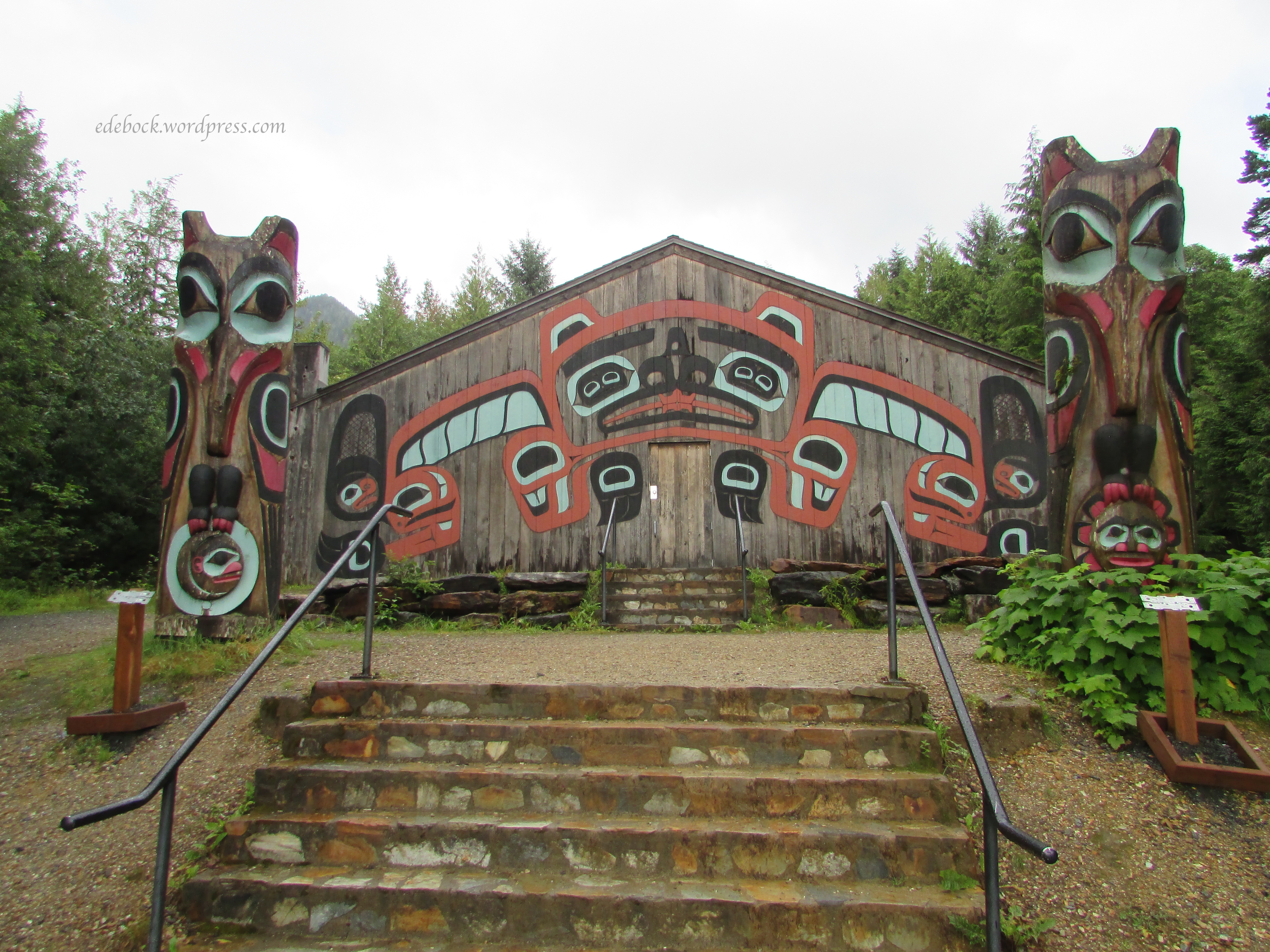
After returning to the ship for lunch, we took a taxi to Saxman Totem Park about 2.5 miles (4 km) south of Ketchikan because we didn’t want to walk that far in the rain and the city bus only goes once an hour. Of all the things we saw and did on this this trip, Saxman was the only one that we considered to be a bit of a rip off. We were charged $8 USD apiece to walk around and look at the collection of totem poles, authentic replicas of original poles that were left in abandoned villages in the past. There was no map available to guide us and most of the descriptive signs were missing. The traditional clan house and the carving centre were closed and all that was open was the gift shop! We did manage to tag along with a tour group that made a very quick stop there and heard the stories of a few of the poles from their guide.

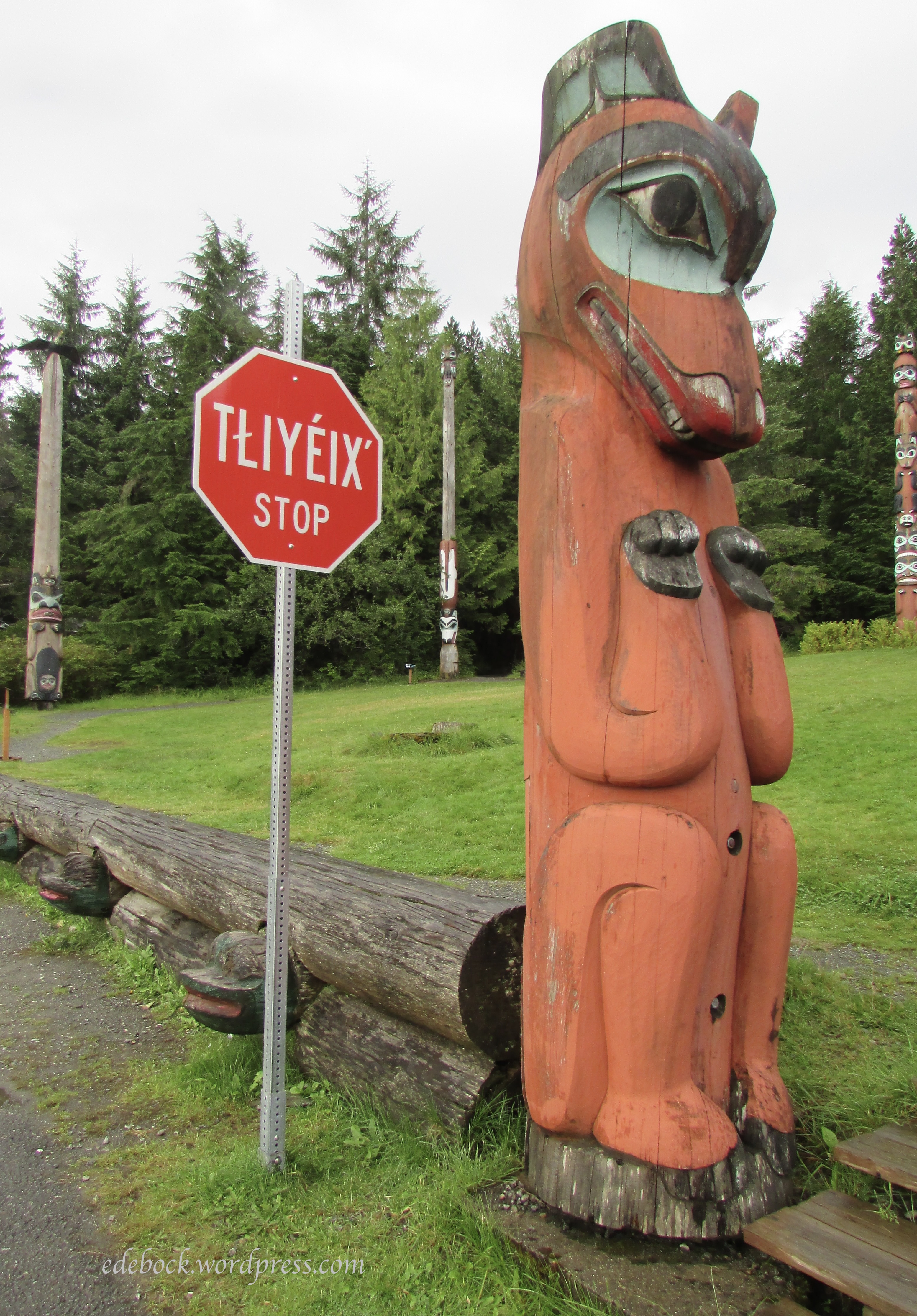
And that brings this very long post to a full STOP. If you’ve stuck with it and read this far, you are to be commended!






















 Following Augustine