Bringing the Beatrice home

In 1984, shortly after my father retired, my parents ordered a Volkswagen Westfalia camper van from the factory in Germany. They traveled from their home in Vancouver, BC to Germany via Japan, South Korea, Hong Kong, through China, across the USSR on the Trans Siberian railway, and into Europe! After picking up their brand new van in Germany and outfitting it with dishes, bedding and other basic necessities, they lived in it for a year and a half as they traveled around Europe and the Middle East.

Clearly, I came by my wanderlust honestly!

When Mom and Dad finally decided that it was time to return to Canada, they had the van shipped home to Vancouver. Because they’d owned it for over a year, they were able to bring it into the country duty free.

For almost two decades, the blue camper van traveled through the mountains almost every year bringing Grandma and Grandpa to Alberta to visit their grandchildren. It continued to be their only vehicle until Dad, now 93, finally gave up driving a few years ago. At that point, he passed it on to our niece who was a college student at the time. She drove it until she graduated from college, but once she got a job she bought a little car and the van sat under a tarp in my sister’s backyard in Vegreville for the past two years.

img_2124

This summer, our son, who also lives in Vancouver, acquired the van from his cousin. Matt plans to use it as a camping vehicle for his young family. Prior to their visit to Alberta last month, we rented a U-Haul auto hauler and moved it to Sedgewick.

img_20160812_170528680

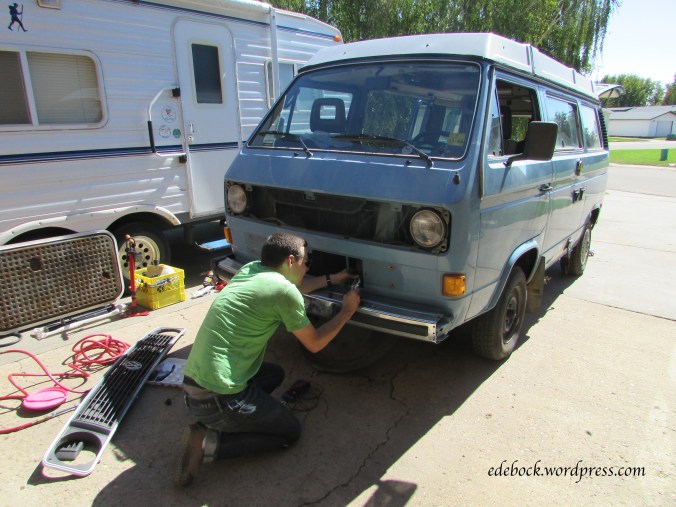
Matt knew that after sitting unused for so long, the vehicle would need some work to make it roadworthy and he came prepared.
img_2176

When he knew that the van was going to be his, he joined TheSamba.com, an online site for Volkswagen owners and checked out other informational sites. In addition to learning important information including the common quirks of the vehicle and where to access parts, he discovered that owners of these vintage vans often give them names in the same manner that boat owners name their crafts. I was touched when he chose to name his Beatrice after my late mother!

Sadly, though he had hoped to drive her home to Vancouver, the Beatrice needed more work than Matt was able to accomplish in the few short days that he was at our place. That’s when Plan B came into being and here we are in Vancouver! We loaded the van onto another auto hauler and pulled her through the mountains. Now she’s tucked into a corner of Matt’s backyard where he can work on her as he has time. This has also afforded us another opportunity to visit Dad before winter sets in as well as a few unexpected days with our grandsons!

img_2487

In addition to bringing the Beatrice home to the coast, we brought our 17 foot Coleman canoe for Matt, Robin and the boys to enjoy. It’s an extremely durable, very stable family canoe, but bigger and heavier than Richard and I want to haul around anymore. As I paddled it through some fairly rough ocean waves at Porteau Cove on the Sea to Sky highway yesterday afternoon, I knew my paddling days weren’t over though. A couple of waves crashed over the bow and left me soaking wet, but it was a blast and a lightweight kayak is definitely on my wish list!

Hiking Johnson Canyon

I first hiked Johnson Canyon, one of the most popular day hikes in Banff National Park, as a university student in 1974 and I’ve been wanting to do it again ever since. On Sunday, I finally did!

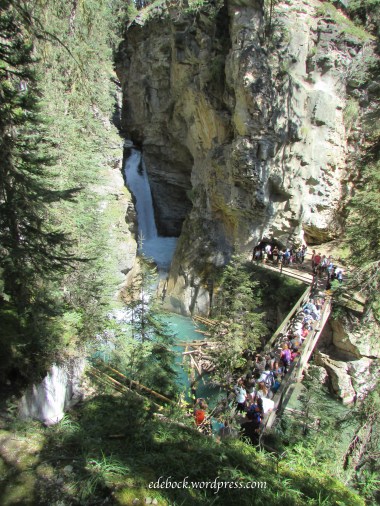
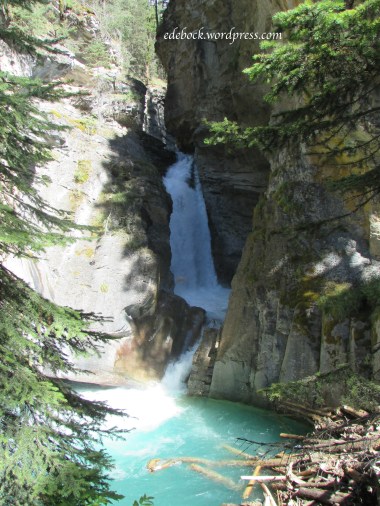
The parking lot was already full by mid morning when we arrived and the trail was packed with tourists. Catwalks affixed to the limestone cliffs make the canyon easily accessible to everyone and the 1.1 km trail to the lower falls involves very little change in elevation.

IMG_2392

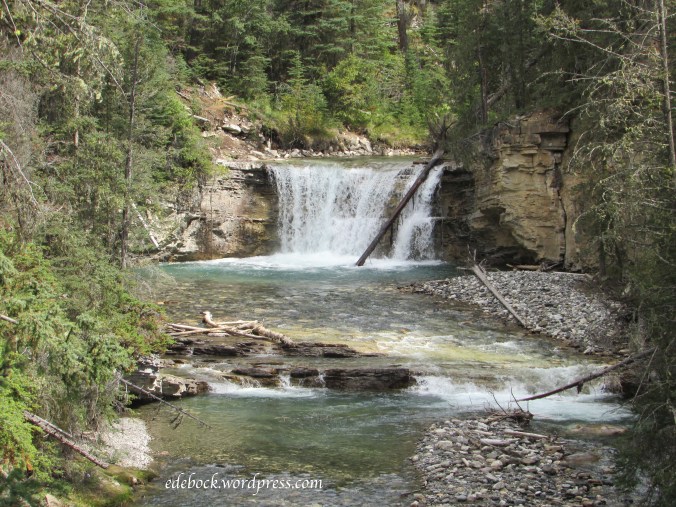
At the lower falls, a bridge crosses the creek allowing both an excellent spot from which to view the falls and access to a water-formed tunnel through the rock to a closer viewing platform.

IMG_2394

IMG_2397

IMG_2399

IMG_2402 - Version 2

The crowd thinned out a little as we moved on toward the upper falls, another 1.5 km up the trail. Spectacular views continued to surround us as we followed the crystal clear creek.

IMG_2406

IMG_2414

There is significantly more change in elevation on the way to the upper falls and by the time we arrived at the bottom our two little grandsons decided that their legs had hiked far enough. Our son and daughter-in-law took them back to camp while Richard and I pushed on. It was a short climb to the top of the falls where we enjoyed great views of the falls themselves and the deep pool at the bottom.

IMG_2424

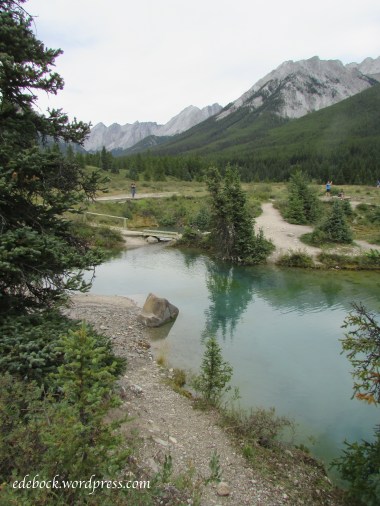
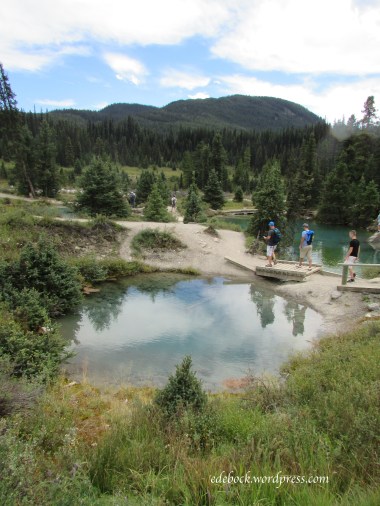
Beyond the upper falls, the trail leaves Johnson Canyon behind and climbs another 3.1 km to the Ink Pots, seven cold mineral springs that bubble to the surface forming small pools in an open meadow. These springs are unique in that they have a constant year round temperature of 4ºC and their basins are composed of quicksand.

I had not hiked beyond the upper falls in the past and wasn’t expecting the steep climb that was involved. Once we’d set out, however, I was determined to finish! The trail seemed to go on forever, climbing higher and higher. Younger legs passed us by, but we pushed onward and eventually reached our goal!

IMG_2436

IMG_2441

IMG_2443

IMG_2449

IMG_2450

My old knees were a bit achy the next morning, but a soak in Banff’s Upper Hot Springs was all they needed to recuperate!

Chokers are back!

Screen Shot 2016-03-18 at 11.07.24 PM 3

Last week’s 70s girl post got me thinking about another favourite style from that era that has returned in recent months. Chokers are back! Or did they ever really go away? They were popular in the 70s, again in the 90s, and now they’re being seen yet again.

One of my favourite chokers of the 70s was a cameo on a wide velvet ribbon. Another was a leather cord with wooden beads. Those were pretty typical of the era and looked good with the flowing tops and dresses of the day.

The choker of the 90s often had an edgier, gothic look. I think my daughter was in junior high when she wore one that looked exactly like a shiny black dog collar. I’d post a picture, but I suspect she’d hate me for it!

Today’s chokers are more reminiscent of the 70s. Here are a few examples:

While I’m definitely not a proponent of age related fashion rules, it’s my personal opinion that chokers usually look best on the young. Because the skin on our necks is thinner than elsewhere, it tends to loosen and wrinkle earlier. As a result, our necks may look older than the rest of our bodies. Why draw attention to that?

On the other hand, I recently found this one in my jewelry box and I’ve decided to wear it again. Made of pewter and gold plate, it was a gift from a good friend back in the late 70s. It’s a bit longer than most chokers and it’s shape tends to draw the eye down, away from my 63 year old neck. IMG_20160825_171601778

Do you have any favourite fashions from days gone by? Would you wear them today?

The House at Riverton

If you, like me, are grieving the cancellation of TV’s popular drama series, Downton Abbey, then have I got a book for you!

Riverton

Originally released in her native Australia as The Shifting Fog, The House at Riverton was author, Kate Morton’s, debut novel. Described on the back cover as “the captivating story of an aristocratic family, a glorious English estate, a mysterious death and a way of life that vanished forever”, the story is set in England between the two great wars. Told in flashback by 98-year-old Grace, who was employed at Riverton, first as a housemaid and later as lady’s maid to the family’s eldest daughter, I found it a captivating read. The time period and master/servant relationships were so very reminiscent of Downton Abbey!

I’m not generally a fan of mysteries, but this one is more than a simple who-done-it and kept my attention to the end. In addition to providing a window into a fascinating time in history, The House at Riverton explores topics like memory and long held secrets, the devastation of war, and the end of an era.

Since The Shifting Fog was released in 2006, Kate Morton has published four more novels. I picked up The House at Riverton and two of the others, The Forgotten Garden and The Distant Hours, at a garage sale this spring thinking that they would make great summer reading. So  far, I haven’t been disappointed. We’ll be camping for the next couple of weeks and the other will be going with me.

What are you reading this summer? 

What’s in your purse?

Screen Shot 2016-03-18 at 11.07.24 PM 3

A friend of mine once reached into her handbag and pulled out half a hamburger wrapped in a paper napkin! It had been there for several days and was practically petrified.

What’s the most unusual thing in your purse?

Here’s what’s in mine right now:

  • leather clutch wallet purchased 8 years ago in Japan that contains driver’s licence, health care cards, cash, credit cards, receipts, business cards, an expired State of Israel Border Control Stay Permit and a reloadable Japanese Pasmo card that can be used for anything from train and bus travel to shopping. (The last two items are non-essentials, but they don’t take up any space and they bring back memories that make me smile every time I see them!)
  • cell phone
  • keys
  • pens
  • small folder containing rewards cards
  • cheque book
  • notebook
  • address book
  • calendar/planner
  • small pack of tissue
  • an ultra compact reusable shopping bag
  • 2 small cosmetic bags containing lip balm, lipstick, nail clippers, emery board, tiny foldable scissors, bandaids, eyeglass cleaning cloth, allergy and headache medication, a small tube of hand lotion, toothbrush and toothpaste
  • ziploc snack bag of almonds

Until recently, I was a one purse person, carrying the same bag for months on end without ever switching. The purse we carry is part of our overall fashion statement, however, and since boring is not the message I want to give about myself, my collection of handbags has started to grow and I’ve figured out how to switch quickly and easily from one to another. The trick is to organize the contents of your purse into smaller bags that can be transferred from one bag to another with ease.

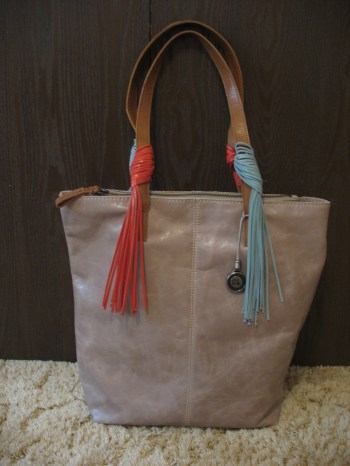
I’m presently using this one a lot. I love it’s carefree summer look and the fact that it’s big enough to carry extras like sunscreen, sunglasses, my camera and even a hat. From The Sak, I won it last summer and first posted about it here.

IMG_5418

What do you carry in your purse?


Starting them young

At five and six years old, our Vancouver grandsons are already avid skiers; a passion passed on to them by their mom’s side of the family. We, on the other hand, look forward to the day when we can play a round of golf with them!

Today, Victoria Day here in Canada, we left our daughter-in-law at home preparing a delicious turkey dinner for later in the day and headed for a driving range with the boys.

Nate’s club of choice was a putter, but he did a pretty good job of whacking it off the tee.

IMG_1712

Oops! The ball’s still there!

IMG_1721

Sam got some tips from Daddy then made some great shots.

We finished off the morning with a fun round of mini golf.

IMG_1737

IMG_1739

Unlike their Gram who didn’t take up the sport until I was about 40, these two are starting young!

Disaster! What should we do?

a-wall-of-fire-rages-outside-of-fort-mcmurray-alta-tuesday

photo credit: Edmonton Journal


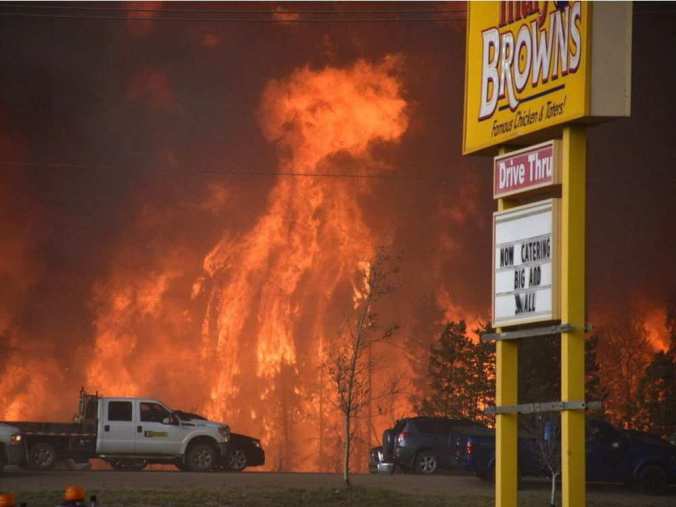
The images coming out of Fort McMurray, Alberta over the past few days have been terrifying. A city on fire and its entire population of 80 000 people evacuated!

li-parsons-fire-flames

photo credit: CBC


convoy

photo credit: CBC


We appreciate the messages of concern received this week from friends around the world who heard the word “Alberta” on the news and immediately thought of us! Fort McMurray is about 500 km north of us. Though the entire province is experiencing an unusually hot, dry spring and the risk of fire is high everywhere, we are safe!

It has been gratifying to see the outpouring of support from people across Alberta and beyond our borders for the residents of Fort McMurray. As Missions president for our church, I have been fielding questions about how we as a congregation can help. Here is Church of the Nazarene Canada West District Superintendent, Dr. Larry Dahl’s, response to similar questions:

We have had a number of inquiries regarding how people can provide support and help for the disaster in Fort McMurray.

We are suggesting to those who are interested in making a donation to send funds directly to Samaritan’s Purse, who are presently working on organizing a response. They were quite actively involved in helping with the Slave Lake fire and then with the High River flood crisis in the past.

Additionally, if they wish, they could send funds to the Salvation Army, designated to help with the relief for the area. I received the following information from Major Ron Cartmell, Divisional Commander:

“The Salvation Army has been mobilized to feed 1,000 first responders south of Fort McMurray. Our portable kitchen is in place, and as I write, three other teams from Alberta and Saskatchewan are en route to help.”

I concur with Dr. Dahl and would add that the Red Cross is another organization that you might consider sending a donation to. The Canadian Government has agreed to match all donations made to the Red Cross Alberta Fires Emergency Appeal.

Cash donations, even small ones, are by far the most effective way to help those recovering from any disaster of this nature, but what should a person not do?

No one wants to see the collective community’s goodwill offerings end up in the landfill, but sadly, in situations like this one, when people start filling trucks and trailers with used goods and hauling them into the affected area, that’s often exactly what ends up happening. It happened following the 2011 Slave Lake fire, it happened following the High River flood in 2013, and unfortunately, it will happen this time too.

Compassion tells us that we need to help these people get back on their feet by replacing the things they’ve lost, so we start collecting food, clothing and household items without thinking about the fact that someone has to sort, warehouse and distribute what we collect. Also, people may not realize that for heath and safety reasons a lot of what is collected can’t be distributed at all. If you do want to donate material goods during the first few weeks following this or any other crisis, the wise thing to do is to find out what specific needs have been identified by the emergency shelters and meet those needs which usually include things like disposable diapers, baby formula and toiletry items.

Many of the larger needs will come later. For example, during a wildfire, electricity to the community is lost. That means that by the time the Fort McMurray evacuees return home, if they have a home to return to, every single fridge and freezer in that city will be full of rotting food and will probably need to be replaced. We’re talking thousands of appliances. This is not a need that can be met by shipping individual donated items. It will require negotiations with manufacturers, huge buying power and major logistical coordination. Organizations like the Red Cross, in cooperation with government, are equipped to handle this kind of need, but they can only do that if they receive adequate monetary donations.

So give wisely. Instead of sending material goods, give a cash donation to Samaritan’s Purse, the Salvation Army, or the Red Cross. If you have clothing, furniture or other possessions to get rid of, hold a garage sale and donate the proceeds. Disaster victims don’t need your discards!

Donate:

Blessings in the ordinary and mundane

What are some of the most ordinary, mundane tasks that you perform on a regular basis? Have you ever thought about the fact that there are blessings hidden in every one of them?

I hadn’t either until I was doing my Bible study homework yesterday. Our ladies group has recently started doing Priscilla Shirer’s study, Gideon: Your Weakness, God’s Strength. In yesterday’s lesson, she asked us to list five ordinary tasks that we perform every day. That was the easy part. Later in the lesson she had us look back at the list and beside each task, write down what it indicates about God’s faithfulness and kindness to us.

Referring to the fact that Gideon had wheat to thresh despite the hardships and oppression that he and his people were facing (Judges 6:1-11), she wrote:

“Gideon’s story reveals that even your most mundane duty has a twinkle in the favour of God, for if He removed His blessings completely from you – taking away your home, your family, your work, your possessions – the need for many of your daily tasks would disappear. Don’t despise the very things that signify your seat under the umbrella of God’s goodness each day.”

What an eye opener this simple exercise was for me! One of the tasks that I wrote down was brushing my teeth. Is there anything more ordinary or mundane than that? What could possibly be the hidden blessing? Then I thought about the fact that I have access to unlimited clean, healthy water. I am not in danger of contracting a water borne disease every time I brush my teeth! Globally, approximately twice the population of the United States, or some 6.63 million people, do not have access to clean, safe water! 1.6 million people die every year from diarrheal diseases, including cholera, due to their lack of safe water and basic sanitation. Many more are plagued by tropical diseases and intestinal parasites.

Getting dressed is another routine task that we all engage in, so what’s the hidden blessing? I have a closet full of clothes to choose from and the financial resources to buy more if I ‘need’ them, while there are many who have nothing but the rags on their back. I can even blog about my wardrobe! (Come back tomorrow for the second instalment of my new Fashion Friday! feature.)

Cleaning the bathrooms is one of my least favourite household tasks, but when I consider that approximately 1/3 of the world’s population doesn’t even have a toilet to clean, I know how blessed I am! Astonishingly, more people worldwide have a cell phone than a toilet! Almost one billion people still defecate in the open, a practice that leads to the spread of disease and the contamination of drinking water sources. I don’t mind using an outhouse when I’m camping, but after living and travelling in parts of the world where I rejoiced when I found a western toilet to use instead of a “squatty potty”, I’m pretty thankful to be blessed with toilets to clean!

I could go on and on, but you get the idea. There are hidden blessings in all our humdrum, routine tasks if only we have the eyes to see them!

What are some of your least favourite tasks? What are the blessings hidden in them?

lookforhidden

Threads of Hope

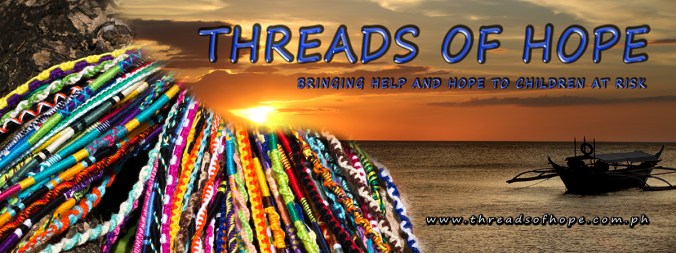
I’m wearing a simple thread bracelet today that was handmade in the Philippines.

IMG_1452

In early 2003, Christian missionary Alex Kuhlow and his wife Chris, while visiting the beautiful beaches of Puerto Galera on the island of Mindoro, became aware of a heartbreaking reality. Many impoverished families flocked to the popular vacation destination to sell woven baskets or colourful bracelets and anklets to the well-to-do tourists, but some of them, realizing that they still couldn’t generate enough income to live on, were making the desperate choice to sell their children into prostitution. Moved by their circumstances and wanting to help, Alex ordered $100 worth of bracelets to be picked up on his next visit. That became the beginning of a non-profit organization called Threads of Hope that now provides a steady income to over 250 families who were previously at risk! In addition to providing life-sustaining income and protecting their children from exploitation, selling their beautiful hand-made bracelets and other products including necklaces, keychains, bookmarks and headbands, fosters a new sense of hope and brings dignity to these families.

Through the sale of simple bracelets like mine, Threads of Hope has also been able to purchase land and build a ministry centre that accommodates 1000 people for church and other activities. A full-sized basketball court provides a recreational outlet for the community and pineapples planted on the remaining property bring more income into the community at harvest time.

Last night our church hosted a visiting missionary from the Philippines who, in addition to her regular responsibilities at a Christian international school in Manila, has partnered with Threads of Hope to spread awareness of their ministry and help raise support through the sale of their products. The bundle of colourful bracelets that she brought with her were quickly gobbled up. One public school teacher in our congregation bought enough for every child in her class!

Though the majority of sales are generated through a network of individuals who have been moved with compassion for the economically oppressed of the world, Threads of Hope products can also be purchased individually or in bulk through their website. Customized orders in school or team colours can also be provided. What an easy way to provide protection and support for some of the world’s most vulnerable children!

sunsetbanner


International Women’s Day 2016

Yesterday, March 8th, was International Women’s Day. My search for something relevant to write about led me to a headline that caught my interest:

Ditch the sexualized dress codes, Ontario employers told

Compared to many of the issues and abuses such as poverty, female genital mutilation, and child marriage, that women in other parts of the world face,  being required to wear sexy, cleavage-baring outfits or heels to work is definitely a first world problem, but one that I’m happy to see being addressed.

The Ontario Human Rights Commission has told that province’s employers to stop demanding that their workers dress provocatively as a condition of employment. Requiring female staff, most often restaurant and night club servers, to adhere to a sexualized dress code that frequently includes tight skirts, low-cut tops and high heels is discriminatory and, according to US research, leaves them vulnerable to a higher than normal rate of sexual harassment.

Those in the industry claim that dressing in a sexualized manner garners greater tips. That may be true, but isn’t that a rather sad statement about our culture? Should a restaurant server have to sell her body to make a living? Personally, I would rather eat at an establishment that builds its reputation on quality food and excellent service and I tip accordingly.

Hooters is, of course, the first to come to mind. It built an empire on its young, attractive and scantily clad waitresses. With their tank tops, short shorts, tights and socks, at least they get to wear comfortable shoes!

hootersgirls-1024x682

photo:  http://www.hooters.ca

Some employers insist that servers, who are on their feet all day, must wear heels. According to the Earls communication manager, that company recommends wearing heels “to reduce safety hazards.” A heel or wedge is preferred because apparently ballet flats don’t offer enough protection against stepping on glass. That’s a feeble excuse if I ever heard one! She also claims that heels provide more support, but the American Osteopathic Association would disagree. According to their website, “statistics show that high heels are one of the biggest factors leading to foot problems in women, with up to a third suffering permanent problems as a result of prolonged wear. Over time, wearing high heels can shorten the muscles in your calves and in your back, leading to pain and muscle spasms.” I have nothing against women choosing to wear heels, but to require it of someone who is on her feet day in day out puts her long term health in jeopardy.

It was the comments on the articles about this issue that disturbed me most, however. Over and over again, I read responses like this one:

” If women go to Moxie’s or Hooters to work they know they will have to flaunt their equipment. Unbelievable how women would complain knowing full-well going into the job what it’s all about.”

and

“This is a free country, Women have the choice to  accept or decline employment at businesses that require revealing uniforms.”

Tell that to the many young women who are working in these places to put themselves through school or feed their children. How many options do many of them have, especially in today’s economy?

Obviously objectifying and exploiting women is still alive and well in our culture.