I resolve…

I don’t usually make New Year’s resolutions. Resolving to make dramatic changes with a flip of the calendar usually does nothing more than set people up for frustration and failure. It’s often said that it takes 21 days to make or break a habit, but that’s simply a common myth. According to a study published in the European Journal of Social Psychology it actually takes an average of 66 days before a new behavior becomes automatic. In other words, if you keep your New Year’s resolution until at least March 7, it has a good chance of sticking, but how many diets and exercise programs are abandoned long before that?

funny-new-years-resolutions-someecards

In spite of knowing this, I’ve decided to make one resolution this year. I’m not happy with the amount of time that I spend on the internet and I plan to do something about it. I often wonder what my retirement would have looked like if it had happened before the advent of the internet. Quite different, I’m sure. It’s not that the hours I spend online are all a waste of time. I use the internet for a wide variety of purposes including reading the news, communicating with friends and family around the world, editing, mentoring, and of course, writing my blog, but how many times a day do I really need to check emails, Facebook and my blog stats and what could I be doing instead?

I could simply resolve to spend less time on the net, but that’s a vague and unmeasurable goal. I don’t even know how much time I spend online now, so how would I know if I was being successful? And what do I want to do instead? Back in my teaching days, I learned all about SMART goals – Specific, Measurable, Achievable, Realistic and Time-based or Trackable. With that in mind, in 2017,     I resolve to read at least two books every month. 

I love reading. I always have, but that’s one thing that’s suffered as I’ve gradually started spending more and more time online. I’m sure that I could quite easily read more than two books a month, but I don’t want to set myself up for failure nor do I want this to be a gruelling exercise. I simply want to make better, more enjoyable use of some of my time. I’ve already picked out the first three books that I plan to read, two novels and one non-fiction. I also have a list of several other books to begin ordering in through our provincial interlibrary loan system.

Now, what about you? Do you make New Year’s resolutions? If so, why not share one or more of yours in the comments section.

images

Christmas shopping dilemma solved!

Have you finished your Christmas shopping yet or are you still trying to figure out what to get for that impossible to buy for person on your list? You know the one; the person who seems to have everything already and who, when they actually want or need something, goes out and buys it for themselves. Gift cards have helped alleviate some of that last minute Christmas shopping angst, but perhaps that solution seems a bit impersonal to you. Are shopping days rapidly disappearing while you fret over what to do?

Perhaps I have the perfect solution!

Why not give them a Kiva Card? With a Kiva Card, your loved one can help a third world artisan buy supplies, a farmer purchase equipment, a student continue their education… the possibilities are endless!

I’ve written about Kiva before, but this is a great time to plug one of my favourite charities again, especially since it might help someone with the last minute Christmas shopping blues. Kiva is a non-profit organization that allows a person to lend as little as $25 to a specific low-income entrepreneur in one of more than 80 countries around the world. Each time the borrower makes a payment on the loan, a portion of that payment is deposited back in the lender’s Kiva account and they receive an email notifying them of their updated balance. That money can be withdrawn at any time but instead, as soon as most lenders have recovered their $25, they search the Kiva database and choose another borrower to lend it to. That way the initial investment truly becomes the gift that keeps on giving!

I originally invested $100 in Kiva in early 2010 and added another $25 in 2012. By lending and relending, I’ve now helped fund 38 loans to entrepreneurs in 19 different countries. I’ve invested in livestock, solar panels, a flour mill, several sewing machines, a food cart, stoves,  refrigerators, a freezer, restaurant furniture, and the list goes on.

Purchasing a Kiva Card is easy. Simply click here. You can choose to print the card yourself or have it emailed or sent to your loved one via snail mail (although it may be too late to have it delivered in time for Christmas that way). You can add a personal message and when the recipient receives your gift, they can choose who to support. When their loans are repaid, they can use those funds again and again to continue making a greater impact long after Christmas has passed.

If you’re interested in becoming a Kiva lender yourself, visit kiva.org or click on the banner in the sidebar.

kiva_121x64

Where’s that little black dot?

Now that my cancer treatments are six months apart and I feel so well in between, sometimes it’s almost possible to forget that I have that dread disease. Almost, but not quite.

Yesterday morning, we were back at the Cross Cancer Institute in Edmonton for Lutetium treatment #7 and this morning, I had the follow-up scans and met with my doctors to learn the results.

Once again, the news was good. The black marks on the screen that represent my tumours were not only significantly smaller than they were at diagnosis three years ago; they appeared to be noticeably smaller than they were six months ago. Three were still very obvious and the doctor pointed out the fourth one, but where was number 5? Gone? Was that possible?

Dr. Koumna, the newest member of my care team, explained that what we know for sure is that that tumour, one of the smallest in the first place, is no longer absorbing Lutetium, the radioactive substance that binds to my tumours and fights them on the spot. It may be gone or it may be dead or completely non-functioning. Either way, the news is definitely good!

On the other hand, the morning was also somewhat sobering as we were reminded once again that neuroendocrine cancer (NETS) is a deadly disease. We learned that a couple of things have changed in the treatment protocol since we last sat down with the doctors six months ago. First of all, I will now be having a CT scan three months after every treatment instead of after every second one. In other words, twice a year instead of only once. According to Dr. MacEwan, head of the team, they’ve discovered that leaving these tumours unchecked for six months, as they had been doing, was putting patients at too great a risk. Secondly, although I was told last year that after I’d had four treatments at six month intervals, if everything was still going well, we would try nine months between treatments, that is no longer an option. Again, leaving these tumours untreated for that long was proving to be too risky.

This type of therapy, known as Peptide Receptor Radionuclide Therapy or PRRT, is still very new. It is extending the lives of NETS patients beyond what was possible in the past and as that happens, even the specialists are still learning. I truly thank the Lord that I live so close to one of the centres where this treatment is available because there are not many of them in North America!

The most disconcerting thing that we learned this morning is that, at this point, only 12 Lutetium treatments are available per patient. For me, that means just 5 more. Two and a half years and then what? Dr. MacEwan was frank in explaining that the clinical trial that I’m part of and that is the only way to access this treatment in western Canada at this time, was set up with a maximum of 12 treatments because they didn’t actually expect to need more than that. Though they knew that in the early stages of use, Lutetium was proving to be successful in providing symptom relief, stopping or slowing tumour progression and improving overall survival, they really did not expect it to be as effective as it’s proving to be. Now that some patients are approaching the 12 treatment maximum and still doing well, Dr. MacEwan will be going back to the government to apply for further funding and permission to continue therapy beyond 12 treatments. He fully expects that to be in place before I need it.

In the meantime, I’m highly radioactive again meaning that I need to stay somewhat isolated from other people for the coming week and, as usual after a treatment, I’m feeling quite tired, but I’m home and very happy to report that one little black dot was missing from the screen today!

screen-shot-2016-11-03-at-5-05-05-pm

This is not my scan because I got so involved in discussing what I was seeing (and not seeing) on the screen that I forgot to ask if I could take a photo of it, but this gives you an idea what the scan I get after each treatment looks like. This patient has tumours that are larger than mine and located in different areas of the body.

Photo credit

Hats, hats, hats

logo

October is usually a golden month here in Alberta, but this year it’s been grey and dreary. I did my seasonal wardrobe switch earlier this week, putting away my summer clothes and bringing my winter ones out of storage. This is not something that I enjoy doing as I dread our long, cold winters, but I do like the fact that the chilly autumn air means there are some hats that can also come out of storage. We took advantage of a few moments of sunshine this afternoon to take a series of hat photos with the remaining leaves on our weeping birch as a backdrop.

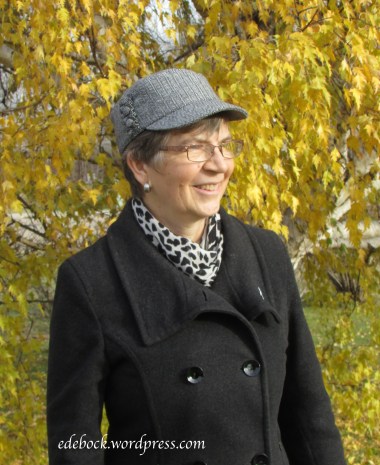
A hat is a great accessory that sets you apart, whether you’re at a formal event or just running errands. This jaunty tweed cap is casual, yet chic.

IMG_3219.jpg

When I lived in Japan in 2008 and 2009, most of the older women wore bucket hats that often reminded me of upside down flower pots on their heads! It was in Japan that I found this black felt cloche, however, and I immediately fell in love with it. I was delighted that it actually fit my larger than average head.

img_3226

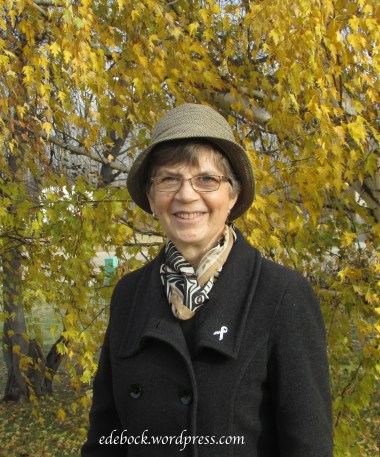
In addition to looking at the hats, take notice of the fact that scarves are a great way to add a bit of trendy animal print to your fall and winter wardrobe.

img_3227

Vintage hats can be a fun addition too. This “Saratoga Uncrushable” was made by Biltmore, a world-renowned hat maker, likely in the late 1960s or early 1970s. Though the hat was made in Canada, the tweed fabric, which is 55% wool and 45% cotton, was woven in Scotland. A little research online told me that this is actually a man’s hat and meant to be worn fedora style, but the soft, pliable material is easily reshaped as a cloche which is how I have always worn it.

img_3213

The “Saratoga Uncrushable” is actually on long term loan from the community theatre group that I belong to. It was part of one of my costumes several years ago, but when the production came to an end, I hated to part with it! It will go back to the group when it’s needed again, but in the meantime, I continue to enjoy wearing it.

img_3209

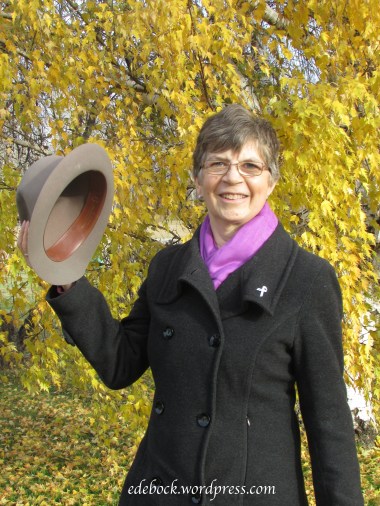
And finally, a real felt fedora! I’ve never actually worn this one except for for these photos. Made by the great British hat makers, Christys’, probably in the 1940s, it was my father’s. It even has his initials punched into the leather headband inside. When we were cleaning out his apartment and storage unit in preparation for his move to an assisted living facility a few years ago, I laid claim to the hat that he hadn’t worn for years. I knew that it, too, would make a great costume piece for our theatre group. It has been worn onstage several times by several different actors, but I’ve always been tempted to wear it myself.

img_3241

What do you think? Should I wear it or not?

img_3244

Packing light

logoLong before airlines started charging for checked baggage, Richard and I carried less luggage than most travellers. On our recent 17 day trip to Nova Scotia, we shared one large suitcase. Our carry-ons included a backpack which doubled as a day pack when we went hiking, my computer bag and my purse.

The first questions to ask yourself when packing for any trip include: Where am I going? What kind of weather will I likely encounter? and What is the purpose of my trip?

Average daytime temperatures in Nova Scotia in October tend to be mild, ranging between 12 and 15ºC (54 to 58ºF) while nights are cool, between 3 and 9ºC (38 to 48ºF). Though we celebrated our 40th wedding anniversary the first weekend we were there and planned to  dine at one of Halifax’s finest restaurants, most of our vacation would be spent visiting friends, sightseeing and hiking. We packed accordingly.

So, what was in my half of that one large suitcase?

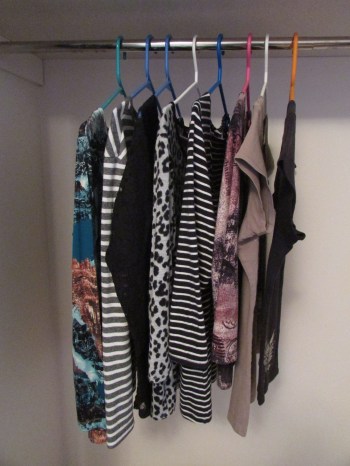
  • 8 tops – 2 long sleeved, 4 three quarter sleeved, 2 short sleeved – mostly neutral colours – most were casual, but if you look closely you’ll see my black lace and my animal print, both suitable for dressier occasions

img_3193

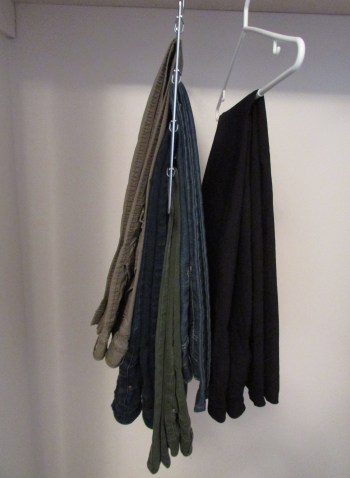
  • 5 pairs of pants – 2 blue jeans, 1 green jeans, 1 lightweight khaki pants and one black dress pants

img_3197

Just think of all the combinations that could be created with those 13 items! To these basics, I added

  • 1 cardigan that could coordinate with many of the items shown above
  • 3 camis for layering – 1 black, 1 white, 1 khaki
  • 1 dress for that special anniversary dinner
  • 12 panties and 12 pairs of socks – I didn’t actually need that many, but I wasn’t sure exactly when we’d have access to laundry facilities (we did laundry once on the trip)
  • 3 bras – those I wash by hand so 2 really would have been enough
  • 2 pantyhose and 2 knee high hose – again, more than I needed, but they don’t take up any space and I like to have extras in case I snag them
  • 4 pairs of pyjamas
  • 1 skimpy negligee – it was our anniversary, after all!
  • 1 short, very lightweight kimono
  • 1 pair of cozy slipper socks
  • 1 swimsuit which didn’t come out of the suitcase, but I rarely travel without one
  • 1 ball cap for hiking and walking in the sun

img_2903

  • 1 toque which I didn’t actually wear until we arrived back in snowy Alberta
  • 1 scarf
  • 1 hoodie and 1 lightweight jacket that could be worn individually or layered for extra warmth

img_3040-version-2

  • 3 pairs of shoes –  I wore my Merrell walking/hiking shoes on the plane and the other 2 pairs fit into the outside pocket of our suitcase along with Richard’s dress shoes – I always stuff socks or other small items inside shoes when I pack them to save space and to help them keep their shape.

img_3204

This list actually includes what I wore as well as the change of clothes that was in the backpack in case our suitcase didn’t make it to our destination at the same time as we did. In addition to clothing, my side of the suitcase also contained toiletries, makeup, medications, sunscreen, jewelry (packed in a hard shell eyeglass case), a travel size blow dryer, a straightening iron and a travel alarm clock.

What about you? Do you travel light? What can’t you leave home without?

Searching for colour and finding history

img_2873-version-2

We knew from our previous visit with Ronnie and Myrna, the dear pen pal that I inherited from my mother-in-law, that they enjoy sightseeing drives through the lovely countryside around Mahone Bay. Like my own father, however, Ronnie has macular degeneration and is legally blind. He still has some sight, but not enough to drive. When we suggested taking them for a drive to look at the fall colours that Nova Scotia is famous for at this time of year, they jumped at the opportunity and off we went!

img_2788

With Richard behind the wheel and Myrna navigating, we headed inland toward New Ross. Sure enough, though many of the trees were still green, others were aflame. For those of you who are accustomed to the wide range of reds, oranges and golds of autumn, our delight might seem odd, but where we live in Alberta, we don’t experience the same array of colours in the fall. Most of our trees just turn shades of yellow.

We saw much more than trees, however. Soon Myrna was pointing out the house where she grew up. It was here that she wrote the first letters to my mom-in-law over 75 years ago! Obviously well cared for, it has new shutters, windows and front door since the last time she saw it.

img_2791

Along the same road, we saw her uncle’s old horse barn

img_2802

and the one room schoolhouse that she attended.

img_2805

At 16 years of age, with a grade 11 education, Myrna became a teacher in a similar school! She taught for five years before she and Ronnie married.

Nova Scotia has been changing before our very eyes with more colour every day. Here are just a few more sights from that day’s drive.

img_2792

Hello Nova Scotia!

As I write this post, I’m sitting in the sunshine on the beautiful south shore of Nova Scotia! These are the views out the window beside me.

With this trip, we’re killing four birds with one stone. First of all, we celebrated our 40th wedding anniversary on Sunday and we wanted to do that somewhere other than home. We spent the weekend in Halifax where we stayed in a lovely Victorian bed and breakfast that is older than the town we live in! Ascendence Harbourside Mansion was built in 1891 for the Auditor General of Nova Scotia. We stayed in the luxurious Auditor’s Suite. Our hosts went above and beyond, placing chocolates and fresh flowers in our room when they learned that it was our anniversary. The breakfasts were wonderful and we had a great time visiting with the other guests around the table each morning.

Our main reason for choosing Nova Scotia as the destination for our anniversary trip was the fact that we’ve been wanting to return to Mahone Bay for another visit with the pen pal that I inherited when Richard’s mother passed away. The two little girls began writing to one another when they were 11 years old. When Mother passed away in 1993, the family asked me to write her pen pal to let her know. In return, I received a beautiful letter from Myrna telling me that she didn’t want to lose touch with the family that she’d known only through letters for so many years. I began writing to her and the relationship between our two families has now been going on for 77 years! As I write this, I’m sitting in her son’s living room three doors down the road from her house at Indian Point, just outside the beautiful little town of Mahone Bay. You can read about our first visit in 2009 here.

The third reason for this trip was our longtime desire to see the spectacular colours of eastern Canada in the fall. So far, everyone here has been apologizing for the fact that the trees aren’t in full autumn colour yet due to the extreme lack of rain in this area this year, but we are still seeing colour we would never see at home! Hopefully we’ll see more before we return to Alberta over a week from now.

Lastly, we had lots of Air Miles to use up before they begin expiring on Dec. 31. We’ve been collecting them for years and had enough saved to pay for our flights and our little rental car and still have enough left over for a mid winter vacation!

Stay tuned for future posts and pictures as we continue our travels. Right now, the sun is shining and the locale is too beautiful to spend any more time sitting at my keyboard!

Bringing the Beatrice home

In 1984, shortly after my father retired, my parents ordered a Volkswagen Westfalia camper van from the factory in Germany. They traveled from their home in Vancouver, BC to Germany via Japan, South Korea, Hong Kong, through China, across the USSR on the Trans Siberian railway, and into Europe! After picking up their brand new van in Germany and outfitting it with dishes, bedding and other basic necessities, they lived in it for a year and a half as they traveled around Europe and the Middle East.

Clearly, I came by my wanderlust honestly!

When Mom and Dad finally decided that it was time to return to Canada, they had the van shipped home to Vancouver. Because they’d owned it for over a year, they were able to bring it into the country duty free.

For almost two decades, the blue camper van traveled through the mountains almost every year bringing Grandma and Grandpa to Alberta to visit their grandchildren. It continued to be their only vehicle until Dad, now 93, finally gave up driving a few years ago. At that point, he passed it on to our niece who was a college student at the time. She drove it until she graduated from college, but once she got a job she bought a little car and the van sat under a tarp in my sister’s backyard in Vegreville for the past two years.

img_2124

This summer, our son, who also lives in Vancouver, acquired the van from his cousin. Matt plans to use it as a camping vehicle for his young family. Prior to their visit to Alberta last month, we rented a U-Haul auto hauler and moved it to Sedgewick.

img_20160812_170528680

Matt knew that after sitting unused for so long, the vehicle would need some work to make it roadworthy and he came prepared.

img_2176

When he knew that the van was going to be his, he joined TheSamba.com, an online site for Volkswagen owners and checked out other informational sites. In addition to learning important information including the common quirks of the vehicle and where to access parts, he discovered that owners of these vintage vans often give them names in the same manner that boat owners name their crafts. I was touched when he chose to name his Beatrice after my late mother!

Sadly, though he had hoped to drive her home to Vancouver, the Beatrice needed more work than Matt was able to accomplish in the few short days that he was at our place. That’s when Plan B came into being and here we are in Vancouver! We loaded the van onto another auto hauler and pulled her through the mountains. Now she’s tucked into a corner of Matt’s backyard where he can work on her as he has time. This has also afforded us another opportunity to visit Dad before winter sets in as well as a few unexpected days with our grandsons!

img_2487

In addition to bringing the Beatrice home to the coast, we brought our 17 foot Coleman canoe for Matt, Robin and the boys to enjoy. It’s an extremely durable, very stable family canoe, but bigger and heavier than Richard and I want to haul around anymore. As I paddled it through some fairly rough ocean waves at Porteau Cove on the Sea to Sky highway yesterday afternoon, I knew my paddling days weren’t over though. A couple of waves crashed over the bow and left me soaking wet, but it was a blast and a lightweight kayak is definitely on my wish list!

Hiking Johnson Canyon

I first hiked Johnson Canyon, one of the most popular day hikes in Banff National Park, as a university student in 1974 and I’ve been wanting to do it again ever since. On Sunday, I finally did!

The parking lot was already full by mid morning when we arrived and the trail was packed with tourists. Catwalks affixed to the limestone cliffs make the canyon easily accessible to everyone and the 1.1 km trail to the lower falls involves very little change in elevation.

IMG_2392

At the lower falls, a bridge crosses the creek allowing both an excellent spot from which to view the falls and access to a water-formed tunnel through the rock to a closer viewing platform.

IMG_2394

IMG_2397

IMG_2399

IMG_2402 - Version 2

The crowd thinned out a little as we moved on toward the upper falls, another 1.5 km up the trail. Spectacular views continued to surround us as we followed the crystal clear creek.

IMG_2406

IMG_2414

There is significantly more change in elevation on the way to the upper falls and by the time we arrived at the bottom our two little grandsons decided that their legs had hiked far enough. Our son and daughter-in-law took them back to camp while Richard and I pushed on. It was a short climb to the top of the falls where we enjoyed great views of the falls themselves and the deep pool at the bottom.

IMG_2424

Beyond the upper falls, the trail leaves Johnson Canyon behind and climbs another 3.1 km to the Ink Pots, seven cold mineral springs that bubble to the surface forming small pools in an open meadow. These springs are unique in that they have a constant year round temperature of 4ºC and their basins are composed of quicksand.

I had not hiked beyond the upper falls in the past and wasn’t expecting the steep climb that was involved. Once we’d set out, however, I was determined to finish! The trail seemed to go on forever, climbing higher and higher. Younger legs passed us by, but we pushed onward and eventually reached our goal!

IMG_2436

IMG_2441

IMG_2443

IMG_2449

IMG_2450

My old knees were a bit achy the next morning, but a soak in Banff’s Upper Hot Springs was all they needed to recuperate!

Chokers are back!

Screen Shot 2016-03-18 at 11.07.24 PM 3

Last week’s 70s girl post got me thinking about another favourite style from that era that has returned in recent months. Chokers are back! Or did they ever really go away? They were popular in the 70s, again in the 90s, and now they’re being seen yet again.

One of my favourite chokers of the 70s was a cameo on a wide velvet ribbon. Another was a leather cord with wooden beads. Those were pretty typical of the era and looked good with the flowing tops and dresses of the day.

The choker of the 90s often had an edgier, gothic look. I think my daughter was in junior high when she wore one that looked exactly like a shiny black dog collar. I’d post a picture, but I suspect she’d hate me for it!

Today’s chokers are more reminiscent of the 70s. Here are a few examples:

While I’m definitely not a proponent of age related fashion rules, it’s my personal opinion that chokers usually look best on the young. Because the skin on our necks is thinner than elsewhere, it tends to loosen and wrinkle earlier. As a result, our necks may look older than the rest of our bodies. Why draw attention to that?

On the other hand, I recently found this one in my jewelry box and I’ve decided to wear it again. Made of pewter and gold plate, it was a gift from a good friend back in the late 70s. It’s a bit longer than most chokers and it’s shape tends to draw the eye down, away from my 63 year old neck. IMG_20160825_171601778

Do you have any favourite fashions from days gone by? Would you wear them today?