Lone kayaker

IMG_9883

Richard has had a back problem for most of his adult life. Usually when it flares up, it settles down again within a few days, but whatever he did in early July appears to be something different. After weeks of rest, he’s still in pain. When the doctor recently told him no more golf and no kayaking for the rest of the season (we hadn’t even been out in the kayak yet), I was very unhappy! I felt sorry for him, of course. Being inactive is very difficult for him, but I was also sorry for myself! Perhaps that sounds selfish. Maybe it was. After all, I could have shrugged and said, “There’ll always be other summers”, couldn’t I? Not really. I don’t have that luxury. I’m hoping that there will be many more summers, but when you’re walking around with two cancers that aren’t being treated, you really can’t count on next year. You have to live for the moment.

I could golf on my own, but our kayak is a tandem and there it hung in the garage gathering dust. Then I remembered the other kayak; the one we’ve been storing in the back corner of the garage for our son for the past couple of years! It’s so lightweight that I can carry it myself. I could go kayaking after all!

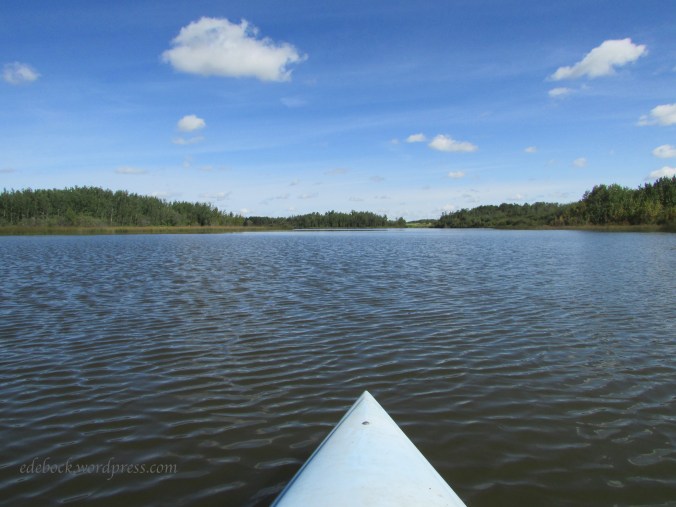
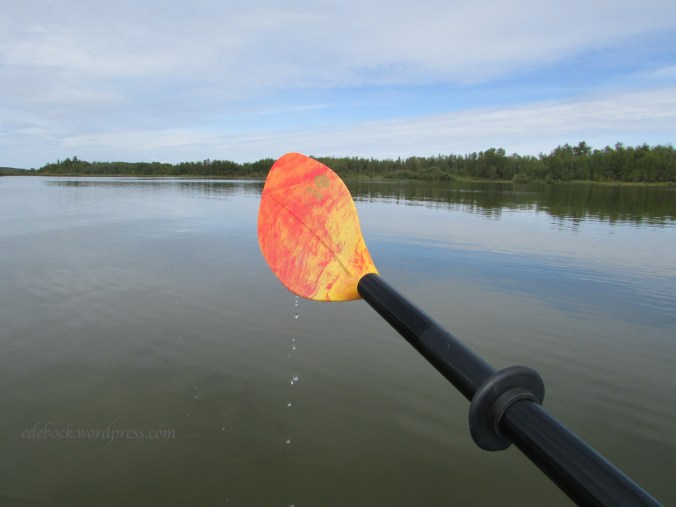
We spent the past four days camping at Camp Lake, less than an hour from home, and I spent many hours out on the water. Sometimes I paddled vigorously, sometimes slowly, and sometimes I simply lifted the paddles out of the water and listened to the silence of solitude.

IMG_9903

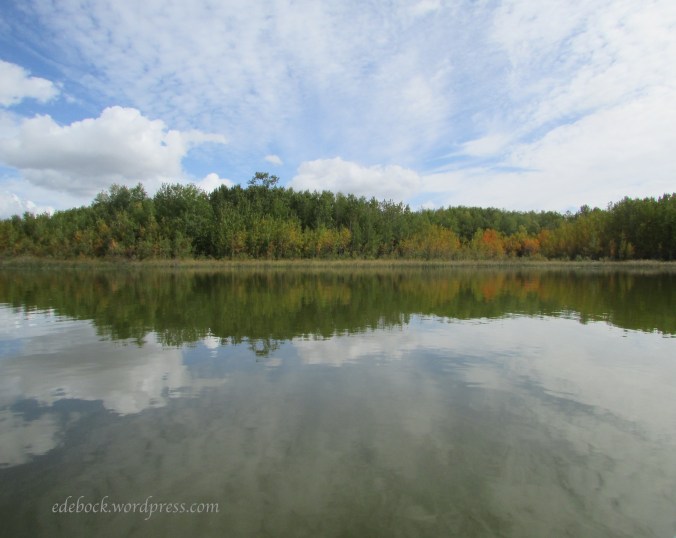
I spent lots of time playing with my camera too. I especially love to capture reflections on water.

IMG_9884

In some places the fall colours were beginning to show.

IMG_9909

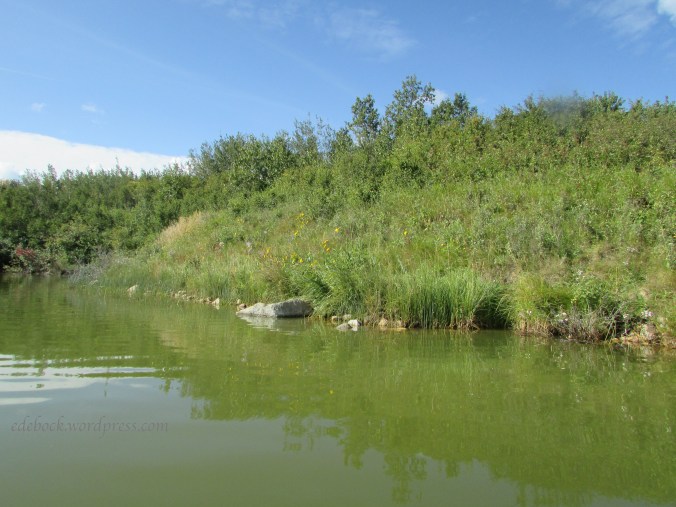
One of the things that I love about kayaking is the chance to see wildlife in their natural habitat. I didn’t see any larger animals this time, but there were many places like this one along the water’s edge where they obviously come down to drink.

IMG_9888

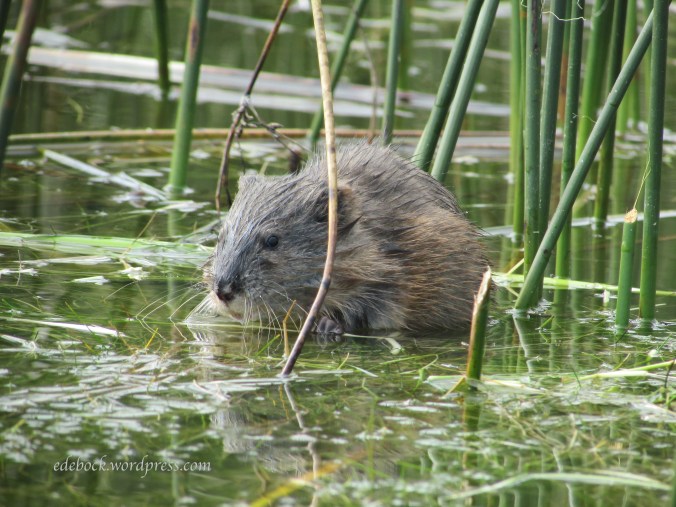
One end of the lake in particular is shallow and edged with reeds and that’s where the action was.

IMG_9880

I have no idea how many muskrats make Camp Lake their home, but clearly there are a lot of them! For every photo that I captured, many were missed. Even the ping of my camera turning on was enough to startle them. I learned to cover the speaker with my thumb to muffle the sound as I drifted close to them. I’m not sure who was the most surprised when one furry fellow popped up and swam beside the kayak for a couple of metres! Before I could grab the camera, he noticed me and dove beneath the surface immediately disappearing from sight. It was easier to capture the ones that were out of the water.

IMG_9902

I’m hoping for at least one more lone kayaker outing this year, and I really hope that we’re both well enough to paddle together again next year, but at least this summer didn’t go by without some time on the water.

IMG_9877

IMG_9907

IMG_9913

Jami’s special day

If you read my last post, you already know that we gave each of our two grandchildren who had birthdays in the spring a special day on their own with Gram and Grandpa instead of adding to the abundance of toys, games, and books that fill their home. Today was 9-year-old Jami-Lee’s day.

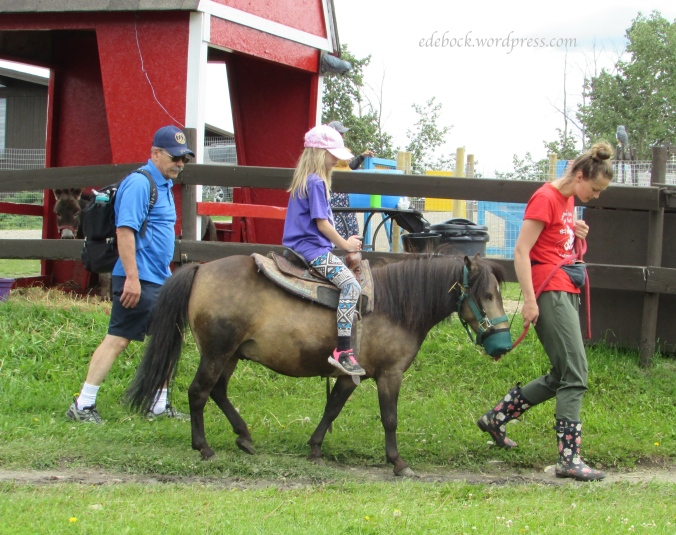
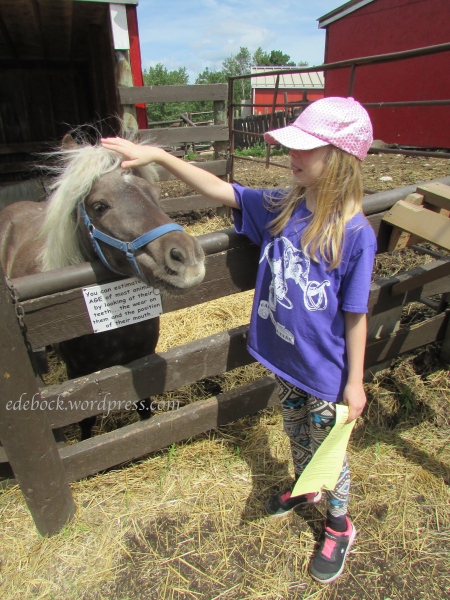
Jami is an animal lover, so our day started at Butterfield Acres petting farm on the outskirts of northwest Calgary. She was most excited about going for a pony ride and even though we thought that the single lap around a small track was a bit lame, she was delighted. So much so that Grandpa surprised her with a second ride before we left the farm!

IMG_9681

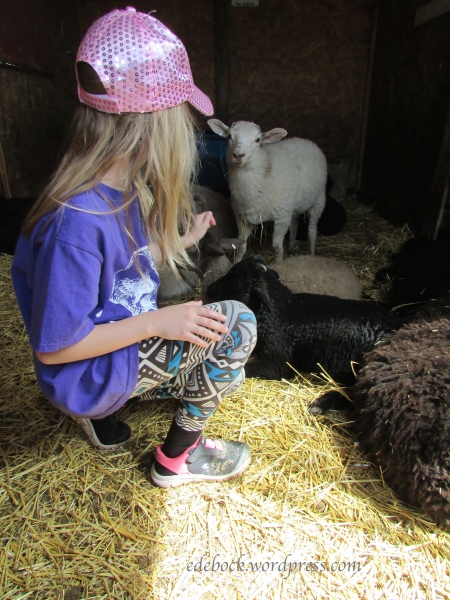
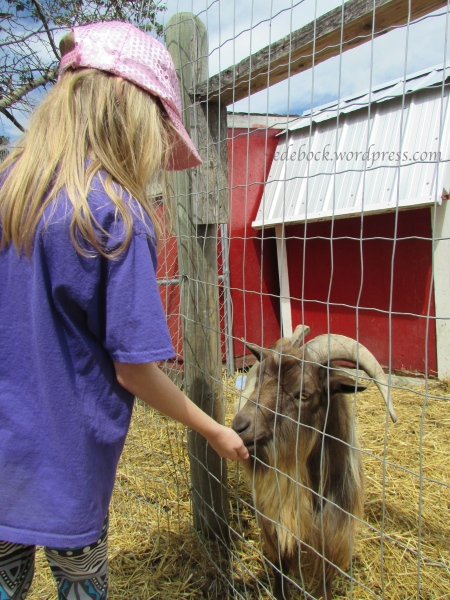
There were a wide variety of typical farm animals, but also a few more exotic ones like emus, llamas, peacocks, and even a yak.

IMG_9644

IMG_9673

IMG_9674

IMG_9679

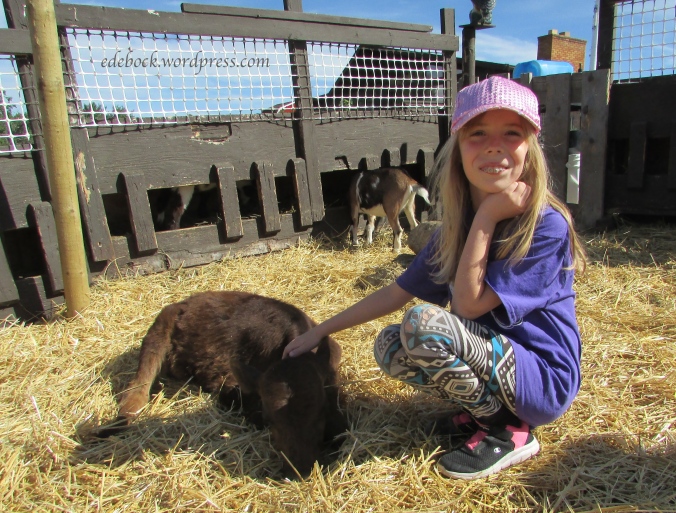
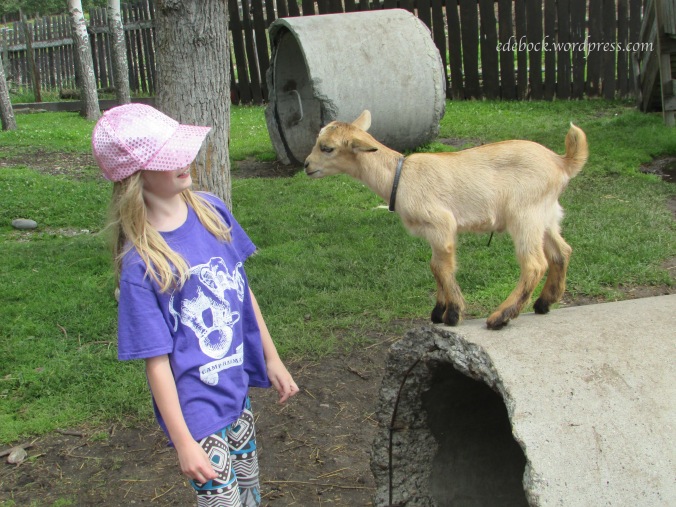
The baby goats were adorable and I think this is my favourite photo of the day.

IMG_9672

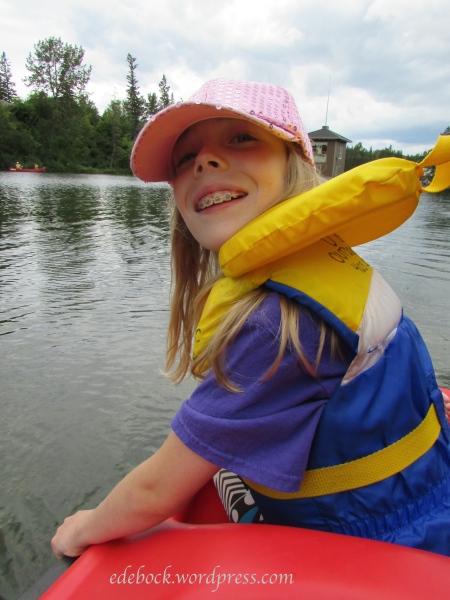
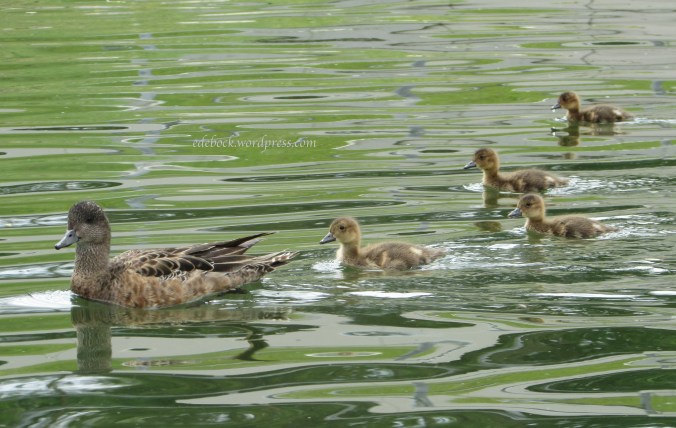
We also went for a tractor-pulled wagon ride and ate our picnic lunch in a tipi on the grounds. After finishing at Butterfield Acres early in the afternoon we drove about 15 minutes to Bowness Park, a beautiful 30-hectare urban park on the Bow River. There we rented a pedal boat and explored the lagoon where we’ve skated in the winter. Jami loved the duck families that shared the water with us.

IMG_9685

IMG_9690

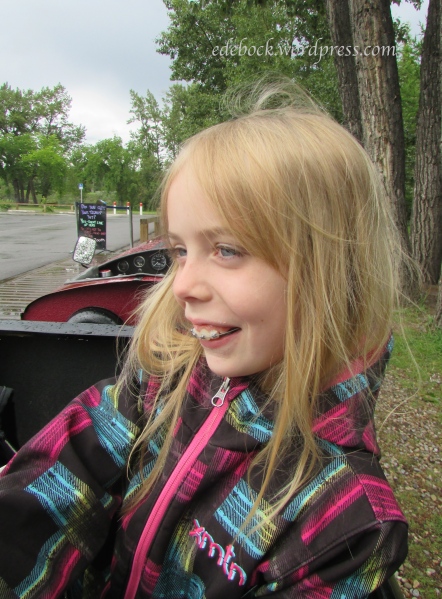
After treating her to a giant ice cream cone, we found cover and waited out a sudden rain shower before taking a ride on the miniature train.

IMG_9692

IMG_9697

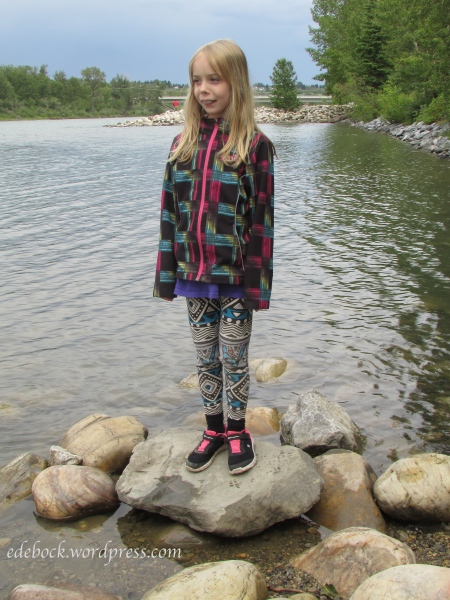
As the afternoon wound down, we went for a walk along the river. Rocky breakwaters at regular intervals slow the river’s flow and keep its banks from eroding. Jami decided that climbing the rocks would be fun, so we spent some time doing that and then found a playground.

IMG_9705

IMG_9703

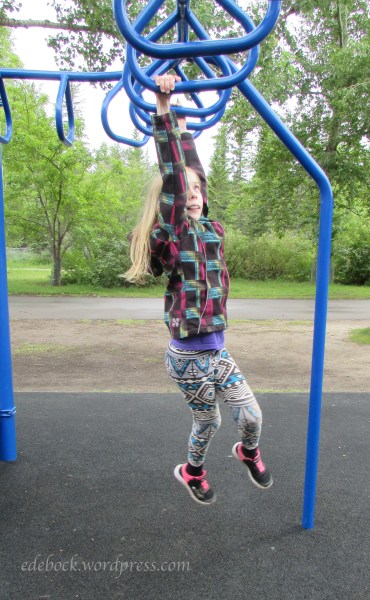
She still had enough energy left to swing like a monkey!

IMG_9722 2

Our day ended with a delicious dinner at The Old Spaghetti Factory. I think both Jami-Lee and her brother would agree that spending time together and making memories were great birthday gifts! I hope we can do as well next year!

Drew’s special day

Our grandchildren have been blessed with an abundance of toys, games, and books so when two of them had birthdays this spring, we decided to be creative. Our gift to each of them was a special day on their own with Gram and Grandpa once school was out for the summer. Yesterday was 11-year-old Drew’s day.

IMG_9552

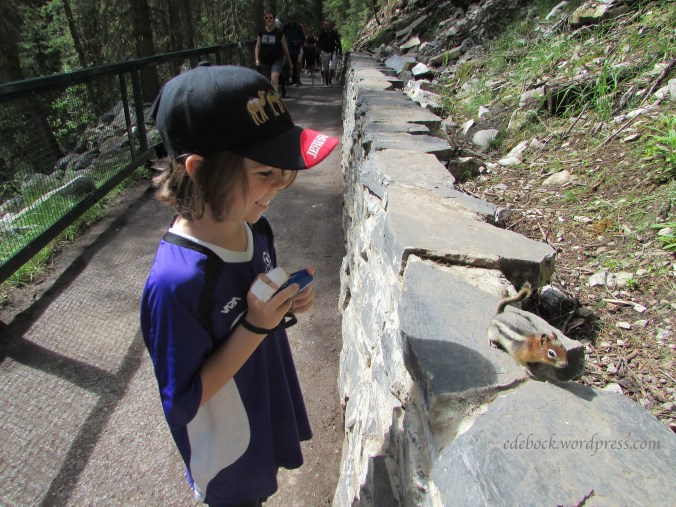
We left his Calgary home early in the morning and headed for Banff National Park where our day started with a hike in beautiful Johnson Canyon. Drew was beyond excited when we spotted a black bear crossing a hillside shortly before we arrived at the trailhead. The bear was too far away to get a good photo, but the entertaining little ground squirrels (like the one shown above) and red squirrels along the trail certainly weren’t!

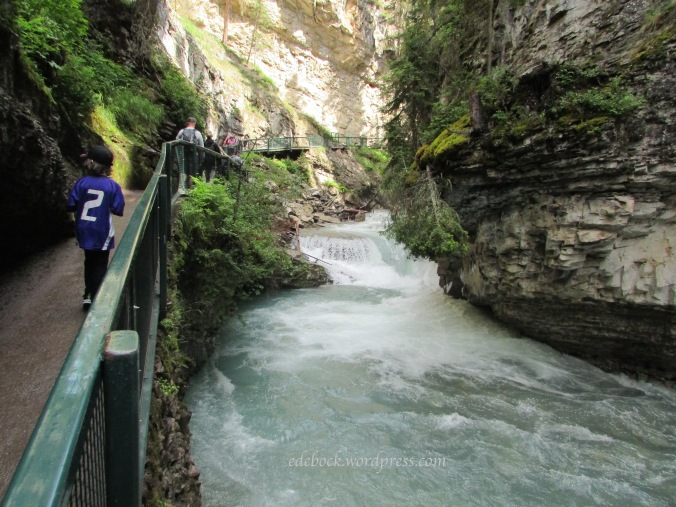
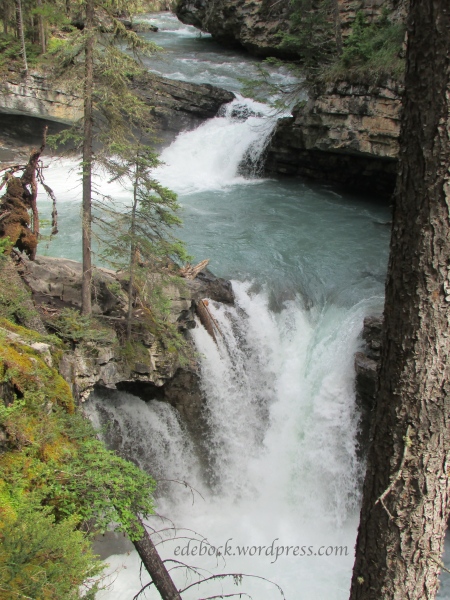
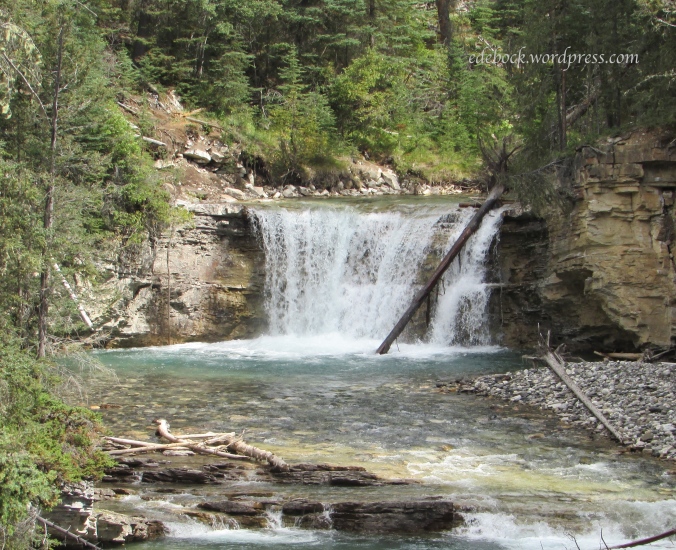
Catwalks affixed to the limestone cliffs make the canyon easily accessible to everyone and the 1.1 km trail to the lower falls involves very little change in elevation.

IMG_9564

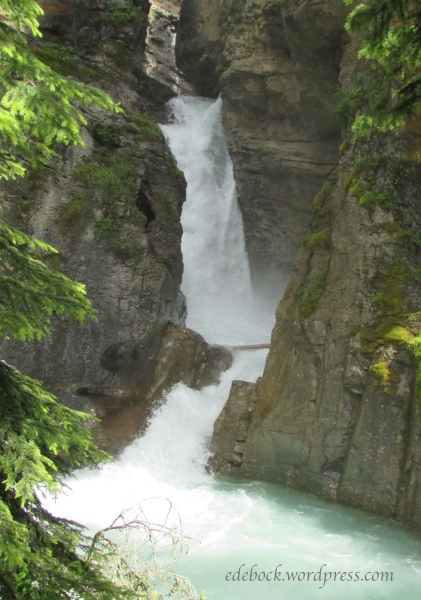
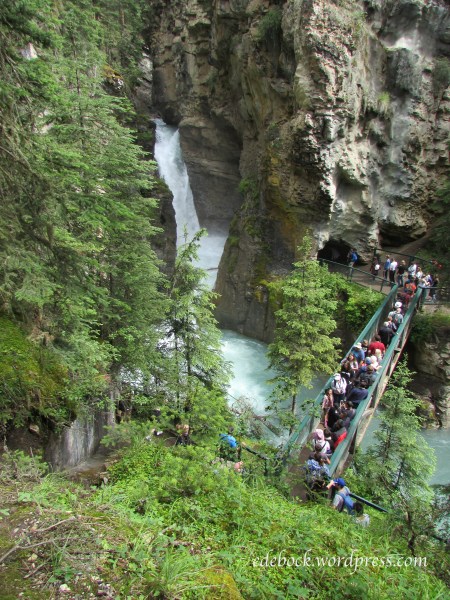
At the lower falls, a bridge crosses the creek allowing both an excellent spot from which to view the falls and access to a water-formed tunnel through the rock to a closer viewing platform.

IMG_9567

IMG_9572

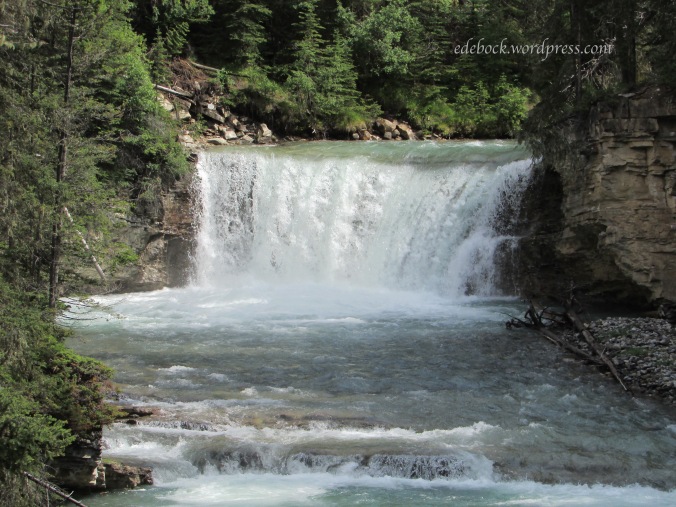
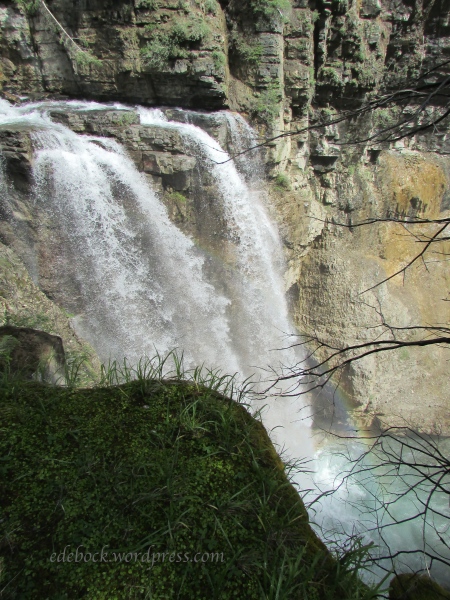
The crowd thinned out a little as we moved on toward the upper falls, another 1.5 km up the trail. Spectacular views continued to surround us as we climbed.
IMG_9575

We knew that the water level was much higher than when Richard and I did the same hike almost three years ago, but I didn’t realize how much until I compared photographs. Considering how much rain Alberta has been getting this season, I guess it shouldn’t be surprising.

IMG_2406 - Version 2

August 2016

IMG_9577

July 2019

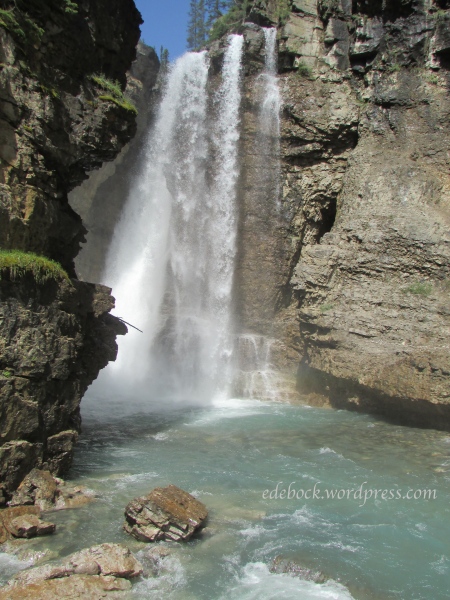
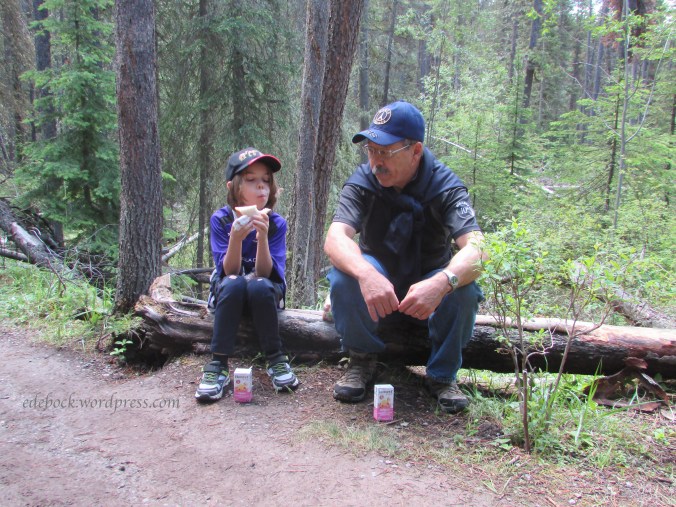
After reaching the spectacular upper falls, we stopped to enjoy our picnic lunch before continuing our adventure.

IMG_9589

IMG_9597

IMG_9599

As we started back down the trail Drew announced, “This is the best birthday present ever!” It was then that I realized that the day was as much a gift to ourselves as it was to him! It definitely filled my heart to overflowing.

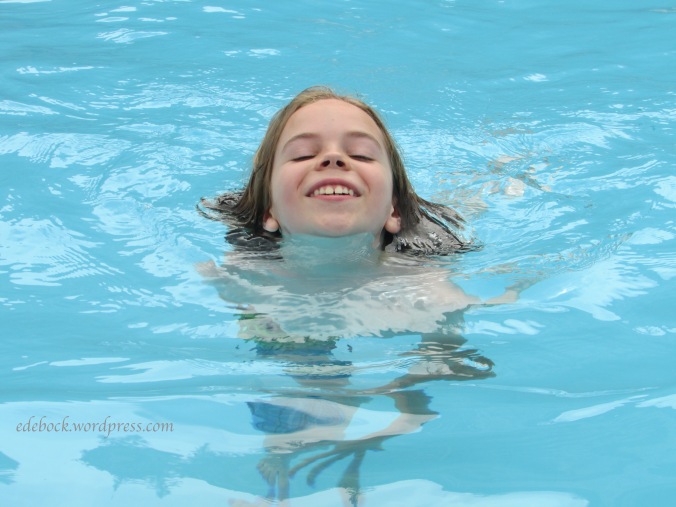
In addition to the hike, Drew had been eagerly looking forward to relaxing in the Banff Upper Hot Springs. I love this photo of his “floating head”!

IMG_9615

IMG_9618

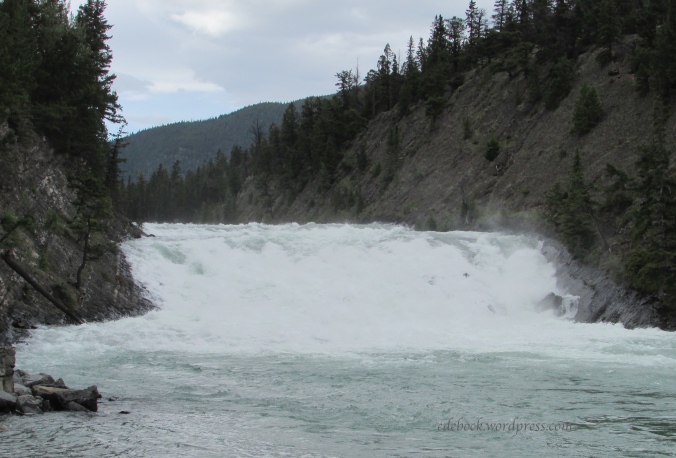
After soaking our tired feet and muscles in the hot pool, we made a quick stop at the Bow Falls Viewpoint then ended our day with a delicious restaurant dinner and a browse through a few gift shops before bringing a very tired boy home!

IMG_9635

Tomorrow we have a completely different agenda planned for his 9-year-old sister’s special day.

Eulogy virtues

Don’t worry, I’m not planning my funeral just yet!

Earlier this week I read a short devotional that really resonated with me. It quoted New York Times columnist, David Brooks, who said that there are two kinds of virtues: those that look good on a résumé and those you want mentioned at your funeral.

A résumé outlines educational qualifications, work experience, and pertinent skills. It points out a person’s strengths and outlines what they can do, but a eulogy describes what kind of person they were.

So what are those eulogy virtues? What do I want to be remembered for? More importantly, what character traits do I want to exhibit now in in my responses to what life throws my way and in my day to day interactions with people?

Colossians 3:12-14 immediately comes to mind. Therefore, as God’s chosen people, holy and dearly loved, clothe yourselves with compassion, kindness, humility, gentleness and patience. Bear with each other and forgive one another if any of you has a grievance against someone. Forgive as the Lord forgave you. And over all these virtues put on love, which binds them all together in perfect unity.”

Compassion, kindness, humility, gentleness, patience, forgiveness, love. I would add wisdom to that list. None of these would likely appear on my résumé, but if I’m successful at being the person I strive to be, perhaps they’ll be mentioned in my eulogy.

What virtues would you want to be remembered for?

honor-1389241_1920

1000 posts!

When I launched Following Augustine in early December 2007, I didn’t expect the blog to still be going more than 11 years later and I certainly didn’t expect that I would ever write 1000 posts! According to WordPress, however, which keeps track of all sorts of interesting stats for me, this is it; my 1000th post!

download

As many of you are aware, I started the blog to share the year that we spent teaching English in Japan with friends and family back home. Writing has always been a passion of mine and when that year was over I couldn’t simply let the blog die. In the ensuing years, Following Augustine has chronicled our travels to other parts of Asia including a full semester in China,  as well as trips across  Canada, to the USA, Israel, Mexico, Costa Rica, and Saipan. Soon it will be off to Europe!

When I started Following Augustine, I never dreamt that it would someday include a weekly fashion feature. In fact, I probably would have laughed out loud if someone had predicted that. I certainly didn’t visualize it recording a cancer journey either, but life takes unexpected twists and turns and the blog has faithfully followed mine through many ups and downs.

The blog is older than all five of my grandchildren. It has become so much a part of me that I can’t imagine life without it, but a blog is nothing without its readers and so today, hats off to those of you who have been with me since the beginning and also to those who have joined me along the way! I couldn’t have done it without you.

Photo of a woman silhouette taking off a hat. Taken in Riga, Latvia.

Onstage again!

Over my many years of involvement in community theatre one of the greatest joys for me has been sharing the stage with former students. Some of them even got their first taste of acting in my junior high drama classes. Never did I imagine, however, that I would someday act in a play written by one of them!

IMG_7316 - Version 3

❤  This photo absolutely warms my heart. On my right, is my former student Kelly Berg, author of Silent Jim, in his lead role of Marshall Henry Jackson. Standing on my left, in the role of Jesse Longstrand, the blacksmith, is a young man I’ve known since he was a preschooler. I taught him Sunday School back in those days!

Silent Jim is a western murder mystery with a mix of intensely serious moments and hilariously funny ones. Thursday evening was opening night. We performed again on Friday and have two more shows next weekend. Our cast of 23 ranges from preteen actors trying out the stage for the very first time to seasoned veterans like myself.

Cast photo

Cast photo: Brenda Grove

I have a very small onstage role this year. In fact, I only have nine lines to deliver! Silent Jim is set in the small fictional town of Buffalo Skull in the American west in the late 1870s. In the original version, my character was a judge but, like any western, the play has a lot of roles for male actors and far fewer for females. We had to do a bit of adjusting. There were no female judges in the US in the 1870s, but the first female lawyer, Arabella Mansfield, was called to the Iowa bar in 1869. We could change our judge’s role to that of a lawyer and remain authentic to the time we were portraying. Our lady lawyer needed a name, however, and that’s an interesting side story.

One of the aspects of theatre that I absolutely love is the costuming, especially when we’re doing a period play. What would a lady lawyer have worn in the 1870s, I wondered. I turned to the internet in search of photos and as so often happens when I’m online, I ended up going down a variety of interesting and unrelated rabbit trails. One of them led me to an amazing find; my grandmother’s 1909 graduation photo from Dalhousie University in Halifax, Nova Scotia! 

Gran - Eliza Clara Walker - BA Dalhousie University 1909

Though the photo is apparently signed “Lizzie Walker. Dal. 09.” I know that Gran’s full maiden name was Eliza Clara Walker and that later in life she chose to use her middle name. Though hers wasn’t a law degree, there weren’t a lot of university educated women in her day and I thought it would be a wonderful idea to honour her memory by naming my character after her. My fellow thespians agreed and so I became Clara Walker, Esquire!

IMG_7310 - Version 2

In addition to my small onstage role, I also act as prompter for the first three quarters of the play. I was surprised to discover that I really enjoy that position as I’m fully involved in every moment of the show.

curtain call.jpg clouded creations

Curtain call photo: Caity Moore, Clouded Creations


Spring jacket

LogoOne spring, many years ago, while shopping for something completely unrelated, I fell in love with a classic anorak in a light beige colour. At the time, I didn’t really need a new spring coat and I did my best to talk myself out of buying it. “I don’t need it,” I told myself. “It will show every speck of dirt,” I continued. My arguments were futile. The jacket insisted on coming home with me and I’m ever so glad it did. I’ve literally worn it until the collar and the cuffs are threadbare. It’s been through the washer innumerable times and always came out looking good.
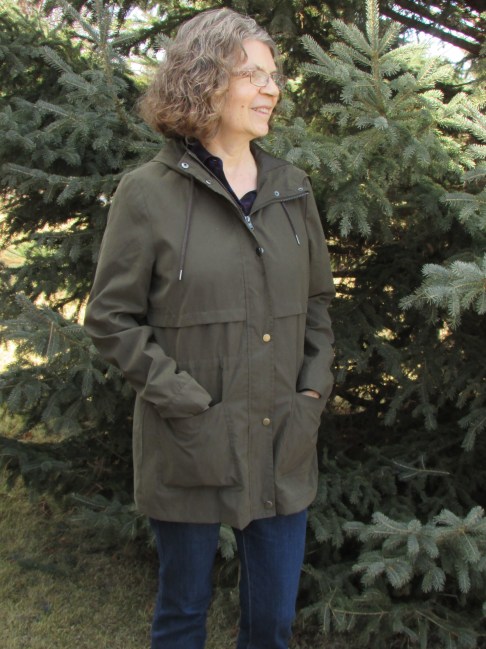
As much as I still love that old jacket, by the end of last season I had to admit that it was time to begin thinking about a replacement. Then, about a month ago, I was sitting on a bench at the entrance to the fitting rooms in a Reitmans store in Red Deer waiting for my sister-in-law to try on a blouse when I glanced across the store and there it was!

IMG_7289

A classic anorak is a lightweight jacket, long enough to cover the hips and typically with a hood, that protects the wearer against wind and rain; perfect for spring and fall in our part of the world. With a drawstring at the waist, it’s roomy enough to wear over a sweater on chillier days, but can be snugged in for a more fitted look if desired.

IMG_7291

My jacket came in navy and this lovely olive green, both colours that are very much on trend this spring. I don’t know if it will last as long as its predecessor did, but I’m certainly enjoying wearing it now that our weather is finally warming up and the last bits of snow are quickly disappearing!

IMG_7280


Tea, the universal drink

After water, do you know what the world’s most widely consumed beverage is? Would you say coffee? Beer? Wine? Coke? Wrong every time! It’s actually tea!

There was always tea available in our house when I was growing up in the 1950s and 1960s, but only plain black tea. We drank green tea on the rare occasions when we went to a Chinese restaurant. Now I drink two mugs of green tea every morning and the basket of other teas in my kitchen cabinet is overflowing.

In Canada, our increasingly multicultural society plays a large part in the growing popularity and availability of so many different teas. Over the years, the world has come to us and it has brought its teas with it.

Screen Shot 2019-02-25 at 9.03.21 PMDrinking tea is a tradition that is said to date back to 2737 BCE. According to legend, Chinese emperor Shen Nung was sitting under a tree while his servant boiled drinking water. When some dried leaves from the tree blew into the water, Shen Nung decided to try the infusion that was created and found it to his liking. Since then, tea drinking has spread around the world.

While black tea is more popular in Western countries, green tea is preferred in China and Japan where it is a common part of daily life. Green tea is unoxidized, giving it a lighter taste and aroma than black tea. The tea that is used in the traditional Japanese tea ceremony is matcha which is powdered and not infused. This means that the leaves themselves are consumed resulting in a much higher concentration of the antioxidants, minerals, and vitamins that make green tea healthy. For this reason, matcha has become quite trendy.

Taiwanese bubble tea is a modern innovation. This high calorie tea has as its base an iced tea (typically black, green, jasmine or oolong) with milk and a sugary syrup. The “bubbles” are actually tapioca pearls. As much as I like tea, this one has never appealed to me!

From Thailand comes the very popular Thai tea. Made from strong black tea, often spiced with ingredients such as star anise, crushed tamarind, and cardamom, it’s usually sweetened with sugar and condensed milk and served over ice.

India produces and consumes more tea that any other country in the world. It is best known for it’s chai blends that mix black tea leaves with spices like cinnamon, ginger, nutmeg, cloves, cardamom, and black pepper. Assam is another popular variety of black tea which is grown in the Assam region of India. It is used in many breakfast blends including English Breakfast and Irish Breakfast, but is also consumed on its own. It has a strong, malty flavour, a reddish colour, and is high in caffeine. Darjeeling is yet another tea that is grown in India, specifically the mountainous Darjeeling region in the northern part of the country.

In Morocco, drinking tea is more than simply a social custom, it’s also part of doing business. If you find yourself in a Moroccan market, you’ll likely be sat down and offered a glass of mint tea by a vendor wanting to sell you a beautiful carpet. This is touareg tea, a green tea prepared with spearmint leaves and sugar.

It was Portuguese and Dutch traders who first brought tea to Europe in the early 1600s. By the mid 18th century it had become Britain’s most popular beverage with the East India Company using fast ships called tea clippers to bring the leaves from India and China.

Then there are the herbal teas which aren’t considered “real” tea at all because, unlike black, white, and green teas, they aren’t made from the leaves of the tea bush (Camellia sinensis). Popular among the herbal teas is rooibos or bush tea from South Africa which is made from the leaves of the red bush, a broom-like member of the Fabaceae family.

One of my favourite teas is Earl Grey, a black tea flavoured with oil from the rind of the bergamot orange, a fruit grown mostly in Italy. It is thought to have been named for Charles Grey, 2nd Earl Grey, who was British Prime Minister from November 1830 to July 1834. In addition to regular Earl Grey, I have Vanilla Earl Grey, Lavender Earl Grey, and even Double Bergamot Earl Grey in my collection!

There are apparently all kinds of health benefits to drinking tea, especially green tea. The comparative lack of processing means that it has a higher level of antioxidants and polyphenols. Studies have shown that it may:

  1. lower cholesterol
  2. lower blood pressure
  3. reduce the risk of heart attack and stroke
  4. reduce the risk of neurological disorders like Alzheimer’s and Parkinson’s diseases
  5. lower blood sugar
  6. encourage weight loss
  7. aid digestion
  8. inhibit intestinal inflammation
  9. strengthen the immune system
  10. help fight infection
  11. help fight various cancers
  12. prevent bone loss
  13. reduce plaque buildup and tooth decay
  14. help cells regenerate and repair
  15. help slow down aging
  16. increase mental alertness
  17. lower stress hormone levels
  18. prevent arthritis

If nothing else, it’s a flavourful way to stay hydrated, it contains no calories, and it has less caffeine than coffee.

Tea, the healing beverage that knows no borders! 

IMG_7153

That’s 3 of my grandchildren on the cup!

Parents, please vaccinate your children!

When I learned that only slightly more than 80% of the children who attend the same school as two of my grandsons have been vaccinated, I was more than a little concerned! They live in Vancouver where there has been an outbreak of measles this month. Nine cases have been confirmed. The number grew from four to nine in less than 24 hours! At the centre of the outbreak is a family whose three children were not vaccinated due to concerns that the MMR (measles, mumps, rubella) vaccine might cause autism, a belief that has been scientifically debunked.

It may not be a popular opinion, but I don’t think that children should be allowed to attend public schools or any other kids’ programming if they haven’t been vaccinated (unless there’s a valid documented health reason why they shouldn’t be). Vaccines don’t just protect the people getting vaccinated; they protect everyone around them. The more people in a community who are vaccinated, the harder it is for a disease to spread. Having grown up with a dearly loved brother who was severely brain damaged by measles related encephalitis as an infant, I feel very strongly about this!

Some years ago, popular children’s author, Roald Dahl, who lost a daughter to measles encephalitis at the age of seven, had this to say:

Olivia, my eldest daughter, caught measles when she was seven years old. As the illness took its usual course I can remember reading to her often in bed and not feeling particularly alarmed about it. Then one morning, when she was well on the road to recovery, I was sitting on her bed showing her how to fashion little animals out of coloured pipe cleaners, and when it came to her turn to make one herself, I noticed that her fingers and her mind were not working together and she couldn’t do anything. 

“Are you feeling all right?” I asked her.

I feel all sleepy,” she said. 

In an hour, she was unconscious. In twelve hours she was dead.

The measles had turned into a terrible thing called measles encephalitis and there was nothing the doctors could do to save her. That was in 1962, but even now, if a child with measles happens to develop the same deadly reaction from measles as Olivia did, there would still be nothing the doctors could do to help her. 

On the other hand, there is today something that parents can do to make sure that this sort of tragedy does not happen to a child of theirs. They can insist that their child is immunized against measles. I was unable to do that for Olivia in 1962 because in those days a reliable measles vaccine had not been discovered. Today a good and safe vaccine is available to every family and all you have to do is ask your doctor to administer it. 

I couldn’t agree more! In my opinion, people who refuse to have their children vaccinated are putting their lives at risk. Roald Dahl went on to say:

So what about the risks that your children will run from being immunized? They are almost non-existent. In a district of around 300 000 people, there will be only one child every 250 years who will develop serious side effects from measles immunization! That is about a million to one chance. I would think there would be more chance of your child choking to death on a chocolate bar than of becoming seriously ill from a measles immunization. 

I can only assume that parents who have been blessed with perfectly healthy children and refuse to safeguard their health by immunizing them are completely oblivious to the risk they are running. As a parent who has lost a child and a grandparent who has watched a beloved grandchild fight for life; as a sister whose brother never had the opportunity to realize his potential and a daughter who saw her parents’ grief over that, that makes me livid!

Vaccines save lives! It’s as simple as that. There are no treatments or cures for diseases like measles, mumps and polio. The only proven way to protect your child is with vaccines. Parents, please just vaccinate your children!

36f282e21c56f3fe0a6e474cacb7de76

Check your facts please!

One of my pet peeves is the amount of false or misleading information that people post or repost on social media. How is it that seemingly intelligent and honest people can be so gullible, so naive, as to believe everything they read? Just because you see something on Facebook, on somebody’s blog, or in an email doesn’t mean that it’s true!

As a teacher, it was part of my job to insist that students learn to check their sources and back up their statements with fact. Perhaps that’s why it bothers me so much when I see people spreading false information like dandelion seeds on the wind. It’s more important than ever to be critical online. The amount of misinformation that is spread on the web is absolutely staggering!

mujer-soplando-una-flor

image

Some of the false information that is spread on the internet consists of ridiculous hoaxes that play on people’s fears, like the ones that are continually circulating warning us that Facebook is about to make everything we’ve ever posted public. Others are more damaging. Here’s a little video that explains this more clearly than I ever could.

In addition to scams and hoaxes, politics and religion are particularly hot topics for false information, but it goes far beyond those topics. I don’t know how many times I’ve seen people repost missing person reports only to discover when I check that the person has already been found safe and sound, sometimes many months or even years before! I can only assume that people repost these things because they simply don’t know how to distinguish fact from fiction or they don’t know how to fact check.

How to spot bogus stories

  1.  The author is anonymous. If it were true, why wouldn’t the author put their name on it?
  2. On a similar note, beware of quotes from famous people. The internet is rife with false quotes attributed to everyone from Albert Einstein to Abraham Lincoln to Adolph Hitler.
  3. The message is riddled with spelling mistakes. This is pretty much a sure sign that it’s false. Why would you trust someone who doesn’t even bother to use spellcheck?
  4. The message itself argues that it isn’t false. “THIS IS NOT A HOAX!’ likely means that it is and “THIS IS A TRUE STORY” is probably a sure sign that it isn’t.
  5. And then there’s the old adage, if something sounds too good to be true, it probably is.
  6. Perhaps above all else, be skeptical!

How to fact check

  1.  Ask the person who has posted the story if it can be verified. If they can’t offer any evidence for the claims that are being made, perhaps they aren’t true.
  2. Check the date and time that the original post was published.
  3. Consider the source. Is it reputable? For example, the internet is rife with wacky health advice. Use the search feature on the Mayo Clinic website to check for accurate information.
  4. If it’s a news item that seems questionable, check to see if other news sources are reporting it.
  5. If a news source is unfamiliar, go to their About tab. It may acknowledge the site’s bias or say that it’s satirical.
  6. Do a Google search. If you don’t find what you’re looking for right away, try other search terms. Whenever I see a missing person report on Facebook, I google the person’s name (eg. John Doe missing) and I can almost always find out immediately whether or not the person has already been located.
  7. Use one of the following fact checking sites. Again, you may have to try different search terms to find what you’re looking for. Be as specific as you can.
    • Snopes.com  Snopes is an excellent go-to for checking out hoaxes, rumours, urban legends, false quotes, etc. The number of topics that they cover is astounding and the site is constantly updated.
    • TruthorFiction.com  TruthorFiction is another excellent site that provides the truth about a wide variety of rumours, inspirational stories, virus warnings, hoaxes, scams, humorous tales, pleas for help, urban legends, prayer requests, and calls to action.
    • Hoax-Slayer.com  Hoax-Slayer is yet another recommended site that is dedicated to debunking email hoaxes, thwarting internet scammers, combating spam, and educating web users about email and internet security issues.
    • FactCheck.org  FactCheck.org is a nonpartisan, nonprofit site that aims to reduce the level of deception and confusion in American politics.

null-4

So how should you respond to someone who reposts false information? Keep it light. The goal isn’t to make anyone feel foolish. Assume that they weren’t intentionally trying to mislead anyone. Perhaps suggest a site where they can get accurate information about the topic or provide a link to the Snopes article that debunks the myth or rumour that they’ve reposted. Most people will respond well to gentle correction. The ones who boggle my mind are those who respond with something like “I know, but I thought it was interesting anyway” when I point out that they’ve posted something false. So far, I’ve managed to bite my tongue, metaphorically speaking, but in cases like that I’m sorely tempted to be less than polite!

And lastly, what do you do if you share something online and subsequently discover that it’s not true? It isn’t easy to put the genie back in the bottle, but by all means, try! Admit your mistake and do your best to correct it.