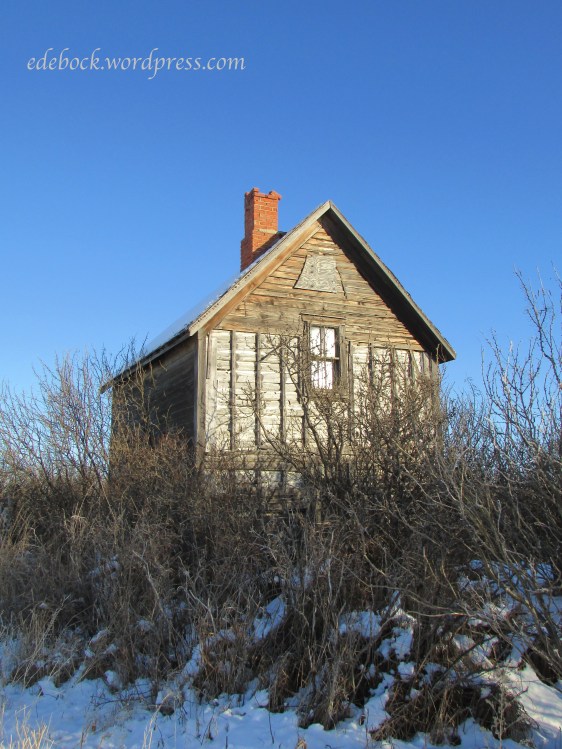
Remembering my father

The blog has been unusually quiet for the past week and a half. There was no Fashion Friday post last week and nothing in honour of International Women’s Day yesterday. My father passed away less than 48 hours after I published the last post. All I’ve written since then is his eulogy and a myriad of lists. Lists of things to do and people to contact. In fact, I wrote so many lists that Richard suggested perhaps I needed to make a list of my lists!

As I worked on the eulogy, when we chatted with Dad’s pastor while planning the memorial service, and when we visited with friends and family after the service, it was comforting to recall who Dad was before macular degeneration robbed him of his sight, a stroke stole most of his speech and mobility, and in his final months, dementia began to weaken his mind. My Dad was many things. He was a kind and generous man who was accepting of all people. He had a keen scientific mind, but also loved good literature and often quoted poetry to us. Above all else though, Dad was an adventurer. Even though it was very far removed, he was proud of his Gypsy heritage!

After graduating from the University of British Columbia in the spring of 1946 with an honours degree in chemical engineering, Dad found a job up the coast in the pulp and paper town of Powell River. That fall, he bought an old 24-foot wooden boat powered by an ancient 1927 car engine. With a friend, he sailed it up the coast from New Westminster to Powell River where he spent many hours over the next year sanding, re-caulking, and painting the hull and having the engine overhauled. He also met his bride-to-be that fall and the summer after they were married, they spent two weeks puttering up the coast in that old wooden boat. Apparently it rained every day but one, but that didn’t deter them from further adventures!

It was also during the Powell River years that Dad took up mountain climbing. He was a member of the BC Mountaineering Club for many years and ascended many peaks in the Powell River area as well as around Vancouver and on Vancouver Island. Dad always had a passion for seeing what was in the next valley, behind the next hill, or around the next corner. As a climber, he had at least one first ascent because, in his words, he was mad enough go one mountain further back than anyone else had ever bothered!

Dad loved to get away to quiet and remote places. For our very first camping trip as a family, he piled Mom and three kids into the little rowboat that he’d made with his own hands and rowed us across an isolated inlet to a rocky point where we would set up camp and stay for a week. A second trip in the rowboat brought the big canvas tent and the rest of our camping gear across. We had so much fun that we returned to the same spot the following summer!

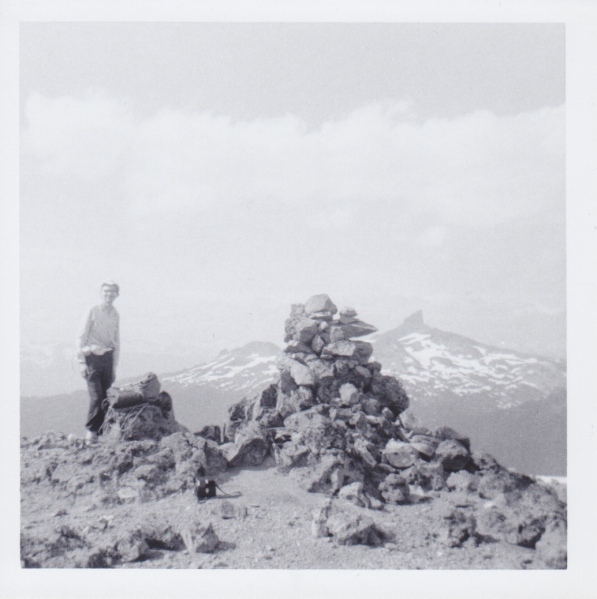
After we moved to Vancouver in 1963, Dad’s passion for the path less traveled took us to some of the most remote places in BC that were accessible by road. As a child, I remember wondering if some of them were really roads at all and if we were going to get permanently lost! In 1967, we drove the then mostly unpaved Alaska Highway all the way to Anchorage. The following year, Dad chartered a little floatplane and we flew into Garibaldi Lake to spend a couple of weeks camping, climbing, and exploring. While we were there, Dad and I climbed Mount Price together.
Scan copy 14

Dad on the summit of Mount Price

Just before Christmas 1968, Dad accepted a job with the newly formed Government of the Northwest Territories. He moved to Yellowknife in January while the rest of us stayed in Vancouver until the end of the school year. Our last long road trip as a family took us from Vancouver to our new home in Yellowknife with a side trip to visit Wood Buffalo National Park. Dad’s role with the territorial government involved quite a bit of travel, sometimes to comfortable spots in southern Canada, but mostly by small aircraft into settlements across the Arctic. On one of those trips, he froze his fingertips while desperately clinging to a komatik (sled) as it bounced across the ice and snow behind an Inuit man on a snowmobile.

In the early 1970s, Dad decided that it was time for he and Mom to begin seeing more of the world. With my younger siblings, who were still living at home, they spent the summers of 1973 and 76 exploring Europe. In typical Dad fashion, those trips took them off the popular tourist trail to some more remote and unusual destinations including Leningrad and Moscow.

In May of 1982, Dad retired and in his words, he and Mom became homeless wanderers. Their belongings were shipped to Vancouver and put into storage while they spent most of the following year traveling North America and sleeping in the back of their little Malibu station wagon. After returning to Vancouver and living in a rented apartment for six months, it was time to set off on an even more audacious adventure. Dad ordered a Volkswagen camper van from a dealership in Vancouver to be picked up at the factory in Germany. Rather than flying directly to Germany, they got there via Japan, South Korea, Hong Kong, two weeks in China, and the Trans Siberian railroad across the Soviet Union. After picking up the Volkswagen, they spent more than a year living in it and roaming around Europe and the Middle East before finally shipping it back to Canada. Sometime later, while a niece housesat for them, Dad and Mom were off on yet another adventure living in a rented van in Australia for several months. It was there that they survived a head on collision virtually unscathed.

In retirement, when he wasn’t traveling, Dad quickly learned that there’s no end of things to do as long as you don’t want to be paid. He spent three years working as volunteer office manager and treasurer for the Africa Community Technical Service, an organization committed to providing clean, accessible water to isolated communities in Africa. That led to yet more travel as he and Mom spent seven weeks in Kenya, Uganda, and Tanzania with the director and his wife seeing first hand what their efforts were accomplishing.

Over the years that followed, the Volkswagen van brought them over the mountains to Alberta numerous times to visit their children and grandchildren. Their last big trip was to a resort in the Dominican Republic where they celebrated their 55th wedding anniversary. That brought their total number of countries traveled to 67.

Life changed significantly for Dad when Mom began to show signs of dementia. For many years after that he devoted himself to the challenging task of caring for her. As a family, we were deeply concerned that he was burning himself out, but he faced it like another mountain to climb and later, after she passed away in 2014, he was heard to say that those had been good years.

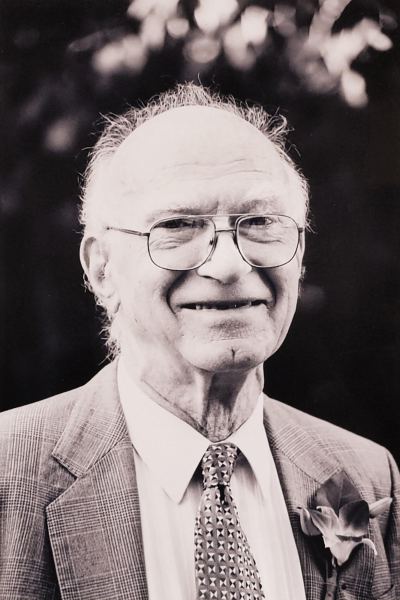
In the early morning hours of Sunday, March 1, while I stood at his bedside, Dad ascended his final peak and caught his first glimpse of what’s on the other side.
clone tag: 3240436027412250884

June 25, 1923 – March 1, 2020

At the reception following his memorial service, I was asked if I had inherited my father’s adventurous spirit and I was proud to reply that, yes, I believe I did! Thank you, Dad!

Ansanm… together

Tim DeTellis is President at New Missions, a ministry started by his parents in 1983 when they set up five tents on the Leogane plain in Haiti and started holding church services. Tim was 11 years old at the time. From that humble beginning, New Missions has grown to include 35 churches and schools as well as medical clinics in both Haiti and the Dominican Republic. In addition, a Bible school and a professional trade school prepare graduates of the New Missions schools to support their families and become leaders in their communities. As a lover of words, I was touched by something that Tim recently posted on Facebook.

“Ansanm means together in Haitian Creole. Togetherness makes life better because you have community to share life with. When I lived in Haiti I saw the strength of togetherness as villagers would gather at the shoreline to help pull in the fishing nets. It took many hands and the strength of togetherness to survive.” 

84136281_1519572048193605_2583547266631467008_o

photo: Tim DeTellis

We’re not meant to live life alone. Married or single, we were made for community. We’re meant to do life together… ansanm.

The Bible says, “How good and pleasant it is when God’s people live together in unity!” Psalm 133:1 and Two are better than one, because they have a good return for their labor.” Ecclesiastes 4:9

While there are times that togetherness can try our patience, maybe even drive us a little bit crazy, there are definite advantages to being part of a group whether it be immediate family, physical neighbourhood, church, workplace, or even an online community.

  • it’s safer
  • it’s mutually supportive
  • it provides comfort in times of trouble or loss
  • we can share knowledge and learn from one another
  • we’re inspired by others
  • we receive advice and encouragement from others
  • we cheer one another on and celebrate together
  • we can share resources
  • it provides accountability
  • it’s fun

Not only do we need other people, but they need us. Someone needs you! Who are you doing life with?

Never forget to laugh!

Ideas for blog posts come from all sorts of places. Sometimes a word or a phrase catches my attention and suddenly, I feel a blog post coming on. Recently, my good friend, Richard M, responded to a comment from another of his friends on Facebook with an excellent bit of advice. “NEVER forget to laugh!” he wrote. That immediately sounded like a title to me!

We’ve all heard it said that laughter is the best medicine, but did you know that it’s actually good for your health? I have absolutely no medical background and I know better than to depend on Dr. Google for sound medical advice, but even trustworthy sites like the Mayo Clinic agree that laughter has many positive physical and mental benefits.

Physical benefits of laughter

  • Lowers stress by reducing the release of stress hormones like cortisol and adrenaline.
  • Boosts the immune system which is negatively affected by stress hormones.
  • Promotes heart health
  • Lowers blood pressure
  • Increases oxygen intake
  • Relieves pain by releasing endorphins which act as natural pain killers.
  • Boosts energy
  • Relaxes muscles
  • Burns calories. Though it won’t replace regular exercise, 15 minutes of laughter burns 10 to 40 calories!

Mental benefits of laughter

  • Builds rapport and strengthens relationships between people
  • Eases symptoms of depression as endorphins also act as natural antidepressants.
  • Reduces anxiety and other negative emotions
  • Improves mood
  • Promotes relaxation

Clearly Richard M is right. We should never forget to laugh. Laughter adds joy and zest to life, but we live in a world that seems to be in constant turmoil. Last month it was the fires in Australia and a plane shot down; now the news is dominated by the coronavirus. Our own personal lives are often a struggle. How, in the midst of all that, do we remember to laugh?

Here are a few suggestions

  • Spend time with people who make you laugh
  • Don’t take yourself too seriously
  • Look for the humour in everyday situations
  • Watch funny movies or TV comedies
  • Make time in your life for fun activities
  • Play with a pet
  • Hang out with a little kid and find your inner child

If you really can’t find any reason to laugh, you might even want to check out laughter yoga or laughter therapy. While the idea of sitting in a group or one on one with a therapist forcing myself to laugh definitely doesn’t appeal to me, I could probably use more laughter in my life. We probably all could.

I will add one caveat, however. Never laugh at someone else’s expense. Not everything that passes as humour is funny. Make sure you know the difference.

images

“The human race has only one really effective weapon and that is laughter.”   Mark Twain

Kintsugi… broken made beautiful

product-jpeg-500x500

“We have this treasure in jars of clay to show that this all-surpassing power is from God and not from us.”   2 Corinthians 4:7

When I read this verse in my morning devotions today, my mind went in several different directions. It immediately brought to mind a couple of verses from the Old Testament book of Isaiah.

“You, Lord, are our Father. We are the clay, you are the potter; we are all the work of your hand.”   Isaiah 64:8

and

Shall what is formed say to the one who formed it, ‘You did not make me’? Can the pot say to the potter, ‘You know nothing’”?   Isaiah 29:16

We are all vessels shaped by God’s hands for His purpose, not our own.

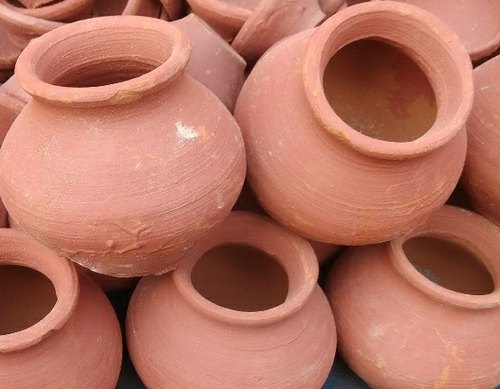
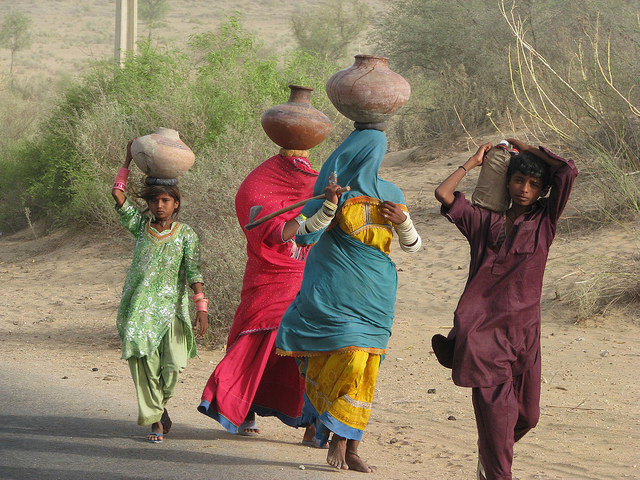
Next, my mind went to the value of a clay pot. Many are plain on the outside and made for ordinary everyday purposes. They might not look like they have much value, but from earliest times people the world over have survived in the harshest of circumstances because they had simple clay pots to carry life giving water. We ought to be like those jars carrying life to those around us.

women-providing-water_

Finally, I was reminded of the centuries old Japanese art of kintsugi. or “golden joinery.” Life is hard and sometimes our jars of clay are chipped, cracked, or broken, but God is not only the potter; he is also the master of kintsugi!

daa394a7fdce830f2628ee54246ee38b

Kintsugi is a method of repairing broken pottery using lacquer mixed with gold, silver or platinum. Rather than trying to hide the brokenness, it becomes part of the beauty of the piece. The process often enhances the value of the item as each mended piece is completely unique.

In a similar manner, when we bring our brokenness to God, He doesn’t reject or discard us. Instead, where we see only ugliness, he sees potential and the possibility of creating something new and beautiful. He takes our broken pieces and carefully puts them back together so that even though the cracks and scars might still be visible, they become part of our beauty. Through His loving grace and mercy, he forgives our failures and heals our hurts. When His gold fills our cracks, we are made stronger and more beautiful and His power and glory are seen in us. We simply need to put our broken lives into the hands of the master of kintsugi and trust Him to put us back together!

bowl-1

Do the good you can do

Do you ever feel like permanently turning off the news and hiding away from the world? Sometimes it’s overwhelming, isn’t it? A plane is shot down and 176 people die, Australia burns and earthquakes rock Puerto Rico, a volcano erupts in the Philippines and thousands are forced to flee. Violence, murder, and mayhem seem to be the order of the day.

The Bible tells us that such things will happen as end times approach. Mark 13:7-8 says, When you hear of wars and rumours of wars, do not be alarmed. Such things must happen, but the end is still to come. Nation will rise against nation, and kingdom against kingdom. There will be earthquakes in various places, and famines. These are the beginning of birth pains.” But what are we to do in the meantime? How do we continue to function in a world that seems to be coming apart at the seams?

Do the good you can do.

Can you accomplish world peace, end hunger, prevent climate change, or stop the tectonic plates from shifting? No, of course you can’t, but there is good that you can do.

Do the good you CAN do.

  • make a Kiva loan to help an entrepreneur in a developing country establish a business and provide for their family
  • give a child the gift of education through child sponsorship
  • volunteer at a local homeless shelter or food kitchen
  • donate blood
  • become a mentor or tutor to someone who would benefit from your skills and experience
  • rake leaves or shovel snow for an elderly neighbour
  • make a donation to your local food bank
  • help build a Habitat for Humanity home
  • clean up a local beach or park
  • fill a shoebox for Operation Christmas Child
  • recycle
  • reduce your kitchen waste by composting or making “garbage soup”

The possibilities are endless. Do the good you CAN do.

Make kindness a lifestyle. Whether it’s simply smiling and saying hello or doing a random act of kindness for a stranger, you can make a difference in someone’s day. It won’t save the world, but it will make your small corner of it a better place to be and you might be surprised by how much better it makes you feel.

Do the good you can do.

doing good

What hydrates your soul?

We all know that drinking water to stay hydrated is important to our physical health. It helps maximize physical performance, promotes cardiovascular health, has a major effect on energy levels and brain function, and may prevent or relieve digestive issues. Conversely, even low levels of dehydration can cause headaches, fatigue, dizziness, lethargy, and constipation.

But what about our souls? What hydrates or nourishes your soul? What brings you joy or a deep sense of satisfaction?

If you’re like me, you might find January a month when your soul begins to feel depleted;  malnourished. Christmas is over and New Years has come and gone. Depending where you live, winter may seem to stretch out endlessly in front of you. It’s easy to start feeling down. The solution may not be as simple as drinking a glass of water, but there are many things we can do to hydrate our souls.

Here, in no particular order, are 12 things that nourish my soul:

  • daily time in prayer and God’s Word
  • spending time with people who make me happy
  • soaking up sunlight
  • doing something unexpected for someone else
  • losing myself in a good book
  • writing
  • spending time in nature
  • traveling
  • organizing and decluttering
  • exercising
  • sipping a cup of tea or a glass of wine
  • relaxing in a hot bath

Your prescription might be entirely different than mine, but if your soul is feeling dehydrated, here are some things you might try:

  • listen to music or make music if you’re so inclined
  • visit a museum or an art gallery
  • watch a movie or a live theatre performance
  • keep a gratitude journal
  • volunteer
  • go for a massage
  • get some sleep
  • do something creative

What hydrates your soul? 

whatevers-good-for-your-soul

One word for 2020

Three years ago, as part of a ministry that I was involved in, I was asked to choose one word to inspire or guide me in the coming year and to choose a scripture verse to go with it. As a lover of words, this was a perfect assignment for me and one that I’ve repeated each year since then. My word for 2017 was Still, for 2018 I chose Grace, and last year my word was Inspire. There’s actually a whole #OneWord365 movement on the internet urging members to choose just one word to focus on every day, all year long; a word that sums up who they want to be or how they want to live.

The weekly Bible study that I do with a small group of women from my church pointed me toward the word that I’ve chosen for 2020: Bold. The study, Legacy: How One Ordinary Life Can Make an Eternal Difference with Jackie Green and Lauren Green McAfee, points out that being bold is vital to leaving a spiritual legacy. According to the study, “being bold doesn’t mean breaking rules or social conventions just for the sake of being a rule breaker. It’s not about demanding your own way. It’s not about having a sense of entitlement. Rather, biblical boldness is about speaking the truth even when it’s unpopular. The bold act without worrying about what other people think or say because they have confidence in following a higher standard. The bold are willing to break with tradition.”

The dictionary defines bold as showing an ability to take risks; confident and courageous.

“Bold people stand out from the group. They are confident, courageous, and directed.” says Kevin Daum, author, columnist, entrepreneurship coach, marketer and speaker in a post entitled 7 Things Really Bold People Do. “People who choose to be bold are inspiring not just because they get big things accomplished, but because they also instigate growth, progress, and movement for themselves and others around them.” That definitely resonated with me considering that my word for the past year was Inspire.

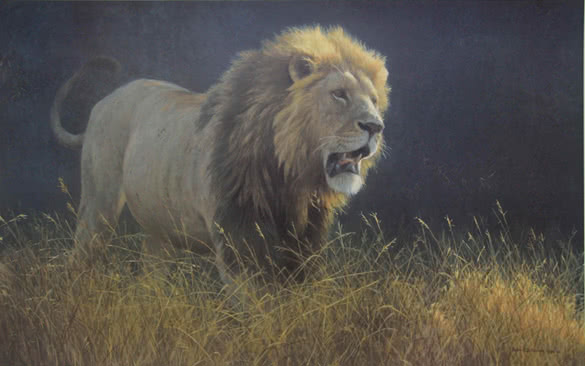
The Bible verse that I selected to go with this year’s word is Proverbs 28:1. The wicked flee though no one pursues, but the righteous are as bold as a lion.” Known as the king of the beasts, the mighty lion is regal and fearless. With a roar that can be heard from more than 5 miles (8 km) away, he’s a symbol of fearlessness, strength and invincibility.

bold-1024x1024

So how do you blend boldness with grace? How do you act boldly without being abrasive? How do you speak up for what you believe in or what you know to be true without sounding arrogant and turning people off? These are the questions that I’m wrestling with as I enter the new year.

I want to have the boldness of the early disciples who shared their faith in spite of great opposition. I want to have the courage to confront injustice and stand up for the downtrodden. I want to be bold enough to reach out to the woman weeping in the ladies room at the cancer clinic instead of just saying a silent prayer for her.  

So how am I, a naturally shy and introverted person, going to learn to act with greater boldness? One recommendation that I read suggested that I pretend that I’m already bold, ask myself what I’d do if I was, and then act accordingly. That’s what I’m determined to do this coming year.

print94 (1)

What about you? Can you think of one word to inspire or guide you in the new year?

Screen Shot 2019-12-24 at 9.50.47 AM

Winter at its best

Winter is not my favourite season, but sometimes it’s spectacularly beautiful here on the Canadian prairie.

IMG_0501

With a houseful of grandchildren for the past week, we were very thankful for sunshine, mild daytime temperatures, and fresh powdery snow that made outdoor activities not only possible, but a great deal of fun.

With shovels and brooms, a skating rink was cleared on a pond just outside town.

IMG_0497

Even the littlest one helped out.

IMG_0498

IMG_0522

IMG_0520

Many hours were spent tobogganing on a hill just three blocks from the house.

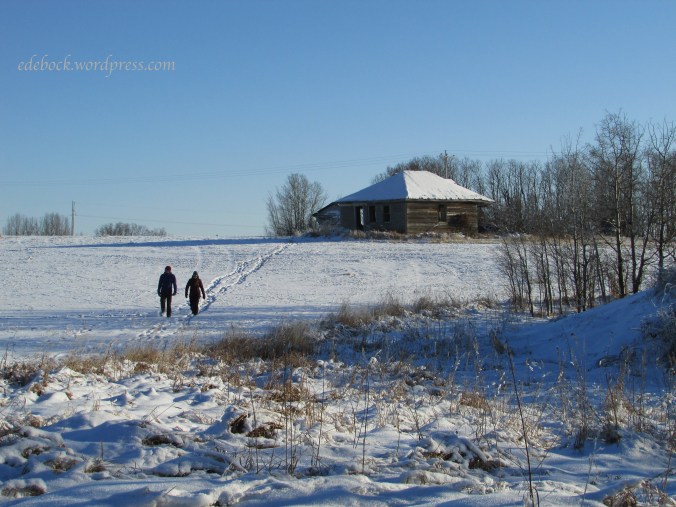
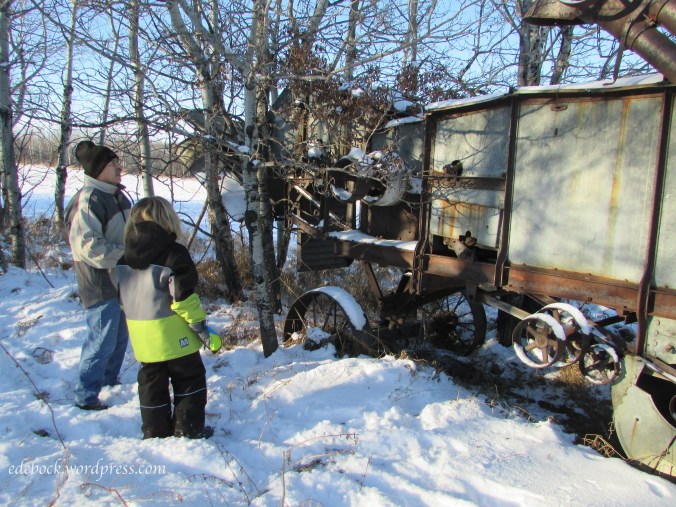
By late this morning, most of the family had packed up and left for home. Only our two Vancouver grandsons and their parents remained. If you’ve been following my blog for very long, you may remember how much I enjoy exploring the old abandoned buildings that are scattered across the prairie. Until today, that was a summertime activity, but when I discovered that 8-year-old Nate shares my passion for old abandoned houses, a plan was hatched and off we went to find a few.

Our first stop was an old farmstead a few kilometres from town.

IMG_0577

IMG_0578

IMG_0600

The last time we were there, the old shed was still standing, but not anymore.

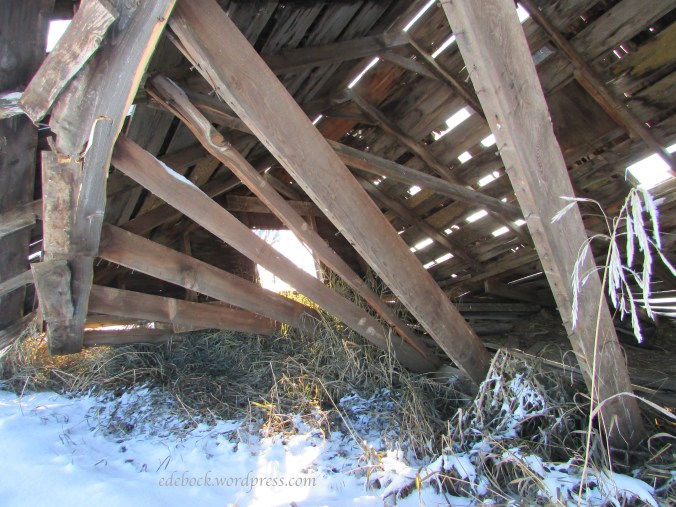
When the sun is shining, there’s beauty even in decay.

IMG_0575

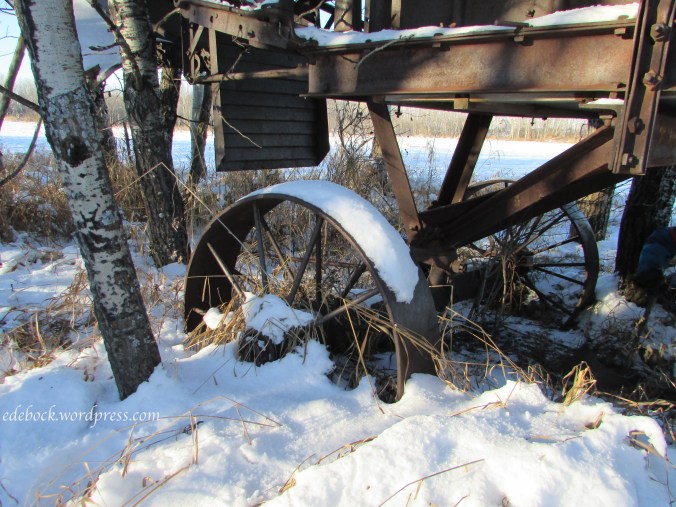
Next, we walked down the field to check out the old threshing machine in the edge of the trees.

IMG_0589

IMG_0598

IMG_0591

IMG_0592

IMG_0593

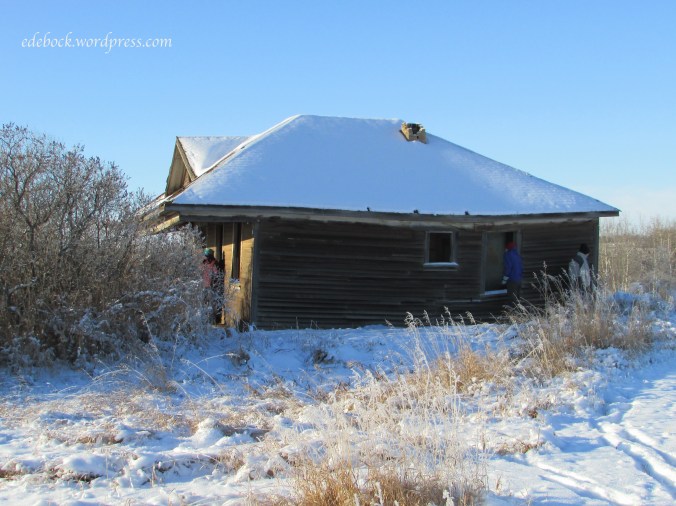
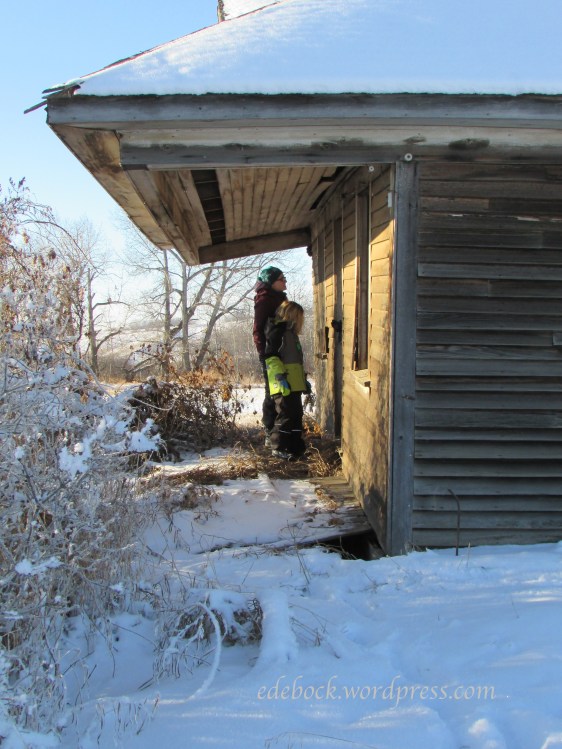
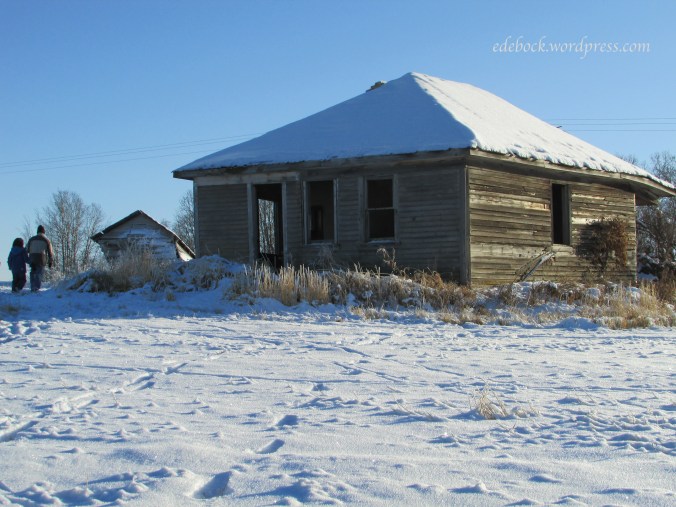
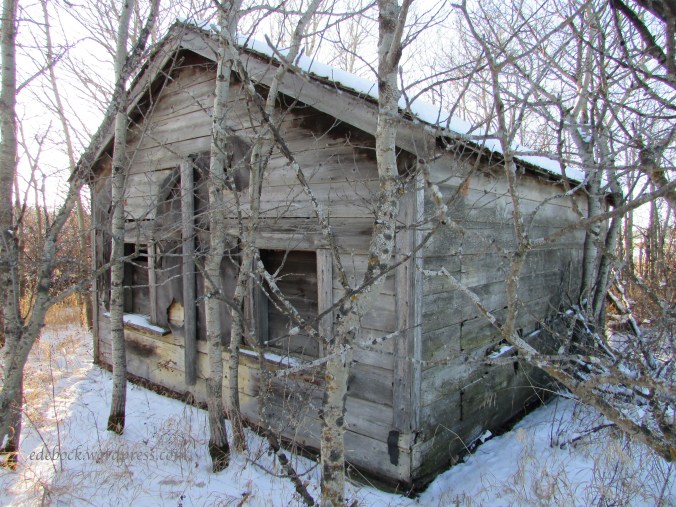
Sharp-eyed Nate spotted this tiny one room house beside the road not far from the old farmstead. I’m sure we’ve driven by it many times without ever noticing it. In the summer it would be completely hidden by leaves on the trees.

IMG_0610

IMG_0604

A little further down the road we spotted another old house that we’d never noticed before. We had to walk across a snowy field of canola stubble to check it out.

IMG_0611

Two stories tall with a cellar below, it would have been quite a place in its day. It’s a very solid structure built of logs overlaid with wooden slats. With doors and windows still intact and shredded curtains hanging in some of the windows, it’s in better shape than many of the old buildings we’ve found. Peeking through the kitchen window we spotted a calendar on the wall dated September 1963. Presumably that’s when it’s last residents moved out. I couldn’t help wondering why they left a sink full of dishes behind! If only these old walls could talk. What stories they would tell!

If winter was always this beautiful and this much fun, I might not mind it so much! The last of the family leaves tomorrow morning though and the forecast is calling for much colder temperatures a week or so from now. We haven’t made any plans for a winter getaway to warmer climes, but it might soon be time to look for a last minute deal!

Reclaiming Christmas

The fact that the world has ‘stolen’ our Christian holy days and turned them into commercial extravaganzas has been one of my pet peeves for a very long time. Walk up and down the aisles full of Christmas decorations in any store and what do you see? Santas, reindeer, snowmen, and Disney characters galore. What do any of these have to do with the real meaning of Christmas? Look at the outdoor decorations in your neighbourhood. You might see a nativity scene, particularly in front of a church, but where is Christ in most of those decorations? What does an inflatable penguin or puppy have to do with Christmas? I don’t know either, but you can get one for just $19.98 CAD at Walmart!

Don’t even get me started on that stupid Elf on a Shelf! Whoever thought that one up did nothing but add more meaningless stress to an already over-stressed season for anyone who bought into it.

Don’t get me wrong. I’m not a total Grinch! I love Christmas lights. After all, it was Christ Himself who said, “I am the light of the world. Whoever follows me will never walk in darkness, but will have the light of life.” John 8:12 NIV

Though standing a tree in the house and decorating it with lights and ornaments often strikes me as a weird tradition, I also love the Christmas tree that stands in front of our living room window. Many of its decorations point to the true meaning of Christmas. That’s very intentional. It’s one small attempt at reclaiming Christmas.

IMG_0445

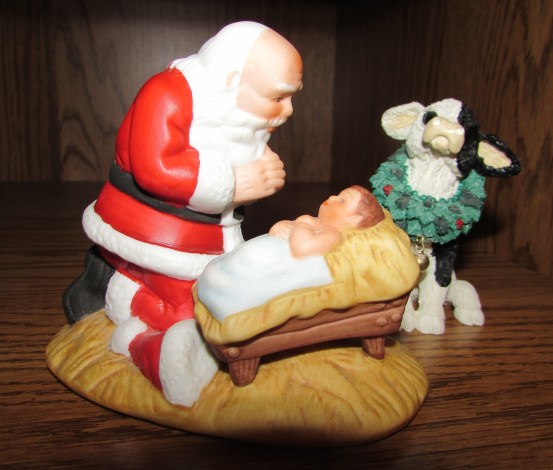
Although a beautiful nativity scene also has a place of prominence, our home isn’t completely devoid of the fun side of Christmas. Santa and one of his reindeer stand atop a cabinet in the living room. Surrounded by teddy bears and twinkly lights, he’s checking his list and preparing for his round the world gift giving flight, but it’s the little Santa bowing over the manger on another shelf that holds greater meaning for me.

IMG_0452

So what is the real meaning of Christmas? “I bring you good news of great joy that will be for all the people,” an angel told some shepherds keeping watch over their flocks outside Bethlehem that night so long ago; a night that would forever change the world. (Luke 2:8-10 NIV) That night the mighty Creator of the universe chose to come to earth in the form of a tiny babe, to live among us, and to show us who He really is. That night, He began His journey to the cross where He would pay the penalty for all our failures and give us the gift of eternal life with Him. There is no better gift than that! It costs nothing but the willingness to humble ourselves and surrender to His leading in our lives. That’s what Christmas is really all about! That’s true love and that’s why I want to reclaim Christmas. I can’t take it back from the masses who celebrate by overindulging and running up their credit card bills, but I can keep the love of Christ at the centre of my Christmas season.

When we were teaching in Japan, I asked one of my adult students why so many Japanese people celebrate the birth of a God they don’t believe in. “We love to decorate and we love to shop,” she told me. Perhaps that’s why most people celebrate a holy day that has no real meaning to them.

Why do you celebrate Christmas? What does it mean to you?


Gram’s in nesting mode!

The urge to clean and organize is commonly known as nesting and usually comes upon a woman in the final weeks of pregnancy. I don’t remember actually experiencing this overwhelming desire to get my home ready for a new baby. I worked up until a few days before baby #1 arrived. It’s a good thing that that was back in the day when they kept mom and baby in hospital for several days because hubby was still putting up a wall to separate the nursery from the living room when she was born! I was a bit more prepared when baby #2 arrived 19 months later. Babies #3 and #4 arrived at very busy times in our life (there are long stories behind both of those) when nesting was the furthest thing from my mind.

So, what does all that have to do with anything? The whole family comes home for Christmas every third year and this is that year! Suddenly I find myself cleaning and organizing, decorating, planning menus, and buying ingredients for all sorts of Christmas baking. Yes, Gram is definitely in nesting mode!

It started with the teeny tiny playroom in the corner of our basement that only gets used when grandchildren come to stay. It hadn’t had a thorough cleaning in a long time. I sorted through the old wooden toy box that was lovingly made for my siblings and I by a great uncle of ours in the 1950s discarding broken toys and putting away ones that are too babyish for our growing grandkids. I washed down the play kitchen that our children got for Christmas in the 1980s. Dolls that had been mine and our daughters’ when we were little girls were bathed and their clothes went through the laundry. Then the tiny toy dishes were washed.

10807616

Just as the toys spill out into the rest of the basement when the grandkids are here, my cleaning frenzy has also moved on into other areas. Since we retired, Richard has taken over much of the day to day housework, but I’m attacking those nooks and crannies that don’t get regular attention. Why wait for spring cleaning when the family’s coming home and Gram is in nesting mode?

What are you doing to prepare for the holiday season?