One day at a time

I’ve been pondering why it is that I don’t seem to be as stressed out by the Covid-19 shutdown as many people around me are. First of all, I acknowledge, as I have before, that I have it easier than many. As a retiree, I don’t have a business to close, a job to lose, or children at home. Trusting in a God who makes manna also makes all the difference in the world, but I believe that there’s another factor as well.

For most of my life I was a long term planner to such an extent that I tended to live more in the future than the present. When I retired a little over a decade ago, one of my primary goals was to learn to live more in the moment. I didn’t anticipate that cancer would be what it took to teach me that, but when we’re not guaranteed a future (none of us really is), we start to look at life quite differently and each day becomes a gift. What I’ve discovered about myself during this unusual time is that I truly have met my goal! While people all around me are worrying and making dire predictions about how long this is going to last, I’m finding myself quite unbothered by that aspect of it. I’ve learned to inhabit one square on the calendar at a time and I’m not giving a lot of thought to what the future will bring. It’s very much a “que sera, sera” attitude, but it seems to be serving me well!

I’m sad that I won’t be able to celebrate with two grandchildren who have birthdays in the next couple of weeks and that the trip we were planning for next month had to be put on hold. I’m also hoping that we won’t have to miss a whole season of camping and golf, but mostly I’m just living one day at a time and not worrying about what next week or next month might hold.

An old Merle Haggard song keeps running through my head:

One day at a time, sweet Jesus, that’s all I’m asking from you.
Give me the strength to do everyday what I have to do.
Yesterday’s gone, sweet Jesus, and tomorrow may never be mine,
So for my sake teach me to take one day at a time.

One Day at a Time Calendar Daily Routine Plan 3d Illustration

In closing, I want to be absolutely clear that I’m not suggesting that everyone should be experiencing this time of uncertainty in the same way that I am. Of course, I’m deeply concerned for those who are living in fear and for whom the outcome might be quite devastating. I’m simply enjoying the fact that I’ve met my goal and learned to live in the present moment.

Stay home, stay safe and I hope that you can find some joy in this day!

The power of the written word

The Bible has a lot to say about how we ought to use our words. The book of Proverbs is full of wise sayings about the power of the tongue.

The one who has knowledge uses words with restraint, and whoever has understanding is even-tempered. Even fools are thought wise if they keep silent, and discerning if they hold their tongues.  Proverbs 17:27-28
The words of the reckless pierce like swords, but the tongue of the wise brings healing.  Proverbs 12:18

feather-pen-vector-546939It was English novelist and playwright Edward Bulwer-Lytton who, in 1839, wrote “The pen is mightier than the sword.”
Today, when most of us are holed up at home waiting out the Covid-19 pandemic, the written word is being used more than ever. We FaceTime and we Zoom, but we also use written platforms like Facebook and Twitter to connect with one another.

For some of us, writing is our preferred method of communication. We find it easy, but others may struggle to express themselves clearly. Without the visual and auditory clues that go along with face-to-face communication, misunderstandings can happen very easily. We definitely need to cut one another a bit of slack.

For example, a friend recently responded to something that I said on Facebook with a comment that could easily have been taken in two completely different ways. I had no way of knowing whether it was written in jest or meant to be extremely hurtful. If we had been talking face-to-face, I would have been able to tell based on her body language, facial expression, volume, and/or tone of voice. To tell you the truth, I still don’t know what her actual intent was, but because I know her and I don’t think of her as a mean person, I gave her the benefit of the doubt and assumed that, even if it fell a bit flat, her response was meant to be funny. Had I concluded that she was being nasty and responded in kind, I could have easily destroyed a relationship!

I love a good online conversation where people can express their views, have them heard, and willingly listen to the views of others. Unfortunately, however, what could have been a meaningful dialogue often becomes nothing more than a battle of words. Why is that? What can we do to prevent hurt feelings and misunderstandings? I have a few suggestions. If you have others, please add them to the comment section below.

  1. If you disagree with something that someone else has written, don’t react immediately. Take time to think about it first. Is there any truth in what they’ve written? Did they actually mean what you thought they meant? If you’re not sure, ask for clarification instead of immediately going on the defensive.
  2. Avoid getting sucked into arguments. Sadly, some people are willing to go toe-to-toe online in ways they’d never dream of doing face-to-face.
  3. Understand that your sense of humour isn’t universal and that, without cues like facial expressions and tone of voice, what is intended to be funny might not come across that way.
  4. Don’t comment on someone’s spelling or grammar. Sometimes the English teacher in me wants to take a red pen to the screen, but this is just plain rude! It’s also a tactic that’s often used by commenters who simply want to belittle someone they disagree with.
  5. Edit your responses before you post them. (There’s that English teacher again!) Read over what you’ve written. Does it actually say what you want it to say? Is it clear or could it be open to more than one interpretation?
  6. Distinguish between fact and opinion. Just as we should all know the difference between a news article and an editorial, we need to be clear when we’re the writer. If you’re declaring something to be a fact, be prepared to back it up. If it’s opinion, say so and remember that everyone is entitled to have one even if it’s different from yours. What a boring world it would be if we all agreed on everything!
  7. Remember, posting online is the same as speaking in public. If you don’t want something to come back and bite you, don’t say it online!
  8. Don’t be that person who always has to have the last word.
  9. Don’t drink and tweet! If you’re impaired in any way, whether it be from lack of sleep, a fight with your partner, or one too many drinks, you run the risk of saying something that you’ll regret. Resist the urge and wait until you’re in a better frame of mind.

Fear and Covid-19

Yesterday’s post generated a very lengthy discussion on Facebook. As the conversation went on it became very clear that the Covid-19 pandemic has resulted in a great deal of fear. I found it very interesting that people were not expressing fear of the disease itself. No one talked about being afraid of succumbing to the virus or even of loved ones getting sick. Instead, they expressed fear that a vaccine, once discovered, will be forced on people against their will, fear that churches, now closed, might not be allowed to reopen, fear of economic collapse, and fear that our personal freedoms are being eroded and that we’re headed down the same road as Nazi Germany. It seems to me that what people are really afraid of is change, the unknown, what life will look like when this is all over.

Some of the fears that were expressed in yesterday’s conversation may seem pretty far-fetched, but I don’t want to make light of anyone’s fears. Fear is real and it can be debilitating. It feeds upon itself and it isn’t necessarily logical or realistic. After all, the author of fear is the great deceiver himself. The Bible calls him Satan.

I once preached an entire sermon on living without fear, but in a nutshell, the antidote to fear is trust. When we put our trust in our jobs, our institutions, our relationships, our rights and freedoms, what happens when those things are stripped away? That’s what we’re finding out now.

Our devotional this morning came from Proverbs 16. The second half of verse 20 jumped out at me like a flashing neon light… “blessed is he that trusts in the Lord.” When everything in life is like shifting sand, He is the one and only constant. Total trust in God is the only true remedy for fear.

The Bible is full of admonitions not to fear.

Have I not commanded you? Be strong and courageous. Do not be terrified; do not be discouraged, for the Lord your God will be with you wherever you go.  Joshua 1:9

So do not fear, for I am with you; do not be dismayed, for I am your God. I will strengthen you and help you; I will uphold you with my righteous right hand.  Isaiah 41:10

In these uncertain times, when trusting in the things that we usually depend on fails us, we need to trust in the only One who knows what the final outcome will be, the One who will still be with us when Covid-19 is a distant memory.

The Bible also tells us that “perfect love drives out fear” (1 John 4:18). As human beings, we may not be capable of perfect love, but we are certainly capable of reaching out to others in love even while we social distance. While the circumstances surrounding the Covid-19 pandemic have resulted in fear for many, they have also brought out the best in others. Whether it be singing and waving signs outside the windows of a long term care centre, dropping fresh baking on a neighbour’s doorstep, picking up and delivering groceries for someone who is self-isolating, planning a drive by birthday parade for a child who can’t have a traditional party, or just taking the time to pick up the phone and call someone who’s living alone, people are finding creative ways to reach out in love. Maybe, hopefully, this world will actually be a kinder place when this is over!

So if you’re feeling afraid, don’t just hunker down with your fear and let it fester. Trust in God and reach out in love. And if you’re truly feeling overcome, please reach out and ask for help.

Redneck thinking and Covid-19

I live in Alberta, a province that’s well known for and somewhat proud of its redneck reputation.

Screen Shot 2020-04-11 at 3.51.54 PM

This was the politest definition I could find!

I grew up on the BC coast where people tend to have a more liberal mindset. Perhaps that’s why I sometimes have a hard time understanding how Alberta people think. These are broad generalizations or stereotypes, of course, but sometimes I really do feel like a fish out of water! Don’t get me wrong. I like country music and wide open spaces and one of the best jobs I ever had was operating a combine, but I just don’t get redneck thinking.

Take COVID-19 for example. An online poll conducted April 3 to 5 indicated that 22% of Albertans think that it’s being blown out of proportion, higher than any other province in the country. That doesn’t even include the ones who believe that it’s either a hoax or a conspiracy theory of some sort! I think my blood pressure goes up every time I open Facebook and see another one of their posts. They choose the most obscure and outlandish “news” sources and when the good Lord was handing out discernment, I think they must have been in some other line.

Yes, China wants greater control worldwide and, unfortunately, western nations are making that way too easy for them, but no, they didn’t create the virus in a lab and then release it into the atmosphere! There’s lots of scientific evidence for that. No, this isn’t some nefarious government plot to take control of our lives. I don’t even know which government they’re referring to… Canadian, American (there is a difference, you know), Chinese, or maybe they’re all in cahoots with one another? And no, we’re not living in a police state just because we’ve been asked to limit our activities to protect ourselves, our communities, and especially the most vulnerable in our midst. And no, it’s not okay if they die because they’re old anyway and have had a good life!

Yes, we’re putting up with a lot of inconveniences right now, but that’s what they are. Inconveniences! Yes, toilet paper might be hard to find. It wouldn’t be if people had been smarter in the first place, but maybe just be thankful that you have a toilet. 2.3 billion people on this planet don’t! Yes, I’d like to be able to see my doctor and have an ultrasound on my thyroid, but those who need more urgent care are getting it.

When this is all over, as it surely will be someday, if the number of deaths isn’t as high as projected, there will undoubtably be rednecks who see that as evidence that they were right all along. However, there will also be those of us who’ll realize that it’s actually proof that what we’re doing right now has been successful. After all, that is the goal isn’t it? Lives saved, not government domination.

Why is it so hard?

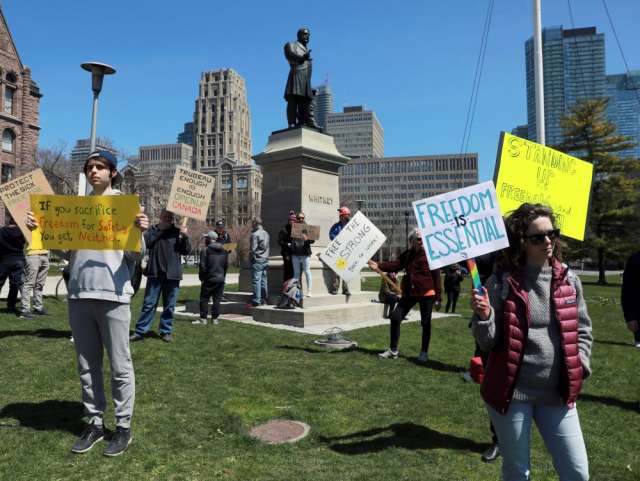
As I’ve seen the news about pastors, like Rev. Tony Spell in Louisiana, who are insisting on their “right” to hold Easter services in spite of the Covid-19 pandemic, I have to ask why is it so hard to obey stay-at-home orders that have been put in place to protect the lives of the vulnerable; the very people that churches profess to care about? Why is it so hard?

I fully understand people wanting to be with family and to take part in their traditional Easter celebrations. I’d love to be with my kids and grandkids too, but I’ve been pondering why we do what we do and why we think we need to. Nowhere in scripture are we commanded to gather together for Easter (other than the instruction not to give up meeting together in Hebrews 10:25 which, thankfully, we’re able to do virtually) or given any instructions about how to celebrate the resurrection. These are manmade traditions. Perhaps a quiet, at home Easter without all those extras is not a bad thing. Perhaps it’s a time for us to reflect in a more intentional way on the real meaning of the event which is not bunnies, eggs, and chocolate. It isn’t even necessarily going to church!

I’m not saying that there’s anything wrong with the ways we usually celebrate Easter, but just this once, it’s okay to do things differently. In fact, we need to do things differently! As the church, we need to be obedient to the Word of God which tells us in several places to obey those in positions of authority over us. Romans 13:1 tells us, “Let every person be subject to the governing authorities. For there is no authority except from God, and those that exist have been instituted by God.” Regardless of what people like Rev. Spell proclaim, we are called to obey those who put the current social distancing regulations in place! Why is that so hard?

I’m reminded of the two Easters that we spent in non Christian countries. In Japan, we did attend a Christian church and celebrated Easter there, but outside the walls of the church, there was no recognition of Easter at all. In China, where we weren’t part of any Christian organization, I’ll always remember that we went out for dinner with a couple of our college students on Easter Sunday and ate roast duck and bullfrog! Not frog’s legs, the whole frog! It was delicious, but I digress! At the end of that day, I wrote this and I think it applies as well to our current situation as it did then.

“Easter isn’t really about what we eat or who we spend the day with. Whether we’re with family around a table laden with ham and all the trimmings or in a shopping mall in China eating bullfrog, as Christians, Easter is at the centre of who we are and what we believe.”


Coping with the new normal

I was supposed to be in the city this afternoon for an appointment with Dr W concerning cancer #3 which is located in my thyroid. Unfortunately, due to the ongoing Covid-19 pandemic, that didn’t happen. Clinic visits are being restricted to only the most urgent cases while people like myself are required to make do with a phone call from the doctor. Had I been in the office, Dr W would have done an ultrasound to determine whether or not there has been any change to my thyroid since I last saw him six months ago. We both agreed that that would have been the best scenario. If I was able to have an ultrasound done in the community where I live, we might have gone with that option, but the closest place that I could do that would be the hospital located an hour away. Since we both know that a hospital is a higher risk location than his clinic would be, we agreed that that wouldn’t be a good choice. Instead, we wait. We wait until the Covid-19 threat passes and I’m able to see him in his office again. He’s predicting June or July, but no one knows for sure. We wait and we pray that the cancer doesn’t grow or spread; that the additional two or three months doesn’t make a difference.

I was also planning to stop into the University Hospital dental clinic this afternoon to pick up a supply of the fluoride gel that I use once a day to protect my teeth from harmful effects of the radiation that I received after cancer #2 was surgically removed.  Thankfully, though, that can be sent to me by mail.

As we enter the fourth week since our province declared a state of emergency and services began to shut down, we’ve all experienced many changes. Most, like accessing my fluoride, have been fairly simple to deal with, while others, like not being able to see Dr W and have my scheduled ultrasound, are more challenging and may have serious long term effects.

Thankfully, for retirees like hubby and I, the impact of Covid-19 has thus far been easier to bear than it has been for many others. We don’t have a business to close, jobs to lose, or children to teach at home. Nevertheless, the novelty of staying home 24/7 wears pretty thin and many of the frustrations that go along with the current situation affect us all. In light of this, I thought I’d share a few things that are helping me deal with our new normal.

Routine.  I like routine at the best of times, but it’s even more important in times of uncertainty. This doesn’t mean that I can’t be flexible or spontaneous, but having some structure to my day really helps keep me on an even keel.

Adequate sleep.  I try to go to bed at night and get up in the morning at about the same time each day. That takes a bit of self-discipline. I tend to be a night owl and I could easily stay up way too late, but I know that I function best if I get about 8 hours of sleep a night. Thankfully, in spite of the fact that I’ve had a couple of nights where odd dreams that probably indicate an elevated stress level have kept me from sleeping well, most nights have not been like that and I feel well rested.

Exercise.  I’m very fortunate that, unlike many people who are finding it difficult to exercise because their gyms have closed, I have everything I need here at home. Monday to Friday my day begins with a 25 minute exercise routine that focuses on core strength, flexibility, and balance. Our basement gym consists of a treadmill, two weight benches, and a large assortment of free weights. Three afternoons a week find me down there lifting weights and on the alternate days, I either walk on the treadmill or outdoors. Sunday is usually a day of rest.

Healthy diet.  If anything, we’ve been eating better than ever since the beginning of this pandemic because I’ve been a little more intentional about meal planning. That started three weeks ago when we visited five grocery stores in one afternoon and found their meat departments almost empty! Thankfully, the shortage didn’t last and I’ve since been able to add enough to the freezer to last us quite awhile. We keep very little unhealthy snack food in the house, so even with many more hours at home, we haven’t been tempted to fill up on junk food.

Spiritual nourishment.  Prayer and Bible reading are regular parts of my daily routine that help keep me balanced. We’ve been missing the opportunity to meet in person on Sunday mornings, but we’ve been enjoying church online.

News, but not too much!  I don’t want to live with my head buried in the sand, but at the same time, I don’t want to become obsessed with every detail of what’s going on. I’ve continued my habit of reading the news after breakfast every morning. We subscribe to one newspaper online. I check the world, national, and local news each day, but I very seldom read editorials. For the past couple of weeks, I’ve been watching our provincial Chief Medical Officer of Health give her daily Covid-19 update each afternoon online, but I don’t watch TV news.

Connection.  Staying in touch with friends and family by phone and online has been a vital part of staying sane. I enjoyed a lovely visit with a group of girlfriends via Zoom one evening last week and we’ve also enjoyed chats with several of our grandchildren.

Purpose.  It think one of the key ingredients to coping throughout the ups and downs of life and perhaps more than ever right now is having a sense of purpose. In addition to the usual day to day activities like meal preparation and exercising, I’ve been cleaning and reorganizing the kitchen cabinets and I’ve been using Duolingo to learn Spanish! Of course, there’s also the blog! Writing it and connecting with all of you gives me so much pleasure!

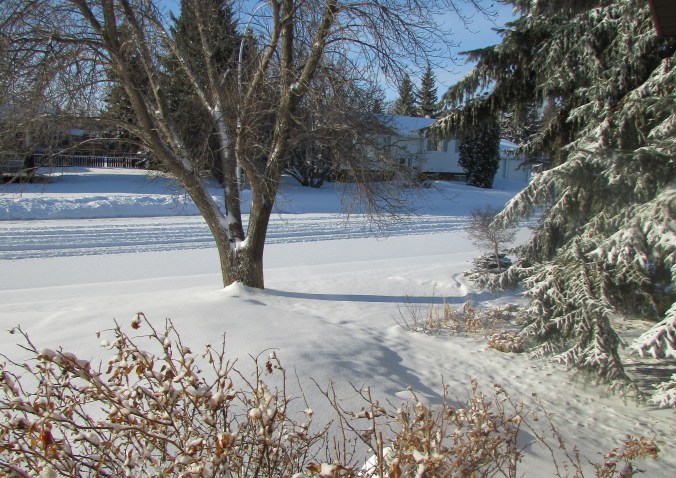
The one thing that I’d like to be doing more of these days is getting outdoors, but we seem to trapped in a never ending winter. Our snow is usually gone by the end of March, but not so this year. There’s lots of sunshine in the forecast though and our daytime temperatures are beginning to inch up over 0ºC (32ºF), so perhaps this too shall pass just as we know the pandemic will.

IMG_0911

So, my friends, how are you coping? What are some things that are helping you get through these most unusual times?


Living in unusual times

We are definitely living in unusual times. We’ve watched as COVID-19 swept across the globe and now it’s reached our shores. I’m tempted to sit at my laptop hour after hour watching and reading updates. Things are happening so fast! Late Sunday, it was announced that schools across our province were closing. Yesterday, the province declared a state of emergency and non essential services began to shut down. Recreational facilities, museums, libraries, art galleries, community centres, children’s play centres, casinos… all closed until further notice. Gatherings of more than 50 people are prohibited. Even churches are closing their doors. I’m sure it’s much the same where you are.

So what do we do in such unprecedented and uncertain times? How do we cope when the calendar is suddenly blank? Self-isolate and social distancing are new additions to most people’s vocabulary, but I have a little more experience than most with these concepts. Over the past six and a half years, I’ve had 14 PRRT treatments and I was required to self-isolate for one to two weeks after each one. The present COVID-19 crisis will likely last significantly longer than that, but this too shall pass and when it does, I don’t want to look back on this as time wasted.

We’ve just been handed a lot of extra uninterrupted time, something most of us never seem to have enough of. What will you do with yours?

Here are a few suggestions:

  • Declutter. Clean out a closet, a drawer, the kitchen cupboards. Start your spring cleaning early.
  • Try some new recipes. This one might become a necessity. We visited five grocery stores today only to find the meat departments almost empty. I’m definitely going to have to be somewhat creative with meal planning over the next while!
  • Prepare and freeze some meals for when life gets busy again.
  • If you’re able, get outside. Self-isolating doesn’t mean you have to stay inside. Go for a walk or, depending on where you live, do some yard work, ride a bike, go snowshoeing, paddle a canoe. Fresh air and exercise are essential to maintaining a positive outlook in trying times.
  • Check out Duolingo and start learning a new language.
  • Keep up social connections via phone or video chat.
  • Play board games.
  • Do jigsaw or crossword puzzles.
  • Finish the craft that you started some time ago and never completed.
  • Start a journal or a blog.
  • Read all those books that you never had time for.
  • Enjoy virtual tours of 12 famous museums from around the world.
  • Attend the opera online.

Whatever you do, don’t panic and don’t just sit around waiting for this to pass. Take wise precautions, be safe, but also seize the moment. Choose to do something worthwhile in the midst of these difficult and uncertain times. Make it a time worth remembering!

And one final bit of advice… assuming that you don’t live alone and that no one in your household is sick, remember that hugs are healthy! The thing that I missed most during my periods of post treatment isolation was the comfort of physical touch.

Remembering my father

The blog has been unusually quiet for the past week and a half. There was no Fashion Friday post last week and nothing in honour of International Women’s Day yesterday. My father passed away less than 48 hours after I published the last post. All I’ve written since then is his eulogy and a myriad of lists. Lists of things to do and people to contact. In fact, I wrote so many lists that Richard suggested perhaps I needed to make a list of my lists!

As I worked on the eulogy, when we chatted with Dad’s pastor while planning the memorial service, and when we visited with friends and family after the service, it was comforting to recall who Dad was before macular degeneration robbed him of his sight, a stroke stole most of his speech and mobility, and in his final months, dementia began to weaken his mind. My Dad was many things. He was a kind and generous man who was accepting of all people. He had a keen scientific mind, but also loved good literature and often quoted poetry to us. Above all else though, Dad was an adventurer. Even though it was very far removed, he was proud of his Gypsy heritage!

After graduating from the University of British Columbia in the spring of 1946 with an honours degree in chemical engineering, Dad found a job up the coast in the pulp and paper town of Powell River. That fall, he bought an old 24-foot wooden boat powered by an ancient 1927 car engine. With a friend, he sailed it up the coast from New Westminster to Powell River where he spent many hours over the next year sanding, re-caulking, and painting the hull and having the engine overhauled. He also met his bride-to-be that fall and the summer after they were married, they spent two weeks puttering up the coast in that old wooden boat. Apparently it rained every day but one, but that didn’t deter them from further adventures!

It was also during the Powell River years that Dad took up mountain climbing. He was a member of the BC Mountaineering Club for many years and ascended many peaks in the Powell River area as well as around Vancouver and on Vancouver Island. Dad always had a passion for seeing what was in the next valley, behind the next hill, or around the next corner. As a climber, he had at least one first ascent because, in his words, he was mad enough go one mountain further back than anyone else had ever bothered!

Dad loved to get away to quiet and remote places. For our very first camping trip as a family, he piled Mom and three kids into the little rowboat that he’d made with his own hands and rowed us across an isolated inlet to a rocky point where we would set up camp and stay for a week. A second trip in the rowboat brought the big canvas tent and the rest of our camping gear across. We had so much fun that we returned to the same spot the following summer!

After we moved to Vancouver in 1963, Dad’s passion for the path less traveled took us to some of the most remote places in BC that were accessible by road. As a child, I remember wondering if some of them were really roads at all and if we were going to get permanently lost! In 1967, we drove the then mostly unpaved Alaska Highway all the way to Anchorage. The following year, Dad chartered a little floatplane and we flew into Garibaldi Lake to spend a couple of weeks camping, climbing, and exploring. While we were there, Dad and I climbed Mount Price together.

Scan copy 14

Dad on the summit of Mount Price

Just before Christmas 1968, Dad accepted a job with the newly formed Government of the Northwest Territories. He moved to Yellowknife in January while the rest of us stayed in Vancouver until the end of the school year. Our last long road trip as a family took us from Vancouver to our new home in Yellowknife with a side trip to visit Wood Buffalo National Park. Dad’s role with the territorial government involved quite a bit of travel, sometimes to comfortable spots in southern Canada, but mostly by small aircraft into settlements across the Arctic. On one of those trips, he froze his fingertips while desperately clinging to a komatik (sled) as it bounced across the ice and snow behind an Inuit man on a snowmobile.

In the early 1970s, Dad decided that it was time for he and Mom to begin seeing more of the world. With my younger siblings, who were still living at home, they spent the summers of 1973 and 76 exploring Europe. In typical Dad fashion, those trips took them off the popular tourist trail to some more remote and unusual destinations including Leningrad and Moscow.

In May of 1982, Dad retired and in his words, he and Mom became homeless wanderers. Their belongings were shipped to Vancouver and put into storage while they spent most of the following year traveling North America and sleeping in the back of their little Malibu station wagon. After returning to Vancouver and living in a rented apartment for six months, it was time to set off on an even more audacious adventure. Dad ordered a Volkswagen camper van from a dealership in Vancouver to be picked up at the factory in Germany. Rather than flying directly to Germany, they got there via Japan, South Korea, Hong Kong, two weeks in China, and the Trans Siberian railroad across the Soviet Union. After picking up the Volkswagen, they spent more than a year living in it and roaming around Europe and the Middle East before finally shipping it back to Canada. Sometime later, while a niece housesat for them, Dad and Mom were off on yet another adventure living in a rented van in Australia for several months. It was there that they survived a head on collision virtually unscathed.

In retirement, when he wasn’t traveling, Dad quickly learned that there’s no end of things to do as long as you don’t want to be paid. He spent three years working as volunteer office manager and treasurer for the Africa Community Technical Service, an organization committed to providing clean, accessible water to isolated communities in Africa. That led to yet more travel as he and Mom spent seven weeks in Kenya, Uganda, and Tanzania with the director and his wife seeing first hand what their efforts were accomplishing.

Over the years that followed, the Volkswagen van brought them over the mountains to Alberta numerous times to visit their children and grandchildren. Their last big trip was to a resort in the Dominican Republic where they celebrated their 55th wedding anniversary. That brought their total number of countries traveled to 67.

Life changed significantly for Dad when Mom began to show signs of dementia. For many years after that he devoted himself to the challenging task of caring for her. As a family, we were deeply concerned that he was burning himself out, but he faced it like another mountain to climb and later, after she passed away in 2014, he was heard to say that those had been good years.

In the early morning hours of Sunday, March 1, while I stood at his bedside, Dad ascended his final peak and caught his first glimpse of what’s on the other side.

clone tag: 3240436027412250884

June 25, 1923 – March 1, 2020

At the reception following his memorial service, I was asked if I had inherited my father’s adventurous spirit and I was proud to reply that, yes, I believe I did! Thank you, Dad!

Ansanm… together

Tim DeTellis is President at New Missions, a ministry started by his parents in 1983 when they set up five tents on the Leogane plain in Haiti and started holding church services. Tim was 11 years old at the time. From that humble beginning, New Missions has grown to include 35 churches and schools as well as medical clinics in both Haiti and the Dominican Republic. In addition, a Bible school and a professional trade school prepare graduates of the New Missions schools to support their families and become leaders in their communities. As a lover of words, I was touched by something that Tim recently posted on Facebook.

“Ansanm means together in Haitian Creole. Togetherness makes life better because you have community to share life with. When I lived in Haiti I saw the strength of togetherness as villagers would gather at the shoreline to help pull in the fishing nets. It took many hands and the strength of togetherness to survive.” 

84136281_1519572048193605_2583547266631467008_o

photo: Tim DeTellis

We’re not meant to live life alone. Married or single, we were made for community. We’re meant to do life together… ansanm.

The Bible says, “How good and pleasant it is when God’s people live together in unity!” Psalm 133:1 and Two are better than one, because they have a good return for their labor.” Ecclesiastes 4:9

While there are times that togetherness can try our patience, maybe even drive us a little bit crazy, there are definite advantages to being part of a group whether it be immediate family, physical neighbourhood, church, workplace, or even an online community.

  • it’s safer
  • it’s mutually supportive
  • it provides comfort in times of trouble or loss
  • we can share knowledge and learn from one another
  • we’re inspired by others
  • we receive advice and encouragement from others
  • we cheer one another on and celebrate together
  • we can share resources
  • it provides accountability
  • it’s fun

Not only do we need other people, but they need us. Someone needs you! Who are you doing life with?

Never forget to laugh!

Ideas for blog posts come from all sorts of places. Sometimes a word or a phrase catches my attention and suddenly, I feel a blog post coming on. Recently, my good friend, Richard M, responded to a comment from another of his friends on Facebook with an excellent bit of advice. “NEVER forget to laugh!” he wrote. That immediately sounded like a title to me!

We’ve all heard it said that laughter is the best medicine, but did you know that it’s actually good for your health? I have absolutely no medical background and I know better than to depend on Dr. Google for sound medical advice, but even trustworthy sites like the Mayo Clinic agree that laughter has many positive physical and mental benefits.

Physical benefits of laughter

  • Lowers stress by reducing the release of stress hormones like cortisol and adrenaline.
  • Boosts the immune system which is negatively affected by stress hormones.
  • Promotes heart health
  • Lowers blood pressure
  • Increases oxygen intake
  • Relieves pain by releasing endorphins which act as natural pain killers.
  • Boosts energy
  • Relaxes muscles
  • Burns calories. Though it won’t replace regular exercise, 15 minutes of laughter burns 10 to 40 calories!

Mental benefits of laughter

  • Builds rapport and strengthens relationships between people
  • Eases symptoms of depression as endorphins also act as natural antidepressants.
  • Reduces anxiety and other negative emotions
  • Improves mood
  • Promotes relaxation

Clearly Richard M is right. We should never forget to laugh. Laughter adds joy and zest to life, but we live in a world that seems to be in constant turmoil. Last month it was the fires in Australia and a plane shot down; now the news is dominated by the coronavirus. Our own personal lives are often a struggle. How, in the midst of all that, do we remember to laugh?

Here are a few suggestions

  • Spend time with people who make you laugh
  • Don’t take yourself too seriously
  • Look for the humour in everyday situations
  • Watch funny movies or TV comedies
  • Make time in your life for fun activities
  • Play with a pet
  • Hang out with a little kid and find your inner child

If you really can’t find any reason to laugh, you might even want to check out laughter yoga or laughter therapy. While the idea of sitting in a group or one on one with a therapist forcing myself to laugh definitely doesn’t appeal to me, I could probably use more laughter in my life. We probably all could.

I will add one caveat, however. Never laugh at someone else’s expense. Not everything that passes as humour is funny. Make sure you know the difference.

images

“The human race has only one really effective weapon and that is laughter.”   Mark Twain