HOOFED IT!

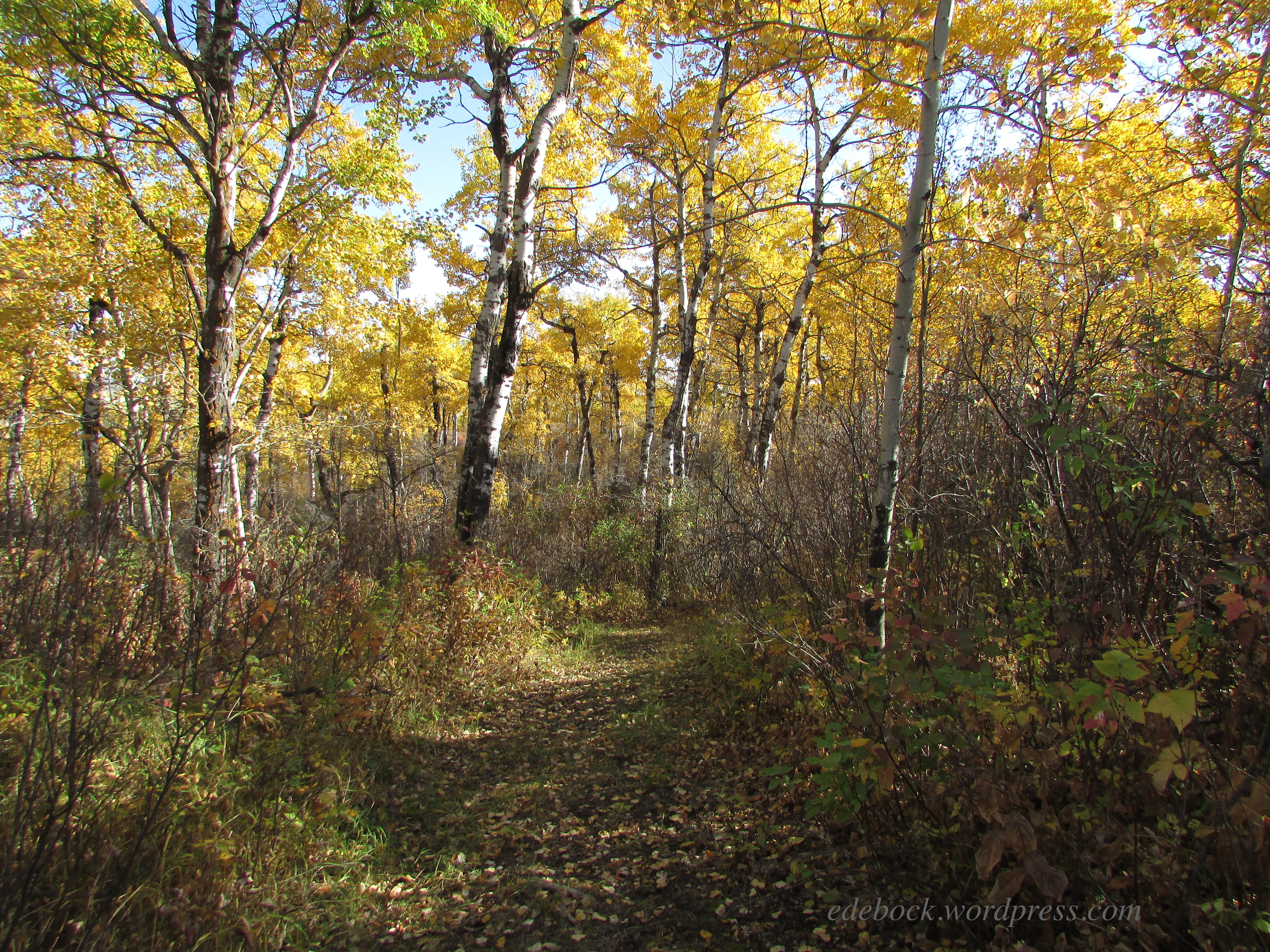
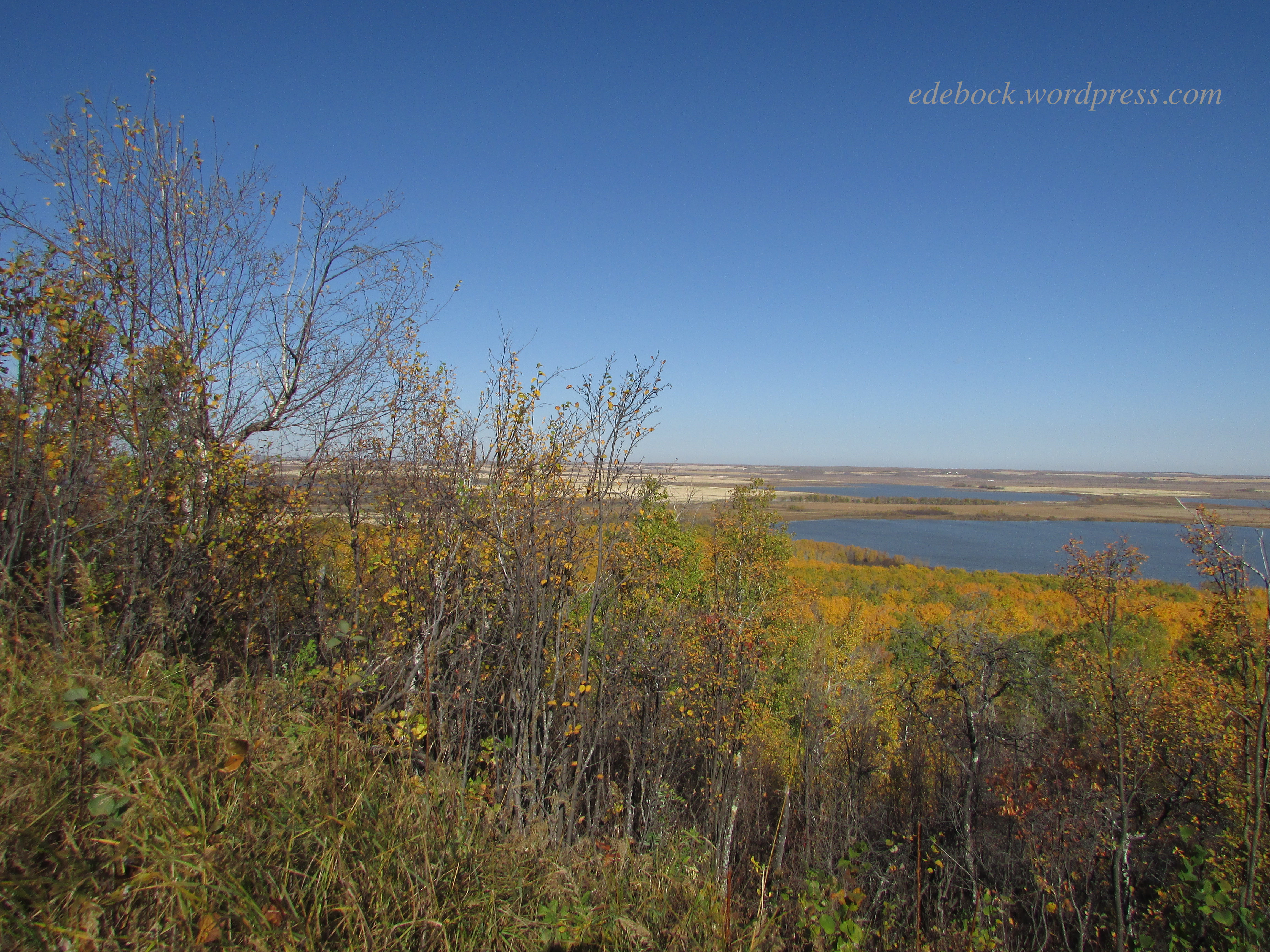
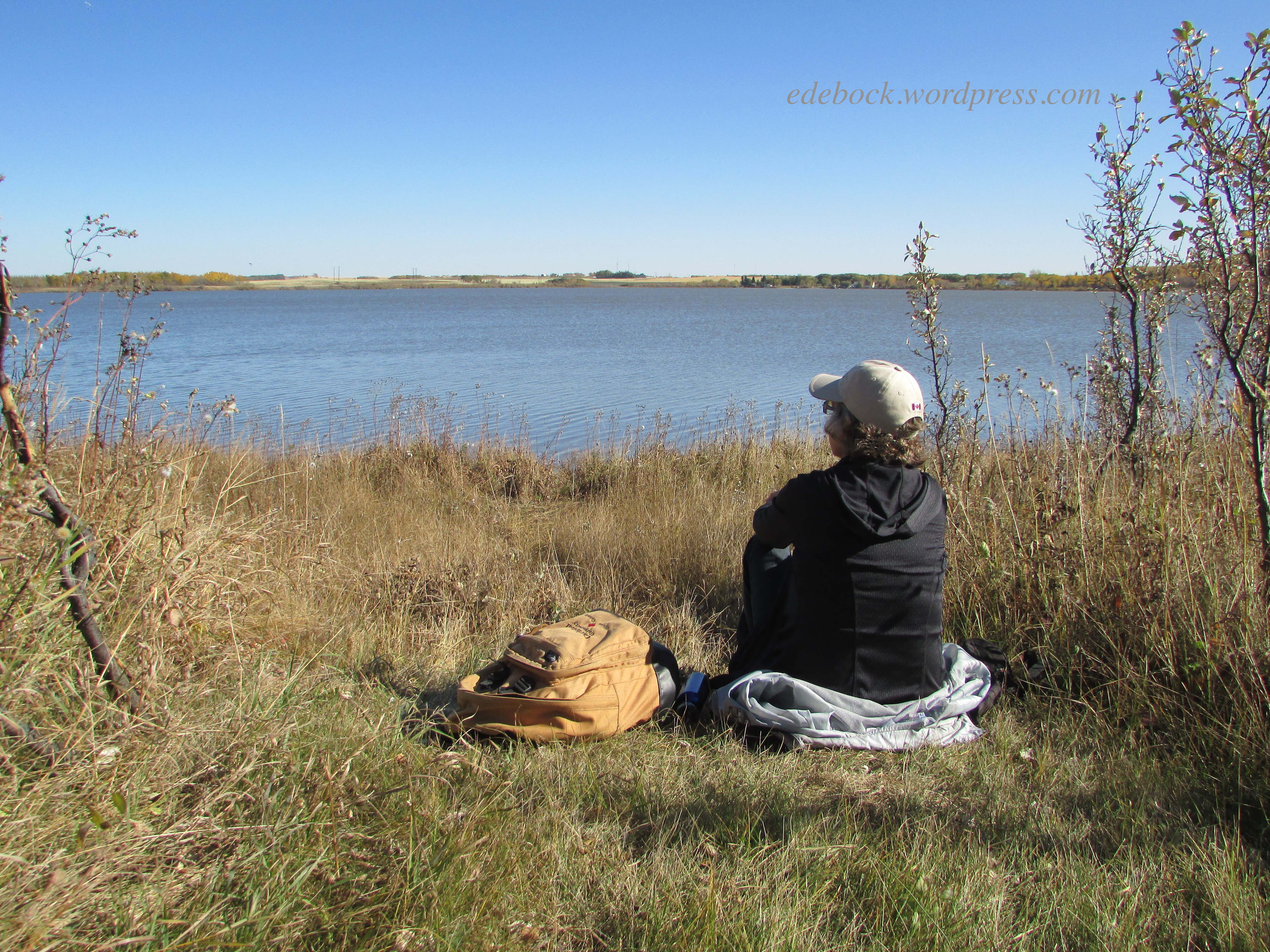
Over a three day period while camping at Miquelon Lake Provincial Park this past week, Richard and I hiked a total of 23.9 km, pushing me to within just 2 km of my final HOOFING IT Across Canada goal. This evening, under dark cloudy skies that look like they were about to let go and pour rain, I crossed my self-imposed finish line! Since July 1st, I’ve HOOFED IT 179.5 kilometres (111.5 miles). That’s 2.5 km more than the distance from our front door to the Cross Cancer Institute in Edmonton where I receive all my neuroendocrine (NET) cancer care.

If you’ve been reading my blog or following me on Facebook this summer, you know that I’ve been taking part in the CNETS Canada campaign to raise funds for NET cancer research. The goal was for participants to rack up 5514 km, the distance from Newfoundland and Labrador to the Yukon, by walking, hiking, kayaking, swimming, cycling, roller-blading, or any other forward moving activity that they could think of. We did that in spades, criss-crossing Canada almost five times!

Fundraising has been a bigger and vastly more important challenge. This evening, we’re sitting at just over $73,000, but approximately $20,000 of that has come in over the past ten days! For that reason, the deadline for making donations has been extended to September 25. With an extra two and a half weeks, we’re hopeful that we can bring in the final $27,000 necessary to continue funding critically needed neuroendocrine cancer research.

The need for research and awareness was brought home to me again this afternoon when I spent some time chatting online with a NET patient in another Canadian province who was diagnosed in May of this year. She’s been seen by an oncologist and has had surgery, but she hasn’t been referred to a NET specialist. She hadn’t even heard of Sandostatin, the injection that I’ve been receiving every 28 days since diagnosis. It’s been the workhorse medication for neuroendocrine cancer patients for the past 30 years, but her oncologist may never have encountered a NET patient before and may have little or no idea how to treat it. Sadly, this is a common occurrence for NET cancer patients!

Today, with so much attention being directed toward COVID related research (and rightly so) a relatively unknown cancer like ours can easily get overlooked. With many people facing financial difficulties, it’s not easy to keep asking for donations, but let me do it one more time. If you haven’t already and you’re able to give even a small donation, please visit my fundraising page and help us reach our goal. Every dollar counts!

Facebook, not Factbook!

facebook-thumbs-guardian-express

In my opinion, Facebook is a perfect example of a good thing gone very wrong. Facebook was launched on February 4, 2004 by Mark Zukerberg and his three college roommates as a social media platform meant to connect Harvard University students with one another. By the next day, over 1000 students had registered and by the end of that year, membership was open to nearly every university in the US and Canada. In September 2006, Facebook became available to anyone over the age of 13 with an email address and it rapidly ballooned into one of the most significant social media companies in history. By July 2015 half the world’s internet users were using Facebook.

On the surface, a social networking service open to everyone sounds like a wonderful idea, but people being people, it quickly morphed into something much uglier. ‘Everyone’ includes a lot of awful people who like nothing more than using the internet to be awful to as large an audience as possible. Online abuse and hate speech quickly became major issues that Facebook was ill-equipped to deal with. In no time, what was meant as a way for people to share their lives and photos with friends and family became flooded with fake news, propaganda, and false information on any and all subjects. This is particularly concerning considering the mind boggling fact that a study from the Pew Research Centre, also conducted in July 2015, found that 63% of Americans on the site were getting their news from Facebook!

Screen Shot 2020-08-10 at 11.41.42 AM

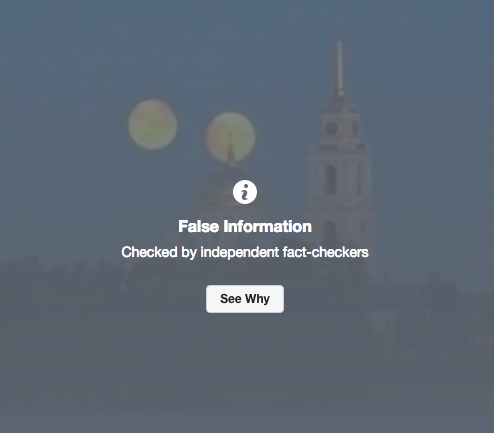
Facebook now works with third-party fact-checkers to try to identify and limit false news and I’m beginning to see more of these notifications, but so far, they’re only managing to catch the tip of the iceberg. It would help a great deal if people would do their own fact checking, but it’s a lot easier to just hit the share button than it is to do the work involved in making sure that something is accurate. The teacher in me always wants to point people toward the truth, but sadly, this sometimes gets me in trouble with those who don’t actually care if what they’re sharing is true as long as it fits their particular bias.

While there are many who are simply naive or gullible and who unintentionally share false information, there are others who are very purposeful about it. They are deliberate, sophisticated in their methods, and very devious. Take this recent post, for example.

117086856_10158958329000016_7096568034737799281_o It looks legit, but it’s not. Notice that it gives sources below the graphs. They’re blurry which makes them difficult to read and they don’t actually link to the sources given, but more grievous is the fact that if a person actually checks those sites, they discover that the numbers on the graphs don’t line up with the figures that they give! Someone has gone to a great deal of effort to create a false graphic that serves their agenda, but doesn’t provide facts.
So, in light of all this, why do I still use Facebook? I use it for the purpose that it was originally created. As frustrating as it can be, it’s still a useful communication tool. The chat feature was absolutely invaluable during the many years that we dealt with the needs and care of my very elderly parents from a distance. It allowed family members scattered across North America to participate in an ongoing discussion about life and death issues and to come to some very important decisions. It also allows me to participate in the day to day lives of my grown children and grandchildren who all live some distance away. I’ve used Facebook to reconnect with some important people from my past and to keep in touch with friends in faraway places like Japan, Mexico, China, and Saipan. As a neuroendocrine cancer patient living in a rural location where I don’t have access to an in-person support group, the Facebook patient groups that I belong to have been excellent sources of information and encouragement. Linking my blog to Facebook also allows it to reach a wider audience than it would otherwise.

So what can we, who still want to use Facebook, but who care about truth, do to ensure that we don’t contribute to the spread of false information? The American Friends Service Committee (AFSC) came up with a simple four step acronym that I think is worth sharing. SCEP: Source, Confirm, Evidence, Pause.

  1. Consider the Source. Is it from an independent news source that is likely to use fact-checkers and editors to verify a writer’s claims or is it from a website with a stated political aim?
  2. Google to Confirm. Is the story being reported by more than one site or author? If you can find it in other credible sources, it has a better chance of being legit.
  3. Assess the Evidence. A solid news story will be supported by strong evidence: verified documents, peer-reviewed research and sound studies, and direct quotes from named, not anonymous, sources.
  4. Pause. Instead of instantly liking or sharing a post that hits home, pause and consider. Is the article likely real? What do I hope will happen if I share it?

Be SCEPtical! It’s Facebook, not Factbook.


Just wear the mask!

I’ve avoided wading into the wearing of masks fray because I know that it’s controversial and has the potential to erupt into another nasty conversation on Facebook similar to the one provoked by my “redneck thinking” post back in April, but I can’t stay silent any longer. I am absolutely mind boggled that this is even an area of debate! Are people so stressed and so unhappy these days that they will jump at any reason to protest?

In an attempt to understand this controversy, we need to back up several months. In the very early days of the Covid-19 pandemic, public health officials thought that the virus was primarily transmitted by people touching contaminated surfaces and then their faces. Frequent hand washing, the use of hand sanitizers, and refraining from touching your face were thought to be the best ways to prevent its spread. At first, both the World Health Organization (WHO) and the Centers for Disease Control and Prevention (CDC) said that wearing masks was unnecessary. As time progressed, however, and more was learned about this new virus, it became clear that this early thinking was inaccurate. Instead, researchers now realize that Covid-19 is primarily spread by inhaling virus-laden droplets expelled by an infected person. As time passed and studies were conducted, it also became clear that people can transmit the virus before they begin to experience symptoms and, in fact, that some people who remain asymptomatic are actually contagious. These factors explain the more recent recommendation that people wear masks in public, especially in situations where it’s difficult to maintain distance between one another. Perhaps changing advice midstream led to confusion and fuelled the anti mask movement, but I think that there are also other reasons why it’s become necessary for many businesses and municipalities to make wearing masks in public spaces mandatory.

Denial is clearly at the root of some people’s refusal. In spite of all the information to the contrary, there are still those who refuse to accept the severity of this worldwide plague. Conspiracy theories abound and negative voices question the research and the data that it presents.

At the individual level, some people protest that their personal rights and freedoms are being infringed upon when they’re told that they must cover their mouths and noses. They selfishly choose to put personal comfort above the welfare of others. We all know that wearing a mask isn’t particularly comfortable. If you’re a glasses wearer, as I am, there’s the added frustration of fogged up lenses, although I’ve discovered that folding a Kleenex (tissue) into a strip and placing it across the bridge of my nose under the top edge of the mask helps a lot. I don’t like wearing a mask any more than anyone else does, but I wear one because I don’t walk this planet alone and I don’t want to take a chance on unknowingly passing a deadly virus to someone else, particularly one of the more vulnerable amongst us. As my specialist put it so succinctly when we discussed the topic at my appointment yesterday, “In our culture, too many people think only about their rights and freedoms while forgetting that we also have responsibilities.” In Genesis 4:1-12 and elsewhere throughout scripture, God answers the question, “Am I my brother’s keeper?” with a resounding YES! Jesus said that the greatest commandment is to “Love the Lord your God with all your heart and with all your soul and with all your mind.” The second is to “Love your neighbour as yourself.” In the days of Covid-19, loving your neighbour often involves wearing a mask!

Some of the excuses that I’ve heard for not wearing masks are absolutely ludicrous.

  • Wearing masks causes oxygen deprivation or carbon dioxide poisoning or similarly, rebreathing dirty moist air will make me sick. In reality, the fibres that cloth and surgical type masks are made from aren’t dense enough to block the exchange of gases and air can also get in around the edges. The only time that this excuse might be considered legitimate would be during strenuous exercise. If this is a concern, exercise outdoors instead of in a gym and maintain distance from people who aren’t part of your household or “bubble”.
  • The mask prevents communication. Sound passes easily through masks! This is only a legitimate concern for those who are hearing impaired and who depend on lip reading. Masks with clear panels are available for those who interact regularly with someone for whom this is an actual problem.
  • Masks hide our beautiful smiles. The world will survive without your beautiful smile until this pandemic eventually comes to an end!

And then there’s the one that I’ve seen circulating around on Facebook since our province announced that masks will be required in schools for students from grade 4 to 12. Masks make children unidentifiable and assist in human trafficking! Now that’s really grasping at straws! There is absolutely no question that human trafficking is an incredibly heinous crime and far more prevalent that most people are aware of or willing to admit, but to make the wearing of masks about human trafficking is a ridiculous stretch and an insult to intelligence.

Perhaps living in Asian countries where wearing a mask when you have a simple sniffle has long been a common courtesy has influenced my thinking on this topic, but I’m truly astonished by the tempest that this has created here in North America. As more businesses and municipalities make masks mandatory, the furor increases, but there’s really one simple answer for those who don’t want to comply. If you choose not to wear a mask, stay home!

download

Sharing spaces

Big Knife Provincial park, less than an hour from home, has become one of our favourite places to get away from the busyness of life. We’re just back from enjoying three days of peace and quiet there. 72 hours without cell phone or internet. No news. No politics. Just us and nature!

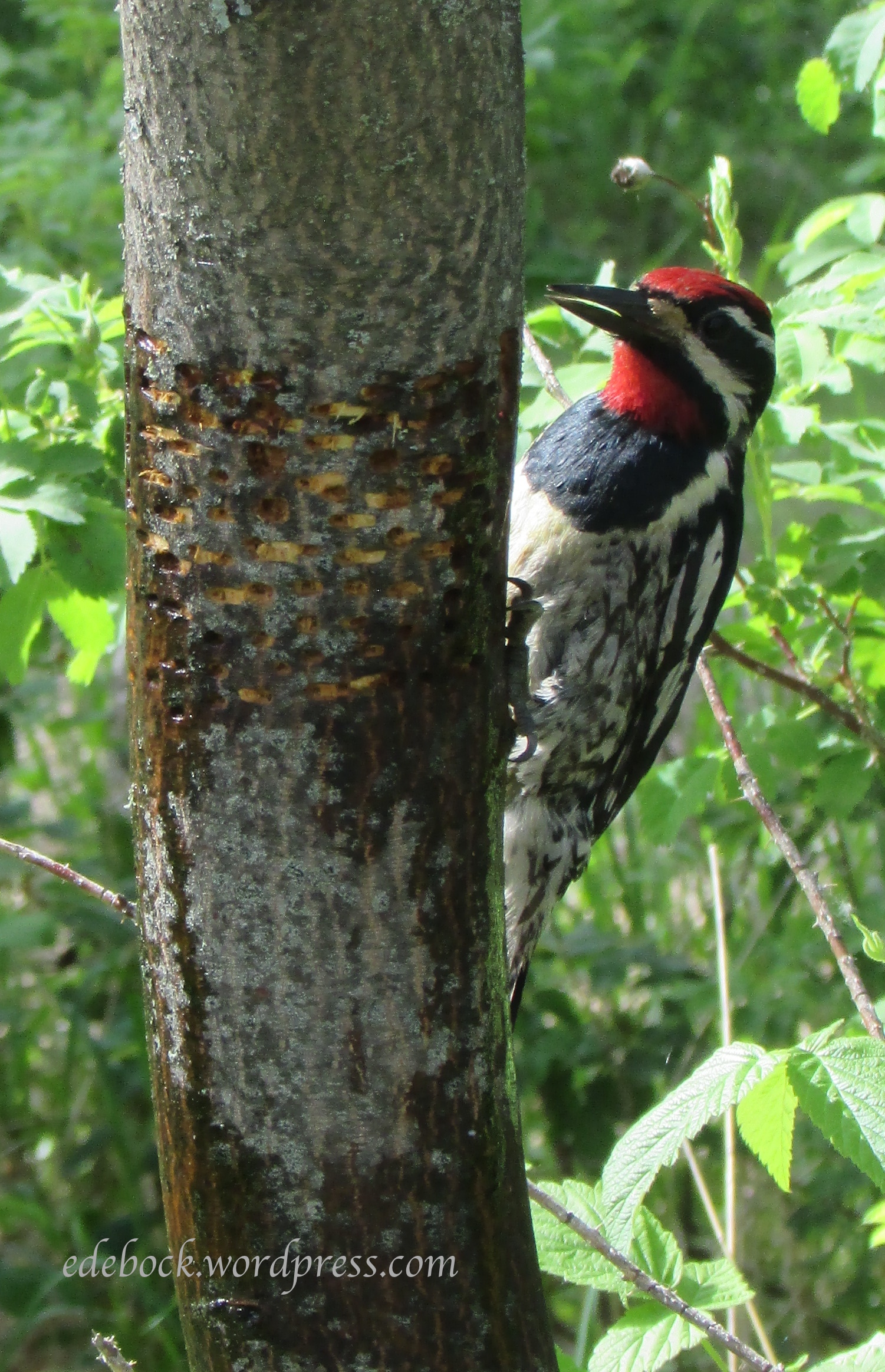
We certainly weren’t alone, however. We shared our camp spot with a very busy pair of yellow-bellied sapsuckers. I’m not an avid bird watcher, but these two piqued my curiosity and I had to do a bit of research as soon as we got home. Here’s what I learned.

The Yellow-bellied Sapsucker is a medium-sized woodpecker that breeds in Canada and the north-northeastern United States. It makes two kinds of holes in trees to harvest sap. Round holes extend deep in the tree and are not enlarged. The sapsucker inserts its bill into the hole to probe for sap. Rectangular holes are shallower, and must be maintained continually for the sap to flow. The sapsucker  laps up the leaking sap and any trapped insects with its specialized, brush-tipped tongue, and eats the cambium of the tree too. New holes usually are made in a line with old holes, or in a new line above the old.

IMG_1040 - Version 2

That’s Mr Sapsucker in my photo. His Missus looks almost the same except her bib is grey instead of red. With thousands of trees in the area, why they chose one in the middle of the campground, I’ll never know, but they were clearly quite comfortable sharing space with us. Apparently, our trailer was in their flight path between this tree and the woods surrounding the campsite, but Mr quickly took to flying directly under our awning even when we were sitting there! Thankfully, there were no collisions as he went back and forth all day long!

We also shared our space with chipmunks and squirrels who checked the site from time to time to see if we’d left anything edible lying around, and a couple of rabbits who just passed on through.

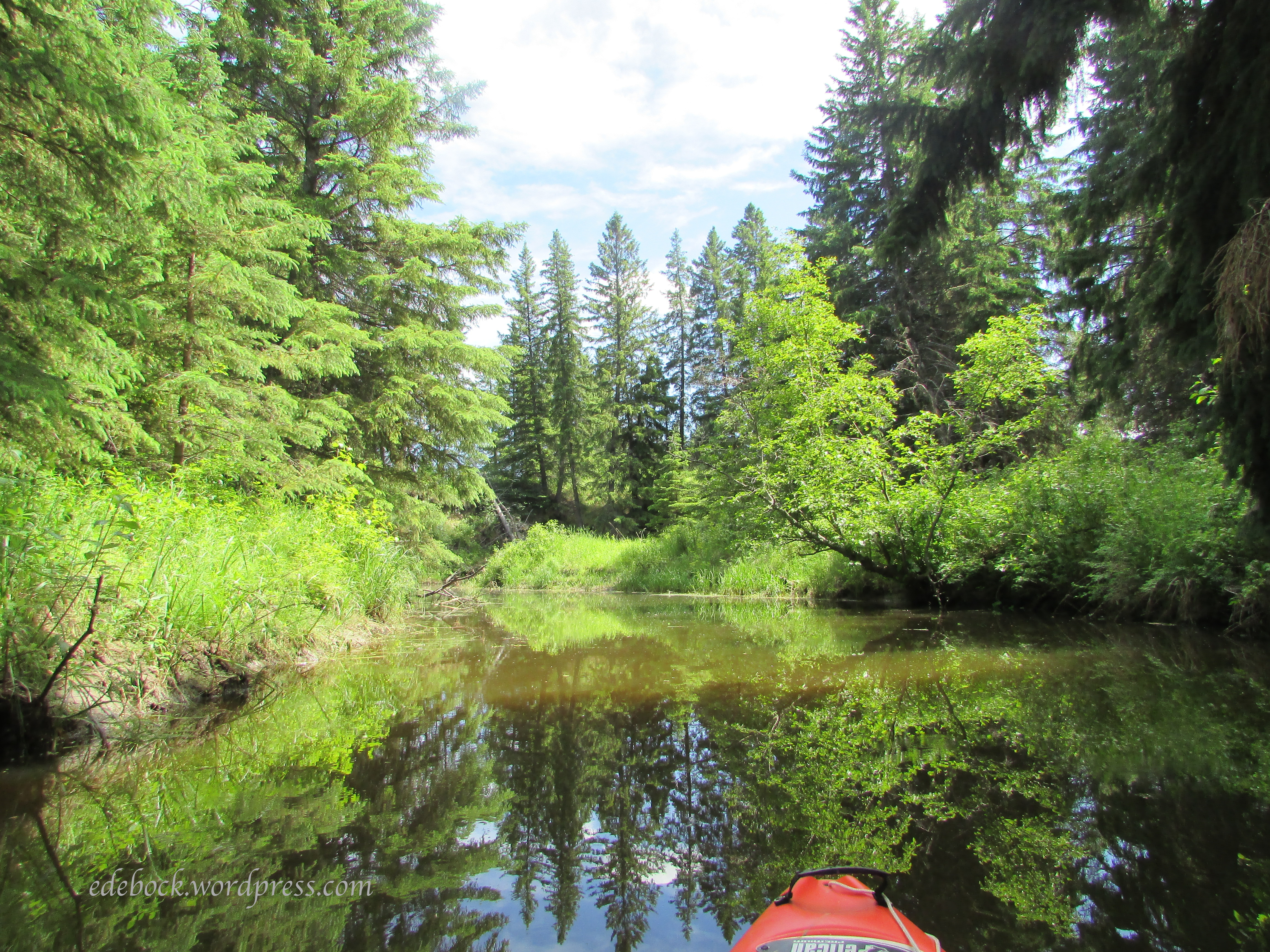
One of the things that we love to do at Big Knife is kayak on the Battle River. Yesterday, we discovered the spot where Big Knife Creek feeds into the river, so of course we had to explore it. The slow moving creek was shallow in spots, but navigable. We went as far as we could (up the creek with a paddle!) until a huge fallen tree blocked our pathway and we had to turn around.

IMG_1042

Pristine, untouched wilderness!

IMG_1047

We quickly discovered that even here we weren’t alone. This time we were sharing space with beaver. Lots of beaver! They obviously weren’t as comfortable as the sapsuckers were with the idea of sharing space with us though. As soon as we got anywhere close, tails hit the water with thundering splashes and they disappeared below the surface. I managed to get a picture of this one just before he gave his warning shot and disappeared from sight.

IMG_1049 2

Emerging

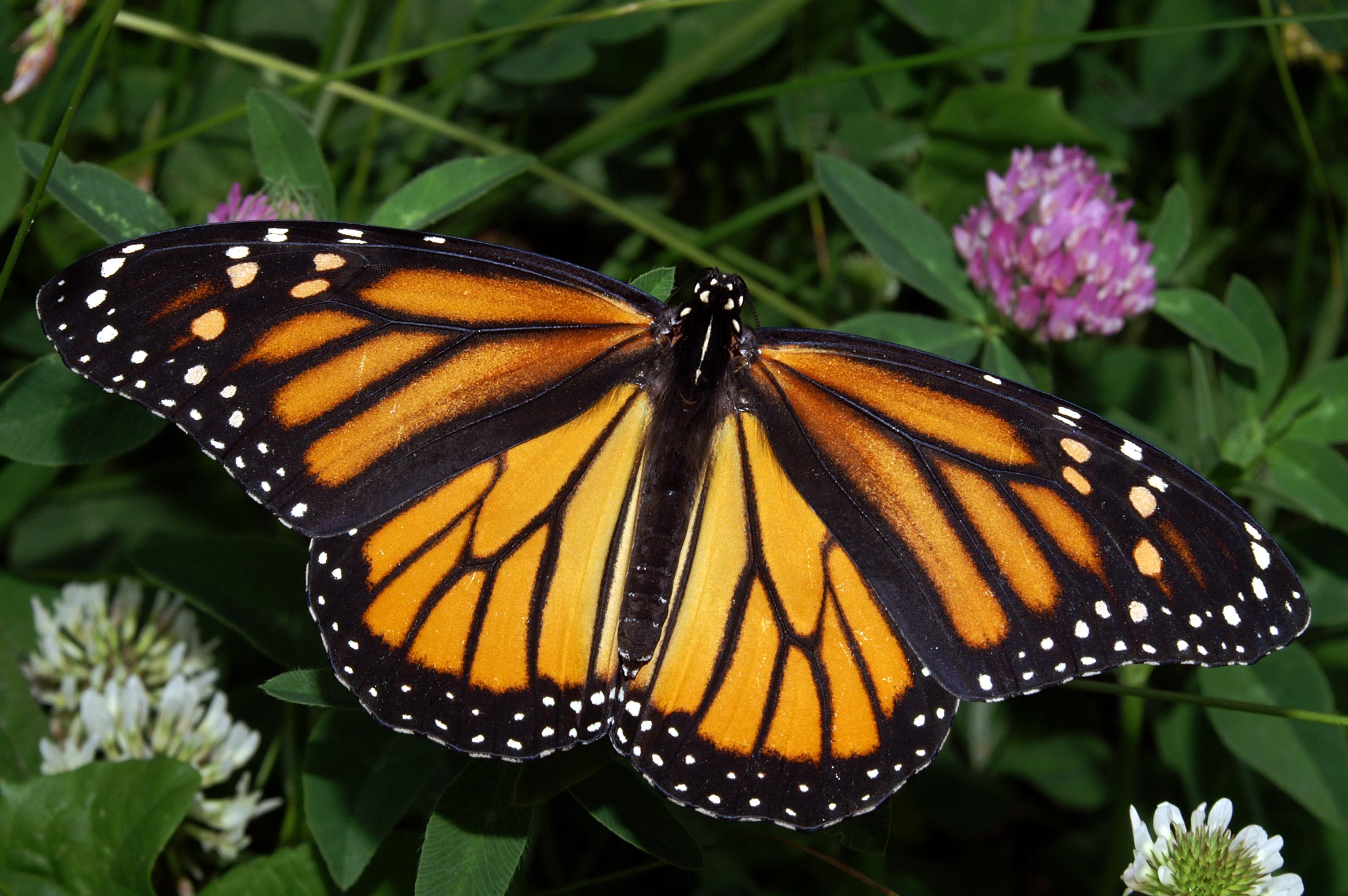
6b418a7e1c894727282ae55335b6bb1aLike butterflies coming out of cocoons, we’re gradually emerging from the Covid-19 shutdown and figuring out what living in this new world is going to look like. I don’t know about anyone else, but I’m finding it a little bit unnerving. My cocoon was comfortable. I knew exactly what to do and what not to do. I wasn’t worried about contracting  the virus because we easily kept our distance from other people and almost never left our county where there hasn’t been a single confirmed case. Thankfully, I was able to fit the local golf course into my cocoon!
Even though Alberta entered the first phase  of a three stage relaunch strategy back on May 14, nothing really changed for us. Now, with the introduction of Stage 2 on Friday, a week ahead of schedule, bigger changes are happening. In addition to those businesses that were deemed essential and never closed, as well as those that reopened in Stage 1, theatres, libraries, places of worship, casinos, bingo halls, arcades, and recreational facilities including gyms and pools, as well as many other similar facilities, can now be open. Personal services, including skin and body treatments, facials, manicures, pedicures, waxing, and tanning are also allowed now.

2560

Life at this stage is a bit like the newly emerged butterfly; somewhat fragile and facing many unknowns. As we step out of our cocoons, we need to decide which of the many available options we feel comfortable resuming right now and what precautions should be taken when we do.

Though we’re being reminded to remain diligent about social distancing and to wear masks when that’s not possible, I’m concerned that many people seem to think the crisis has passed and are becoming lax about following the recommendations. If that continues to happen, I foresee an upswing in Covid cases and possibly a need to shut things down again. Though my cocoon was comfortable and safe, I don’t want to have to hide away in it for any longer than necessary, so while we spread our wings, please let’s do it with care and caution!

Monarch_In_May

The time before

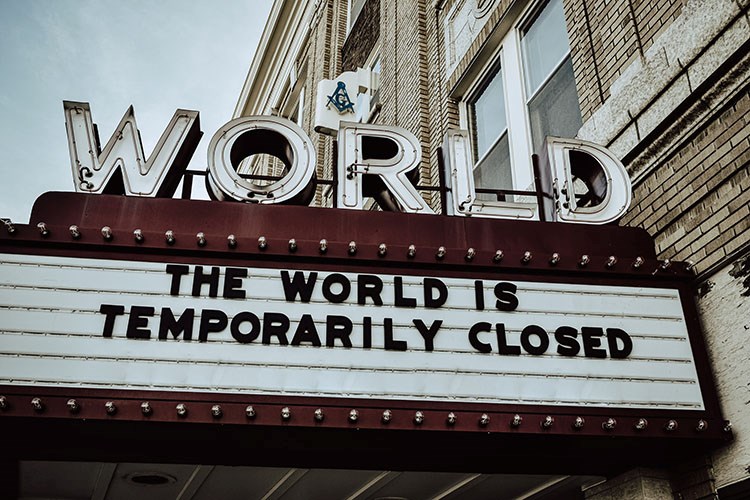
It’s been over ten weeks since the World Health Organization officially declared the worldwide outbreak of Covid-19 a pandemic and countries began to shut things down. More and more I hear people expressing nostalgia for “the time before” and wondering when, if ever, life will return to normal. As I’ve mentioned before, I feel fortunate that my life has not had to change as drastically as many others have. As a retiree, I don’t have a business to close, a job to lose, or children at home. Nevertheless, life is different now and I’ve been pondering the things that I miss.

In the big picture, most of the things I miss are small, but small things are often what bring interest or significance to our lives.

I miss browsing our local thrift stores and perhaps finding a treasure or two. After cleaning out our storage room and kitchen cupboards as well as doing my seasonal wardrobe switch from winter to warm weather clothes, I also miss being able to donate the items I no longer want to keep.

I miss impromptu lunch dates with my husband at The Wooden Spoon, our favourite local eatery. We usually go at least once or twice a month.

Although I enjoy being at home with hubby, I miss spending time with other women. Whether it be dropping in for a cup of tea and a chat with a friend, a morning coffee time with women from my church, or sipping wine and visiting with my “craft night” friends at our monthly get togethers, I need my girlfriends. Thankfully Zoom has helped, but it’s not the same as being together in person.

Though we’ve been enjoying online services from the comfort of home, I miss gathering together with our church family on Sunday mornings.

We don’t live close enough to see our grandchildren on a regular basis, so two months without seeing any of them hasn’t been too hard to handle, but there are babies close by who are changing so quickly that I’ll hardly recognize them when I finally see them again. And then there’s the one that was born late last week. How I’d love to visit and hold her!

Though I’ve learned to live one day at a time, I miss being able to plan ahead. Not knowing if or when we’ll be able to travel internationally again is especially difficult for a wanderer like me. Half the fun of traveling is the planning that goes into it.

Perhaps more than anything else, I miss having things to look forward to. Never before has the calendar page been so blank! In fact, the only thing I’ve written in for the entire month of May is the morning that the nurse comes to give me my monthly injection! I don’t mind life slowing down a bit, but at the moment it seems almost to have stopped and there’s a sameness in our days that’s getting rather tedious.

Perhaps when life finally returns to normal, or the “new normal” that everyone is talking about, we’ll have a greater appreciation for the things that we’re missing right now. Or will we quickly get back into routine and begin to take them for granted again?

What do you think? What do you miss the most from the time before?

closed-world-kies

100 pounds!

I started lifting weights in the early 1990s. It was never my intention to become a body builder, but I had recently entered my 40s and I thought that it might be a good idea to do something to try to keep in shape. We already had the equipment in the basement and hubby, who was a phys ed teacher at the time, had been lifting for several years, so I had him set up a routine for me and my lifting days began. I would never have foreseen that I’d still be lifting all these years later!

Unlike many serious lifters who work out year round, we only lift from mid October until the end of April each year; the months that the golf course is closed. We have a short summer season here in Alberta and we want to spend as much of it as possible engaging in outdoor pursuits, not working out in the basement! Over the almost three decades that I’ve been lifting, I’ve had good seasons, bad seasons, and  even one when I didn’t lift at all. We spent that year teaching English in Japan and rather than seeking out a gym to join, we spent as much time as we could seeing the country and soaking up the culture. There were also a couple of partial seasons including the winter that we headed off to China to spend a semester teaching there.

My best year to date was the winter of 2005-2006. I was 53 years old and many years pre cancer. At the end of that season, I was bench pressing 97.5 pounds. Why I never pushed myself to add just 2.5 more pounds and press 100, I’ll never know! I suspect that the golf course opened and I probably thought that I’d be able to push that little bit further the following year. In ensuing years, however, I never made it past 90 pounds again. That is until this year!

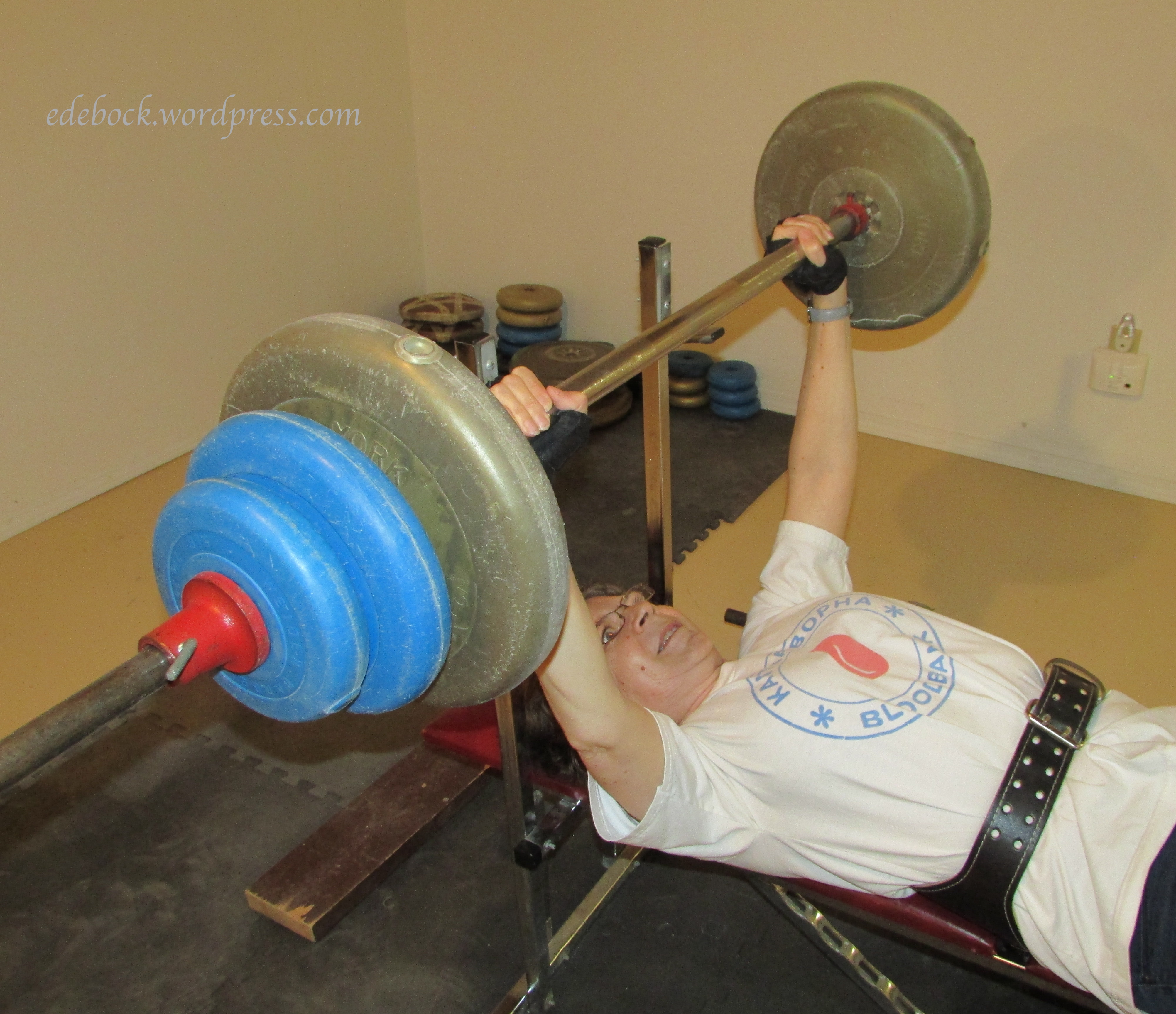
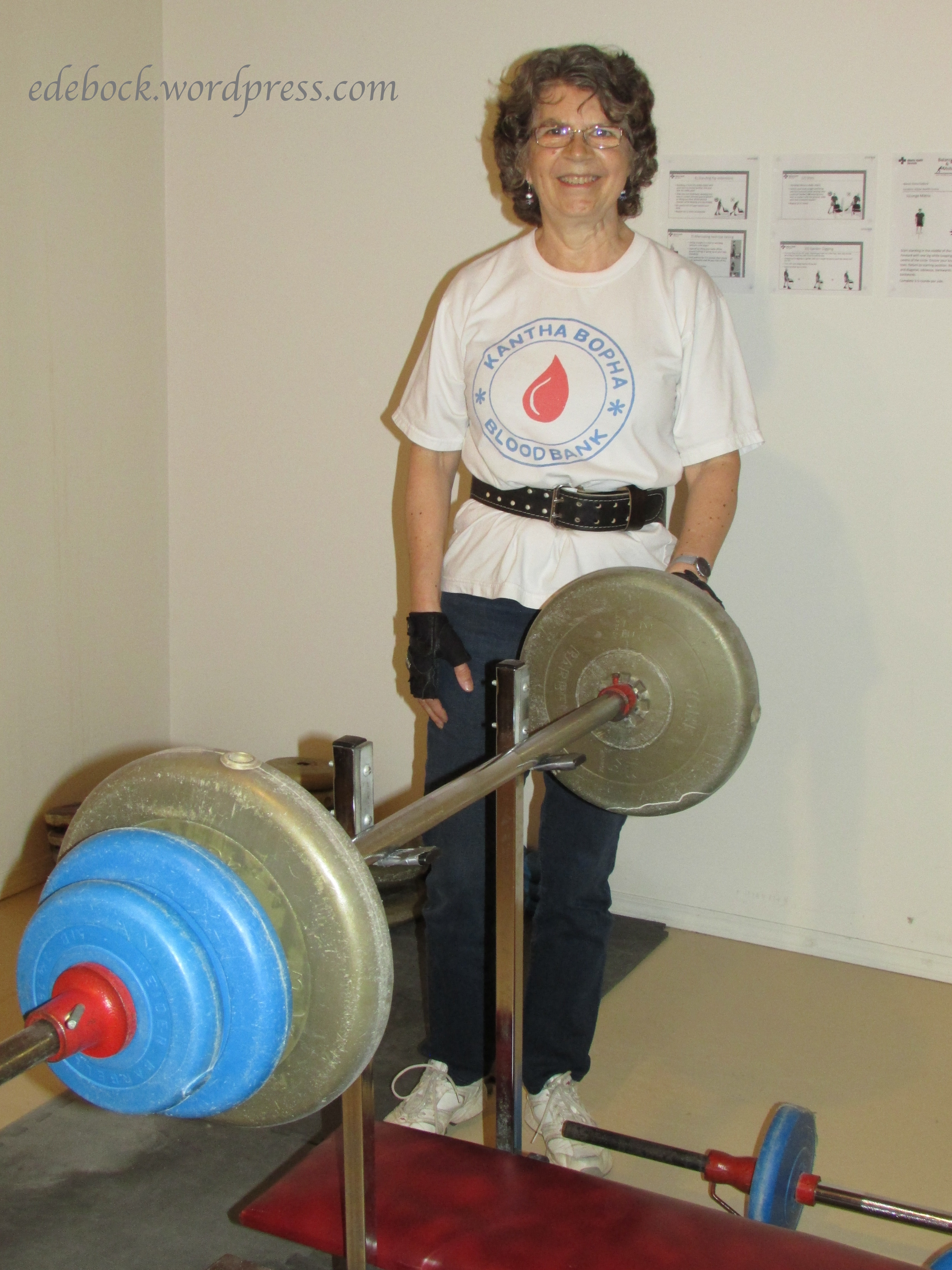
Each of the past few years, I had a midwinter PRRT treatment that set me back strength-wise, but I kept on pushing myself and refused to quit completely. Am I ever glad I did! I guess I didn’t realize how much those treatments were actually taking out of me, but I haven’t had one since last June and I cannot believe how strong I’ve felt this year. Today I did something that I gave up hope of ever doing a long time ago. I bench pressed 100 pounds! That might not seem like a lot to many more serious lifters, but to me, at 67 years old with two cancers, it was huge!

IMG_0998

It was back in February that I first caught a glimpse of potentially reaching a new personal best. It was definitely on a distant horizon, but barring injury or sickness, it might just be possible. It was very shortly after that thought crossed my mind, however, that we got the call telling us that my father was dying. We had to drop everything and head for Vancouver. With that interruption, I thought the possibility was gone, but when we got home, I picked up where I’d left off and soon realized that it might still happen. I’ve continued lifting later into the spring than I normally do partially because, with the Covid-19 shutdown, there wasn’t a lot else to do, but mostly because I was so close to reaching my goal and I simply couldn’t let it slip through my fingers this time.

IMG_1002

Definitely feeling pretty proud of myself!

IMG_1005

What is freedom?

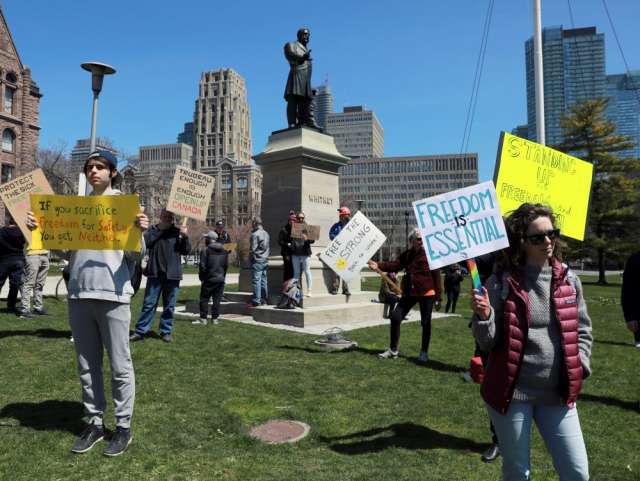
As the restrictions imposed by Covid-19 drag on, I’m seeing more and more on social media from people who are convinced that this is all a nefarious plot to permanently rob us of our rights and freedoms. These are people who, like me, have lived privileged lives; people who have no idea what true lack of freedom looks or feels like.

The Guardian 2

photo: The Guardian

In 1991, when the Soviet Union collapsed and the iron curtain ceased to exist, Eastern Europeans jubilantly celebrated the freedom that they had long been denied. Sadly, however, some of the first “freedoms” to be exercised in these formerly communist countries were indulgence in pornography, prostitution, drugs, and organized crime. So what is freedom? According to many, it seems to be the right to do whatever I want, whenever I want, to whomever I want. How incredibly self-indulgent!

Freedom means many things to many people. It may mean having the opportunity to vote for the ideas, people, or parties that best represent our views. It may mean being able to freely express our ideas and opinions without fear of reprisal. To some it may mean being free of debt and having the financial wherewithal to buy whatever they want. To others it may simply mean being able to live without constant fear of violence or persecution.

Is being told to social distance or to wear a mask to enter certain businesses really robbing anyone of these rights and freedoms? Are temporary school closures and having to worship online instead of in person really endangering society as we know it? I hardly think so!

During the current pandemic, those of us who are willing to temporarily give up some of our freedoms for the good of the community and who dare to suggest that others ought to do the same run the risk of being labelled socialist. That’s an insult that’s commonly hurled about by those who fear that their freedoms are being forever taken from them. I pay it little mind, however, as they clearly aren’t political scientists!

The Bible has a lot to say about freedom. In fact, it’s one of the central themes of the entire Word. John 8:32 tells us that “the truth will set you free” and later, in John 14:6, Jesus says, “I am the way and the truth and the life.” True freedom is found in relationship with Him.

This freedom is both freedom from and freedom to. Freedom from the things of this world that enslave us: earthly desires for wealth, success, and status; jealousy and envy; lust and perversion; rivalry and hatred. Freedom to be everything that we were designed to be, to do what we were made to do, and to serve God by serving others. Galatians 5:13-14 sums it up this way, “You, my brothers and sisters, were called to be free. But do not use your freedom to indulge the flesh; rather, serve one another humbly in love. For the entire law is fulfilled in keeping this one command: ‘Love your neighbour as yourself.'”

So how does this apply to Covid-19? Like true Biblical freedom, our political and social freedoms are also responsibilities. They don’t exist so that we can do whatever we want, whenever we want, to whomever we want. They exist for the good of the whole. Freedom provides opportunity and reason to serve whether by delivering groceries to doorsteps, making phone calls to ensure that neighbours and friends are faring well, sewing masks, or simply practicing social distancing and keeping our school and church doors closed until the threat of spreading the virus has lessened.

I don’t hide behind rose coloured glasses nor do I blindly believe that everything that our political leaders do is for our good, but I also don’t believe that Covid-19 is an evil plot to permanently rob us of our rights and freedoms!

National Post

photo: National Post

At least these ones are social distancing!


Obstacle or opportunity?

Screen Shot 2020-03-21 at 7.17.10 PM

Before the onset of Covid-19, we had planned on leaving on a spring vacation this week. We were going to walk the historic streets of Boston, explore some family history, see the sights of New York City, and visit friends who live in the area. Instead, we continue to shelter at home waiting for our province to gradually begin lifting some of the restrictions that have been put in place to protect us and to keep our health care system from being overwhelmed. There’s absolutely no question that for most people on the planet, the Covid-19 pandemic has been an obstacle to living life as we knew it before the middle of March, but has it also been an opportunity?

Screen Shot 2020-05-03 at 5.15.56 PM

Screen Shot 2020-05-03 at 5.16.35 PM

“Even in the darkest experiences we can uncover creative options.” wrote Samuel R. Chand in Leadership Pain: The Classroom for Growth.

On March 18, the day after Alberta declared a state of emergency and started shutting down non essential services, I wrote that I didn’t want to look back on this as time wasted. That was seven weeks ago. Rather than lamenting over a vacation lost and other obstacles to normal living, I’d rather look at opportunities seized. I truly believe that a positive attitude is vital to maintaining good health and overall well-being. That’s proven to be true throughout my journey with cancer and I think it’s just as true in present circumstances.

So how have I been using the unexpected extra time that I’ve been given by the pandemic shutdown? Here are a few of the ways…

  • Cleaned and reorganized the kitchen cabinets and set aside a number of items to take to our local thrift store when it reopens.
  • When I could no longer find the mixes that I’ve been buying for years on the grocery store shelves, I reverted to making my own pancake mix and baking biscuits from scratch. I doubt that I’ll ever go back.
  • Experimented with adapting a bread recipe until it turned out just the way I wanted.
  • Read several books.
  • Wrote more than usual including 11 blog posts in April as opposed to the 6 or 7 that I usually post.
  • Used Duolingo to study Spanish every day learning more than 1000 words so far.
  • Enjoyed several Zoom chats with family and friends.
  • Walked over 80 km (50 miles) partially on the treadmill, but mostly outdoors.
  • Found 7 geocaches.
  • Played a lot of 7 Wonders Duel.
  • Completed some yard work that wouldn’t have gotten done if I’d been busy planning and packing for a trip.

Does all this mean that I’m happy to have been essentially shut in for the past seven weeks? Does feeling positive about how I’ve been using my time mean that I’m oblivious to the effects that this period of time has had on the economy, on businesses, on the lives of others? Of course not, but neither have I been anxiously straining at the bit for it to come to an end. I’m happy that the health authorities in our province feel that we’ve reached a point where we can cautiously and carefully begin reopening, but I also realize that it will be some time before things are back to “normal”. I sincerely hope that we’ll be able to reschedule our trip someday, but I know that it won’t be for quite awhile.

So, how have you been coping during these most unusual days? Have you been focusing on obstacles or looking for opportunities?

Essential or non-essential?

As the Covid-19 shutdown continues and spring finally comes to Alberta, I’m hearing more and more discussion about essential versus non-essential services particularly amongst my fellow golfers. I have a great deal of respect for Alberta’s Chief Medical Officer, Dr Deena Hinshaw, but there are many who are taking strong exception to her declaration that golf courses are non-essential and must remain closed. This has been made worse by the fact that courses in our neighbouring province of British Columbia are open.

I love golfing and I eagerly await the opening of our local course each spring, but I would have a difficult time arguing that it’s an essential service. On the other hand, it definitely contributes to physical and mental well-being and it’s an activity that could quite easily be done while still maintaining appropriate social distancing. Adaptations could be put in place to ensure that golfers are not touching surfaces such as flag sticks.

One of the greatest sources of frustration for many people is the inconsistency in what is being deemed essential and what is not. For me, the most obvious example is cannabis shops. How is it that a substance that was illegal less than two years ago is now essential? Grocery stores, yes. Pharmacies, of course. But, cannabis stores? I don’t think so! In fact, I was even a bit surprised to see liquor stores remain open.

I realize that there are those who use cannabis medicinally, but like any other prescribed medication, they were able to access it legally long before it became available to the rest of us in October 2018. There’s no reason why it can’t still be accessible to patients who need it during the pandemic without the shops that cater to recreational use being open.

download

There would definitely be a lot less grumbling about following current public health orders if they were consistent. Golf or cannabis? Why one but not the other?