Where do you find comfort?

If there was ever a time in most of our lives when we craved comfort, this is probably it. The combination of the upcoming holiday season + a worldwide pandemic is bound to be stressful. For many of us, the shorter, darker days of winter add to our feelings of disquiet. It’s a universal human trait to seek comfort when life becomes difficult, but where do we find that comfort? What do we turn to?

You’ve probably heard people refer to their “Quarantine 15”. In a poll of more than 1,000 WebMD readers, nearly half of the women and almost one-quarter of the men said that they had gained weight since March. This trend is no surprise. Food is one of the most common sources of comfort that people turn to in times of stress. There’s even a physiological reason for this. Chronic or ongoing stress causes the body to produce higher levels of the stress hormone, cortisol, which in turn triggers cravings for salty, sweet, or fried foods; foods that produce a burst of energy and pleasure.

Thankfully, this hasn’t been an issue for me. In fact, in times of distress I tend to lose my appetite. One of my main go tos for comfort is a cup of hot tea which is known to lower stress hormones. Since I drink my tea black, it has the added benefit of being calorie free.

tea-mugs-250x250

Soaking in a hot bath is another favourite source of comfort for me. There’s something about being surrounded by liquid warmth that soothes away anxiety and restores a sense of peace. Perhaps it’s reminiscent of returning to the womb! 

What are some other ways that you can comfort yourself, especially if you’re trying to avoid stress eating? Here are a few suggestions, but I’d love to hear your ideas in the comment section. 

  • Exercise. This one might be challenging if gyms and recreational facilities are closed in your area, but it goes hand in hand with the next suggestion. 
  • Spend time outdoors. 
  • Listen to music.
  • Do something creative… paint, sketch, knit, crochet, sew, embroider… the options are almost endless.
  • Keep a gratitude journal.
  • Practice mindfulness. Focus on whatever you’re doing at the moment. Notice the sights, sounds, and scents that surround you. 
  • Escape into fiction. Watch a movie or read a book. 
  • Work on a jigsaw, crossword, or sudoku puzzle.
  • Savour the routines in your life. If life seems chaotic, work on establishing some routines and focus on the comfort that you receive from that first cup of coffee in the morning, a regular devotional or prayer time, a few minutes of quiet reading or contemplation after work.  

We are living in tumultuous times and there seems to be no end in sight. We can’t see the big picture and have no idea how all this is going to work out for us individually or globally, but there is One who does know. Ultimately, true comfort is to be found in faith in God. Scripture is full of words of comfort. 

2 Corinthians 1-3-4

Who is the enemy?

One of the most valuable lessons I’ve learned about dealing with conflict in a relationship is the idea of standing shoulder to shoulder and attacking the problem together instead of face to face and attacking one another. If we all applied this principle to the fight against Covid-19, I think we’d have a much better chance of successfully containing the spread and minimizing the long term effects of this dreadful pandemic.

unnamed

The first step in fighting this battle together is identifying who or what is the enemy and perhaps even more important, who is NOT the enemy. The enemy is not the government, the public health authorities, or Bill Gates. The enemy is not 5G and it certainly isn’t your Facebook friend who thinks that Covid-19 is a hoax!

The enemy is a virus; a submicroscopic infectious agent that invades living cells and uses their chemical machinery to stay alive and to replicate itself. It doesn’t care whether or not we believe it’s real. It doesn’t care what our political views are, whether we’re young, old, or in-between, or if we’re good at math. It just needs an available host.

We can exhaust ourselves arguing about whether or not we should be wearing face masks and using hand sanitizer. We can wave protest signs and refuse to follow recommendations and requirements. We can spread rumours and accuse one another of all sorts of heinous things, but the virus doesn’t care! As long as we’re standing face to face and fighting with one another, it will simply continue its insidious attack. It will kill more of our elderly and vulnerable. Some of its victims will get off easy, but others will suffer long term physical and mental harm.

OR we can stop attacking one another and stand shoulder to shoulder against a common enemy. We can admit that we’re all in this together and that there are no quick fixes or easy answers. We can temporarily put aside our personal preferences and stop rebelling against every measure that is put in place to try to protect us.

header

Hiking in November!

We usually have snow to stay by the end of October, but as we all know by now, 2020 is a rule breaker! Though we had some unusually cold weather and a few flurries in the latter half of October, when we turned the calendar page to November, the weather took an amazing turn. The average daytime temperature at this time of year is barely above 0ºC (32ºF), so when the forecast said that today’s high would be 18ºC (64ºF), we decided to go hiking! Hiking in central Alberta in November? Unheard of!

This morning, we headed for the village of Donalda, about an hour from home. The last time we hiked in that area was over five years ago. It was already 18ºC when we arrived and we hadn’t been hiking long when we started peeling off layers!

IMG_1801

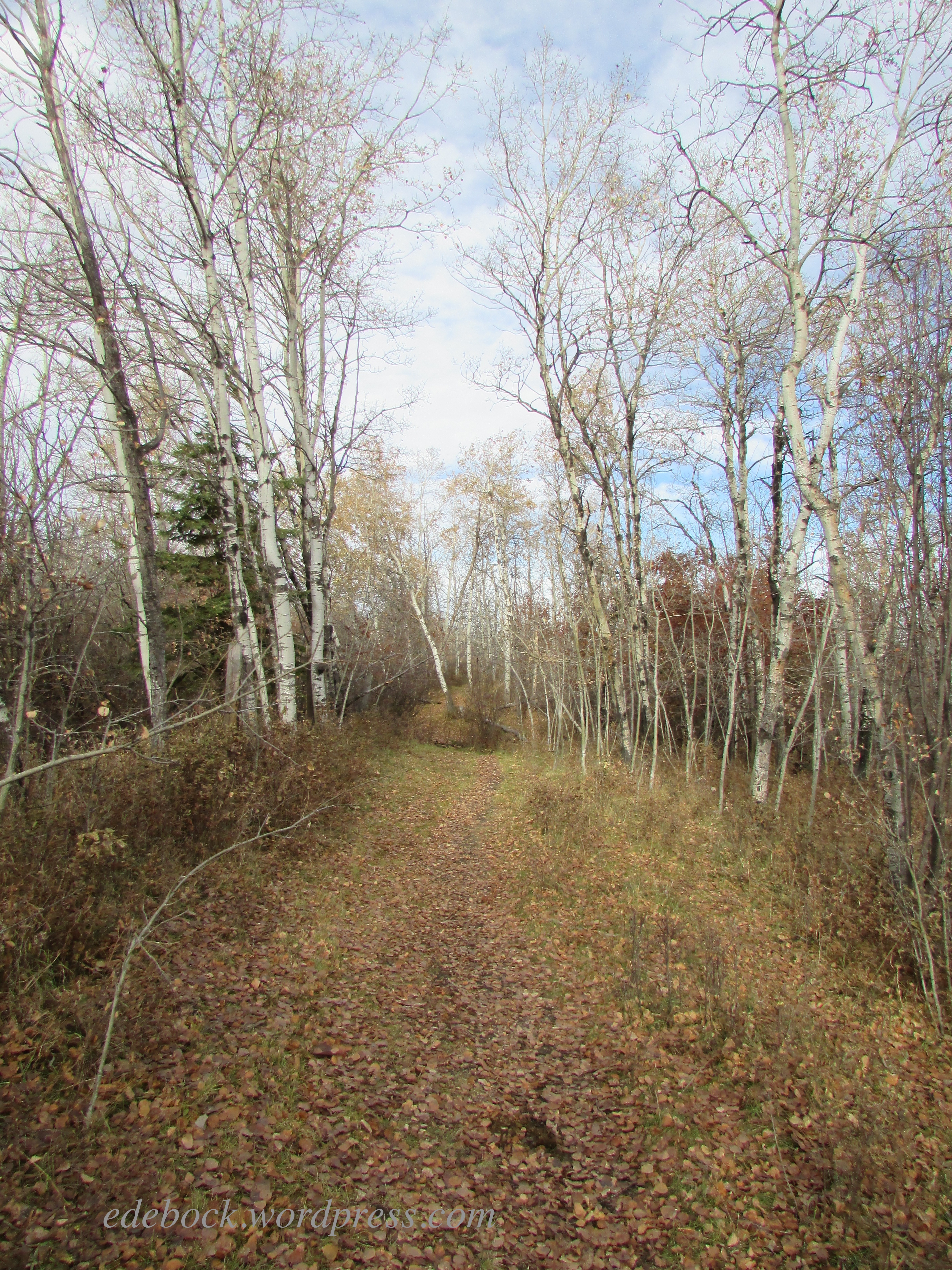
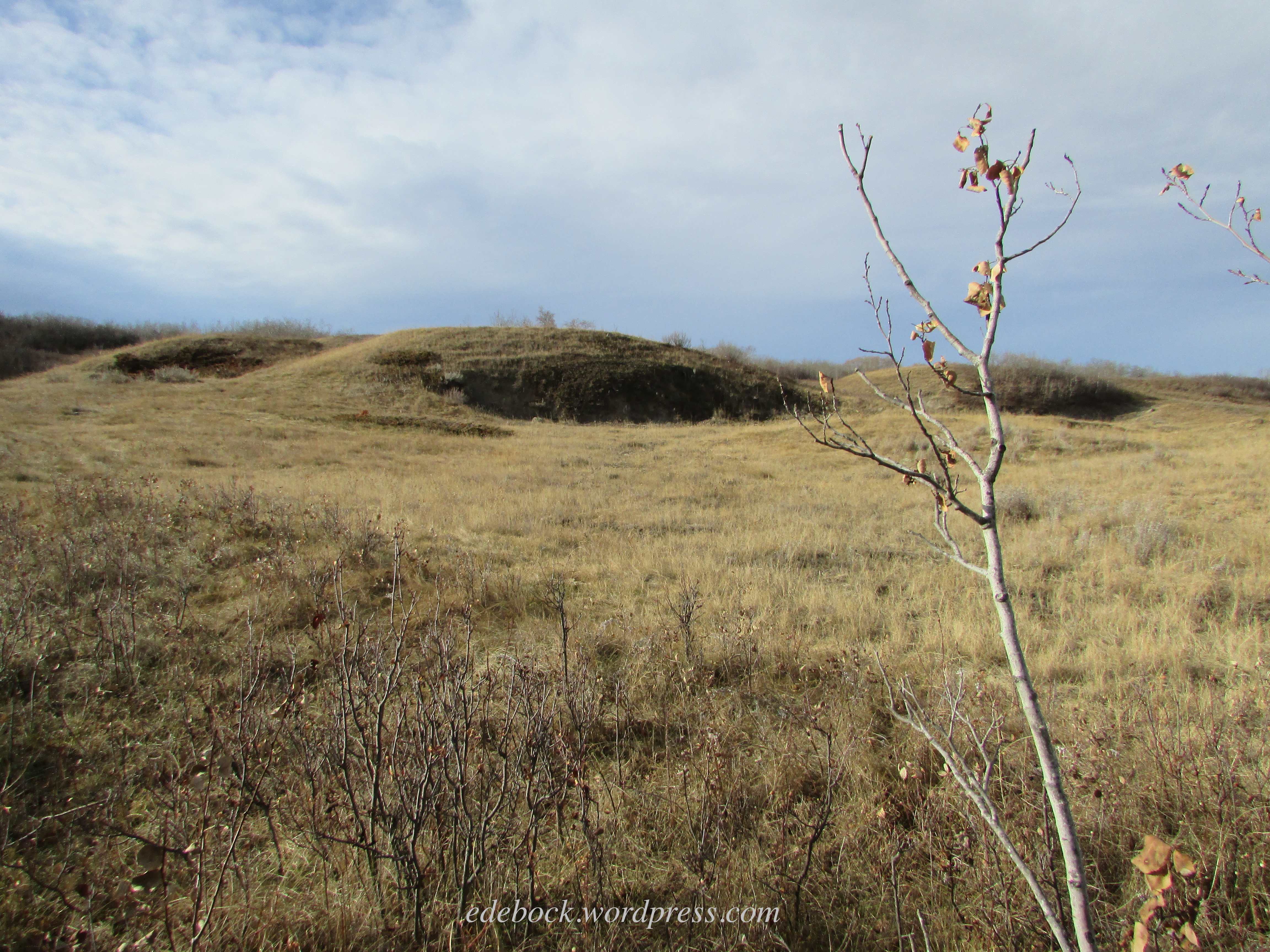
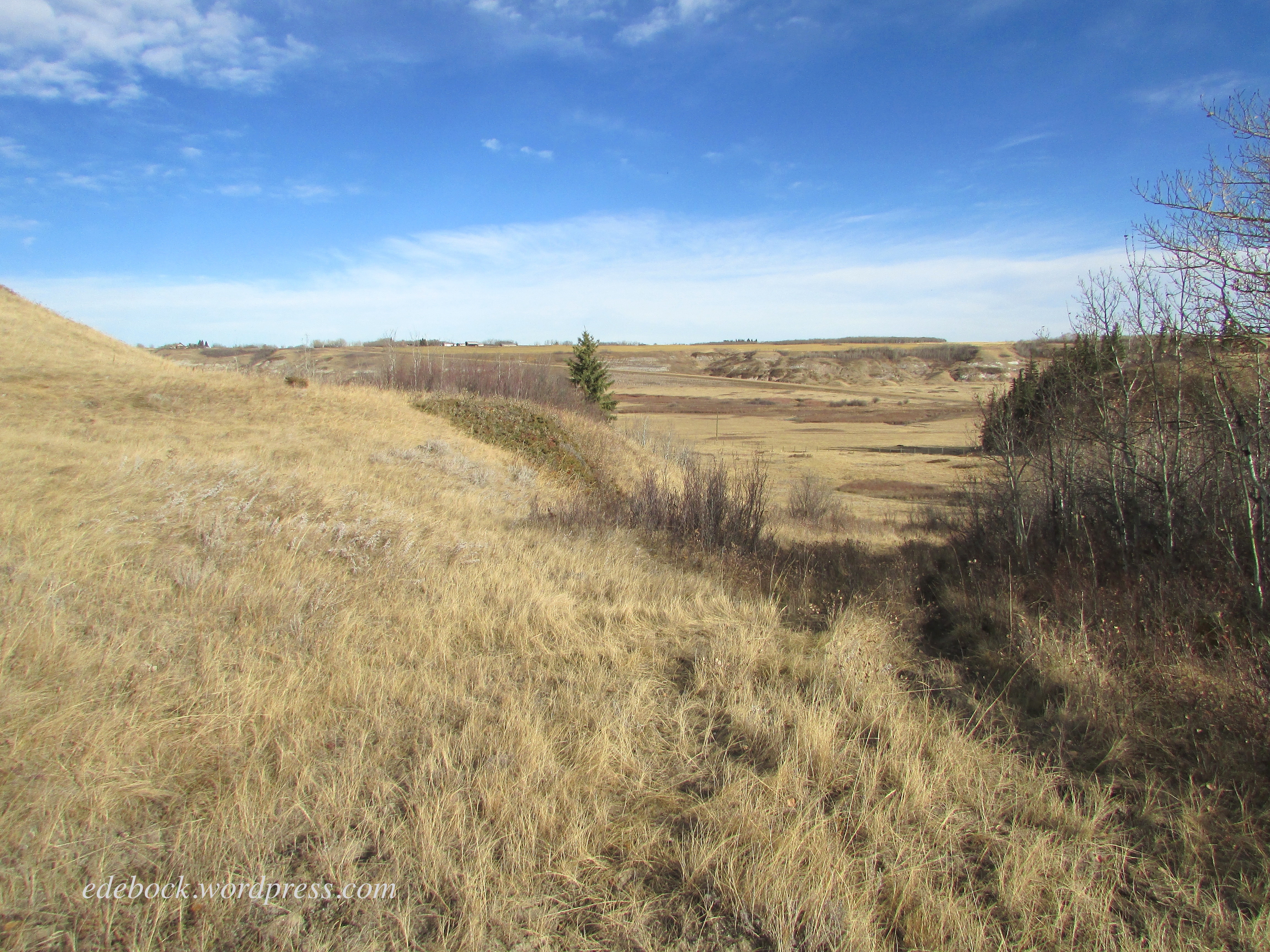
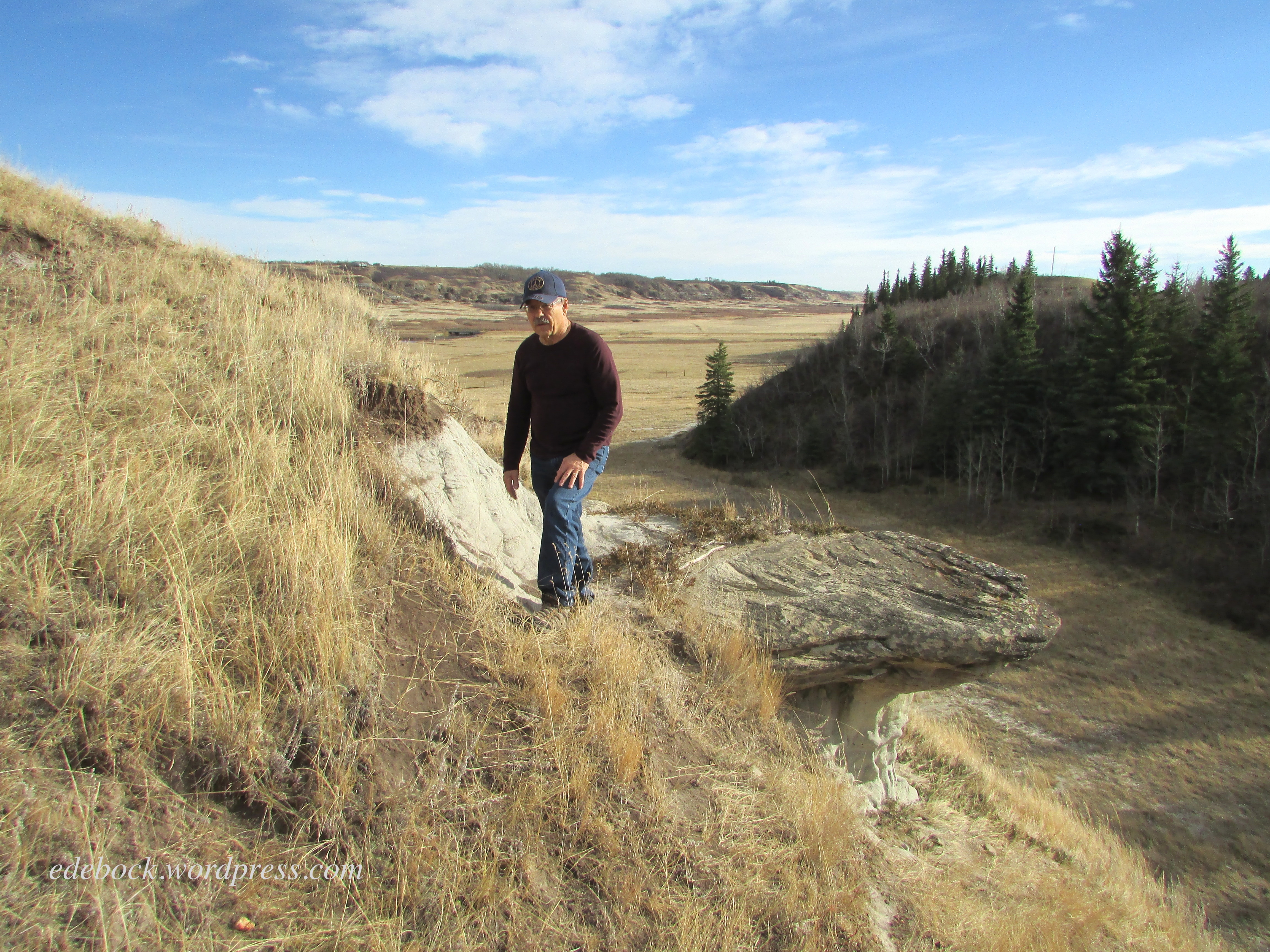
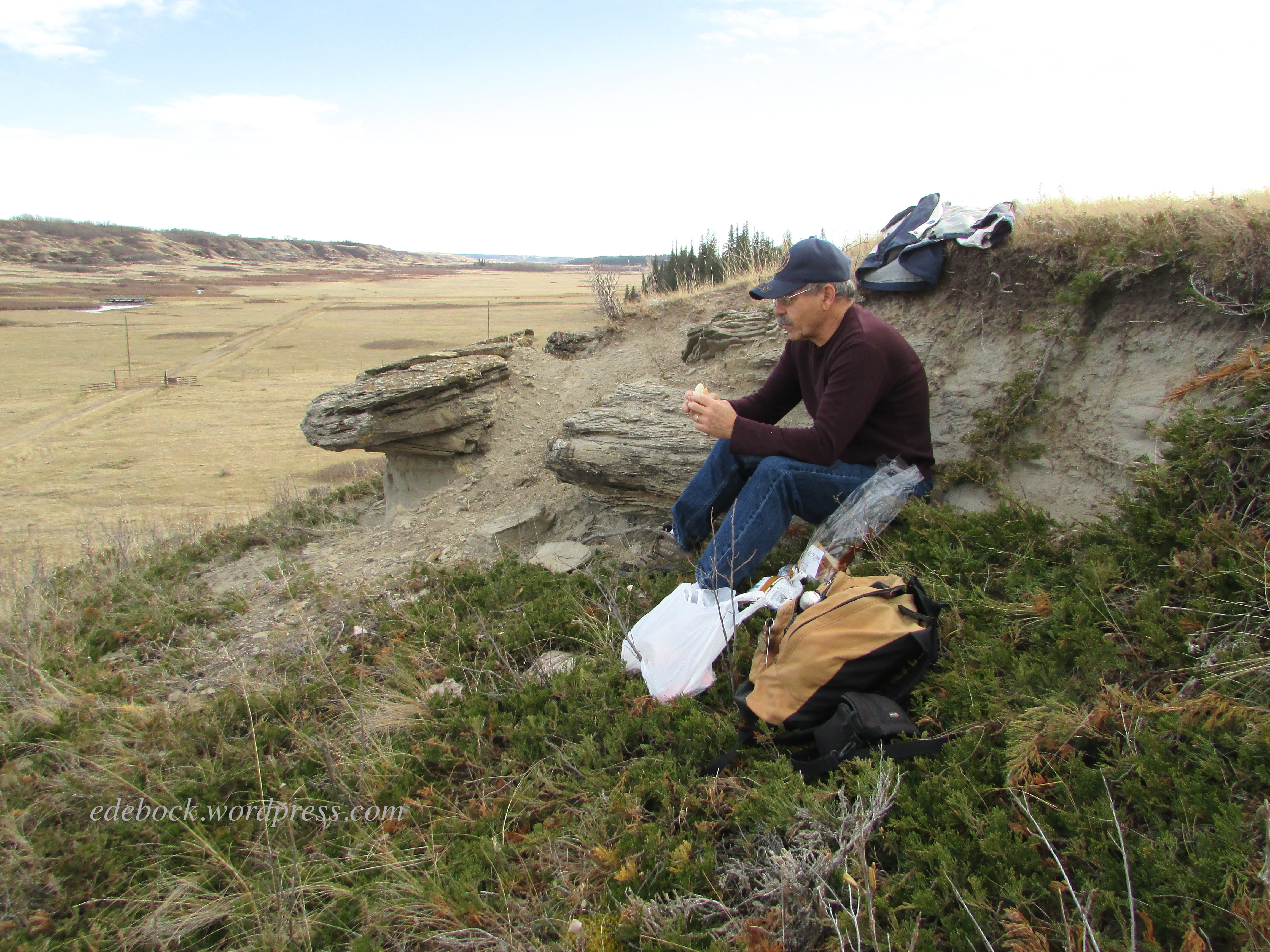
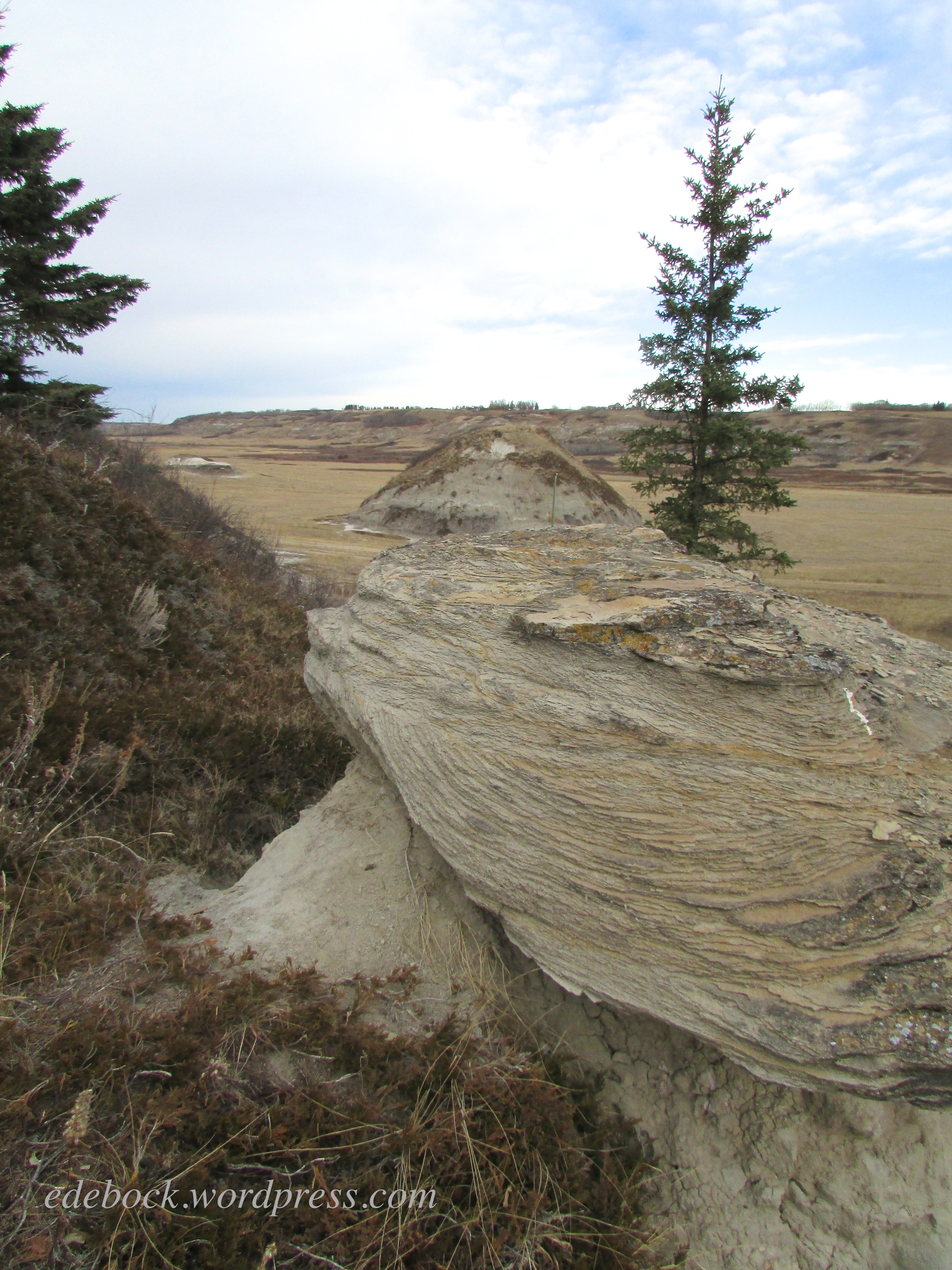
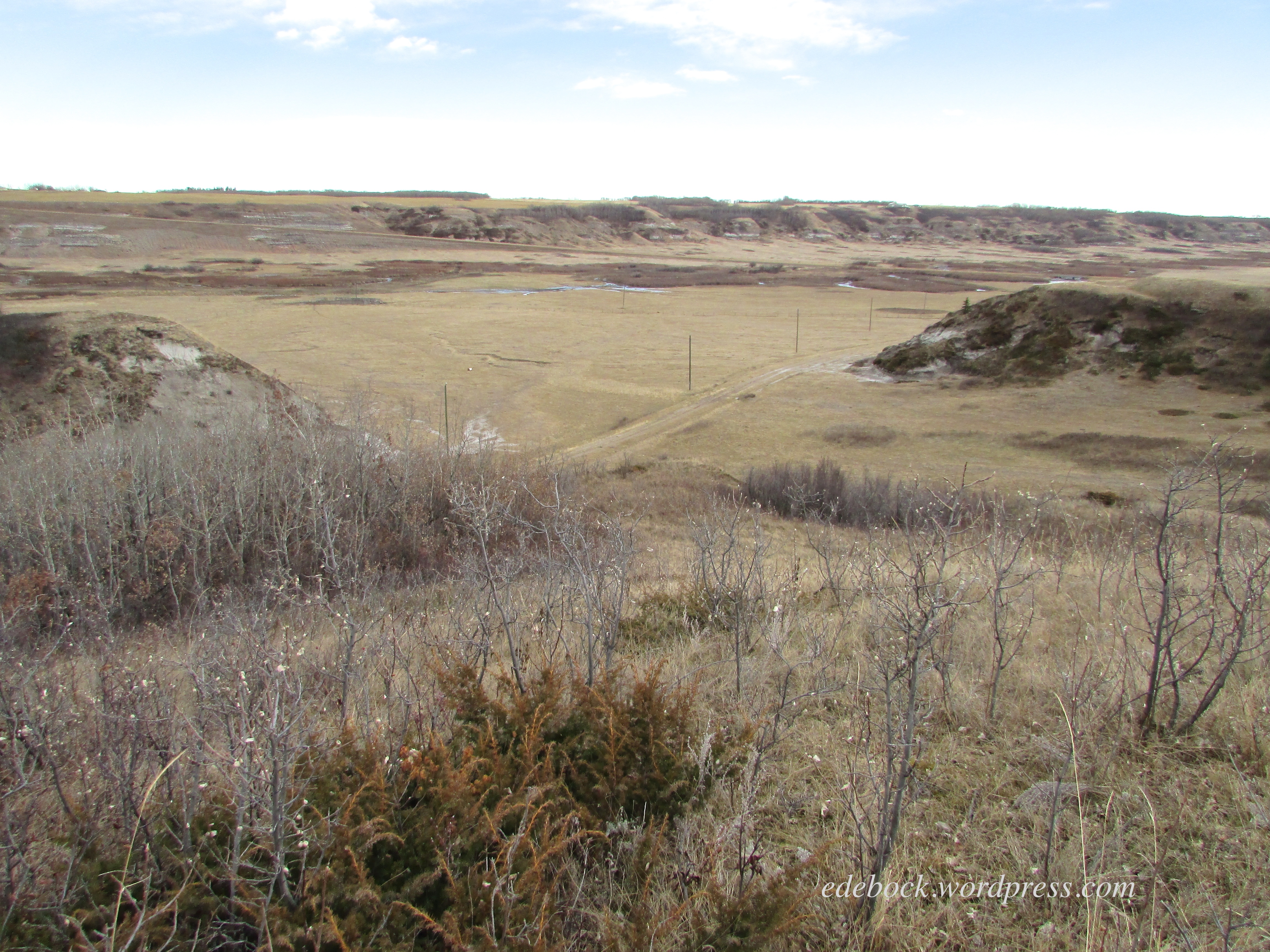
We started off following the woodland trail that leaves from one corner of the village. With all the leaves on the ground and the trees bare, there was a peaceful beauty about the place. Before long, we passed through a gate that took us onto 129 acres of private land that’s used for grazing cattle. Signs tell hikers that they’re welcome to explore anywhere within the area. We had the option of staying on the trail along the rim of the massive coulee, the northernmost part of the Canadian Badlands, but instead we turned toward the valley and wandered wherever our feet took us. Up, down, and around the bluffs we went seeking out interesting formations and views.

IMG_1806

Though there weren’t any cattle grazing in the area, we had to watch our step as there was plenty of evidence that they had been there! We did see some deer. 

IMG_1808

IMG_1811

The weather is so warm this week that the golf course, which has been closed since October 12, has reopened with golfers playing on temporary greens. Richard had Platelet Rich Plasma (PRP) injections in both his shoulders a week ago to promote healing of some old sports injuries, so he can’t do much with his arms right now. Golfing is out, but he certainly could hike!

IMG_1812

I have no idea how far we hiked, but we were out for about three hours. We enjoyed a picnic lunch overlooking the valley.  

IMG_1817

IMG_1818

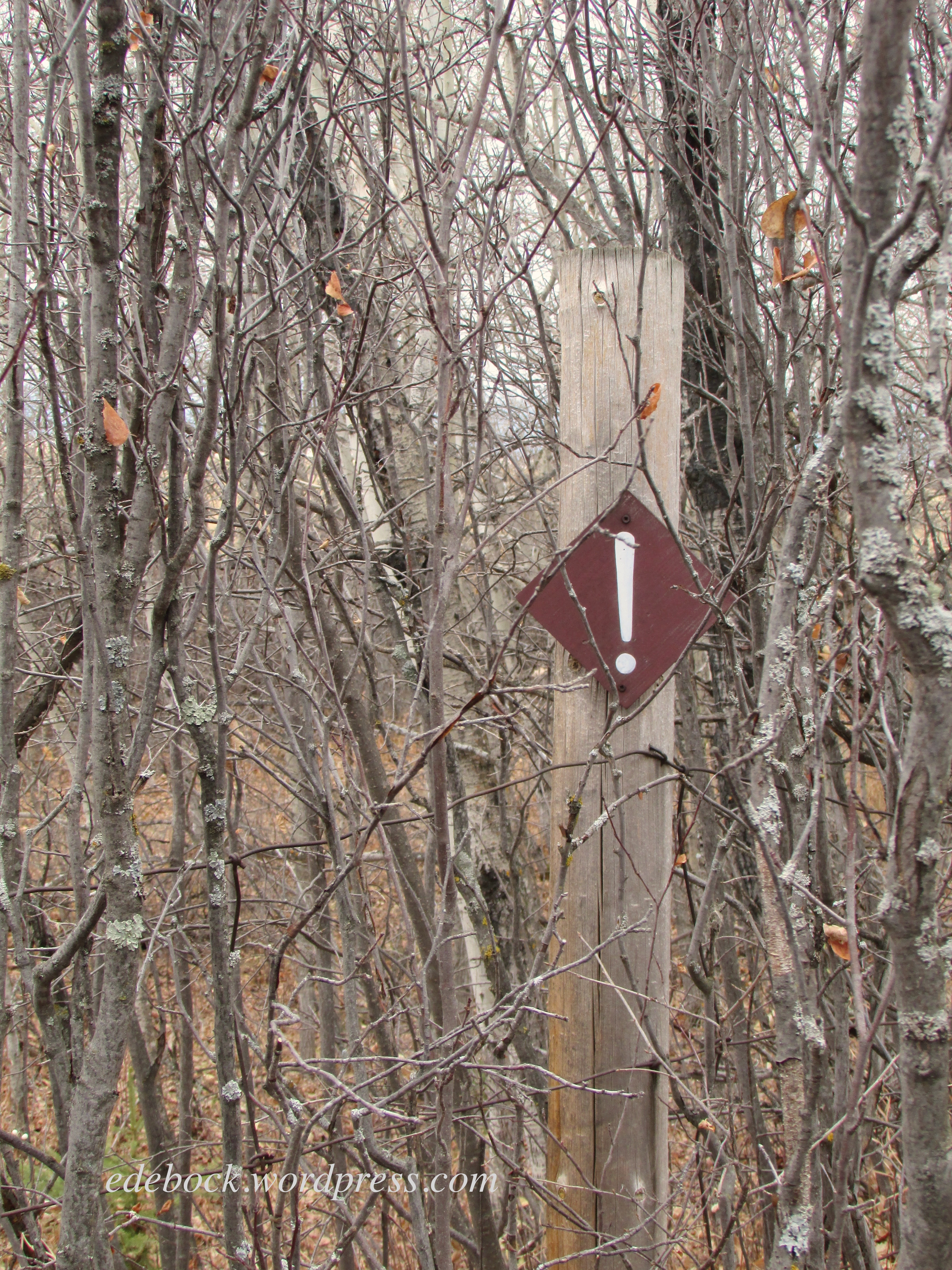
Eventually, we rejoined the woodland trail at it’s far end and made our way back to our starting point. Along the way, we passed this unusual sign on a fence post. We have no idea what it was trying to tell us, but it seemed very appropriate for this most unusual November day!

IMG_1821

Are you anti pantie?
I’ve started seeing more and more articles posted on social media with titles like this one. Medical Doctor Warns that “Bacterial Pneumonias Are on the Rise” from Mask Wearing. What these articles actually talk about is the danger of wearing contaminated face masks; either repeatedly wearing the same disposable mask or wearing a cloth mask without changing and washing it regularly.

Interestingly, I’ve never seen anyone post an article warning us to stop wearing underwear! What? What does that have to do with anything? Quite a lot, actually.
Davidson Hamer, infectious disease specialist and professor of global health and medicine at Boston University, says that while there have actually been no documented cases of masks leading to fungal or bacterial infections of the upper airway or the lower airway as in pneumonia, bacterial growth could possibly occur if someone wore a mask that was contaminated. “Theoretically, it could happen, but it’s highly unlikely with just typical mask use.” Anne Monroe, an internal medicine physician and epidemiologist at George Washington University’s Milken Institute School of Public Health agrees “In terms of mask use, it is important to follow general sanitation guidelines,” she says.

Exactly the same thing is true of underwear. For both men and women, failing to wear clean underwear every day can be problematic. For those of us with vaginas, moisture build up in the nether regions is normal. It’s common knowledge that lack of cleanliness in this area can lead to rashes and infection. While men may not be quite as susceptible, they too can get yeast and urinary tract infections.

So why are people advocating that we stop wearing facial masks, but not that we stop wearing underwear? The articles that I’ve seen are often posted by anti maskers, those who would have us stop wearing facial coverings altogether as opposed to simply following good hygiene. In other words, they’d have us throw the baby out with the bathwater! My question for them would be, are you also anti pantie?

Just treat your mask like your underwear. Wear a clean one every day!

Screen Shot 2020-10-27 at 3.52.49 PM

My kind of birthday

If the weather permits and we’re not travelling, I usually like to play a round of golf on my birthday, but today I decided that I wanted to spend some more time hiking and kayaking instead. I just can’t get enough of the glorious fall weather that we’ve been enjoying and what could be better than spending it out in nature?

Big Knife Provincial Park on the Battle River is one of our favourite places within an hour of home, especially at this time of year. The campground closed in early September, but the park gates are still open which means that the hiking trails and boat launch are still accessible.

For today’s hike we decided to take a path less travelled. In fact, the trail that we chose doesn’t even appear on the park maps. I think it’s really just an animal trail that is occasionally used by humans. We first discovered it several years ago when we were doing some geocaching in the park, but we hadn’t hiked it again since then.

IMG_1590

The trail begins with a fairly steep climb to the top of the bluff shown above and then follows along the ridge. 

IMG_1594

Apparently, I took more photos looking back than ahead!

IMG_1591

IMG_1593

IMG_1595

The path eventually leads to The Hoodoos, a mini badlands area, and then joins the River Flats trail system . 

IMG_1604 

IMG_1608

If this is what 68 looks like, I’m good with it!

After hiking part of the River Flats trails and having our picnic lunch along the way, we headed for the river and launched the kayak. When you’re on a hiking trail, a river, or a lake, there’s no Covid, no politics, no racism, no hoaxes or conspiracies. There’s just you and nature; just beautiful peace and quiet!

IMG_1622

We spent three hours paddling. Every time we’ve been on the river in the fall, we’ve seen a blue heron. I always hope that we’ll be able to get close enough to get a good photo, but they’re very elusive, taking flight as soon as we get anywhere near. Today, it was almost as if the heron was playing with us. Every time we got close, it flew a short distance upriver and then appeared to be waiting for us to catch up. We never did get close enough to get the picture I was hoping for though!

This muskrat, on the other hand, was quite unconcerned with our presence. He was sunning himself in this same spot when we passed by on our way up the river. He slipped into the water and disappeared, but when we returned, he’d obviously decided that we were no threat and continued to sunbathe while we stopped to take his picture. In fact, if you zoom in, you’ll see that his eyes are even closed! 

IMG_1620

We got back to town in time to clean up and go out for supper. That’s definitely my kind of birthday… a day in the great outdoors and no cooking! 

Anniversary getaway

Hubby and I celebrated our 44th anniversary on Friday with an overnight getaway to Wapasu Lake, a tiny dot on the map just an hour north of home. We started our day with a hike at Wapasu Conservancy Park. While our wedding day was cool and blustery, Friday was a perfect fall day. The trail was absolutely gorgeous with the sun shining through the canopy of golden leaves. 

IMG_1557

We started our hike with a climb to a high point that offers a view of the lake and surrounding area. 

IMG_1553

Wapasu is a Cree word meaning white swan. When the trail took us back down to the lakeside, there was a large flock of Canada geese and one pair of swans swimming some distance from the shore. While I didn’t get a very clear photo of the swans, I did manage to capture some of the geese taking flight.

IMG_1558

Further along, we enjoyed a peaceful picnic lunch overlooking the lake.

IMG_1570

After about two and a half hours on the trail, we returned to our starting point and took the kayak out on the lake. There was a strong breeze blowing that whipped up some significant waves. I got pretty wet when the occasional one broke over the bow of the boat, but it was fun! The lake is small so even contending with the waves, it took less than an hour to paddle our way around it.

IMG_1577

After changing into dry clothes, it was time for the next part of our anniversary getaway and we didn’t have far to go. Beachside Bed and Breakfast is located just outside the park boundary. Though the B&B has three guest rooms, occupancy has been reduced to one family group at a time to ensure safe distancing during the Covid pandemic, so we had the entire guest portion of the house to ourselves. After settling into our lovely room, we relaxed with a glass of wine on the deck overlooking the lake until it was time to go for dinner.

IMG_1579

The only restaurant in the vicinity is a truck stop at the nearby village of Innisfree, but it’s located on a hilltop with a beautiful view and, as is typical of truck stops, the food was tasty and plentiful. The sun was setting over the lake as we returned to the B&B. After another glass of wine on the deck, we went for a walk along the sandy beach in the fading light. 

IMG_1584

IMG_1587

That brought the outdoor portion of our beautiful anniversary day to an end, but there was still a jacuzzi tub and a king size bed awaiting our return to the B&B! 

IMG_1588

Hitting the Covid-19 wall

hitting-the-wall-resize-1

Do you feel like you’ve hit a wall where Covid-19 is concerned? Have you simply had enough with all the restrictions imposed by the pandemic? I know I have!

I admit that as retirees, we’ve had it easier than many. We don’t have jobs or a business to worry about or children at home. My father, our last remaining parent, passed away ten days before the World Health Organization declared the rapidly spreading coronavirus outbreak a pandemic, so we don’t have elderly parents in care facilities to worry about. Nevertheless, I’ve definitely hit the proverbial wall. Like many others, I’m tired and frustrated.

Experts tell us that this isn’t unusual. Dr. Aisha Ahmad, Associate Professor of Political Science at the University of Toronto who has has conducted fieldwork on conflict dynamics in Afghanistan, Pakistan, Somalia, Lebanon, Mali, and Kenya, recently summed it up this way: “The 6 month mark in any sustained crisis is always difficult. We have all adjusted to this “new normal”, but might now feel like we’re running out of steam. Yet, at best, we are only 1/3 the way through this marathon. How can we keep going? First, in my experience, this is a very normal time to struggle or slump. I always hit a wall 6 months into a tough assignment in a disaster zone. The desire to “get away” or “make it stop” is intense. I’ve done this many times, and at 6 months, it’s like clockwork.”

With the pandemic dragging on and no end in sight, it’s easy to become discouraged. In our part of the world summer is over. The days are getting shorter and the hours of darkness longer. We’ve enjoyed beautiful fall weather throughout the month of September, but the long cold winter is just around the corner. People will soon feel more shut in than ever. Add to that the fact that Thanksgiving is almost upon us (we celebrate it in October in Canada) and not long after that, Christmas. Those are times when families usually come together to celebrate, but much of the spread of Covid-19 over the summer has been the result of family gatherings. There’s a lot of uncertainty in many families about how to observe these holidays this year. 

One of my greatest sources of frustration is the urge to travel. It may not make sense to a lot of people, but wanderlust (a deep, uncontrollable desire to travel and explore the world) is real. With interprovincial travel discouraged and international borders closed, I’m beginning to feel trapped. Yesterday, I jumped in the vehicle and drove down country roads just to try to appease that feeling! 

Then there’s frustration over the divisiveness of this thing. With more than 1 million deaths due to Covid worldwide, there are still those who believe that it’s a hoax or a conspiracy cooked up by “the” government to take control of our lives. I still haven’t figured out which government they’re referring to or why they think that all the governments of the world would come together to destroy their own economies! I was actually told yesterday that it’s all a plot to derail the upcoming election in the United States! What ever happened to calamity drawing people together? It certainly hasn’t happened this time! 

Anyway, enough of my ranting! Thankfully, Dr. Ahmad also offers hope. “This is my first pandemic, but not my first 6 month wall. So, what can I share to help you? First, the wall is real and normal. And frankly, it’s not productive to try to ram your head through it. It will break naturally in about 4-6 weeks if you ride it out.” I sure hope she’s right! 

In the meantime, what can we do to help alleviate that hitting the wall feeling? Nicole Haughton, a registered psychologist based in Toronto, suggests that that maintaining a proper diet, exercising regularly, going out for fresh air, and engaging in spiritual practices or mindful meditation can be beneficial to mental health during this time.

For me, writing about my feelings is cathartic, but here are a few other suggestions:

  • Give yourself something to look forward to. I can’t plan a major trip right now, but I can plan an overnight getaway for our upcoming anniversary. 
  • Step back from social media and limit the amount of news you consume. I definitely need to take this one to heart!
  • Clean out or reorganize something. It could be the kitchen cupboards, a closet, a filing cabinet, or the garage. The simple act of bringing organization to chaos where we’re able to can be very freeing. I did a lot of this back in the early days of Covid-19, but it’s been awhile. Now it’s time to do my seasonal wardrobe switch and reorganize my closet for winter. Having some “new” clothes to wear might also be a pick me up. 
  • Start a gratitude journal. It’s easy to spiral into negativity, but even in these strange and somewhat difficult days, we all have much to be thankful for.  

Finally, psychologist, Dr. Heather McLean, asks her clients to rate themselves on this scale and tells them, “If you see you are on the low end of any of these these, get busy and problem solve, think outside the box, and ask others for help on how to fix it.” 

Screen Shot 2020-09-29 at 11.50.11 AM

Though the pandemic is likely going to be with us much longer than anyone hoped or predicted, I do trust that it will come to an end. For now, I just need to focus on getting through this blasted six month wall instead of bashing my head against it!

HOOFED IT!

Over a three day period while camping at Miquelon Lake Provincial Park this past week, Richard and I hiked a total of 23.9 km, pushing me to within just 2 km of my final HOOFING IT Across Canada goal. This evening, under dark cloudy skies that look like they were about to let go and pour rain, I crossed my self-imposed finish line! Since July 1st, I’ve HOOFED IT 179.5 kilometres (111.5 miles). That’s 2.5 km more than the distance from our front door to the Cross Cancer Institute in Edmonton where I receive all my neuroendocrine (NET) cancer care.

If you’ve been reading my blog or following me on Facebook this summer, you know that I’ve been taking part in the CNETS Canada campaign to raise funds for NET cancer research. The goal was for participants to rack up 5514 km, the distance from Newfoundland and Labrador to the Yukon, by walking, hiking, kayaking, swimming, cycling, roller-blading, or any other forward moving activity that they could think of. We did that in spades, criss-crossing Canada almost five times!

Fundraising has been a bigger and vastly more important challenge. This evening, we’re sitting at just over $73,000, but approximately $20,000 of that has come in over the past ten days! For that reason, the deadline for making donations has been extended to September 25. With an extra two and a half weeks, we’re hopeful that we can bring in the final $27,000 necessary to continue funding critically needed neuroendocrine cancer research.

The need for research and awareness was brought home to me again this afternoon when I spent some time chatting online with a NET patient in another Canadian province who was diagnosed in May of this year. She’s been seen by an oncologist and has had surgery, but she hasn’t been referred to a NET specialist. She hadn’t even heard of Sandostatin, the injection that I’ve been receiving every 28 days since diagnosis. It’s been the workhorse medication for neuroendocrine cancer patients for the past 30 years, but her oncologist may never have encountered a NET patient before and may have little or no idea how to treat it. Sadly, this is a common occurrence for NET cancer patients!

Today, with so much attention being directed toward COVID related research (and rightly so) a relatively unknown cancer like ours can easily get overlooked. With many people facing financial difficulties, it’s not easy to keep asking for donations, but let me do it one more time. If you haven’t already and you’re able to give even a small donation, please visit my fundraising page and help us reach our goal. Every dollar counts!

Facebook, not Factbook!

facebook-thumbs-guardian-express

In my opinion, Facebook is a perfect example of a good thing gone very wrong. Facebook was launched on February 4, 2004 by Mark Zukerberg and his three college roommates as a social media platform meant to connect Harvard University students with one another. By the next day, over 1000 students had registered and by the end of that year, membership was open to nearly every university in the US and Canada. In September 2006, Facebook became available to anyone over the age of 13 with an email address and it rapidly ballooned into one of the most significant social media companies in history. By July 2015 half the world’s internet users were using Facebook.

On the surface, a social networking service open to everyone sounds like a wonderful idea, but people being people, it quickly morphed into something much uglier. ‘Everyone’ includes a lot of awful people who like nothing more than using the internet to be awful to as large an audience as possible. Online abuse and hate speech quickly became major issues that Facebook was ill-equipped to deal with. In no time, what was meant as a way for people to share their lives and photos with friends and family became flooded with fake news, propaganda, and false information on any and all subjects. This is particularly concerning considering the mind boggling fact that a study from the Pew Research Centre, also conducted in July 2015, found that 63% of Americans on the site were getting their news from Facebook!

Screen Shot 2020-08-10 at 11.41.42 AM

Facebook now works with third-party fact-checkers to try to identify and limit false news and I’m beginning to see more of these notifications, but so far, they’re only managing to catch the tip of the iceberg. It would help a great deal if people would do their own fact checking, but it’s a lot easier to just hit the share button than it is to do the work involved in making sure that something is accurate. The teacher in me always wants to point people toward the truth, but sadly, this sometimes gets me in trouble with those who don’t actually care if what they’re sharing is true as long as it fits their particular bias.

While there are many who are simply naive or gullible and who unintentionally share false information, there are others who are very purposeful about it. They are deliberate, sophisticated in their methods, and very devious. Take this recent post, for example.

117086856_10158958329000016_7096568034737799281_o It looks legit, but it’s not. Notice that it gives sources below the graphs. They’re blurry which makes them difficult to read and they don’t actually link to the sources given, but more grievous is the fact that if a person actually checks those sites, they discover that the numbers on the graphs don’t line up with the figures that they give! Someone has gone to a great deal of effort to create a false graphic that serves their agenda, but doesn’t provide facts.

So, in light of all this, why do I still use Facebook? I use it for the purpose that it was originally created. As frustrating as it can be, it’s still a useful communication tool. The chat feature was absolutely invaluable during the many years that we dealt with the needs and care of my very elderly parents from a distance. It allowed family members scattered across North America to participate in an ongoing discussion about life and death issues and to come to some very important decisions. It also allows me to participate in the day to day lives of my grown children and grandchildren who all live some distance away. I’ve used Facebook to reconnect with some important people from my past and to keep in touch with friends in faraway places like Japan, Mexico, China, and Saipan. As a neuroendocrine cancer patient living in a rural location where I don’t have access to an in-person support group, the Facebook patient groups that I belong to have been excellent sources of information and encouragement. Linking my blog to Facebook also allows it to reach a wider audience than it would otherwise.

So what can we, who still want to use Facebook, but who care about truth, do to ensure that we don’t contribute to the spread of false information? The American Friends Service Committee (AFSC) came up with a simple four step acronym that I think is worth sharing. SCEP: Source, Confirm, Evidence, Pause.

  1. Consider the Source. Is it from an independent news source that is likely to use fact-checkers and editors to verify a writer’s claims or is it from a website with a stated political aim?
  2. Google to Confirm. Is the story being reported by more than one site or author? If you can find it in other credible sources, it has a better chance of being legit.
  3. Assess the Evidence. A solid news story will be supported by strong evidence: verified documents, peer-reviewed research and sound studies, and direct quotes from named, not anonymous, sources.
  4. Pause. Instead of instantly liking or sharing a post that hits home, pause and consider. Is the article likely real? What do I hope will happen if I share it?

Be SCEPtical! It’s Facebook, not Factbook.


Just wear the mask!

I’ve avoided wading into the wearing of masks fray because I know that it’s controversial and has the potential to erupt into another nasty conversation on Facebook similar to the one provoked by my “redneck thinking” post back in April, but I can’t stay silent any longer. I am absolutely mind boggled that this is even an area of debate! Are people so stressed and so unhappy these days that they will jump at any reason to protest?

In an attempt to understand this controversy, we need to back up several months. In the very early days of the Covid-19 pandemic, public health officials thought that the virus was primarily transmitted by people touching contaminated surfaces and then their faces. Frequent hand washing, the use of hand sanitizers, and refraining from touching your face were thought to be the best ways to prevent its spread. At first, both the World Health Organization (WHO) and the Centers for Disease Control and Prevention (CDC) said that wearing masks was unnecessary. As time progressed, however, and more was learned about this new virus, it became clear that this early thinking was inaccurate. Instead, researchers now realize that Covid-19 is primarily spread by inhaling virus-laden droplets expelled by an infected person. As time passed and studies were conducted, it also became clear that people can transmit the virus before they begin to experience symptoms and, in fact, that some people who remain asymptomatic are actually contagious. These factors explain the more recent recommendation that people wear masks in public, especially in situations where it’s difficult to maintain distance between one another. Perhaps changing advice midstream led to confusion and fuelled the anti mask movement, but I think that there are also other reasons why it’s become necessary for many businesses and municipalities to make wearing masks in public spaces mandatory.

Denial is clearly at the root of some people’s refusal. In spite of all the information to the contrary, there are still those who refuse to accept the severity of this worldwide plague. Conspiracy theories abound and negative voices question the research and the data that it presents.

At the individual level, some people protest that their personal rights and freedoms are being infringed upon when they’re told that they must cover their mouths and noses. They selfishly choose to put personal comfort above the welfare of others. We all know that wearing a mask isn’t particularly comfortable. If you’re a glasses wearer, as I am, there’s the added frustration of fogged up lenses, although I’ve discovered that folding a Kleenex (tissue) into a strip and placing it across the bridge of my nose under the top edge of the mask helps a lot. I don’t like wearing a mask any more than anyone else does, but I wear one because I don’t walk this planet alone and I don’t want to take a chance on unknowingly passing a deadly virus to someone else, particularly one of the more vulnerable amongst us. As my specialist put it so succinctly when we discussed the topic at my appointment yesterday, “In our culture, too many people think only about their rights and freedoms while forgetting that we also have responsibilities.” In Genesis 4:1-12 and elsewhere throughout scripture, God answers the question, “Am I my brother’s keeper?” with a resounding YES! Jesus said that the greatest commandment is to “Love the Lord your God with all your heart and with all your soul and with all your mind.” The second is to “Love your neighbour as yourself.” In the days of Covid-19, loving your neighbour often involves wearing a mask!

Some of the excuses that I’ve heard for not wearing masks are absolutely ludicrous.

  • Wearing masks causes oxygen deprivation or carbon dioxide poisoning or similarly, rebreathing dirty moist air will make me sick. In reality, the fibres that cloth and surgical type masks are made from aren’t dense enough to block the exchange of gases and air can also get in around the edges. The only time that this excuse might be considered legitimate would be during strenuous exercise. If this is a concern, exercise outdoors instead of in a gym and maintain distance from people who aren’t part of your household or “bubble”.
  • The mask prevents communication. Sound passes easily through masks! This is only a legitimate concern for those who are hearing impaired and who depend on lip reading. Masks with clear panels are available for those who interact regularly with someone for whom this is an actual problem.
  • Masks hide our beautiful smiles. The world will survive without your beautiful smile until this pandemic eventually comes to an end!

And then there’s the one that I’ve seen circulating around on Facebook since our province announced that masks will be required in schools for students from grade 4 to 12. Masks make children unidentifiable and assist in human trafficking! Now that’s really grasping at straws! There is absolutely no question that human trafficking is an incredibly heinous crime and far more prevalent that most people are aware of or willing to admit, but to make the wearing of masks about human trafficking is a ridiculous stretch and an insult to intelligence.

Perhaps living in Asian countries where wearing a mask when you have a simple sniffle has long been a common courtesy has influenced my thinking on this topic, but I’m truly astonished by the tempest that this has created here in North America. As more businesses and municipalities make masks mandatory, the furor increases, but there’s really one simple answer for those who don’t want to comply. If you choose not to wear a mask, stay home!

download