Xico

Like Coatepec, nearby Xico has been designated a Pueblo Magico (Magic Town), for maintaining its original architecture, culture, folklore, and/or history. Recognized by the Mexican government for their “magical” qualities, these towns have been selected as some of the most beautiful places in the country to visit.

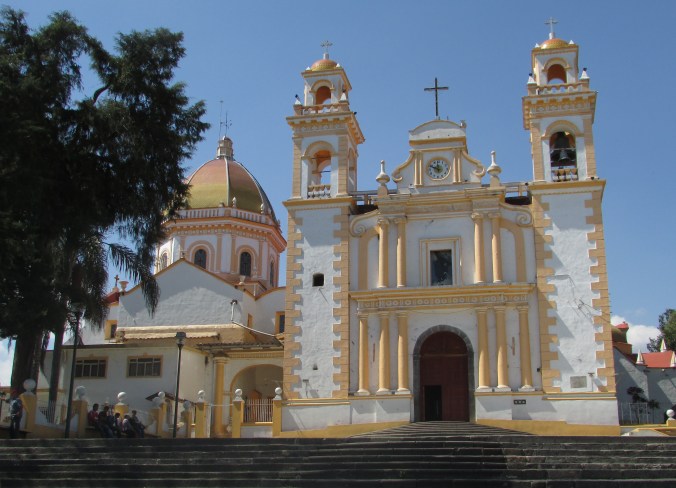
Last time we went to Xico, six years ago, road reconstruction was underway in the downtown core. Though we enjoyed a lovely lunch on an outdoor patio, we weren’t able to explore as much of the area as we did yesterday. Once again, we had the taxi from Coatepec drop us off by the beautiful Santa María Magdalena church in the centre of town.

img_3604

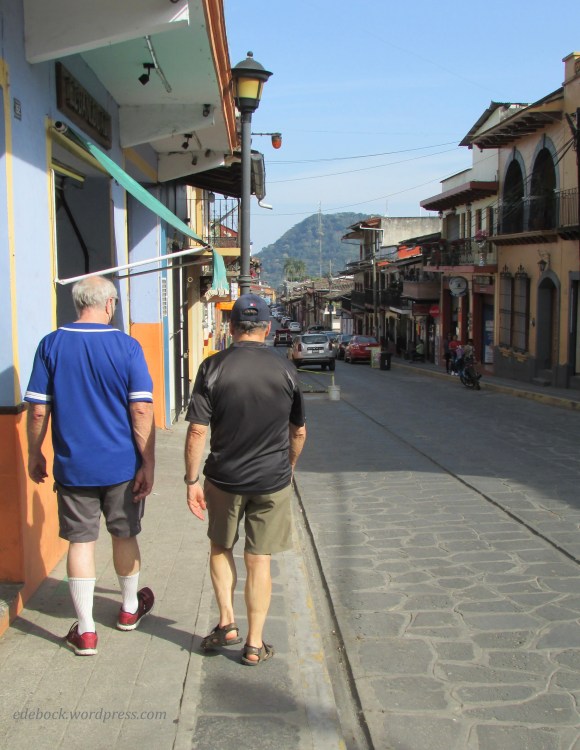
From there, we explored on foot. Come take a walk with us. There’s the two Richard’s leading the way.

IMG_5147

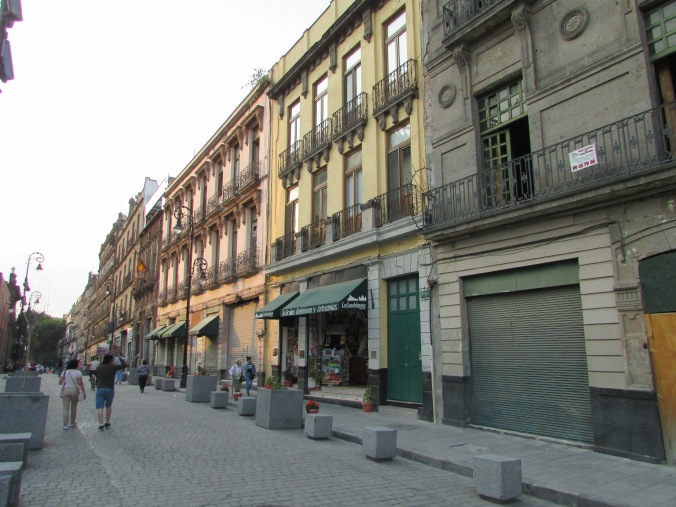
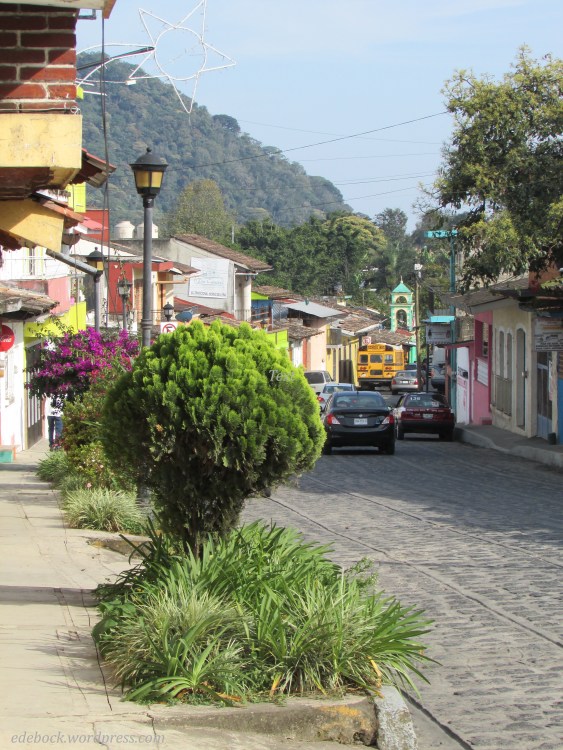
I absolutely love the colours and the old colonial architecture.

IMG_5148

IMG_5149

IMG_5159

IMG_5166

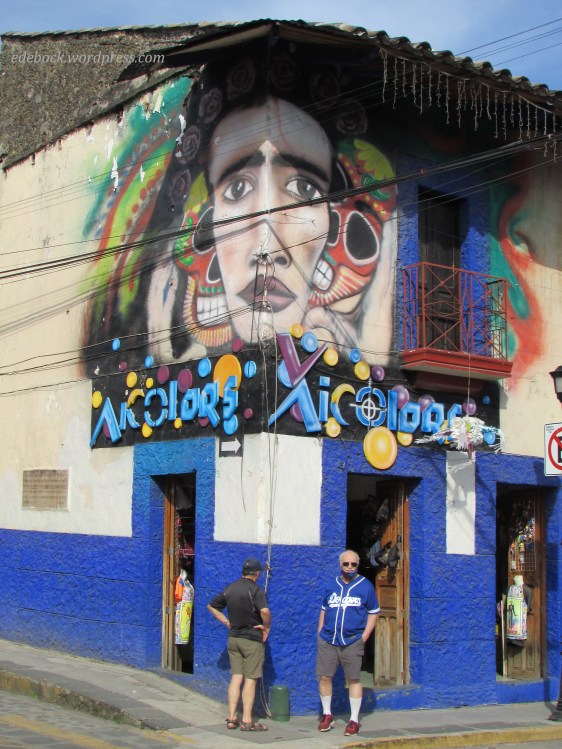
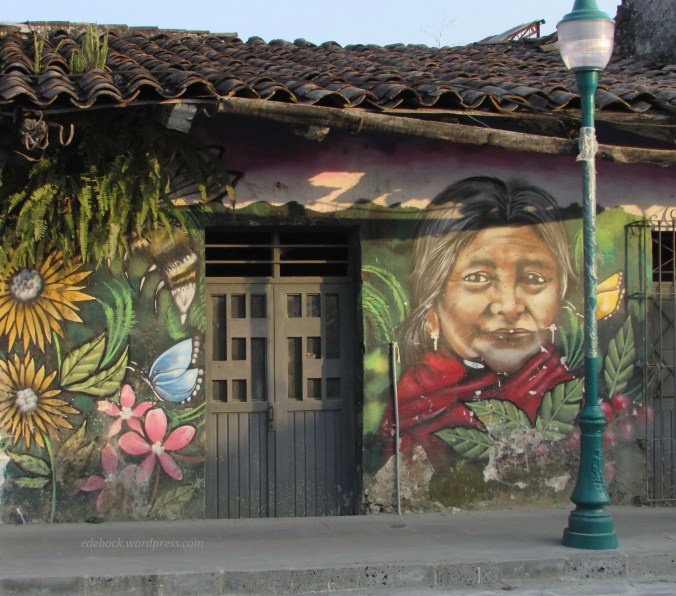
As in Coatepec, I was intrigued by the murals that we saw along the way. This one actually wraps itself around the corner of the upper storey of a building.

IMG_5152

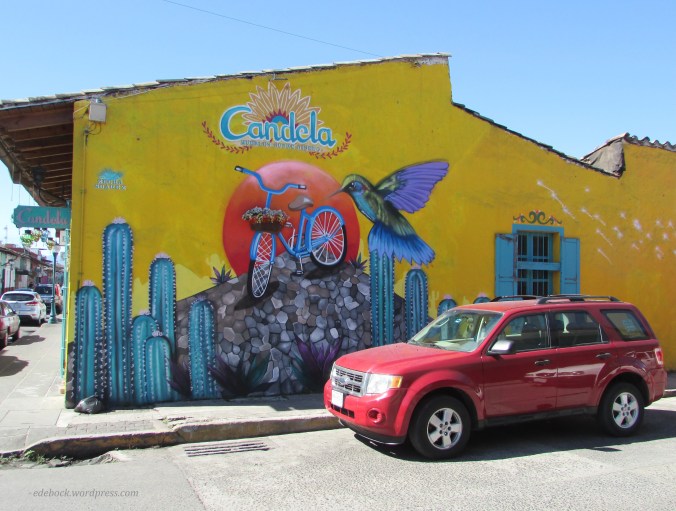
This one adorns the outside of the restaurant where we ate last time we were in Xico.

IMG_5155

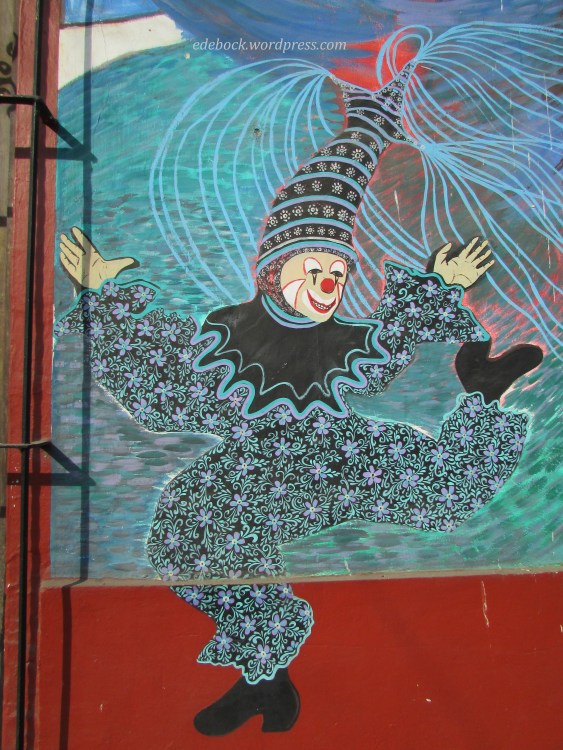
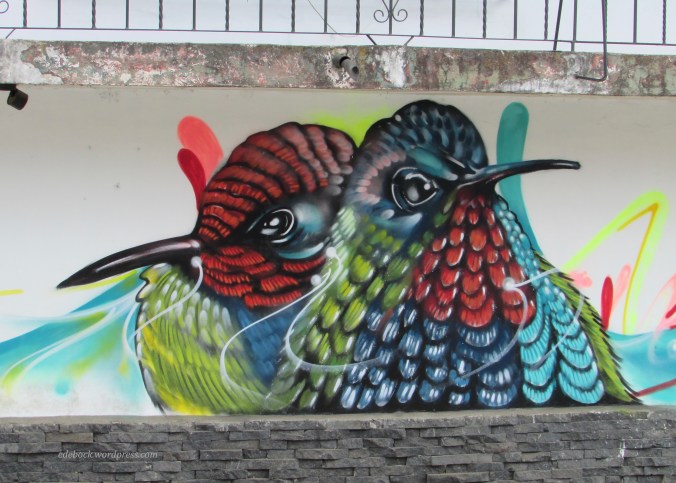
I couldn’t even capture all of this mural in a photo. I especially liked all the detail on the happy little payato (clown).

IMG_5161

IMG_5162

After our walk, we stopped for coffee overlooking the courtyard of the beautiful Las Magdalenas Boutique Hotel. I completely abandoned my coffee free, diabetic diet and indulged in a tall and very delicious frappuccino moka topped with a mountain of whipped cream! Hopefully all the walking somewhat made up for such an extravagance!

IMG_5168

IMG_5176

The murals of Coatepec

Each time we come to Coatepec, Mexico to visit our friends who live here I fall in love with the vibrant colours again. Maybe that has something to do with coming from a place that is covered with snow for many months of the year and where buildings tend to be mostly neutral in colour.

This visit, it’s the murals that have really caught my attention and so I thought I’d share a few of them with you. All of these are within walking distance of our friends’ house. The first is one of my favourites.

IMG_5102

I’m guessing that the next one is real estate advertising, but I’m not sure. It’s located at the end of the street where we’re staying.

IMG_5123

This gate, just down the hill from here, is very fitting for Coatepec as I’m sure there are more old style Volkswagen Beetles here than anywhere I’ve ever been! I like the way that the artist made the handle of the gate look like it was the door handle on the vehicle.

IMG_5130

I don’t know who the people in the next two murals are, but I think they’re gorgeous.

IMG_5124

IMG_5136

These birds caught my eye on a walk down to the centre of town today.

IMG_5135 2

And finally, here’s another of my favourites. I can’t believe the amount of work that must have gone into this one which is located on the side of a building at the entrance to a small alley. The caption “La Naturaleza es Vida” means “nature is life”.

IMG_5133

I’m going to continue photographing murals as I come across them. Perhaps I’ll even find enough for another post!

What I wore to travel

Logo by SamIt was unseasonably warm when we boarded a plane in Calgary on Sunday morning, but even -1ºC (30ºF) is chilly. When we left the airport in Mexico City at almost midnight it was +19ºC (66ºF). How do you dress for a day with that kind of temperature variation?

The answer, of course, is layers.

IMG_5092

My base layer was a long-sleeved, striped sweater. Next came a hoodie and then my ultralight down vest from Uniqlo. The final layer was a spring jacket that is both wind and waterproof. While each layer was very lightweight, together they provided ample warmth on a chilly Alberta morning. After the photos were taken during a layover at the Vancouver airport, the vest came off and was tucked into an outer pocket of my tiny suitcase. Some people find jeans uncomfortable for long days sitting on a plane, but I practically live in them and find them very comfortable. A pair of good walking shoes completed my ensemble.

IMG_5095

Not only is YVR Vancouver’s international airport, but it’s also home to a permanent collection of more than 210 pieces of art, much of it work of British Columbia’s indigenous artists. The pieces behind me represent The Story of Fog Woman and Raven. Carved of cedar wood in 2007 by Dempsey Bob, they tell the story of how the annual salmon run originated to benefit the people of the northern coast of BC and the southern coast of Alaska. Immediately behind me, Raven perches on the side of a pool, beak uplifted, smiling and well fed, while to the side, Fog Woman kneels at the head of a stream.

IMG_5099

Once we reached our destination, the clothing that I wore to travel in was set aside and won’t be worn again until our return trip unless we have a really chilly day while we’re here.

Reunion!

Ten years ago this month, hubby and I arrived in Dalian, China where we were to spend the next semester teaching English at Liaoning Normal University. There were six of us on the native English speaking staff and this week four of us were together again for the first time since we completed our contract there.

Richard M (yes, there were two Richards on our staff of six) and his wife, Colleen, who was with him in China are Americans who, after spending a few years living in China, Cambodia, and then Vietnam, have retired to Coatepec, Mexico. They are close to our age and were the only other couple amongst the teaching staff, so we spent a lot of time together in China, even climbing the Great Wall together. This is our third visit to their home here.

Cliff, also an American expat, was our lead teacher in Dalian and after also living in various locations in Asia, he retired to Xalapa, a larger city just 15 km from here. He arrived shortly after our last visit to the area four years ago.

On Tuesday, Cliff came out to Richard and Colleen’s and what a reunion that was! The afternoon was spent reminiscing, laughing together, looking at the yearbook that Cliff had so thoughtfully brought with him, and enjoying a delicious seafood meal prepared by Richard M.

330769949_524914976193679_3477744324364519691_n 2

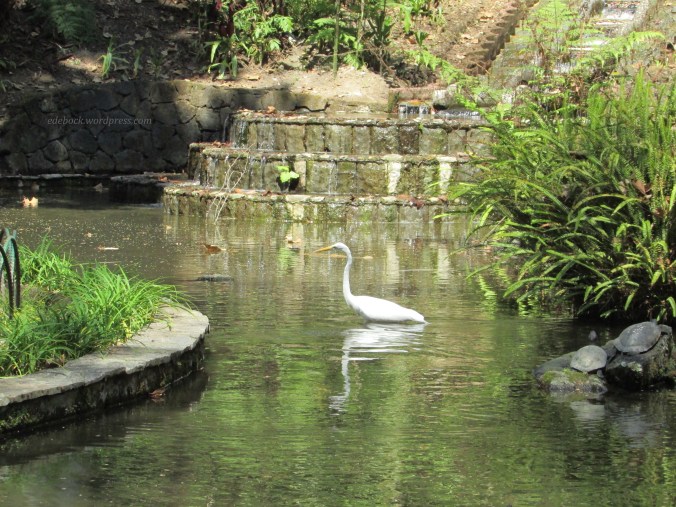
Then yesterday, the four of us met Cliff at Parque de los Tecajetes, a beautiful jungle-like park in Xalapa. Though not a huge park, it was easy to forget that we were in the middle of a city.

IMG_5107

IMG_5120

IMG_5112

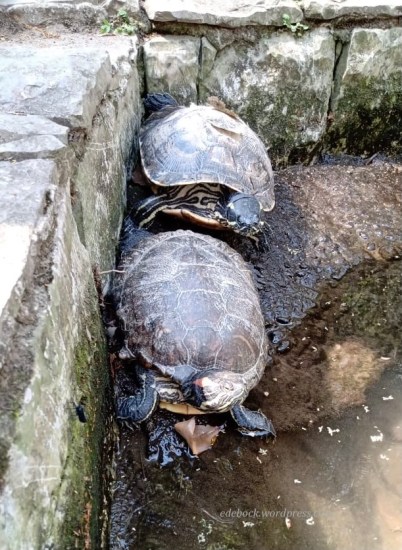
Although you can’t see any in the photo above, the pond was home to many koi. If you look closely though, you’ll see a couple of the resident turtles of which there were many. Here are two others sunning themselves in a sheltered nook.

330930255_1037080877136128_6051597872879838923_n

The egret and the greckle seemed to be posing for me!

And, of course, there were flowers! Flowers in February always amaze me.

IMG_5116

After enjoying a stroll, we had a delicious lunch together in La Estancia de los Tecajetes, a beautiful traditional Mexican restaurant overlooking the park.

330828408_976298353334814_614864196562220575_n

That’s Richard M, Richard D, myself, and Cliff. Thanks to Colleen for taking this and a couple of the other photos.

Packing again!

For the first time in almost four years, we’ve purchased tickets, made our plans, and I’m busy packing our suitcases! This will be our first flight since Covid, but our third trip to visit friends who live in Coatepec, a typical Mexican town located in the highlands about four hours east of Mexico City. On both previous trips, we checked a large suitcase, but this time we’re going carry-on only. Everything we need for two and a half weeks has to fit into our two tiny suitcases, my purse, and hubby’s small backpack.

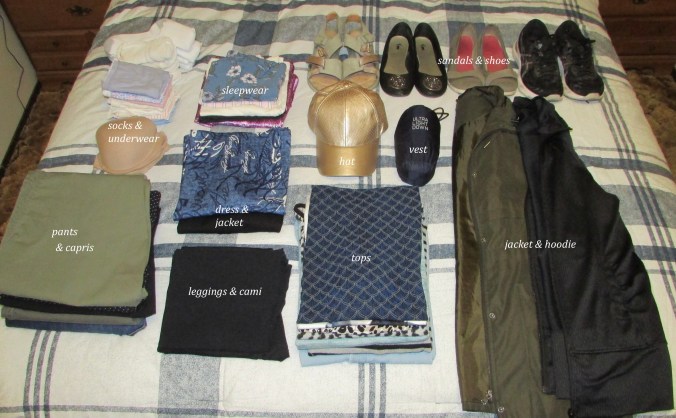
First, let’s take a look at what I was hoping would fit in my suitcase. The photo and list below also include what I’ll be wearing on the plane.

IMG_5086

Packing list:

  • 1 pair of jeans
  • 2 pairs lightweight long pants
  • 2 pairs capris
  • 1 pair leggings
  • 1 camisole
  • 7 tops – 3 long sleeved, 1 with 3/4 length sleeves, 3 sleeveless
  • 1 dress
  • 1 dressy black jacket
  • 1 ultra light down vest
  • 1 lightweight hoodie
  • 1 light jacket
  • 1 hat
  • 1 pair sandals
  • 3 pairs shoes
  • sleepwear, underwear, and socks

You’ll probably notice that this isn’t what a typical tourist would pack for their trip to a Mexican beach resort. That’s because Coatepec isn’t a tourist destination and doesn’t have a beach. At approximately 1200 metres above sea level, the weather is pleasant, but not always hot. It cools off significantly at night and the houses don’t have central heating so we need to be prepared to dress accordingly. Although I don’t actually expect to have an opportunity to use it, I did decide to tuck a swimsuit into the bottom of my suitcase just in case! I really don’t like to leave home without one. At the last minute, when I saw that there was enough space, I also decided to squeeze in a pair of shorts.

There are two keys to successfully packing light. The first is coordinating colours. As you can see from the photo, I’ve chosen a simple colour palette and pieces that will easily mix and match to create numerous different outfits. The second key is layering. For example, the dress is very lightweight. It can be worn alone or with the little black jacket. For a chillier evening out, it can even be worn over the black leggings. The light blue denim shirt on the bottom of the pile above can be worn alone or as a third piece over any of the sleeveless tops. Depending on the weather, the hoodie, down vest, and jacket can each be worn individually or I can layer them as I will be doing when we board the plane in sub zero temperatures.

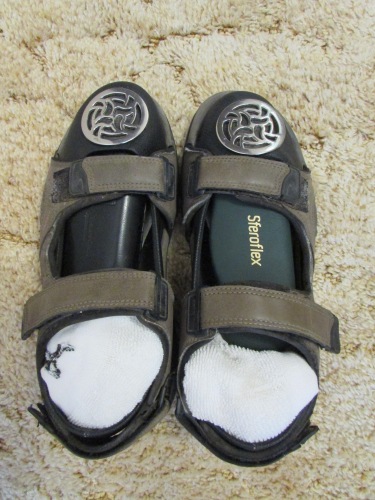
Another trick to successful packing is utilizing space wisely. Can you see hubby’s sandals, a pair of my shoes, spare eyeglasses for each of us, and two pairs of socks in this photo? I can!

IMG_5088

Many travellers swear that you can fit more into your suitcase by rolling everything instead of folding, but that hasn’t been my experience. I prefer to fold basics like pants and tops, but I roll a lot of the other items. I’ve also never used packing cubes.

Our clothes pretty much fill the tiny carry-on suitcases. My laptop (a lightweight 13 inch MacBook Air), my camera, cords, chargers, our toiletries, and our prescription medications will be in hubby’s backpack. We’ll also tuck in a few paperback books for him which he’ll leave behind when he finishes reading them. That will give us a bit of extra space if we need it on the way home. I’ve loaded five books onto my Kindle which takes up hardly any room in my travel purse.

Hopefully I haven’t forgotten anything, but if I have, there are stores in Coatepec!

Jeggings and pearls

LogoJeans + Leggings = Jeggings

Early on one of our recent walks around the central core of Coatepec, Mexico a pair of jeggings on a mannequin standing outside one of the many tiny clothing shops caught my eye. These were jeggings with a twist. Not only were they leggings designed to look like tight jeans, but they were studded with imitation pearls. I looked but kept on walking. Later, as we circled around and headed back toward our friends’ house where we were staying, we passed the shop again and this time I couldn’t resist taking a closer look.

Entering the store, I looked around but didn’t see more of the jeggings anywhere. Approaching the clerk, I asked “Hablas Ingles?” (Do you speak English?) and as usual, the response was “No”. Beckoning for her to follow me out front, I pointed to the jeggings. “Grande o pequeño?” I asked. (Large or small?) Though I tend to wear a size medium in most things, that word wasn’t part of my extremely limited Spanish vocabulary yet! “Uno talla,” was the response. (One size) I recognized the word “uno” and that was enough to tell me that this was a one size fits all garment. The clerk took them off the mannequin and I held them up to myself to ensure that they were long enough. They were and my mind was made up. They were coming home with me! It didn’t hurt that the price was only 100 pesos; less than $7 CAD!

With their cozy fleece lining, these jeggings are surprisingly warm. In fact, since returning to Canada, I wore them outside at -27ºC (-17ºF) and didn’t freeze! Granted, I only walked half a block from the grocery store to the post office and back again, but they were plenty adequate for that. It may seem surprising that I was able to buy something this warm in Mexico, but Coatepec is in the highlands where it can get a bit chilly at this time of year. Since their homes aren’t insulated and don’t have central heating the people tend to dress quite warmly.

I strongly believe that leggings are not pants and that they should be worn with tops that are long enough to cover the buttocks and crotch. I’m undecided where these new jeggings are concerned though. Clearly, the pearl studded imitation pockets on the front and the details on the back are meant to be seen.


Screen Shot 2019-02-11 at 6.02.45 PMPearl embellished clothing has been very much on trend for the past year or so. I’ve seen sweaters, dresses, jeans, and even shoes adorned with imitation pearls. One of my favourite fashion bloggers, Josephine of Chic At Any Age, wore this cute pearl studded beret in one of her recent posts.

Adding faux pearls to a garment that you already own would also be a simple DIY project. I’d thought of doing that to a pair of jeans, but now that I have my pearl studded jeggings, I won’t need to!

Historic Mexico City

On Wednesday morning we took a taxi into Xalapa and then a bus back to Mexico City. Arriving at our hotel in the historic centre of the city a few minutes after 3 o’clock, we checked in, dropped our baggage in our room, and headed out to explore our surroundings. We had about four hours before dark to see as much as we possibly could!

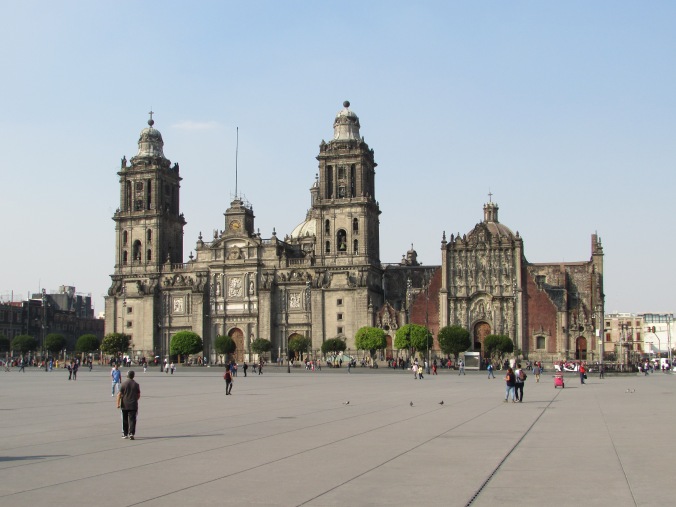
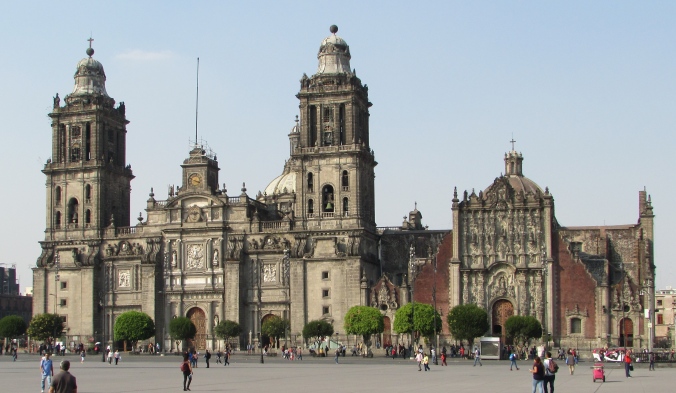
About six blocks north of our hotel, we came across the expansive Plaza de la Constitución. There was a protest of some sort happening just off the south side of the square, but it was the amazing Metropolitan Cathedral (or to give its full name, the Metropolitan Cathedral of the Assumption of the Most Blessed Virgin Mary into Heaven) on the north side of the plaza that completely captured our attention.
IMG_7059

Latin America’s largest and oldest cathedral, the imposing structure is the seat of the Roman Catholic Archdiocese of Mexico and one of the country’s most treasured architectural masterpieces. Built on the site of Templo Mayor, an ancient temple in what was the centre of the Aztec capital of Tenochtitlan, it includes much of the stone from that original structure. Construction of the cathedral, which incorporates several different architectural styles, spanned three centuries from 1573 to 1813! The bell towers house a total of 25 bells, the largest one weighing 13 000 kilograms!
IMG_7059 - Version 2

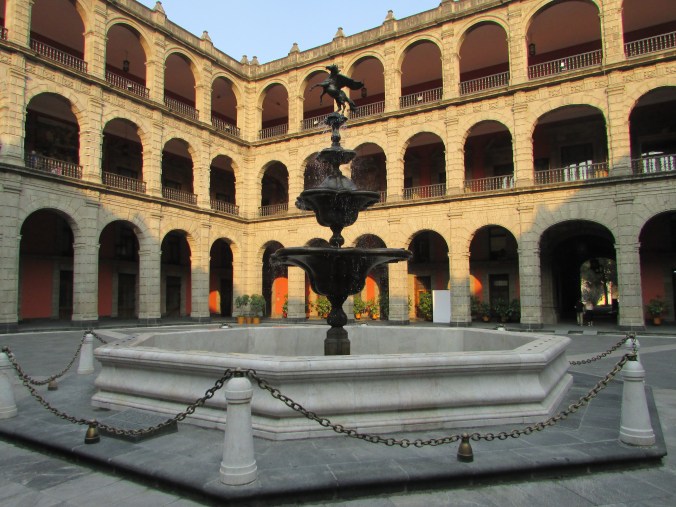
After a quick peek inside the Cathedral, we moved on. The Palacio Nacional, home to the offices of the president of Mexico as well as the federal treasury, is located on the east side of the Plaza de la Constitución. The palace’s main courtyard is surrounded by a three level arcade and has at its centre an enormous fountain topped by an elegant bronze statue of Pegasus, the winged stallion of Greek mythology.
IMG_7102

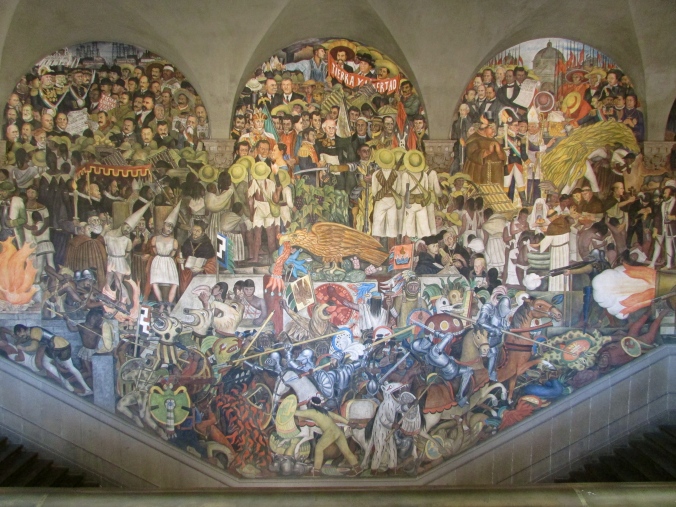
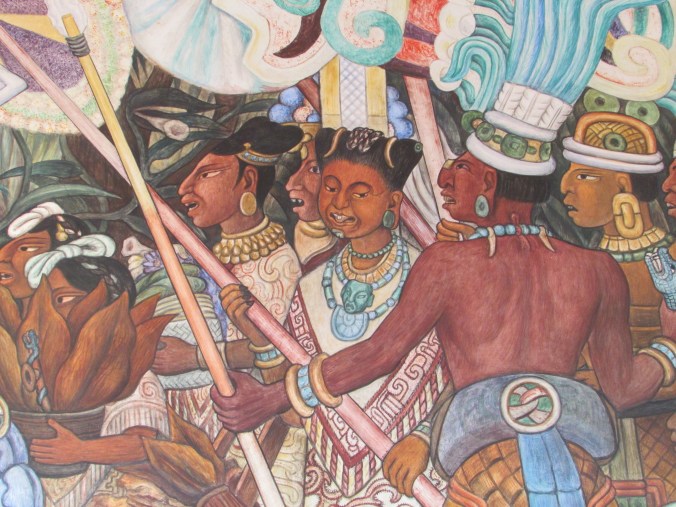
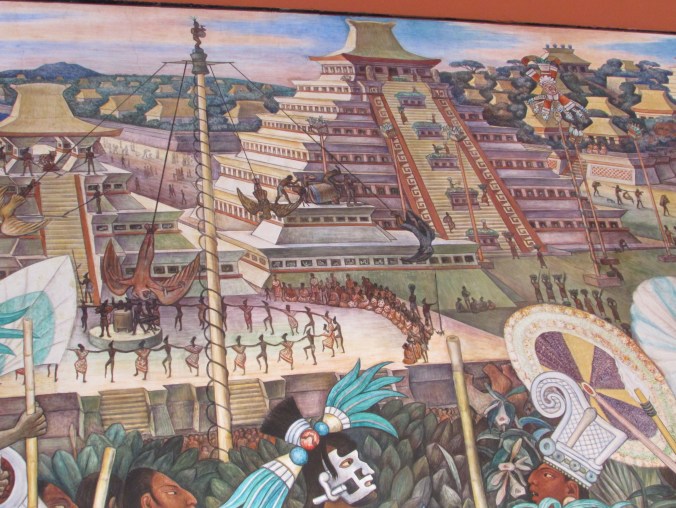
It was the Diego Rivera murals, painted between 1929 and 1951 and depicting the history of Mexico from the Aztec era to the early 20th century that drew us to the Palacio Nacional. The enormous staircase murals, located between the first and second floors, are sometimes compared to an epic poem including the legendary pre-Hispanic past, the Spanish conquest, and the more recent past. Tucked into the mural over the left staircase is an portrait of Rivera’s wife and fellow artist, Frida Kahlo (wearing a green dress and a star necklace).
IMG_7070 2

Nine more murals chronicling indigenous life before the Spanish conquest of Mexico cover the north and east walls of the second level. This series of panels was intended to go all the way around the second storey, but the project was incomplete when Rivera died in 1957.
IMG_7082

IMG_7081

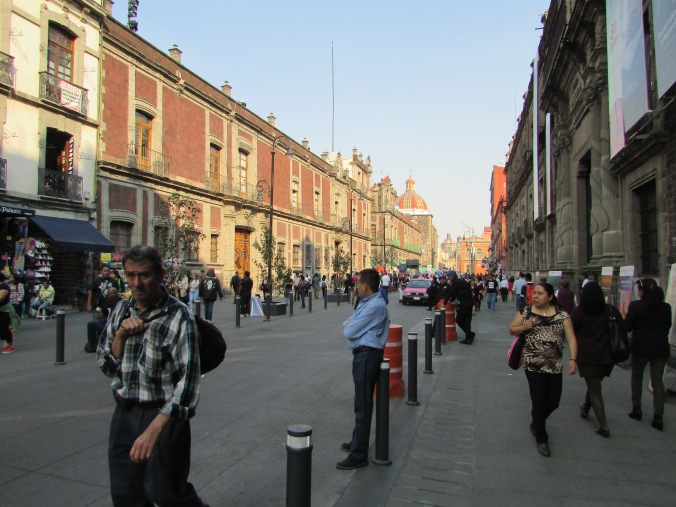
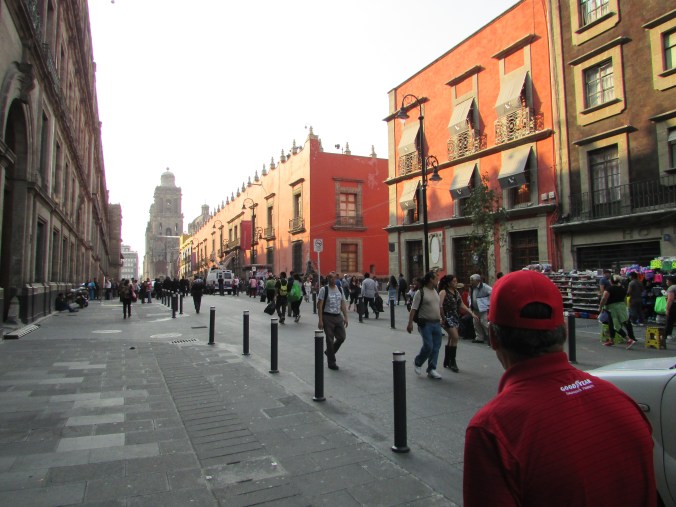
After leaving the Palacio Nacional, we wandered the nearby streets enjoying the sights and sounds of this small part of one of the world’s largest cities.
IMG_7066

IMG_7067

IMG_7112

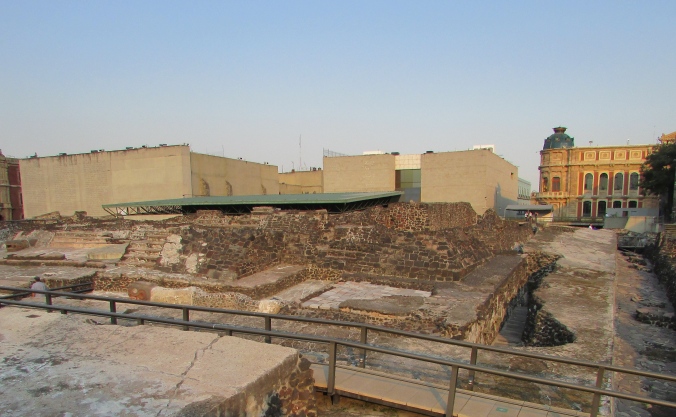
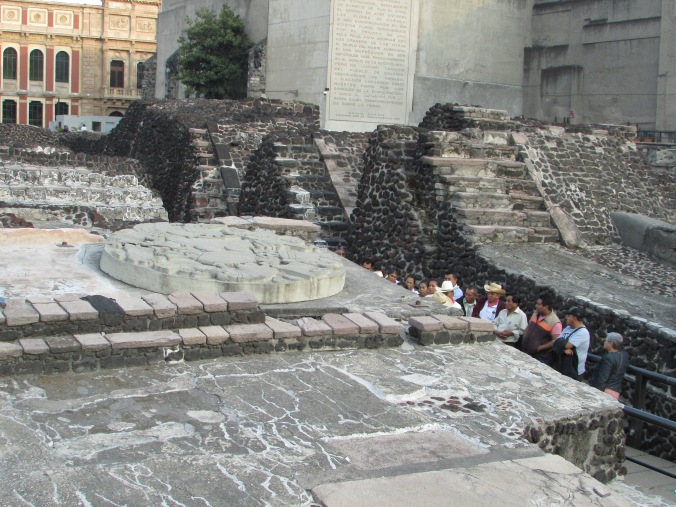
To the north and east of the central plaza, we discovered the remains of a portion of the Templo Mayor that was excavated between 1978 and 1982.
IMG_7106 - Version 2

IMG_7110

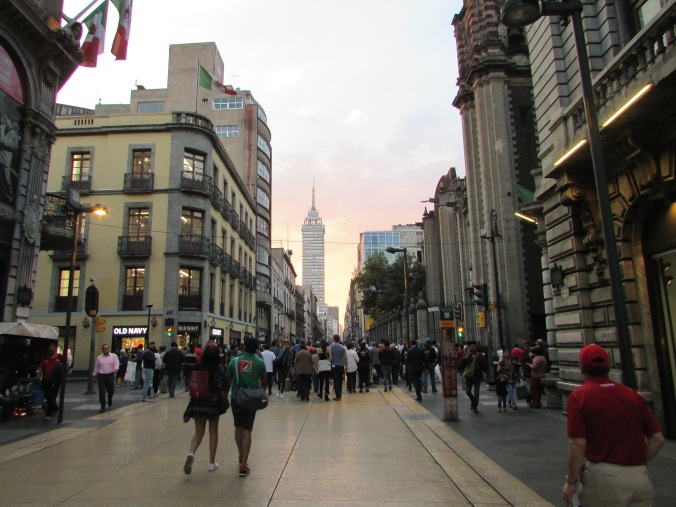
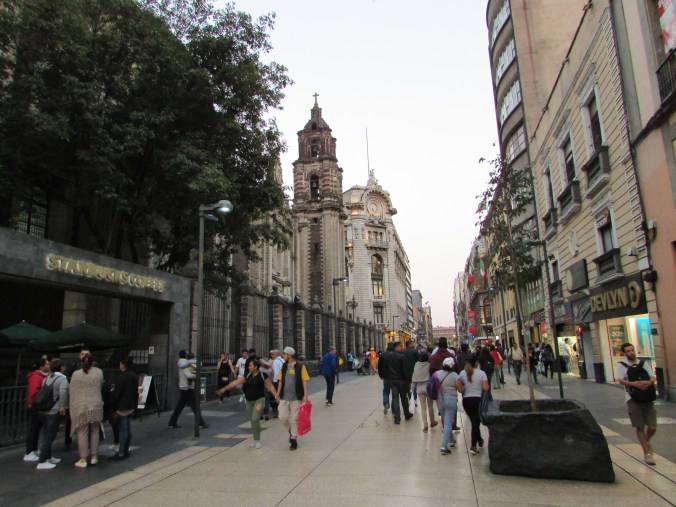
Continuing our walk, we eventually came across a long pedestrian street lined with shops and restaurants that included a number of American chains such as Old Navy, Starbucks, H&M, and Forever 21. Though it was a midweek day at suppertime, the street was full of people. Photos hardly do it justice as without sound they fail to fully capture the festive atmosphere. On one block a young boy played an accordion, on another a trio of men in traditional costume played lively music on stringed instruments, on yet another a boy played guitar and sang. In each case, of course, they had a hat or container out to catch the coins of passersby.
IMG_7116

IMG_7121

We stopped for a quick bite to eat in a tiny Mexican restaurant and dessert from Santa Clara, a Mexican ice cream shop chain. Then as the sun slipped below the tall buildings surrounding us, we headed back toward our hotel. We had to be up very early the following morning to catch our flight home.

And that’s a wrap folks! After a fantastic visit with our friends in Mexico, we’re back home on the frozen Canadian prairie revelling in the memories of another wonderful trip completed.

Churches of Coatepec

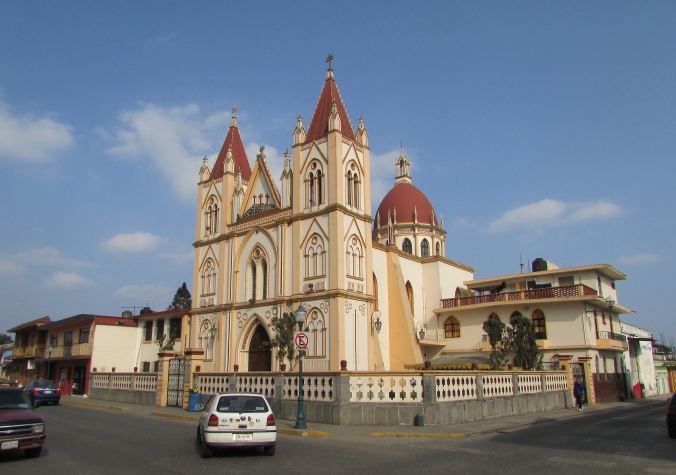
Everywhere we go in Coatepec and the surrounding area, the colour and architecture of the churches practically insist that I stop to take photos! Over 90% of the population of the area adheres to the Roman Catholic faith, so Catholic churches are everywhere.

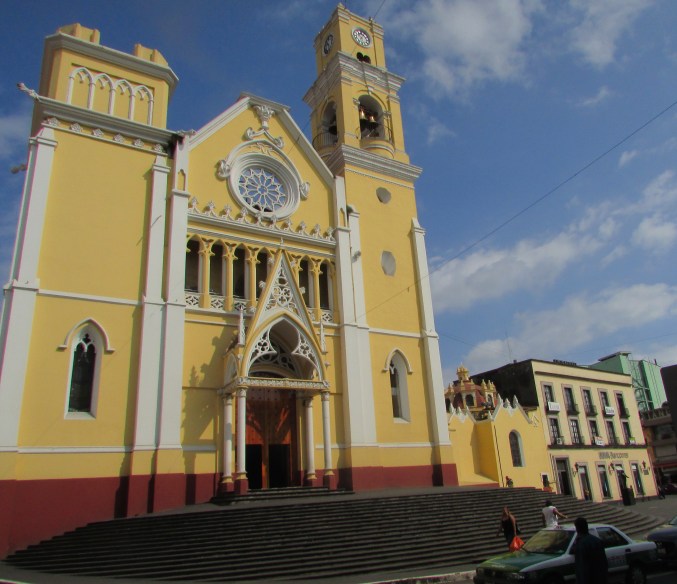
In the nearby city of Xalapa, the Catedral Metropolitana de la Immaculada Concepción, or the Xalapa Cathedral as it is more commonly called, is one of the oldest buildings in the city.

IMG_3649 - Version 2

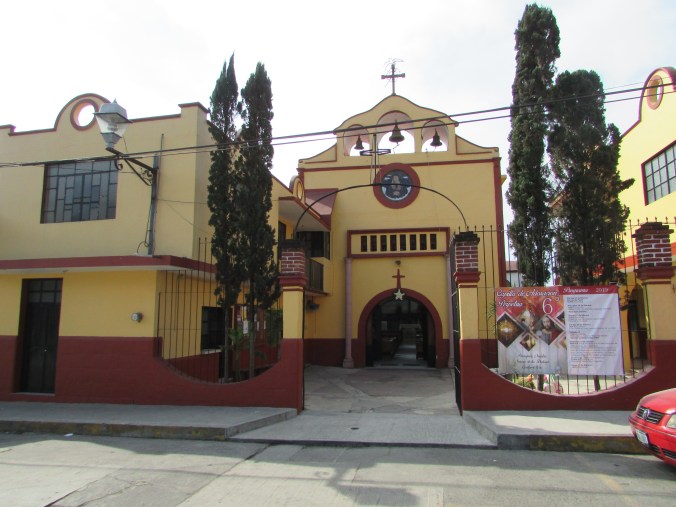
Every small town has churches that are equally spectacular. Santa Maria Magdalena is the patron saint of Xico and the church that bears her name is absolutely stunning.

IMG_3604

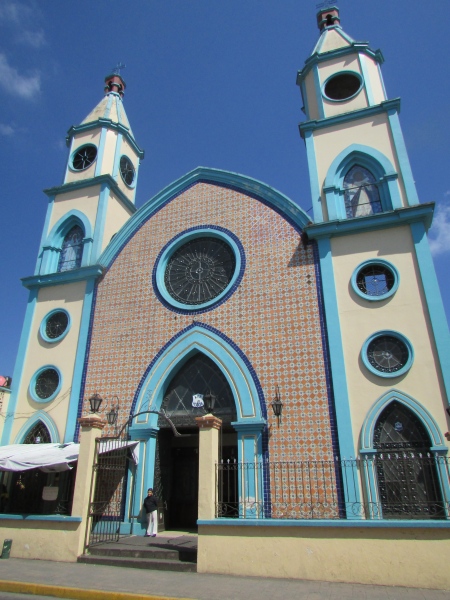
A little further away, this beautiful church overlooks the central square in the smaller town of Teocelo.

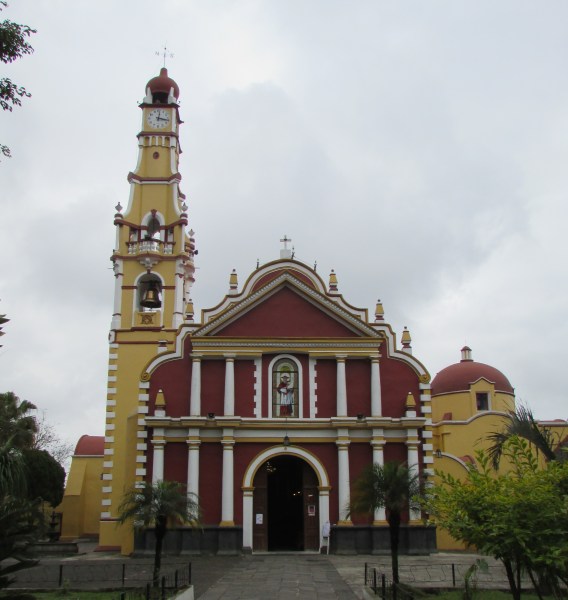
Here in Coatepec, the stately church of San Jéronimo is located in the central core across the street from the Parque de Miguel Hidalgo which is always a happening place.

img_6817

I don’t know the names of the other churches that I’ve stopped to photograph, but there are many!

IMG_3665

IMG_7005

We specifically walked up a steep hill to take a closer look at this one this morning.

IMG_7038

But this is my favourite of all the ones we’ve seen in Coatepec. Not only is the architecture exquisite, but I love the Calvary motif high above the entrance.

IMG_7033

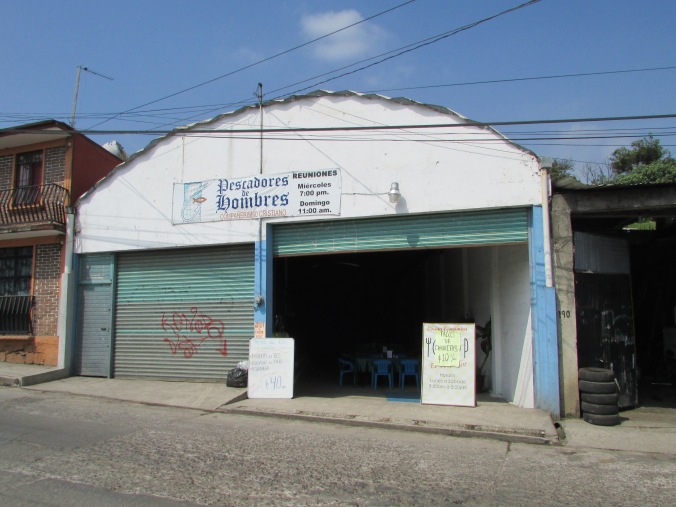
By contrast, less than 10% of the population is evangelical Christian and they meet in much more modest buildings. The Pescadores de Hombres Compañerismo Christiano (Fishers of Men Christian Fellowship) congregation meets in this building a few blocks away from where we’ve been staying.

IMG_7041

A church on Sunday morning and Wednesday evening, it’s a cochina economica (cheap kitchen) the rest of the week where you can buy tacos for 10 pesos (69 cents CAD) apiece.


Hiking in January!

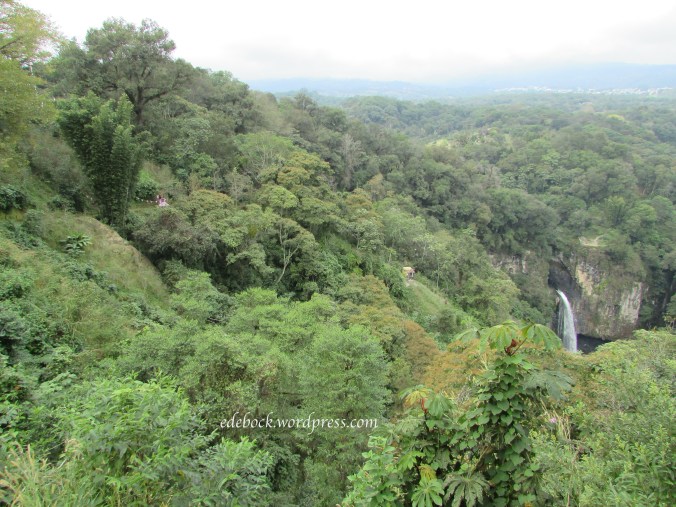
The last time we came to Mexico, we took a taxi about 9 km from Coatepec to the smaller town of Xico where we enjoyed a lovely lunch. Today, we went a little further past Xico and down a very rough cobbled stone road to go hiking. Hiking, in January! What a treat!

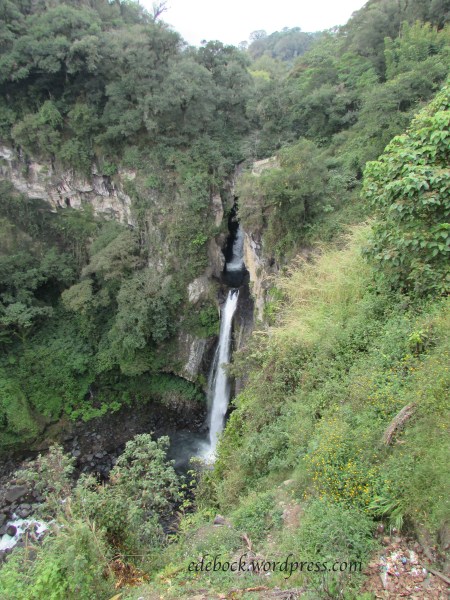
The last time our friends went hiking in the area, they were able to take a trail down to the bottom of Cascado de Texolo, but today that trail appeared to be closed. Instead, we crossed a suspension bridge and took a trail that climbed to a ridge high above the valley.

img_6944

Cascada de Texolo

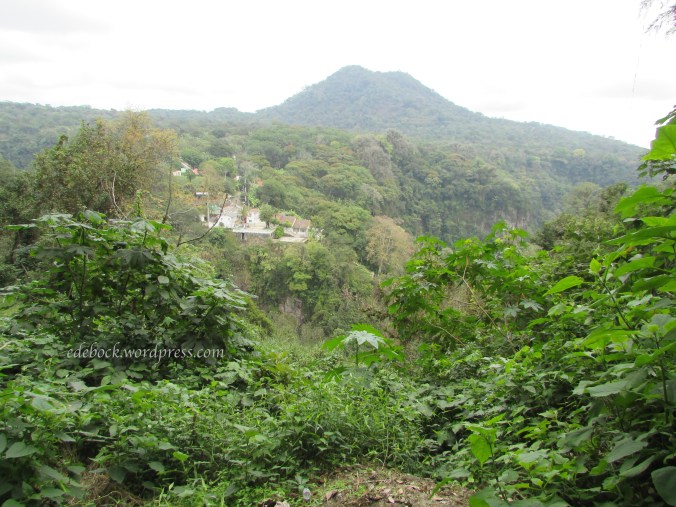
In many ways, the hike reminded me of hikes we’ve done at the BC coast and in the Rocky Mountains except that the plant life was entirely different. Instead of forest, we were hiking through jungle.

img_6972

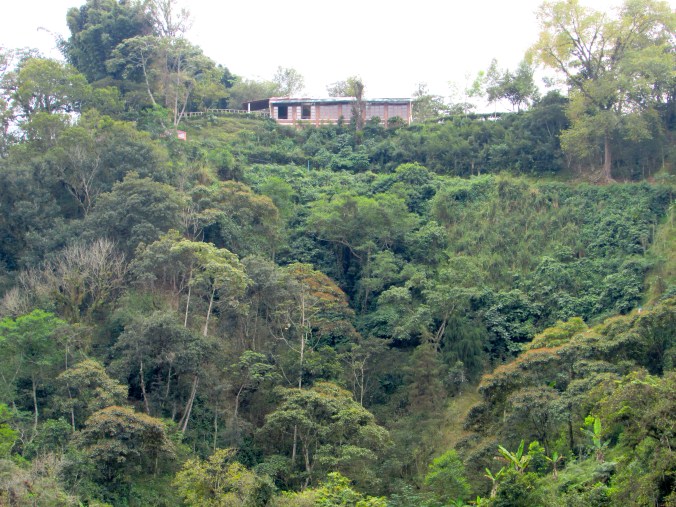
As we climbed higher, we could see a building perched on the edge of the ridge above us. Could it be a restaurant? If it was, we decided, we’d have lunch there.

img_6980

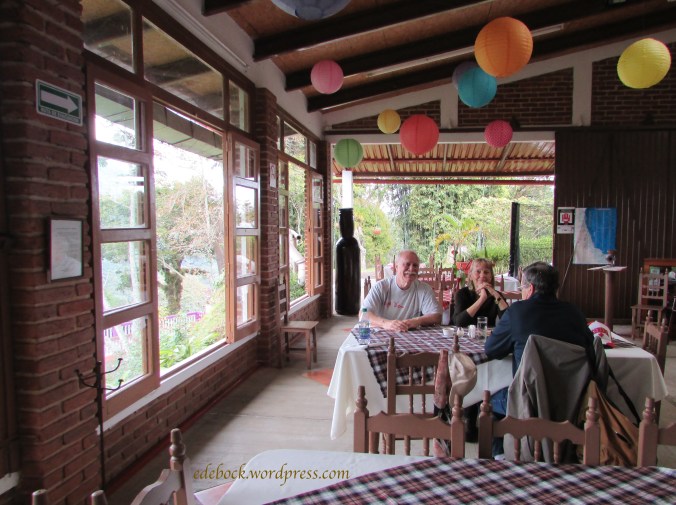
Sure enough, it was and we did! The food was delicious and the view was amazing.

img_6969

img_6967

img_6964

I had to pinch myself and remind myself that it really is January as I enjoyed the brilliant flowers along the trail.

Museo de Antropología de Xalapa

When I registered for my first year of university I intended to take a sociology course, but it was already full. I had to find something else that would fit into my timetable, so I registered for introductory anthropology. The study of human societies and cultures sounded interesting enough, but I didn’t anticipate it capturing my attention to such an extent that I would take as many anthropology courses as I could over the next four years and if money had been no object, I would have gone back to school after earning my education degree to get a second one in anthropology!

When I learned, after our first visit to this part of Mexico, that nearby Xalapa is home to the second largest museum of anthropology in the country, seeing it immediately took first place on my list of things to do on a return visit. With more than 25 000 pieces, the Museo de Antropología de Xalapa, also known as MAX, houses the world’s largest collection of artifacts from the ancient cultures of the Mexican Gulf Coast including the Olmec, the Huastec, and the Totonac.

The most notable amongst these pieces are the colossal Olmec heads that date back to at least 900 BC. That’s hundreds of years before Alexander the Great! Sculpted from huge basalt boulders, 17 of these heads have been discovered to date and 7 of them are housed in the MAX. The heads vary in height from 1.47 to 3.4 metres and weigh between 6 and 50 tons. All of them depict mature men with flat noses and fleshy cheeks.

img_6866

There are also tiny heads like this one depicting a newborn baby.

img_6876

Also Olmec in origin, this 55 cm tall sculpture is thought to depict a priest holding a limp child, either sleeping or dead.

I won’t bore you with all of the 80+ photos that I took today or too many details about ancient culture, but as a lover of anthropology, I was absolutely amazed by the collection.

A few pieces even reminded me of the masks carved by the natives of the Pacific Northwest.

MAX is also noted for a series of small Totonic faces, called “caritas sonrientes” (little smiling faces) in Spanish. The first one shown here makes me laugh!

img_6903

In contrast to the little smiling faces, this poor fellow looks terribly sad.

img_6908

For Mesoamerican people childbirth was considered a form of battle, therefore, women who gave birth were revered as heroes and great warriors. Losses on any battlefield are inevitable, so women who died as a result of childbirth were given the same honour as men who fought and died in conflict. I was very impressed with the sculptures, like this one, representing these women.

img_6910

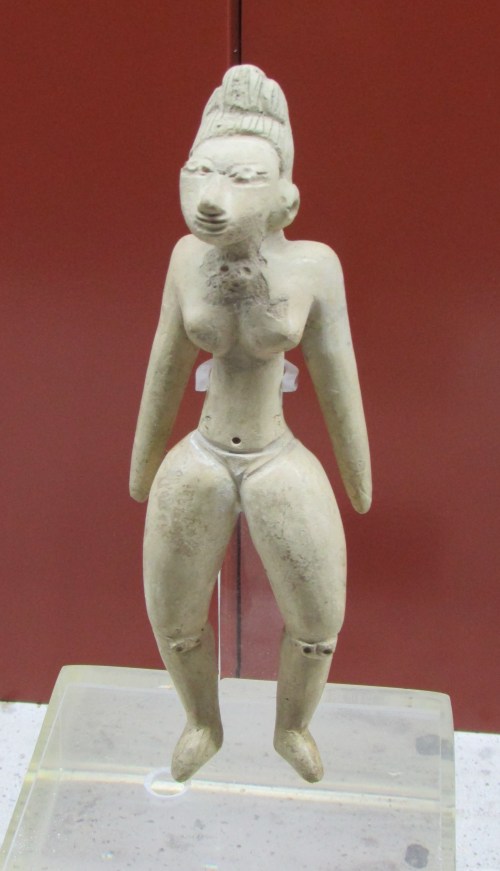
Here’s one of a series of tiny sculptures showing an ancient culture’s concept of the ideal female form; tiny waist, abundant hips, and voluptuous breasts. Clearly, with my boyish figure, I’d have been one of the ugly ones!

img_6922