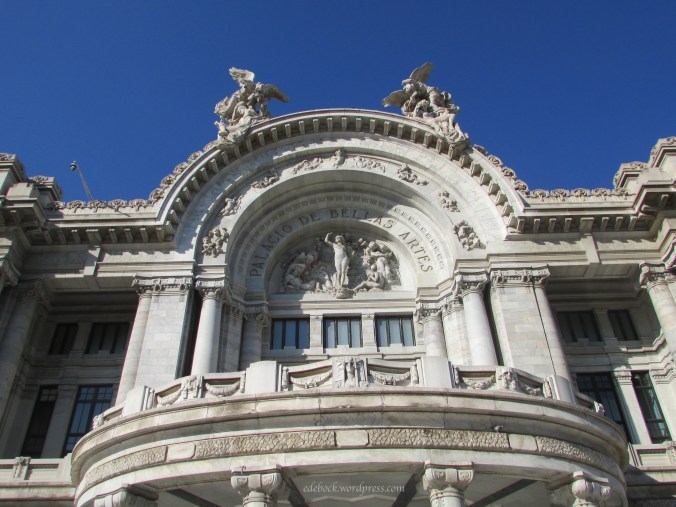
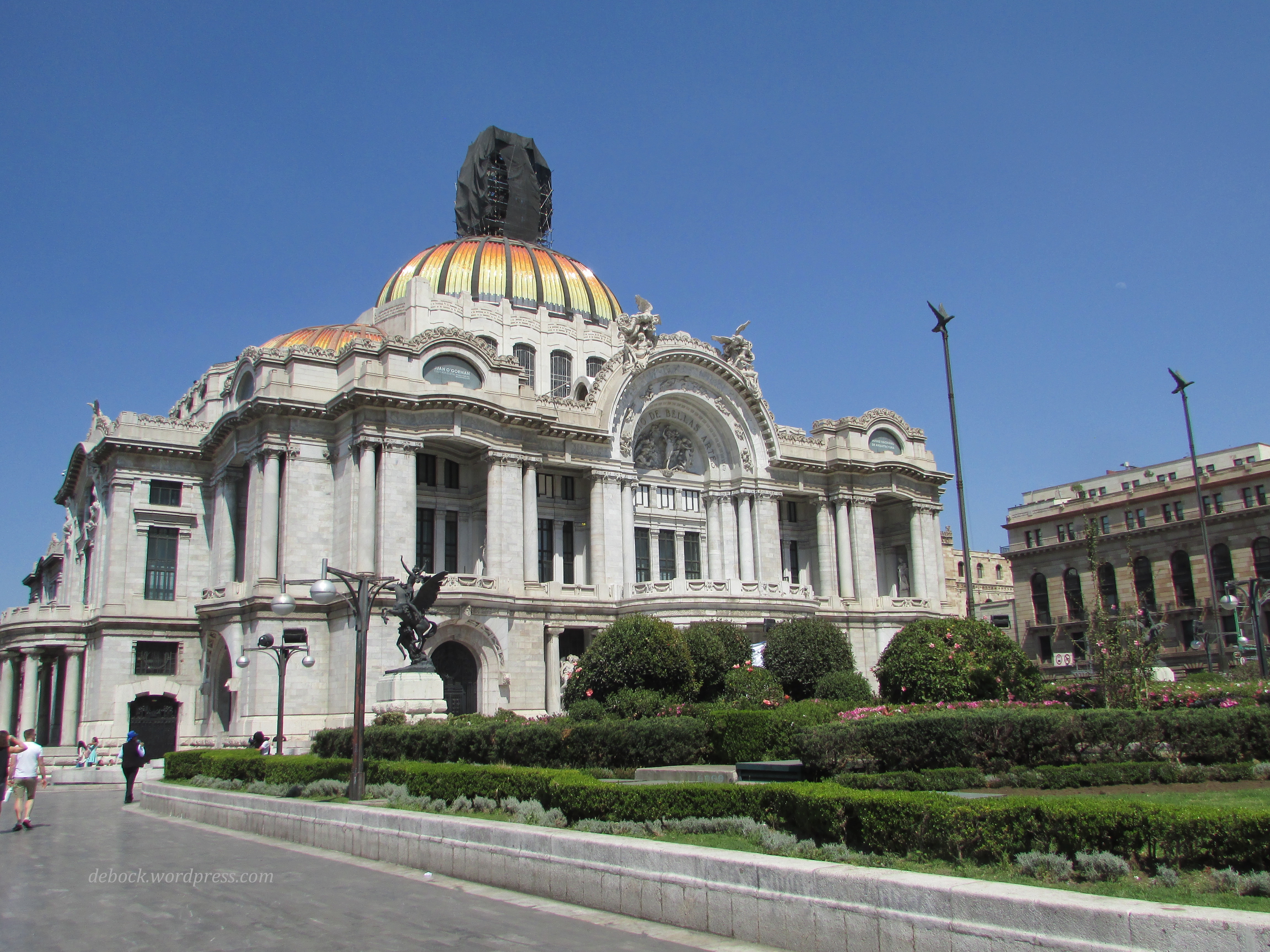
Mexico City’s Palacio de Bellas Artes

We’re home from Mexico now, but we’re living in the middle of a construction zone while renovations continue in our house. Considering how much trouble I had just finding a pair of pants to wear our first morning home, I’m nowhere near ready to consider writing a fashion post just yet. I do have one more travel post to share with you though.

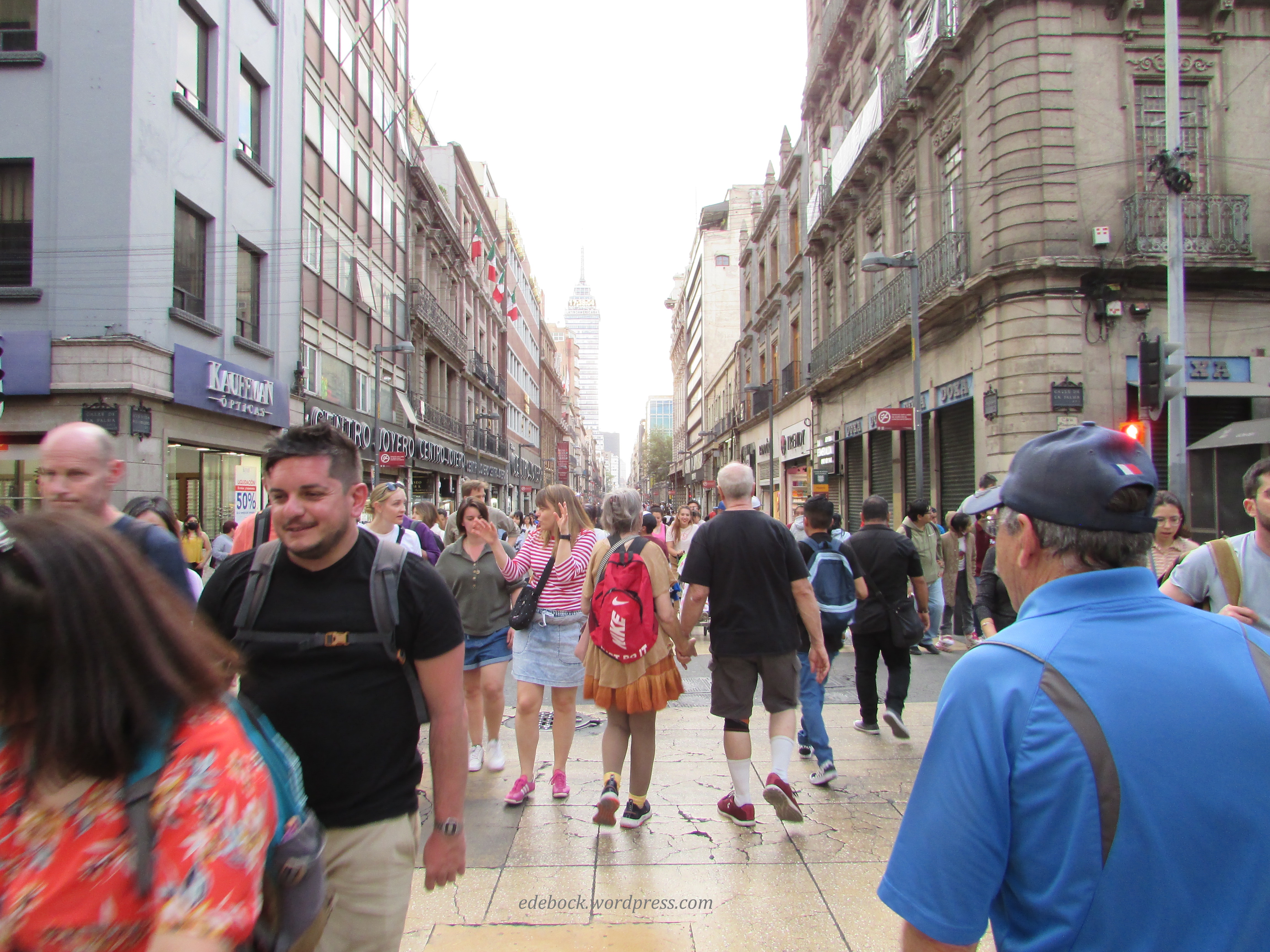
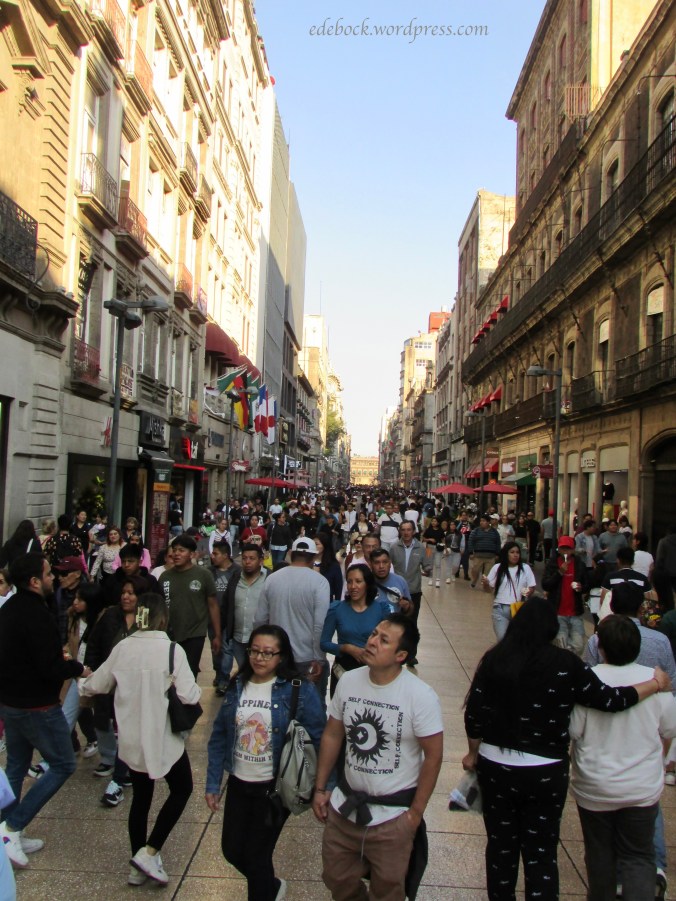
After checking into our hotel in Mexico City’s Centro Historico, we made our way to Francisco I. Madero Street, the busy pedestrian street that we have enjoyed on previous visits. Always busy, it was even more crowded than usual on a sunny Sunday afternoon!

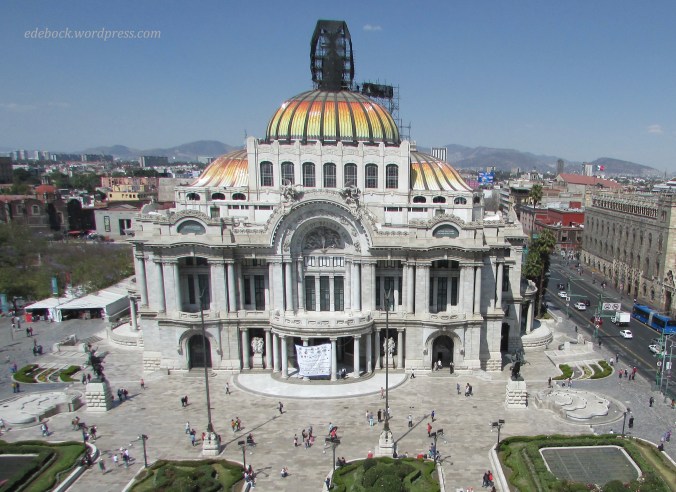
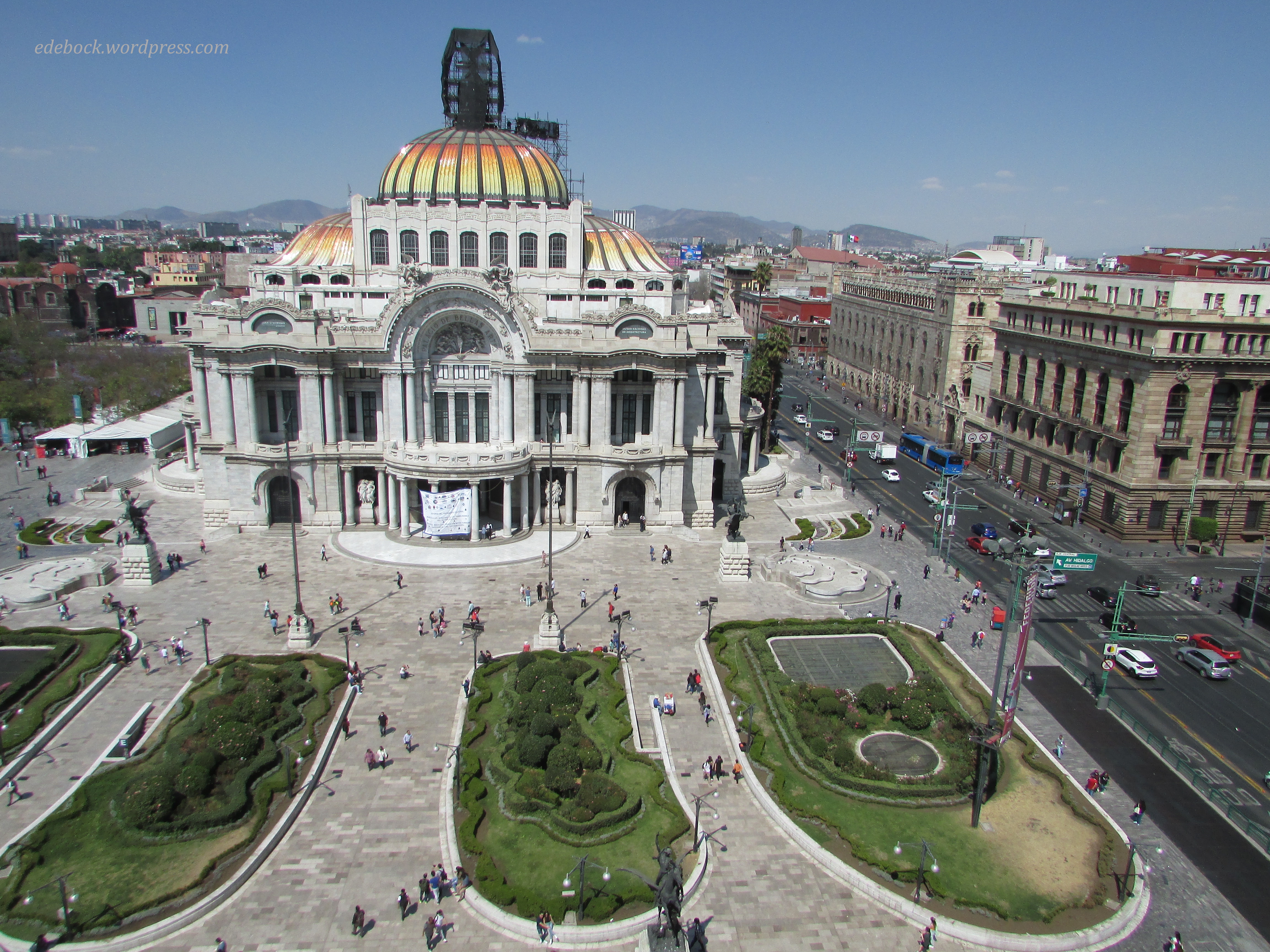
Our destination, the Palacio de Bellas Artes (Palace of Fine Arts), was at the far end of the street. Two years ago, we enjoyed this spectacular view of the prominent cultural centre from the balcony of the 8th floor coffee shop in the Sears department store directly across the street.

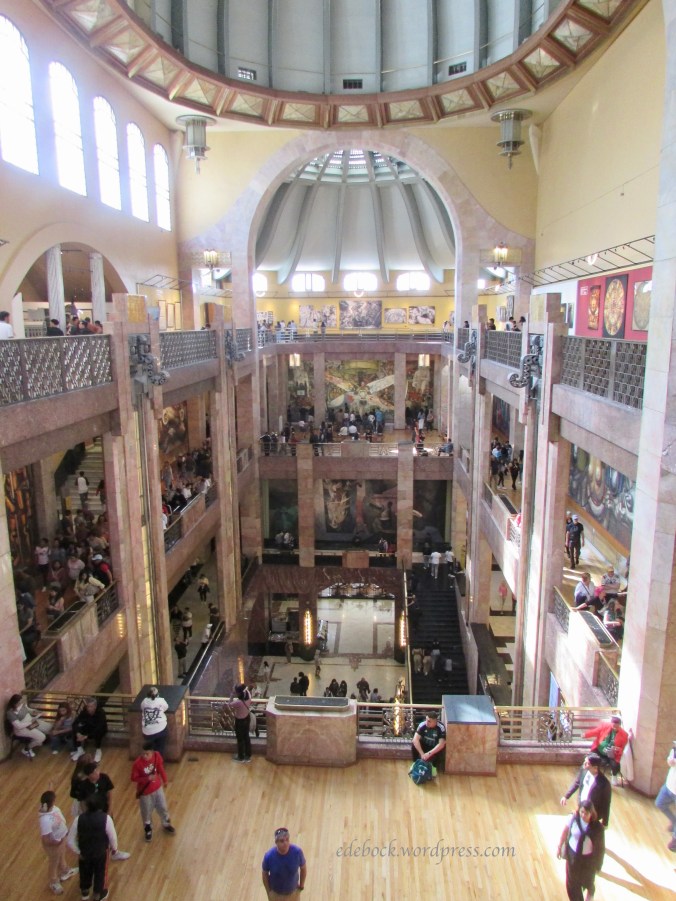
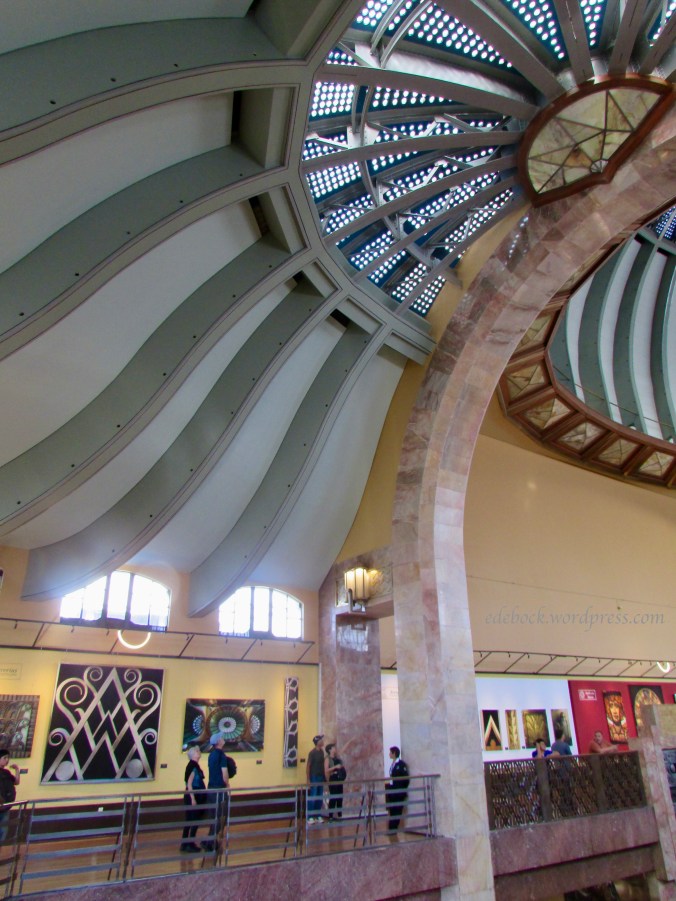
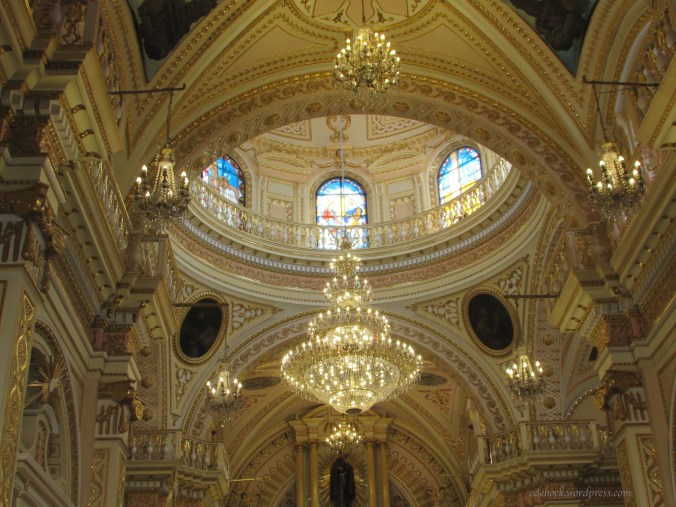
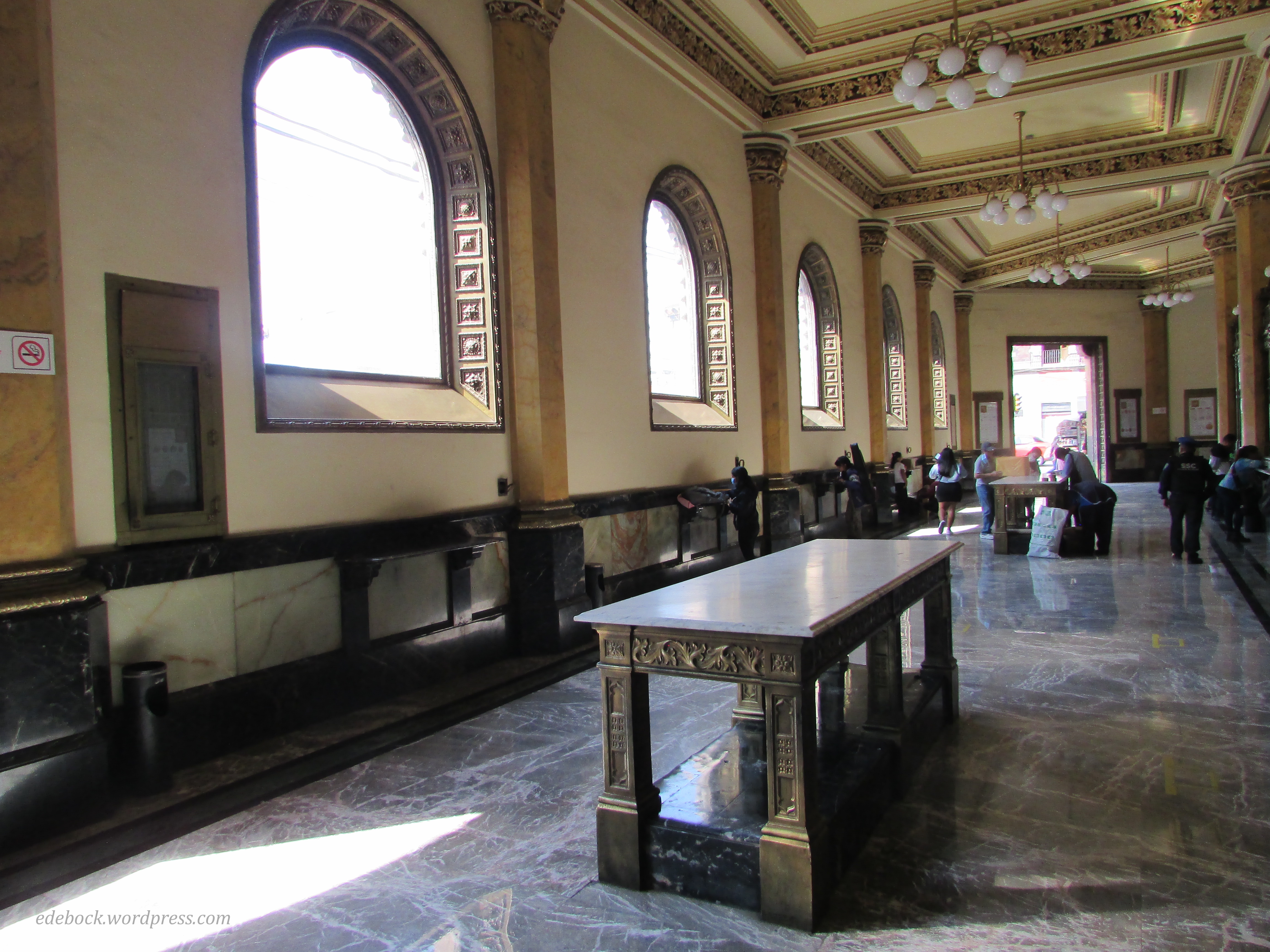
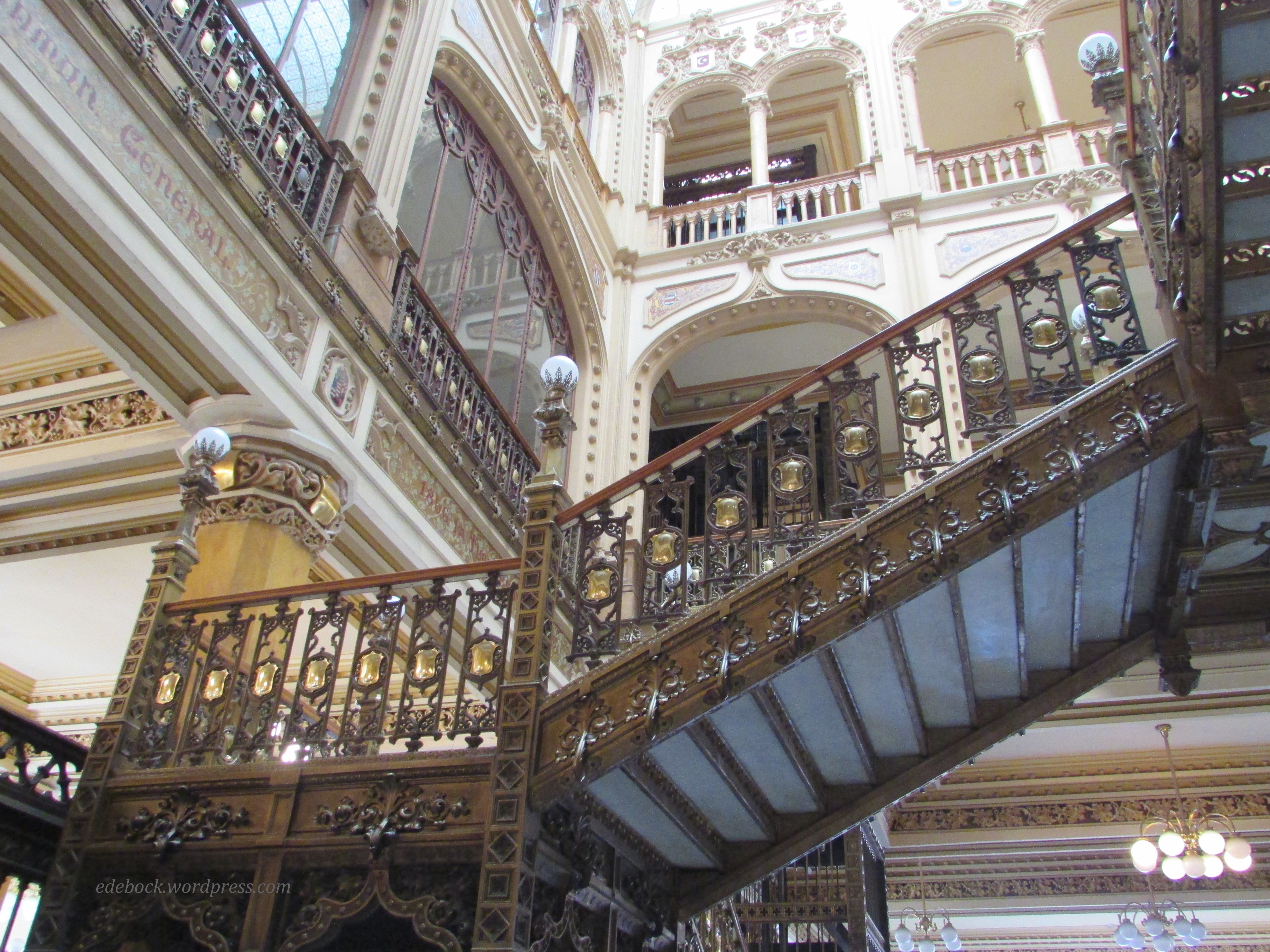
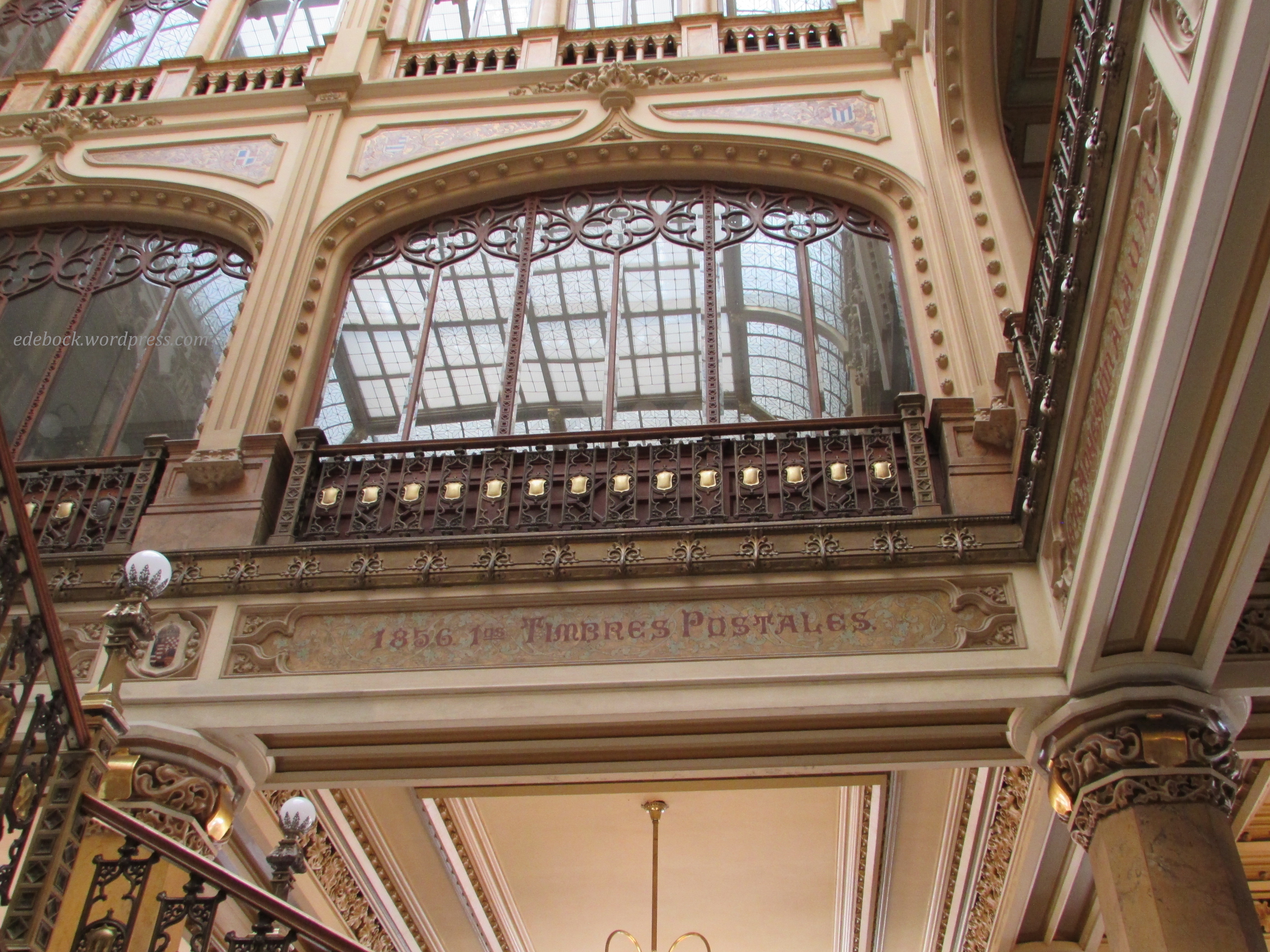
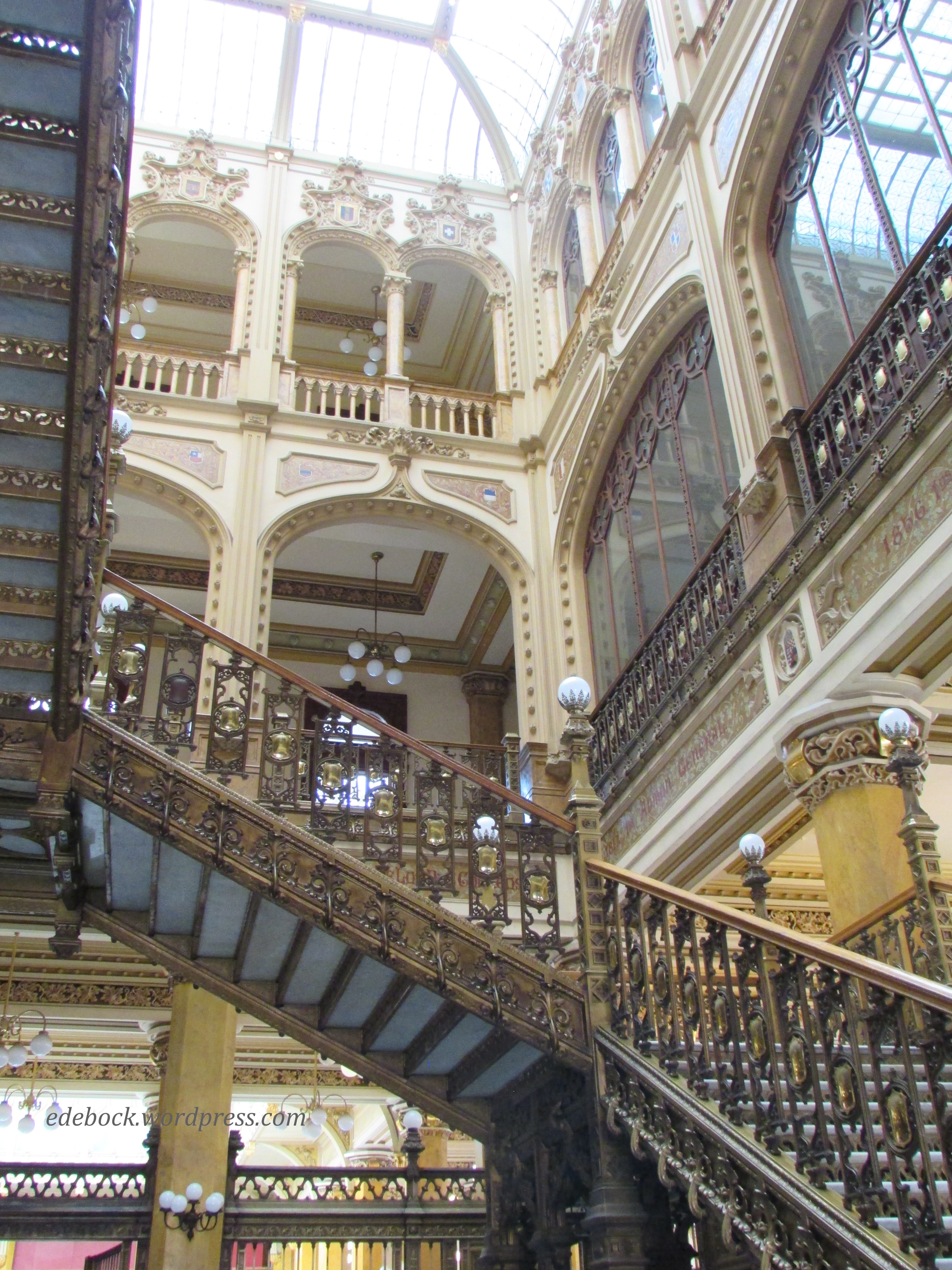
Unfortunately, on that occasion, the Palacio de Bellas Artes was closed, but this time I was determined to see the inside. It definitely didn’t disappoint. While I enjoyed seeing some of the art work on display, it was the building itself that amazed me!

This photo was taken from the centre of the main floor looking up into the domes.

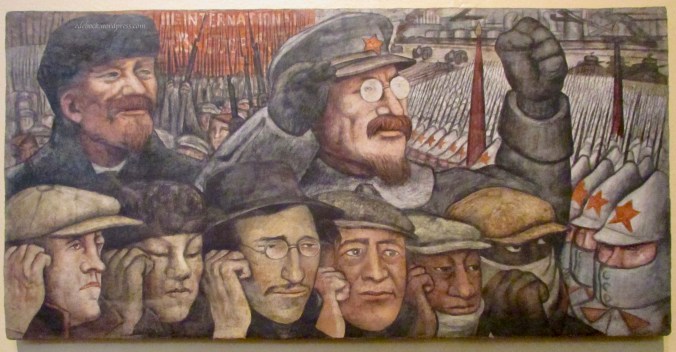
As far as the art work was concerned, it was the murals by famed Mexican artist, Diego Rivera, that I liked best. The first two panels shown here are part of his Carnival of Mexican Life series.

This one, painted in 1933 is called Russian Revolution or Third International.

I wasn’t able to get a photo of his entire The Man Who Controls The Universe mural partly because of the large tour group standing in front of it, but also because of the sheer magnitude of the piece which was painted specifically for the Palacio de Bellas Artes. It’s actually a replica of the original work which was painted in the lobby of the Rockefeller Center in New York City. The inclusion of Lenin’s face led to the destruction of the controversial piece.

Back outside, we also enjoyed the art on the exterior of the beautiful building.

In addition to the art museum housed in the front portion of the enormous marble structure, the Palacio is also home to Mexico’s largest concert hall. Unfortunately, that part wasn’t open while we were there.

Exploring Puebla’s Centro Historico

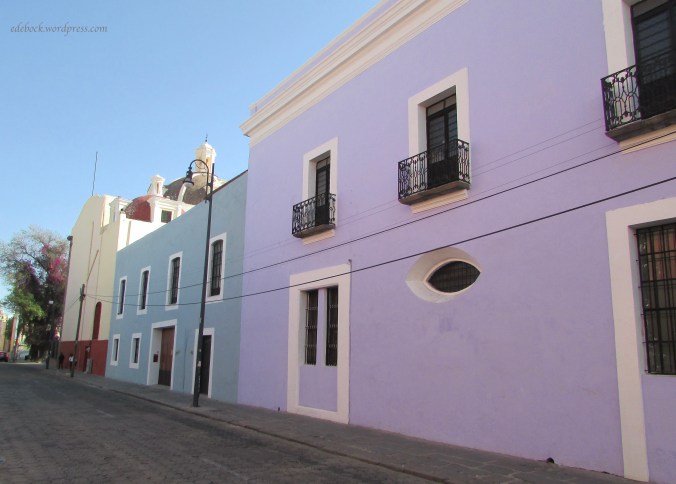
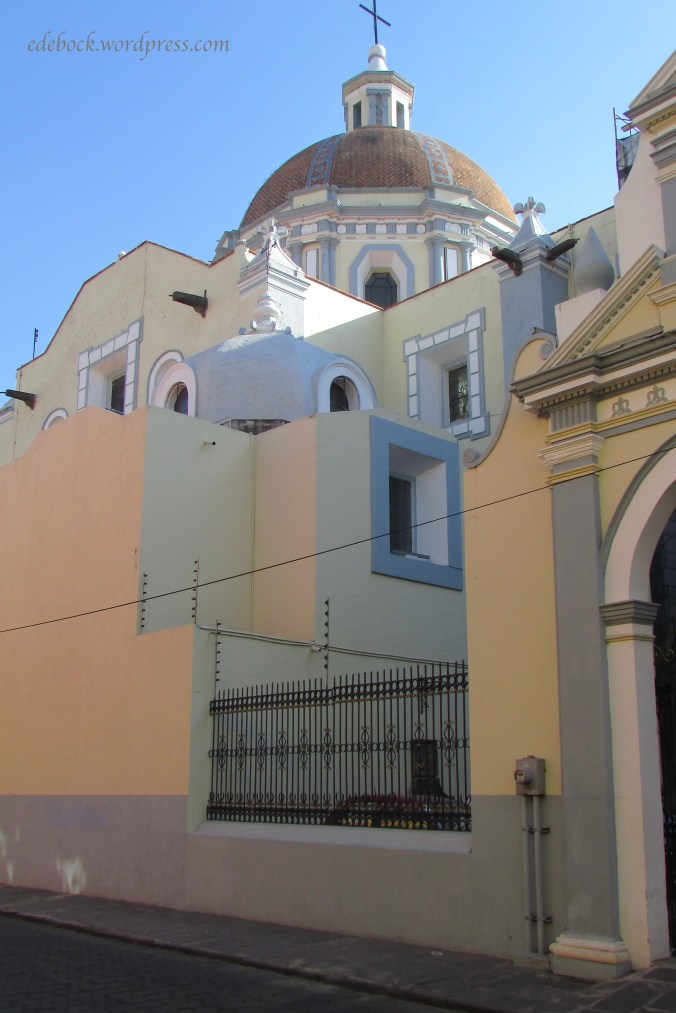
With friends who are permanent residents of Mexico, hubby and I spent a couple of days this past week enjoying the colourful Centro Historico district of Puebla, the country’s fifth largest city by population.  Come take a walk with me as I share some of what we saw.

Everywhere I turned, I was amazed by the architecture. Look at all the interesting shapes!

Tiles, or azulejos, are used to decorate many buildings inside and out.

And beautifully carved wooden doors add to the beauty of many buildings.

Of course, flowers in January add to that beauty!

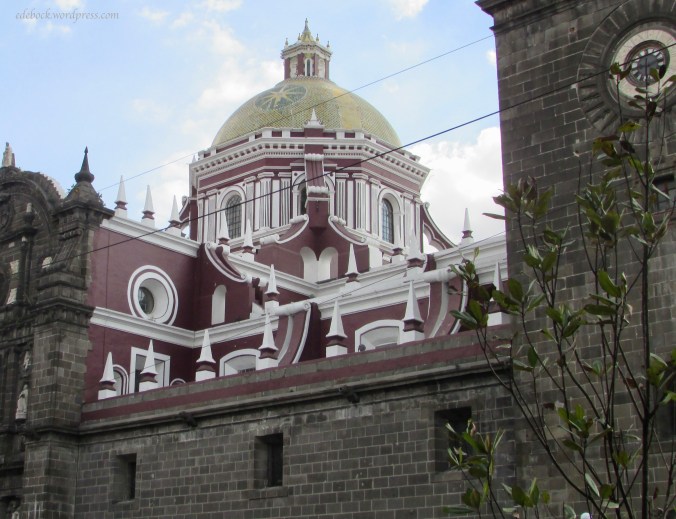
The impressive 16th-century Catedral de Puebla occupies an entire city block in the centre of the district.  

Across the avenue to one side of the cathedral is the Biblioteca Palafoxiana. Founded in 1646, it is recognized by UNESCO as the first and oldest public library in the Americas. It has more than 45,000 books and manuscripts, ranging from the 15th to the 20th century.

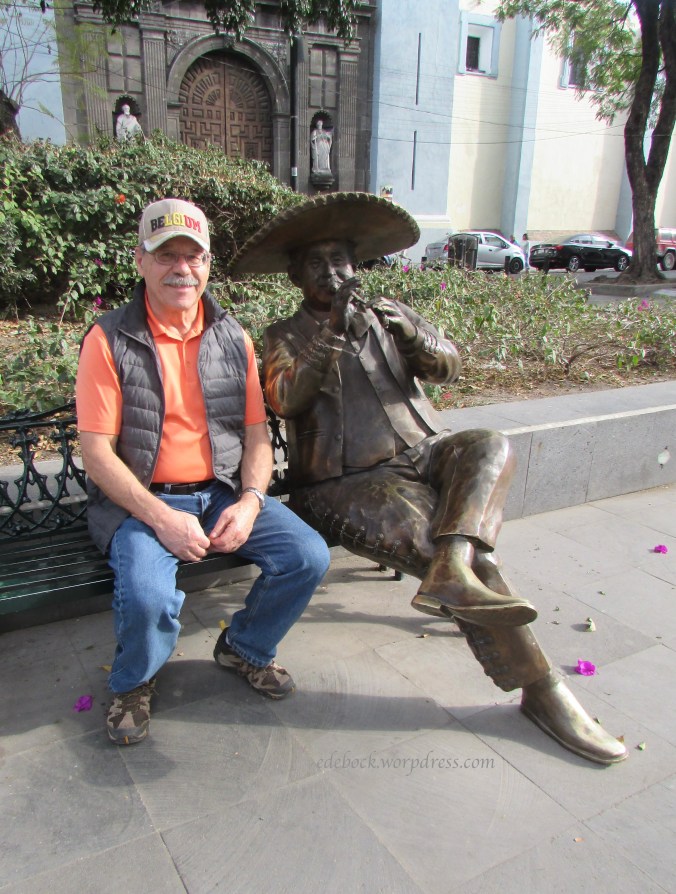
This is just a taste of what there is to be seen and experienced in the historic centre of Puebla. There is, of course, the zócalo, a public square/park that’s found in the centre of almost every Mexican city or town, as well as several other parks. Hubby made a friend in one of the smaller ones! 

There are also upscale eateries and small “hole in the wall” places that serve delicious Mexican dishes as well as many, many shops and market stalls.

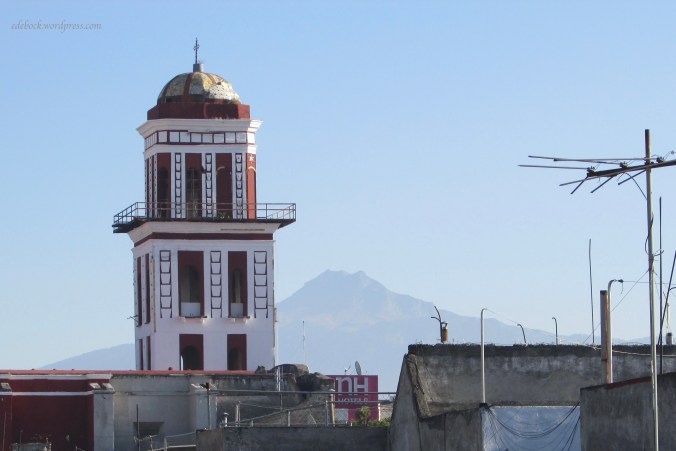
And finally, that’s a view from the rooftop patio of our Airbnb. That’s Popocatépetl (El Popo) in the background, the 18,000-foot-high active volcano that stands about 70 km (45 miles) from Puebla.


The Great Pyramid of Cholula

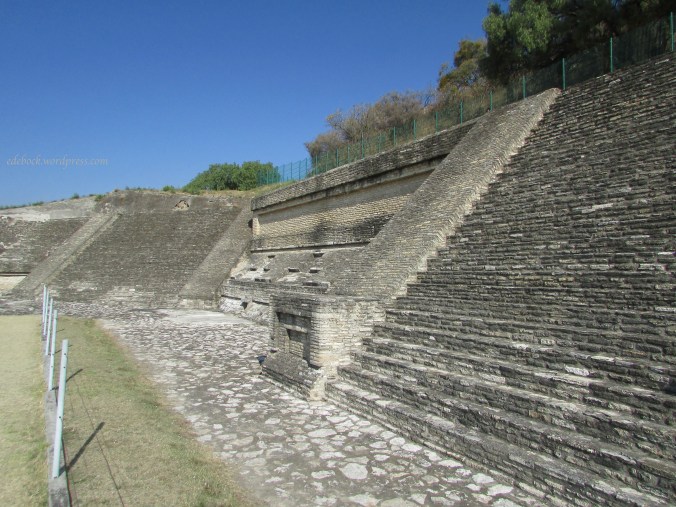
Tlachihualtepetl or the Great Pyramid of Cholula, the largest pyramid known to exist in the world today, isn’t in Egypt. It’s actually located in the city of Cholula, just a few kilometres west of Puebla, Mexico. Significantly shorter than Egypt’s Great Pyramid of Giza, it is much wider, covering an area measuring at least 300 by 315 metres. Partially hidden beneath what looks like a natural hill with the beautiful Iglesia de Nuestra Señora de los Remedios (Our Lady of Remedies Church) at the top, it’s actually a huge archaeological site. 

After our visit, the hardest part about writing this post was deciding which and how many of the 80+ photos that I took to include!


Unlike the Egyptian pyramids, the Great Pyramid of Cholula was built in stages beginning in the 3rd century BC and continuing through to the 9th century AD. As the ancient inhabitants of the area built on top of or modified previous structures the pyramid gradually took shape.

The earliest structures on the site were constructed of stones and adobe blocks made of clay, straw, and other plant material mixed with water. These were covered with a layer of stucco made of lime and sand. Over time, of course, the adobe broke down and nature took over. Legend also has it that when news of Spanish invaders arrived in the early 1500s, locals completely camouflaged the pyramid with mud and greenery to save the sacred place from being completely destroyed. What has been excavated and  is visible now is just a fraction of what lies under the hill. Archaeologists have dug about 8 km of tunnels into the pyramid. Unfortunately, the 800 metres that are sometimes open to the public were not when we were there, but what we saw above ground was astounding.  

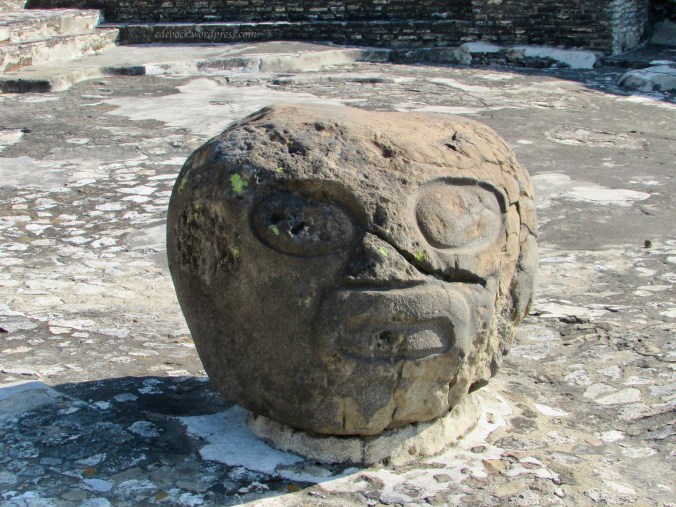
The different phases of the pyramid were built by ancient Mesoamerican civilizations including the Olmecs, Toltecs and Cholutecs. Though much smaller, this large head reminded me of the colossal Olmec heads dating back to at least 900 BC that we saw in the Museo de Antropología in Xalapa on a previous visit to Mexico in 2019. 

The pyramid is thought to have had deep religious and ceremonial significance to the groups that held it at various times throughout history. Around its base and inside its walls, over 400 skeletons have been found. Disturbingly, many of these were the remains of children thought to have been sacrificed on the altar shown below during times of drought. It was believed that when they died they would carry messages to the rain god pleading for water for their people. 

The interior of this altar contained the remains of two people and the remains of eight others, including children, were found under its base. 

On a lighter note, how would you like to climb these stairs? 

While most of the site is cordoned off and we couldn’t have attempted those stairs if we had wanted to, this flight of 50+ narrow stone steps was accessible, so of course we had to climb them! 


Hanging onto the rope that’s firmly attached to the side, I made my way up. While the views from the ledge at the top were worth the climb, I soon discovered that there isn’t any other way down and wondered how I was going to manage the descent. Inching my way to the edge, I sat down and clinging to the rope, I made my way down on my butt! Thankfully, only hubby and our friends were there as witnesses!

As if that climb wasn’t enough, we also decided to take the steep walkway all the way to the top of the hill to see the church. Recognizing the religious significance of the pyramid mound, the Spanish chose to construct the Catholic church on top of it as a way of replacing the pagan cult of the past. It was constructed between May 1574 and August 1575 and consecrated on March 25, 1629.

On our way up the hill, we followed a procession playing music and carrying an almost life-sized statue of a saint. Gathering just outside the sanctuary, they waited until the priest came out and blessed them with a sprinkling of holy water before they entered the already full church and a service began. At that point, we were able to stand just outside the door and see some of the church’s beautiful interior. 

El Resobado: Coatepec’s historic bakery

On previous visits to Coatepec, I’ve written blog posts about everything from grocery shopping in the open market, to the beautiful murals, to the churches, and the architecture here and here. On our last visit, I wrote this post about a walk around the neighbourhood where we stay with our friends who are permanent residents of Mexico.

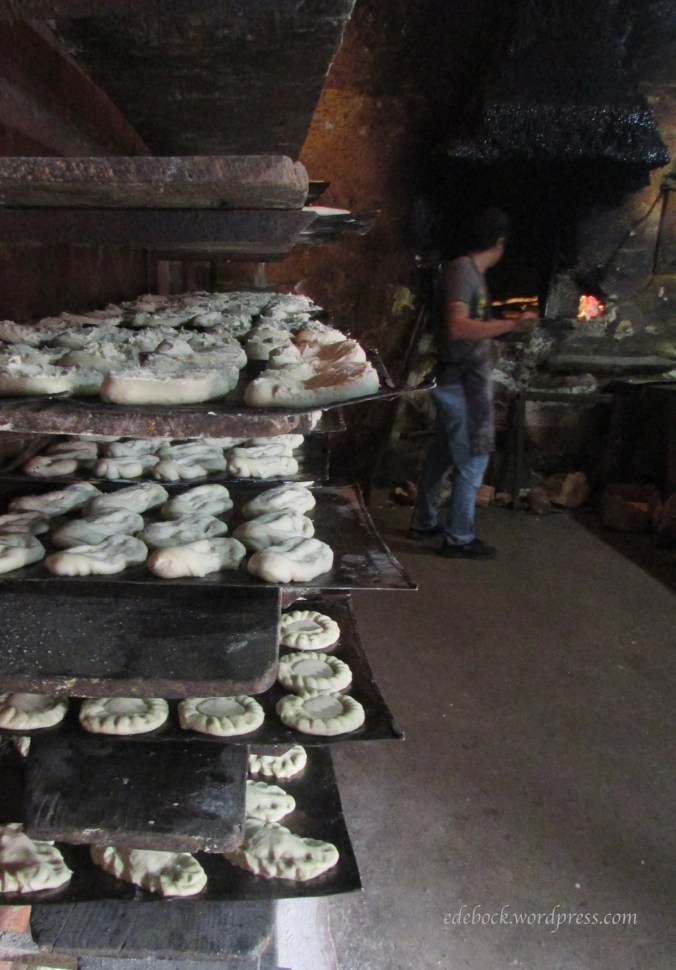
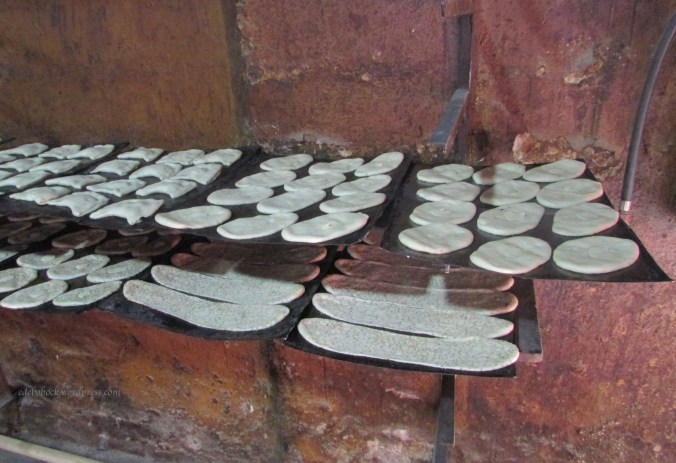
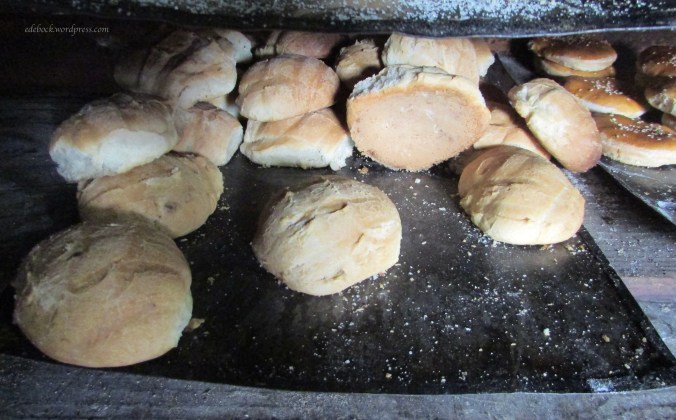
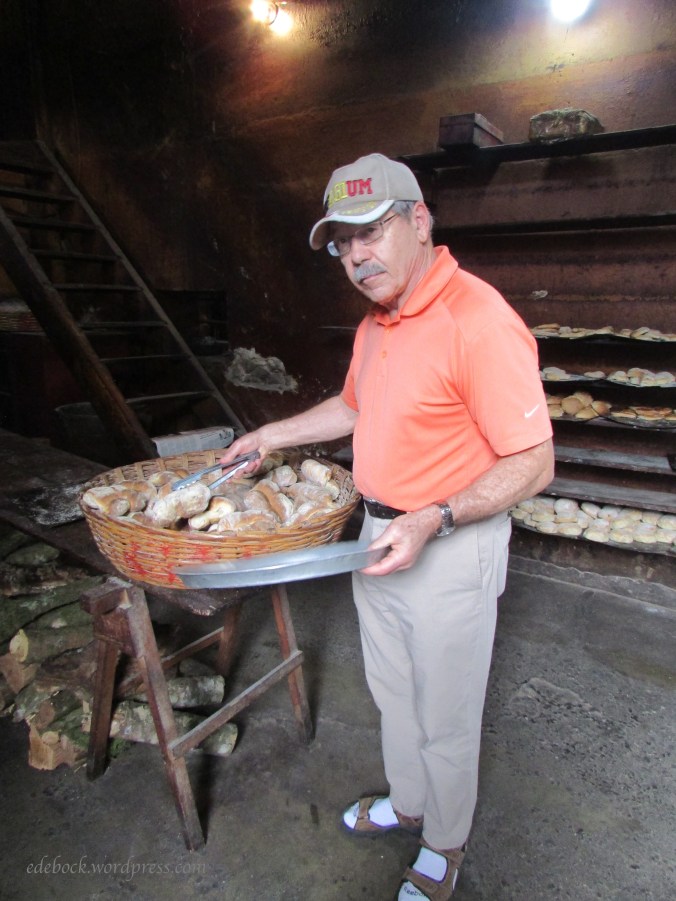
Today, on our fourth visit, I found something different to share with you. The traditional wood-fired oven in Panadería “El Resobado” has been burning for over 140 years! 

Stepping through the doorway into the front room of the bakery feels like taking a step back in time. The walls and ceiling are blackened by more than a century of smoke and one is surrounded by the smell freshly baking bread.

Shelves of artisanal breads and other baked products line the walls waiting for their turn in the oven. 

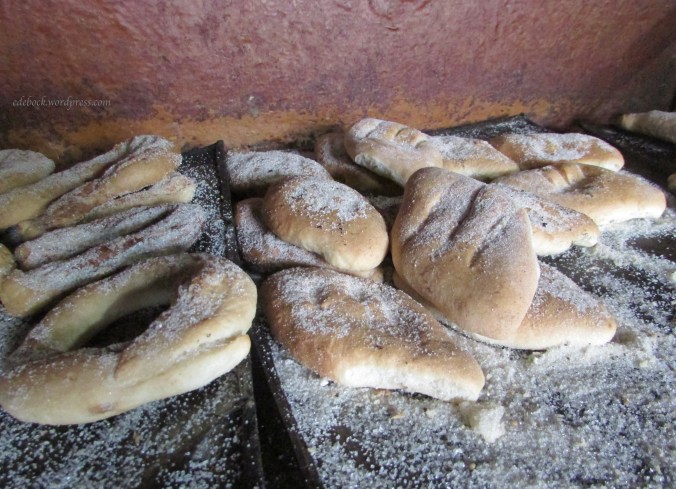
Behind the room where the actual baking takes place, one steps into another room where more shelves hold the baking that’s ready to be sold. 

Of course, we had to sample a few of them!

Until about a year and a half ago, the bakery was open 24 hours a day 7 days a week, but it now opens at 5:00 AM and closes at 11:00 PM. The products are not only sold on-site at El Resobado, but also supply some of the stores in the area. 

A week in paradise

IMG_6434

When we travel, I usually do all the planning myself. I book our flights and accommodations and make all the other necessary arrangements without the aid of a travel agent. We tend to be active travellers who enjoy sightseeing, visiting museums and historical sites, walking the streets and marketplaces of foreign cities, and exploring out of the way places. This time was different though. After the challenges of the past few months I knew we needed to get away for some much needed rest and relaxation, but I also knew that I didn’t have it in me to do the work. I needed help.

When I contacted Pam at Beachbums Travel, I told her that we were looking for a week at an all-inclusive resort. Location wasn’t a priority, but we preferred a direct flight and for me, a beautiful beach was an absolute essential. I needed some ocean time! We wanted good food, good service, and a place where we wouldn’t be hassled about buying a premium membership or touring a timeshare. Pam came through with a list of possibilities and we chose a Sunwing vacation to Hotel Riu Dunamar on Mexico’s beautiful Playa Mujeres just north of Cancun.

IMG_6441

IMG_6438

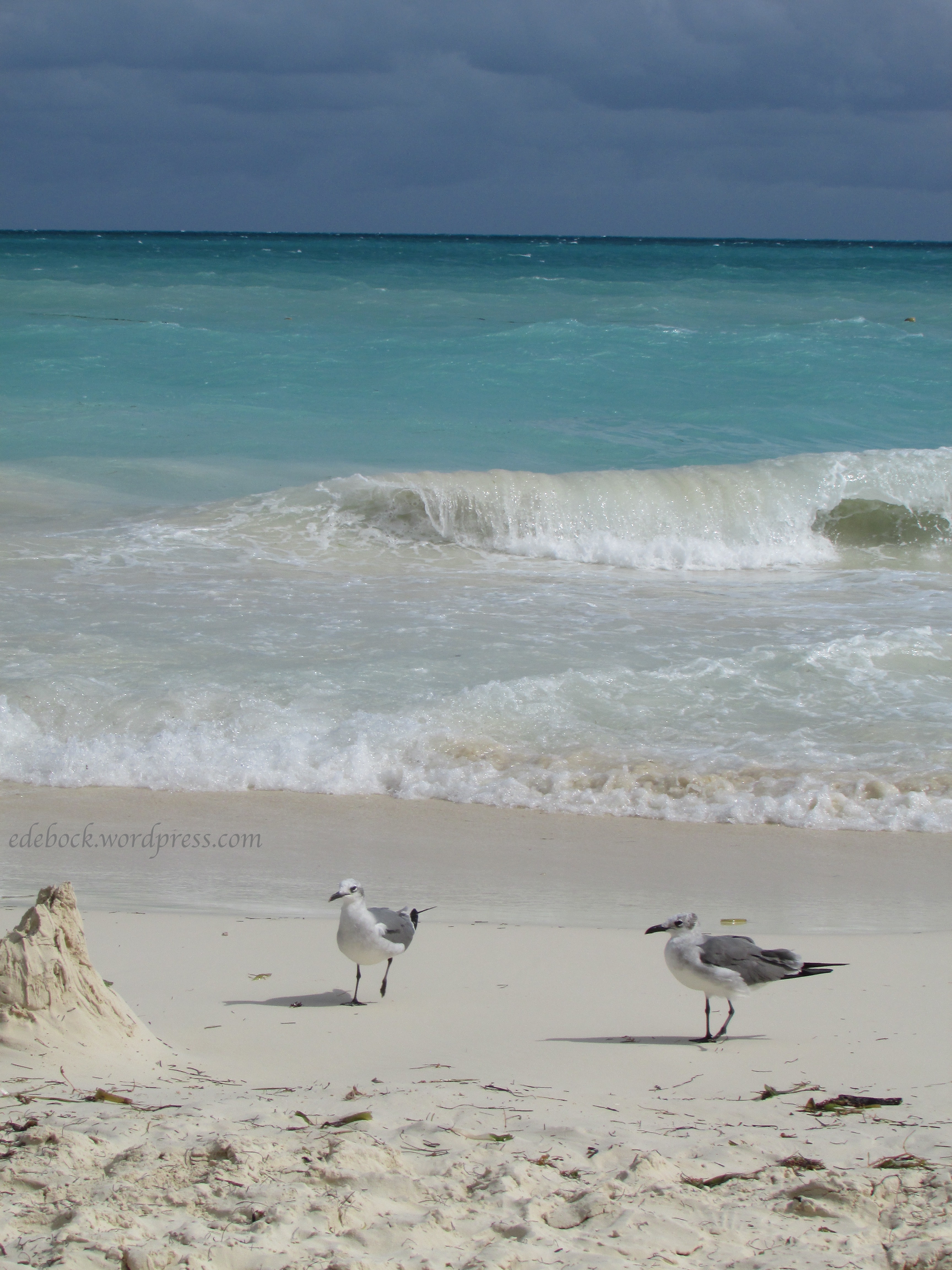
The only thing that Pam couldn’t control was the weather. She says that her memo didn’t reach the heavens in time! The wind blew incessantly and there was lots of cloud, especially early in the week, but the ocean is beautiful in every light.

IMG_6460

For those of you who are familiar with the beach flag warning system, the flag was red all week which usually means stay out of the water. Wading and playing in the waves close to shore was allowed, but nothing beyond that. Even there, the power of the waves could easily send one for a tumble. We’d hoped to do some snorkelling and sea kayaking, but that was, of course, out of the question. There was also some rain almost every day, but those were quick showers and did nothing to dampen our time in paradise.

IMG_6490

Our days quickly fell into routine. After breakfast, we headed for the beach to claim a couple of lounge chairs. It didn’t take long for the beach to begin to fill with people!

IMG_6485

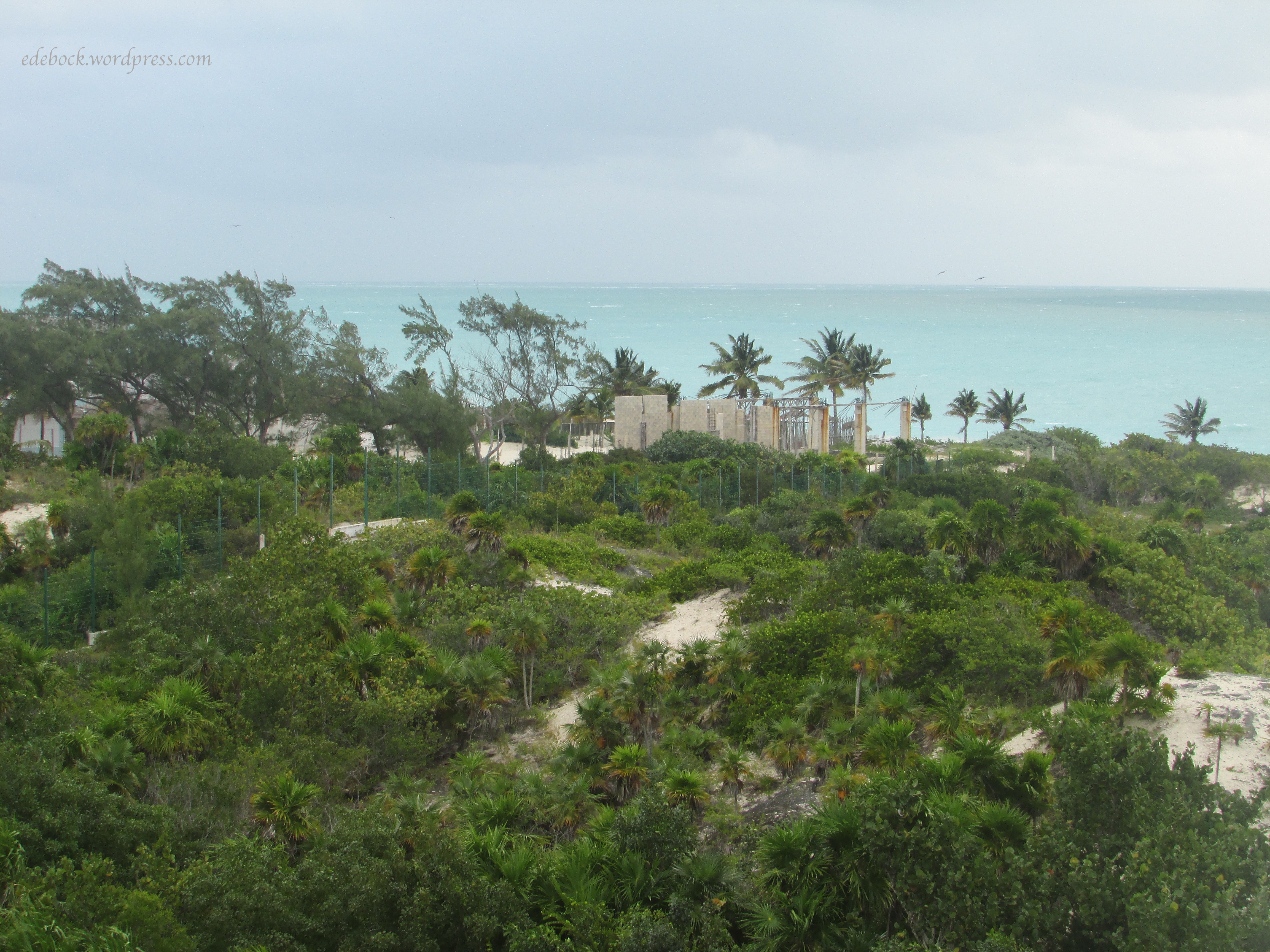
We relaxed, we read, and at some point every morning, we headed off on a long beach walk past several other resorts, including some still under construction. Those walks, often with the waves lapping at our feet, were the highlight of my day.

I did take more than one swimsuit with me, but it seems that I’m wearing this one, my favourite, in all the good photos!

IMG_6452

While at the beach and on our walks, we enjoyed watching pelicans fishing for food. I was amazed by the way that they could somehow spot their prey in the turbulent surf, hover overhead momentarily, and then dive bomb into the water to catch what they were looking for!


IMG_6469

IMG_6465

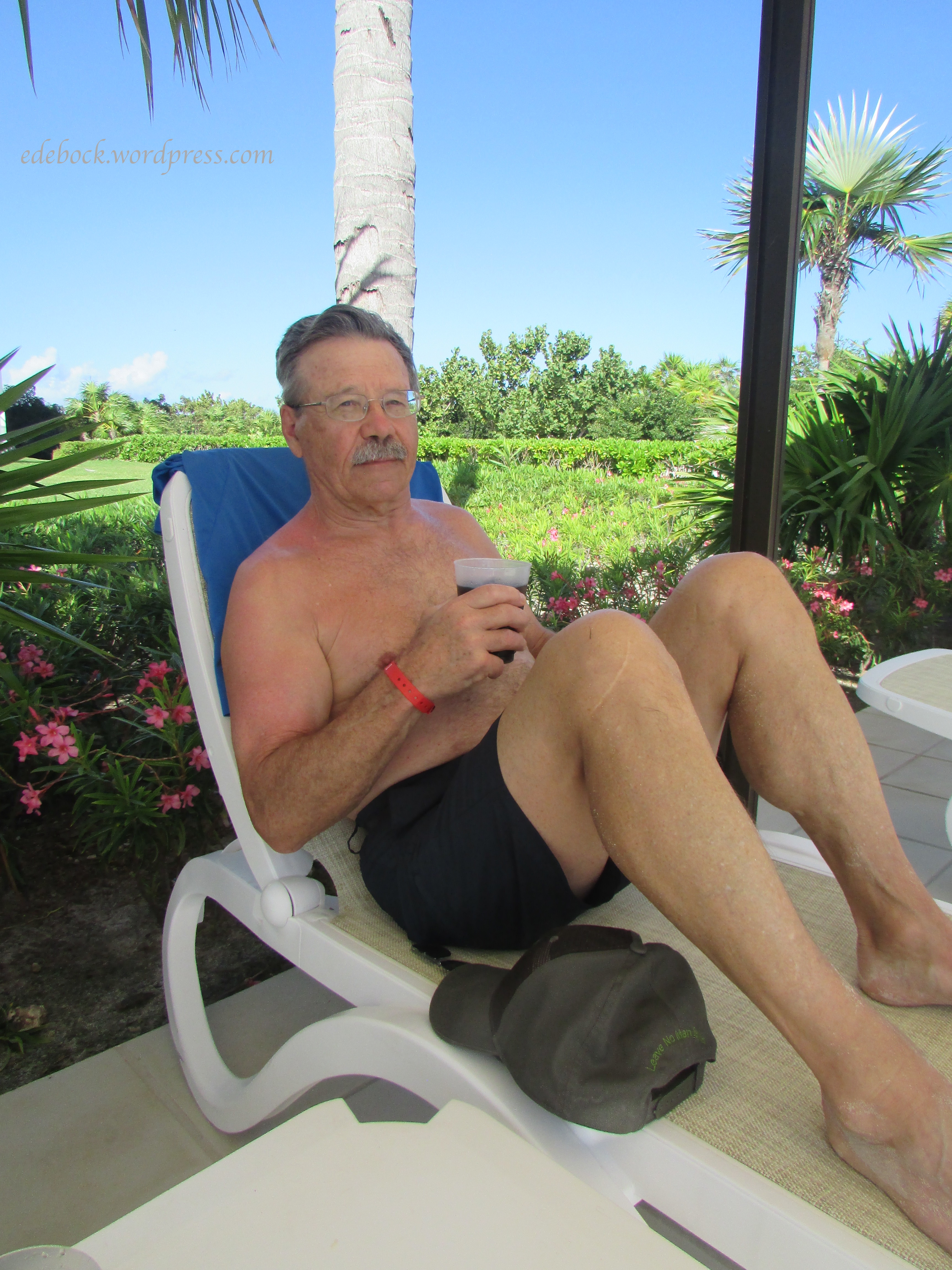
At some point during most days, when we’d had all the wind we could handle or needed to get out of the sun, we’d move up from the beach to lounge beside the quietest of the adult only pools. There, there were overhead screens that could be opened or closed to provide shade (or shelter from a quick cloudburst one afternoon!)
IMG_6568

Late in the afternoon, we’d go back up to our room to shower and dress for dinner. We didn’t need to spend any time at the gym. Those beach walks and climbing the three long flights of stairs (60 steps in all) to our fourth floor room several times a day were all the exercise we needed. We nicknamed the stairs Mount Dunamar! There are elevators, but they were a long way from our room and taking the stairs was much more direct.

We loved the location of our room on the quiet side of the hotel away from the central courtyard. Our patio overlooked the jungle, but also had a view of the ocean. I loved listening to the wind in the trees and the distant sound of the ocean waves. With the patio door open, I slept so well!
IMG_6475

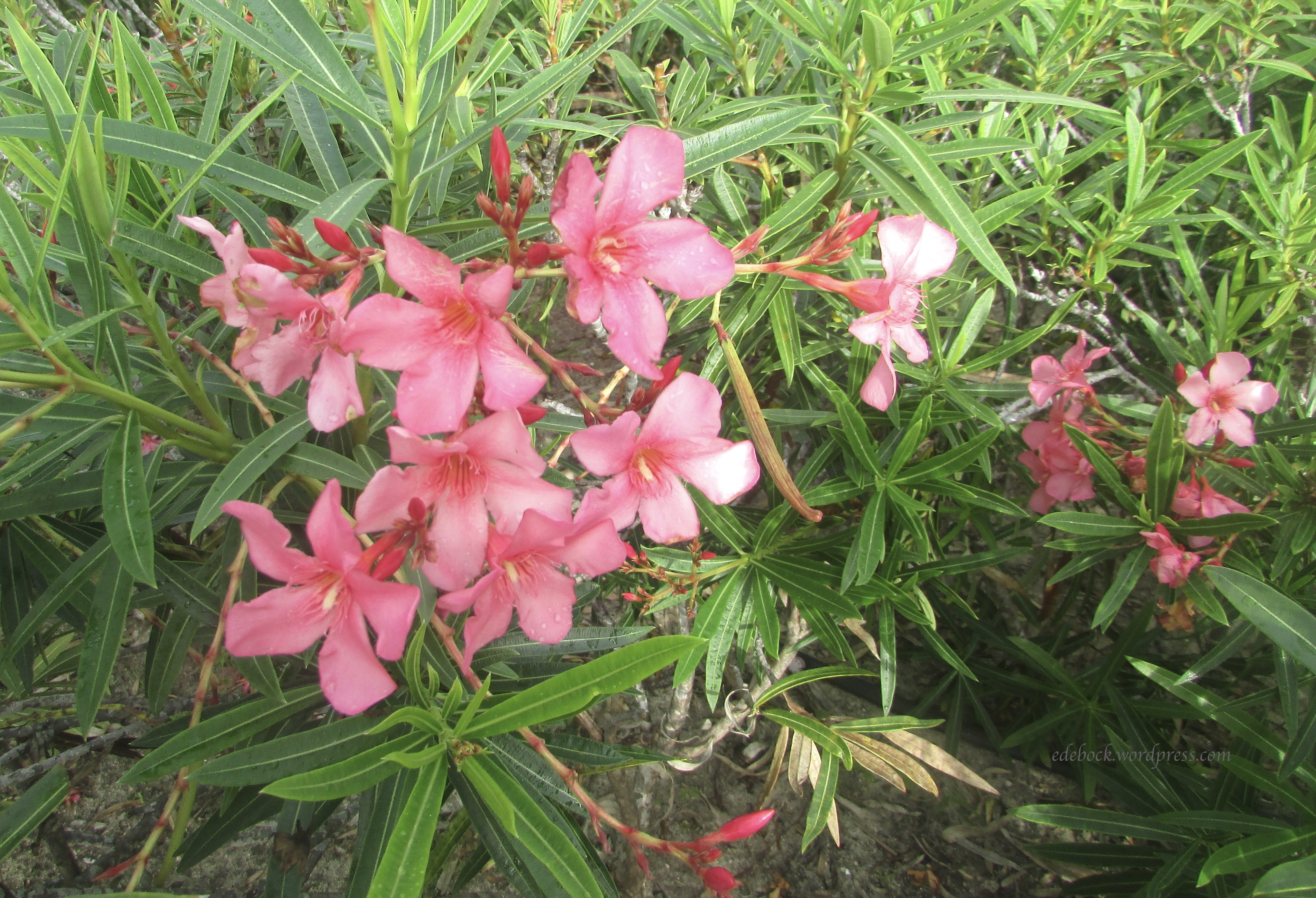
The grounds of Riu Dunamar are impeccably maintained and the entire facility is kept spotless inside and out. Of course anywhere that has flowers blooming in January looks beautiful to me!
IMG_6479

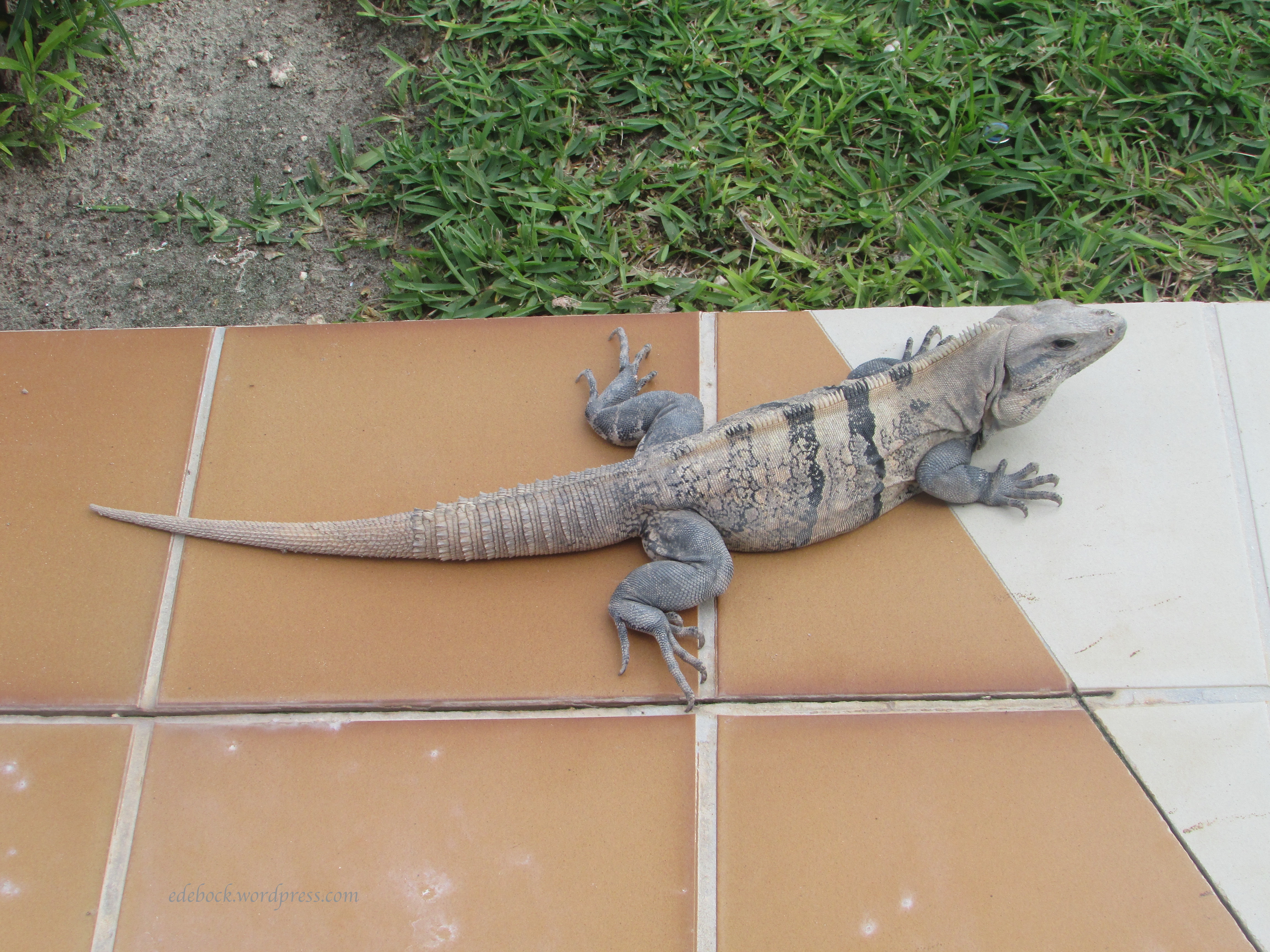
On hot, sunny afternoons, iguanas come out to soak up the sun and nibble the grass.
IMG_6504

I called this one Grandpa because he was the biggest of the many that we saw and always perched in the same spot as if he was looking over his territory.

IMG_6503

During our final meal there, at lunchtime yesterday, we had to initiate an iguana rescue operation when we noticed that one of them had somehow gotten itself into the partially enclosed eating area outside the main buffet restaurant and couldn’t find it’s way out. It could see through the floor to ceiling windows and was desperately trying to push it’s way through. Hubby alerted the staff and after trying unsuccessfully a few times, one of the waiters finally managed to pick it up and release it outside. Iguanas may look like slow moving creatures, but that one took off like a shot the moment it’s feet hit the ground!

We ate all our breakfasts and lunches in that outer eating area where we developed a great rapport with Ady, the waitress who usually served us there. For dinner, we tried all four of the smaller restaurants, none of which required reservations. Two of them were also buffet style and the other two were a la carte. Those were our favourites and we went back to both of them a second time. All but one evening, when there was a rain delay and we decided not to go back out, we took in the main show at the outdoor theatre. Some were better than others, but overall, they were enjoyable.

We didn’t go on any excursions. In fact, the only time we left the resort at all was when we went on those long beach walks. Had we been there any longer, I would have wanted to book something because the wanderer in me couldn’t have taken much more of the lazy life in paradise, but it was exactly what we needed this time!

Now we’re back home. The suitcase is unpacked, the laundry is done, and the summer clothes are put away, but the memories will be with us for a long time!
IMG_6444

At the beach!

419739608_758649606304127_569696839161057210_n

Following Augustine has been at the beach this week for some much needed rest and relaxation. As I write this, I’m sitting on the balcony outside our hotel room listening to the wind in the trees below and the ocean waves in the distance. A full moon is peeking between the clouds above. It’s comfortably warm and humid, such a dramatic contrast to the cold, dry winter at home!
When this post is published early tomorrow, we’ll be enjoying our final morning here and preparing for a flight back to reality! I’ll have lots of photos to sort through and material for two or three posts, but as much as possible, I’ve stayed offline this week and simply enjoyed life at the beach.

See you soon!

Centro Histórico, Mexico City

We packed a lot into our final day in Mexico. Much of what we saw and experienced was within walking distance of our hotel in the Centro Histórico, the heart of Mexico City. Come walk with me and I’ll show you some of what we saw.

IMG_5433

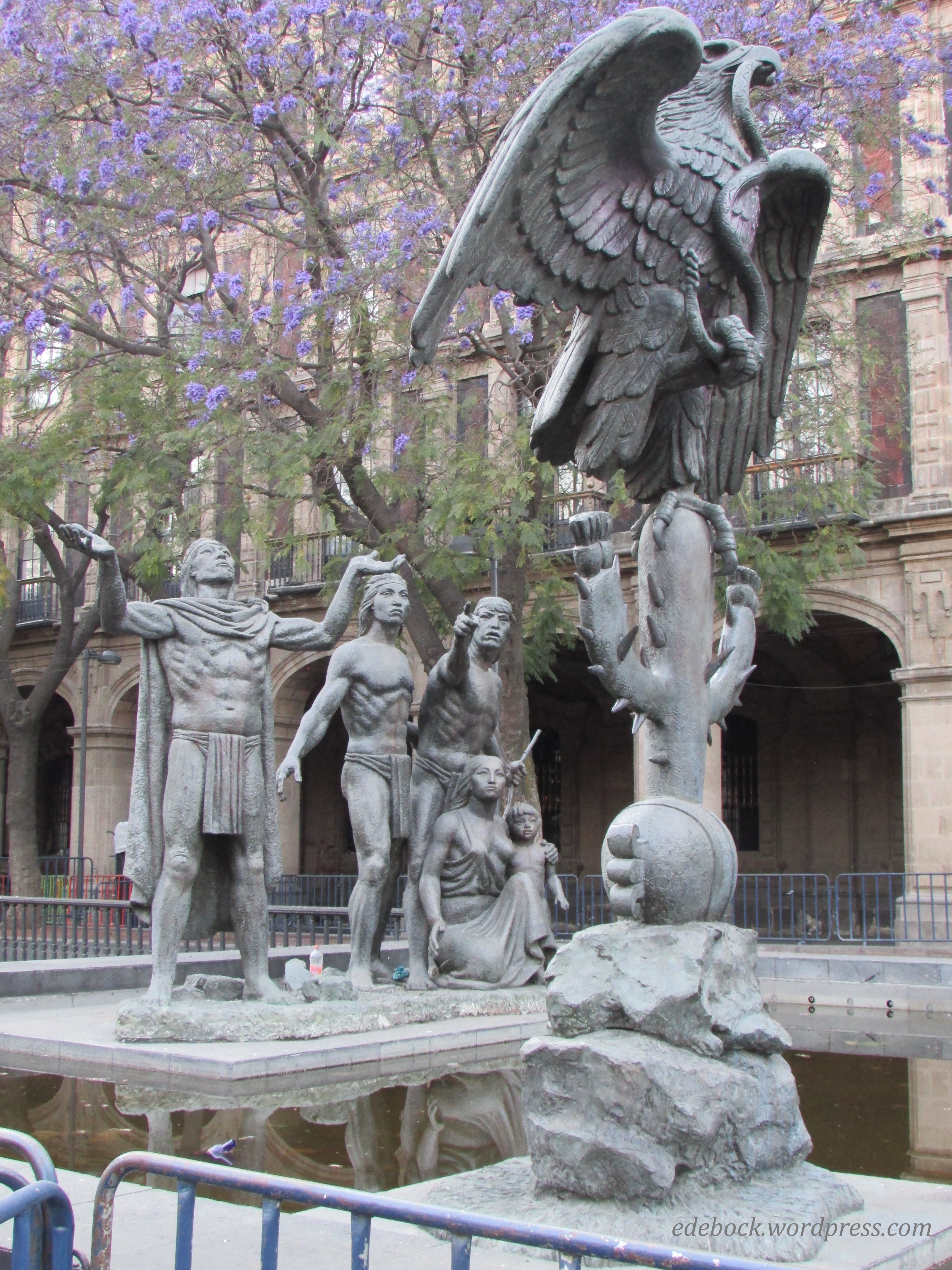
These statues of a wandering group of nomads discovering an eagle perched on a cactus and eating a snake tell the legend of the founding of the Aztec capital, Tenochtitlan. The image of an eagle eating a snake atop a prickly pear cactus also forms part of the coat of arms that is seen in the centre of the Mexican flag. 

Flag-Mexico

Cathedral

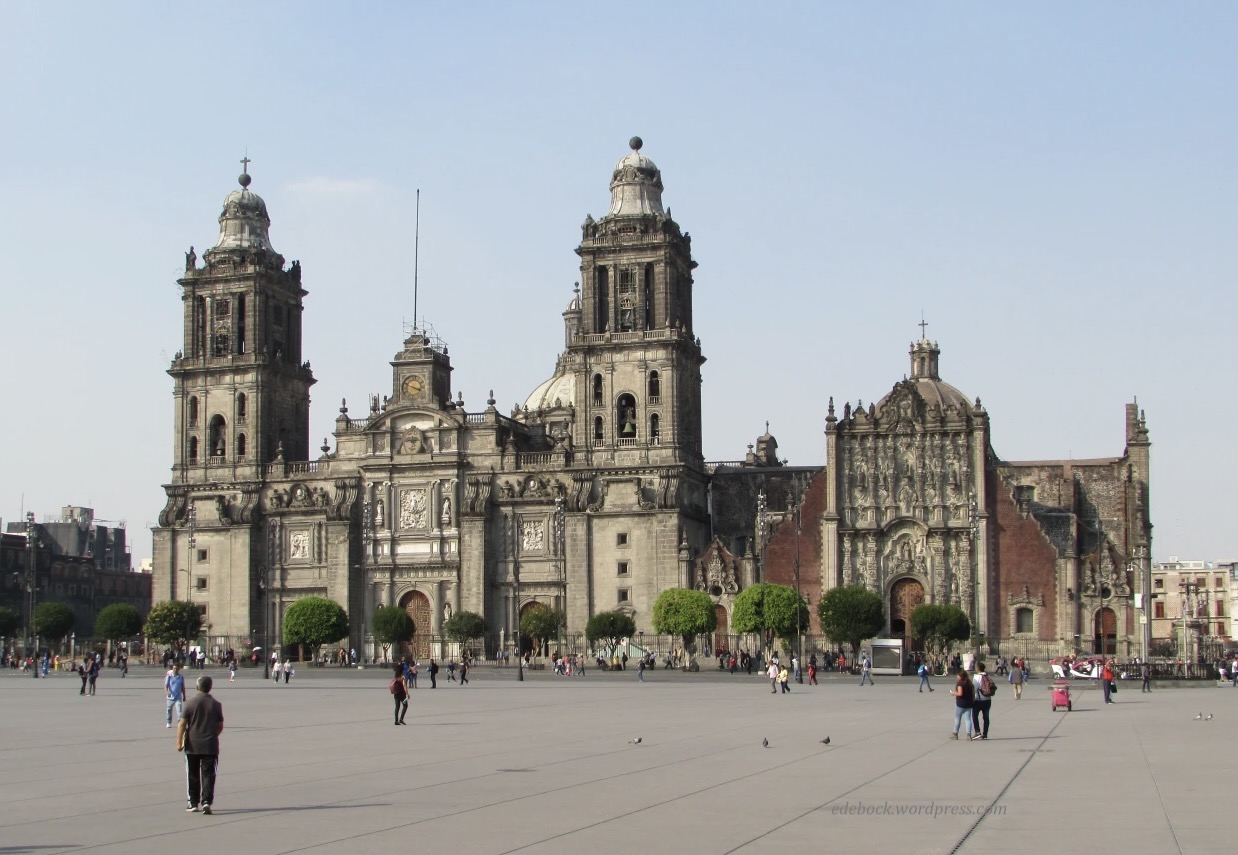
The Metropolitan Cathedral of the Assumption of the Most Blessed Virgin Mary into Heaven, better known as the Catedral Metropolitana, overlooks the Zócalo, a huge city square and is built over what was once part of the Aztec Templo Mayor.

From there, we’ll walk down busy pedestrian-only Avenida Francisco I. Madero which is lined with shops, restaurants, and amazing architecture.

IMG_5325

IMG_5328

IMG_5349

IMG_5330

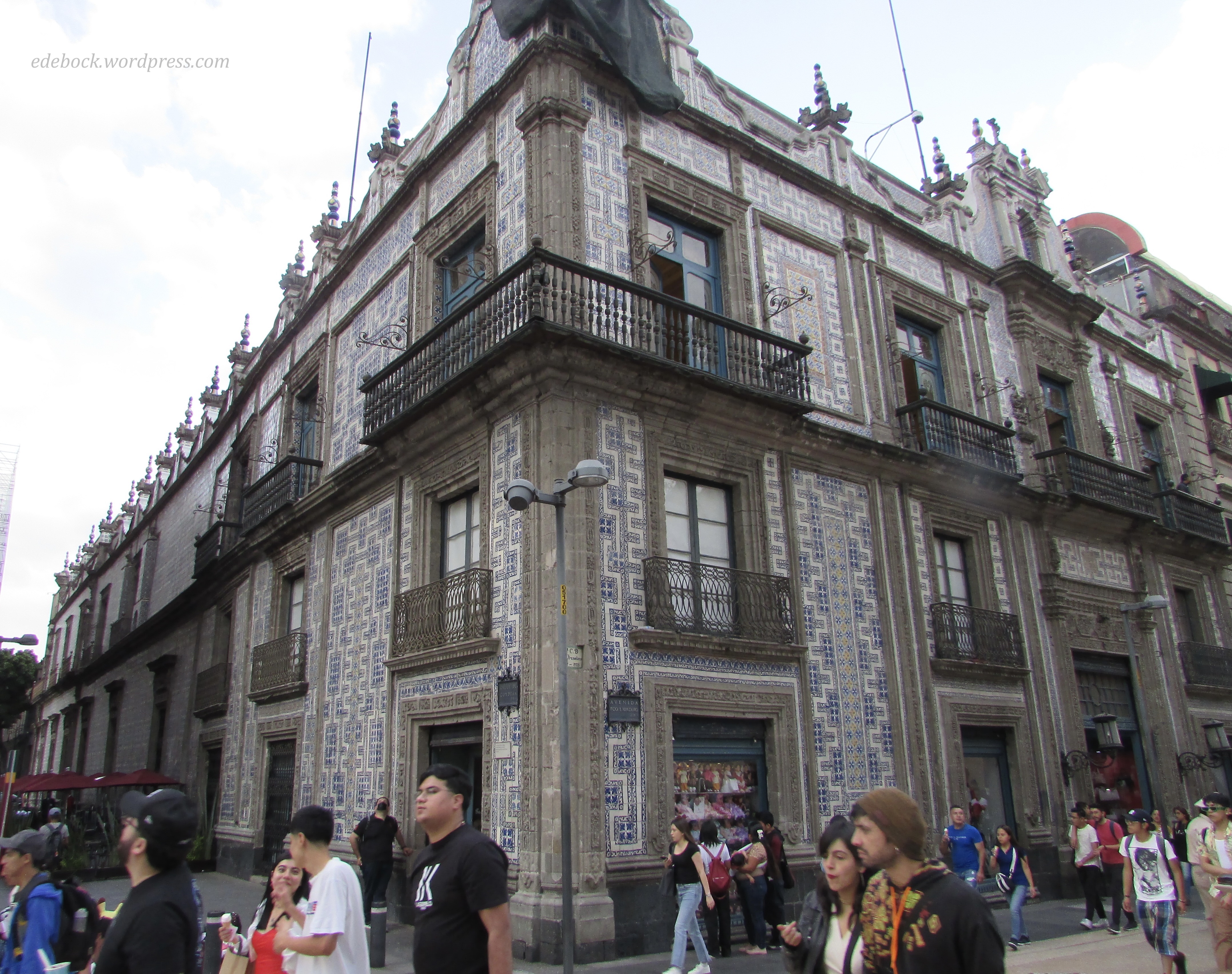
Here, covered on three sides by blue and white Talavera tiles from Puebla, is the famous Casa de los Azulejos (House of Tiles), an 18th-century Baroque palace built by the Count of the Valle de Orizaba family. 

IMG_5337

At the end of the pedestrian avenue, we come to the stunning Palacio de Bellas Artes (Palace of Fine Arts), a prominent cultural center that hosts notable events in music, dance, theatre, opera and literature and holds important exhibitions of painting, sculpture and photography. Unfortunately, most museums and cultural centres in Mexico City are closed on Mondays, so we weren’t able to see the inside. Perhaps on our next visit! 

IMG_5394

A patio coffee shop on the eighth floor of the Sears department store (yes, Sears is still alive and well in Mexico) offered spectacular views of the Palacio des Belle Artes and much of the city beyond. 

IMG_5398

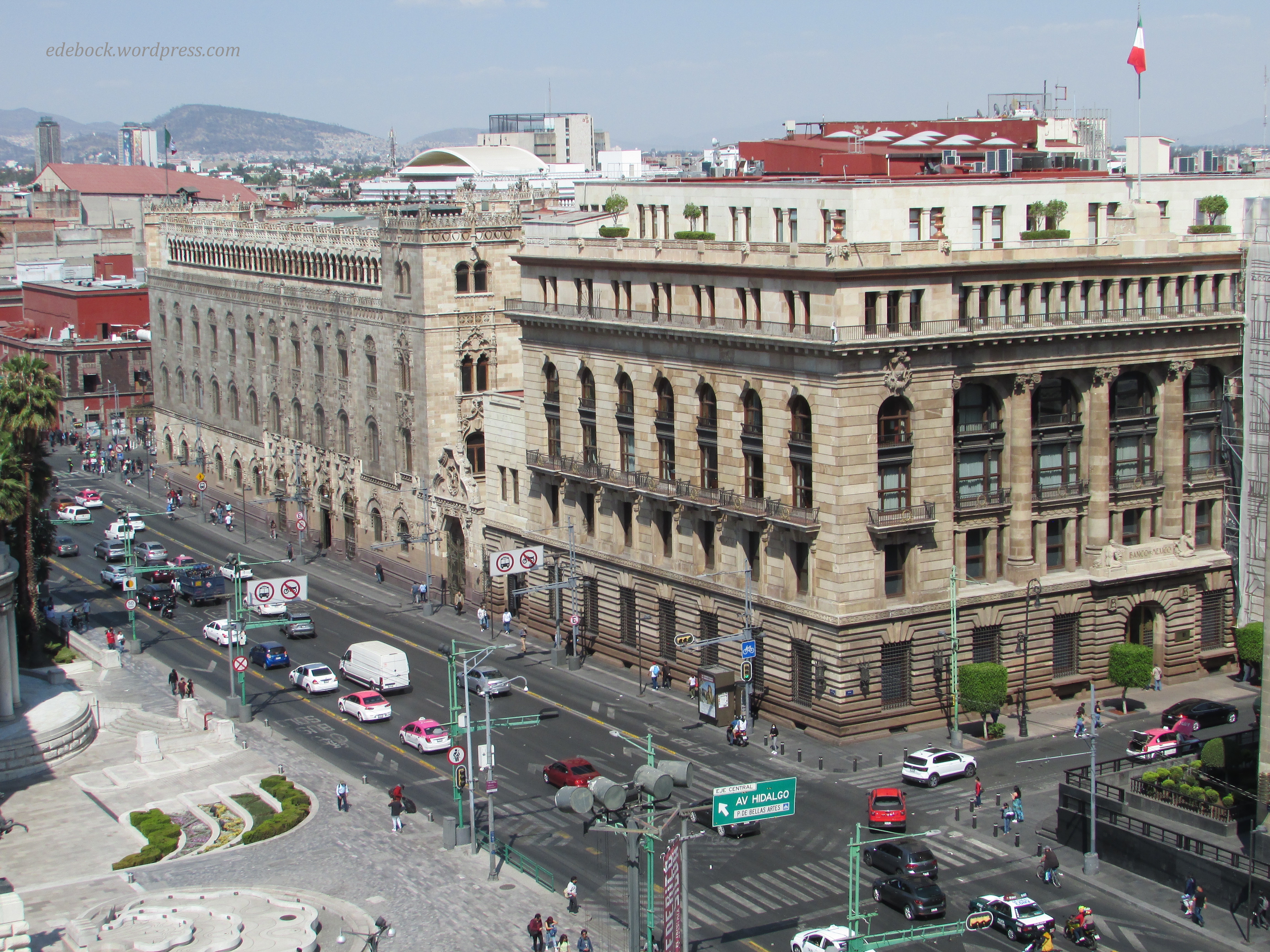
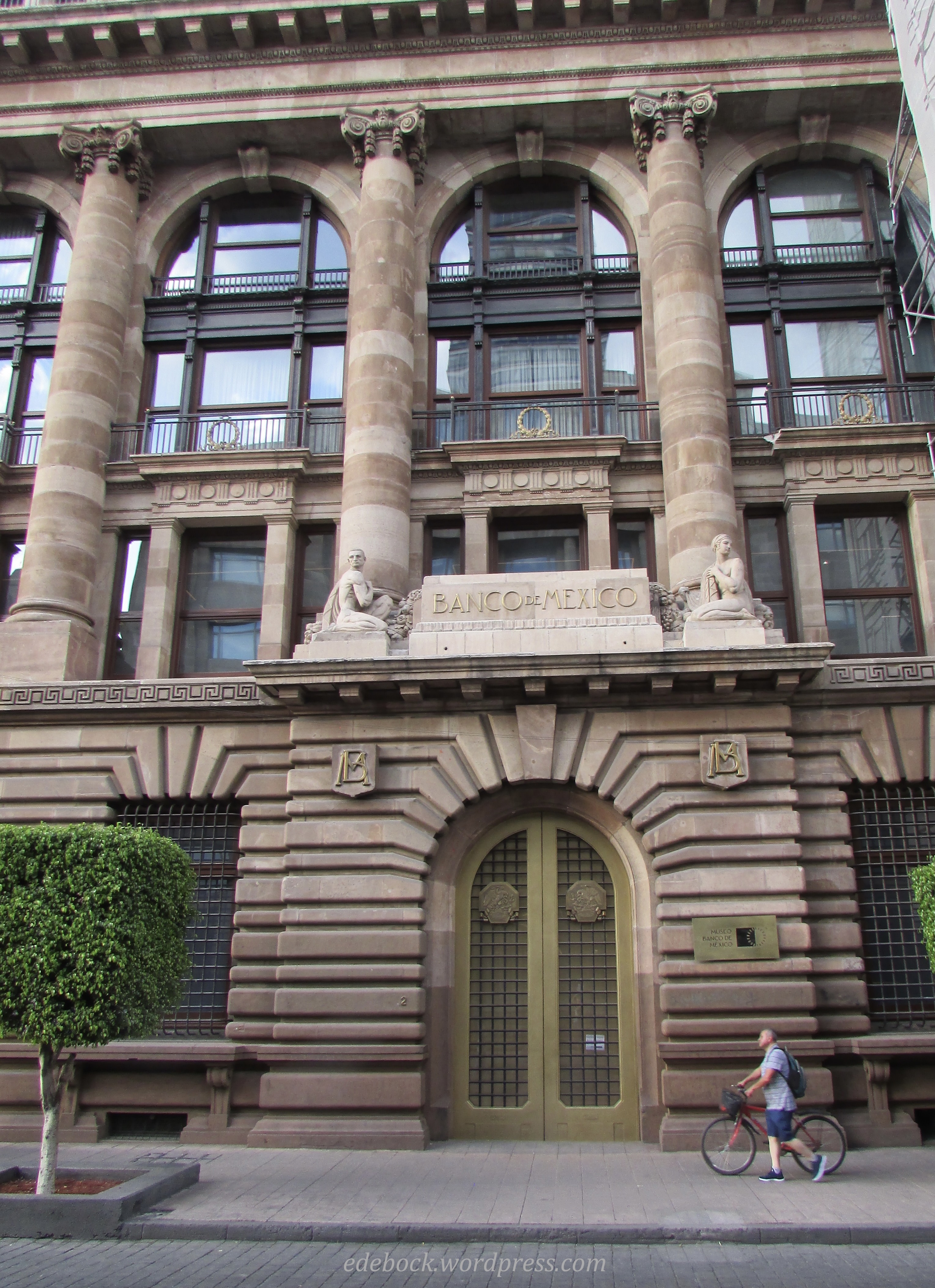
Directly across the street from the Palacio des Belles Artes are the Palacio de Correos (Main Post Office) and Banco de Mexico (Bank of Mexico).

IMG_5399

IMG_5345

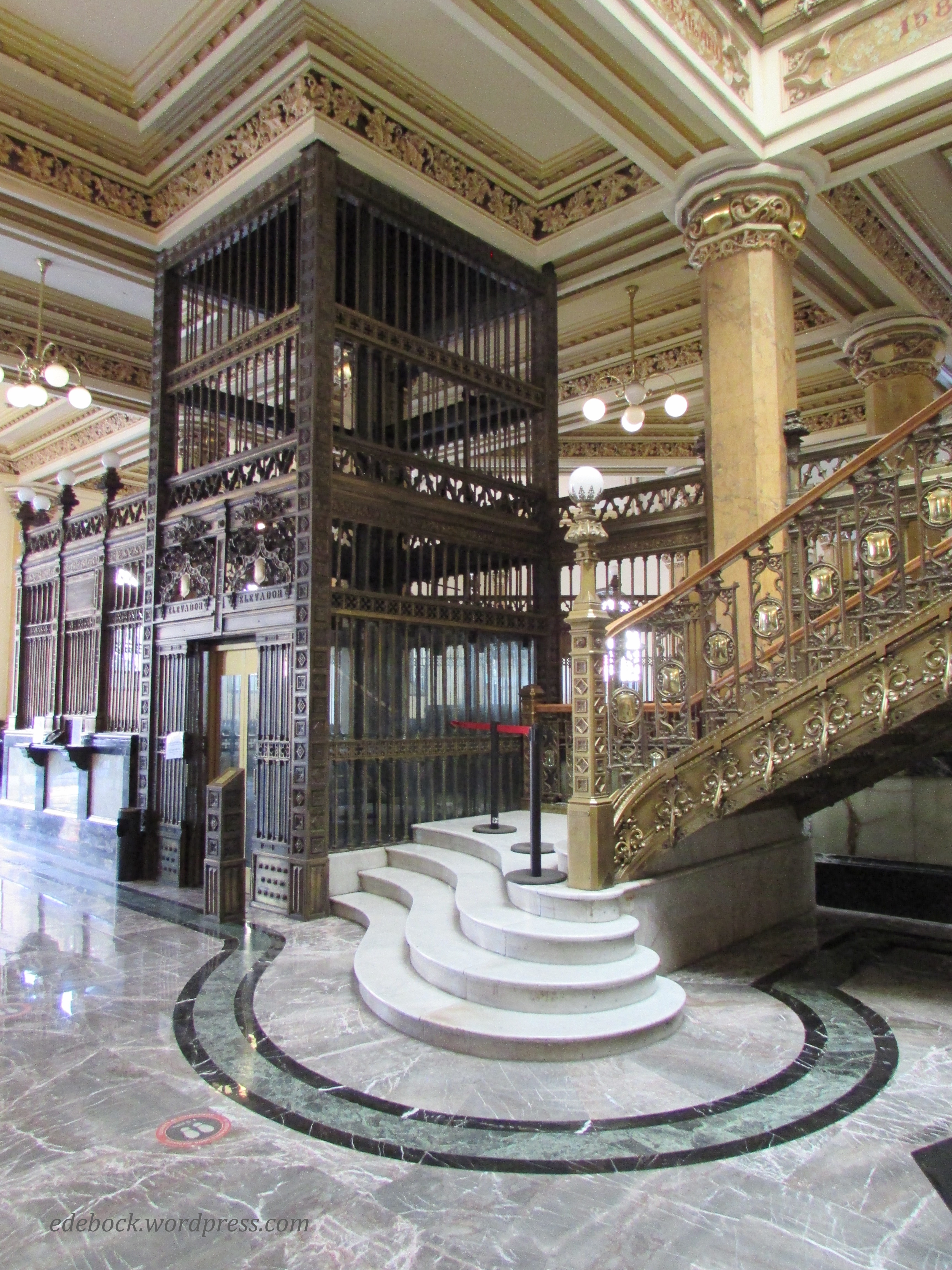
If you’re ever in Mexico City, the interior of the Post Office is definitely a must see! Absolutely stunning, it took five years to build and has been in continuous operation since it opened in 1907.

IMG_5406

IMG_5417

IMG_5416

IMG_5414

IMG_5420

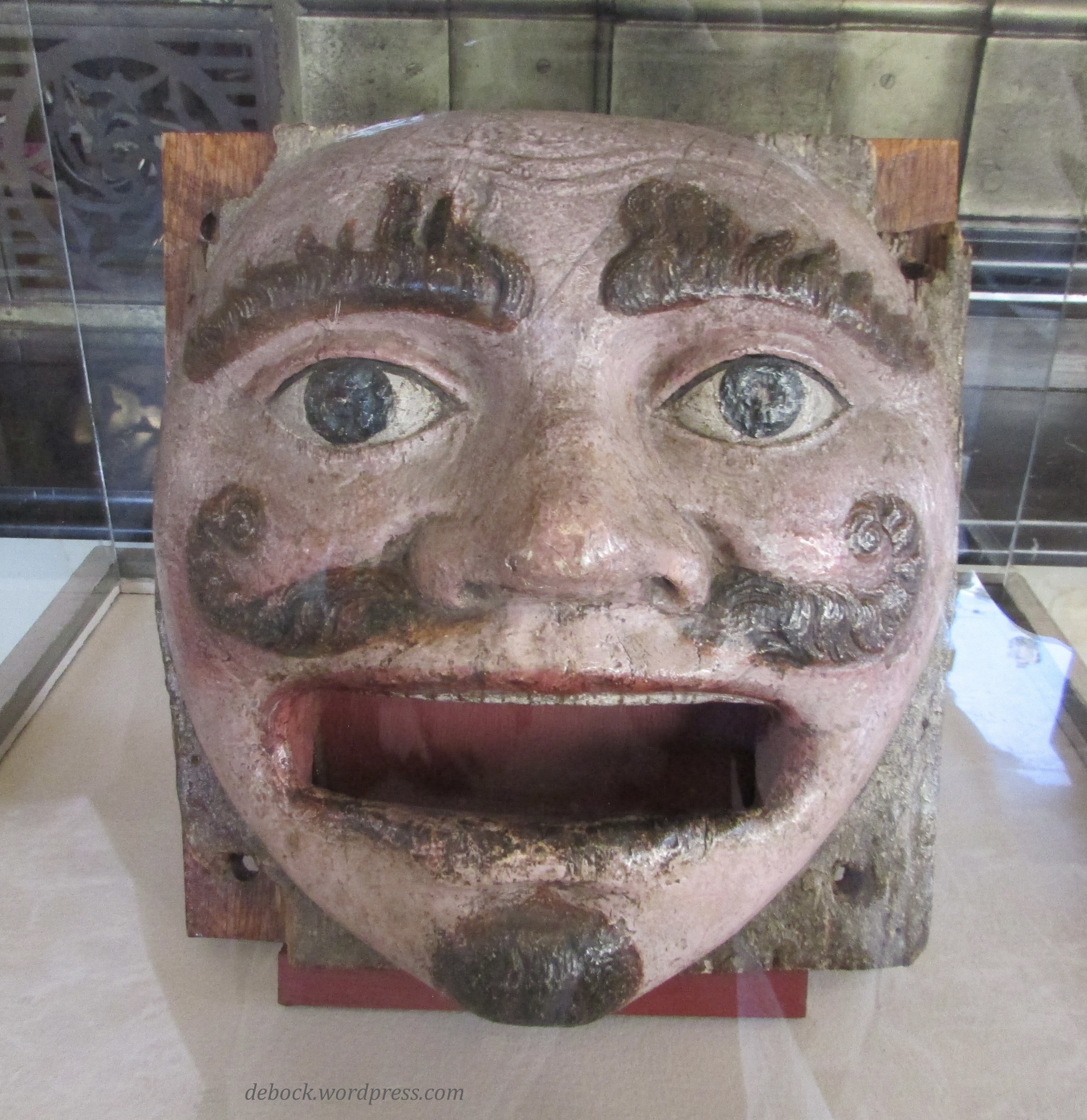
Unfortunately, the antique elevator, though fully operational, wasn’t open to the public. In addition to being an active post office, the building houses a bookstore and a small free museum of postal artifacts. Believe it or not, this handsome fellow is an ancient mailbox! Letters passed through his mouth to be collected and sent to their destination. 

IMG_5425

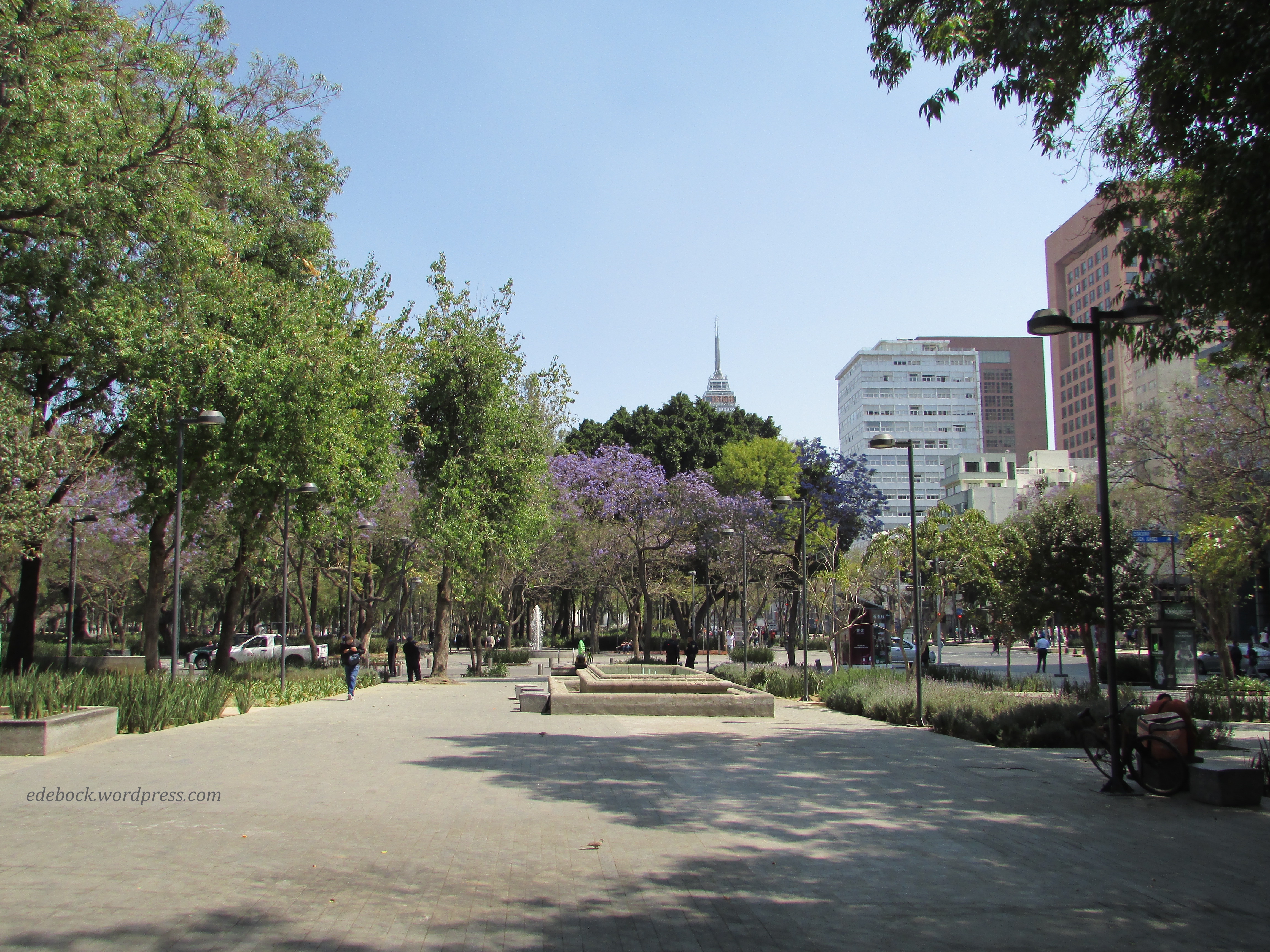
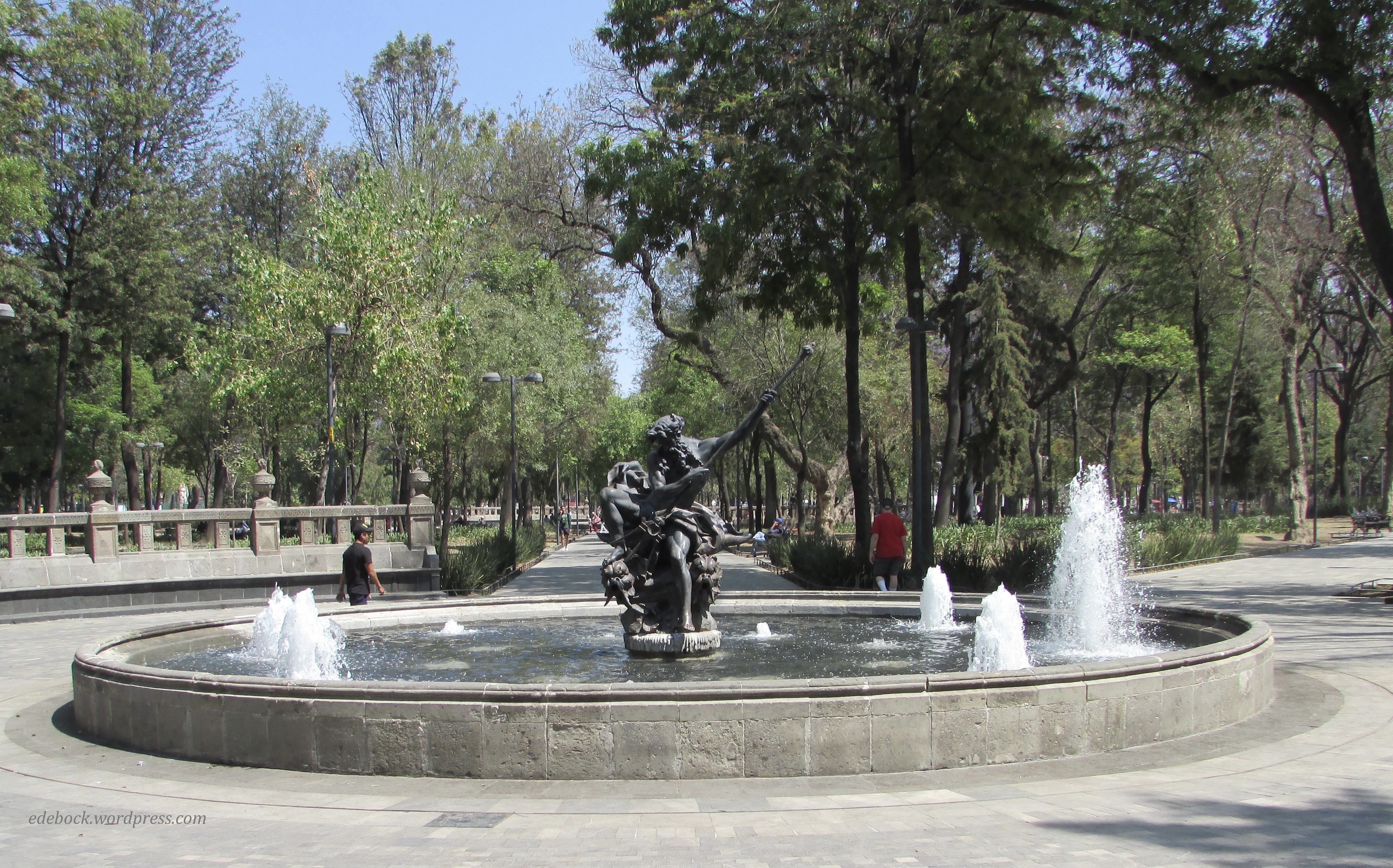
Beyond the Palacio des Belles Artes is beautiful Parque Alameda. What was once an Aztec marketplace is now one of the city’s primary green spaces complete with fountains and statues. Created in 1592, it is the oldest public park in the Americas. 

IMG_5372

IMG_5379

IMG_5381

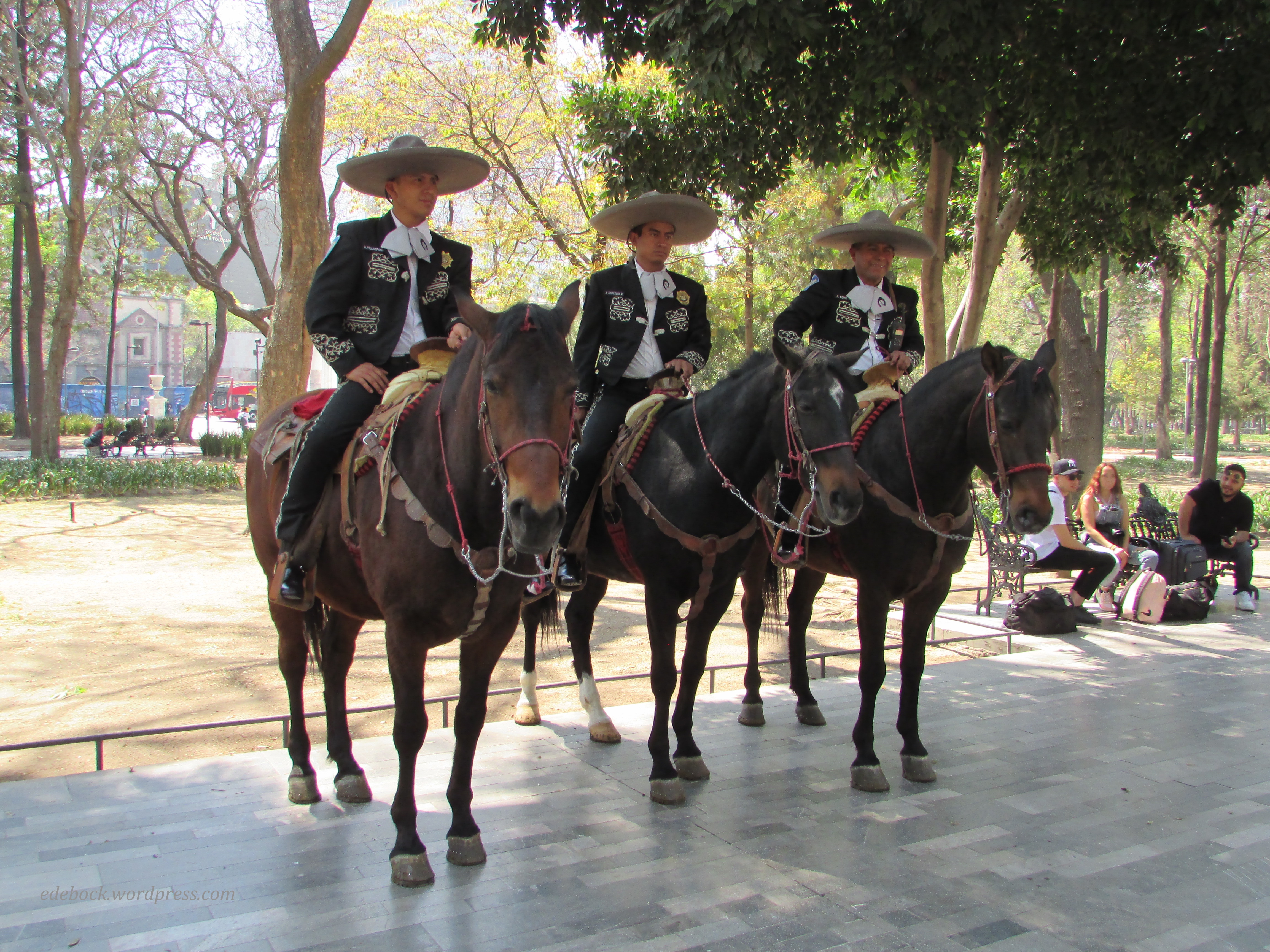
It was in the park that three mounted police officers on horseback donned their sombreros and agreed to have their photo taken. 

IMG_5386

That completes our “walking tour” of Centro Histórico and our most recent trip to Mexico. Now we’re back home in Canada, the land that every Mexican we met referred to as “mucho frio!” (very cold!) I would agree. In fact, I would call it “demasiado frio!” (too cold!).

Packing review

Logo by SamThough I still have one more blog post to write to finish up our trip to Mexico, we are home and for today’s post, I thought I’d do a quick review of what I packed. Once again, we found that traveling carry-on only was the way to go. It’s so easy and there are no baggage fees and no waiting around at airport luggage carousels wondering if our suitcases made it onto the right plane.
But what about the contents of that little carry-on suitcase? Did I pack the right things? Did I take enough of everything? First, let’s review what I packed:

IMG_5086

This was my original packing list. In addition, I put a swimsuit on the bottom of my bag just in case I had an opportunity to use it (I didn’t) and I tossed in one pair of shorts.

  • 1 pair of jeans
  • 2 pairs lightweight long pants
  • 2 pairs capris
  • 1 pair leggings
  • 1 camisole
  • 7 tops – 3 long sleeved, 1 with 3/4 length sleeves, 3 sleeveless
  • 1 dress
  • 1 dressy black jacket
  • 1 ultra light down vest
  • 1 lightweight hoodie
  • 1 light jacket
  • 1 hat
  • 1 pair sandals
  • 3 pairs shoes
  • sleepwear, underwear, and socks

Overall, I think I did a fairly good job of deciding what to take, but if I had it to do again, I might make a few changes. I only wore the top with 3/4 length sleeves once, so I could easily have left it at home. I wore the leggings to a zumba class with our hostess, but I could have worn shorts or capris for that and though I did wear the camisole once on a particularly chilly day, it wasn’t essential either. If I’d known how warm the weather was going to be, I probably would have taken one less pair of long pants and one more pair of capris or shorts, but we had to be prepared for the cooler days that often do occur at this time of year. I’m extremely glad that I did decide to throw in that one pair of shorts though as I wore them a lot. I only wore the dress and the dressy black jacket once for an evening at the symphony in Xalapa, but I definitely wanted to be able to dress up for that.

On our previous visits to Coatepec, we took most of our clothes that needed laundering out to a commercial laundry or washed them by hand. This time, however, we discovered that when the price per kilo of laundry had gone up as well as the price of the taxi to haul it to and from, our hosts had decided to purchase a washing machine. That definitely made things easier and meant that we probably could have gotten away with packing a few less things, especially socks and underwear. As we’ve done in the past, though, we packed mostly old worn out underwear that we could throw away before we came home. That left a wee bit of room to carry home the half kilo of macadamia nuts that hubby yearned for!

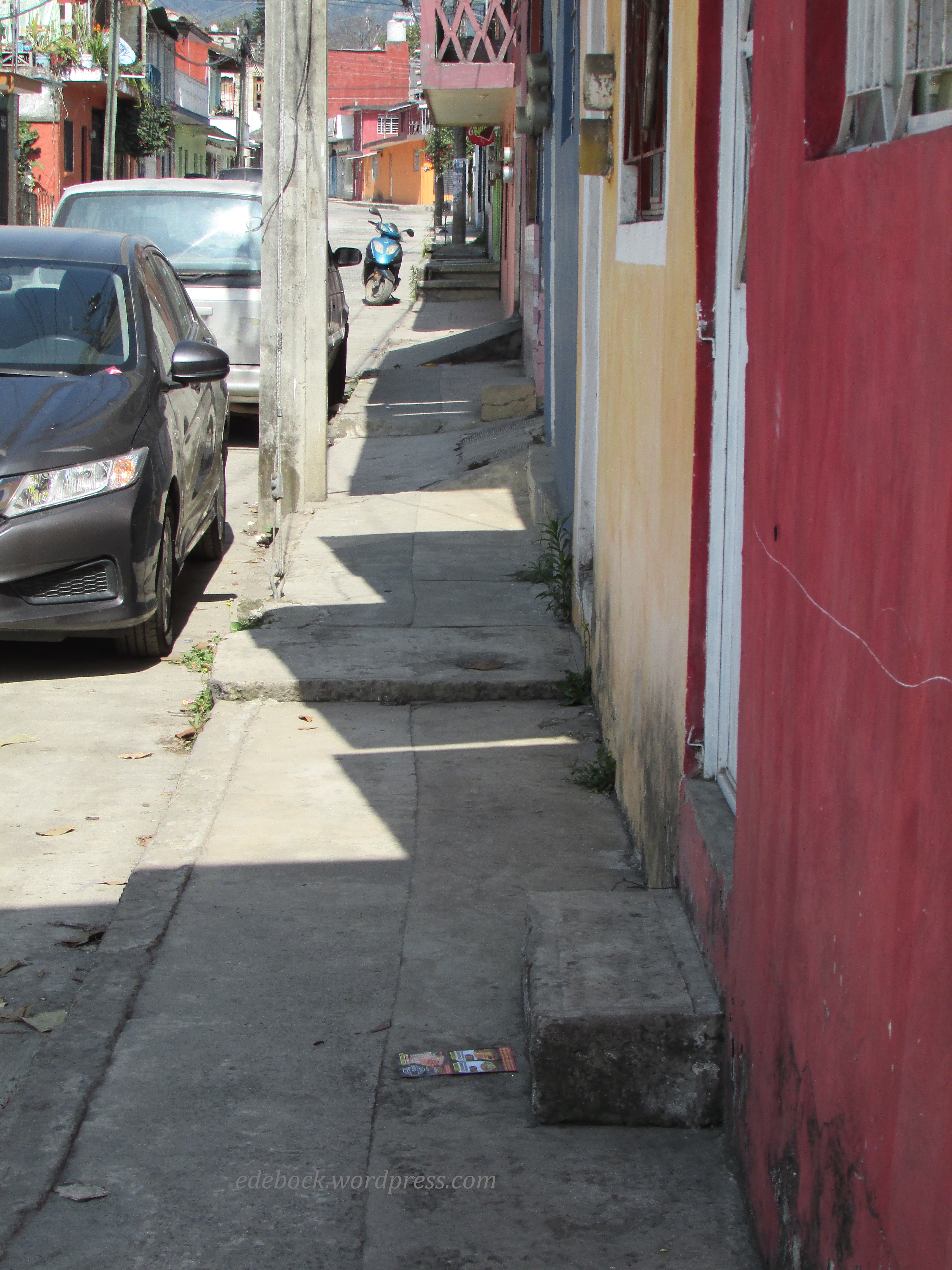
Good footwear is essential on any trip, but especially when the sidewalks that we walked on almost every day looked like this.

IMG_5200

But did I really need four pairs? Possibly not, but other than the dressy black pair that I wore only for a birthday party and the evening at the symphony, I put many miles on all three of the other pairs. The Clarks sandals that I bought at one of our local thrift stores last summer are very comfortable to walk in as are the little grey flats that have memory foam insoles.

Now that we’re finally traveling again, I’m looking forward to the next time I get to pack my teeny tiny carry-on suitcase. I don’t know when that will be or where we’ll be going, but I’ll be sure to let you know!

Templo Mayor, Mexico City

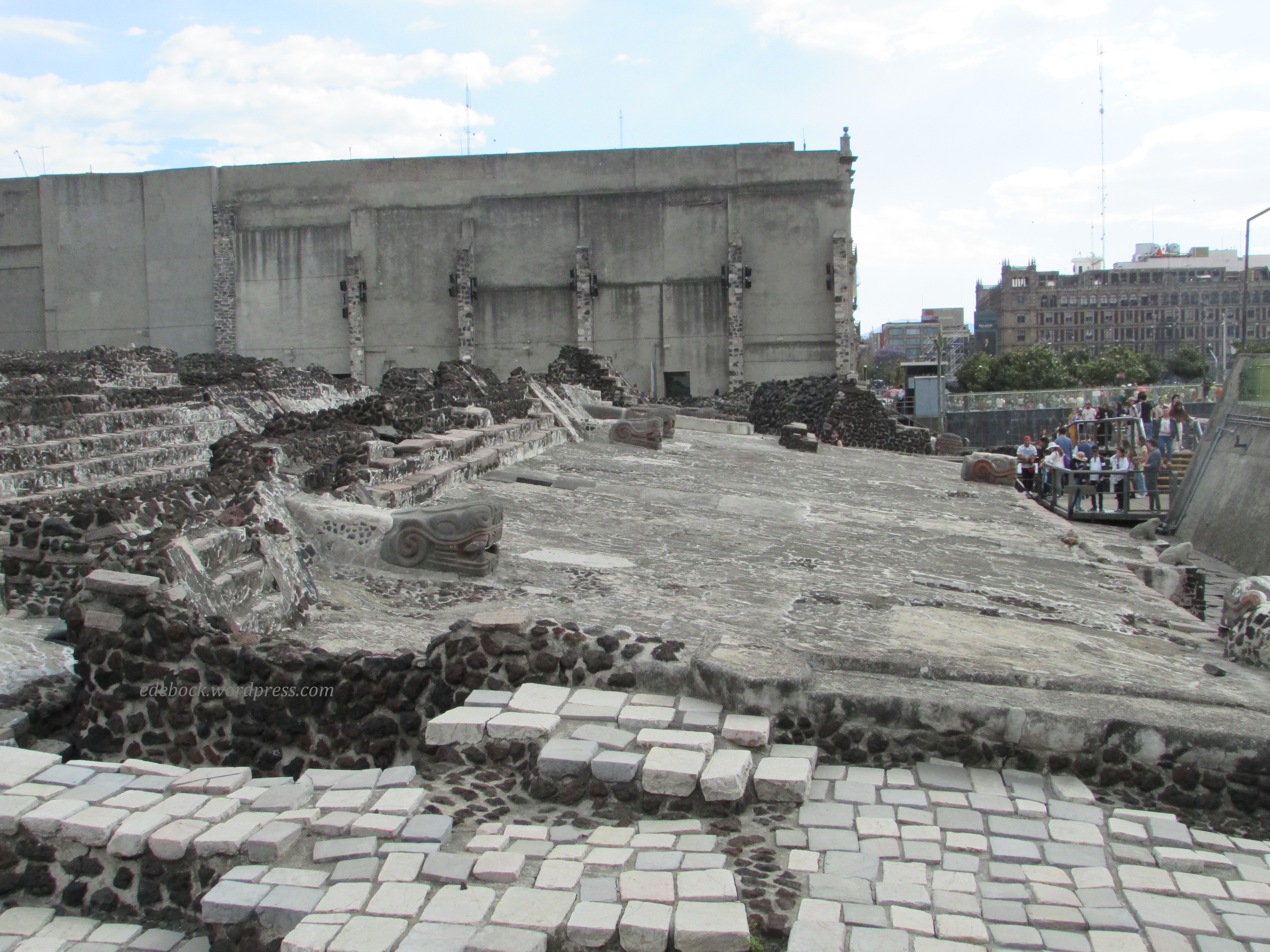
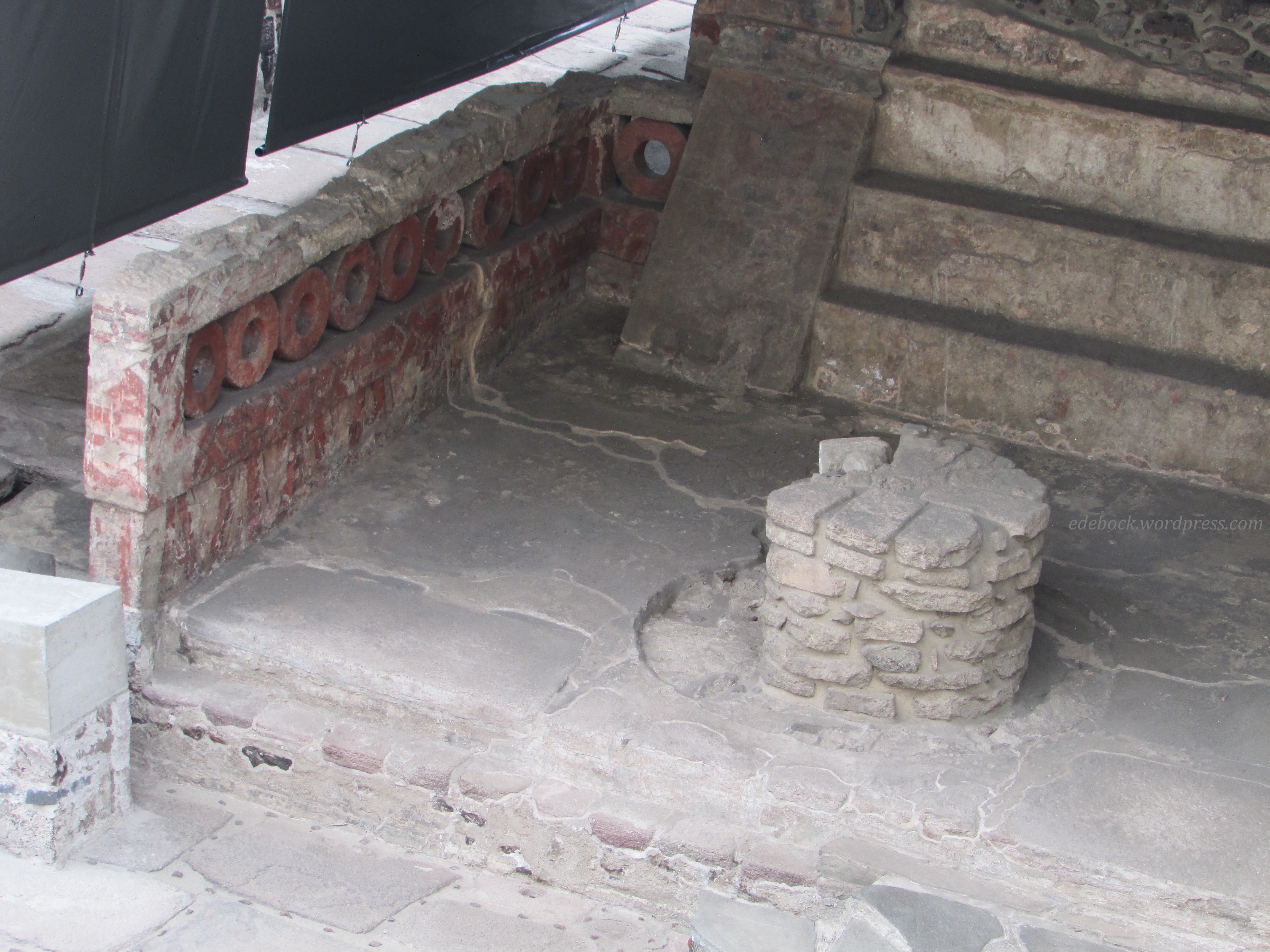
When hubby and I spent half a day in Mexico City four years ago, we glimpsed the ruins of Templo Mayor, the Aztec “Great Temple” from street level, but this time we wanted to get a closer look. Just a ten minute walk from our hotel in the Centro Histórico district, the temple once dominated the central sector of the Aztec capital, Tenochtitlan. Destroyed following the Spanish Conquest, many of its stones were used in the construction of the imposing Metropolitan Cathedral of the Assumption of the Most Blessed Virgin Mary into Heaven. The remainder of the ruins gradually disappeared beneath, first a garbage dump, and later 19th century colonial buildings. It wasn’t until 1978 when electrical workers happened upon an 8-tonne stone-disc carving of the Aztec goddess, Coyolxauhqui,  that the decision was made to demolish those colonial buildings and begin the excavation which continues today. A fenced pathway allows visitors to walk through the site and see close up what remains of the structures that once stood on the site.

IMG_5216

IMG_5215

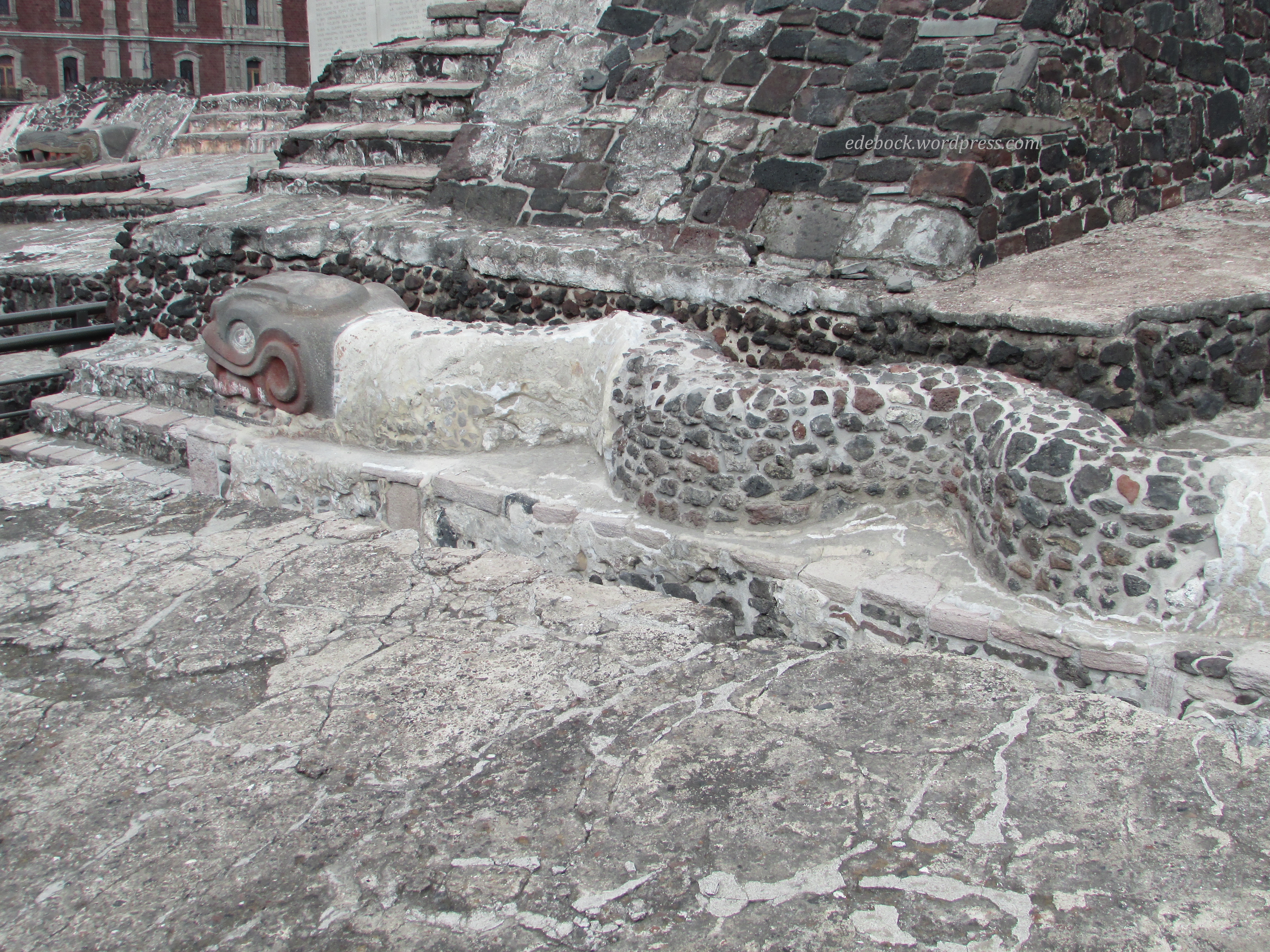
Amazingly, some pieces, including two giant undulating serpents, have retained some of their original colour through the centuries.

IMG_5217

IMG_5223

Over the years, the Great Temple underwent many changes and expansions. The main platform and part of the stairway of the great pyramid that was constructed during the reign of Moctezuma I from 1440 to 1469 have been conserved.

IMG_5227

Though not as big or as detailed, these stone figures reminded me a bit of the terracotta warriors that we saw in Xian, China.

IMG_5229

Tláloc, the rain god was worshipped by the early Mesoamerican people. This brightly painted chac-mool figure holding a basin was located on the platform of a temple dedicated to Tláloc. Dating back to approximately 1350 AD, it is the oldest piece that has been found at the Great Temple thus far.

IMG_5240

IMG_5252

Making our way around the Templo Mayor complex, we came to what was known as the House of the Eagles.

IMG_5261

This is the best preserved portion of the temple area where we can see the stairways, porticos, and individual rooms.

IMG_5265

IMG_5271

In the next photo, you can see the present day cathedral in the background. At 60 metres high, it is only 15 metres higher than the ancient temple at the time of the conquest in 1521. I’m sure that the circular structure in the foreground had a different purpose in ancient times, but today people toss coins into it and I presume make wishes as they do so. As I tossed my coin into the centre circle, my wish was that I would have the opportunity to return to Mexico again in the future!

IMG_5289

In addition to the ruins, the Templo Mayor complex includes a four storey indoor museum that houses many artifacts found at the site. Unlike the outdoor portion, however, there is no English signage inside and since we were short on time, we only briefly checked out the first floor. I’ll finish this post with a few of the pieces that we saw there.

A walk in the neighbourhood

Our time in Coatepec is coming to a close. Tomorrow, we depart for Mexico City and on Tuesday, we fly home. This morning, hubby and I went for a walk in the neighbourhood exploring a few of the many side streets in the area. Come along and I’ll show you some of the sights that are common here. 

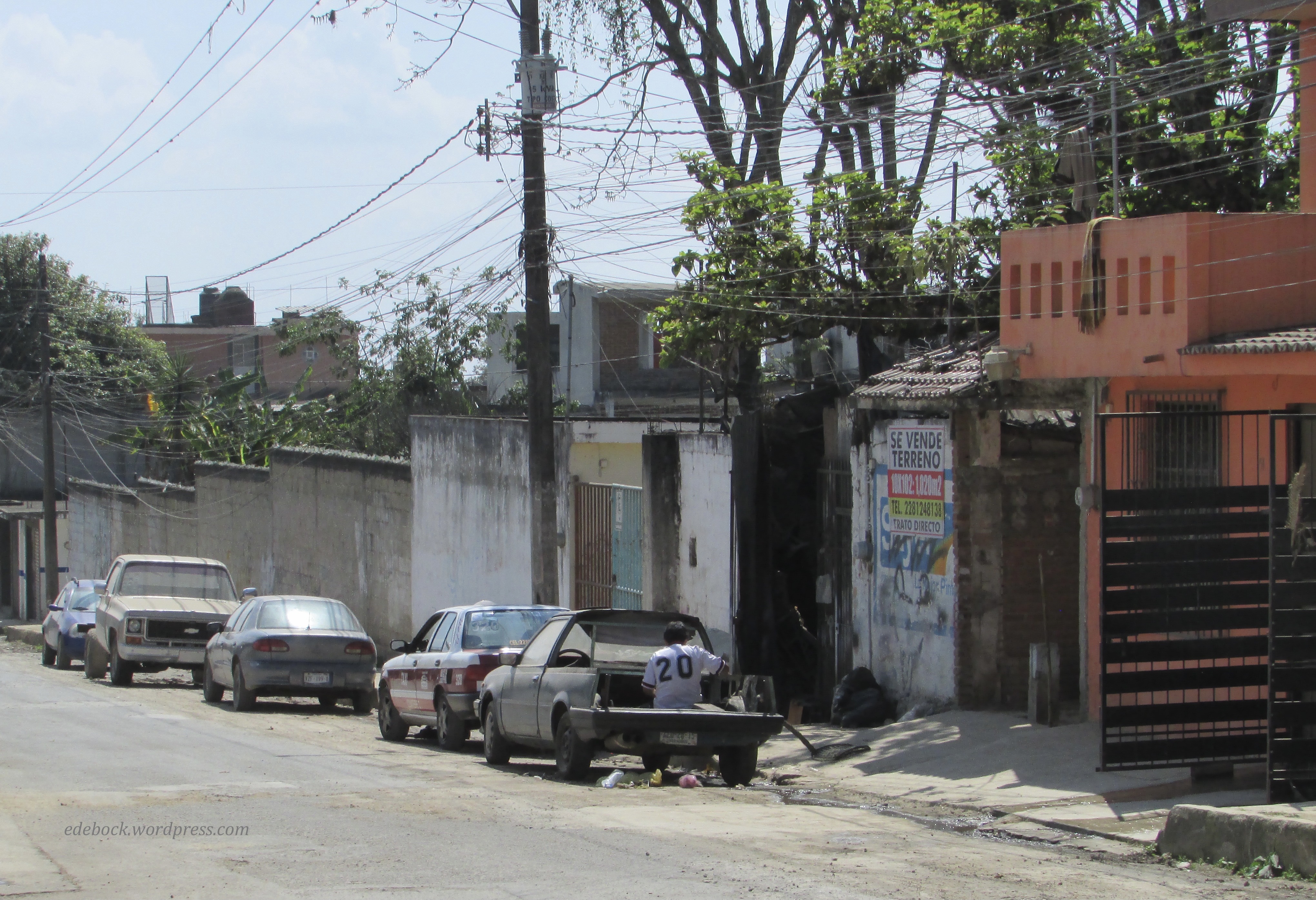
Just around the corner, you’ll see the roadside mechanic who is always busy repairing someone’s vehicle. 

IMG_5206

Here we are a little further down the street. Though this isn’t an everyday sight, it seems to be quite common on Saturday mornings.

IMG_5197

Walking can be a challenge here. This is quite typical of the sidewalks in the area!

IMG_5200

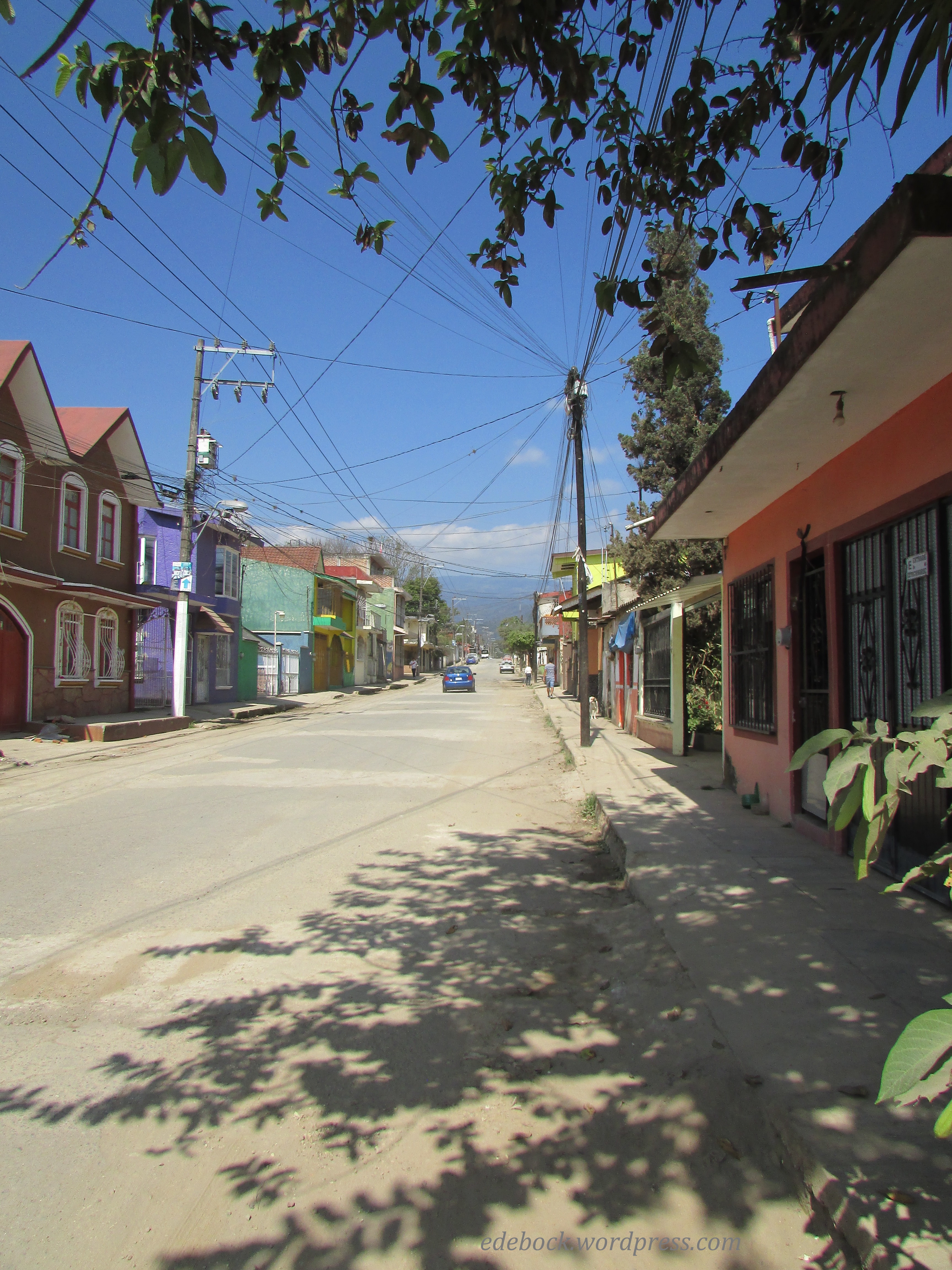
There is beauty to be seen too though. 

IMG_5201

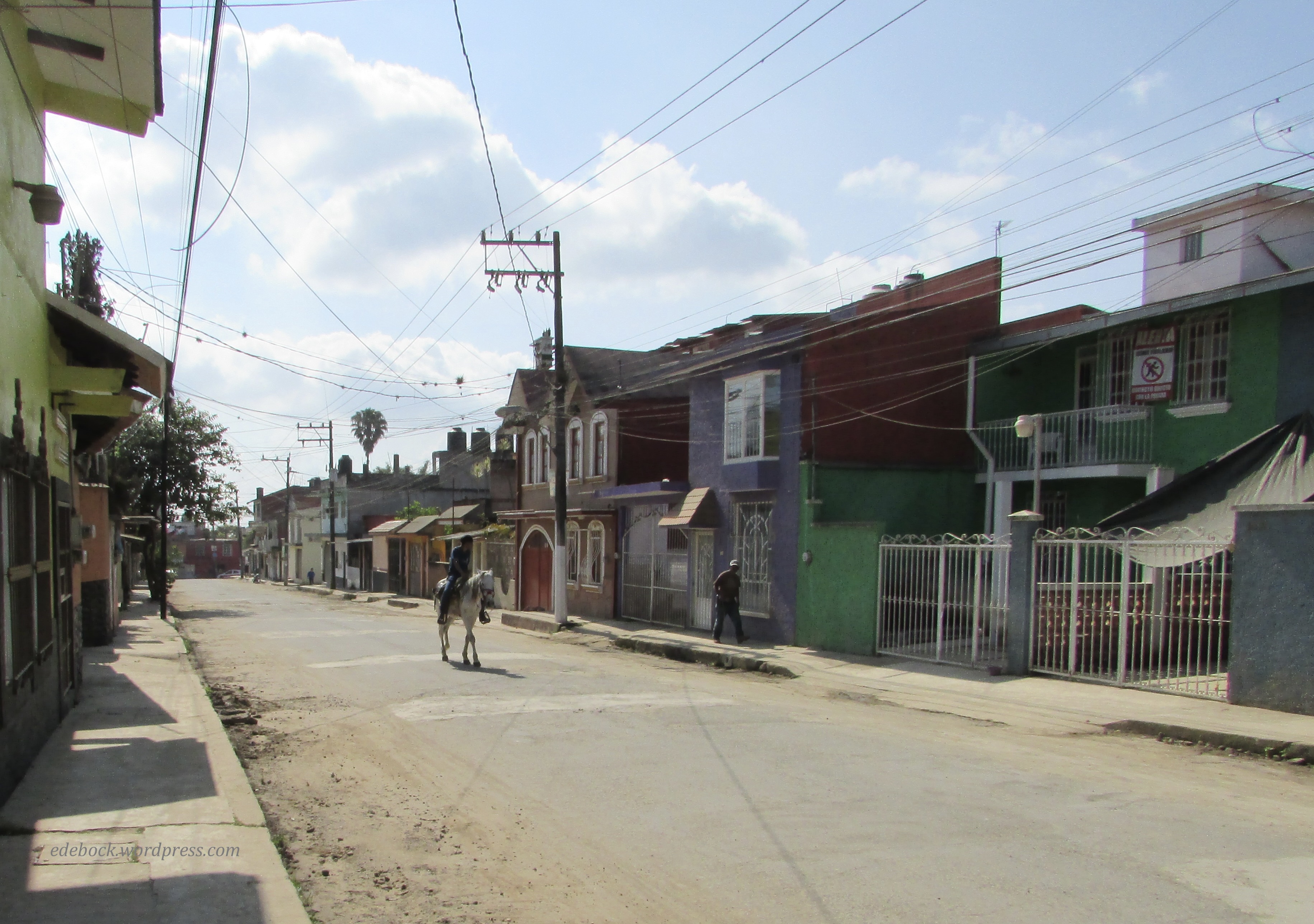
This is a typical street scene. 

IMG_5205

And here’s what it often looks like when someone is doing construction on their home or place of business. 

IMG_5204

Finally, this is the small callejón (alley) where we “live”. That’s an apartment building on the right and the rest are private homes. 

IMG_5207

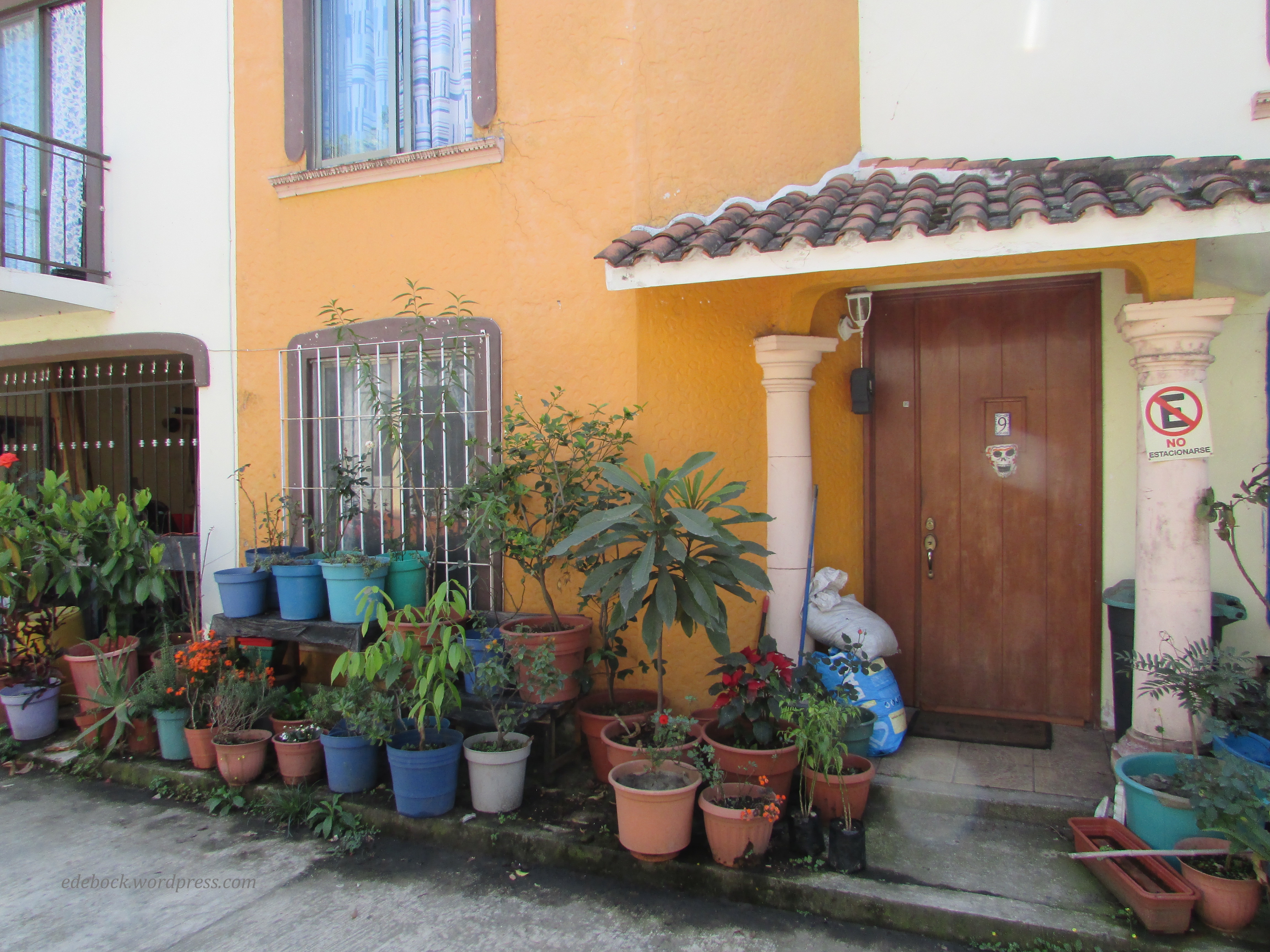
Richard and Colleen’s house is the yellow and orange one a la izquierda con muchos plantas enfrente (on the left with many plants in front).

IMG_5208

IMG_5209

As we fly back to the frigid north, we’re going to miss sunny Coatepec, but first we have Mexico City to explore!