We climbed Mt. Fuji!

Our schools were closed yesterday and Richard took a yukyu (personal leave day) on Wednesday, which was already my regular day off. That gave us another two day break together which we used to climb Japan’s highest and most famous mountain. Most of the pictures that you see of Mt. Fuji are taken during the winter when it’s covered with snow and truly majestic looking. During the official climbing season, which lasts from July 1 to August 31, there are only small patches of snow. Even so, it’s a challenging climb.

From base to summit, the mountain is divided into 10 stations. These days all but the most die hard climbers start their ascent at one of the four 5th stations which can be reached by road. We arrived at the Kawaguchiko 5th station on the north side of Fuji by bus from Tokyo early Wednesday evening. Traditionally, Fuji is climbed at night. The climber’s goal is to reach the summit at dawn both to see the sunrise from the top and because the views are best early in the morning when the mountain is less likely to be shrouded in clouds. Climbing a mountain in the dark may seem a very strange thing to do but for me, it was perfect. Because all I could see was the part of the mountain that was illuminated by my flashlight, my fear of heights didn’t kick in and dampen my enthusiasm. Had I been able to look down and see what was below me, I’m not sure I could have done it! Instead, I was able to enjoy the stars overhead and when the full moon peaked over the edge of the mountain, I was thrilled.

Mt. Fuji rises 3776 meters (12 388 feet) above sea level. Kawaguchiko 5th station is located just below the tree line at an elevation of 2305 meters. From there, the climb seemed to be made up of three sections. The first was much like a steep but wide gravel driveway switchbacking up the hillside. Next came the serious climbing looking for the best footholds as we made our way up the rock. The route was very clearly marked. In fact, most of the way, it was chained off on both sides so that it would have been very difficult to stray too far in the wrong direction. The last part of the climb was mostly a loose gravel pathway again switchbacking back and forth. Lots of slipping back made upward progress slow.

Timing is important because you don’t want to reach the mountaintop much before sunrise as it’s usually very cold and windy. Even at this time of year, the temperature hovers around the freezing point at night. As on any mountain, the weather can be very changeable so it’s important to be well prepared. Though we had rain capes with us, we were fortunate not to need them. We took plenty of layers of clothing though and were happy to have them when we reached the top. The latter half of the climb was done in a pretty stiff wind. It didn’t bother us too much while we were climbing but we got chilly very quickly when we stopped to rest. The mountain is also high enough for altitude sickness to be a problem. We knew that cans of oxygen were available at the various huts scattered up the mountainside so we didn’t take any with us. Though we did see several people sucking back on oxygen, we decided that the best way to combat the effects of altitude was probably to give ourselves lots of time and to rest often along the way. That seemed to work well. We definitely noticed the shortness of breath as our elevation increased and at one point near the top, I had to stop for a few minutes when I noticed that my heart was racing.

We actually left the 5th station and began our climb earlier than we had originally planned. My research told me that there are several restaurants at the 5th station so we had planned on having a good supper before beginning our ascent. Unfortunately, when we arrived, we discovered that the restaurants were all closed! We were carrying food but didn’t want to break into it just yet so we set off right away and climbed to the first hut where we were able to purchase noodles, chocolate bars and pop. Perhaps not the most nutritious supper but we rationalized that the sugar would give us the energy we needed for climbing!

The climb was definitely more strenuous than we had anticipated after reading in our Lonely Planet guidebook that children and grandparents regularly reach the summit. We would probably have found it considerably easier 25 or 30 years ago! It was fortunate that we started climbing earlier than we had originally planned as Richard’s right hip began to hurt early in the climb and he had to take it pretty slow. With dogged determination, he just kept on going though.  He wore his knee brace, of course, and his bad knee didn’t bother him at all.  I must admit that about three quarters of the way into the climb, I could feel myself wearing out and I did begin to wonder if we’d make it but on we went.

When you’ve gone without hours of sleep and expended a great deal more energy than usual, your mind starts doing strange things. About 2 o’clock in the morning, as I stopped to wait for Richard as he plodded up the path behind me, I began to wonder what would happen if he had a heart attack on the mountainside! It was shortly after that that my own heart started racing so I guess it wasn’t him I should have been worrying about!

Climbing midweek early in the season, the mountain wasn’t overly crowded but we were never alone. Many languages and nationalities were represented amongst the climbers and regardless of whether or not we could understand one another, a sense of camaraderie quickly developed as we passed and greeted one another along the way. We did much of the climb with Blue who is stationed in Okinawa with the American military. We met him on the bus from Tokyo.

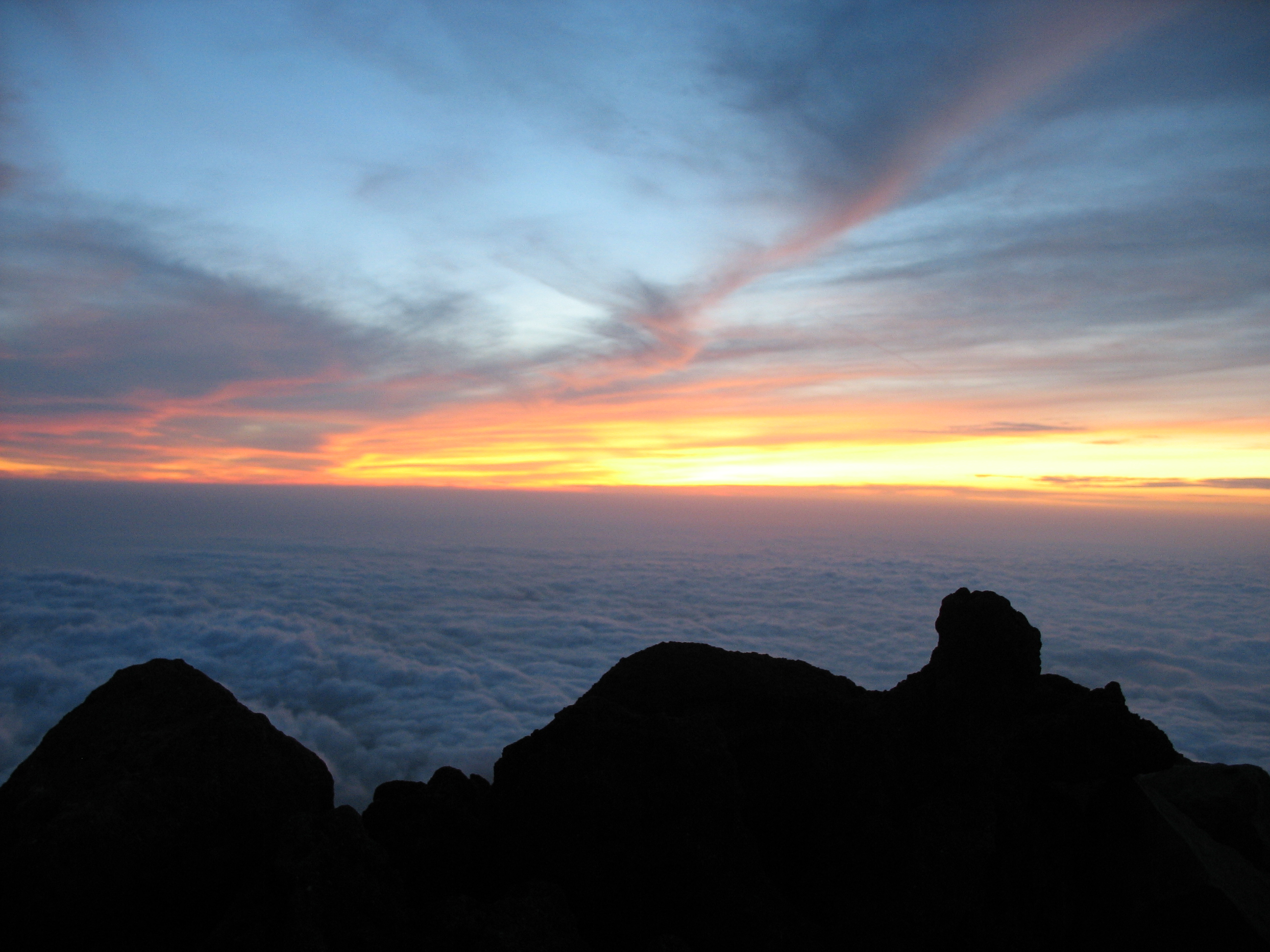
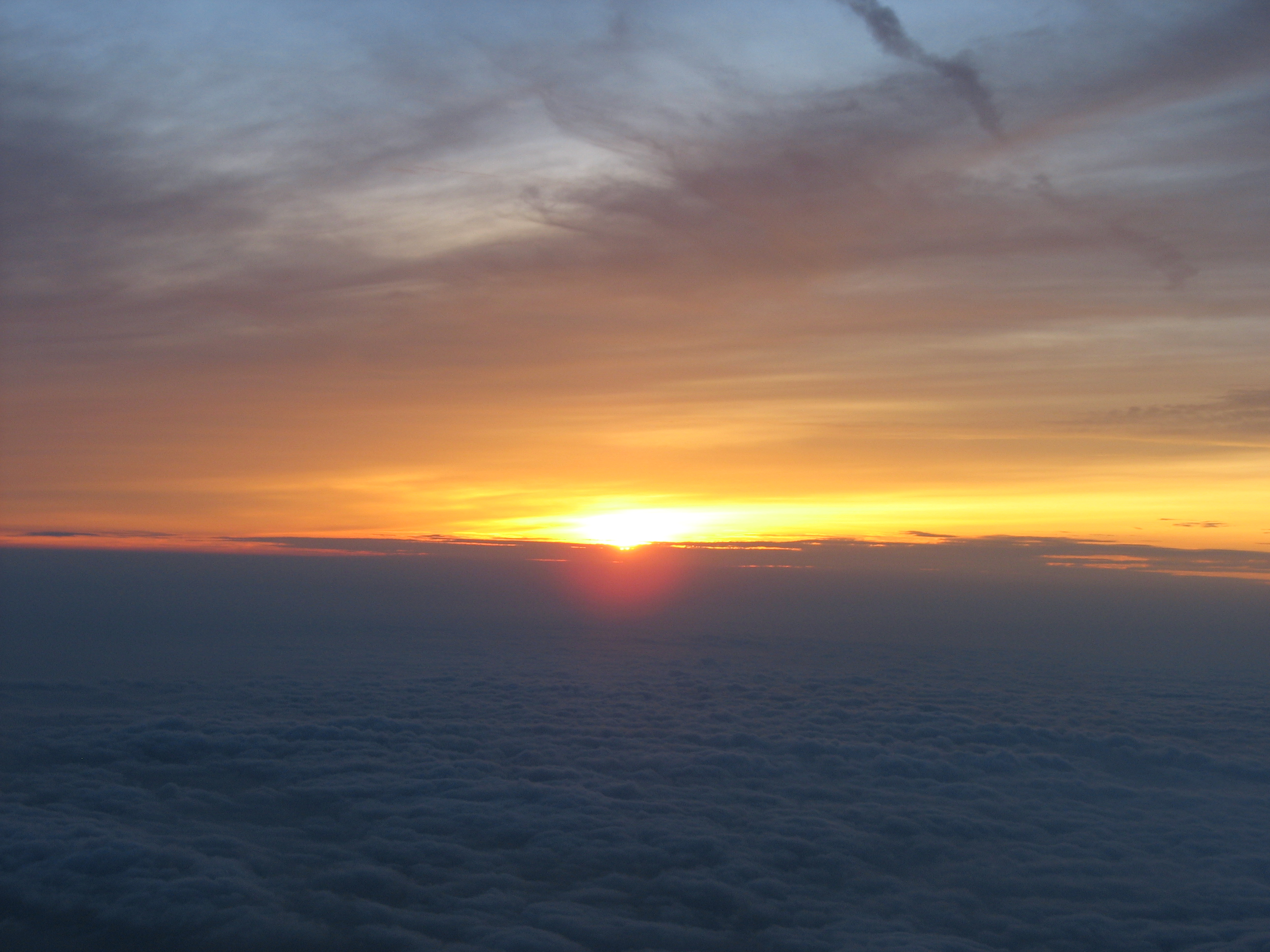
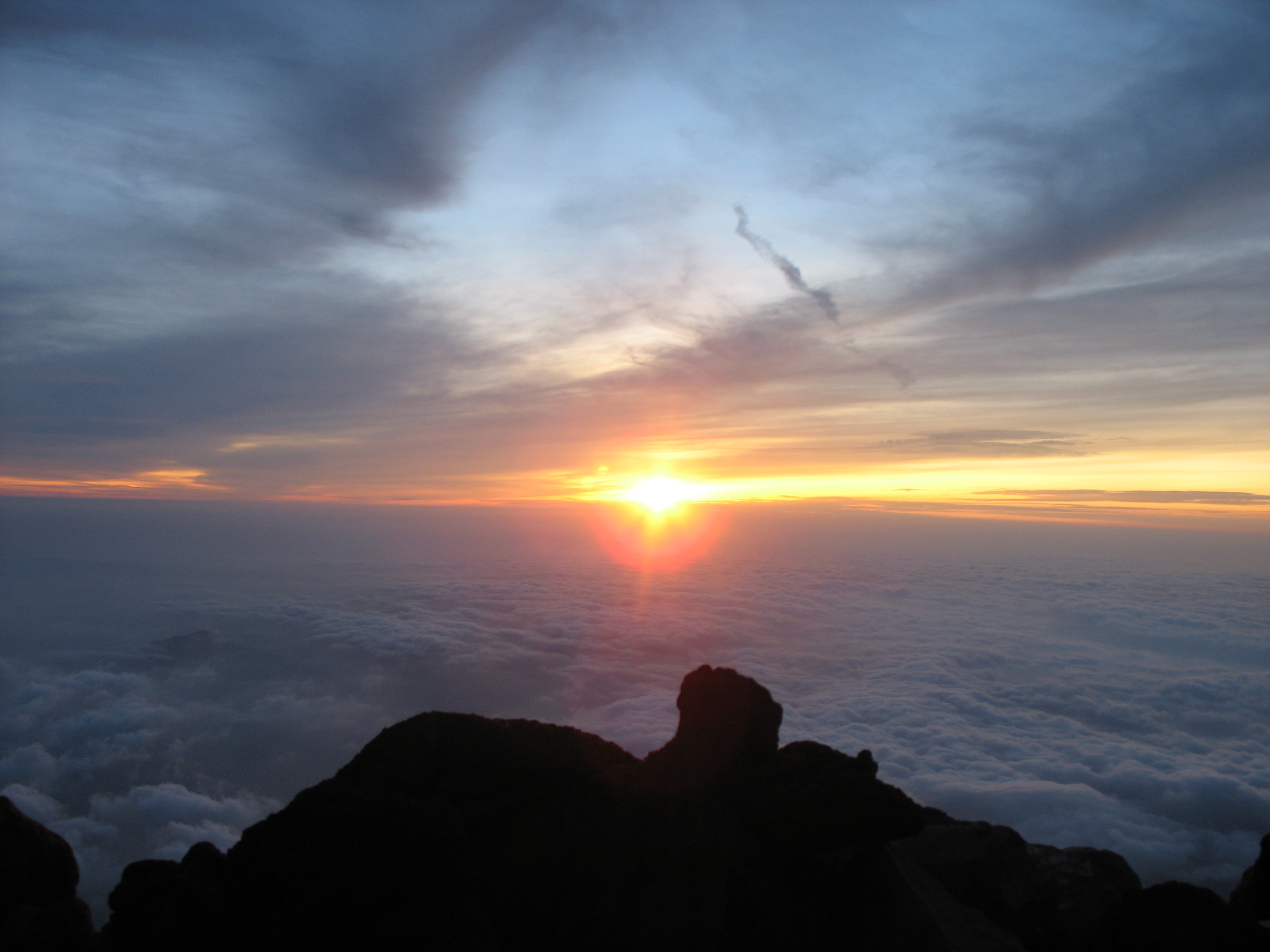
We reached the edge of the mountaintop crater just a while before the sky began to lighten and watched the lights of those on the path below us snaking toward the top. Sitting with so many others who had just made the same trek and watching the sun rise above the clouds far below us was absolutely amazing! As soon as the sun was fully up, someone came out of one of the huts and made a loud announcement, in Japanese, of course. I’m assuming that he was greeting the sun. I only recognized subarashi (wonderful, beautiful) and Ohayo gozaimasu (Good morning) which became a cheer rising from all of us, Japanese and non Japanese alike. It is a beautiful memory that will stay with me for a long time.

The actual summit or highest point of the mountain was located on the far side of the crater. Reaching it would have involved another hour of hiking before beginning our descent. We knew that our bodies didn’t have that in them, so like most others, we chose not to take that final step. It was only a few meters higher than the spot where we were standing and we had seen what we came to see.

When you’ve climbed to the top of a mountain, you’ve made a very serious commitment. Regardless of how tired and sore you are, you have to climb down again! For most of the way, there is a separate trail for descending Fuji. While it looks much easier, I’m not sure that it is. For me, the first challenge was overcoming my fear of heights. For most of the way, we descended on a wide gravel pathway. In my head, I knew that there was no way that I could fall off the mountainside from such a trail but the fear riding on my shoulder didn’t listen to reason and for the first while I was unable to enjoy the splendor laid out before us as the morning cloud cover burned off. After awhile though, I was able to shake it off and enjoy the sight. The descending trail was made up of a loose red gravel that reminded me of popcorn. It was very slippery and steep enough that keeping your footing and not landing on your behind was at times difficult. We found descending hard on the knees and I also began to experience cramping in my thigh muscles. It was also very dusty. Our eyes were pretty sore last night both from the lack of sleep and the grime. In spite of these difficulties, the descent still took less than half the time that the climb had taken.

When we got home, we cleaned up and walked over to our local hospital just a few blocks away. Fortunately, our visit had nothing to do with the climb nor was either one of us sick or injured. Before leaving Canada, we decided to have the immunizations that are recommended before traveling to some of the Asian countries that we hope to visit while we’re on this side of the globe. In Canada, the hepatitis A and B vaccine is given in three doses. We were able to have the first two before leaving the country but the third is given several months later so we planned to have it here. We’ve learned, however, that Japan only gives two doses. The doctor here decided to check our blood for the antibodies then decide whether or not we need more of the vaccine so we went to the hospital yesterday for the blood tests.

After supper at a nearby restaurant that we’ve been wanting to try, we fell into bed earlier than usual last night and both enjoyed a long, deep sleep. In spite of somewhat stiff and achy leg muscles and joints, we’re upright and walking fairly normally today and are definitely enjoying the fact that we’ve accomplished yet another long term goal!

Palm trees and ocean breezes

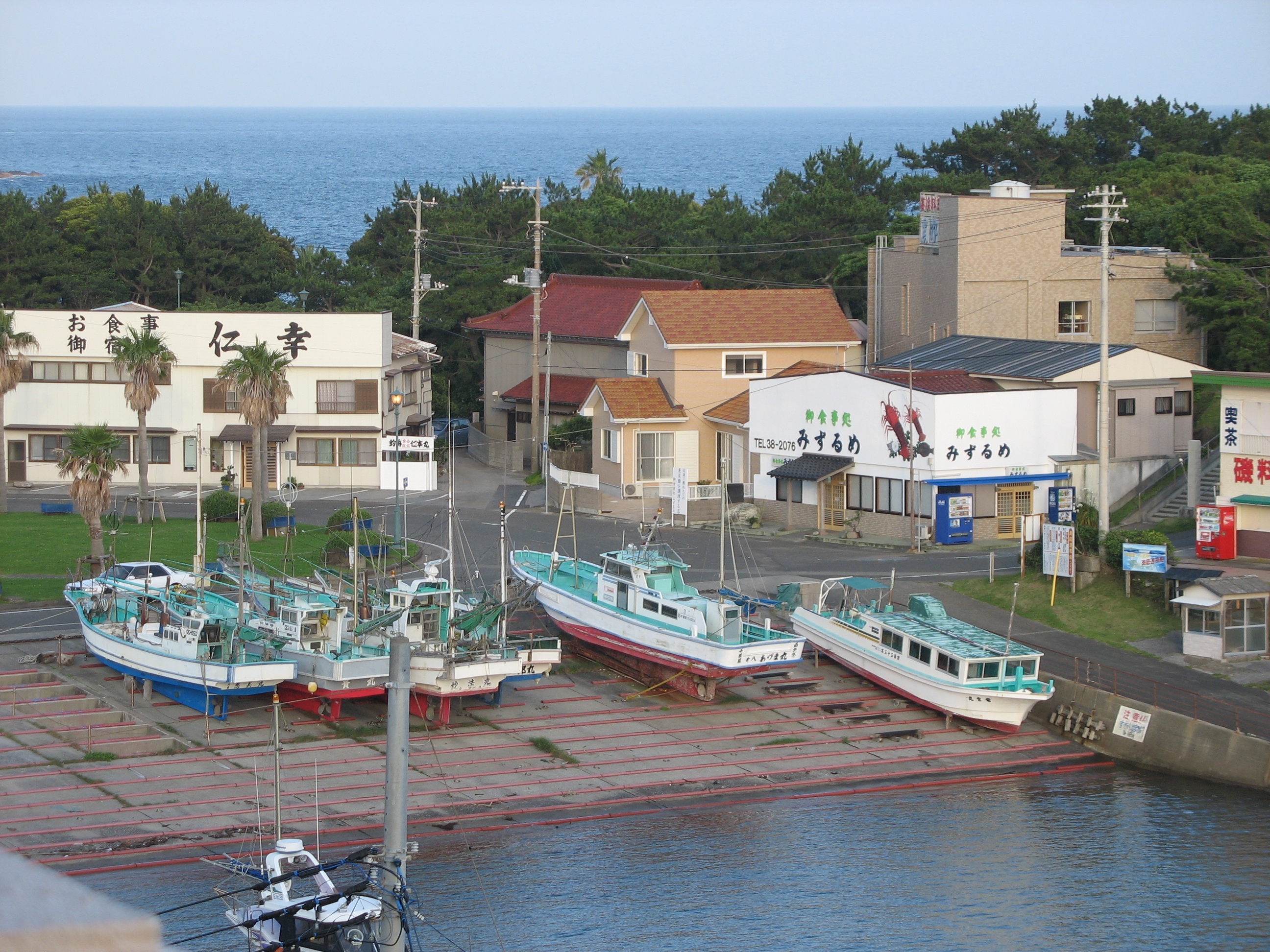
Over the past few years, thanks mostly to my friend Louis, I’ve truly become a prairie girl but regardless of how many years go by, time can’t take the ocean out of my blood. As a child, I went to sleep to the sound of the waves and to this day, there is nothing I find more relaxing. The past two days at Nojimazaki on the southern tip of the Bozo Peninsula were truly subarashi (wonderful)!

We left home at 7:00 a.m. Wednesday morning, took the train to Chiba and went the rest of the way by bus arriving at Nojimazaki shortly before 11:00. Much of the trip reminded me of driving through parts of B.C. As we drove through forested hills, even the roadside signs reminding drivers to watch for wildlife looked familiar except that the animals depicted on the signs were monkeys! As we neared the southern coastline, however, the forest gave way to stately palm trees and other tropical looking plants.

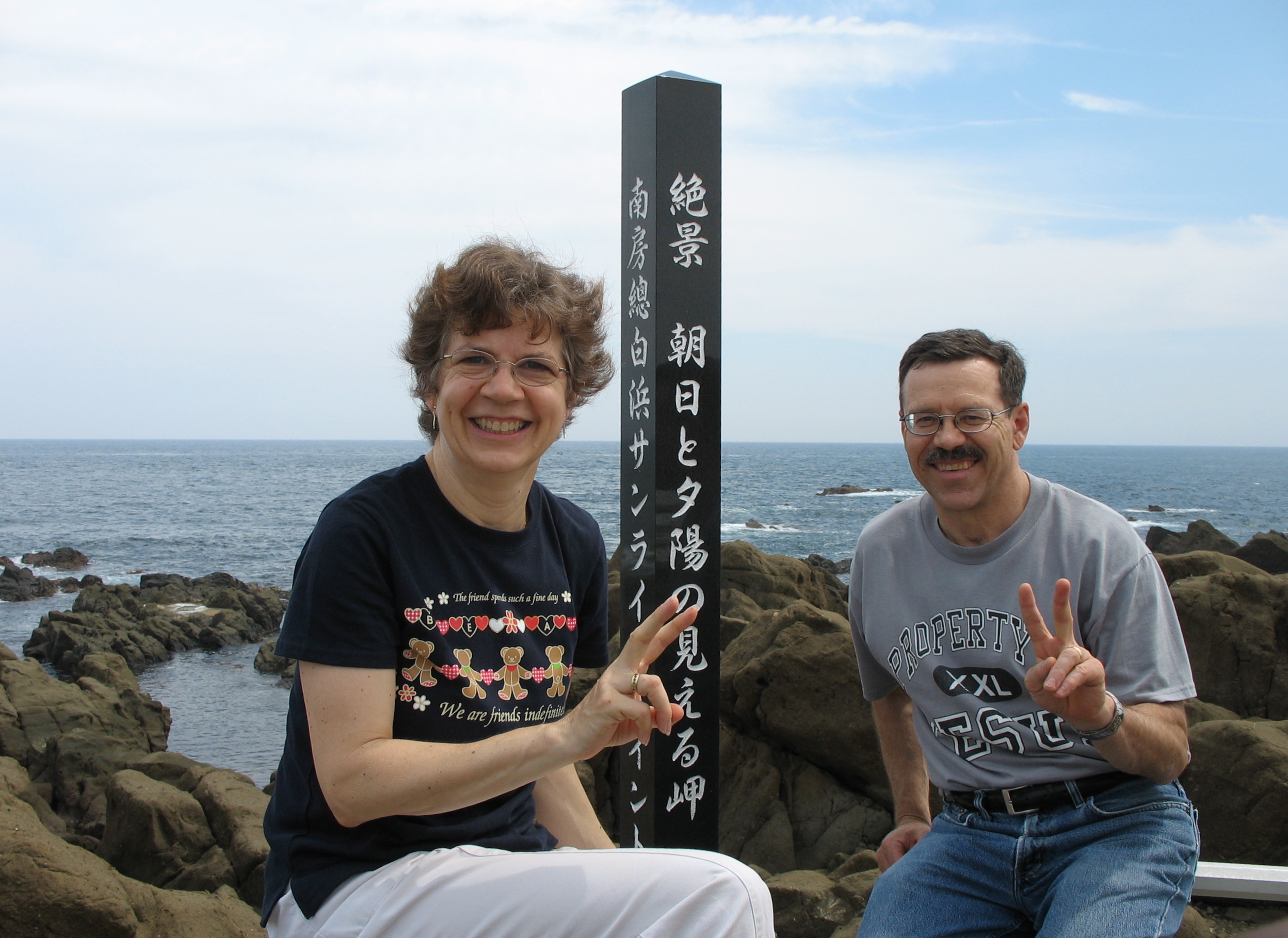
Though there are some sandy beaches, the coastline is mostly very rocky and rugged. Immediately across from our hotel was Nojimazaki Park, a beautiful promontory jutting out into the ocean and topped by the Nojimazaki lighthouse. We arrived several hours before check in time at our hotel but were able to drop off our bags and begin exploring right away. We started with the lighthouse, climbing the 77 stairs that spiral upward followed by two ladders with twelve steps each. When we stepped out onto the viewing platform high above the ground, I was delighted to discover that, with a metal railing reaching nearly to my chin and spectacular views spread out before me, my usual fear of heights didn’t bother me at all! After touring the lighthouse, we spent many hours beach combing, examining tidal pools and enjoying the sights and sound of the surf. A favourite spot quickly became a bench perched high on the rock far out on the point where a marker indicated that we were looking directly south and were at the spot from which the sun could be seen both rising and setting over the ocean. We couldn’t read the Japanese script on the marker but a couple who were just leaving as we arrived at that spot for the first time, offered to take our picture there and also explained, mainly through gestures, what the significance of the spot and the marker were. Later in the afternoon, we spent an hour exploring further along the shoreline by bike and in the evening, after dark, we returned to the park again so that I could see the stars. Standing under the beam from the lighthouse as it swept across the water and passed over our heads was so very cool!

We were the only non Japanese staying at our hotel and we were treated like royalty. Thanks to our friend, Minako, who phoned ahead to confirm our reservation and alert the staff to the fact that we don’t speak Japanese, there was someone at the front desk when we arrived who was able to greet us in English. We had reservations for the 7:00 p.m. sitting at dinner and again, we were greeted by name and a waitress who spoke a little English was hovering nearby, obviously awaiting our arrival.

The dinner buffet was fantastic. We started off with a wide variety of salads as well as appetizers of raw fish. Though we both prefer the texture of fish that’s been cooked, we can also enjoy it raw. Next we filled our plates with more seafood and all sorts of meats, vegetables and things unknown. There were so many choices that we couldn’t possibly try everything but we did make sure we had some of the seafood and vegetable tempura that was being cooked as we served ourselves. Dinner wrapped up with a variety of little desserts including a delicious mango pudding. Breakfast the next morning was another buffet and included scrambled eggs, tiny sausages, fruit and a variety of breads as well as many salads and other foods that we were unfamiliar with.

Since Japan is known as the land of the rising sun and this was likely the only opportunity I would ever have to watch the sun rise over the Pacific Ocean, I set the alarm clock for 4:10 a.m. hoping to catch the sunrise from our hotel balcony. Amazingly, I awoke very suddenly from a deep sleep at 4:09, exactly one minute before the alarm was due to ring! Unfortunately, there was just enough cloud that I couldn’t actually see the sun break over the horizon but I did watch the clouds turn pink and then slowly fade to bluish gray before heading back to bed for a few more hours sleep.

After breakfast we walked the shoreline again watching with fascination the many, many locals far out on the rocks harvesting baskets full of sea life, presumably seaweed and shellfish though they were too far away for us to know for sure. Others came and went in small fishing boats.

In spite of the fact that this is supposedly rainy season, the weather was superb. The morning clouds burned off by noon and even though I used sunscreen, I came home with a bit of a burn especially on my neck and arms.

Deuteronomy 29:5

Before we came to Japan, I was under the impression that I wouldn’t be able to find clothes to fit so I was careful to make sure that I had enough to last the year if necessary.  As it happens, however, I’ve already bought a pair of pants, a skirt, two tops and a couple of hats!  Imagine that.  Hats!  I come from a family of big-headed people and I can’t usually find ladies hats to fit in Canada but here I’ve bought two; one for winter and one for summer!

Shoes are another matter, however.  I would have to search far and wide to find a pair to fit me.  It’s really quite unfortunate as there are so many cute shoes here.  Shopping could be such fun!  On the other hand, it’s easier on the budget this way and I do have to think about how much I can carry home.

I brought five pairs of shoes, a pair of sandals and a pair of flip flops with me.  That sounds like enough to last a year but considering how much walking we have to do and the fact that it’s all on pavement, I wonder if it will be.  I have two pairs of dressy flats that are suitable for wearing to school with skirts and capris.   The dress code doesn’t allow me to wear sandals.

After just a few trips to school and back, the heels of my black flats were completely worn down so today I paid a visit to the shoemaker in the corner of one of the local department stores.   Once again, I discovered how easy it can be to communicate my needs without a common language.  I indicated what I wanted done, he wrote down the time that I should come back and within an hour, my shoes had new heels and he’d even polished them for me!   The funny part of the whole thing is that I paid more to have the heels replaced than the original cost of the shoes!  Replacing the heels cost 1155 yen (approximately $11.50) which doesn’t seem at all unreasonable but I distinctly remember buying the shoes on sale at Zellers for only $9.00!

I’m more concerned about my other black shoes, the ones I wear most often because they’re very comfortable and look good with dress slacks.  They have thick rubber soles that will never wear out but I hope the shoes themselves stand up to a year of pavement pounding, especially considering how often they get wet.  They’re an inexpensive Payless purchase but I’ve had wonderful success with Payless shoes in the past so I have high expectations for these ones too.

I’m often reminded, as I wonder whether or not my shoes will last, that during the forty years that the Israelites wandered in the wilderness, their sandals never wore out.  I’m not wandering in the wilderness but, like the Israelites, I’m definitely in a place where I can’t replace my footwear so I’m counting on the same care from above!

Re-entry permit

Today I went to the closest immigration office, which is located in the nearby city of Chiba, to apply for and receive a re-entry permit so that I can leave Japan on vacation. This is extremely important because if I left the country without one, my work visa would be automatically canceled and I’d be unable to return! Richard will be making a similar trek on one of his upcoming days off.

There are two types of re-entry permits – single or multiple. A single allows you to leave the country once and costs 3000 yen (approximately $30) while a multiple allows any number of trips and costs 6000 yen so anyone who is reasonably sure that they’ll leave at least twice during their stay is advised to apply for a multiple. It also saves making a second rather boring trip to the immigration office.

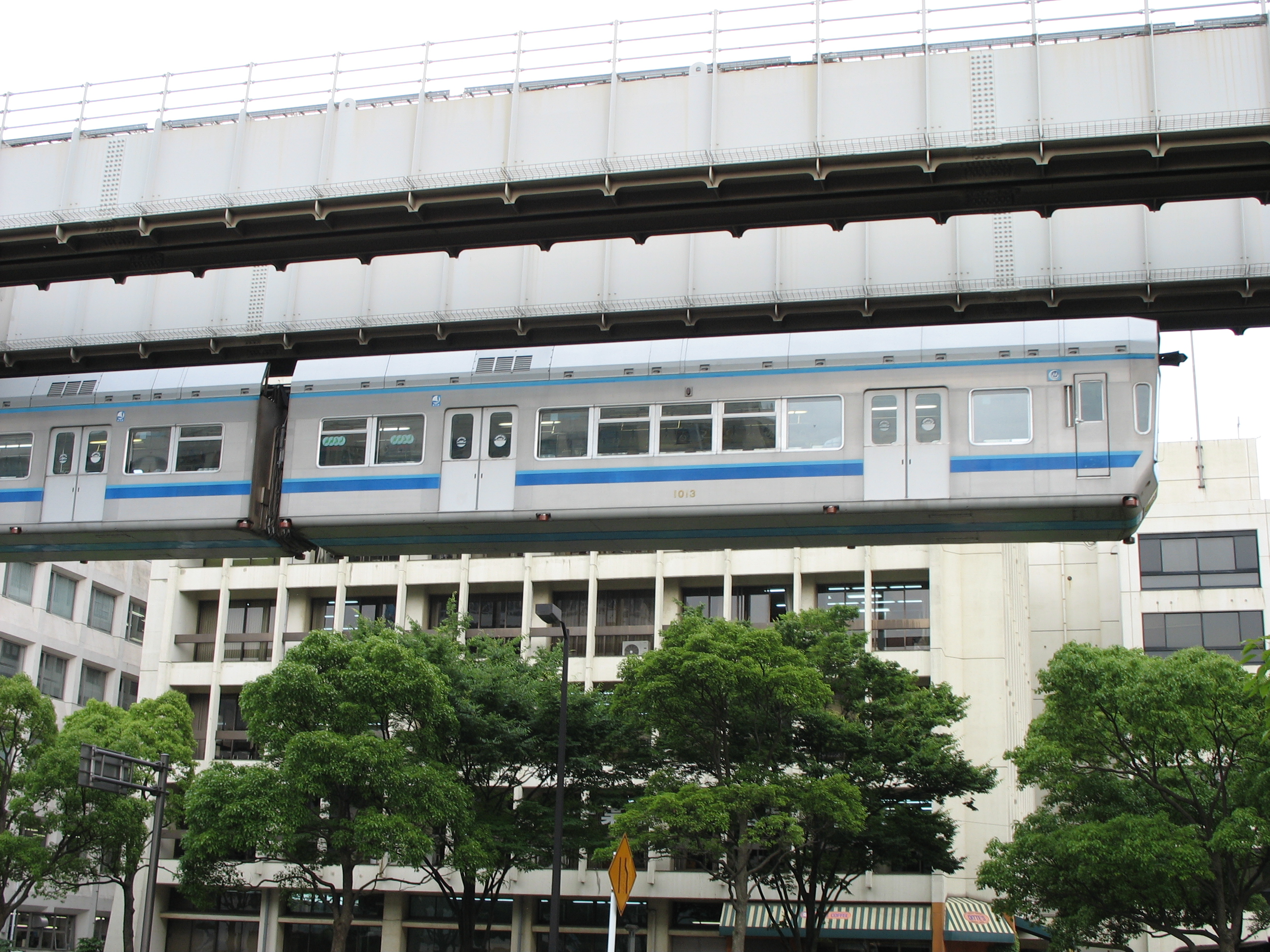
By far the most interesting part of the trip was a short ride on the Chiba city monorail. Suspended from an overhead track, it winds its way above the city traffic, in some places several stories from the ground.

The actual application procedure was relatively simple. First, I had to go to a post office and purchase a 6000 yen revenue stamp which looks like a postage stamp and is affixed to a payment form that accompanies the re-entry permit application. There’s a post office in the basement of the building where the immigration office is located. I decided to go there instead of our local one because I was pretty sure they’d be more accustomed to dealing with foreigners and would more easily understand what I was looking for. Once I had the revenue stamp and had filled out the application form, I simply had to take a number, wait my turn and present them along with my passport and my alien registration card. The waiting room was definitely a multicultural gathering place with some people looking quite stressed and others simply bored. Once I’d waited half an hour or so, processing the application and affixing the permit to my passport took only a few minutes.

So, why do we need the re-entry permits? We’re planning to spend our nine day summer vacation in South Korea. We fly to Seoul on August 9th. After three days and four nights there, we’ll travel by train to Busan and fly back to Japan from there on August 17th. We also plan to leave Japan a second time for our Christmas/winter vacation. Those plans are pretty sketchy at this point but we’re thinking about Cambodia, Thailand and possibly Vietnam.

Rose garden

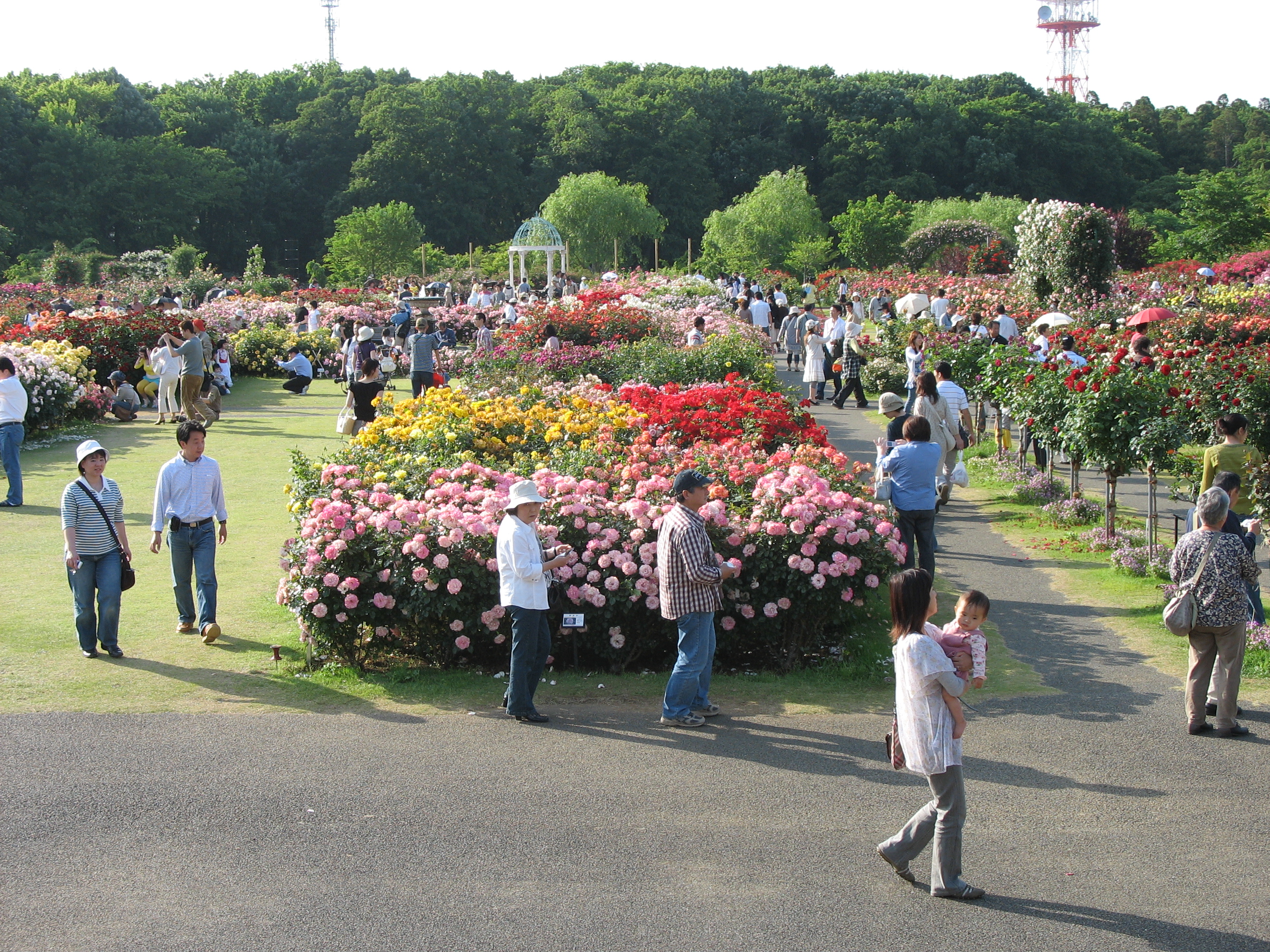
We spent this afternoon strolling around Keisei Rose Garden, one of the largest rose gardens in Japan, which is located very close to here. It’s only two stops away by train and then a 10 to 15 minute walk. When we got off the train, we weren’t sure which way to go to find the garden. While we were consulting the poster and map in the station, a young Japanese couple came along. They were looking for the garden too. The girl spoke English quite well and when none of us could figure out the directions on the map, we stopped into the station convenience store. They asked for directions in Japanese and then led the way!

The garden was beautiful. Many of the blooms had taken a beating by the recent rainstorms but, in spite of that, we were surrounded by every variety and colour imaginable and the aroma was sensational.

Have you ever wondered what a rose tastes like? I hadn’t, but today I found out! After touring the garden, we decided to treat ourselves to cones at the soft ice cream shop. We couldn’t read the signs but it was quite obvious that we had three choices – pink, white or half and half. We both chose the half and half, not knowing for sure what we were getting. It was logical to assume that the white would be vanilla but the pink was a darker shade than strawberry usually is so we weren’t sure what it would be. The moment I tasted it, I was pretty sure I knew. They say that taste and smell are closely related. I can’t describe the flavour other than to say that it tasted exactly the way that roses smell! I was quite sure that we were eating rose flavoured ice cream! It definitely wasn’t rosehip either. Rosehip tea is one of the few herbal teas that we’ve been able to find here so we drink it quite often in the evenings and I would have recognized that flavour. My suspicions were confirmed when we discovered that the gift shop sold rose petal jam.

Sisters

After we’d been here for about a month I realized that the one thing I missed most was my girlfriends. Don’t get me wrong, I dearly love the men in my life, but I’ve discovered that we women really do need one another.

During that first month, I worked on Sundays so we weren’t able to search out and begin attending a church. At home, many of my girlfriends are also part of my church family so these two needs really went hand in hand. As soon as we began attending Hope Church, I began to pray that God would give me at least one woman friend there. He has answered far beyond my wildest dreams!

God’s been doing that a lot lately. In response to my feeble requests, he’s been pouring out blessings. We knew that finding a Christian church to attend in this country might be difficult so I asked for someone that we could have Christian fellowship with even if it wasn’t in a church setting. He answered by leading us to a vibrant church three times the size of the one that we attend at home! When I asked for at least one woman friend amongst that crowd, he surrounded me with so many that I haven’t even been able to learn all their names!

I don’t think it’s a coincidence that the church’s two women’s meetings each month fall on Wednesdays, my day off. I’m convinced that it was meant to be that way. Two weeks ago, at the second meeting that I attended, I sat with four ladies, all around my age. Two had lived in the States for a period of time so they spoke fairly good English, one spoke only a few words and one spoke no English at all. It was amazing how well we managed to visit!  After we’d been chatting for awhile, they told me their names. When I told them that I probably wouldn’t remember all of them, one told me not to worry.  Just call us sister, she said!

One of the things that most women like to do is shop together. When I needed to buy all the goodies to prepare the apartment for the coming rainy season, I could have struggled through on my own trying to figure out which packages contained roach traps and what dehumidifying products to buy, but it was so much easier to ask one of my new sisters for help!  After church one Sunday, Seiko and I crossed the street to the Don Quijote, a crowded discount store, better known in our family as the Sad Blue Duck, and with her help I got what we needed.  If you’re wondering where the Sad Blue Duck name came from, that’s what Matt and Robin called the one near their home in Osaka because the store logo is a rather sad looking blue duck!

Though I’ve made friends with several of the ladies from the church, Seiko is especially dear to my heart as she’s expecting her first baby, a boy, within the next couple of weeks.  I can’t cuddle my own wee grandson but I’ll be able to hold Seiko’s baby and as I watch him grow, I’ll be able to see all the stages that Andrew’s been going through.

For a foreign teacher to develop these kinds of relationships with Japanese people, especially in such a short period of time, is highly unusual but when we’re all part of the family of God, amazing things happen!

Yukyu, merit pay and stubbornness

According to our contract, we’re entitled to five yukyu, days off that can be used as either sick days or personal leave days.  Once these are used up, any additional absences, whether for sickness or any other reason, are treated as time off without pay.

In addition to our monthly salary, we’re also entitled to 5000 yen (approximately $50) merit pay for each month in which we are not late for school, do not leave early, complete the myriad of required paperwork on time, do not violate the working regulations in any way and do not take any unscheduled yukyu.  In other words, if we are sick, it not only costs us one of our five yukyu days but also our merit pay for that month!  I know that $50 will never make or break us but I consider that unduly harsh.

I’m a stubborn woman.  I’ve had a difficult time convincing some people of that but Richard would attest to the fact!  He says I come by it honestly; that I inherited the trait from my mother and my aunt.  I’m okay with that.  In fact, I thank them for that legacy.  I don’t see anything wrong with a woman having a bit of backbone as long as she knows when to bend.

This issue of sickness and yukyu is one area where I’m not willing to bend!  I have absolutely no voice today.  When the sore throat of the past few days disappeared, it took my voice with it!  Regardless of what shape it’s in tomorrow, I intend to be in school.  I plan to save my precious yukyu days for interesting things like climbing Mt. Fuji and visiting with Matt & Robin while they’re here.  I’m not willing to spend even one of them on laryngitis nor am I willing to give up my merit pay, especially since I’ve already done all the required paperwork this month and quite a bit of next month’s.

While laryngitis is definitely a teacher’s curse, if I were at home in Canada, it really wouldn’t be a problem.  During my very first year of teaching, my doctor at the time introduced me to a vile smelling potion known as Friar’s Balsam.  When it’s added to boiling water and the fumes are inhaled, the voice is magically restored.  I know it sounds hokey but it works!  Unfortunately, I didn’t think to bring any with us and finding such a thing here when all I know is the brand name and not what it actually contains, would be virtually impossible.  Someone at church this morning recommended that I try Vicks VapoRub which is readily available here.  I haven’t used it since I was a child but I picked some up on the way home and will try that along with the Halls lozenges which are mentholated and seem to help.  I’m also drinking tea with honey.  Any other suggestions would be appreciated!

The darker side

On her way to school last Saturday, one of our young female teachers arrived at a station just in time to witness the aftermath of a growing problem in Japan; suicide by throwing oneself in front of a train.   I can’t imagine the horror of watching the station crew remove the body from the tracks and carry it out through the assembled crowd.

Japan has one of the highest suicide rates amongst industrially advanced countries with over 30 000 self inflicted deaths occurring every year since 1998.  Even the Japanese are becoming alarmed by the steep rise in the number of people taking their own lives.  Apparently, in this country, one is roughly five times as likely to die by one’s own hand as to be killed in a traffic accident!

Aokigahara woods, a secluded forest area at the foot of Mt. Fuji, has become infamous as a favourite suicide spot because of the number of bodies found hanging from trees and death by train has become so rampant that the Japanese railways now seek financial compensation from the families of jumpers because of the delays that are caused.

There are many reasons for the rising suicide rate but most are related to the recession that Japan has been experiencing in recent years.   Men account for a staggering 73% of those who take their own lives and many are businessmen experiencing financial difficulties and/or work related stress and exhaustion.  There is no doubt that this is a country of hard working, tired people.  We see the weariness on their faces every day.  Men, especially, work long hours and are under a great deal of pressure to succeed.  One of my private students, a fascinating young man who works for a trading company, often has to cancel his Saturday English lesson due to work commitments.  Last Friday, he worked through the night until 6:00 a.m. without even having supper because his company is preparing for important foreign visitors.  He came to class without having had any sleep because, like many others, learning English is not simply a hobby for him.  It’s required by employers as another means of getting ahead.

The unemployment rate here falls below that of most other developed countries but it has been rising since 1998 so some of those who take their own lives are amongst the jobless.  Family breakdown is another reason for suicide.  The divorce rate has climbed significantly as women have joined the workforce and found the means to free themselves from troubled marriages.  Perhaps the saddest statistic is the growing number of bullied students who are committing suicide.  Apparently bullying is rampant in Japanese schools.

Cultural issues come into play as well.  Japan is one of the few countries in the world where suicide is still considered an honourable act.  It has long been seen as a way to restore honour to one’s name, family or organization when one has failed in some way and Japanese literary tradition romanticizes it.  There is also a complete lack of religious prohibition against suicide here and there has long been a reluctance to discuss and deal with serious mental health and stress related issues.  It isn’t only good cold medications that are banned here.  Many of the cutting edge antidepressants that are readily available in western countries are not yet legal in Japan.

Until recently, a book entitled “The Perfect Suicide Manual” which gives explicit instructions on how to commit suicide by a wide variety of means, was consistently on the bestseller list and readily available.  It was finally designated a “harmful publication” after the suicide death of a 12-year-old girl.

As I enjoy the beauty and the rich history of this country, I’m reminded that there is a darker side and a high price being paid for the rapid advances that are being made.

It’s all part of the adventure

I’ve succumbed to my first Japanese cold.  Fortunately, I brought some echinacea with me and, with its help, I’m hoping that this doesn’t amount to much.  I don’t really have to use my teacher voice here as my biggest class has only eight students and the rooms are quite small but my throat was very sore at school yesterday which makes teaching rather difficult.  Today’s my day off so my voice will get a rest but I decided that I’d better go in search of lozenges and decongestants just in case they’re needed.  Back in Canada, that would be no big deal but here, where I don’t understand the language, it’s all part of the adventure.

My favourite cold medication is Sudafed but, since it contains a substance that is banned in Japan, we weren’t able to bring any with us.  There are three little drugstores in the shopping area surrounding our closest school so I went exploring to see what I could find.  In the first store I entered, I found some Halls nestled amongst the chewing gum!  There was only one flavour and since all the labeling except the brand name is in Japanese, I have no idea what it is but at least I know that it’s lozenges.  I discovered cold medications behind glass under the front counter.  I could tell that that’s what they were by the pictures and a few English words on some of the packages but there were so many kinds!  How would I choose?  What a delight to discover that the girl behind the counter spoke enough English to help me out!  She was able to ask about my symptoms, recommend the decongestant that she felt was best and explain the dosage.  As she rang up my purchases, she asked if I had a points card.  I didn’t have, of course, but she was able to explain that if I had one I’d receive points with every purchase and eventually earn a discount.  Since there was no cost involved in getting a card, she helped me fill out the application form and I now have a bright yellow Matsumoto KiYoshi point card!  Since we usually buy things like paper towel and toilet paper at the little drugstores, I’ll make sure I frequent that one from now on.  Not only will my purchases earn me points, but more importantly, I know that there’s someone on staff who speaks enough English to help me if I need it.  It may be crazy but carrying a points card from a local store is just one more little thing that makes me feel like I belong here!

Imperial Palace

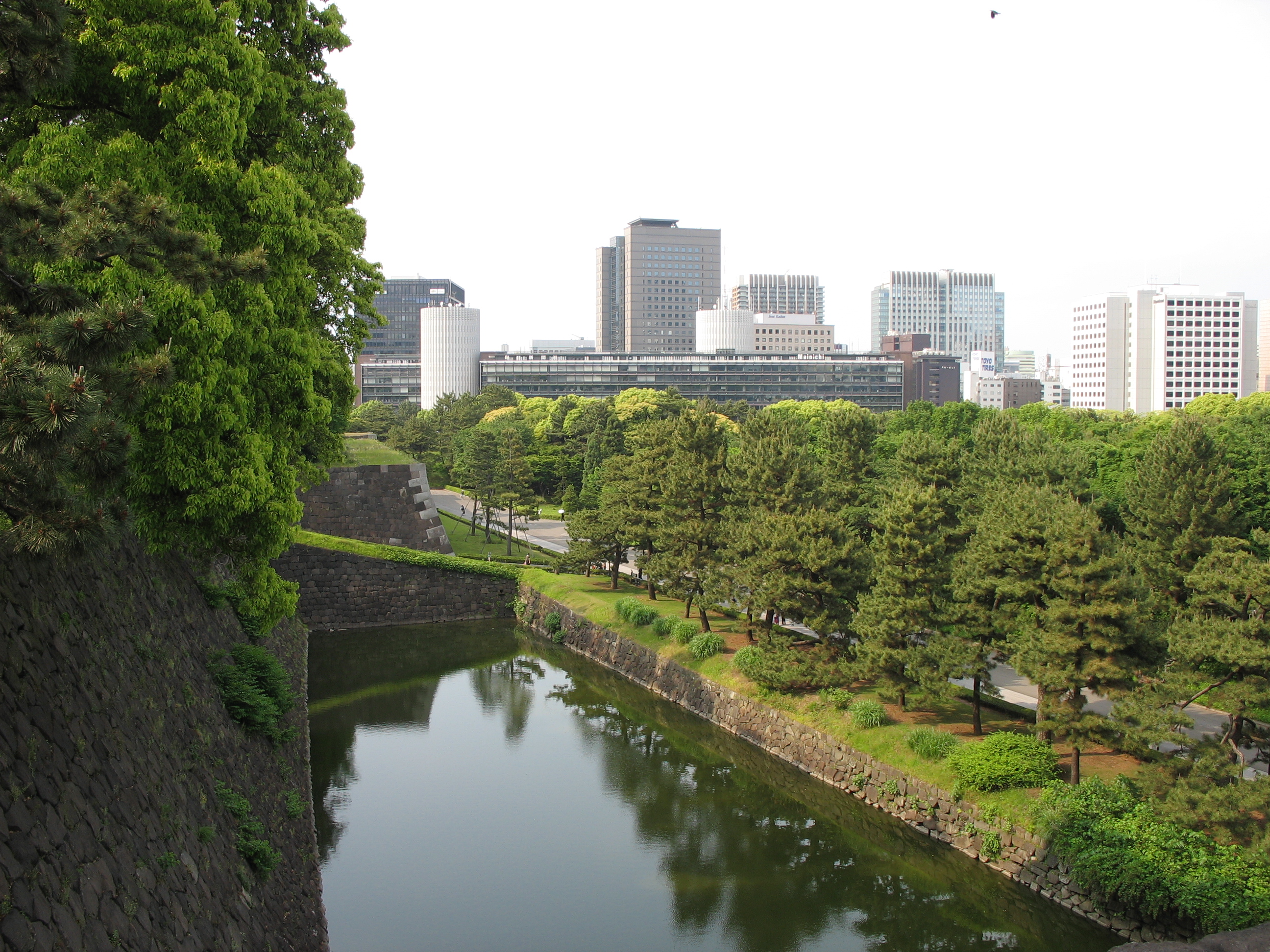
After church yesterday we ventured into Tokyo again to visit the Imperial Palace, the home of Japan’s emperor and the imperial family.  The palace itself is closed to the public for all but two days each year but the east garden is a popular spot for strolling and picnicking.  We spent about an hour and a half wandering through the garden enjoying the sunshine and the peaceful surroundings.

The present palace occupies the site of the original Edo Castle from which the Tokugawa shogunate once ruled all Japan.  In its time, the castle was the largest in the world but virtually all that remains of the original structure is the massive moat and the imposing stone walls.

Japan’s government is similar to the British parliamentary system.  The emperor, considered divine until the close of World War II, has a role similar to that of Queen Elizabeth’s so in a sense, I suppose visiting the Imperial Palace is akin to visiting Buckingham Palace in London.  Despite the fact that the emperor no longer holds the power that his predecessors once did, he is a figure of enormous respect in Japan.  There was a definite police presence in the area and though admission to the east garden is free, visitors are issued a plastic token when they enter and return it to the entry kiosk when they leave to ensure that no one remains in the area after it closes at 5:00 p.m.

After leaving the garden, we strolled over to the elegant Nujibashi bridge where it’s possible to catch a glimpse of the actual imperial residence.  From there, rather than retracing our path back to the train station we arrived at, we walked to another nearby station and returned home by a different route, stopping on the way for supper.

Perhaps what surprised me most about yesterday’s outing was the ease with which we can wander around a place like downtown Tokyo!  The first couple of times that we went into the city seemed a bit intimidating and we were careful to keep track of where we’d been and how to get back to our station.  Now, we’re much less concerned, realizing that we can find our way back from anywhere and knowing that when we’re unsure about how to do that, it’s easy to find help.  The worst that can happen is that you get on the wrong train or one going in the opposite direction from what you had in mind.  If that does happen, all you have to do is get off at the next stop and go back!  As long as you don’t leave the stations, it doesn’t even cost anything.  The price of a trip depends entirely on where you enter the system and where you leave, not on how many detours you take along the way.