National Founding Day

The neighbourhood is very quiet today. At 7:45 this morning, the street wasn’t filled with noisy school children on their way to class. The garbage truck with it’s announcement blaring didn’t stop below our window a little later on to collect the trash and around 9:00 a.m. there was no huddle of mothers and preschoolers waiting for the kindergarten bus on the next corner. There are no machines digging up the streets anywhere nearby. Today is a national holiday known as National Founding Day.

Celebrated annually on February 11, this day was originally called Empire Day. Perhaps in order to bolster its own legitimacy, the holiday was an invention of the Meiji government. It commemorated the founding of the nation and the imperial line in 660 BC by the legendary first emperor, Jimmu. Abolished after World War II because of its association with the imperial system, the holiday was resurrected in 1966 as National Founding Day but was stripped of any overt references to the Emperor. It is Japan’s most controversial holiday often sparking protest rallies held by those who claim that it is unconstitutional because it links the country’s foundation with the imperial institution.  I assume that they look more favourably upon Constitution Memorial Day on May 3.  Established in 1948, that holiday celebrates the day on which the current Japanese constitution came into effect one year earlier.

February 11 is, at best, a subdued celebration with few overt expressions of national pride or patriotism.  In fact, for most Japanese, it appears to be nothing more than a day off work or school. Most of my adult students weren’t even able to tell me why it’s a holiday. Some guessed that it might be the emperor’s birthday which is actually celebrated on December 23 while others surmised that it had something to do with Japan becoming a country.  For us, it’s a day like any other and we’ll soon be off to school as usual.

Language limitations?

Before we came to Japan, we fully intended to take some Japanese lessons once we settled in. We thought that a basic knowledge of the language would be necessary in order to cope with everyday life. While there have been occasions when it would have been helpful, we quickly came to the realization that knowing Japanese wasn’t essential and decided that our time would be better spent in other ways. If we had planned to stay longer than a year or if we thought that we would have any opportunity to continue using the language once we returned to Alberta, we probably would have taken some lessons but we also realize that old brains like ours don’t absorb new languages easily and it would take much longer than a year to develop any level of fluency.

We’ve learned a few useful words and phrases along the way as well as some that are just plain fun. The latest is saiko. According to the dictionary, it means highest or maximum but it can be used in the same way that we commonly use the English word awesome, as in “How are you?” “I’m awesome!” The reason we’re having so much fun with it is the fact that it’s pronounced exactly like the English word psycho. So, imagine for a moment the quizzical looks I’ll get if, back in Canada, someone asks “How are you?” and I respond “I’m saiko!”

Most of our fellow teachers here are the age of our children or younger and many have studied some Japanese before they arrive in the country. One of them, a somewhat immature and self-absorbed young lady, hopes to become completely fluent in the language and work as a translator someday. She takes advantage of every opportunity to point out to anyone and everyone that she speaks Japanese and she clearly looks down on anyone who doesn’t. She actually told Richard some time ago that we wouldn’t have any opportunity to get to know any Japanese people if we didn’t make an effort to learn the language. She’d be shocked to learn how difficult it’s going to be for us to leave this country because, after just one year, it means saying good-bye to so many dear friends and how hopeful we are that we’ll be able to come back and visit them someday!

We spent the past two Sunday afternoons and evenings visiting in Japanese homes. Last week we enjoyed a wonderful visit with Seiko, Atsuo and their eight month old son, Ayumu. The fact that we don’t speak Japanese and Atsuo doesn’t speak English hardly interfered at all and has not hindered us from developing a very special relationship with this young couple. Ayumu is our “adopted” grandson and it warms my heart every time I hear Seiko refer to us as Granma and Granpa!

Yesterday we visited Yoko and Yoshinori, a couple who are almost the same age as we are. Yoshinori is a journalist who spent much of his career as a foreign correspondent so they spent many years living and raising their children in London, Mexico City and the United States and they both speak English quite fluently.

Of course, being a part of a church family here has given us the opportunity to get to know Japanese people and enter into their lives in a way that we wouldn’t have otherwise. We won’t be here to see Yugo and Minako’s new baby when it arrives in July or to watch Dave and Yuki exchange marriage vows but it’s been a delight to share in their excitement as they’ve told us of these upcoming events. In fact, it’s been absolutely saiko!

Setsubun

Today is Setsubun, in my opinion probably the most unusual day on the Japanese calendar. Because of it’s original association with the Lunar New Year, it is thought of as a new beginning, a time to drive away evil spirits and prepare the home for the year to come. This is done by opening the windows and throwing roasted soybeans both inside and outside the home while shouting “Oni wa soto! Fuku wa uchi!” which loosely translates as “Evil spirits out. Good luck in”. As part of bringing in the good luck, it is then customary to pick up the beans and eat one for each year of your life. In recent years, some families have chosen to use peanuts instead of soybeans. Some people wear devil’s masks while performing this ritual while others hang small decorations made of holly and sardine heads over the entrances to their homes to discourage the evil spirits from reentering once they’ve been driven out.

Setsubun is also celebrated at Buddhist temples and Shinto shrines throughout the country where celebrities are often invited to assist the priests by scattering the beans.

In keeping with the theme of new beginnings, Setsubun is also considered the last day of winter even though my students assure me that the weather won’t change significantly for awhile yet. Though there’s a bit of warmth in this evening’s breeze, the weather forecast seems to concur.

There are some variations in how Setsubun is celebrated in different regions of the country. For example, it has long been customary in the Kansai area to eat uncut sushi rolls on Setsubun while facing the lucky compass direction for that year, as determined by it’s zodaic symbol. Through the marketing efforts of supermarkets and convenience stores, this tradition seems to have spread to other parts of the country. I saw these rolls being sold in several spots on my way to and from work today. In front of the convenience store close to the school where I taught today, they were being sold by two young men who were dressed in red and wearing devil masks.

There may be some Japanese traditions that I’d be willing to adopt but I don’t think this will be one of them. While I most definitely believe in the existence of both good and evil in the spiritual realm, I don’t think I’ll ever put my faith in soybeans! It sure is fascinating to learn about these unusual customs though.

Subarashi Christmas

We celebrated Christmas with our church family today and it was subarashi – absolutely wonderful! We got up a little earlier than usual so that I could put together the food that we were taking for the big potluck meal after the service. Everyone was in a festive mood when we arrived and it quickly struck me that while we’re far from family this Christmas, we’re part of a whole new family and so privileged to share this special time with them.

When the service began, the lights were dimmed and with the auditorium lit by a single candle, we all sang Happy Birthday to Jesus (in English). It was very moving. Next we sang several familiar carols in Japanese and then Pastor Steve delivered his Christmas message.

The meal was amazing. The food line passed through three small rooms and the tables were laden with a wide variety of dishes – everything from pizza to sushi! It was impossible to sample everything but we tried as many as we could.

Following the meal, we moved back into the sanctuary for the Christmas program featuring performances by a variety of groups from the youngest children to an adult choir. I took a few photos throughout the day but it’s impossible to capture what Hope Church has come to mean to us in either pictures or words. We feel God’s love so strongly in that place and in a short time we have developed wonderful relationships with many people there. We came home bearing gifts from some of our special friends but, more importantly, we made memories today that will stay with us and when future Christmases roll around, we’ll remember our subarashi Hope Church Christmas with joy.

Today truly was our Christmas celebration. We have one more day of classes and then on Tuesday morning, we fly to Vietnam. On Christmas morning, we’ll be picked up at our hotel in Hanoi and driven to beautiful Halong Bay where we’ll board a junk for an overnight sightseeing tour. Christmas dinner will be a seafood feast on board the boat and if the weather cooperates, we’ll also enjoy some swimming and kayaking. After returning to Hanoi, we’ll travel the length of Vietnam to Ho Chi Minh City (Saigon) and then fly to Siem Reap, Cambodia to see beautiful Angkor Wat. We’ll arrive back in Japan early on January 5. I don’t know if we’ll have access to the internet while we’re traveling so the blog may be silent until that time but I’m sure there will be lots to share when we return. In the meantime, have a very Merry Christmas wherever you are and we wish you all the best in the New Year.

Christmas in Japan

Though Christmas has only become widely popular in Japan in recent decades, its roots go back several centuries. It was first introduced by Catholic missionaries in the mid 1500s. Beginning with the expulsion of missionaries in 1587, however, Christianity was banned throughout Japan during the Edo period and the public practice of Christmas ceased.

For the next 250 years small groups known as Kakure Kirishitan, hidden Christians, continued to meet underground. Persecution was severe and any who were detected during that time were executed for their faith.

Christianity and Christmas reemerged at the beginning of the Meiji period which lasted from 1868 to 1912. By the turn of the century, Japan had become a leading manufacturer and exporter of Christmas ornaments. It was through this industry that the average Japanese gradually became exposed to the western concept of Christmas. Though I wasn’t aware of the fact until now, chances are that many of my Christmas ornaments back home in Canada were made in Japan.

Christmas in Japan is very much a commercial endeavor. In the 1930s, stores began to popularize the celebration by having special sales and, as at home, Christmas decorations appear immediately after Halloween. During World War II, the use of English loan words was prohibited so, for a time, Christmas became known as seitansai, which literally means “holy birth festival” but once the ban was lifted, the term Christmas regained popularity.

Not a national holiday in Japan, Christmas is celebrated as a purely secular event. Adult students often tell us that they like Christmas but they always hasten to add “but we’re not Christian”. When I asked one class why they celebrate the birth of a god if they don’t believe in him, they told me that it’s because Japanese people love festivals and decorating. How true that is!

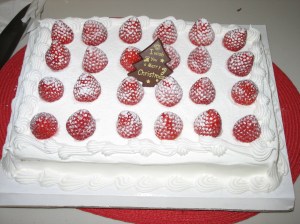
Though many Japanese do enjoy celebrating Christmas, it is vastly overshadowed by New Years which has much greater significance here. If Christmas fell at some other time of year, it might have become much bigger than it is. Devoted mainly to children, Christmas often involves decorating, gift giving and a special meal. Turkey is not usually eaten. Instead, chicken tends to be the meat of choice. In fact, many order a special meal from Kentucky Fried Chicken! I’ll bet that’s a Christmas tradition that wouldn’t go over very well in most North American homes! Japanese Christmas cake is also very different from ours. Unlike our heavy fruit cakes, it’s a delicious sponge cake with whipped cream filling and topped with fresh strawberries. Definitely delicious!

img_3029

Yokohama

Since the port of Yokohama opened in 1859, it has grown from a small village of 600 people to Japan’s second largest city with a population of over 3.5 million! From its early days of exporting Japanese silk and tea, it has become a vibrant metropolis and a major international trading port.

We spent today exploring the area surrounding Yokohama’s harbour, an easy day trip from here. I was disappointed to discover that the world’s largest ferris wheel doesn’t operate on Thursdays at this time of year but a ride in the world’s fastest elevator to the observatory on the 69th floor of the Landmark Tower, Japan’s tallest building, afforded us excellent views of the surrounding area. In addition to its role as a modern seaport, Yokohama has also become an industrial centre and since it hasn’t rained for the past few days, the air was pretty hazy. We couldn’t see very far into the distance.

img_2995 img_2991

While much of the harbour area is very modern, including a moving sidewalk that carried us from the train station to the Landmark Tower five minutes away, there are also a number of very historic buildings that are still in use. We spent a while poking through some of the interesting little shops that are img_2999now housed in one of the old brick shipping warehouses. Since coming to Japan, we’ve both read James Clavell’s novel, Gaijin, which was set in Yokohama during its very early trading days so it was easy for us to imagine what the area might have been like in those days.

We also enjoyed strolling the seafront promenade in Yamashita Park and visited the nearby Silk Museum which was very interesting.

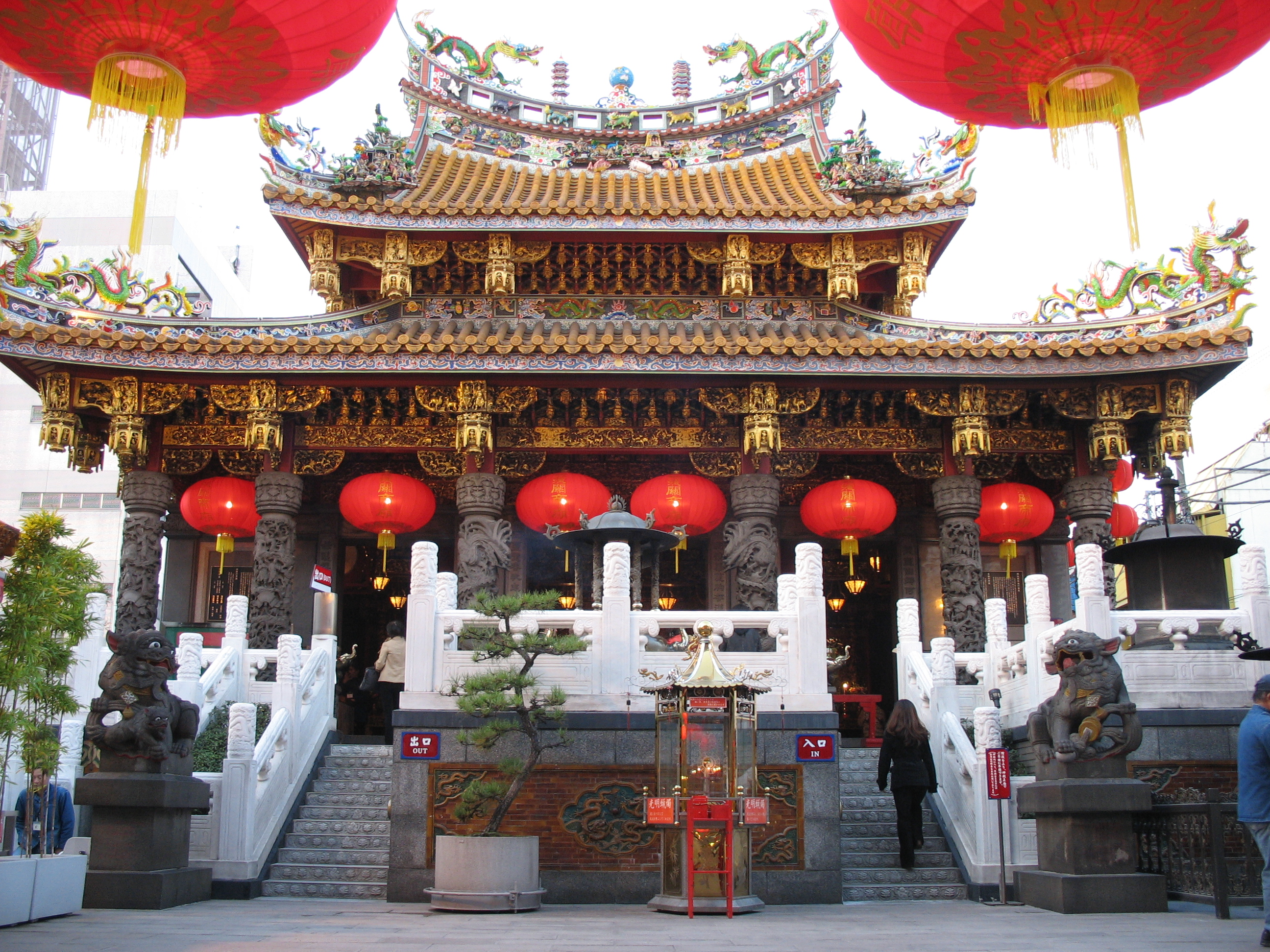
Not far from the harbour is Chinatown, one of Yokohama’s most popular tourist attractions. With its colourful facades and abundance of eating establishments, it struck us as much less genuine than Vancouver’s Chinatown or even Edmonton’s. Apart from the many restaurants, there were lots of tiny souvenir shops where practically everything seemed to have a panda motif. Kantei-byo, the very elaborate Chinese temple at the heart of the district was interesting to see, however.

img_3007

Nomi no fufu

Did you know that a female flea is always bigger than a male flea? I didn’t until this past weekend.

Compared to most Japanese women and even many of the men, I’m very tall. They’re often amazed by my size and comment on it quite openly. Fortunately, they also tell me that I’m beautiful or I might feel somewhat insulted! This weekend was no exception. Rie’s family was not only surprised by my height but by the fact that I’m taller than Richard. It was her husband, Keiji, who introduced us to the Japanese term used to describe a couple like us. Nomi no fufu literally means ‘flea couple’ and is used because of the scientific fact that female fleas are bigger than males! I suspect that I’ll be hearing it for a long time. Richard clearly loves the saying and will probably remember it long after he forgets the other Japanese words that he’s learned. Oh well, it’s better than saying that I suffer from ‘gigantism’, which is what he’s been saying for the past several months! Maybe I should start calling him Little Flea!

Onjuku adventure

We’re just back from our weekend trip to my student’s second home in Onjuku and what an adventure it was! It rained very heavily Thursday night and we woke to a wet dreary looking world on Friday morning. The forecast was for good weather over the weekend though so we hoped for the best. Sure enough, early in the afternoon shortly after we met Rie and set out the sky cleared and the sun began to shine.

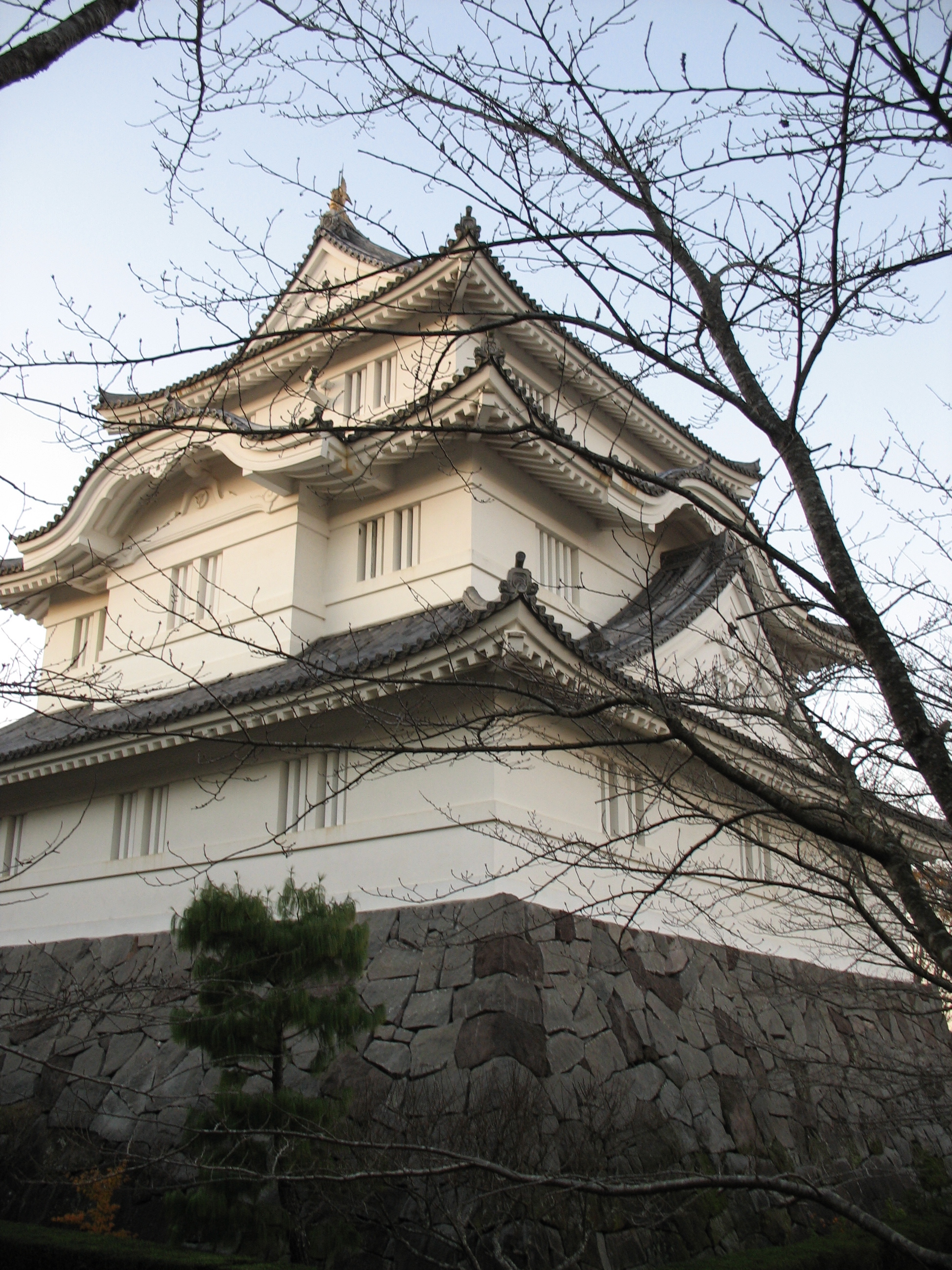
It took us four hours to travel the approximately 120 km across the Boso Peninsula to Onjuku. We explored back roads that we would never have seen from train or bus and made several stops along the way to enjoy the sights. img_2892One of our stops was at Otaki Castle which, though much smaller, is built in the same style as the castles we visited at Osaka and Himeji on our first trip to Japan. We would also have done some hiking but the riverside trail was impassible because of the heavy rainfall.

Rie’s husband, Keiji, who took the train out to Onjuku after he finished work for the day, joined us a couple of hours after our arrival and then began the first of the amazing meals that Rie prepared! Served in traditional Japanese style, dinner both days stretched out over a couple of hours and consisted of a wide variety of foods served in several small courses. Presentation is an important part of the Japanese dining experience and Rie is a very artistic person so everything came to the table looking beautiful. Dinner both days began with sashimi, slices of raw fish which Richard and I have both come to enjoy very much.

Neither of us had met Keiji before but it didn’t take us long to decide that he and Richard are two of a kind. In spite of his very limited broken English, Keiji’s sense of humour shone through and we enjoyed him thoroughly. Though he didn’t join us for most of the weekend’s activities, he was a wonderful host whenever we were at the house.

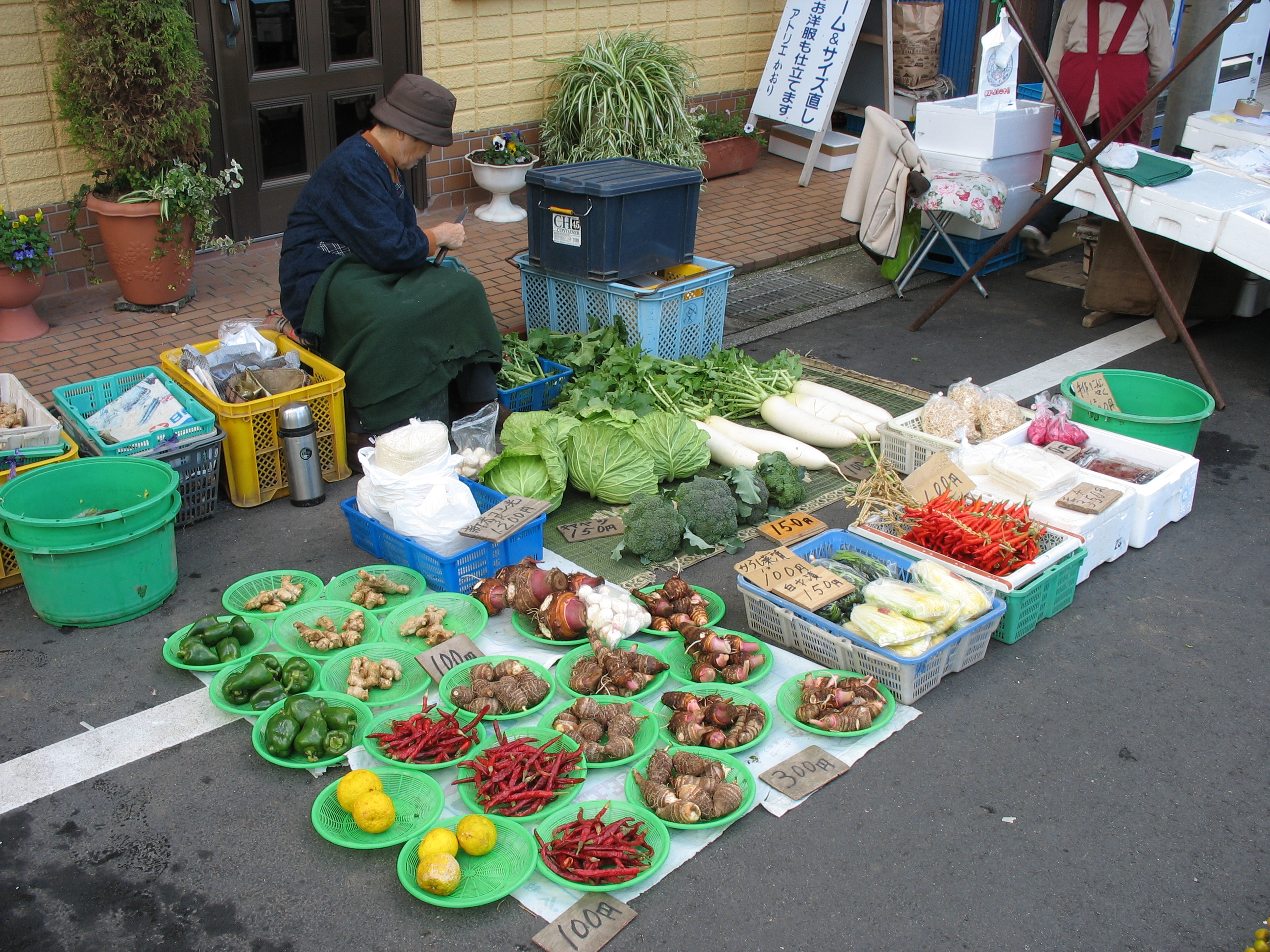
Yesterday began early with a visit to the Saturday morning market in nearby Katsuura. The street was lined with vendors selling a wide variety of seafood, produce and even flowers. It was amazing to us to see all of this happening outdoors at the end of November!

img_2894 img_2901 img_2905

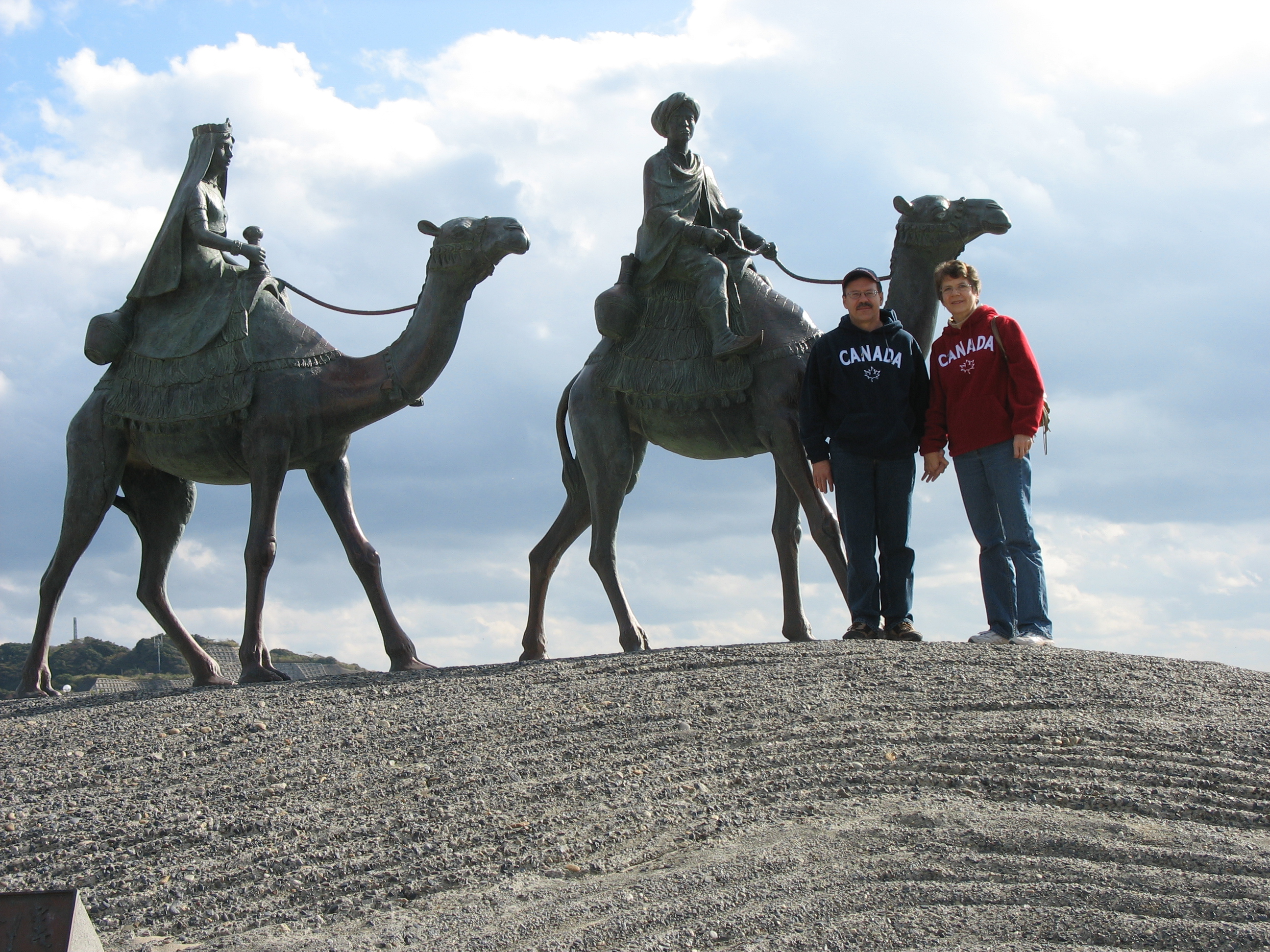
After the market, we headed back to the house for breakfast then went toimg_29091 Onjuku beach, a 2 km stretch of white sand, to see the famous statue of a prince and princess in Arabian garb riding on camels. The landmark was erected in 1969 to commemorate Tsukino-Sabaku (Moonlit Desert), a 1923 song inspired by this beautiful beach. Like many spots along the coastline this weekend, Onjuku beach was dotted with surfers.
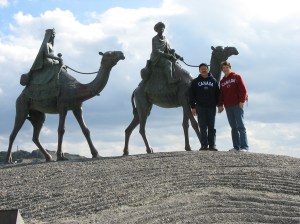
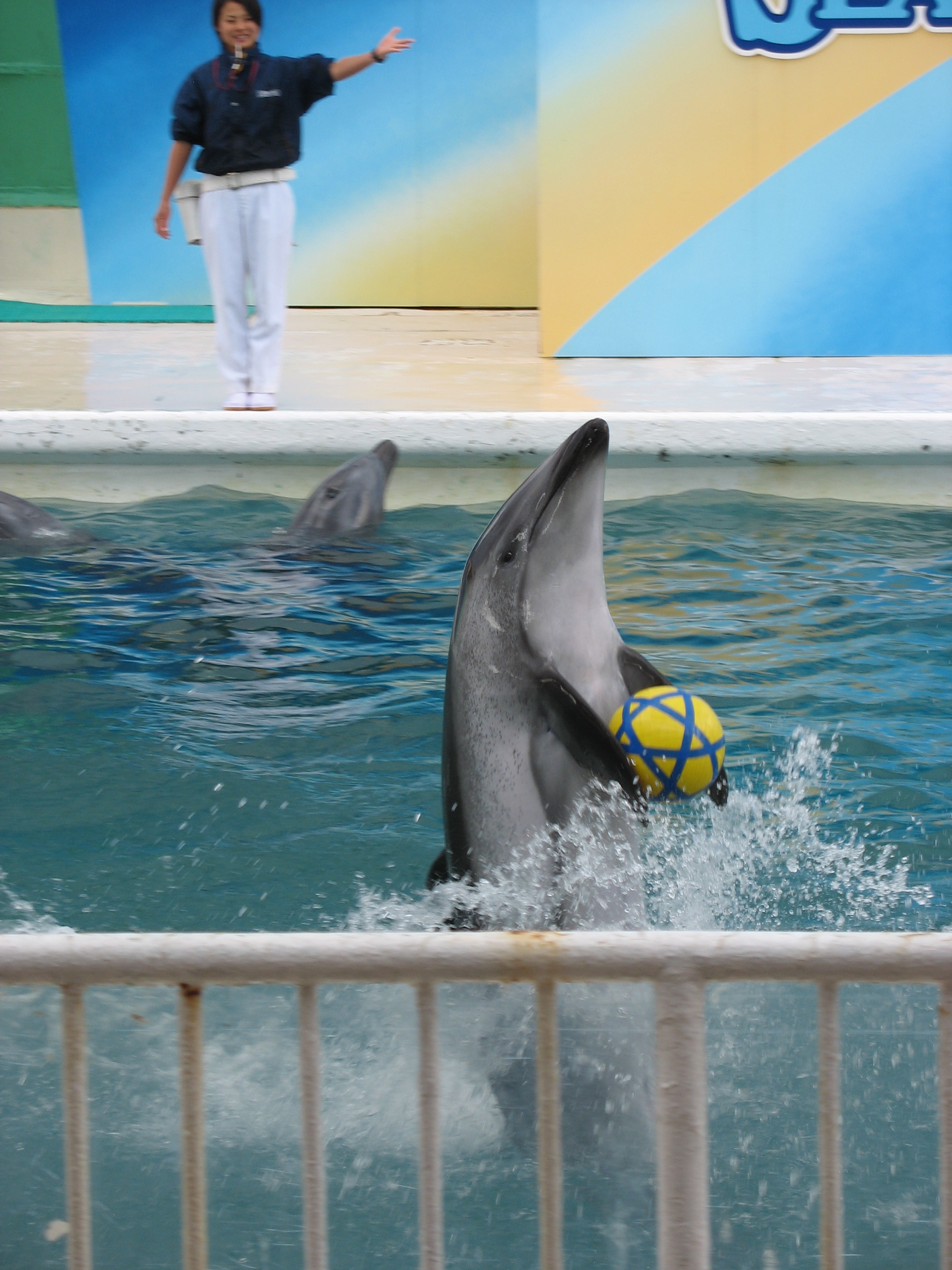
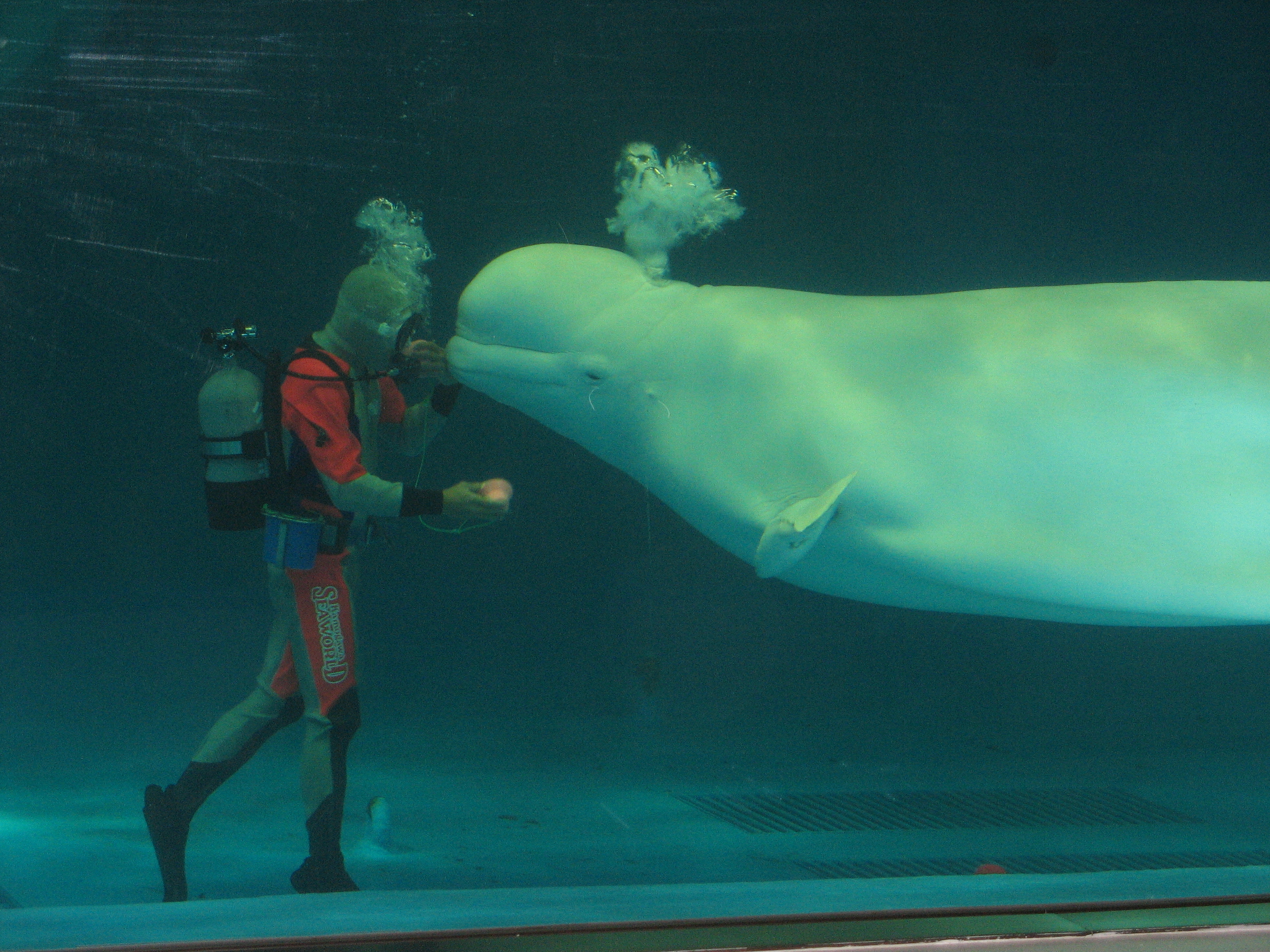
Next on the agenda was a trip to Kamogawa Sea World, one of the world’s largest facilities of it’s kind. We observed a wide variety of fish and other sea life in the aquarium and took in the dolphin, killer whale, sea lion and beluga whale performances. While we have attended similar shows in other places, we’ve never seen anything quite like the killer whale show before. The trainers entered the water with the whales and the interaction between them and the enormous animals was absolutely amazing.


img_2921 img_2941 img_2955

A stop at Tanjo-ji temple finished the day’s sightseeing. Back at the house, we were joined by the rest of Rie and Keiji’s family, their two daughters, son-in-law and three grandchildren who all stayed the night. We thoroughly enjoyed being surrounded by a family and realized that, except at church, we don’t have that experience here in Japan.

When Keiji, who has been teaching school for 38 years, retires next year, he and Rie will move to the lovely Onjuku house that they built three years ago but for now it’s their weekend getaway. After a relaxing breakfast this morning, everyone packed up and went their separate ways. Miwa, the elder unmarried daughter, joined Richard, Rie and I while Keiji took her car and headed for home. The four of us spent the day taking the scenic seaside route around the southern end of the peninsula and back up the Tokyo Bay side. It was a day of surprises. Our first stop was at Rosemary Park, a quaintimg_2974 bit of Victorian England complete with gardens and gazebos, a little church and even a replica of William Shakespeare’s birthplace! As we strolled amongst the flowers and enjoyed soft ice cream in the sunshine, we had to once again remind ourselves what time of year it is. The day was so warm that we didn’t even need jackets.
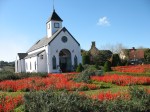
Before we left for the weekend, Rie drew me a map of the places that we’d visit and the routes we’d take. It showed us driving around the peninsula but not all the way to Nojimazaki at the very end. If there was one place that we’ve visited in Japan that I’d have chosen to return to above all others, it would have been Nojimazaki. It is such a beautiful spot and we enjoyed our stay there so very much. Imagine my surprise when we rounded a curve today and I spotted the Nojimazaki lighthouse in the distance! My amazement grew as we continued toward it and by the time the car stopped almost across the street from the hotel that we stayed in back in early July, I was pretty much in tears. Never in my life did I expect to see that spot again or to climb the 77 stairs and 14 ladder steps up the inside of that wonderful lighthouse! The icing on the cake was yet another amazing meal in a restaurant looking out over almost the same view that we had enjoyed from our hotel room.

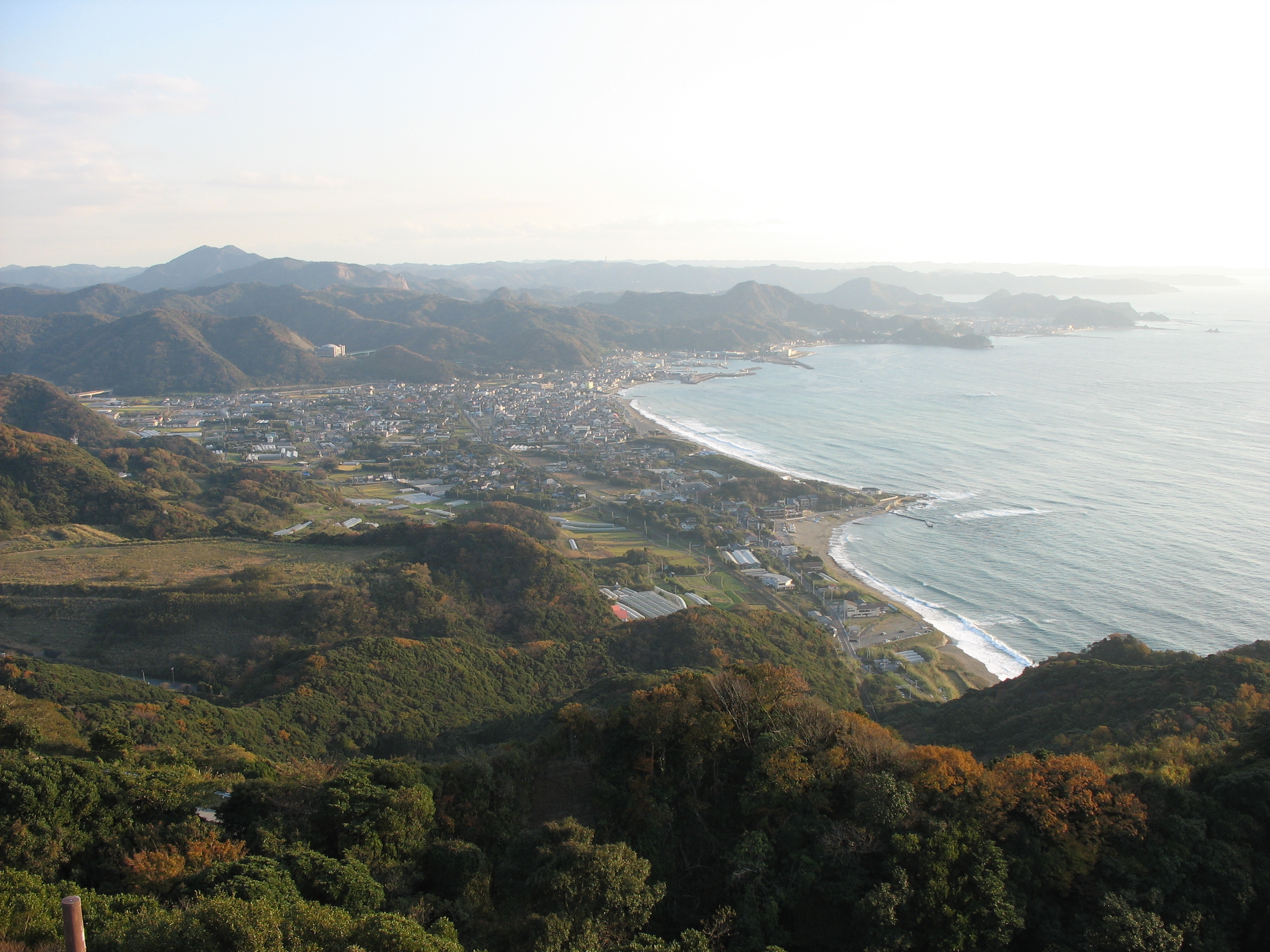
We made one more stop along the way, riding a cable car up a mountainside. Rie and Miwa, who had never been up before, had hoped to show us a giant Buddha carved into a rock face but we discovered that it was quite a hike from the top of the cable car and it was too late in the day for such a jaunt. The views from the top of the cable car were spectacular, however.

img_2988

Rie is a tremendously giving person. Not only did she refuse to let us pay for anything this weekend except the ice cream at Rosemary Park, but we learned on the way up the mountainside that she hates cable cars and was only making the trip for our sake!

We feel so very privileged to have had the opportunity to share this weekend with such special people. I think we all stepped a long way outside our comfort zones and hopefully came away better because of it. I know we most certainly did.
Shichi-go-san

In Japan, November 15 is Shichi-go-san, a traditional rite of passage celebration honouring boys who are three and five years old and girls who are three and seven. Shichi-go-san literally translates seven-five-three. I’m uncertain why these particular ages are so significant but odd numbers are considered lucky by the Japanese.

Because November 15 is not a national holiday, families often hold their Shichi-go-san celebrations on the weekend preceding that date. In fact, even though today is a Saturday this year, the celebrations have been going on for the past couple of weekends and we even saw a few families at the temple in Narita on Thursday who were clearly there for that purpose.

Little girls are usually dressed in kimono, often for the first time. At three years of age, they usually wear a padded vest called a hifu with their kimono. At seven, an obi takes the place of the simple cord used to tie the kimono. Boys look like little samurai in their traditional outfits.

Shichi-go-san begins with a visit to a temple or shrine to pray for the child’s health and good fortune. It’s also a time when formal photographs are often taken and the family usually goes out for a special meal after the celebration.  The children are given chitose-ame, long thin red and white candies.  Chitose-ame means thousand-year candy and it’s meant to signify many years of life.

This little one was very shy but her family was delighted when I asked if I could take her picture.

img_2859

World’s busiest intersection

img_2767We spent a little while in Tokyo today exploring Shibuya, a bustling, youth oriented shopping district.

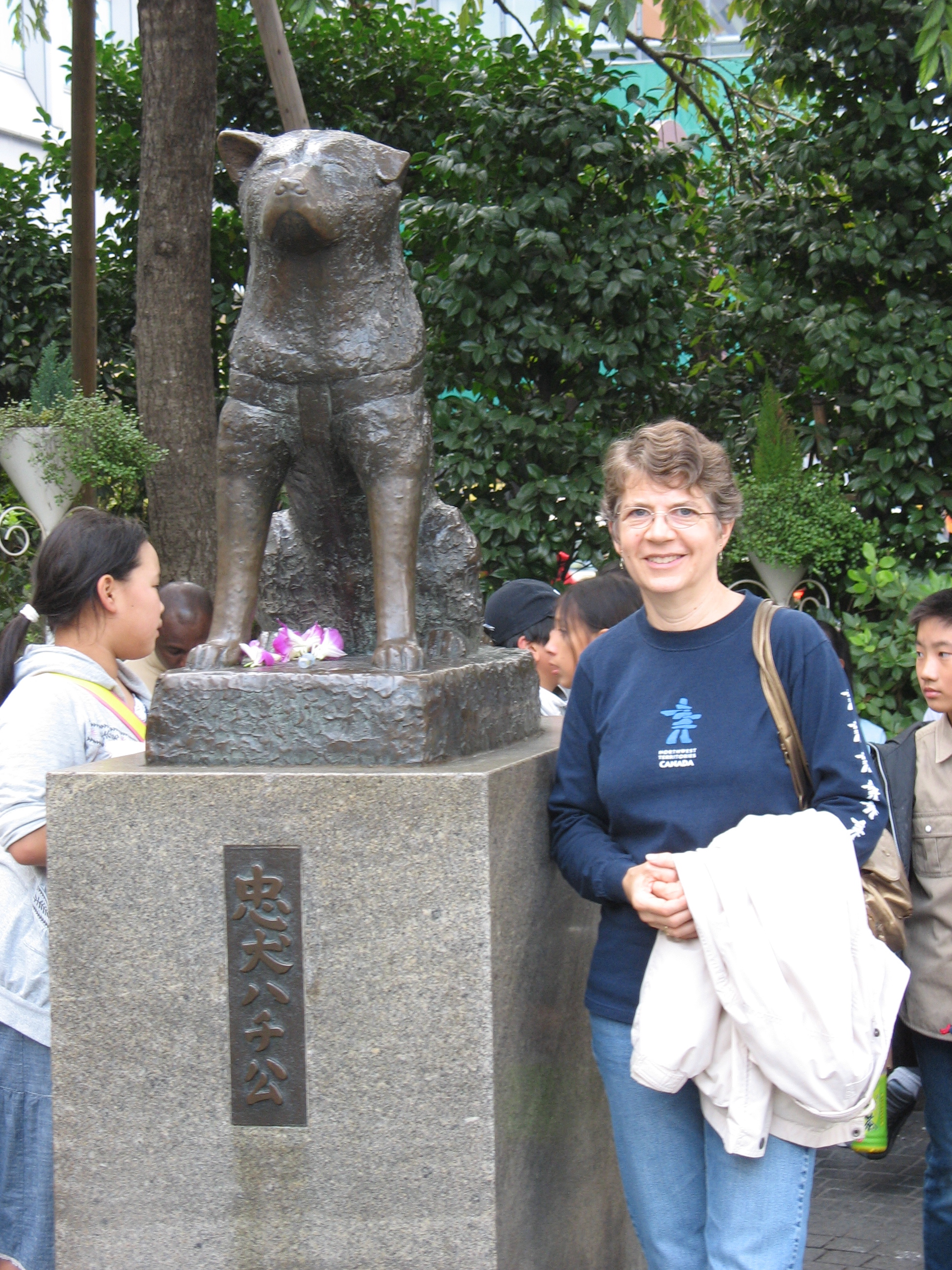
A popular meeting place in Shibuya is the statue of Hachiko, the faithful dog.  According to one of Japan’s best loved stories, a professor who lived near Shibuya station in the 1920s had an Akita dog that would accompany his master to the station every morning and await his return each night.  After his master died in 1925, Hachiko continued to come and wait at the station every day until his own death 11 years later.  The statue was later erected in memory of his faithfulness.

After visiting the statue, we crossed what is touted as the world’s busiest intersection, or at very least Japan’s busiest pedestrian crossing, and sat at the window of the second floor Starbucks that overlooks the intersection watching in amazement.  The walk light comes on every 2 minutes and 40 seconds and for about 40 seconds, a mass of humanity crosses in every direction.  By the time the light comes on the next time, that crowd has gone on it’s way and another has gathered.   Keep in mind that these pictures were taken at 2:15 on a Thursday afternoon!  What must it be like at rush hour?

img_2779

img_2785