Where does donated clothing go?

Logo by SamWhether I like to admit it or not, fall has arrived in my part of the world. Days are cooler, nights are frosty, and leaves are changing colour. The time has come for many of us to go through our closets and decide what to keep for next summer and what we won’t wear again. Bagging up those unwanted items and dropping them off at a second-hand store might be the end of them as far as we’re concerned. It might even seem like the generous thing to do, but what actually happens to all that donated clothing?

As I mentioned in a previous post, most thrift stores are only able to sell a small fraction of what is donated. The reality is that over the years I have taken many items to our local second-hand shop. I’ve seen some of them hanging on the racks, but not once have I ever seen someone in our small town wearing one of them. Where did they go?

If your gently used garment isn’t sold within as little as three or four weeks in some shops, it might end up as carpet padding, insulation, or a rag in an auto body shop. That’s not necessarily a bad thing. Recycling textiles keeps material out of landfills and incinerators and reduces the need for virgin fibres by extending the life of existing ones.

Second-hand clothes that don’t sell in Canada, Europe and the US and that don’t end up in textile recycling facilities are often exported. The US alone sends roughly 700 000 tons of used clothing overseas annually. Again, this might sound like a benevolent thing to do, but it’s the middlemen who profit most from this practice and in many developing countries, it has had a devastating impact on local clothing industries. In Kenya, for example, where second-hand imports can be sold for a fraction of the cost of new locally produced items, the textile industry has been virtually wiped out by our “generosity”. The garment industry in that country, which employed half a million workers a few decades ago, now engages only tens of thousands. In 2016, the East African Community (EAC) agreed to a complete ban on imported clothing that was supposed to go into effect in 2019, but leaders backed down and rescinded the ban under pressure from the Trump administration.

Regardless of how much extra life our cast off clothing gets in those countries, the textiles themselves usually end their life there. Most developing countries don’t yet have even basic collection and recycling programs. Often, there isn’t even municipal waste management in place. Ultimately, what is left of our donated clothing often ends up being burned or dumped in environmentally sensitive areas that are considered wasteland.

So, what can we do to be more responsible consumers?

  1. Buy less. We buy too much stuff and then want our excess to somehow be good for the world. It simply doesn’t work that way!
  2. Shop second-hand.
  3. When buying new, look for garments that contain recycled content to ensure that we create demand for recycled textiles.
  4. Avoid fast fashion. Buy better, more durable clothing.
  5. Learn to extend the life of a garment by mending or upcycling.

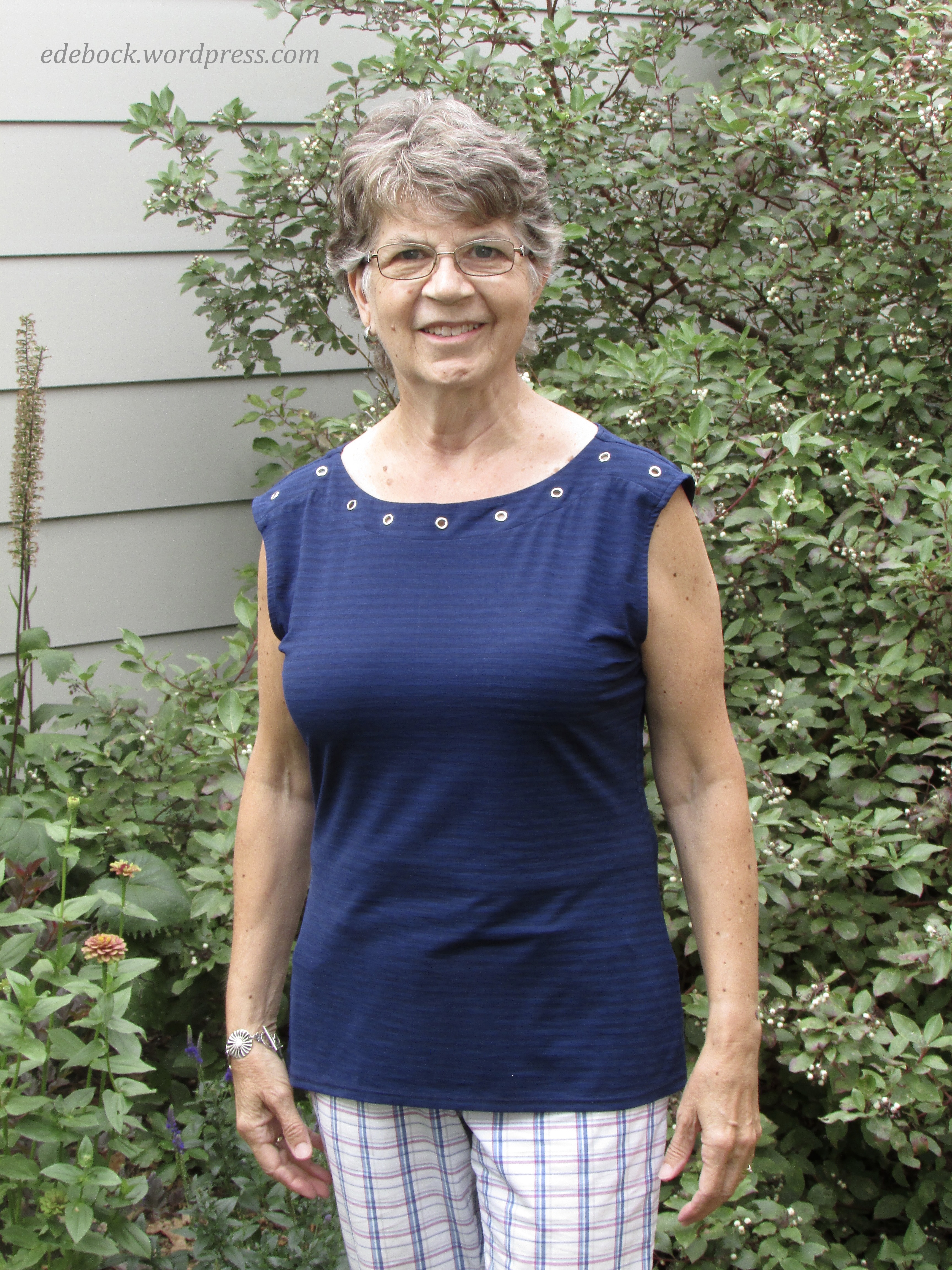
With just one week left in my Second Hand September challenge, I will admit that I’m getting tired of limiting myself to only wearing second-hand clothes, but I’m determined to make it to the end of the month! Here are a couple of the outfits that I wore this week.

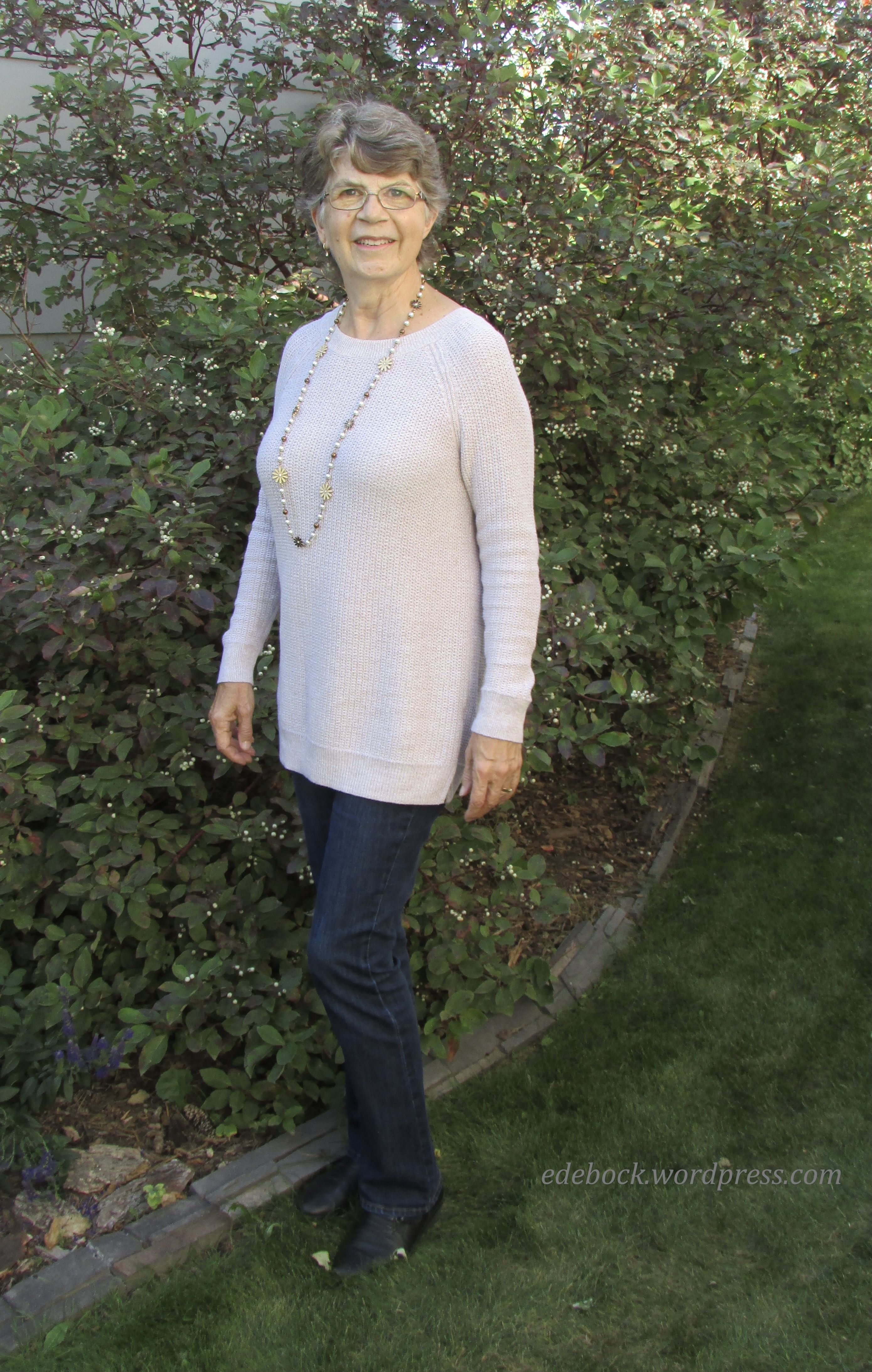
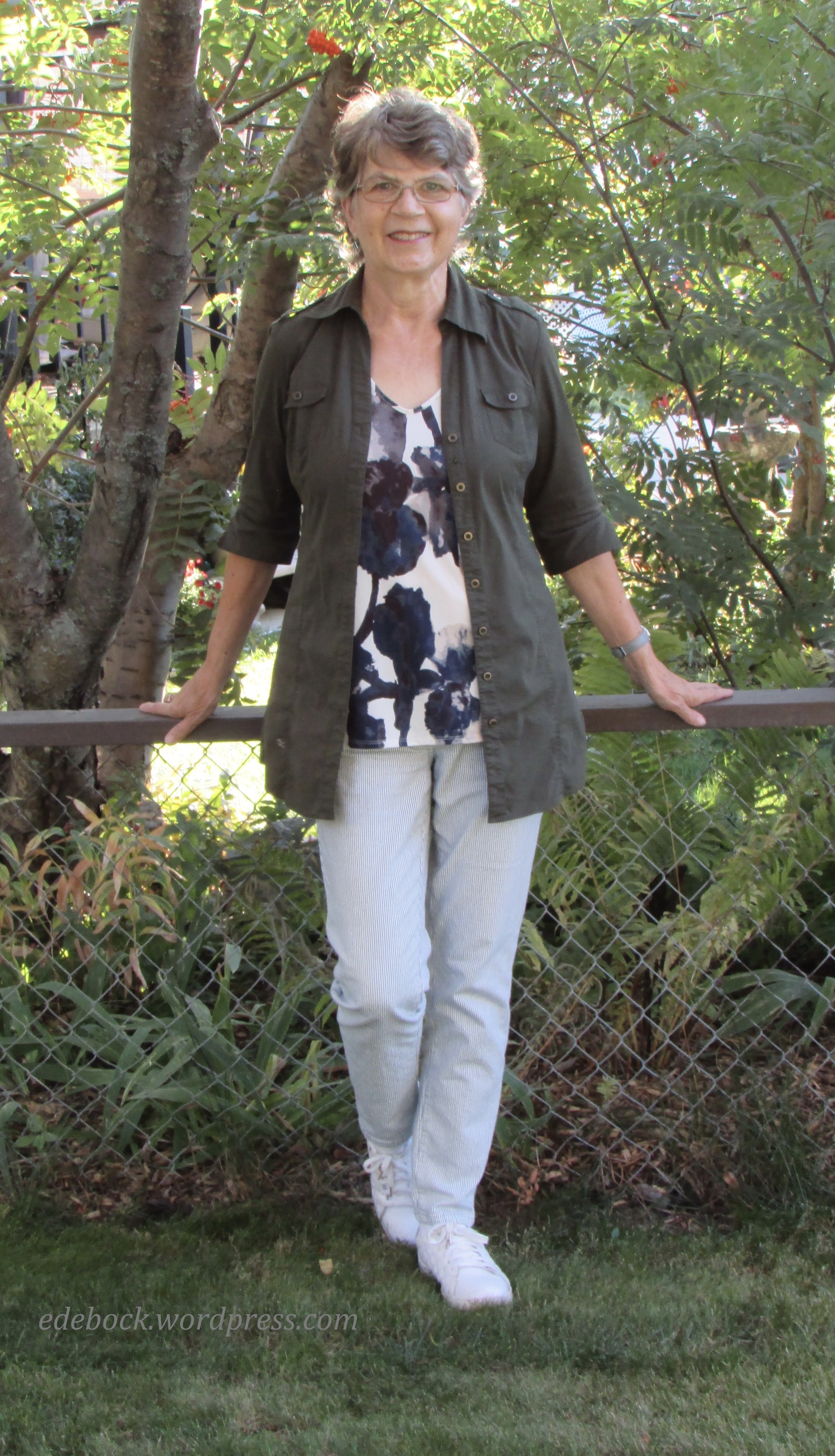
When I left for church on Sunday morning, it was too chilly to wear the sleeveless dress without something over it, so I pulled out the very versatile olive shirt that first appeared on the blog here. More than three years after finding it in our local thrift store, I still enjoy wearing it and have found it very useful this month. Even the shoes in this outfit are second-hand.

IMG_4602

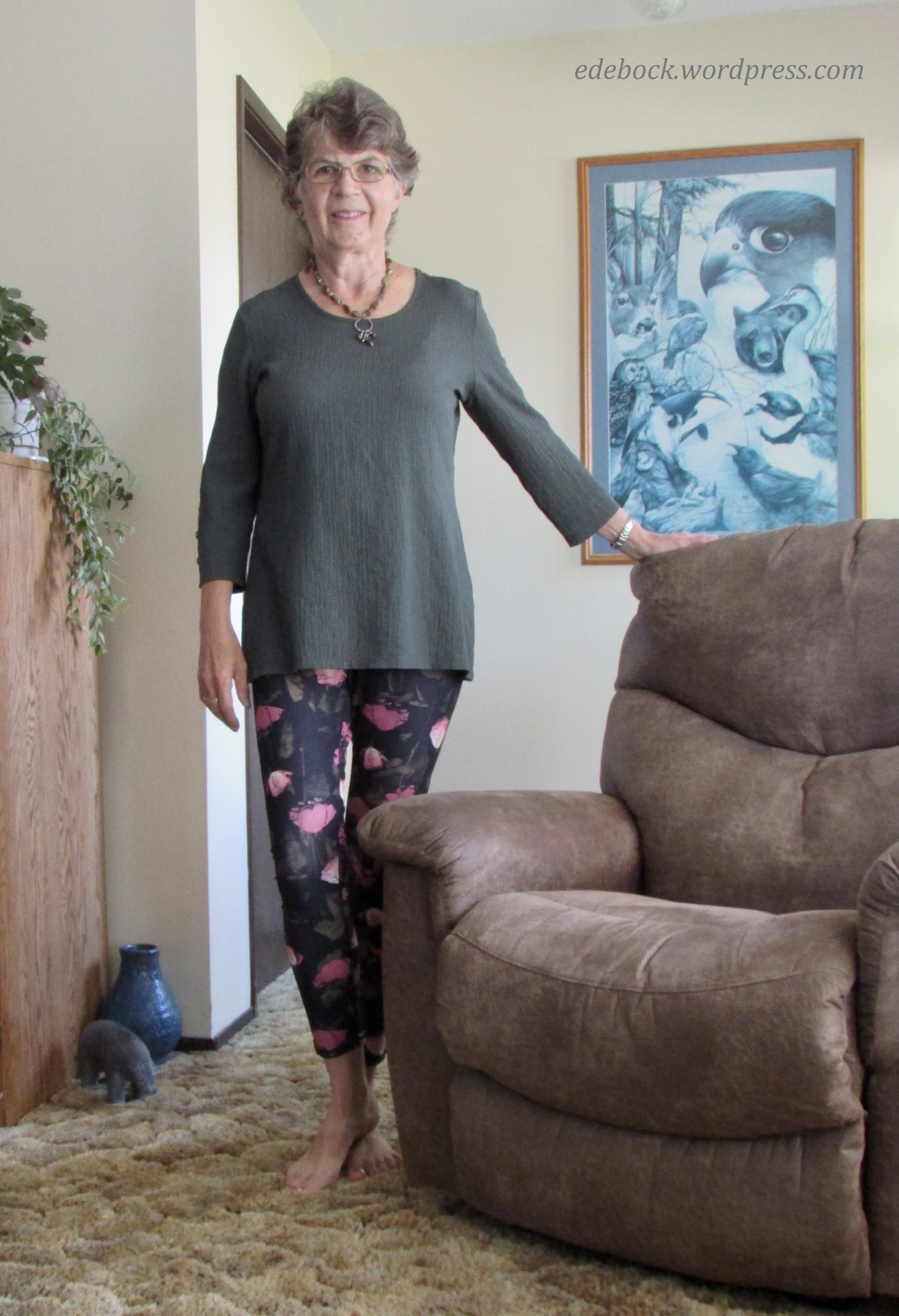
There’s that olive shirt again! The lightweight jeans that I found in one of our local second-hand stores recently look light blue or grey in the photo, but if you zoom in you can probably see that they’re actually a blue and white pinstripe. I discovered that this month’s limited wardrobe didn’t include many tops with sleeves that went well with them. When I headed off to a morning appointment, I needed a third piece over the sleeveless shell to add some warmth and finish the outfit. Thankfully, olive is a neutral colour and goes with just about everything!

Fall camping second-hand style

Logo by SamOver the past week, we spent four days camping and then company arrived shortly after we got home. That left very little time for writing a post for today, but since this is Second Hand September and I’m wearing only second-hand clothes this month, I thought I’d share a couple of the outfits that I wore while we were camping.

IMG_4499

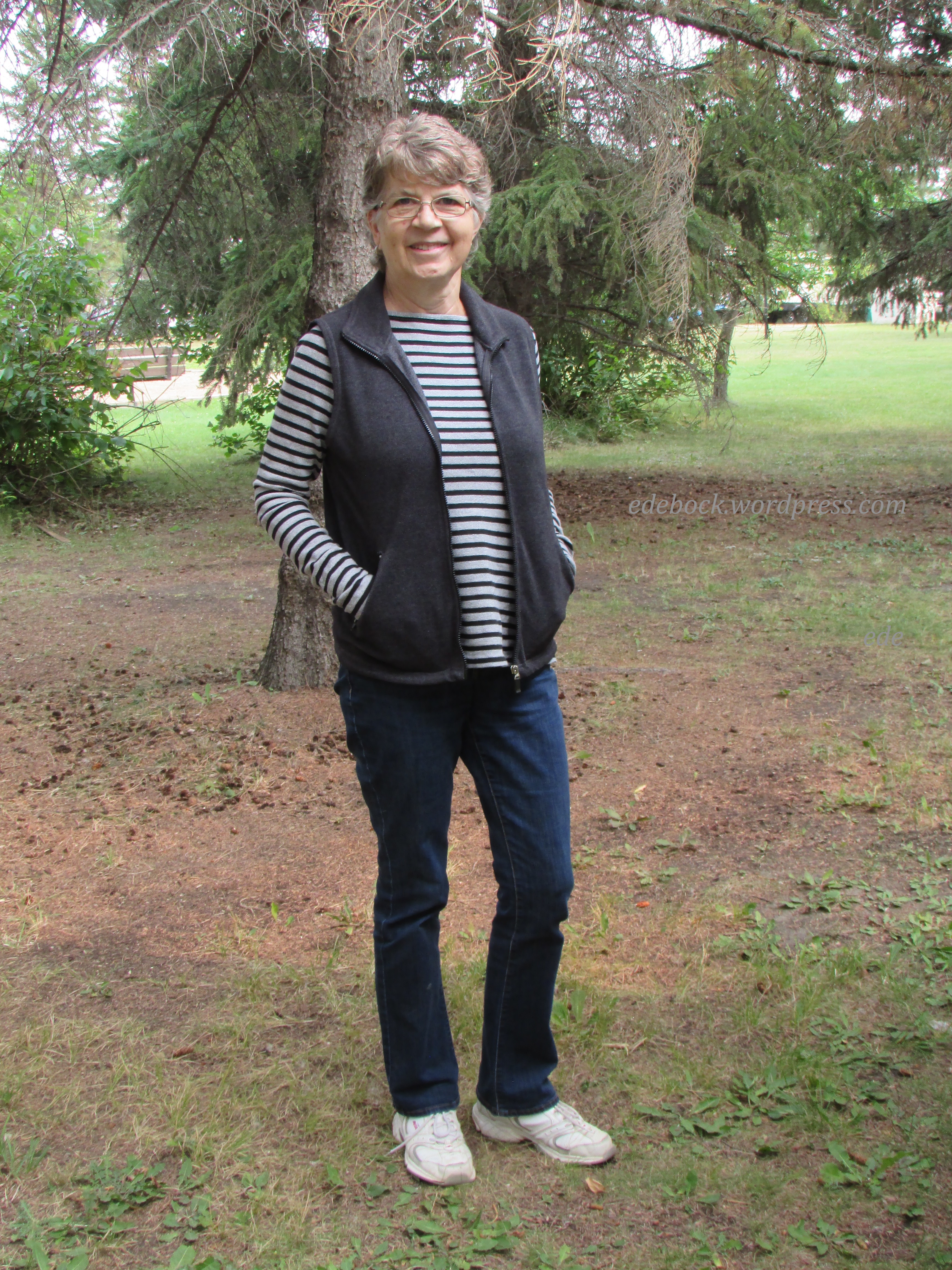
At $12, the striped boatneck sweater, purchased at Goodwill in Calgary last spring, is the most expensive thrifted item in my closet, but its light weight makes it a great layering piece on a chilly morning. It was about 10ºC (50ºF) when this photo was taken! I’ve had the fleece vest for many years and the jeans were hand-me-downs from my very generous sister-in-law. Almost new when she gave them to me because she found a pair that she liked better, they quickly became a staple in my fall/winter wardrobe.

When the temperature soared to about 25ºC (77ºF) in the afternoon, out came the summer clothes again!

IMG_4531

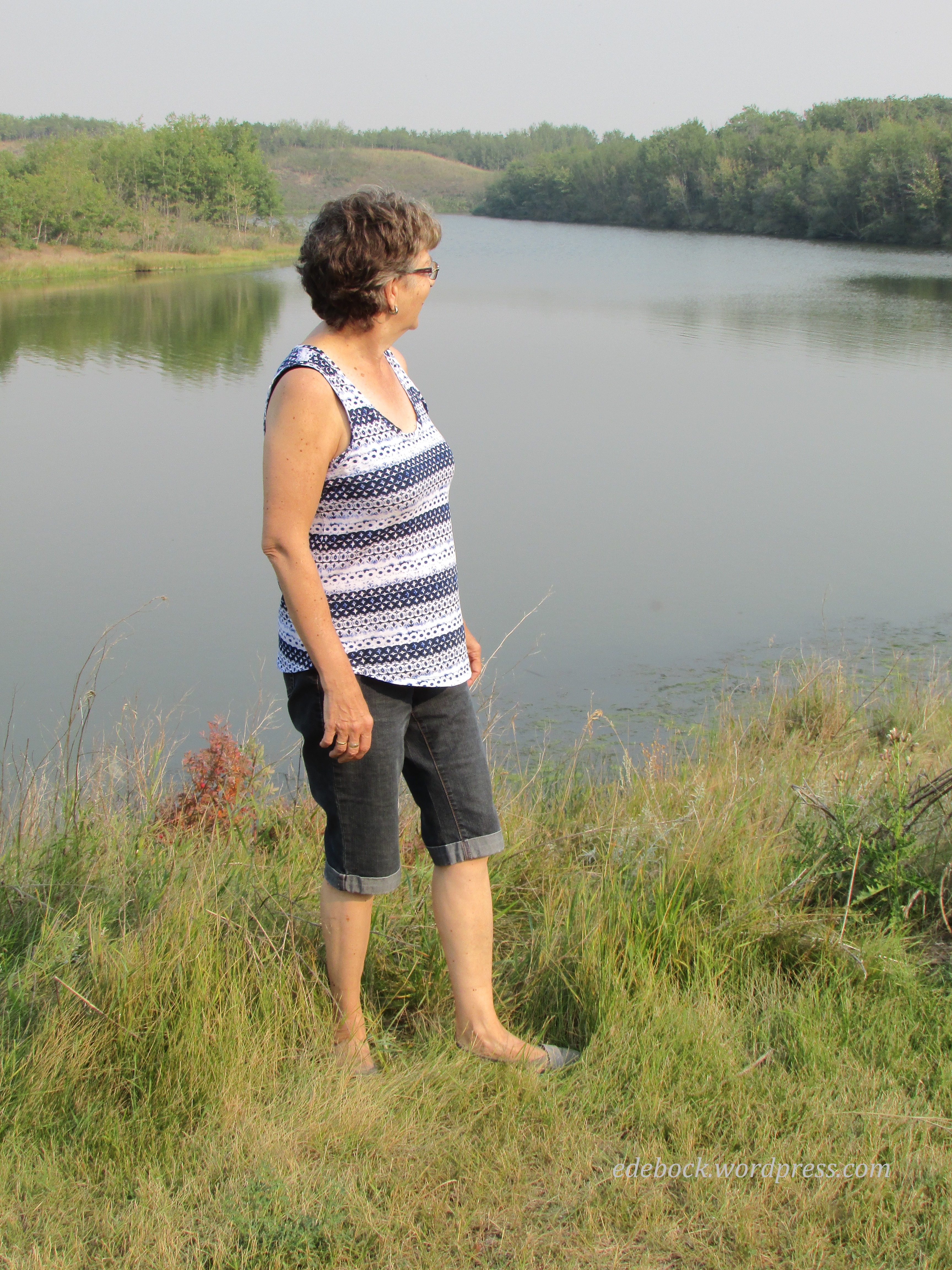
The patterned Denver Hayes tank top is a recent thrift store find, but I’ve had the pants for several years. Too long to be called shorts, they’re shorter than most of my capris. They’re actually a flattering length though because they cover my less than attractive knees and end at a narrow part of my leg. Fashion isn’t a high priority when I’m camping, but a girl always likes to look nice, doesn’t she?

6 myths about second-hand shopping busted!

Over a week into my Second Hand September challenge it’s going well. Today I thought I’d look at some of the most common myths or misconceptions about second-hand shopping.

1.  Thrift stores are only for poor people. 

In reality, most thrift stores exist to raise money for local charities and organizations, not to cater to a certain economic class. Many of us who buy second-hand can afford to buy new, but choose to reuse for a variety of reasons. Shopping second-hand is a sustainable practice that helps preserve resources and cuts waste by keeping usable clothing out of the landfill. It’s also fun; a bit like going on a treasure hunt!

Some argue that when those of us who can afford to buy new shop second-hand, we are taking from those in need. If you’ve ever had the opportunity to look behind the scenes at a thrift store, you know that that’s not true. There is definitely more than enough for everyone! Most thrift stores are only able to sell a small percentage of what is donated. The excess is often sent to women’s shelters, shipped abroad to be re-sold in third world countries (which is not necessarily a good thing… perhaps a topic for a future blog post), cut up and sold as industrial rags, or sent to textile recycling facilities where they are reprocessed into other useful products.

2.  Thrift stores are dirty. 

They may not be able to afford the nicest spaces with the best lighting and may not have fancy window displays, but well-run second-hand stores, like other businesses, try to keep their premises clean and their inventory presentable. Some people think that because the clothes are used, they must be dirty, but that’s generally a false assumption. Most clothing is washed before it’s donated and some second-hand stores have laundry facilities on-site to deal with those items haven’t been. Personally, however, I always wash second-hand items before I wear them because I don’t know where they’ve been and how they’ve been handled. Since I prefer unscented laundry detergent, I also like to remove any odours that might linger.

3.  Second-hand stores are disorganized. 

While some may be more difficult to navigate than others, most second-hand stores are organized in a similar manner to other shops with separate areas for men’s, women’s, and children’s clothing. Within each category, clothes are usually separated by type (tops, pants, dresses, etc) and further arranged according to size.

4.  Second-hand stores only sell cheap, low-end brands. 

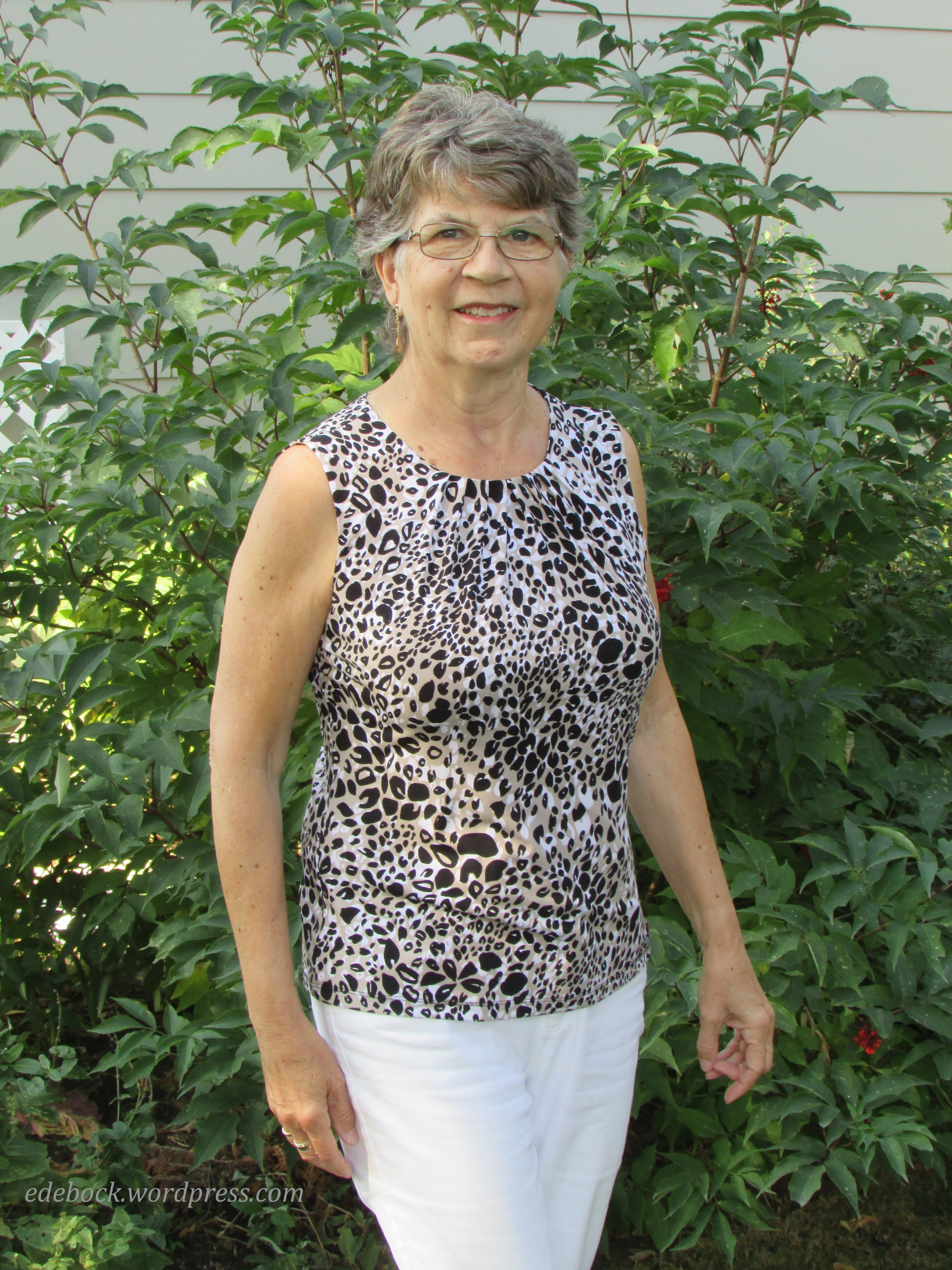
If you take the time to hunt carefully, you can sometimes find name-brand, designer, or even luxury goods in thrift stores. One of my most recent finds was this animal print top from Calvin Klein.

IMG_4474

If high-end fashion is what you’re looking for though, you might want to check out consignment stores. Prices are generally higher and selection smaller, but they tend to be very selective in what they accept for sale.

5.  Clothes sold in second-hand stores are in bad shape. 

Clothes are sorted and inspected for quality before going onto the shelves. Those that are badly worn are disposed of, cut up and sold as rags, or recycled. Most of the clothing that reaches the sales floor has already stood the test of time. Any shrinkage or fading that might occur has already happened. Occasionally, however, brand new items are donated.

IMG_4492

The top I’m wearing in this picture still had the original tags on it when I bought it! It’s from Laura, one of my favourite Canadian women’s fashion brands. If memory serves me correctly, the original price was $69 and I bought it for less than $5!

6.  Clothes in second-hand stores are out of style. 

Thrift stores carry a mix of old and new and a wide variety of styles all in one place. You can easily go modern, retro, or vintage! They’re a great place to find pieces that fit your personal style rather than what the fashion industry dictates as on-trend for a particular season. They’re also a great source of timeless pieces that form the backbone of a good wardrobe.

Logo by Sam

So, if you’ve been averse to shopping for second-hand clothing for any of these reasons, perhaps it’s time to rethink that position and give it a try. Shopping second-hand helps support charitable causes, is good for the environment, and can save you a ton of money!

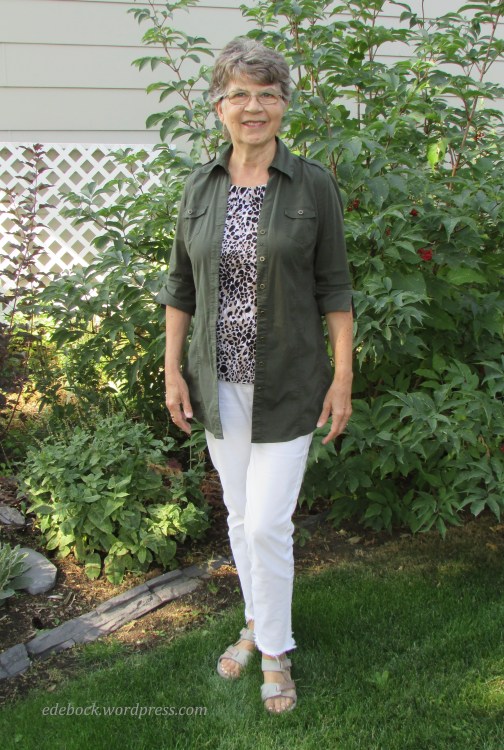
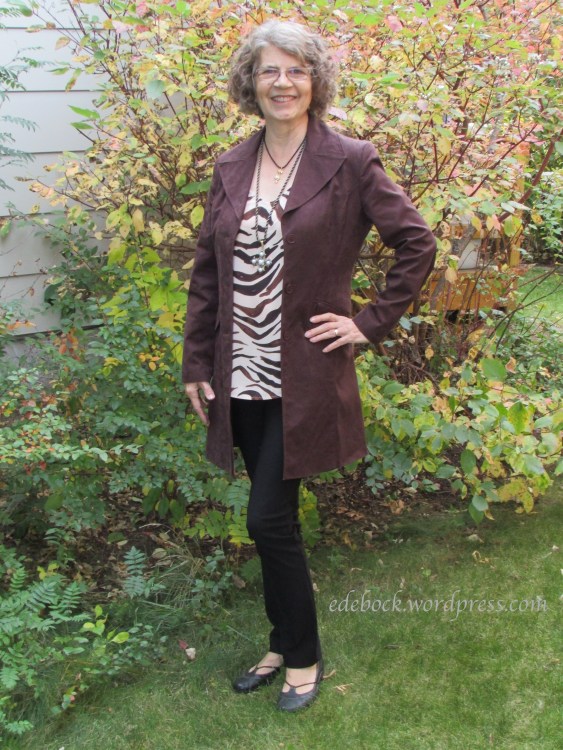
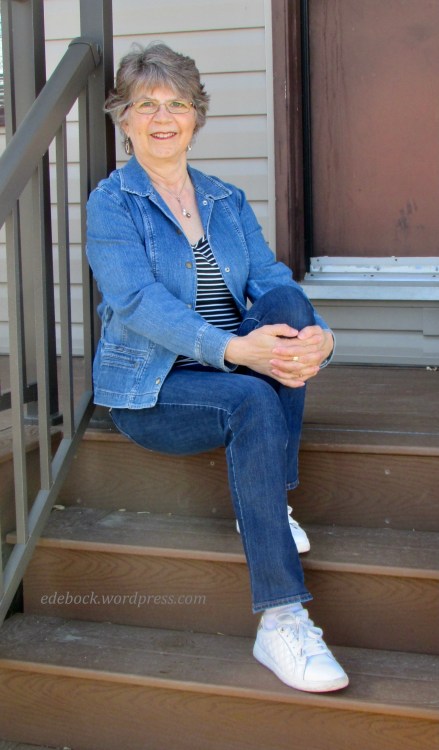
Here are two second-hand outfits that I wore this week that included the tops shown above. As you can see, the white jeans are getting lots of use this month, but it’s also been warm enough for shorts and capris. I’m hanging onto the last days of summer for as long as I can!

Second Hand September

Logo by SamThe fashion industry’s carbon footprint is enormous and has grown even more apparent with the rapid rise of fast fashion over the past few years. It now accounts for more carbon emissions globally than those emitted by all international flights and maritime shipping combined. In addition, approximately 10 million tons of clothes are sent to landfills every year. Second Hand September, a campaign introduced by Oxfam in 2019, has inspired thousands of people in the UK to begin thinking more sustainably by buying only second-hand clothes during the month of September. 

This year, I’ve decided to try taking Second Hand September one step further. I’m challenging myself to wear only second-hand clothing for the entire month! 

I’m going to follow the same rules as I did for last November’s “six Items or less challenge”. Underwear, socks, and pyjamas will not be included. I always purchase those items new. Outerwear, footwear, and accessories will also be exempt. Though I do have second-hand items in each of those categories and will try to make good use of them throughout the month, I won’t restrict myself only to those. 

Though my closet contains many more than six second-hand items, I suspect that this challenge might actually be the more difficult of the two. In selecting six items to wear for 30 days, I was able to be very intentional about choosing a colour palette that could easily be mixed and matched to create many different looks, pieces that could be dressed up or down, and pieces that worked well for layering. This time, I find myself working with a much more random mix of items. Most of those are quite casual and I have at least two events this month, including a concert tomorrow evening, that might require a bit of polish. I’ll also have church every Sunday. September is a shoulder season here in Canada and the weather throughout the month will likely range from hot and dry to chilly and wet. To make this work, I’ll likely be pulling second-hand pieces from both my summer and winter wardrobes.   

Have I bitten off more than I can chew? Only time will tell. Throughout the month, I’ll be sharing my experience and showing you some of the outfits that I create with my Second Hand September wardrobe, so stay tuned! 

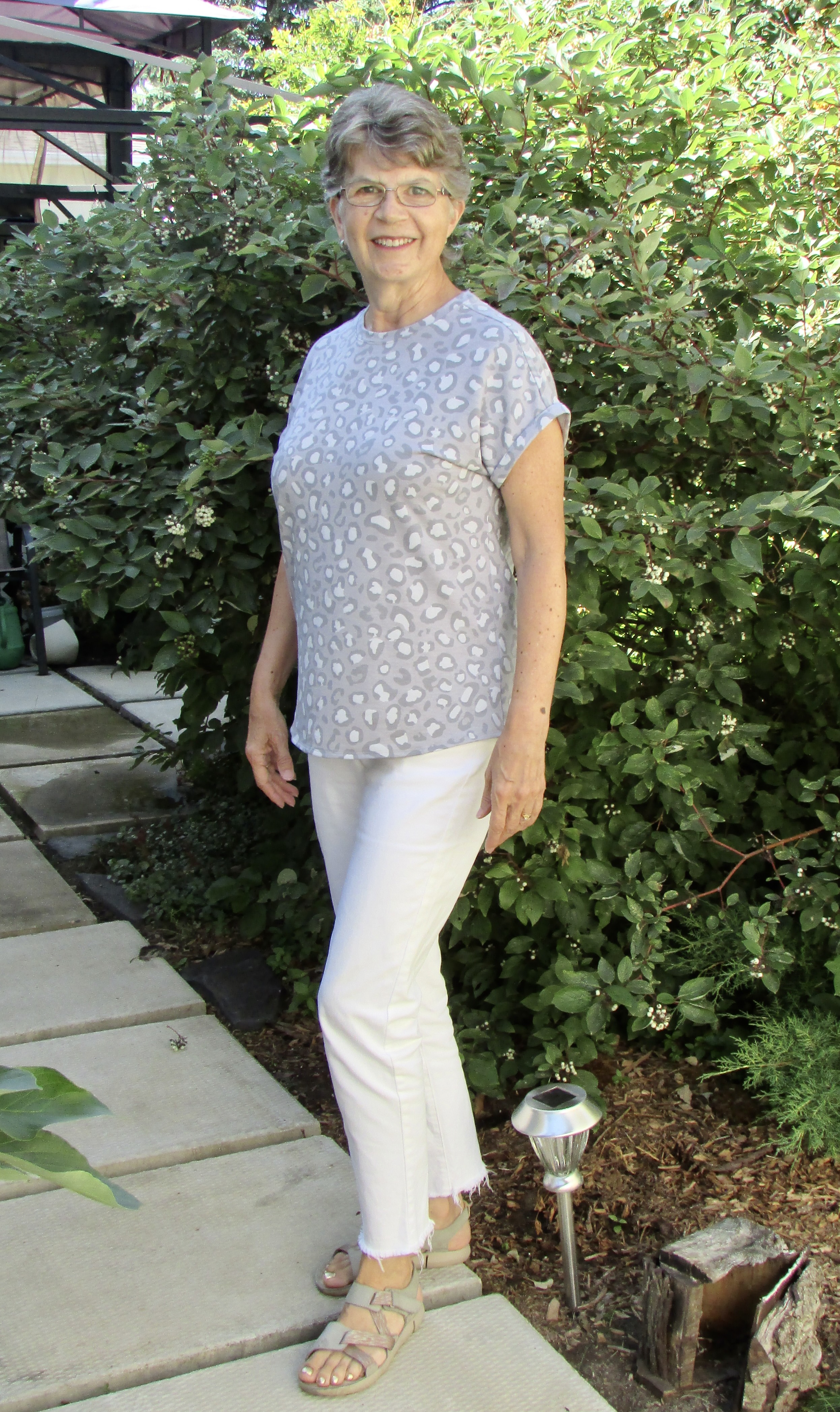
To start things off, here’s what I wore yesterday for the first day of the challenge. I think it has a coastal grandmother feel to it. 

IMG_4440

I’ve had the white frayed hem jeans for three years. They first appeared on the blog here. Thankfully, the archaic “don’t wear white after Labour Day” rule has long been abandoned and while I don’t wear these jeans in the depth of our Canadian winter, I’ll certainly continue wearing them throughout September. The Clarks sandals were a lucky find earlier this summer and the loose and comfortable light grey animal print tee is a new-to-me acquisition. Thanks to regular sales at our local thrift stores, the entire outfit, cost me less than $10!

In closing, I would be remiss not to acknowledge those of you who responded to last week’s post asking for your input about what you’d like to see on the blog. I will be working at incorporating some of your ideas into future posts. 


What do you want to read?

Logo by SamA lot of the fashion blogs that I follow are writing about fall already and, of course, fall fashions have been in the stores for awhile, but I’m not quite ready for a change of seasons yet. Our summers are much too short and our winters too long. I always like to hang onto the last days of summer for as long as I can before I think about making that inevitable seasonal switch.

I am, of course, thinking ahead to topics for future blog posts though and today I thought I’d ask for your input. When I introduced Fashion Friday back in the spring of 2016, I wanted it to be more than just a “look at what I’m wearing today” feature. That seems terribly superficial and my closet wouldn’t sustain something like that for very long anyway. I wanted to present content with a little more substance than that. Many fashion blogs have become what might better be referred to as “shopping blogs”, but I have never been interested in encouraging that level of consumerism nor am I into blogging as a source of income. My intention was to be inspiring and to explore various aspects of personal appearance and how what we wear affects our daily lives. As time went by, I also became interested in topics related to ethics and sustainability in the fashion industry and have written a number of posts along those lines.

Those are some of my guiding ideas, but I’m also interested in knowing what you, my readers, would like to read. Do you want to know what’s on trend? Do you prefer instructional “how to” posts… how to put together outfits in new and interesting ways, how to dress different body types, how to dress on a budget? Are you interested in what’s going on in the fashion industry? Are there specific fashion related questions that you’d like me to try to answer. I have no formal fashion training, but I’ll do my best to search out answers. Where else do you look for fashion inspiration? Do you read other fashion blogs? If so, which ones are your favourites? Why? What do you like about them?

Of course, Following Augustine is more than just a fashion blog, so in addition to your thoughts and ideas about what I might write about on Fridays, I’m open to suggestions for the rest of the week as well. Whether you respond directly on the blog or prefer to comment on Facebook, whether you’ve ever left a comment before or not, please let me know your thoughts. A blog is nothing without its readers!

template, mockup, fall, blank, screen happy thanksgiving

Made in Canada?

Logo by SamThose of us who live in small towns in particular are used to hearing the “shop local” mantra, but buying affordable domestically made clothing has never been more challenging. As of 2019, the majority of clothing purchased in Canada was imported from China, Bangladesh, Vietnam, and Cambodia, countries where workers’ rights are often limited or non-existent. Many proudly Canadian brands including Roots, Lululemon and Joe Fresh design their clothing in Canada, but the majority is actually produced elsewhere. The situation is similar for those of you who shop in the US.

As one who attempts to shop ethically, I was delighted to purchase three items recently that boast “Made in Canada” labels. Delighted, that is, until I discovered that even those labels can be deceptive. According to Canadian law, designers can legally use that term as long as the last substantial transformation of the garment occurs in Canada and a minimum of 51% of the cost of its creation is incurred in this country. Some items are partially assembled cheaply in Asian factories and then imported to Canada where finishing details and those all-important “Made in Canada” labels are added. Then, of course, there’s also the question of where the fabric and notions were produced, but that’s another rabbit trail that I haven’t managed to go down yet.

In spite of knowing that they may not have been 100% produced in Canada after all, I’m quite delighted with my recent purchases, two tops and a dress. One of the tops was thrifted which is, of course, an ethical way to shop regardless of where the item originated, but the other pieces were new.

IMG_4348 2

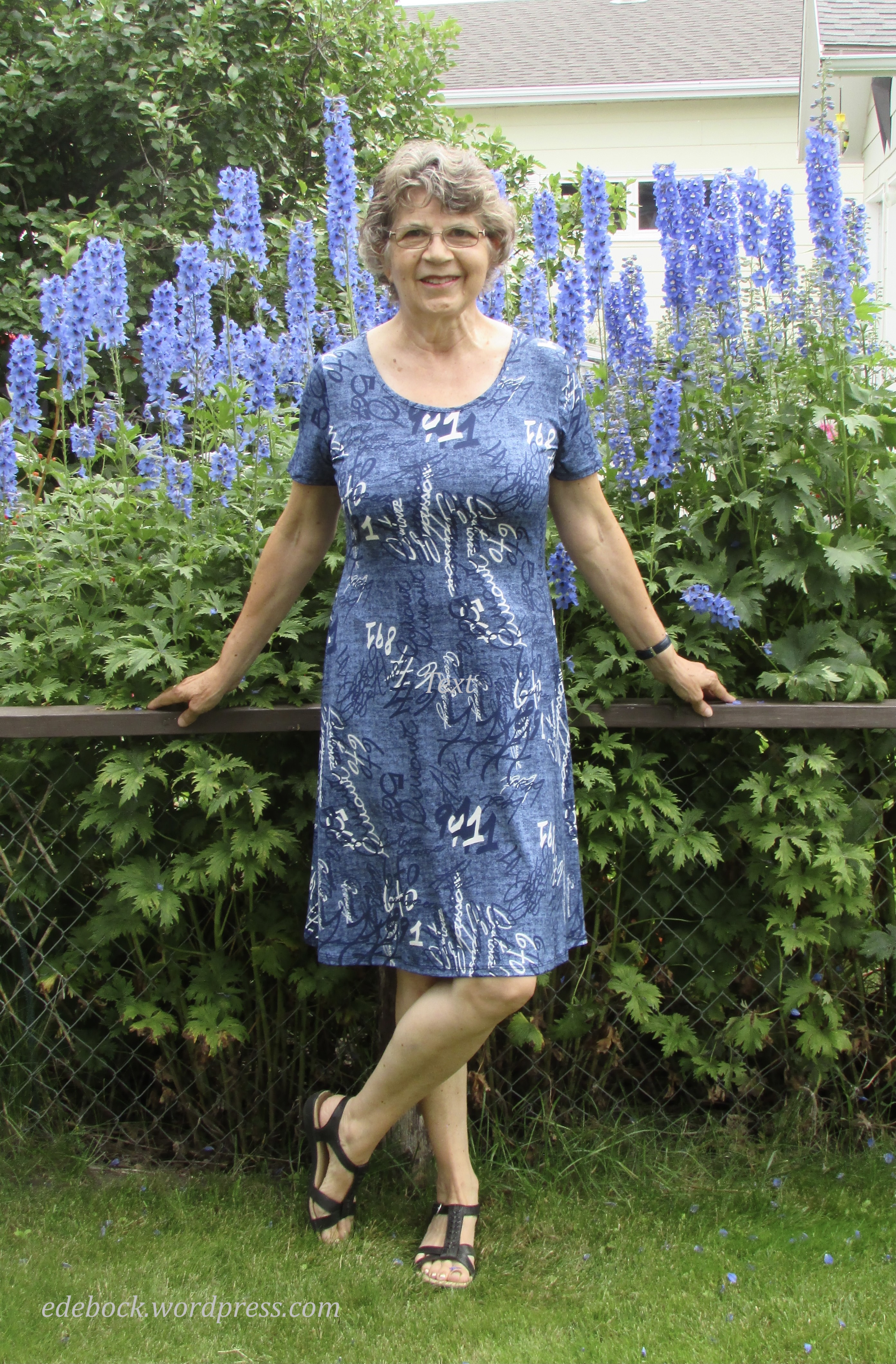
The dress was totally an impulse buy. It caught my eye as soon as I entered the store, but I didn’t really need another new summer dress. After all, I’d just bought this one a few weeks earlier and had only worn it a couple of times. I looked at everything else in the store, but my eye kept going back to the dress, so I finally decided that I had to try it on. I do my best to be a mindful shopper, but once in awhile an impulse buy just has to happen!

IMG_4359

The dress is as comfortable as a favourite t-shirt and as you can see, it’s easy to dress up or down. The lightweight polyester knit is machine washable and will hardly take up any space in a suitcase when we finally decide to fly again.

IMG_4366

The beautiful floral backdrop is our neighbour’s. She’s an amazing gardener and we thoroughly enjoy the results of her labour! Thank you, Connie!

The art of aging gracefully

Since I spent much of the past week camping and yesterday participating in a senior’s golf tournament, I don’t have a regular Fashion Friday post for today. Instead, I’m going to share some words of wisdom from Donna Ashworth’s book, To The Women: words to live by

Think about it, you have EARNED this face.
Every line, a laugh shared.
Every wrinkle, a year survived.
Every age spot, a day that the sun shone on you.
Some women believe that as they age, they LOSE their looks. Oh my friends how wrong this is.
A beautiful young women is a happy accident of nature but a beautiful older woman?
She is a work of art.
The Japanese have a practice whereby they fill any broken objects with gold, believing that something which is broken has earned its beauty and should be celebrated and decorated rather than discarded.
I feel this way about women.
It took a long time to find out who you really truly are. A long time. The acceptance that old age brings is freeing. It brings with it peace and happiness.
Everyone knows, happiness looks good on us all.
Your body has been changing since the day you were born and will continue till the day you depart. Ride with it, accept it, embrace it. Be amazed by it.
Allow your face to represent your life, your stories, your joys.
Why choose to be an older woman fervently chasing youth, when you could be that older women who knows what she is worth and has earned every minute of her hard-won self-acceptance.
The trick with ageing successfully my friend, is to pay as little attention to it as possible.

img_1445_3

I’ve shared this photo before, but it’s one of my favourites from our time in China. I thought she was beautiful when I first saw her and I still do. I wish I could have spoken to her but language was a barrier. I have no doubt, however, that the well-earned lines on her face tell a story… a story of hardship, a story of survival, but hopefully also a story with some happiness in it. As we age, may our faces also tell our stories with grace and self-acceptance.


Something new

Logo by SamHappy Canada Day! 🇨🇦

As we gradually emerge from the pandemic, I’ve finally been doing some shopping! Regardless of what the authorities tell us, I don’t believe that Covid is completely behind us yet, but we are moving forward with caution.

One of the first things that I needed to do was shop for new bras. I absolutely hate bra shopping! I always have, but while we were in the city for a church conference a couple of weeks ago, I managed to fit in a bit of shopping and I got the deed done. It was gruelling, but I came away with three new bras that fit me well. But enough about that!

IMG_4206 2

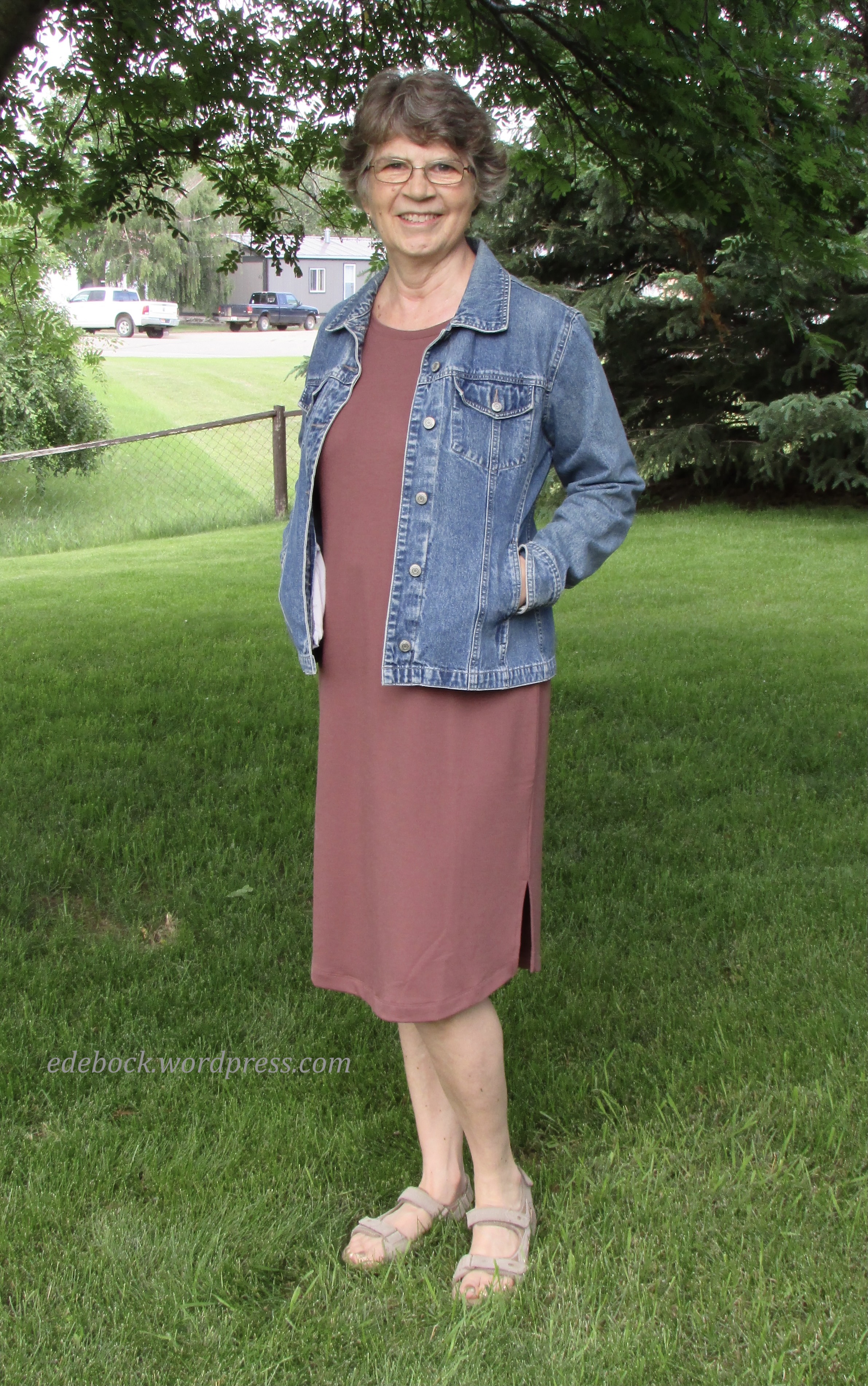
I also bought this, a simple cap sleeve crew neck t-shirt dress, something casual but a little bit dressy for summer. I often wear a medium, but in this case I chose a large because the medium was too clingy and showed off the jiggly bits that I’d rather keep hidden.

When I first saw it online, I thought the colour was a warm brown. The ad called it Marron which my Spanish lessons have taught me means brown, but it really isn’t. It’s somewhere between brown and maroon, a colour that I’m calling smoky rose because I have a lipstick by that name that’s almost exactly the same colour.

IMG_4228

I’ve always thought that it must be fun to be one of those people who name lipstick, nail polish, or paint colours! Pink is never just pink, it’s Blushed, Heartthrob, or Pink Giggles. Red might be Love is On or Cherries in the Snow and brown is Iced Mocha or Choco-Liscious. Some of them even sound good enough to eat! But enough of that. Back to shopping!

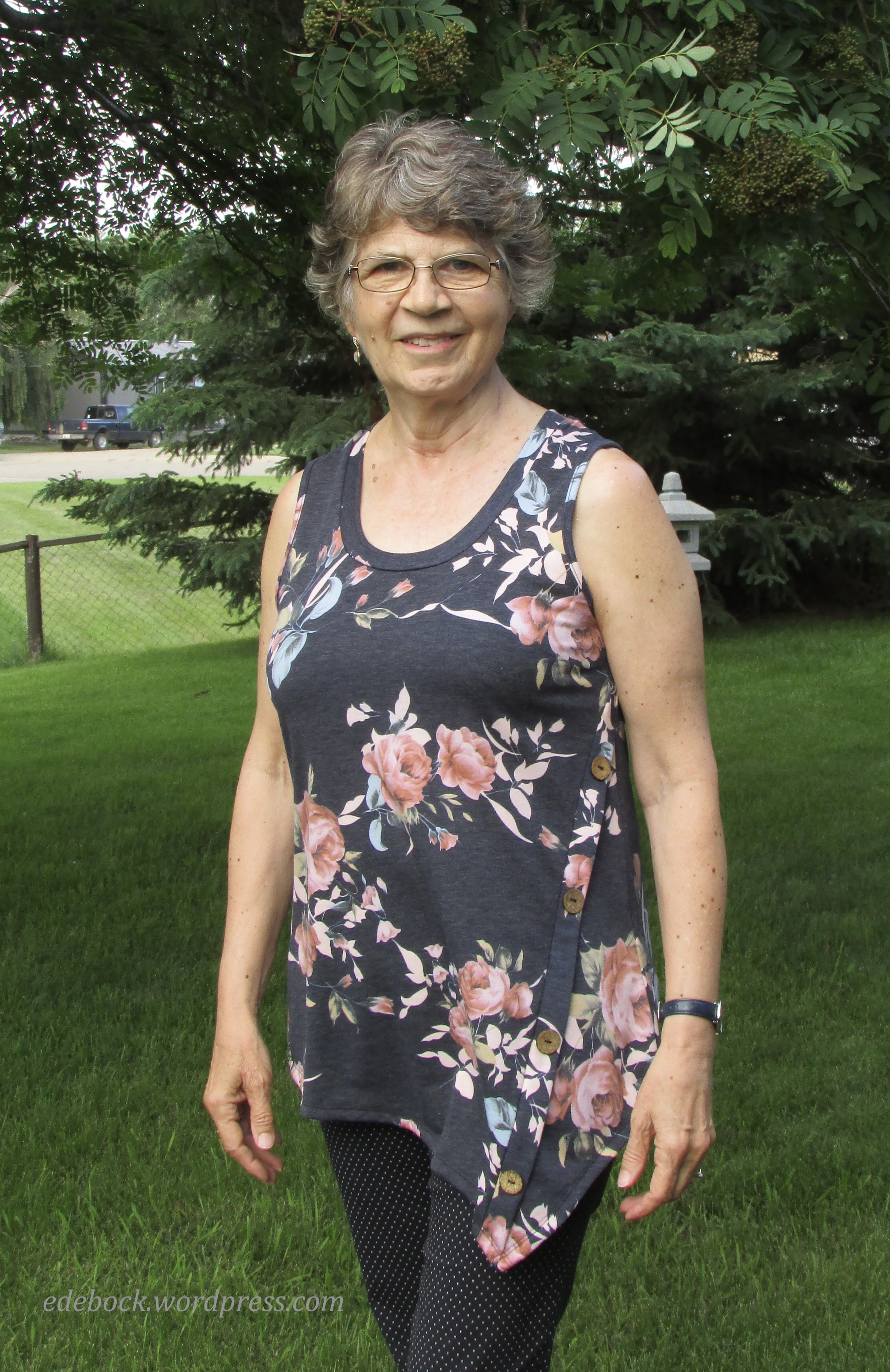
After a long awaited visit to my dental hygienist, I did a bit of browsing and discovered an independent boutique that I hadn’t visited before. It survived the pandemic, but like many others, business was clearly slow and the discount racks were full. This little top caught my eye and ended up coming home with me. The colours fit my wardrobe perfectly and the asymmetrical hemline adds interest. It will be a great  addition to my summer wardrobe and a good layering piece when the weather is cooler.

IMG_4198

As I mentioned in my last post, I’m going to be taking some time to recharge over the next few weeks, so Fashion Friday probably won’t appear as regularly as usual. It’s not going to disappear completely though, so stay tuned!

Personal style types

Logo by SamAfter thinking about personal style last week, I thought I’d explore the topic in a little more depth today by looking at some of the most common style types. Each one of us is unique and it’s unlikely that you will fit cleanly into any one of these styles. Instead, you might take inspiration from more than one of them and by combining traits that resonate with you, identify your own personal style.

Sporty  This is the woman who feels at home in athleisure wear. She wants clothing that is casual, comfortable, and allows ease of movement. She might be seen wearing yoga pants, joggers, or leggings with a t-shirt or a hoodie. Her shoes will be sneakers or flats and her accessories minimal. 

Casual.  Similar to her sporty sister, the casual woman likes simple lines and designs. She is focused on comfort and her look is easy-going and relaxed. She wears jeans, t-shirts, sweaters, and sneakers or flat boots with minimal accessories.

Classic  The Classic woman chooses tailored garments in quality fabrics and timeless styles. Her menswear inspired look is polished and put-together. Her wardrobe will include blazers and pencil skirts in neutral colours. Her accessories are simple and complement her outfits.

Dramatic  This is the elegant woman who invests in quality pieces for her wardrobe. Her look is striking and sophisticated. She wears bold makeup, eye catching shoes, and statement jewelry.

Preppy  Originally inspired by North American prep school uniforms, this look includes khakis and chinos, polo and button-down shirts, pleated skirts, blazers, vests, stripes, plaids, and all things nautical. Loafers are a popular shoe choice. Accessories are simple and often involve pearls.

Bohemian  The flamboyant Boho style has a 1960s and early 70s hippie aesthetic. It has a loose, laid back vibe that includes flowing maxi dresses and long skirts in natural fabrics, earth tones, and ethnic prints. Garments are often embellished with fringes, beads, or feathers. Accessories include large brimmed hats, slouchy handbags, oversized scarves, wide belts, long necklaces, big rings, and chunky bracelets. This is a style that often appeals to the artistic non-conformist.

Artistic  The Artistic or Creative woman is another innovative individual who doesn’t mind being a bit unconventional. She wears unique outfits in a variety of bright, bold colours and prints. She also likes to play with unusual shapes, silhouettes, and textures. She wears bold jewelry and statement footwear.

Romantic  This is the woman who chooses soft, flowy garments with pretty, feminine details including ruffles, bows, and lace. She wears muted or pastel colours and floral prints. She likes delicate, traditional accessories and ballet flats.

Minimalist  The title refers to a particular style, not the number of clothes in this woman’s closet. The Minimalist likes a paired down look with clean simple lines. She most often wears classic neutral colours and chooses simple, sparse accessories.

This is by no means an exhaustive list. I wrote about Gentlewoman style in this post and the very trendy Coastal Grandmother style here. There are Grunge and Goth styles, but since they wouldn’t likely appeal to the demographic that usually reads this blog, I didn’t include them. Then there is the Eclectic woman. She loves to try new styles and combinations and mixes elements from many different styles to create one that is uniquely her own.

The photos that I’ve included are a very limited sampling of each style, but hopefully they are enough to give you an idea what each one looks like.

Do you see yourself somewhere in the list? As I mentioned in the introduction, you will likely fit into more than one category. For example, I see myself as a Casual/Classic dresser, but I occasionally incorporate elements from several other styles.

Thinking about personal style

Logo by SamHubby and I spent three days this week attending a conference as representatives of our local church. It was a full schedule of making connections, worshipping together, and attending sessions. There was no down time, no time for writing a blog post! We came home yesterday feeling both uplifted and exhausted! I sat down last night to write this morning’s Fashion Friday post and absolutely nothing came to mind! Nothing except the desire to soak in a hot bath and crawl into bed. All this to explain why today’s post is later than usual and why it might be a little thin in content!

We often tend to use the words fashion and style interchangeably, but there’s a difference between the two. Fashion is the clothes, accessories and shoes that are produced. They are what you see when you enter a store or shop online, but style is what you do with them, the way in which you wear those items.

433d67c8a179d2f32e67c87f8df403b4

Style is how we personalize what the fashion industry produces.

279263470_3265720087087580_3069265874297079993_n

One way to identify your personal style is to choose 3 to 5 adjectives to guide your fashion choices. Check here for an exercise that will help you do that. Pinterest is another excellent tool to help you identify or clarify your own style. This post will show you how that works.

68c1c89e8f2ddbbff03d37530bd1757b

Personal style shouldn’t be static. We all change as we go through different stages of life and our style needs to change with us. It’s important to evaluate and update our style from time to time so that our outfits express who we are today, not who we were sometime in the past.

What words would you use to describe your personal style? How has your style changed over the years?