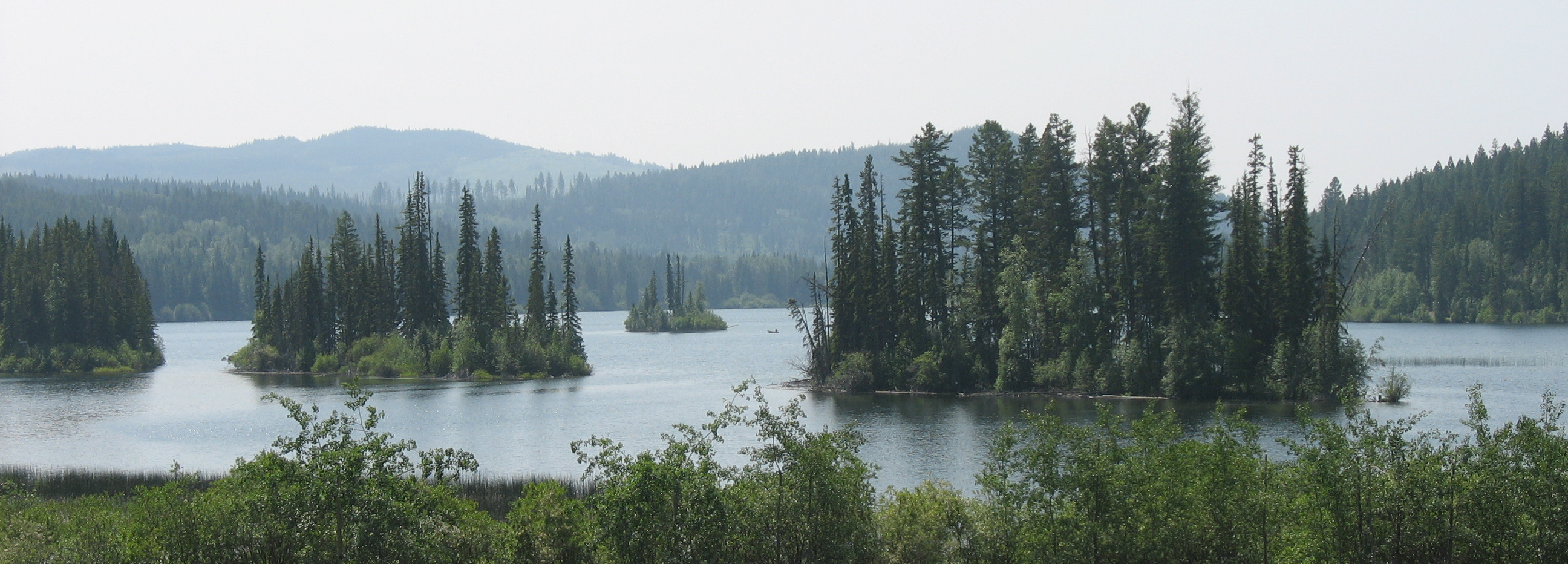
Knouff Lake, British Columbia

When Richard’s sisters and brothers gathered for our niece’s wedding at Sun Peaks, several of us camped together at beautiful Knouff Lake Resort. Towing our trailers up the long steep climb to the crystal clear lake nestled between the mountains about 3800 feet above sea level was well worth the effort. Established in 1904, this 4-season resort is advertised as one of the oldest fishing camps in B.C. but it is much more. Surrounded by the beauty of nature, it provides a tranquil getaway from the hustle of day to day life. Owners, Don and Gloria Lamberton, went out of their way to make our stay a comfortable and memorable one. They even provided us with a key to the gate so that family could come and go after the usual 10:00 p.m. closing time.
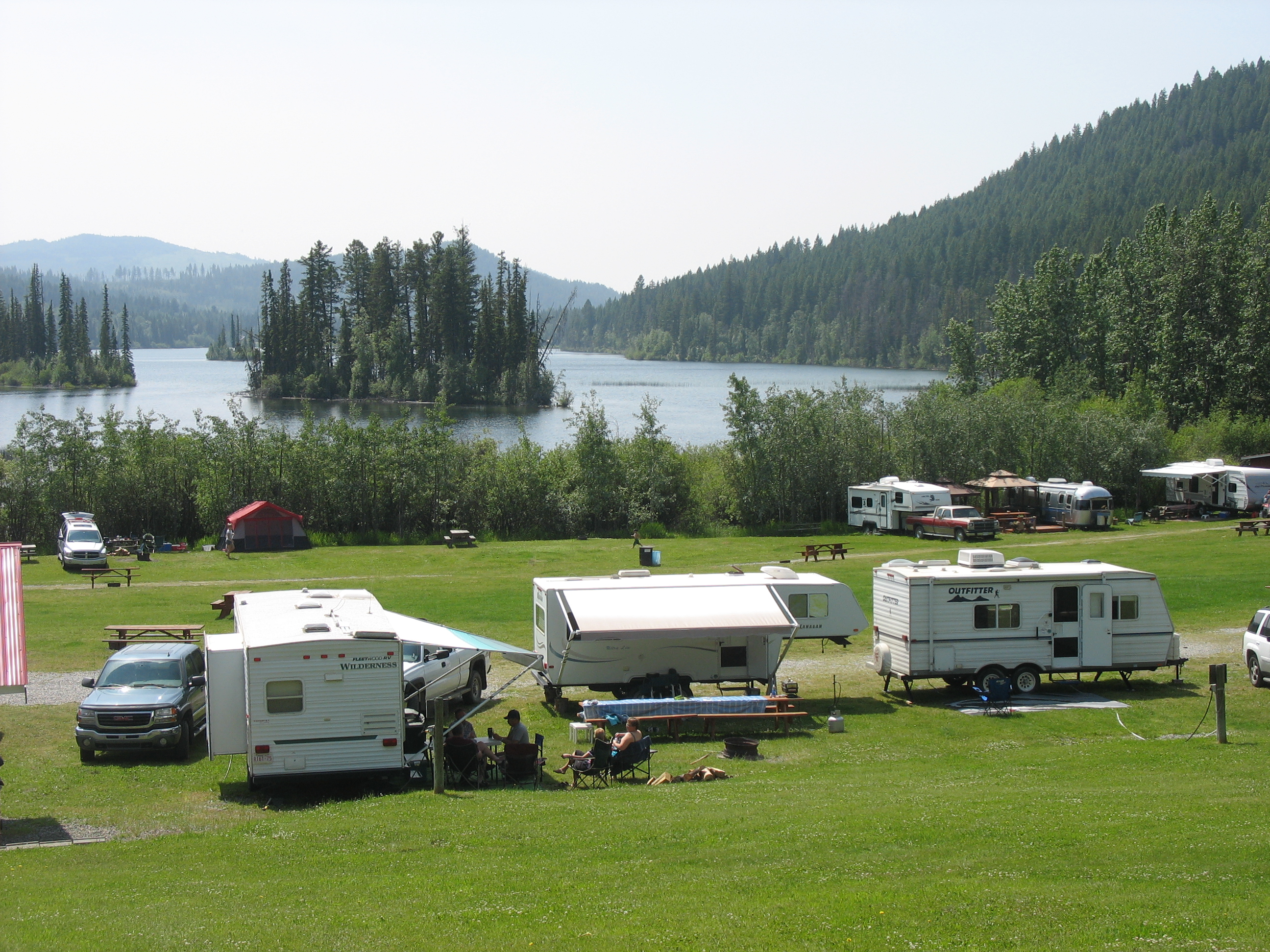
That’s our trailer on the right.

Our sister-in-law, Brenda, is an avid geocacher like us. When I mentioned that I’d seen on the geocaching.com website that there was a cache hidden on one of Knouff Lake’s tiny islands, she was determined that we should find it. Richard’s sister, Sue, was intrigued when she heard us talking about searching for these hidden treasures so the morning after the wedding, she joined us and the three of us set off on an adventure. The husbands, thinking us a bit crazy, stayed in camp.

Though I much prefer the quietness of a canoe, the Lambertons were reluctant to rent one to three prairie chicks so we set out in a big, flat-bottomed rowboat instead. Since I was born a coastal girl and learned to row at the age of 6 or 7, I took the oars and off we went. Sue was a little nervous but I assured her that we’d have to try very hard to capsize that thing on such calm waters. By the time we returned to camp, she’d taken a turn at the oars and what fun we’d had!

As we pulled ashore on Beaver Island, we three women in our 50s and 60s felt like kids on a Tom Sawyeresque adventure. With GPS units in hand, we clambered through the undergrowth and soon found the cache exactly where it was supposed to be.

My sis-in-laws, Sue & Brenda

We’d also been told about a memorial on one of the other islands, placed there in memory of an avid fisherman and outdoorsman who hosted an annual fishing derby at the lake each summer until his untimely death in 2009. Before returning to camp we rowed over to check that out and also discovered the skeleton of a teepee standing nearby.
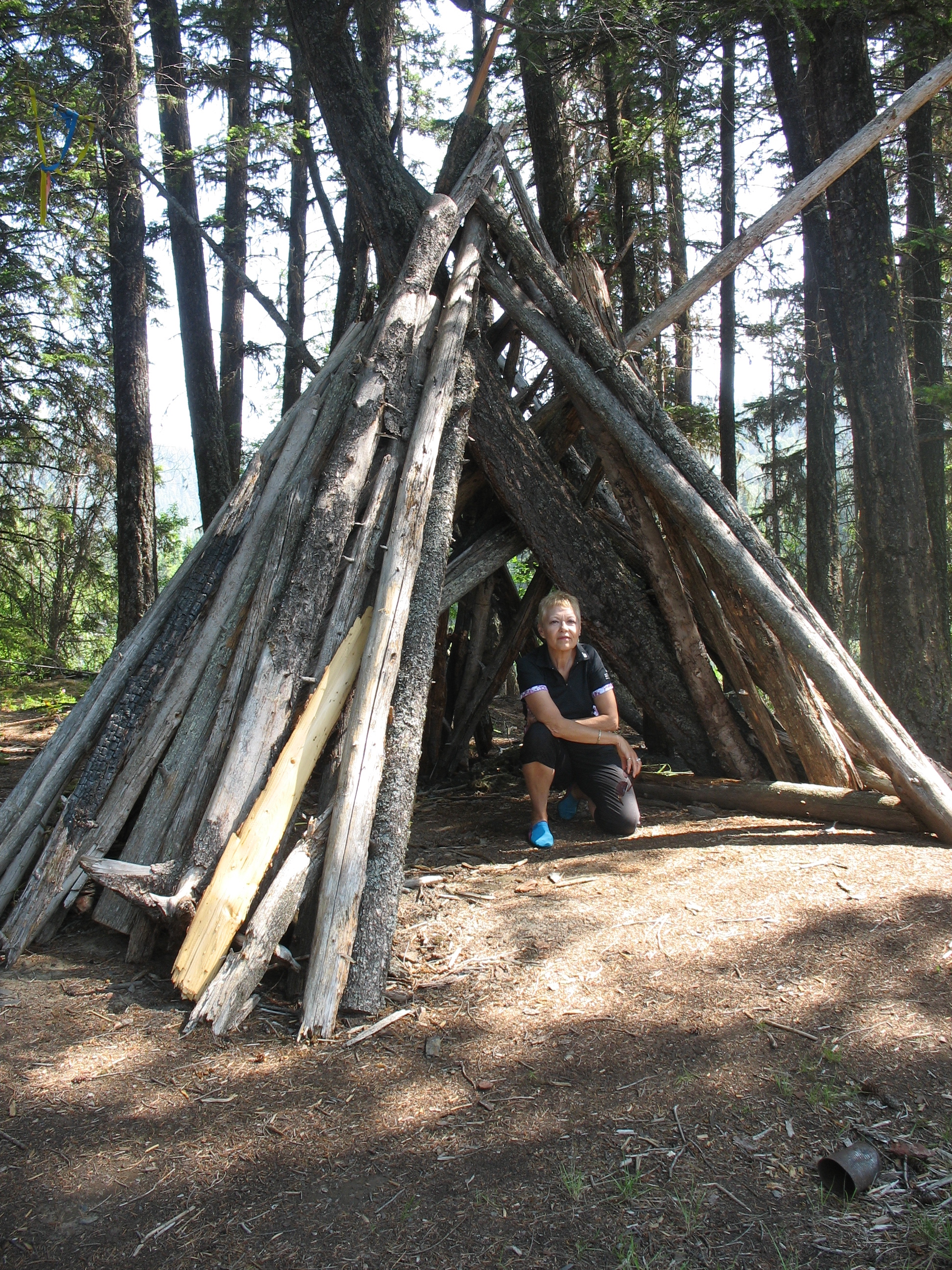
Until Stacey began planning her wedding we were completely unaware that Knouff Lake (also known as Sullivan Lake) even existed but now that we’ve found this hidden gem, we’ll likely be back again. It’s only a short distance off our usual route between home and Vancouver, a trek that we make two or three times a year to visit grandchildren and elderly parents. We don’t often have the trailer with us though so perhaps next time we’ll rent one of the rustic log cabins overlooking the lake.
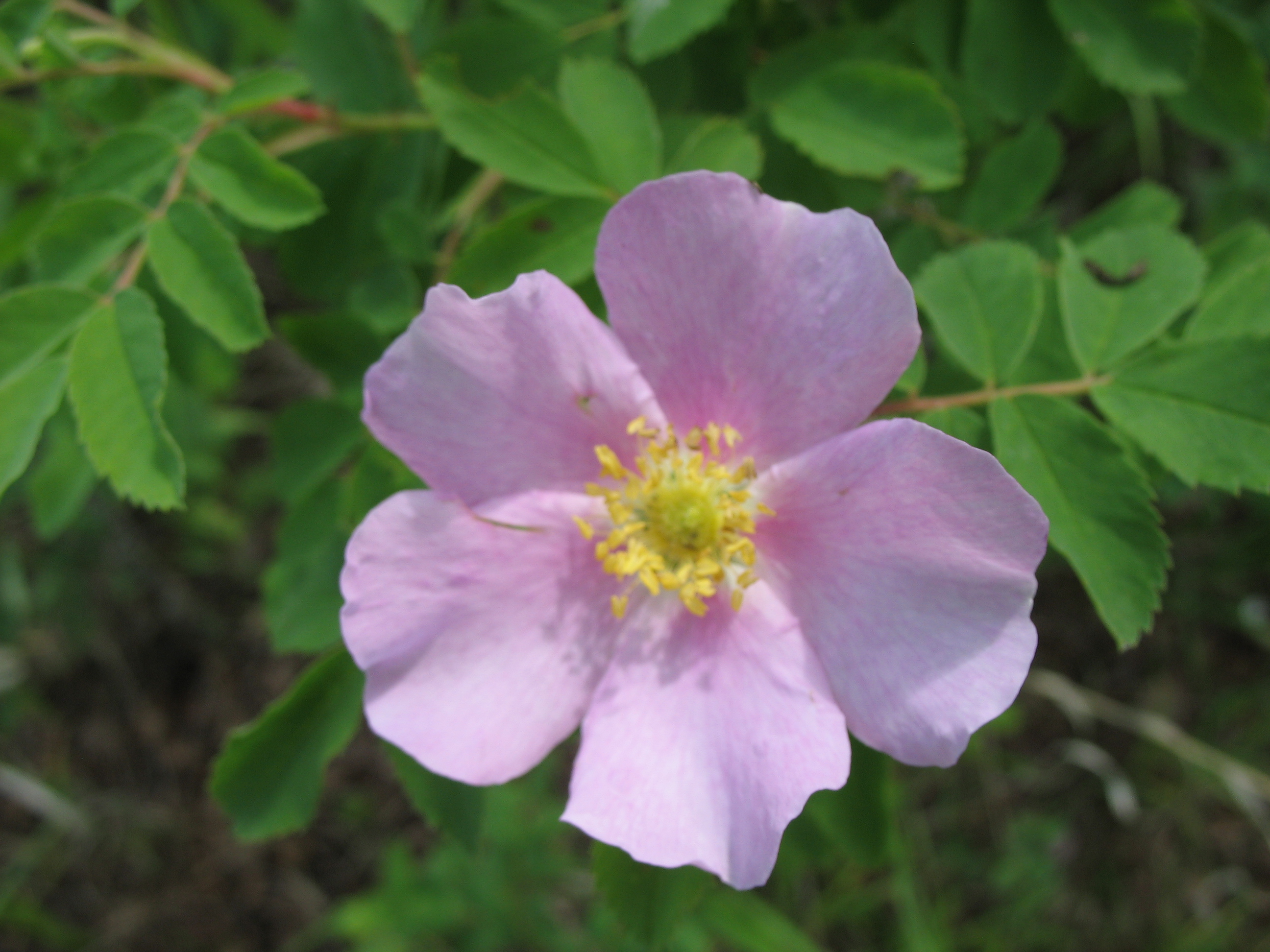
Wild roses and wetlands

My man had to drive to Wainwright this morning (about an hour northeast of here) to pick up some new tires that he’d ordered for the golf cart. “Why don’t you come with me,” he asked. “We can look for a few geocaches along the way and then have lunch in Wainwright.”

Does that sound like a date to you? It did to me. It also sounded a lot more appealing than weeding the flower beds which was what I probably should have been doing. We’re only home for a few days between trips so there are lots of things that need to be done around here but since retirement means doing what you want to do when you want to do it, I went to Wainwright.

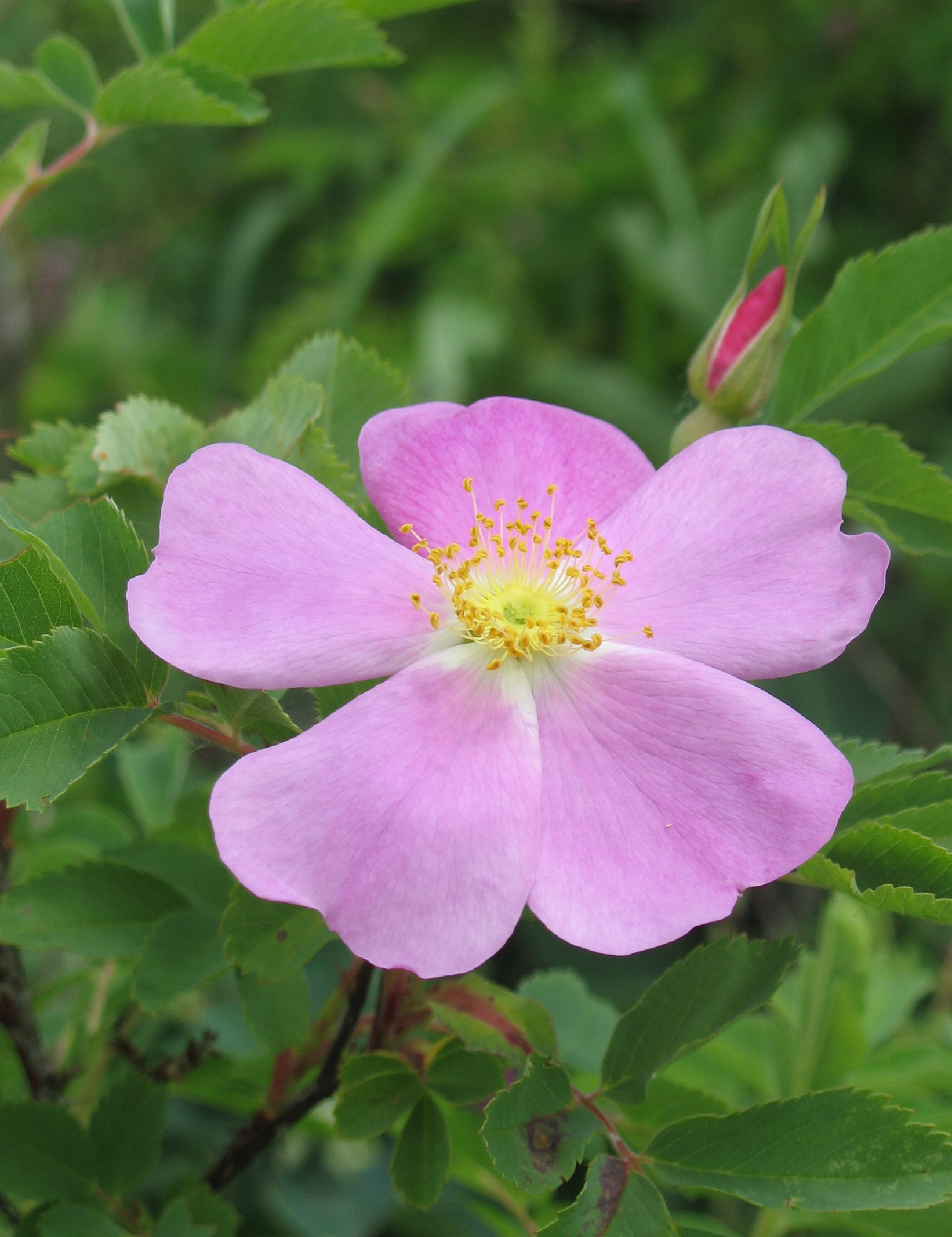
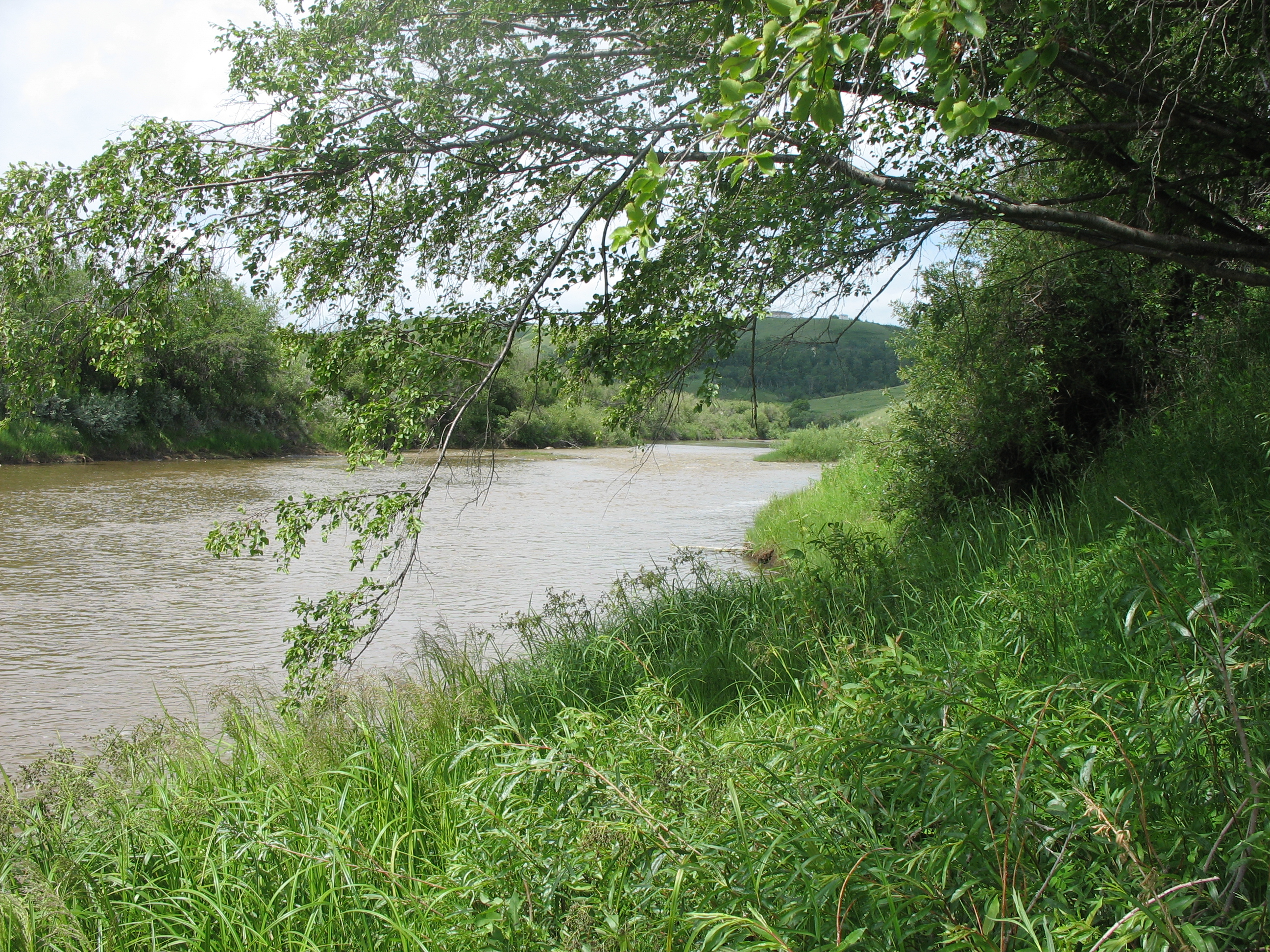
We never did find the cache that was supposed to be hidden in the lilac bushes alongside a rural cemetery but the next one, in a quiet spot overlooking the Battle River, made up for any disappointment we might have felt. The wild rose, Alberta’s provincial flower, is in full bloom at this time of year and as we made the short hike down to the river we were surrounded by them. 

Battle River

I wish I could share their beautiful aroma with you but I don’t have the words to do it justice.


I waded into the bushes and risked being stung to get the next picture and others like it but the ‘sting bugs’, as our grandchildren call them, were much more interested in the flowers than they were in me and I came away unscathed.

The next cache had us treading carefully to keep from getting our feet wet! It was hidden beneath one of the bushes out on the point beyond this lookout tower.


We really should have had our rubber boots on but they’re in the trailer which is in Camrose for a minor repair to a leaky valve on the hot water tank. When it’s ready, Richard will be making another one hour drive in the opposite direction to go get it. Perhaps this time I’ll stay home and get something done around here… or maybe not!

Happy Rocks and Tomahawks

We left Winnipeg yesterday morning and after spending two days on the road, we arrived home a few hours ago. Once again, we stopped to search for geocaches and again, I was surprised at all the interesting and unusual things we saw along the way.

When we passed through the town of Gladstone, Manitoba on our way east I spotted the Happy Rock and immediately thought that there must be a geocache hidden nearby. Sure enough, I checked online and discovered that I was right so we stopped to find it yesterday morning.

Glad stone… happy rock! What a cute idea. Imagine how surprised I was to walk around to the back side of the giant rock and discover two doors. In addition to being a tourist attraction, it houses public bathrooms!

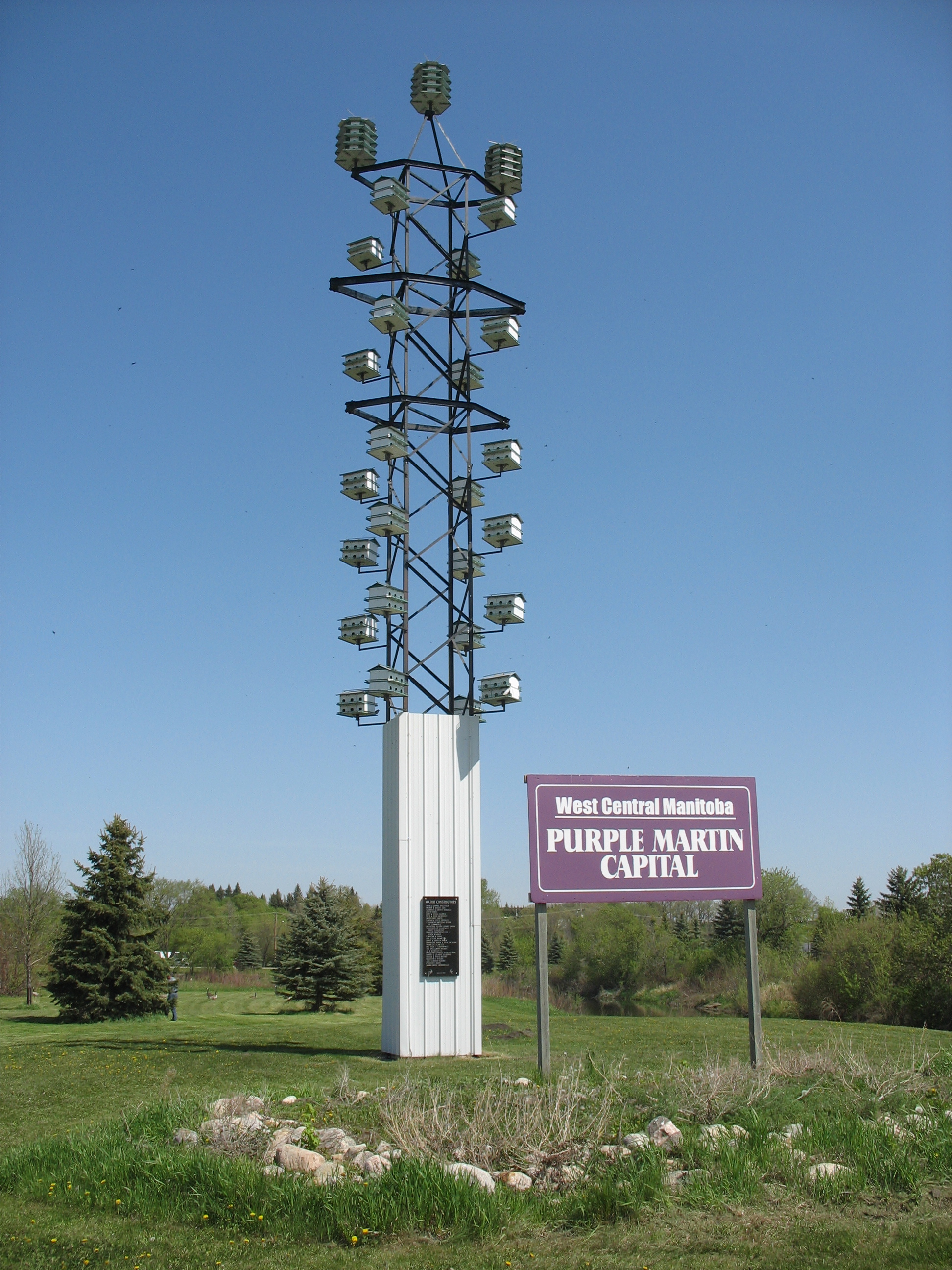
We love the pretty little town of Neepawa and have fond memories of time spent there in the past but we didn’t know that it calls itself the Purple Martin Capital of Western Manitoba until we spotted this unusual tower of birdhouses. There’s a cache hidden in one of the trees nearby.

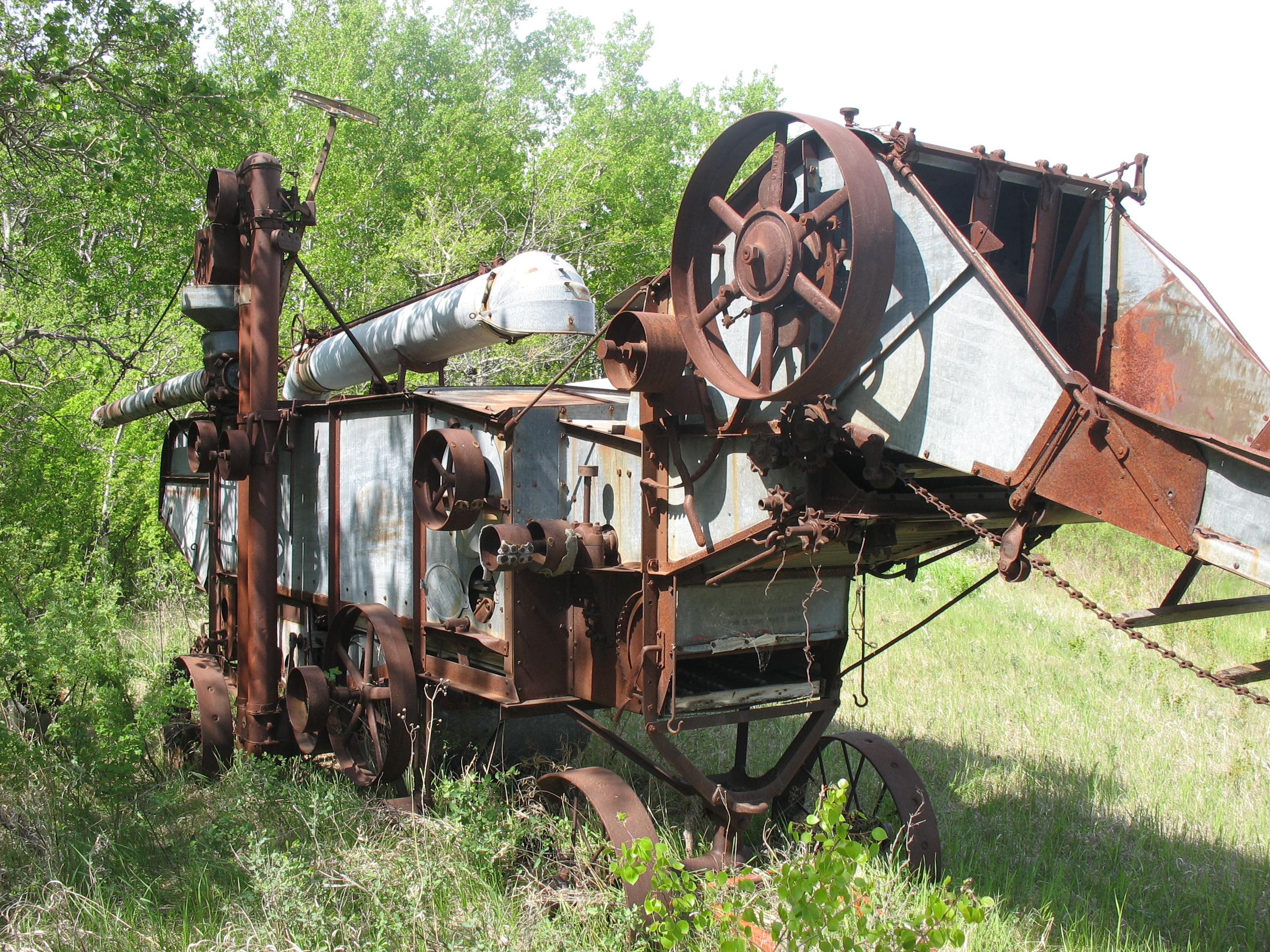
There are antique threshing machines like this one scattered across the prairie and many of them have geocaches hidden in, on or under them. We searched for quite awhile before we found the one that was tucked inside this one.

The Happy Rock is cute but this giant bull, standing outside the tourist information booth at Russell, Manitoba, didn’t do much for me. There was a cache hidden in one of the trees nearby though.

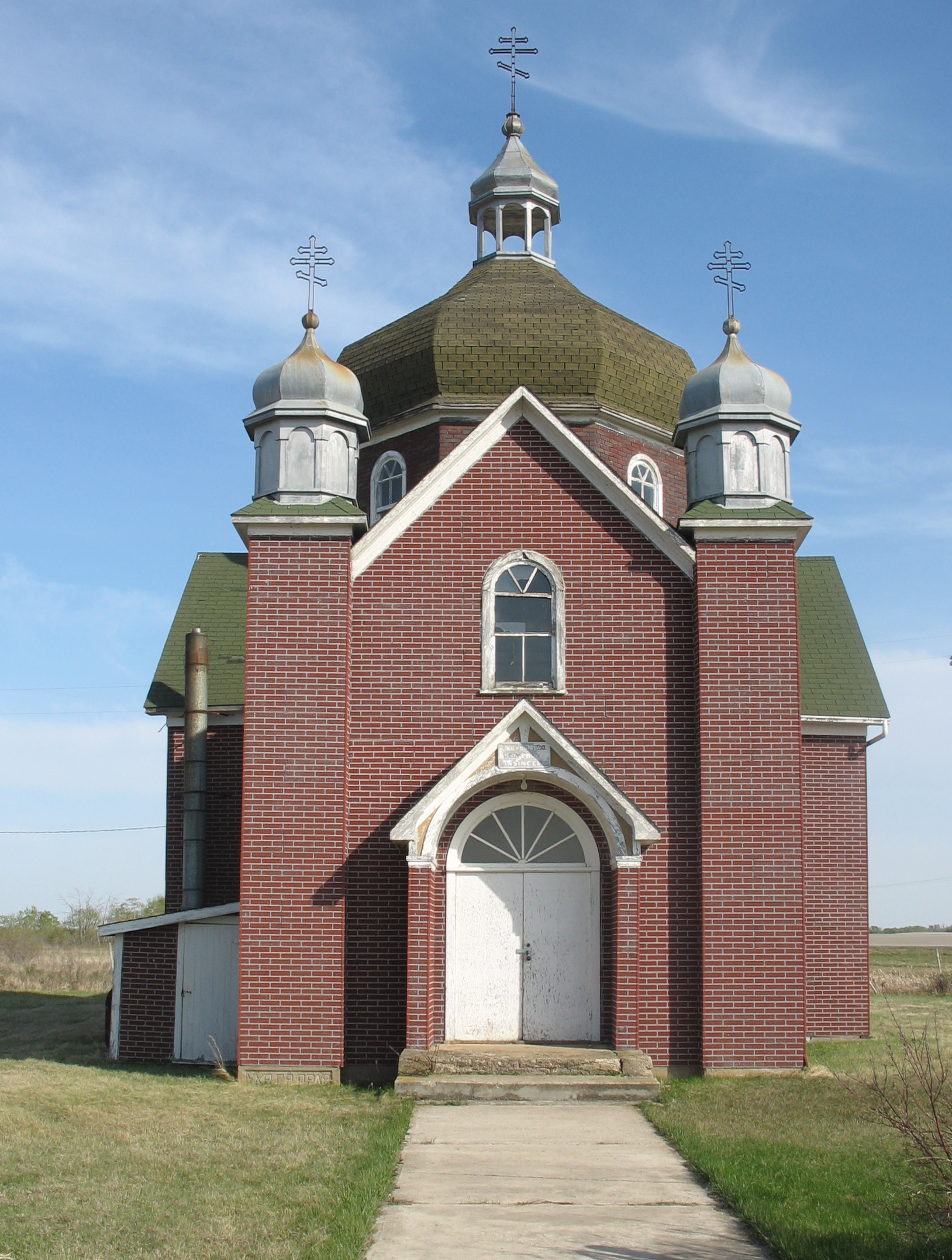
We’ve driven past the quaint little Ukrainian Greek Orthodox church at Insinger, Saskatchewan several times over the years. This time we stopped to take a closer look even though there are no caches hidden there. I really think there should be!

Though we’ve found 86 caches in all since we started hunting for them less than a month ago, we’ve also struck out a few times. This afternoon, we searched the trees around this much larger than life RCMP statue at North Battleford, Saskatchewan to no avail. If the cache was there, we certainly didn’t find it.

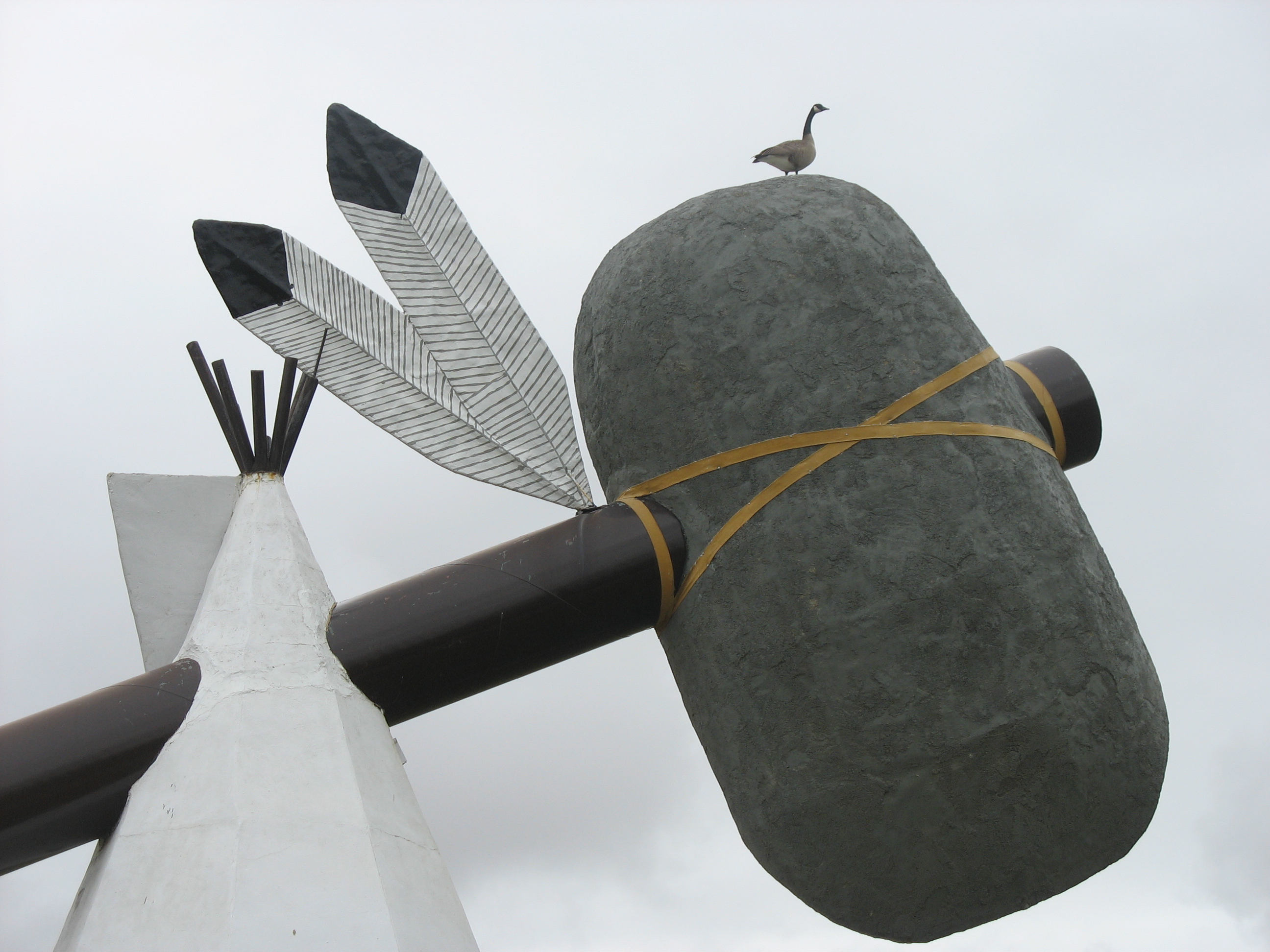
Apparently, there’s a brand new cache hidden near the world’s biggest tomahawk at Cut Knife, Saskatchewan but we couldn’t find that one either. If we had, we would have been the first to find it.

I thought the giant tomahawk was a bit strange until I learned a little of its history. Cut Knife was the site of several Indian uprisings in the 1880s. The Battle of Cut Knife Hill, between the Cree tribe led by Chief Poundmaker and the Northwest Mounted Police ended with the Mounties retreating. Poundmaker, who stopped his warriors from pursuing and ambushing the Mounties, later surrendered to the authorities to help restore peace between the Indians and the settlers. The giant tomahawk, with its 17 metre (57 feet) long handle, commemorates this.

Did you notice the Canada Goose on top of the head of the tomahawk? I didn’t either until it started honking at us! No, it’s not part of the statue. According to the neighbour who came out to chat with us when he noticed us carefully checking under and around the trees between his house and Tomahawk Park, there are seven goslings in the area and this was undoubtedly one of the parents warning us to keep our distance.

Winnipeg walk

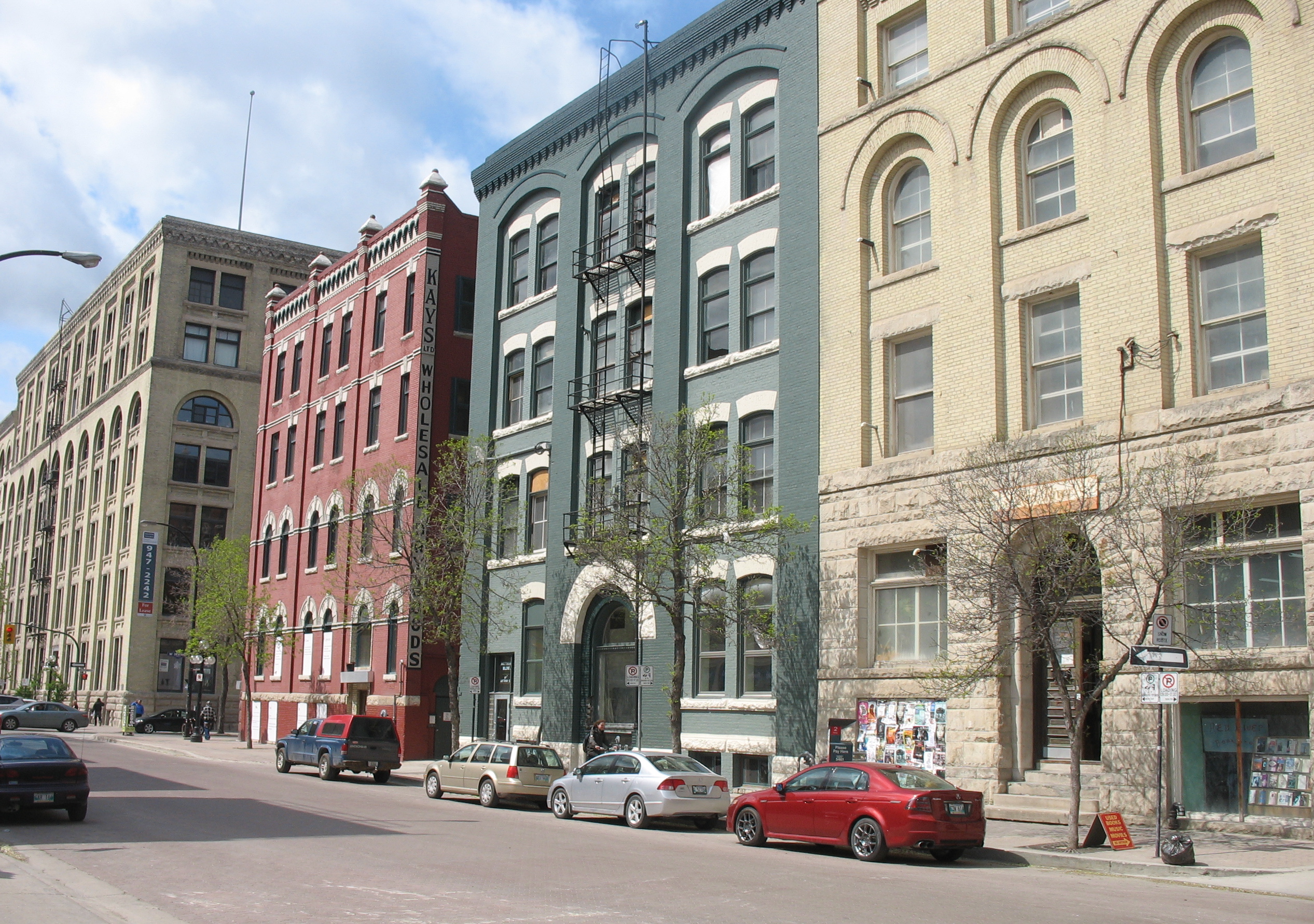
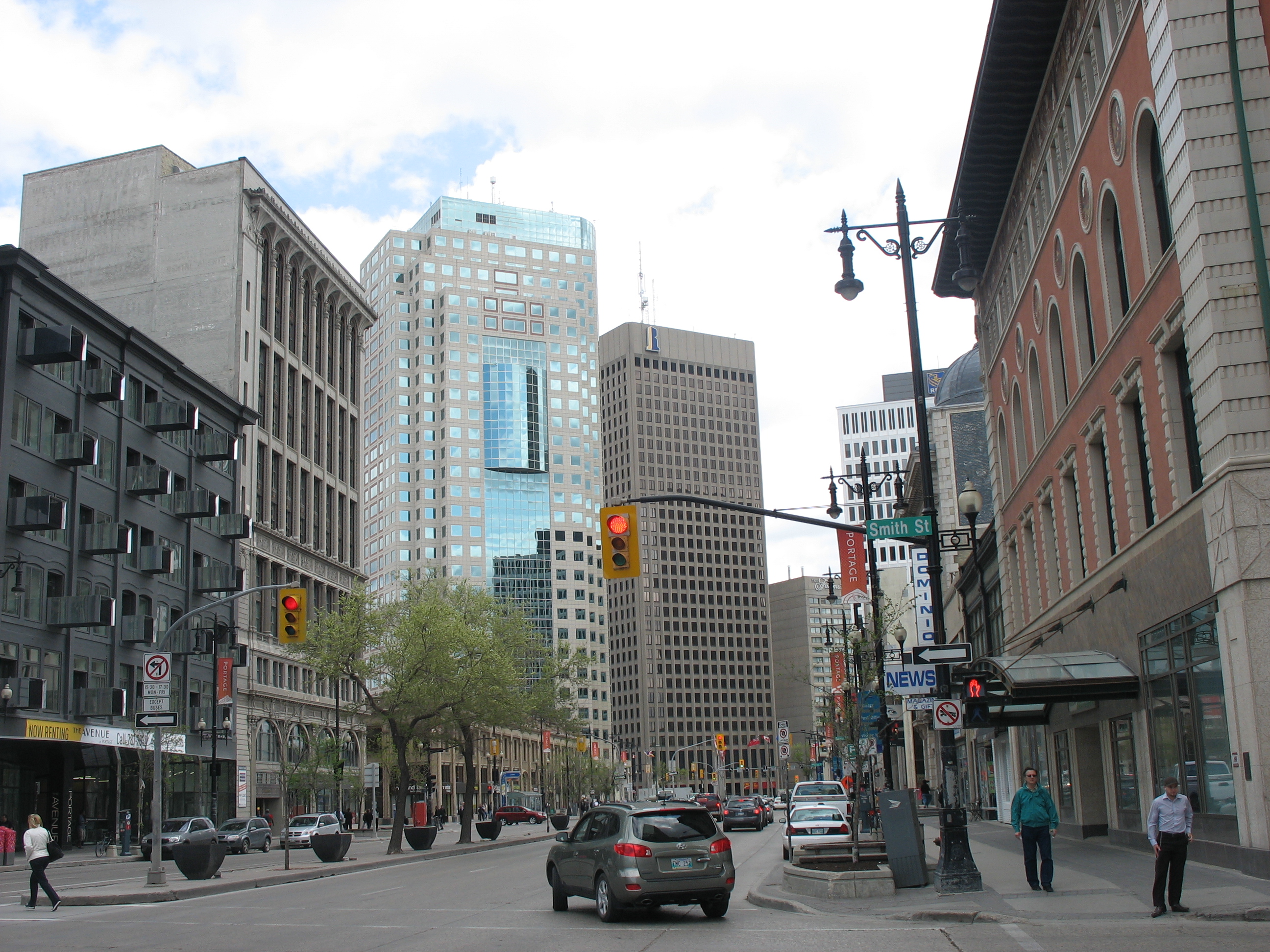
While Chrissy attended her first tae kwon do class this morning, I spent a couple of hours exploring downtown Winnipeg with my camera in hand. Located at the confluence of the Red and Assinboine Rivers, Winnipeg is the capital city of Manitoba and Canada’s seventh largest municipality.

The farther east one travels in Canada, the more history there is to be found. French traders built a fort here in 1738. The City of Winnipeg was incorporated 35 years later, long before anyone settled the area of Alberta that we call home.

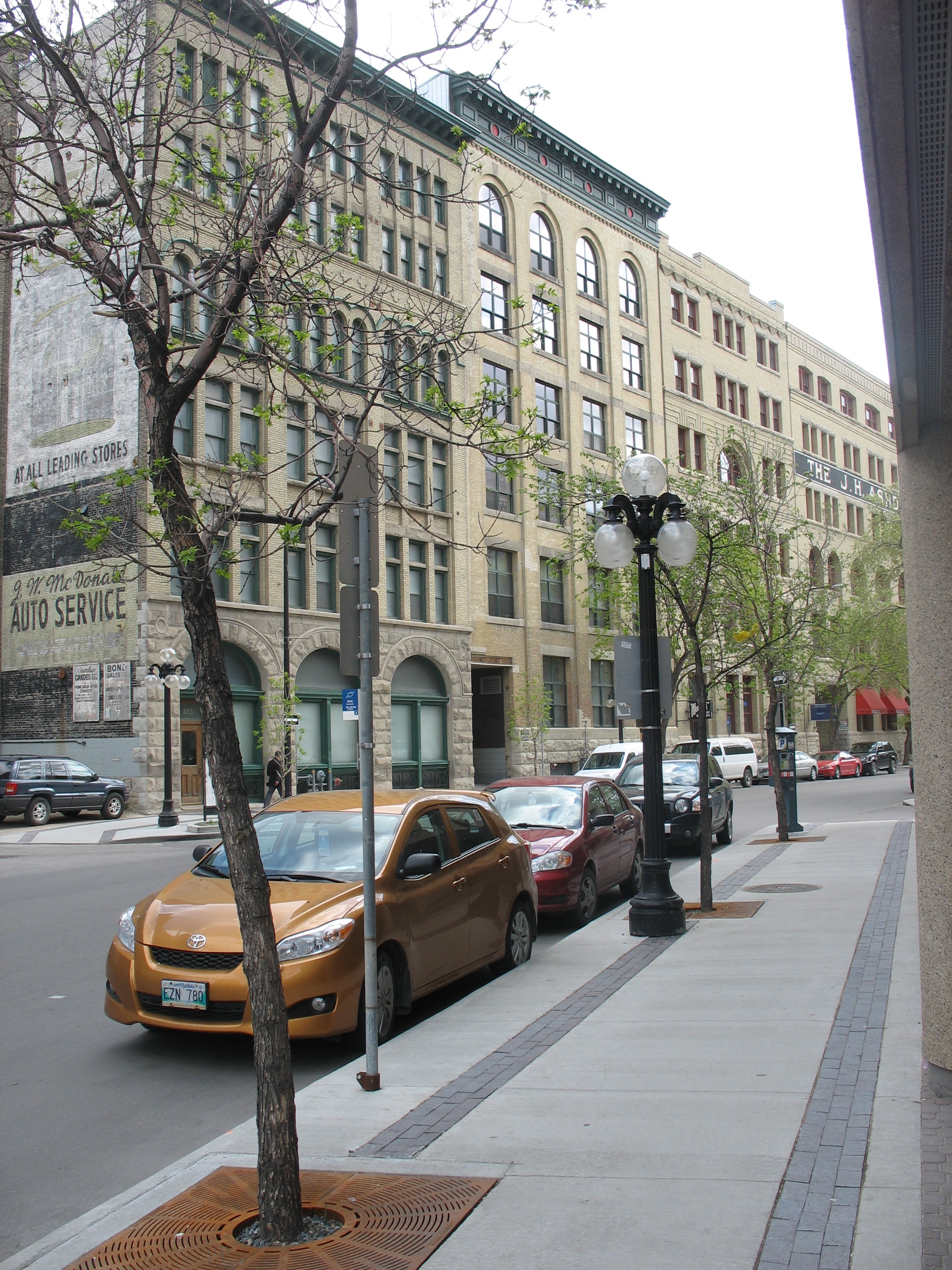
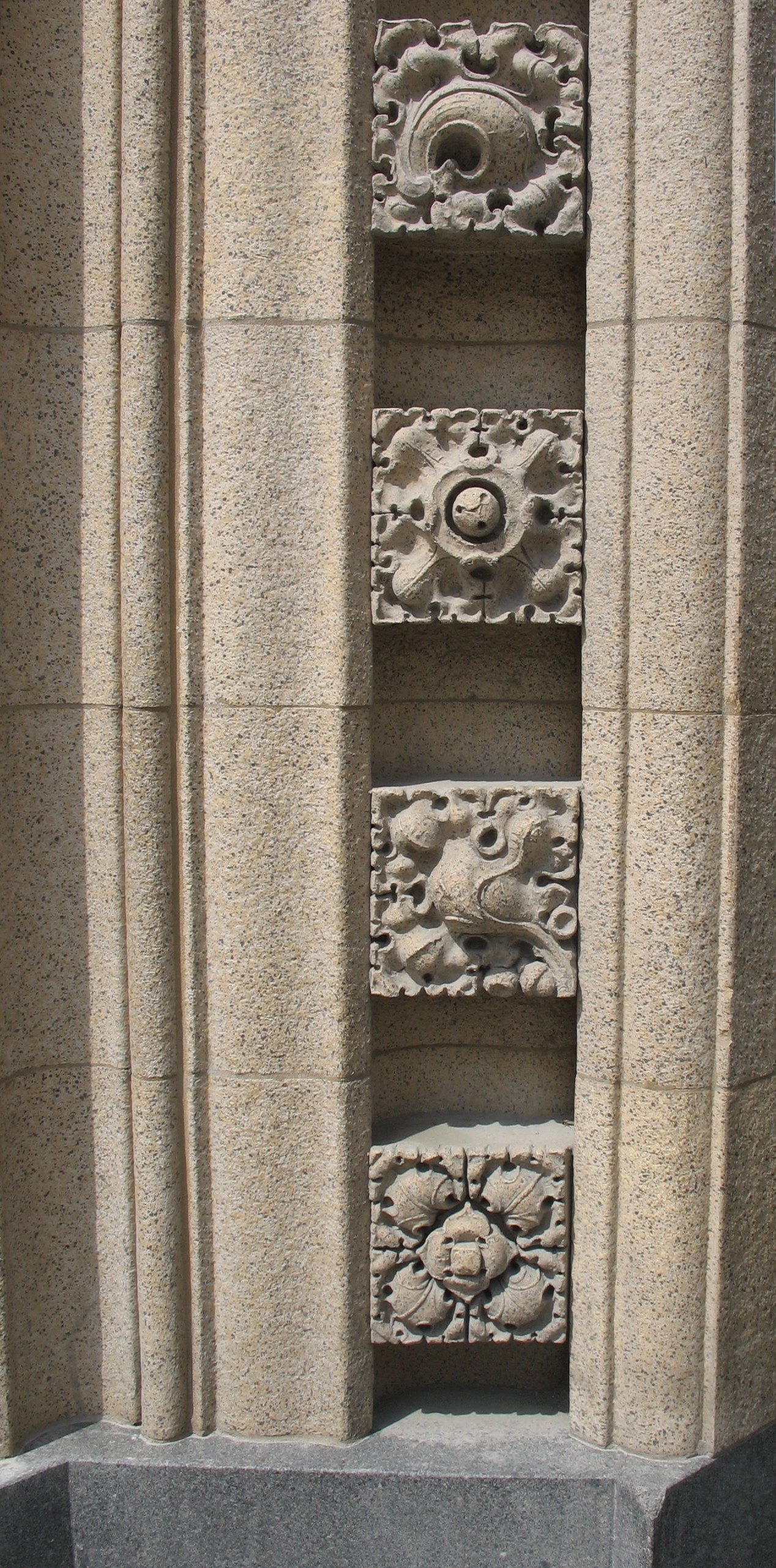
My favourite part of this morning’s walk took me through the Exchange District National Historic Site, one of North America’s most colourful and cosmopolitan neighbourhoods. Home to the city’s arts district as well as fine cultural, dining and retail establishments, it showcases North America’s most extensive collection of turn-of-the-twentieth-century architecture.

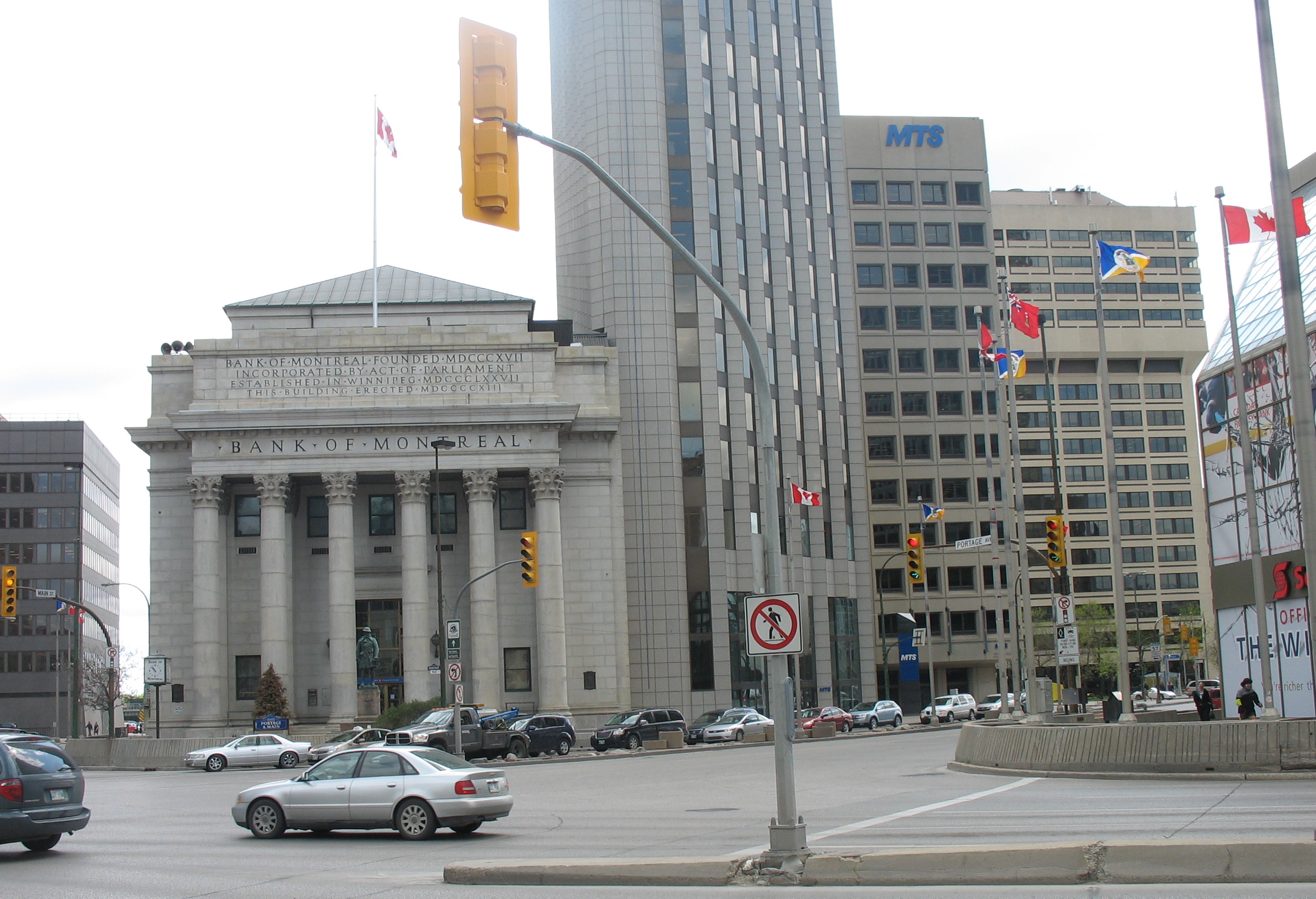
Portage and Main, at the heart of downtown Winnipeg, is perhaps the most famous street corner in Canada. The hub of some of the city’s main transportation routes, it was once the centre of western Canada’s banking industry. The stately Bank of Monteal building, constructed in 1877, stands guard over the intersection.

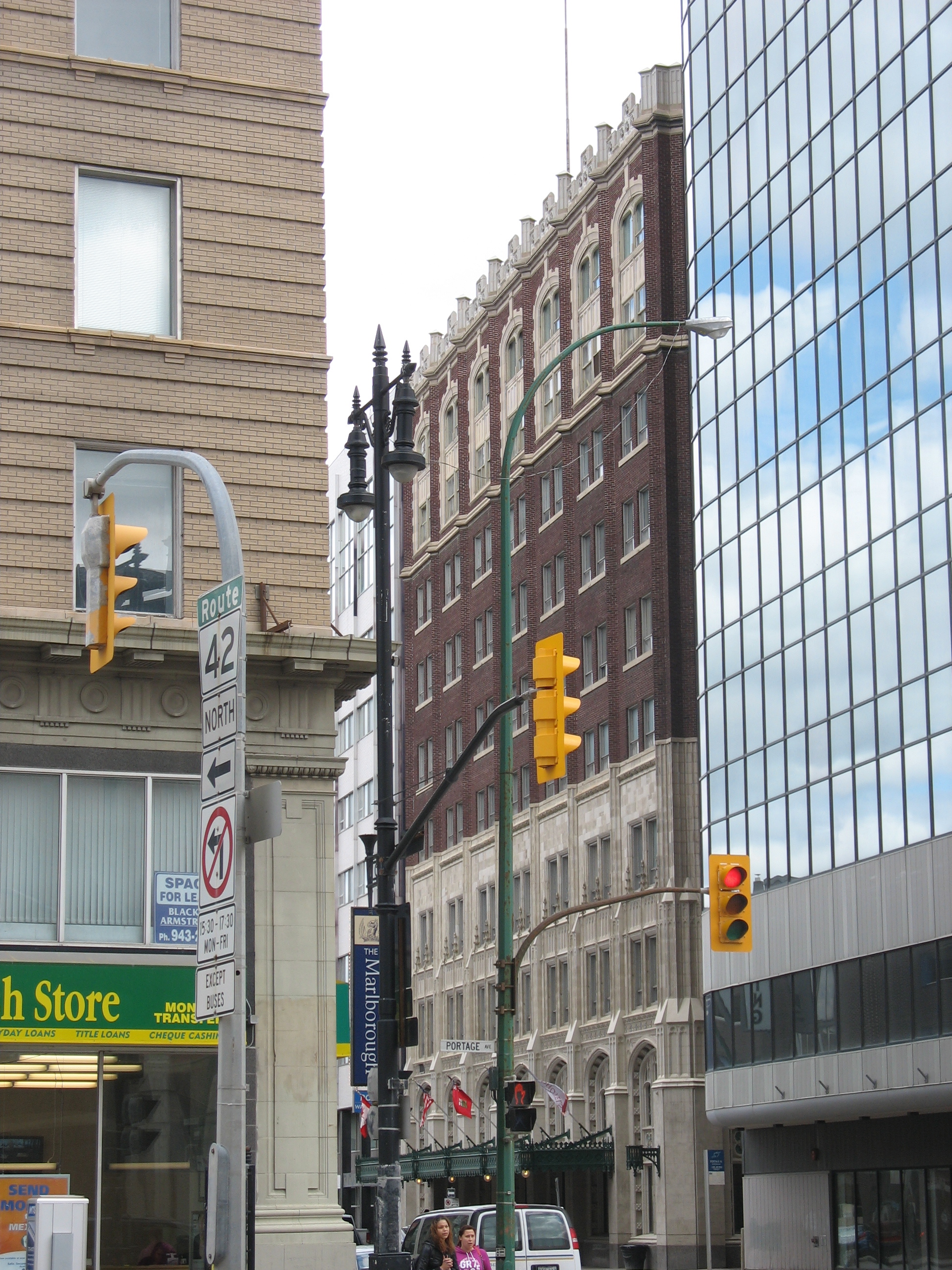
I love the mixture of old architecture and new that I found as I walked Portage Avenue.


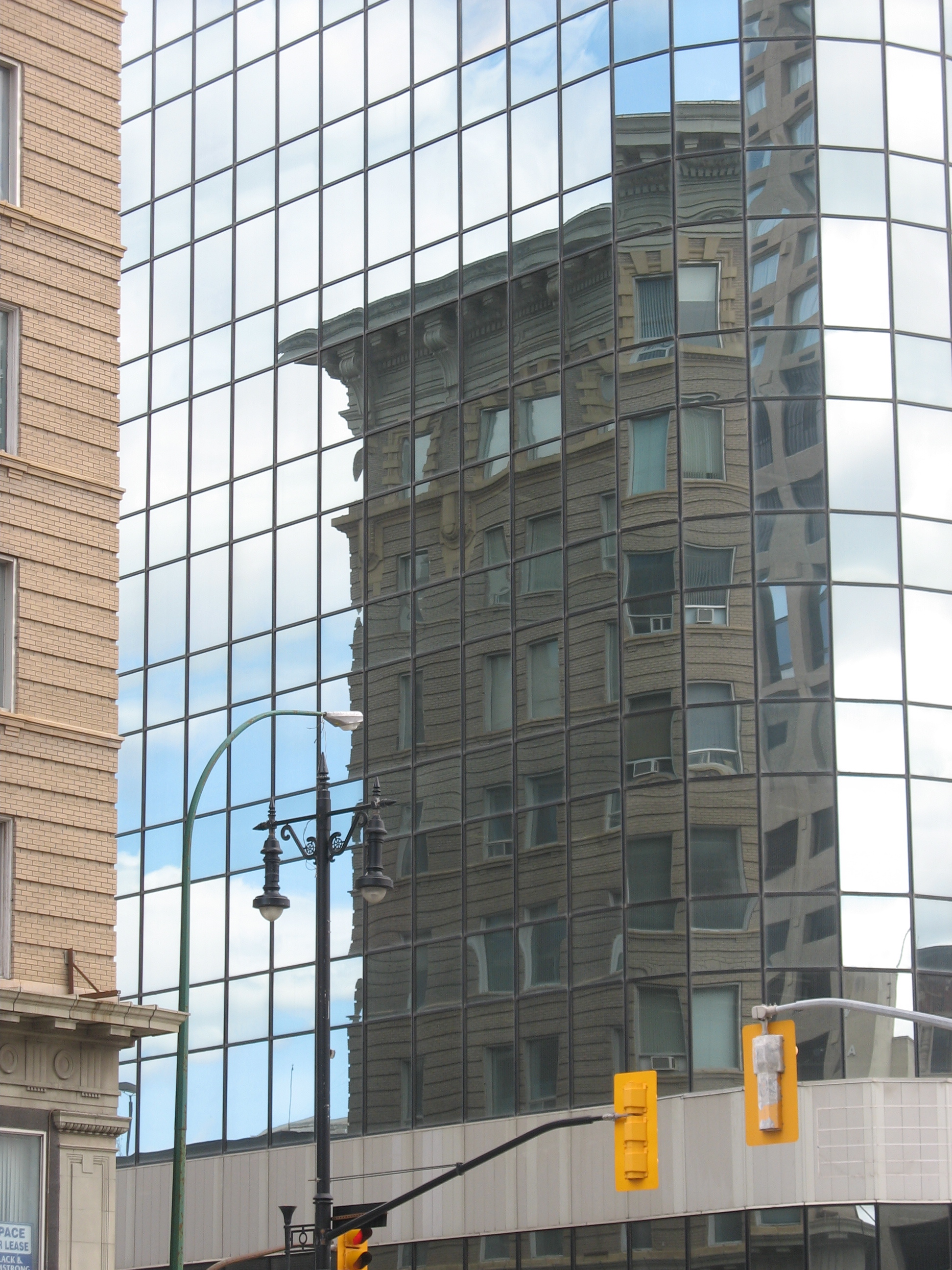
Reflections

There are so many photos that I’d love to share with you but here are just a few more.

            
Winnipeg may not be one of Canada’s prime tourist destinations, in fact it was the butt of a well-known and rather humourous 2005 Fountain Tire television ad, but it’s definitely worth a visit.

The interesting and the bizarre

We spent most of the past two days on the road driving 1169 kilometres across the Canadian prairie from our home in Alberta to Winnipeg, Manitoba. Originally, we’d planned on doing the entire trip in one very long day but we decided that that would be foolish. After all, we’re retired. We have plenty of time and besides, there are geocaches to be found… lots of them!

We’ve discovered that geocaching gives us reason to stop and look at things that we might otherwise cruise right by. Some are interesting, others quite bizarre.

As many of you know, I love bits from the past. This wagon was no exception. A geocache was hidden nearby.

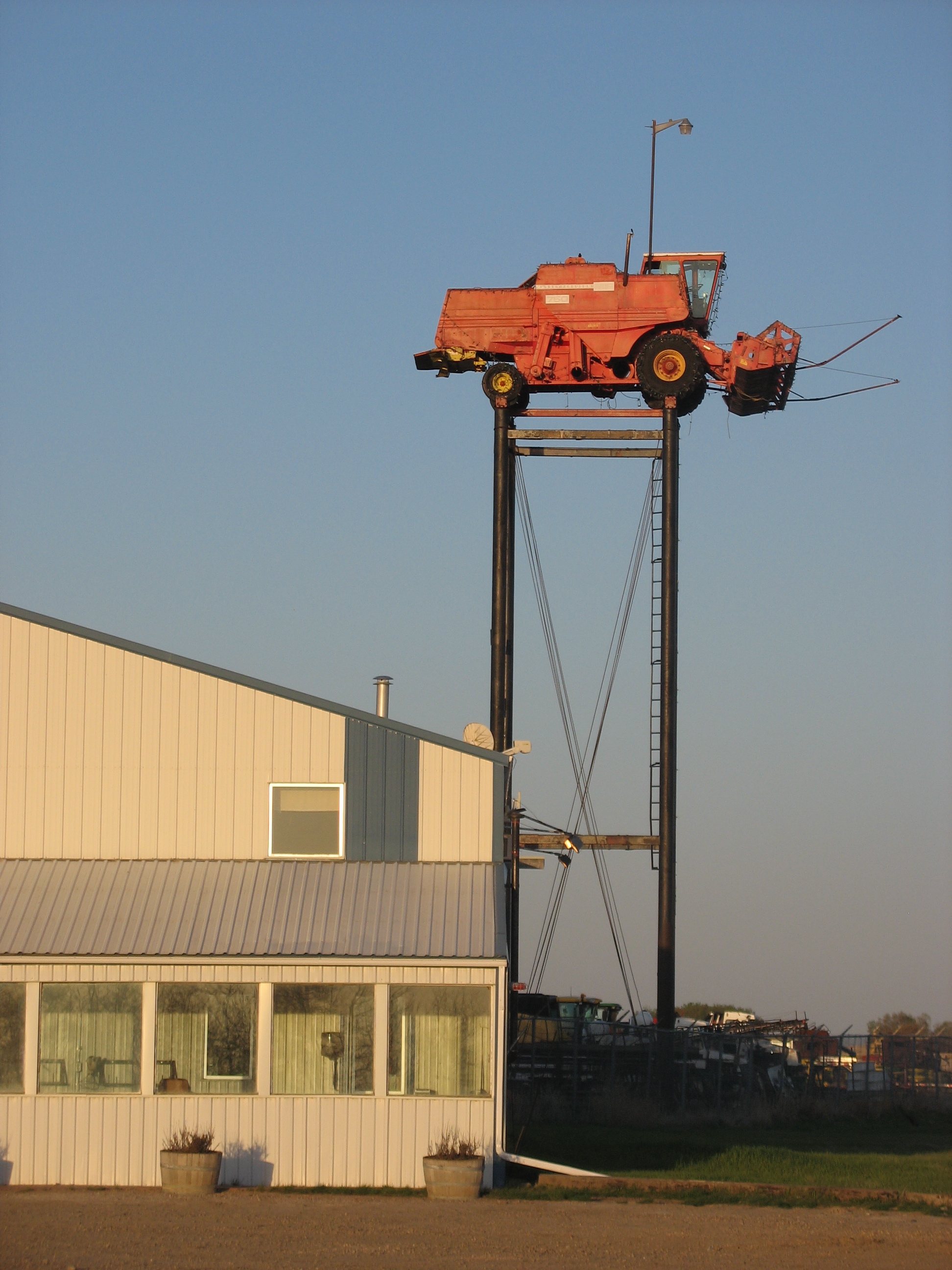
I love farm machinery too, especially combines, but what about one perched high in the sky? Yes, that’s a full sized combine way up there! It kind of reminded me of a giant insect!

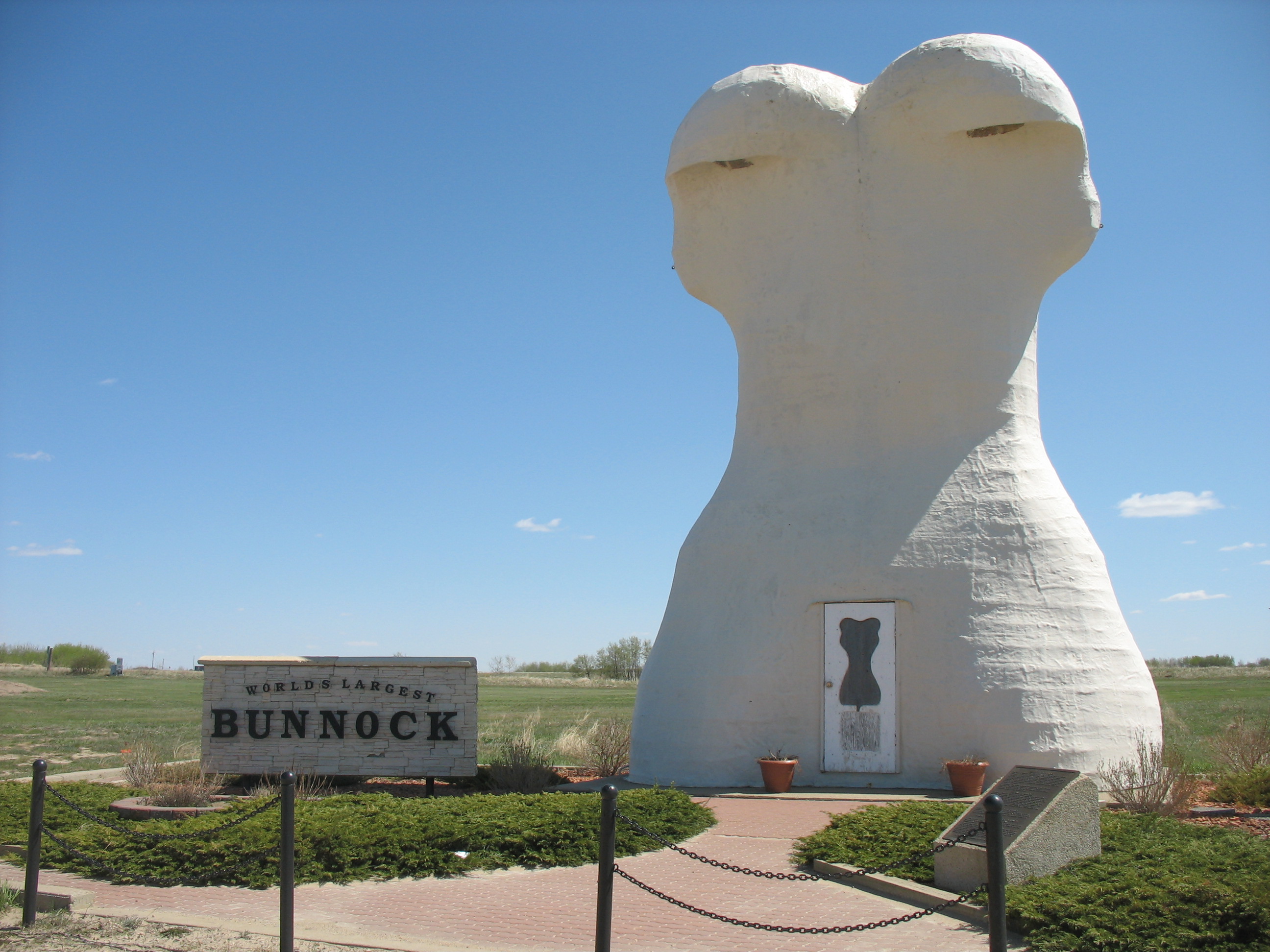
The world’s largest bunnock had to be the most bizarre, however! What’s a bunnock, you ask?

Apparently Bunnock, also known as Glockenspiel or the Game of Bones, was created by Russian soldiers to pass the time while they were stationed in Siberia during the early 19th century. Bunnock was brought to Canada sometime in the early 20th century by Russian and German immigrants, many of whom settled in the province of Saskatchewan. The game pieces were made of horses’ anklebones, something the soldiers apparently had an abundance of! Players set up two parallel rows of bones, each row consisting of two guards and twenty bones. Two teams of four throwers each face off against one another. The object of the game is to knock down the other team’s bones beginning with the guards. The team that knocks down the opposition’s bones first, with the least number of throws, is declared the winner. Apparently the game became highly popular in and around the small town of Macklin, Saskatchewan, now the location of the world’s largest Bunnock. At 32 feet (9.8 m) high, the  giant anklebone constructed of steel pipes, chicken wire and fibreglass also acts as the town’s tourist information booth and yes, there is a geocache hidden close by.

As we crossed the prairies, stopping to view these and other unusual sights along the way, we found 20 geocaches. There are many more waiting to be found on our homeward journey next week!

The great t-shirt debate

photo credit

I’ve been debating all weekend about whether or not to enter the great t-shirt debate that’s been raging across Canada for the past week. After reading the latest update in this morning’s news, I can’t hold back any longer.

First of all, a little background for my many non-Canadian readers. (I love the fact that WordPress now shows us where our readers come from. I can’t help checking the little map on my Stats page several times a day and I’m delighted every time a new country lights up!) Last Monday, William Swinimer, a grade 12 student in Nova Scotia who had repeatedly worn a bright yellow t-shirt  with the slogan “Life is wasted without Jesus” on it, was suspended from school for 5 days.

Christians across the country have been decrying the fact that William was suspended for wearing a t-shirt with the name of Jesus on it. Not so, folks! If we, as Christians, want to be listened to and taken seriously we need to get our facts straight. Swinimer was suspended from school for defying authority. After being told by the school principal that other students found the t-shirt offensive and asked not to wear it to school anymore, this young man who was apparently in the habit of telling his fellow students that they were going to burn in hell, chose to wear it to class every day for several weeks. (I hope he washed it in between!) His defiance earned him a series of in-school suspensions and ultimately the 5 day at-home suspension.

While I admire William’s desire to share his faith and his willingness to stand up for his beliefs and in no way support the principal’s initial request that he not wear the shirt to school again, the Bible clearly tells us “Obey your leaders and submit to their authority.” Hebrews 13:17  Swinimer says that by continuing to wear the banned shirt to school, he was standing up for his rights as a Canadian citizen. The Canadian Charter of Rights and Freedoms guarantees the right to freedom of religion, conscience and expression to all Canadians. Religious freedom does include the right to speak about our beliefs and to share them with other people but I cannot applaud a student for harassing his classmates or defying authority. If we truly hurt for the people we believe are lost, we won’t win them over to our way of thinking by being obnoxious, rude or confrontational.

While I was mildly annoyed with those who failed to look below the surface and immediately jumped to Swinimer’s defence hailing this as another example of a Christian being persecuted for his faith, it wasn’t until I read this morning’s news that my blood began to boil. Swinimer was due to return to school this morning. Rather than attempting to sweep the situation under the carpet and pretend that nothing untoward had happened, the school scheduled a series of forums to begin today that would encourage open dialogue on how students can express their beliefs in respectful and non-discriminatory ways in a multicultural public school environment. They tried to turn the fierce nationwide debate into a learning experience. Swinimer was invited to participate and was even told that that he could wear the bright yellow t-shirt. The pastor of his church agreed to take part in the discussions.

Then came this morning’s news. William Swinimer arrived at school with his father, John. Waving a New Testament at reporters, John Swinimer announced that he was pulling his son out of the school!

“The taxpayer is paying for him to learn his academics as well as the other students and I am not standing for any of this stuff,” he told reporters. “He will not attend this school unless they are having reading, writing and arithmetic, good old-fashioned academics. When they’re having forums, when they’re having other extra curricular activities, he will not attend that school.” When asked by reporters whether Swinimer will come back to the school when the talks are over, John responded, “I’m making a statement here, I’m not answering questions.”

Whoa!! What kind of parenting is that? Instead of supporting his defiant behaviour, William’s parents ought to be teaching him to show proper respect for authority and how to share his faith in appropriate and respectful ways. Unfortunately intolerance and rudeness breed intolerance and rudeness.

Today, having heard the rest of the story, I have sympathy for young William. Sadly, it’s easy to predict what the future holds for him. He lives in a town of little more than 2000 people. You can’t be anonymous in a place like that and a bad reputation is hard to shake. He’s still going to be “that boy” years down the road. Who wants to hire a young man who’s been taught that he doesn’t have to do what he’s told; that his rights are more important than anyone else’s?

I do hope his life isn’t wasted!