What is art anyway?

Picture 4

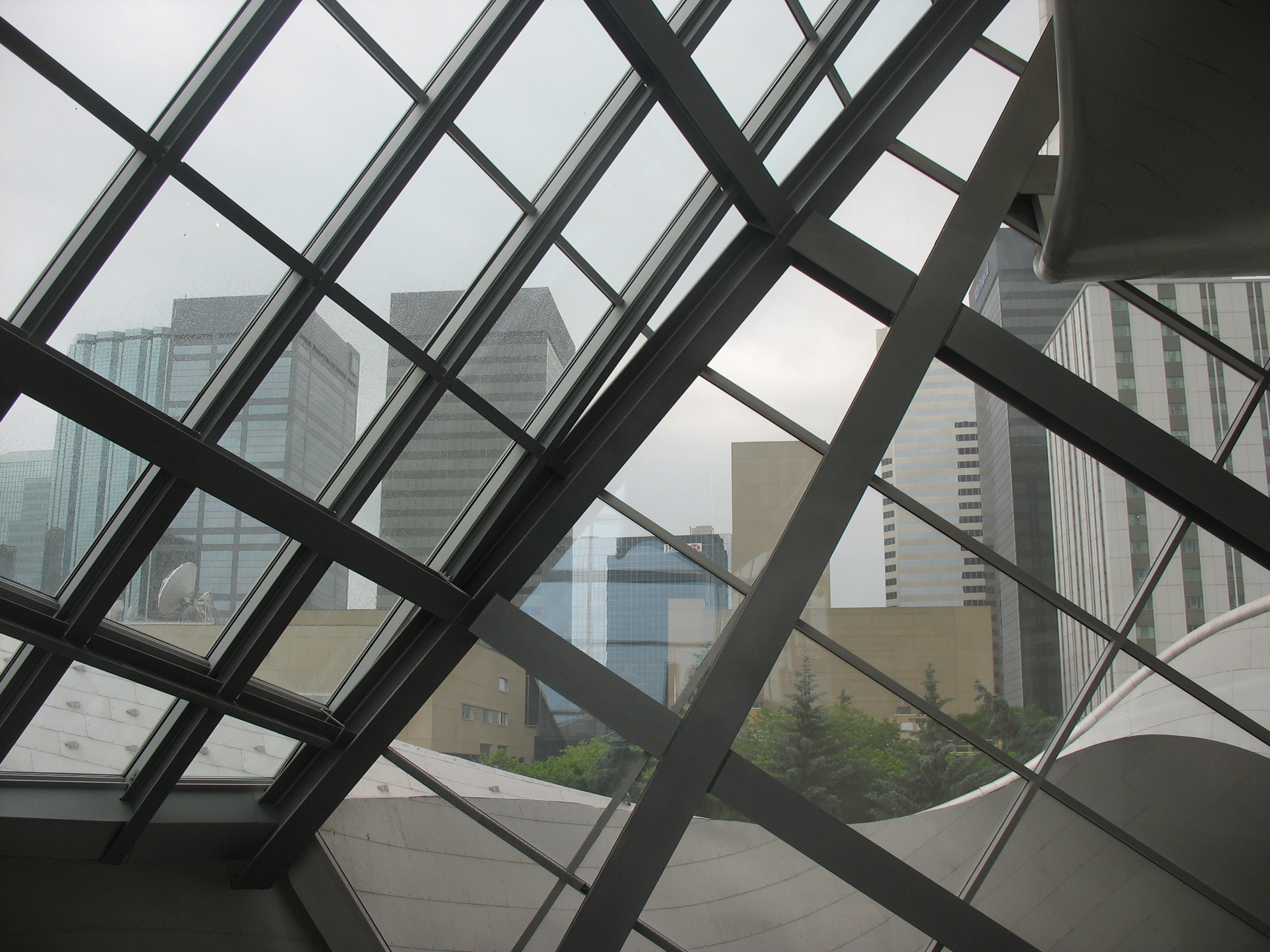
A cool rainy afternoon was a perfect time to visit the Art Gallery of Alberta in downtown Edmonton. We had never been inside the unusual building composed mostly of windows and a winding ribbon of steel before and I was as interested in the architecture as the art inside.

IMG_3972

IMG_3974

As we wandered through the exhibits, we saw pieces that we liked, pieces that we didn’t care much for and others that simply made us shake our heads. I couldn’t help wondering what makes something art. What makes one thing worthy of display in a prestigious art gallery and another not? For example, take a look at this:

IMG_3978

Whether or not they’re to our taste, I’m sure we’d all agree that the paintings on the wall are art, but what about the pile of hammers on the table? Yes, that’s what that is, a pile of hammers! What makes this pile of hammers a work of art and not simply a mess on someone’s workshop floor? I’m afraid I really don’t get it.

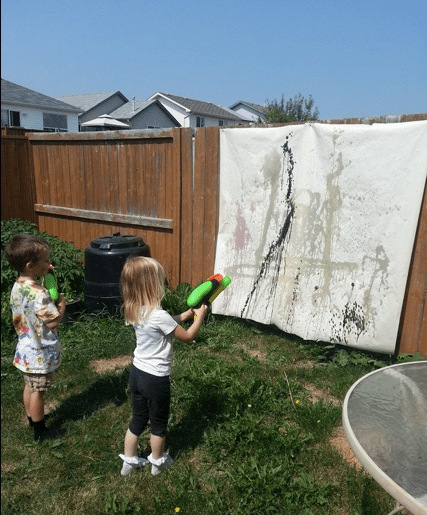
Perhaps Richard was right when he looked at the photo of two of our grandchildren that our daughter posted on Facebook yesterday.

Picture 3Photo: Melaina Graham

“All it needs is a frame and you could sell it for big bucks!” he said. Yes, that looks like art to me!

High Level Bridge Streetcar

Until I started looking into things to do while we’re in Edmonton for my radiation treatments, I’d never heard of the High Level Bridge Streetcar. Maintained and operated by the volunteer members of the Edmonton Radial Railway Society, there are actually four vintage streetcars that operate between Old Strathcona on the south side of the North Saskatchewan River and the Jasper Teminal on the north side, but only one is in operation at a time. Today, it was the Melbourne 930, built in Melbourne, Australia in 1947. In addition, the Society has five more double ended streetcars in operation at Fort Edmonton and several others that they hope to fully restore in the future.

IMG_3966

IMG_3964

Prior to September 1951, the Edmonton Radial Railway regularly carried passengers across the upper deck of the High Level Bridge. At 755m long and 49m high, the bridge was one of the world’s highest streetcar river crossings and afforded the passengers a spectacular and exhilarating view. To the delight of visitors to the city as well as locals, seasonal service was restored in August 1997.

IMG_3959

After finding a place to park near the Strathcona Terminal, we originally intended to stay on the streetcar for the 40 minute round trip, but due to the fact that I’d forgotten my water bottle, an absolute essential on a hot day especially since my saliva production has been greatly suppressed by surgery and radiation, we got off at the Jasper Terminal near the corner of 109th Street and Jasper Avenue. After finding our way to a nearby convenience store and securing a bottle of water as well as a couple of ice cream bars, we enjoying our snack in the shade of a tree at nearby Railway Park before catching the next car back to Old Strathcona.

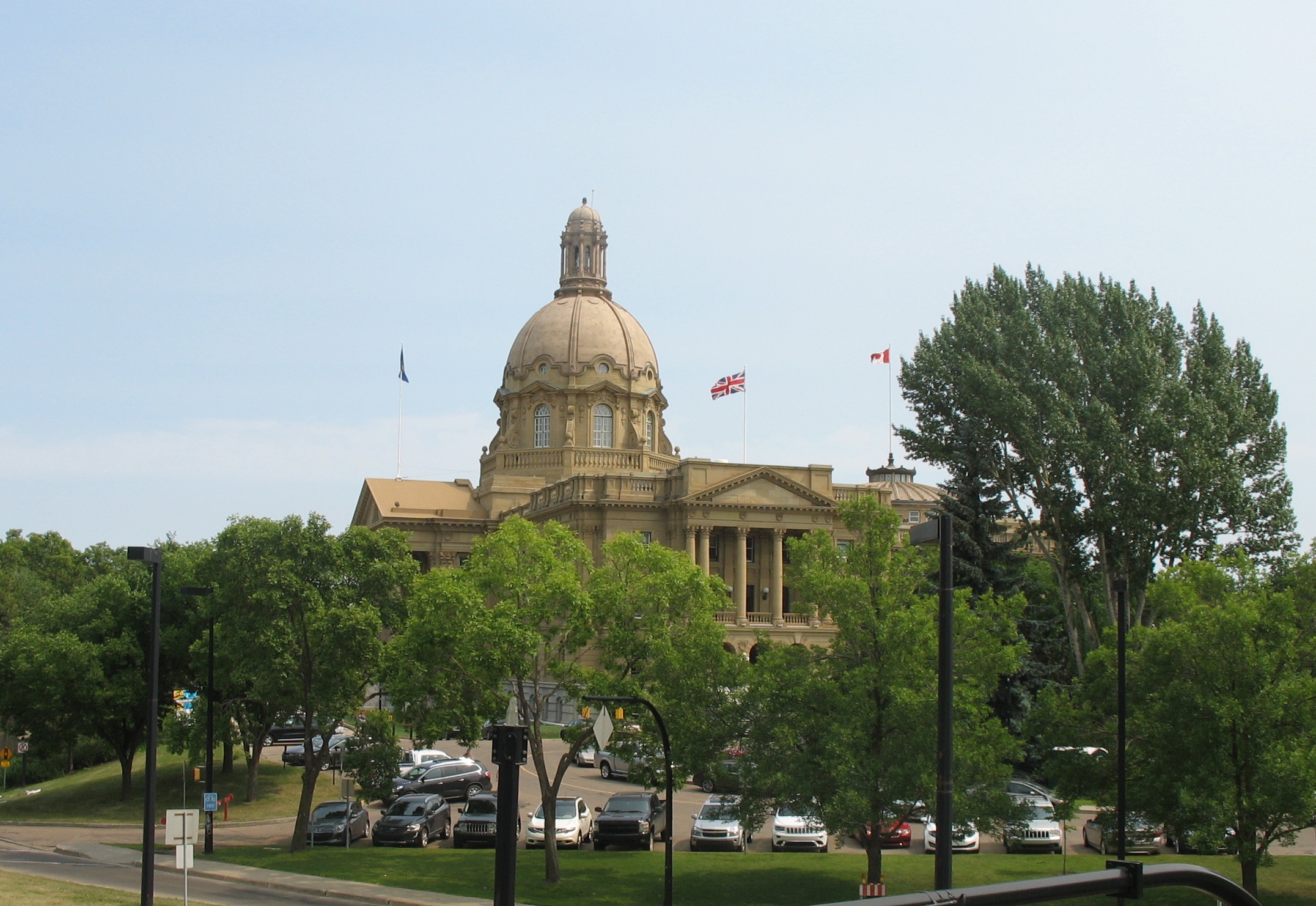
Alberta Legislature Building from the streetcar

Alberta Legislature Building from the streetcar

Fort Edmonton, a walk through time

Richard and I have been to Fort Edmonton numerous times in the past, but always with a class of students, usually 5th graders, in tow. Yesterday, we thoroughly enjoyed taking a more leisurely stroll through time without having to constantly count heads and make sure we hadn’t left anyone behind!

When we were teaching, a visit to Fort Edmonton fit perfectly with the grade 5 Social Studies curriculum which was largely a study of Canadian history. We liked to prepare our students for the field trip by reading Alberta author, Brenda Bellingham’s novel, Storm Child, to them. The story of Isobel, daughter of a Scottish fur trading father and a Peigan First Nations mother living in Fort Edmonton in the 1830s, the book never failed to capture their imaginations and bring the history alive for them.

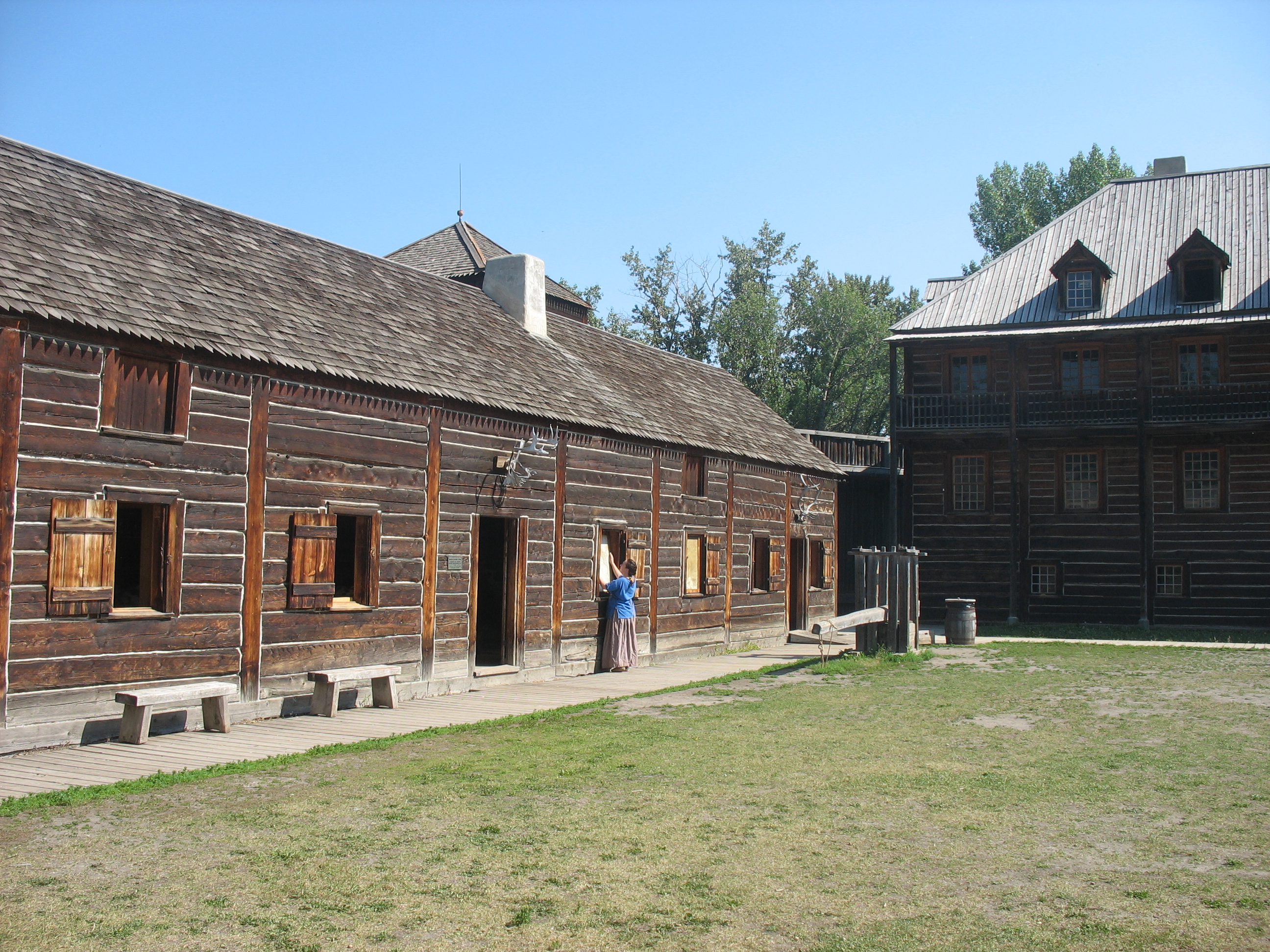
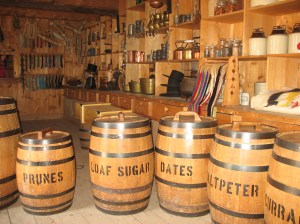
The best way to see Fort Edmonton, Canada’s largest living-history museum, is to begin your visit by climbing aboard the steam train and riding it back to 1846 and The Fort, an exact replica of the original fur trading fort which once stood on a bluff on the opposite side of the North Saskatchewan River close to where the Alberta Legislature Buildings stand today. The Hudson Bay Company fort, where natives brought their furs to trade for a wide variety of goods from Europe and other far away places, is presided over by enormous Rowand House. Built to house Chief Factor John Rowand, his wife and their seven children, it was often referred to as Rowand’s Folly due to it’s sheer size; a mansion in the middle of nowhere!

IMG_3875

IMG_3879

Rowand's Folly

Rowand’s Folly

IMG_3894_2

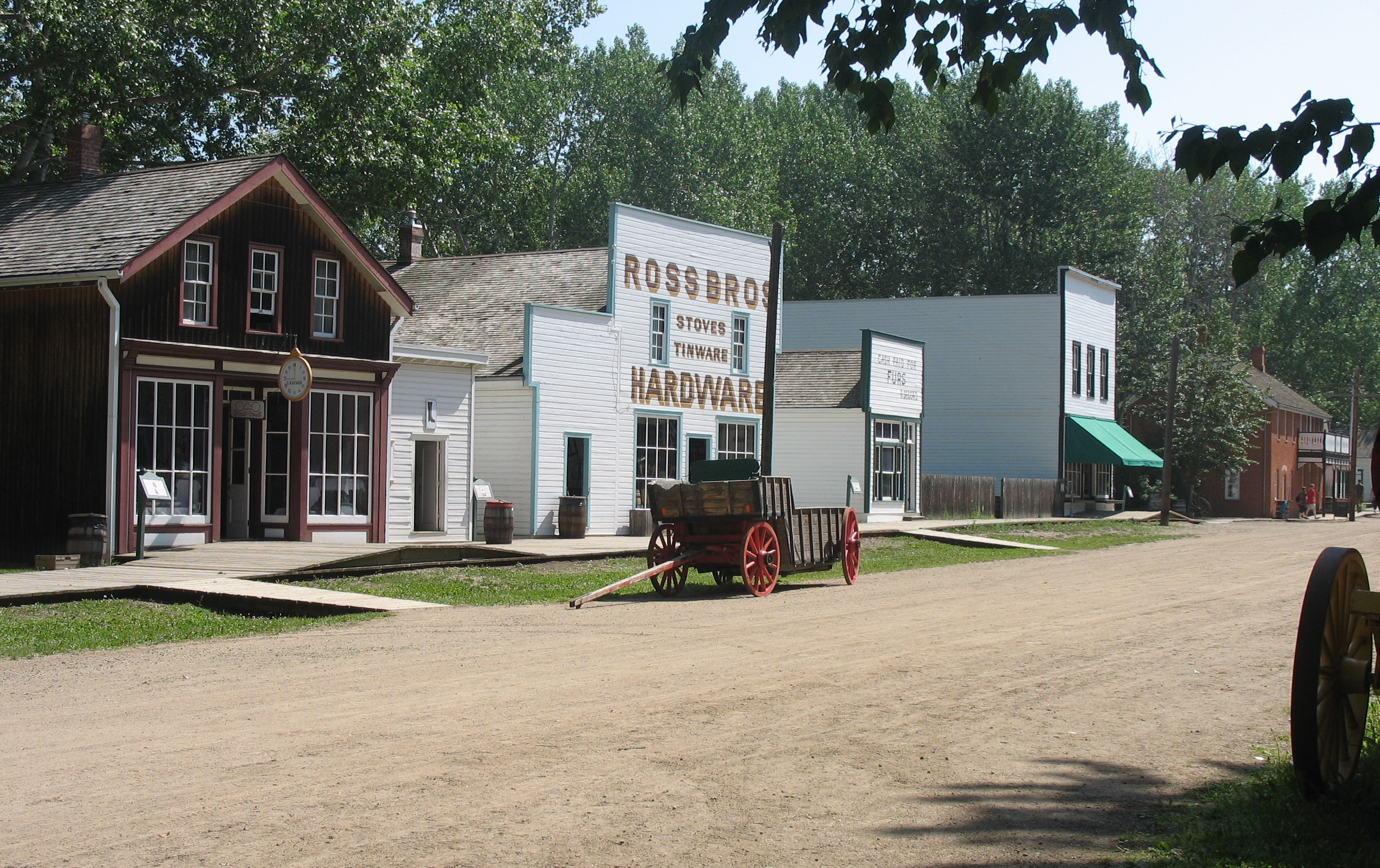
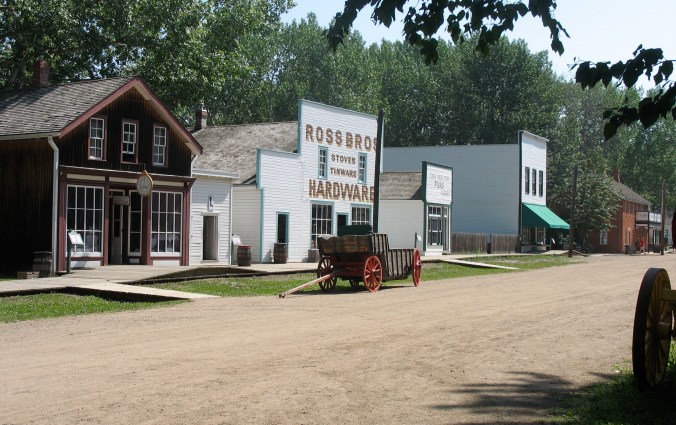
After touring the fort and the Cree encampment outside it’s walls, we left the fur trading era behind and wandered down 1885 street visiting homes, school, church and businesses of those hardy souls who made Edmonton home during it’s early settlement days.
 

IMG_3899

1885 Street

Rounding the corner onto 1905 Street, we stopped for lunch and dined on bison burgers in bannock, the traditional biscuit-like bread that sustained hungry voyageurs, settlers, and First Nations people in the early days of our country. Then it was time to take a jump forward in time and head for the Cross Cancer Institute for my radiation treatment. Our plan was to catch the streetcar in front of our eating establishment and ride it back to the park entrance but unbeknownst to us, the streetcar driver had also stopped for lunch! A brisk walk got us back to the vehicle just in time to make it to my appointment without a moment to spare!

1905 Street Where was that streetcar when we needed it?

1905 Street
Where was that streetcar when we needed it?

Within an hour, we were back at Fort Edmonton. This time, we caught the streetcar back to our stopping point and resumed our walk through time where costumed interpreters help bring history alive for visitors. We enjoyed sipping iced tea with Alexander Rutherford, Alberta’s first premier, on the front porch of his large and comfortable home that even boasted hot and cold running water! Not everyone lived in such comfort, however. In the early years of the twentieth century, Edmonton was growing at such a rapid pace that some families lived in tents for up to two years waiting for houses to be built. Not too bad in the summer perhaps, but much more challenging when the winter temperatures dipped to -40º!
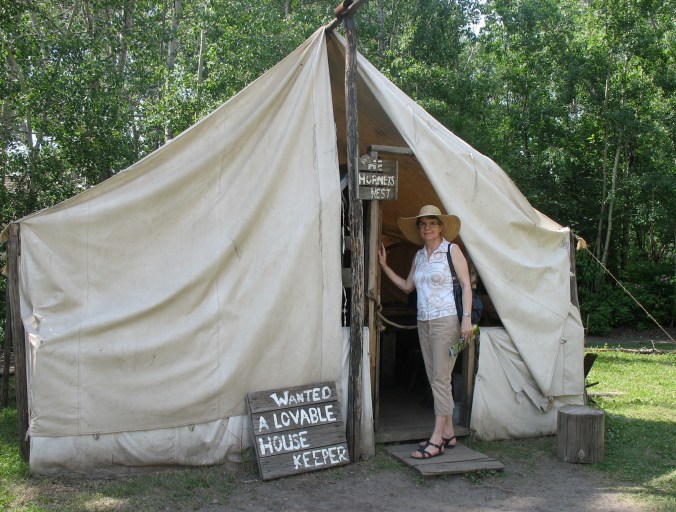
No, I didn't apply for the job!

No, I didn’t apply for the job!

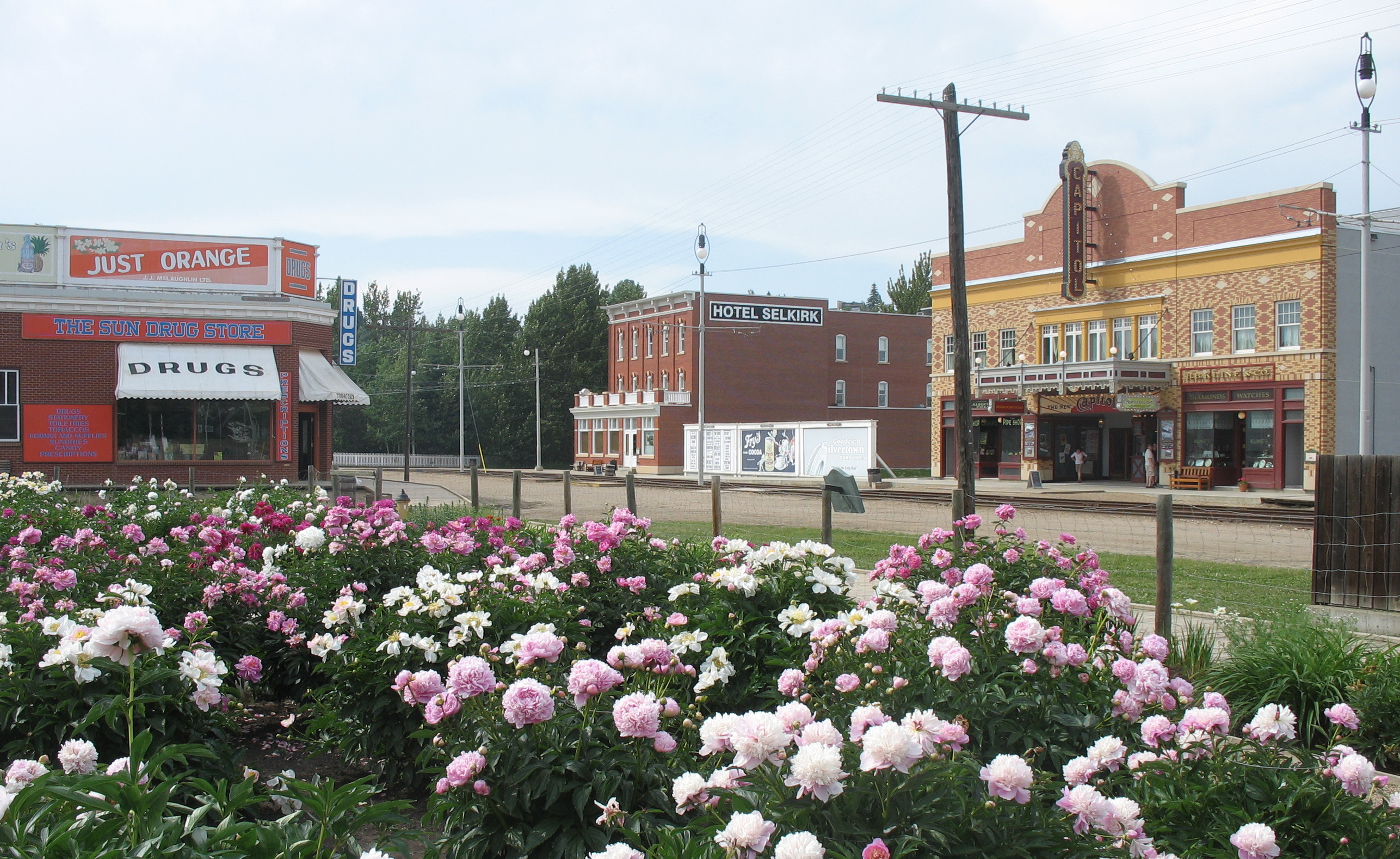
By the time we reached 1920 Street, we were ready to stop at Bill’s Confectionery for ice-cream cones. After all, it was the hottest day that Edmonton has seen so far this summer! Crossing the street to the Capitol Theatre, we took in an excellent 15 minute interactive movie about the early history of the area and the city. A walk through the beautiful peony garden, which is in full bloom at this time of year, and a visit to the Motordome, where we were able to indulge our love of antique cars, brought our day to a close.
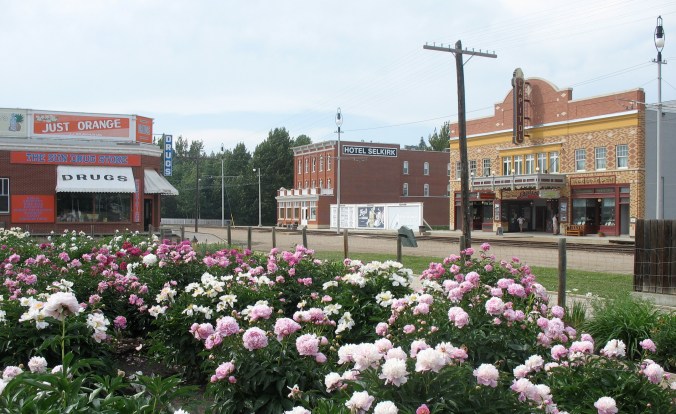
1920 Street with the peony garden in the foreground

1920 Street with the peony garden in the foreground

The only part of the park that we didn’t take in was the 1920s Midway, a fairly recent addition with games and rides that would likely be a hit if you visited Fort Edmonton with some of the younger set.

I’ve been told that fatigue is one of the most common and expected side effects of radiation. After spending a total of six hours walking through time in the hot sun, I was tired but I saw a lot of others dragging their feet back to the parking lot looking no more done in than I was and after a good night’s sleep, I feel fine!

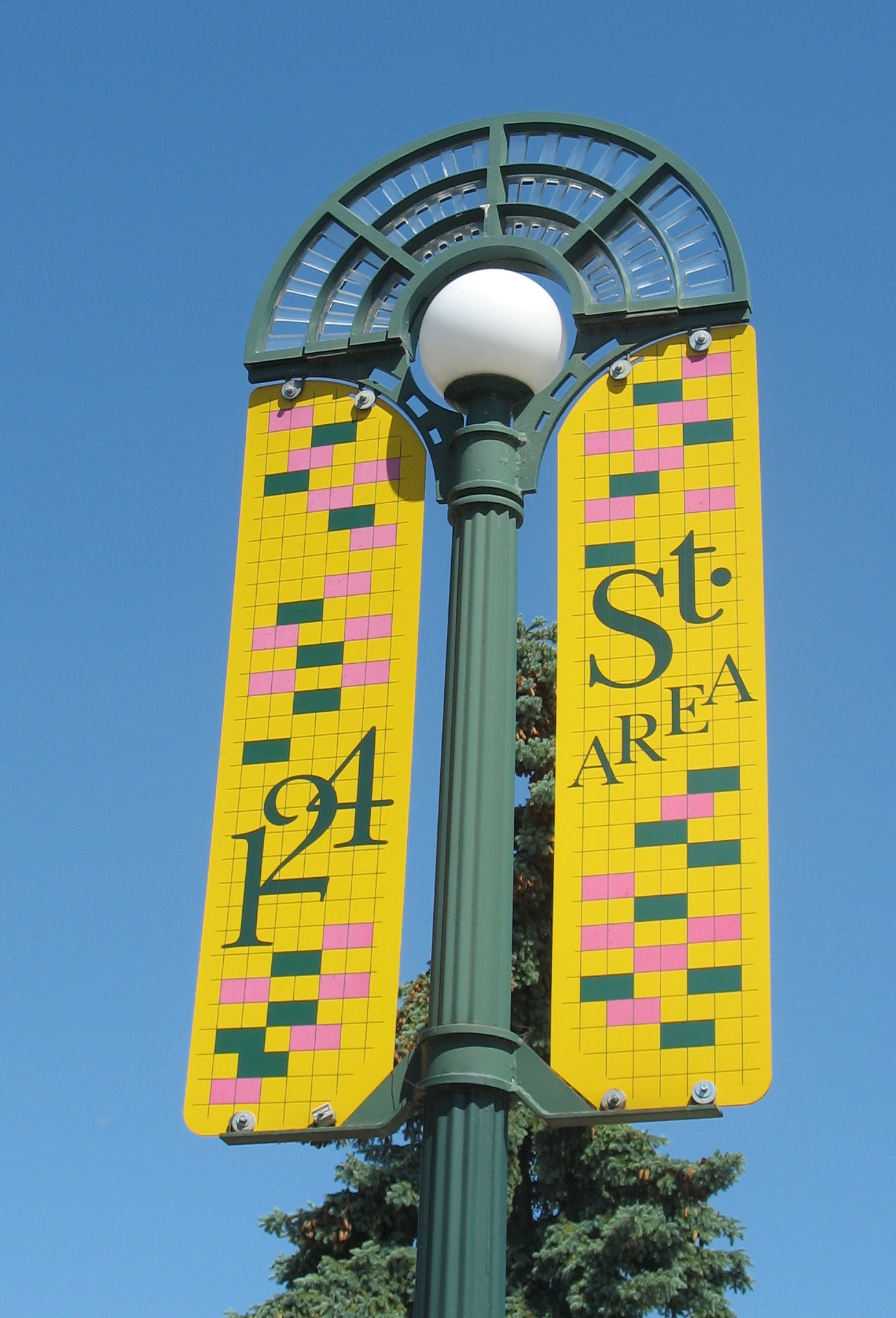
124th Street

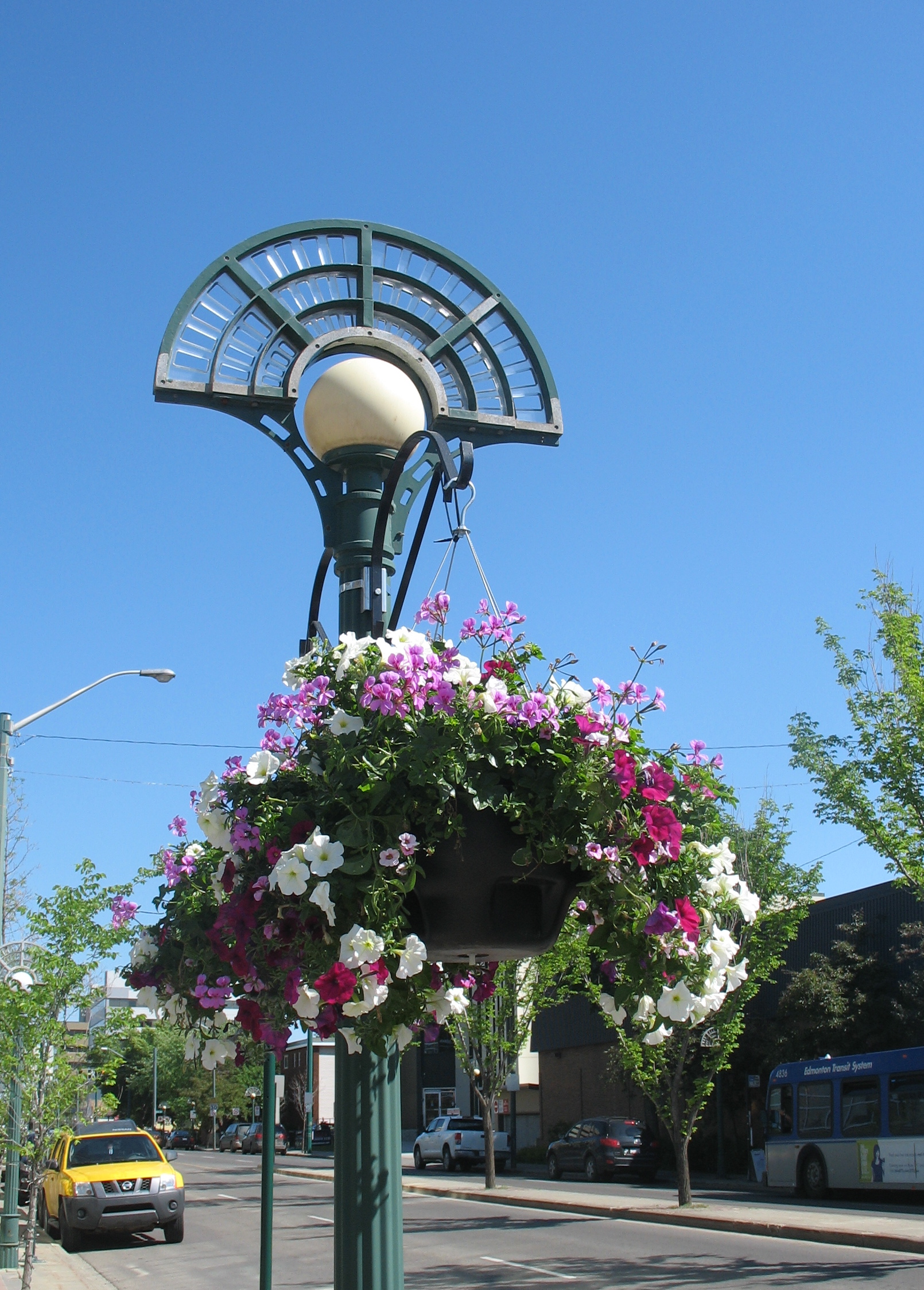
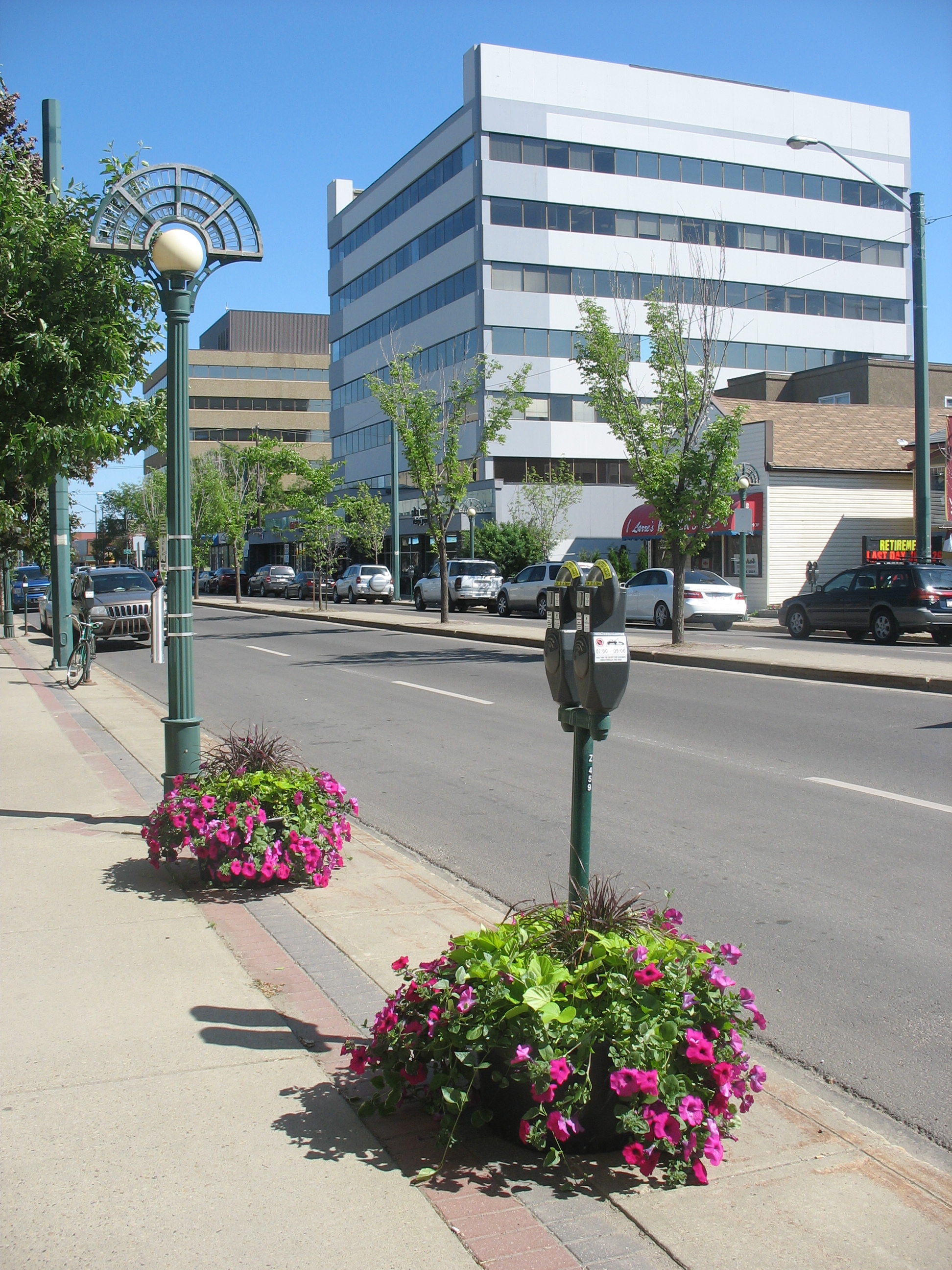
IMG_3864Today is a hot, blue sky day in Edmonton. One of the first truly summer-like days this year, it was perfect for exploring 124th Street, another of the city’s popular locations.

Beginning at the west end of Jasper Avenue and extending north to about 111th Avenue, this vibrant district is known for it’s many specialty shops, restaurants and small art galleries that feature the work of Canadian artists. We strolled from one end of the area to the other checking out several of the shops and most of the galleries.

Though we enjoyed critiquing the wide variety of art that we saw, I had to remind Richard to save some of his comments until we were back on the street! His question, “Don’t you think that this could have been painted by Drew and Jami-Lee?” (referring to two of our preschool grandchildren), asked within earshot of the gallery staff, was a mite embarrassing! In that particular case and a couple of others, I did have to agree with his assessment, but I also saw many pieces that were more to my taste. We both agreed that Bearclaw Gallery was our favourite due to our appreciation for Inuit and West Coast native art.

This was a perfect time of year to visit 124th Street. Flowers and lilac bushes bloomed everywhere adding to the already colourful scene and filling the air with their heavenly scent.

IMG_3866_2_2

IMG_3862_2

IMG_3851_2   IMG_3853

A relaxing lunch on the patio at the Urban Diner, just around the corner on 102nd Avenue, completed our visit to the area. Fortunately, radiation treatments haven’t affected my sense of taste yet and I was able to thoroughly enjoy my salmon quiche.

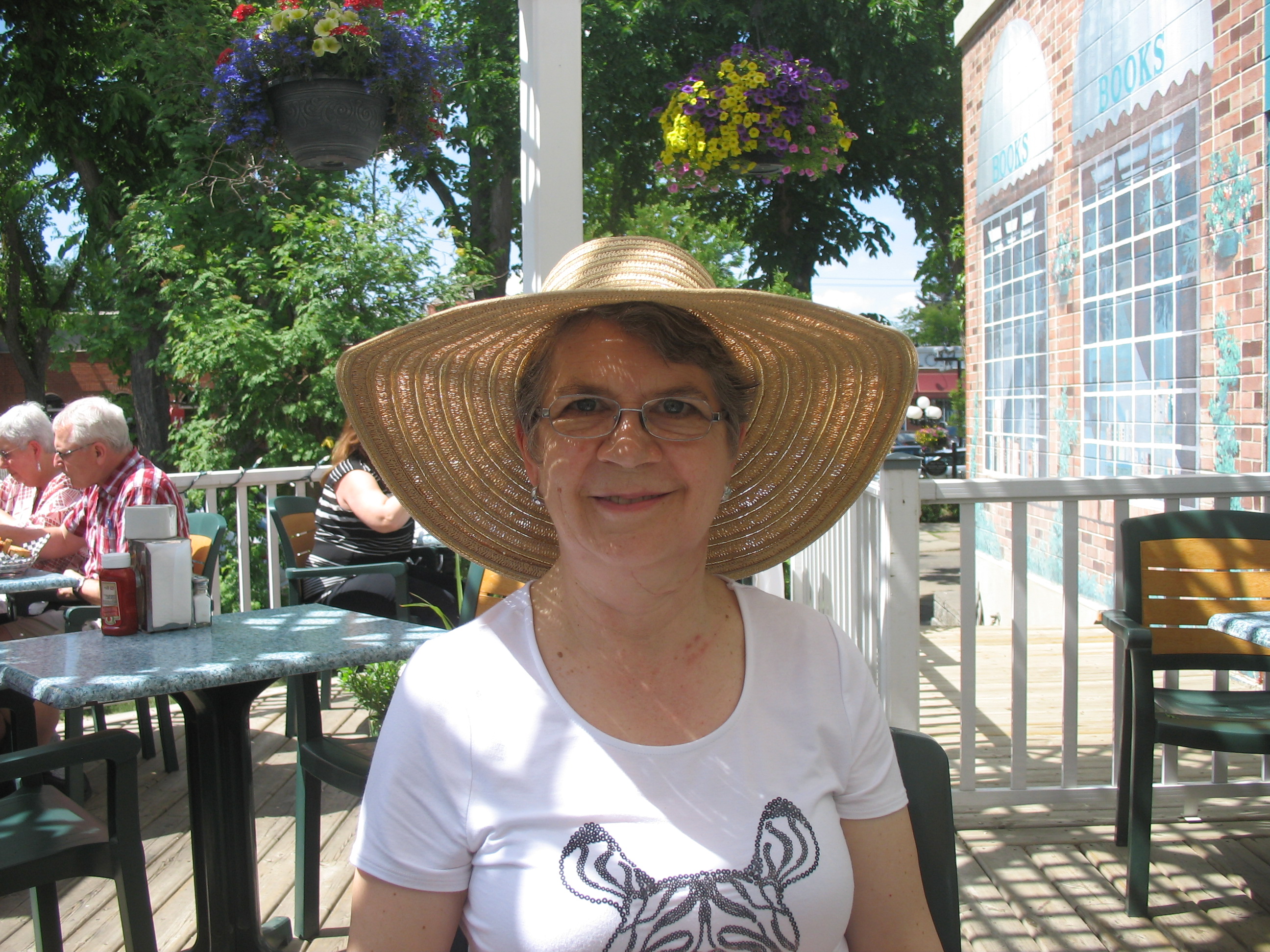
There’s that hat again!

Old Strathcona

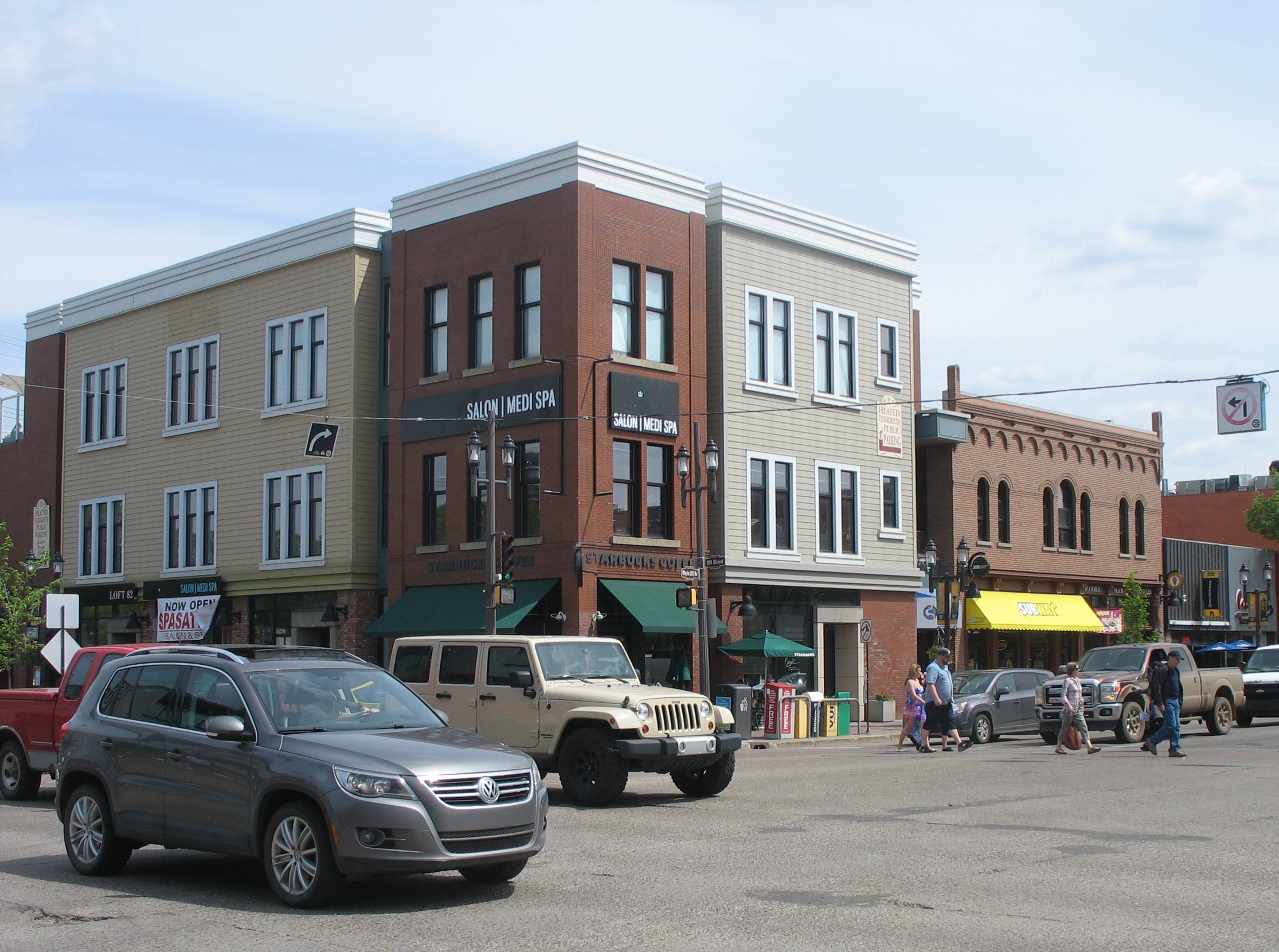
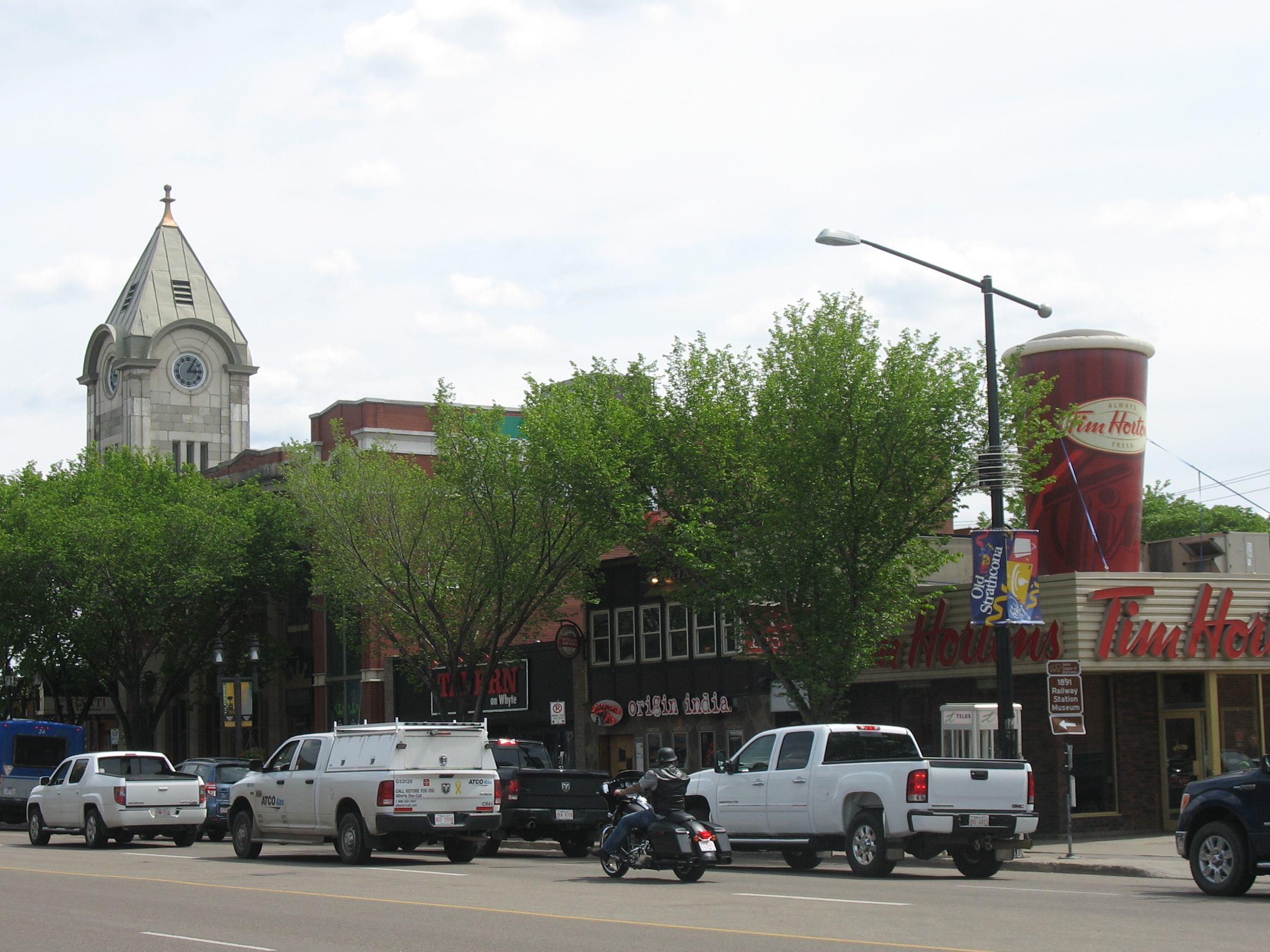
We had a couple of hours to kill between a late morning appointment with the surgeon who did my recent surgery and today’s radiation treatment. Since we were just a few minute’s drive from Old Strathcona, one of Edmonton’s trendiest neighbourhoods, we decided that that would be a good place to explore today. It had been several years since we spent any time there.

IMG_3837_2

IMG_3839_2

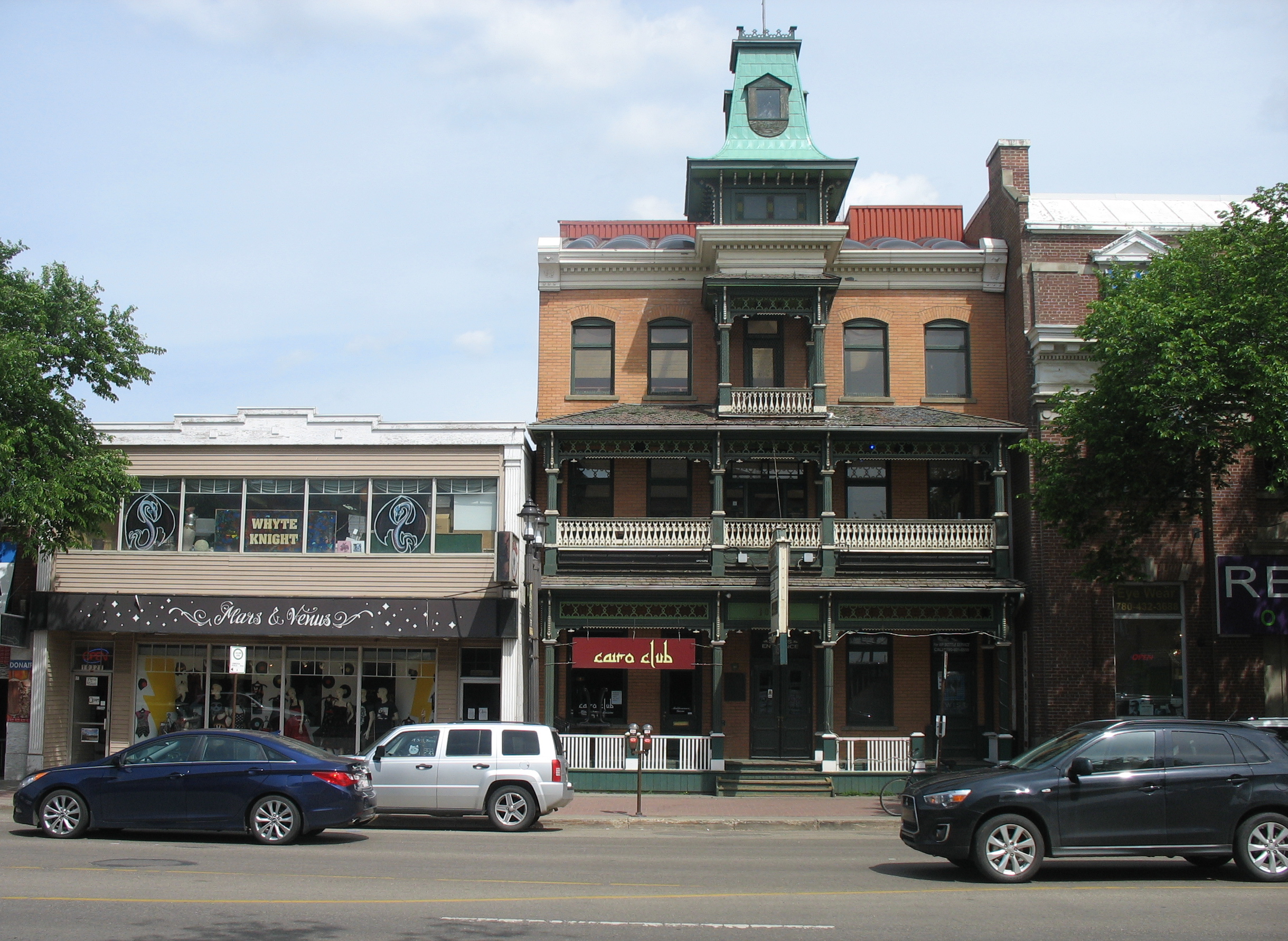
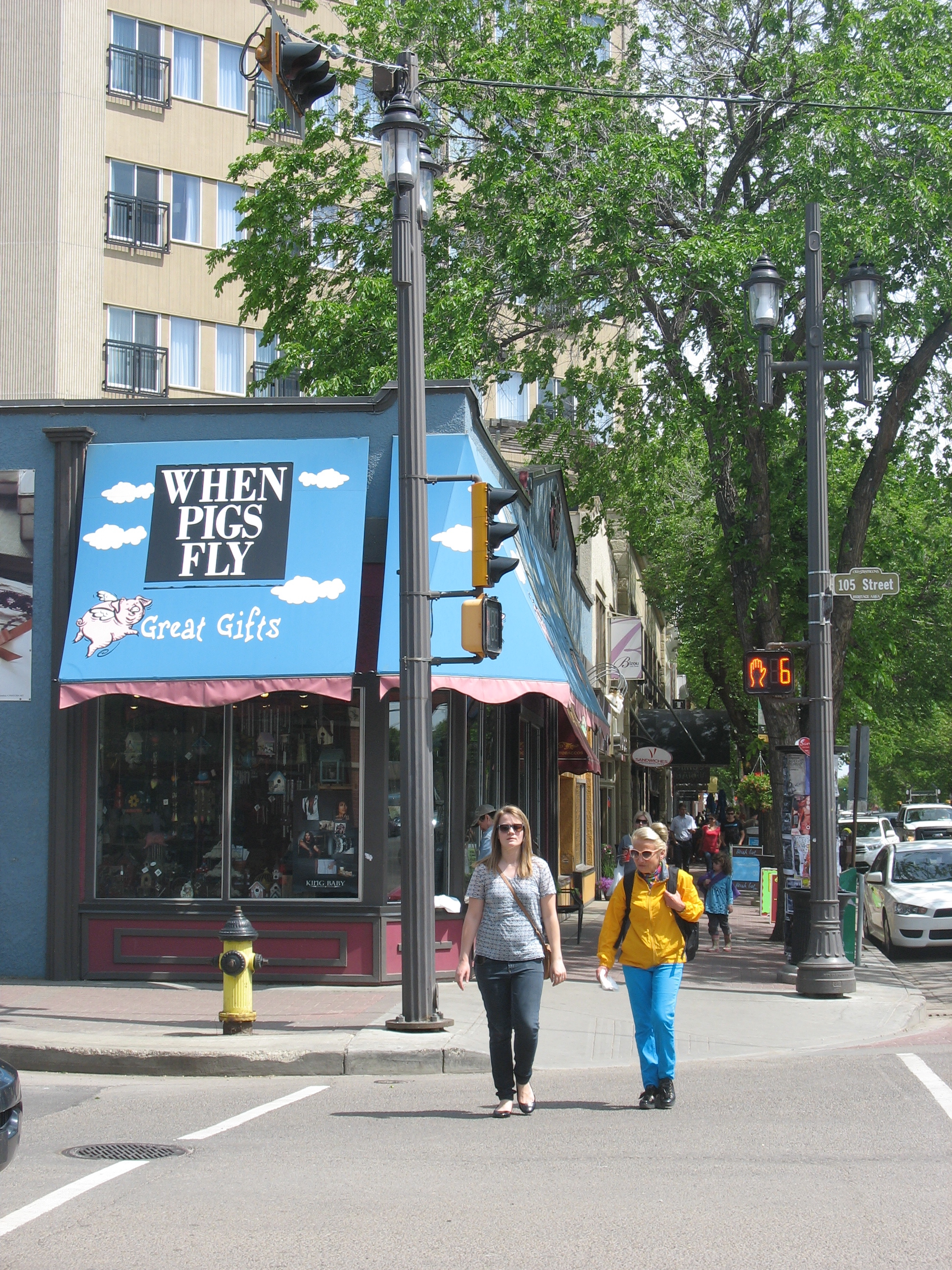
Today, the city of Edmonton straddles the North Saskatchewan River but originally, Edmonton was on the north side while South Edmonton was a separate village on the south side. In 1899, the same year that it was incorporated as a town, South Edmonton was renamed Strathcona and in 1912, the two communities amalgamated. Whyte Avenue forms the backbone of present day Old Strathcona, a funky blend of historic buildings and youthful vitality. Designated a Provincial Historic Area in 2007, it is home to a plethora of unique boutiques, galleries, music shops, restaurants and drinking establishments.

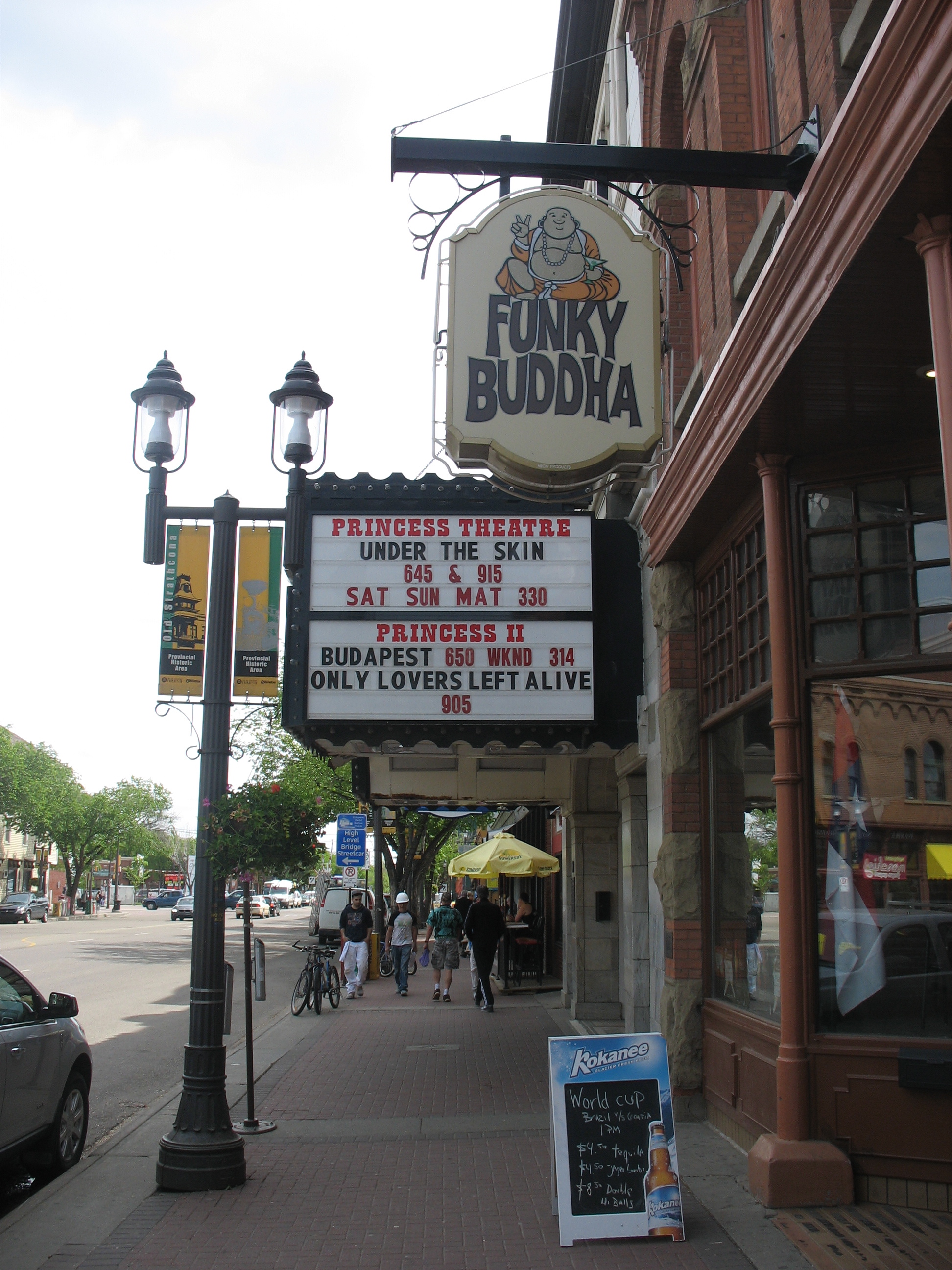
Old Strathcona has an ambiance all it’s own and is a perfect area to explore on foot. I loved the names on many of the signs; titles like When Pig’s Fly, Funky Buddha, Tilted Kilt Pub and Eatery, and The Plaid Giraffe! We enjoyed a hearty and delicious lunch of po’boys and sweet potato fries at Dadeo New Orleans Diner and Bar, a retro 50s style diner.

IMG_3849   IMG_3838

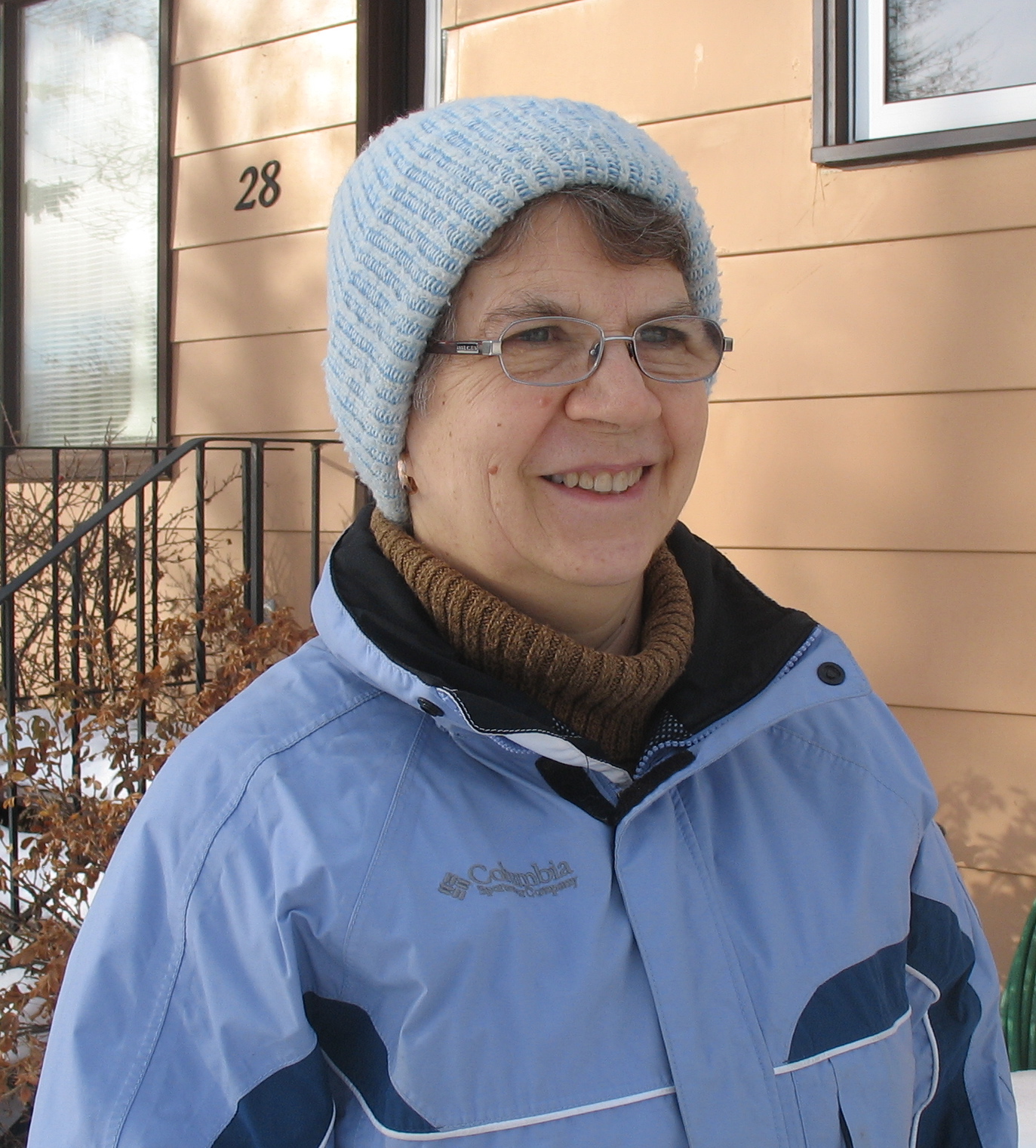
Fashion in Old Strathcona is as diverse as the people on the street; businessmen mix with students and buskers strumming guitars, each one expressing their personal style through their clothing, hairstyles, jewelry and, in many cases, body art. Personally, I wore a new hat. I’ve been told that I need to protect the area that’s receiving radiation from the sun but not to use any products, including sunscreen, on it. That’s a little tricky considering that it’s part of my face and neck. A floppy, wide-brimmed hat seemed to be the answer to my dilemma. Though the wind threatened to steal it away, you can see that it did the job rather well.

IMG_3847_2

IMG_3832

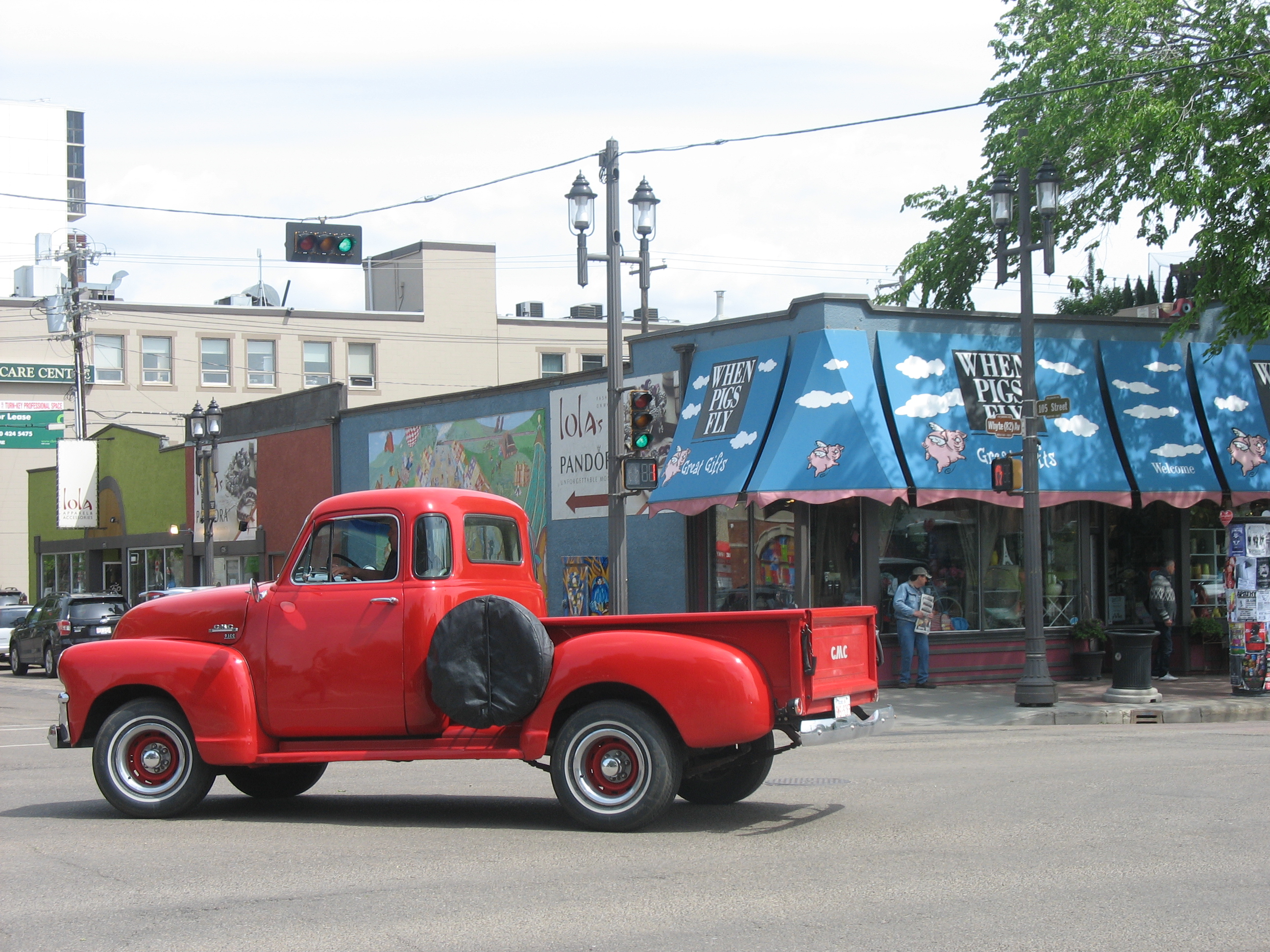
Look what drove into my picture!

IMG_3842

Contrasting towers!

Exploring close to home

Though we’ve climbed Mt. Fuji and the Great Wall of China, cruised Vietnam’s spectacular Halong Bay and swum in the Grotto on the island of Saipan, there are plenty of things right here in Edmonton, the city closest to our home, that we haven’t done. When we come to the city, it’s usually a day trip filled with mundane activities like medical appointments and shopping, but this time is different.

This time we’re in Edmonton from Monday to Friday for six weeks in a row while I undergo radiation treatment. Most days, we’re in and out of the clinic in less than an hour. That leaves lots of time to do and see the things that we haven’t taken time for in the past. Essentially, we’re playing tourist close to home.

IMG_3821

The North Saskatchewan River, one of Canada’s most historic waterways, winds its way through Edmonton on its journey from the Columbia Icefield, high in the Rocky Mountains, to the Hudson Bay. Edmonton’s river valley comprises over 20 major parks and attractions and forms the largest expanse of urban parkland in North America. With over 150 km of well-maintained trails, the river valley provides a unique opportunity for city dwellers and visitors to escape the city without ever leaving it.

IMG_3823After today’s treatment, we spent about an hour walking in the river valley, something we had never done before. Though we started off near a high traffic area, the further we walked, the more the noise of the city faded into the background. It was soon replaced by birdsong and the chatter of squirrels likeIMG_3826 this little fellow who protested loudly when we came too close.

Further along the trail, we heard an unfamiliar sound; the huff and puff of Fort Edmonton’s steam train! Though we couldn’t see it through the trees, we were passing by Canada’s largest living history museum, just one of the many attractions found in the river valley.

The confluence of Whitemud Creek and the North Saskatchewan River

The confluence of Whitemud Creek and the North Saskatchewan River

I’ve always admired cities with well developed and accessible green spaces and I’m glad we finally took the time to explore a bit of Edmonton’s!

Speaking Canadian, eh?

IMG_3571_2

Am I wearing a tuque or a knit cap? That depends on what part of the English-speaking world you’re from. Here in Canada, it’s called a tuque which rhymes with duke. Though used by 100% of Canadians, I was surprised to learn that the word is almost unheard of beyond our borders.

A recent article in the Edmonton Journal listed several other words that are used almost exclusively in Canada or that have different meanings here than elsewhere. While English speakers in most of the world, use parking garage or parking deck to describe a multi-level concrete parking structure, here in Canada, we park our vehicles in a parkade. At the beginning of each school year, we buy our children a new package of pencil crayons but in the US, they’re called colored pencils and the British call them colouring pencils. On hot summer days, we give our children freezies, popsicle like treats that come in plastic sleeves. Elsewhere, these are known by a variety of other names including ice pop and freezer pop. Adults might prefer a treat from a mickey, the term Canadians use to describe a 375 mL bottle of liquor. Using that word could get us into trouble in the US, however, where it’s slang for a date rape drug!

Beatles-Abbey-Road-album

If you’re as old as I am, you probably recognize the famous photo from the Beatles’ Abbey Road album cover. In Canada, we’d say that George, Paul, Ringo and John are in a crosswalk. It wasn’t until I taught English in Japan that I discovered that English speakers in some parts of the world refer to it as a zebra crossing!

Even within our borders or within families, we sometimes have difficulty agreeing on which words to use. Instead of using pencil crayons, children often colour with felt-tipped pens. In our family, we always referred to them as markers but my daughter-in-law insists that they should be called felts. According to my father, we use serviettes at the table but the rest of us call them napkins. In my parents’ livingroom, we sat on the chesterfield but in our house, we call it the couch. Others call the same piece of furniture a sofa. What an interesting and confusing language English is!

The dinner/supper conundrum is the one that has confused me the most. I think it’s a regional thing. Growing up on the BC coast, we ate lunch at noon. Supper and dinner were interchangeable words used to describe the main meal which was usually eaten around 6:00 pm. When I settled on the prairie, however, I found that people here often refer to the noon meal as dinner. If we’re invited to someone’s home for dinner, I’ve learned to ask what time they’d like us to come. Their answer tells me which meal they’re referring to! If I’m issuing the invitation, I’m careful not to use the word dinner at all. Everyone understands lunch and supper but dinner is just too confusing!

As Canadians, we’re probably best known for our use of the little word eh? which we tack onto the end of statements to turn them into questions as in “It’s sure been a cold winter, eh?” We do it without even thinking about it and it’s this unique Canadianism that often identifies us as being from north of the border when we travel in the US.

Following Augustine has readers from all over the English-speaking world. I’d love to know where you’re from and what words and phrases are unique to your part of the world. Please leave a comment!

Cultural surprises

Sheila has been with us for over two weeks already but she continues to be amazed by something new almost every day. In her eyes, my kitchen is a magical place. Most of the small appliances and gadgets that we take for granted are brand new to her. Like most Chinese kitchens, the one in her parents’ home doesn’t have an oven let alone a toaster, a bread maker or a food processor. Her eyes nearly popped out of her head the first time she saw me using my electric knife!

It’s not only the appliances that surprise her, however. Most of our food is also new to her. Though she’s familiar with a lot of the ingredients, we cook them entirely differently and even I’ve been surprised at how many convenience foods I use. We tend to eat a healthy diet avoiding a lot of processed foods but I do depend on things like pancake mix that are completely foreign to her. Breakfast cereal is also something she’s never eaten before. So far, Harvest Crunch, a sweetened granola with coconut and almonds, is her favourite. She’s accustomed to a spicier diet than ours and the ketchup bottle has become her best friend. In fact, she’s dubbed herself a “ketchupholic”!

The rest of the house contained many surprises for her too. Not unexpectedly, even though I’d explained the bathroom to her the evening she arrived, it took a flooded floor to remind her that the shower curtain must be inside the tub when you take a shower! That’s a common blunder for Asians when they first arrive on our shores as an Asian bathroom is basically an oversized shower stall and bathtubs are not common in China.

Laundry brought more surprises. Though we had a fitted sheet on our bed in China, Sheila had never seen one until we stripped the beds to wash the sheets! She thought I must have sewn the elastic corners myself. (In case you were wondering, fitted sheets were actually invented by an African American lady named Bertha Berman in the 1950s.) The clothes dryer also fascinates her as clothing is hung to dry in China.

That brings me to a topic that has been a big surprise to Richard and I. When we lived in China, we were amazed to see people in the street wearing their pyjamas. What we didn’t realize until Sheila came to stay is that Chinese people wear their pyjamas whenever they’re at home! Sheila only dresses to go out and immediately changes back into pyjamas when she gets home. Of course, if you’re just stepping out to run a quick errand, why bother changing at all? Sheila has been out with me more than once now in her pjs and I finally understand why we saw people walking down Little Street dressed that way!

While we continue to learn much about Chinese life from Sheila, it’s definitely been fun looking at our own lives through the eyes of someone for whom almost everything is brand new!

Magnificent mountains

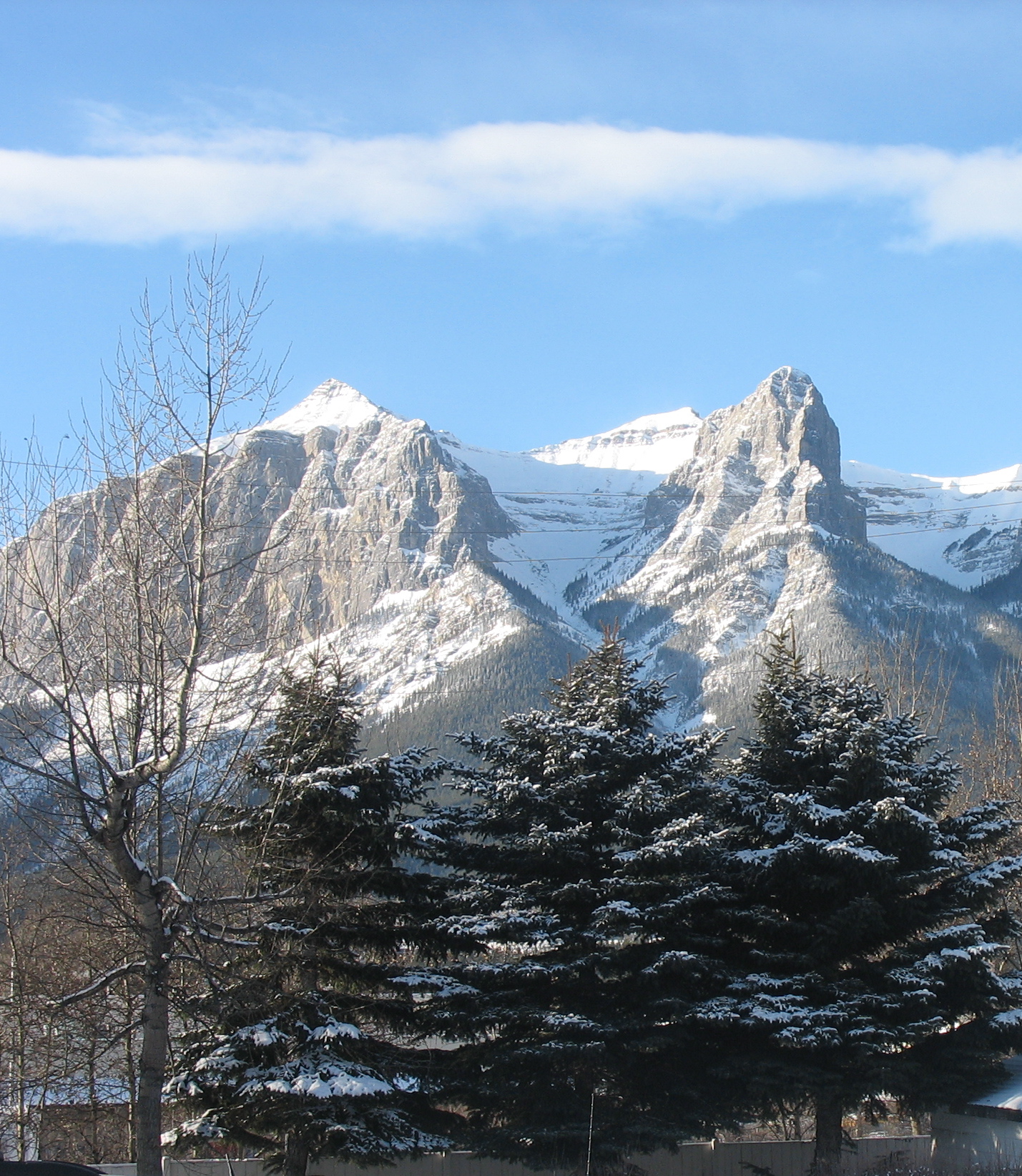
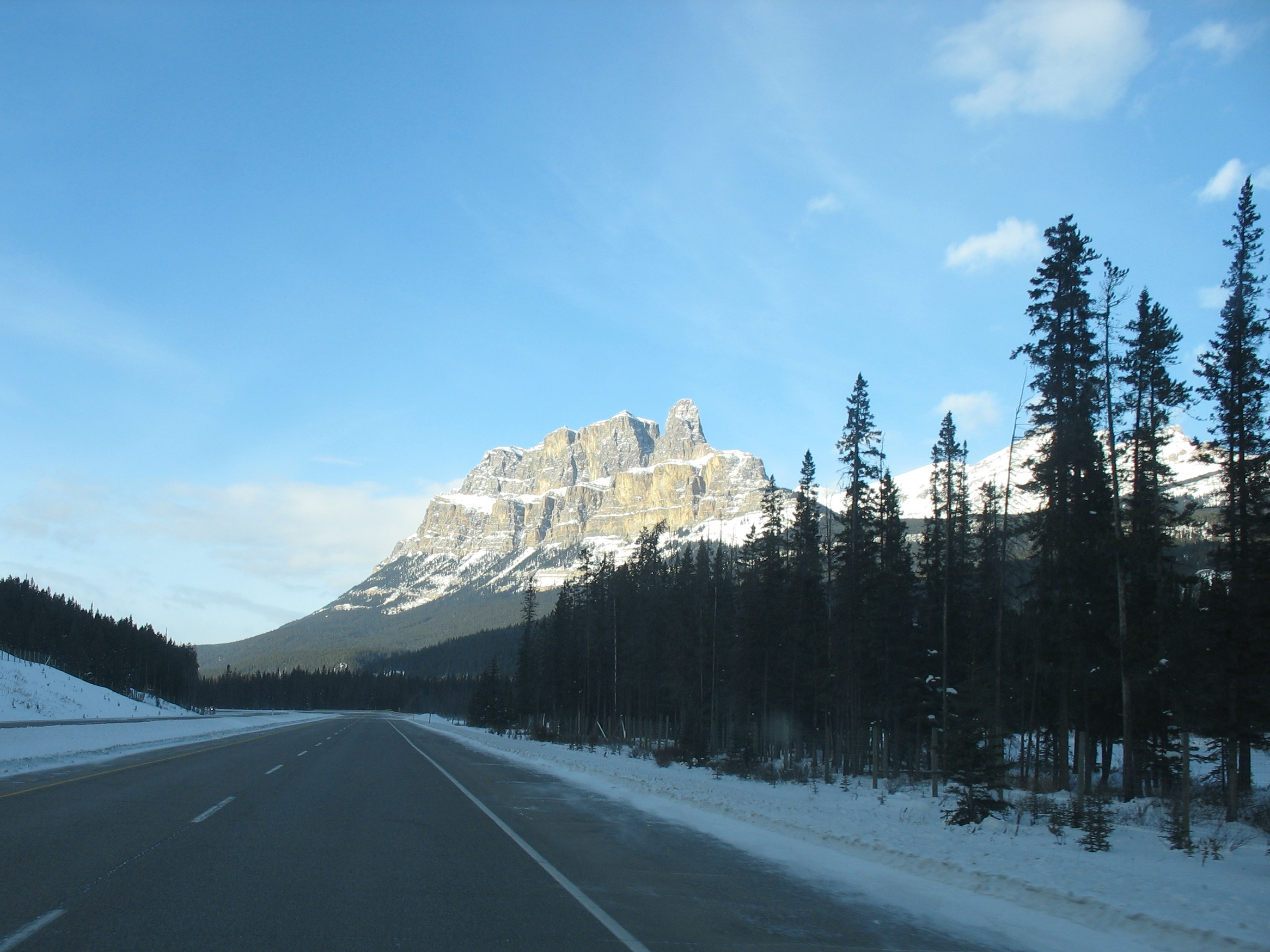
We came to Calgary after church yesterday to spend a couple of days with our daughter and her family but the main purpose of our trip was to take Sheila to see the Rocky Mountains. It was snowing when we woke up this morning and a cold wind was blowing. The recently updated road reports indicated that the highway to the west was in good condition, however, and though the weather forecast called for scattered flurries, it also mentioned sunny breaks.

We left the city in near blizzard conditions wondering if we’d see anything at all but an hour later, there they were; a wall of rugged mountains standing against a band of blue sky! We drove out of the storm and into a spectacular day. Bright sunshine glistened off the snow covered peaks and the snow flurries never materialized.

IMG_3337

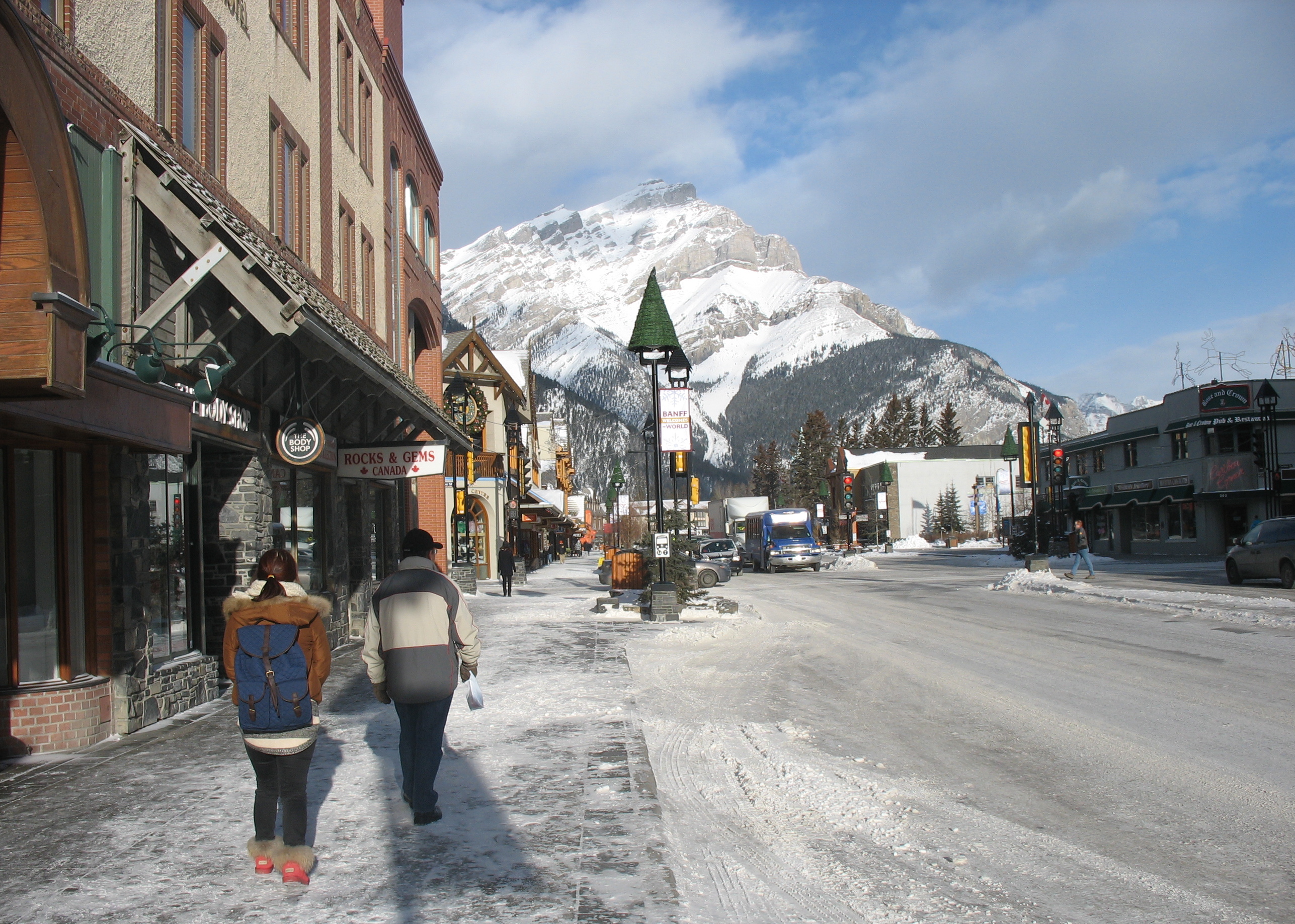
Our first stop was Banff where we browsed several souvenir stores and enjoyed lunch in a quaint little restaurant just off the main street.

IMG_3339

After stopping just outside town to enjoy views of the mostly frozen Bow River, we continued north toward Lake Louise.

IMG_3340

IMG_3346

In spite of the colder temperature at Lake Louise’s higher elevation, we walked down the the lakefront to enjoy the view. Though partially hidden by cloud, it was still magical.

IMG_3354   IMG_3352

IMG_3353

We were back in Calgary in time for supper thankful for a wonderful day and for the opportunity to share one of our country’s most beautiful areas with a very delighted Sheila.

The job that never ends!

We loved our jobs in China! By far the most fun was the time we spent with the students who were preparing to come to North America to study but this is definitely the first time we’ve brought a student home with us!

Three of my former students are now in Ontario enrolled in ESL programs at their colleges of choice and preparing to enter regular studies there in January. Since they arrived in Canada, I’ve spent lots of time communicating with them via email, Facebook and Skype, consoling and encouraging the one who is having a very difficult time adjusting, cheering on the other two, answering questions and helping them find information on everything from yoga classes to how to make healthy bagged lunches!

Sheila is my fourth student to arrive in Canada and she’s presently sound asleep in our guest bedroom! We picked her up at the Edmonton airport last night after her long flight from China and she’ll be with us for just over five weeks. On January 2, she’ll fly to Windsor, Ontario to begin her studies at St. Clair College.

We encouraged all of our students to spend their first month or two in Canada in a home stay setting to help them adjust to Canadian life and to allow them to practice their English in a home where they would be immersed in the language. Sadly, both girls who chose that option found themselves in homes that didn’t meet our expectations; homes where they were left to fend for themselves and not incorporated into a family atmosphere. They probably would have done just as well or better living in a dorm. That’s not the sort of experience we want to give Sheila!

I’ve waited to start decorating the house and doing my Christmas baking until Sheila’s arrival so that she can join in all the fun. After all, this will be her very first Christmas! The whole family is coming home this year so she’ll experience all the noise and fun of a family celebration.

In the meantime, there are lots of other things we want to show her; simple things like a typical Canadian grocery store and things we take for granted such as how to use the myriad of small appliances on my kitchen counter. There are places we want to take her like West Edmonton Mall and sights we want her to see like the spectacular Rocky Mountains. We’ve also arranged for her to be able to visit our local high school to see and experience how different it is from schools in China.

Before we embark on a whirlwind of activity, however, we’d better let her sleep awhile longer and give her a chance to start getting over her jet lag!

with Sheila in China

with Sheila in China