Book of the month – October 2023

Iris & Ruby

Rosie Thomas

9780007173549-l19-year-old, Ruby, driven by her difficult relationship with her mother, runs away from her home in England and seeks refuge with the grandmother she hasn’t seen for many years. Her unexpected arrival on Dr. Iris Black’s doorstep in Cairo brings life and disorder into the elderly woman’s house.

After a lifetime of independent living, Iris recognizes in herself the early signs of dementia. Lovingly cared for by her servant, Mamdooh, and her cook, Aunty, she has become increasingly reclusive, but the arrival of her granddaughter changes that. An unlikely bond forms between the two as Ruby attempts to help her grandmother record her fading memories.

Iris & Ruby is a richly textured story of love, loss, and the power of family relationships.

Through Ruby’s experiences and Iris’ memories, the novel moves seamlessly between present day Cairo and the same city during World War II. Thomas’ writing is wonderfully descriptive drawing us into the glittering parties and the devastating wartime losses of the 1940s; the sights, sounds, and smells of the crowded marketplace of today; and the timeless and relentless desert that surrounds them both.

I was drawn to this novel by the fact that I would love to visit Egypt someday. While preparing to write this post, I discovered that Literary Tours in Egypt actually offers a Rosie Thomas’ Iris and Ruby 2-day tour of Cairo! What a cool idea!

Book of the Month – September 2023

I Am a Bacha Posh

Ukmina Manoori

9781629146812-usThe subtitle of this short, but intriguing memoir, My Life as a Woman Living as a Man in Afghanistan, tells much about the content of the book, but it could also be misleading to those of us living in western cultures. This is not a book about living a trans experience.

You will be a son, my daughter.” With these stunning words young Ukmina learned that she was to spend the remainder of her childhood as a boy. This had nothing to do with gender confusion on her part. In Afghanistan’s heavily patriarchal, male-dominated society, it is customary for some families, especially those without sons, to choose a daughter to live, dress and behave as a boy, even taking on a boy’s name. These children are known as bacha posh which means “dressed up as a boy” in the Persian dialect, Dari.

Families have various reasons for making this choice and there are no statistics on how many families have daughters living as bacha posh. In most cases, due to the somewhat secretive nature of the practice, only the family, close friends, and necessary health and education officials know the bacha posh’s biological sex.

As a bacha posh, a girl has all the freedoms denied to her as a member of the female sex. Instead of staying at home cooking and cleaning, she can move about freely in public, attending school, running errands, playing sports, and sometimes finding work to help the family make ends meet.

Once a bacha posh reaches puberty, however, she is expected to revert to traditional female roles putting on the veil, staying at home unless accompanied by a male, and preparing for an early marriage. What makes Ukmina’s story unique is that when that time came, she refused. Confronting societal and family pressure, she continued to live as a man, not because of gender dysphoria, but because she doesn’t want to give up the the rights and privileges of a male in Afghan society.

Ukmina’s choice paved the way for an extraordinary destiny. She acted as a scout for the resistance when the Soviet Union invaded Afghanistan and ultimately commanded the respect of everyone she encountered. There did come a period of time when she lived in isolation and fear of the Taliban and even of some of her fellow villagers who didn’t agree with her life choices. Eventually, however, she entered politics and as an elected member of her provincial council, fights tirelessly to improve women’s rights.

Rather than telling you any more of her story, I’m simply going to share three quotations that I think wrap up Ukmina’s thoughts about her experience and the life of women in Afghanistan.

Living in men’s clothing has given me a certain freedom. A life as a woman in Afghanistan is a life of destruction.

I say to myself that I have sacrificed nothing. I have done what I had to do. I became what I was. I found my destiny. And there is nothing I lack.

I also told myself that women were beautiful creatures of God. Men were cruel. I often asked Allah: “Give me the power of men and the kindness of women.””

If a novel about bacha posh would be more to your liking, I would highly recommend The Pearl That Broke Its Shell by Nadia Hashimi.

Book of the month – August 2023

What the Wind Knows

Amy Harmon

wtwk-ebookx300_origI was absolutely captivated by this story! I could hardly put it down and when I had no choice, I couldn’t get it out of my mind. I didn’t want it to end and yet I had to keep reading to find out what happened. Clearly, nothing was going to get done around here until I finished it! 

In What the Wind Knows, Amy Harmon seamlessly blends elements of three genres – time travel, romance, and historical fiction – into one compelling and emotional read. 

In 2001, New York novelist, Anne Gallagher, grieving the death of her beloved grandfather, Eoin, travels to Ireland to carry out his request that she scatter his ashes on Lough Gill, the lake overlooked by his childhood home. There, she is mysteriously transported back in time to 1921, a time when Ireland was embroiled in a violent struggle for independence. Mistaken for her own great grandmother, a revolutionary who was missing and presumed dead, she adopts her identity, and is reunited with her grandfather as a 6-year-old boy. She also falls in love with his guardian. I don’t want to tell you too much of the story, but I couldn’t help wondering, would Anne live out the rest of her life in the past or would she, at some point, return to the life she’d left behind. I will say that I found the ending very satisfying. 

Amy Harmon is a gifted writer who makes the transition in time seamless and believable. She combines the magical and the real and integrates fictional characters and story with historical people, events, and places in a way that brings them to life. 

Not your typical time travel story and much more than a mushy romance, What the Wind Knows is a beautiful story of love that spans generations and time. Each chapter is introduced with a snippet of poetry by famous Irish poet, William Butler Yeats, who was a contemporary of the historical characters. Well researched and cleverly told, the novel introduced me to a period of political unrest in Ireland that I knew very little about and for those of us who love fashion, there’s even a bit of that. After all, Anne shows up in 1921 in clothing that is entirely inappropriate for the era and has to go shopping for a new wardrobe! 

I could go on and on, but suffice to say that I found this book absolutely mesmerizing and I’ll definitely be looking for more of Amy Harmon’s novels to read. 

There will be no Fashion Friday post this week. Camping with grandchildren took precedence!

Book of the month – July 2023

Breaking The Age Code

Becca Levy, PhD

Screenshot 2023-07-14 at 10.05.53 PMHow would you like to extend your life by 7.5 years? According to Dr. Becca Levy, Yale professor and leading expert on the psychology of successful aging, you might be able to do just that!
Breaking the Age Code is a fascinating book that could literally revolutionize how you think about aging. Levy’s premise is that our age beliefs, what we think about older people and about getting older, influence how we age. She presents both factual evidence and interesting anecdotes showing that having positive age beliefs results in better physical and mental health in our senior years and actually extends life expectancy. This makes sense when you consider that having positive age beliefs promotes physical exercise as well as social and intellectual engagement and diminishes stress.

Unfortunately, we who live in North America and Europe are constantly bombarded with negative age beliefs. Even saying that someone is having a “senior moment” suggests that there is truth to the all too commonly accepted stereotype that our brains inevitably deteriorate as we get older. In reality, people of all ages experience these momentary memory lapses and there is tremendous variability in how our brains function as we age.

Breaking the Age Code presents us with easy-to-follow techniques for shifting our age beliefs from negative to positive. The first step involves becoming aware of our own age beliefs as well as recognizing the ageism that is so prevalent in our society. The book is also a call to stand up against ageism and its negative effects.

Not only is Becca Levy one of the world’s leading experts on aging and longevity, but she’s also a wonderful storyteller. Her book is both informative and inspiring and would be of benefit to readers of all ages, those who will be old someday and those who already are.

Book of the month – June 2023

346298825_796475711644640_3455810401975110479_n

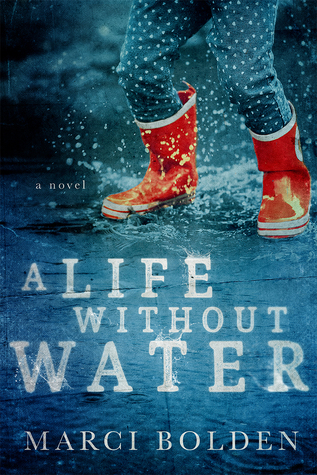
A Life Without Water

Marci Bolden

51358755After reading Rohinton Mistry’s A Fine Balance, a 713 page novel about life in India in the 1970s and 80s, and then Timothy Keller’s The Reason for God: Belief in an Age of Skepticism, I was looking for something light to read! Something frivolous and entertaining.
While A Life Without Water was a quick, easy read it wasn’t quite what I expected. Instead, it dealt with a number of serious issues including divorce, alcoholism, loss of a child, and terminal illness. It’s also a book about forgiveness and about finding peace in the midst of heartbreak.

Carol Denman is a recent widow, still dealing with the loss of her second husband, when the ex-husband that she hasn’t seen in more than 20 years barges back into her life. John Bowman is very sick and while he can, he has some amends to make and promises to fulfill. In order to do so, he needs his ex-wife’s help. His presence turns her life upside down and forces her to confront long suppressed feelings of anger, resentment, and grief. The fact that she goes along with the request that he makes of her seems rather unrealistic to me, but it does make for a good story. If you’re given to tears, you might want to have a few tissues on hand!

While A Life Without Water can be read as a standalone, it is the first in a series of three. A Life Without Flowers and A Life Without Regret continue Carol’s story.

Book of the month – May 2023

When it came time to write this month’s book post, I couldn’t decide which of two historical novels I wanted to feature, so I took the easy way out and wrote about them both!

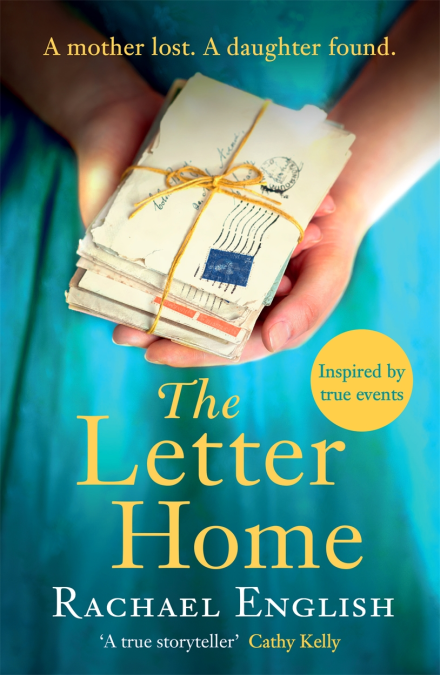
The Letter Home

Rachael English

hbg-title-9781472264701-63.jpgRachael English is a novelist and a presenter on Ireland’s most popular radio programme, Morning Ireland. In her most recent novel, inspired by true events, the lives of three remarkable women are interwoven across time.
While back home in County Clare on Ireland’s west coast, Jessie Daly, whose life has recently fallen apart, agrees to help an old friend research what happened in that area during the terrible famine of the 1840s. Meanwhile in Boston, lawyer Kaitlin Wilson, after suffering a tragedy of her own, decides to research her family history. She knows only that her ancestors left Ireland for Boston in the 19th century. Separated by an ocean, and totally unknown to one another, the two women are drawn into the remarkable story of a brave young mother named Bridget Moloney and the terrible suffering that she and her little daughter, Norah, endured during the famine.

Even on a busy weekend celebrating the birthdays of two of my grandchildren, I had a hard time putting this book down! Perhaps I connected so strongly with the story because I’ve recently been sorting through a box of old family photos, inherited from my mother, and trying to correctly label them before the identities of the people in them are forever lost in the mists of time. Like Jessie and Kaitlin, I’ve taken to the internet to find out more about these ancestors of mine and their lives, but perhaps that should be a story for a different post!

If you enjoy historical fiction or genealogy is your thing, this is definitely a book for you. I enjoyed it so much that I’ve now loaded one of English’s earlier novels, The American Girl, onto my Kindle for future reading.

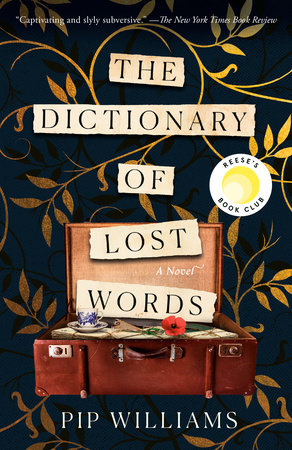
The Dictionary of Lost Words

Pip Williams9781984820747

Knowing that I’m a lover of words and a strong advocate of equal rights for women, my daughter recommended that I read this one. Australian novelist, Pip Williams, masterfully weaves a fictional story into and around the true historical events and people involved in compiling the first edition of the Oxford English Dictionary in the late 1800s and early 1900s.

The only child of a widowed father, Esme spends her early childhood in the Scriptorium, a converted garden shed in Oxford where her father and a team of dedicated lexicographers collect and compile words for the dictionary. From her place under the sorting table she collects stray word slips dropped or discarded by the men and hides them in a small trunk that she labels “The Dictionary of Lost Words”. As she grows up, she begins to realize that not all words are considered appropriate for inclusion in the dictionary, particularly words pertaining to the experiences of women and common folk; words that were considered coarse or vulgar, spoken but not usually written. And so she begins her own collection of words by seeking out the lower-class, less educated people and listening to their everyday speech.

A book about words might sound dreadfully boring to some, but The Book of Lost Words is much more than that. The years during which the Oxford English Dictionary was being compiled coincided with the women’s suffrage movement in England as well as World War I and both have a part to play in the story. More than just a book about words, it’s a book about love, loss, the roles of women, the meaning of service, and a book that asks the important question, whose words matter?

Book of the month – April 2023

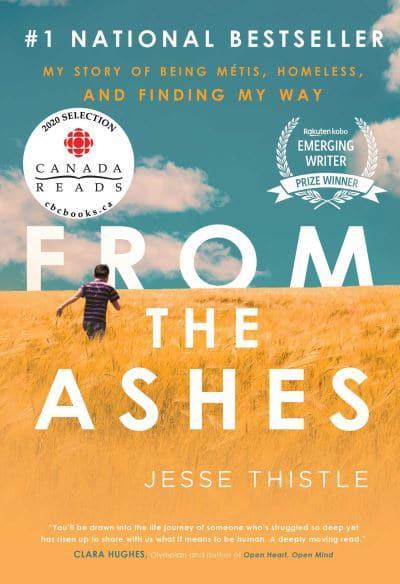
From the Ashes

Jesse Thistle

9781982101213This month’s book was a difficult read because of the content, but at the same time, it was difficult to put down!
Abandoned at the age of 3, Jesse Thistle and his two older brothers were taken into care by the Saskatchewan Children’s Aid Society. After a short time in foster care, they were raised by their paternal grandparents in Brampton, Ontario. In his teens, struggling with the effects of generational trauma and loss as well as his identity as an Indigenous youth, Jesse succumbed to a self-destructive cycle of drug and alcohol addiction and petty crime that eventually led to a decade of homelessness.

Finally, realizing that he was going to die if he didn’t turn his life around, Jesse entered Harvest House, a residential rehab centre and began his healing journey. Today he is a husband, a father, an assistant professor at York University, and is working on his PhD. Once a high school dropout, he won a Governor General’s Academic Medal in 2016 and is a Pierre Elliot Trudeau Foundation Scholar and a Vanier Scholar. He is also the author of the Definition of Indigenous Homelessness in Canada, published through the Canadian Observatory on Homelessness.

It was never Jesse’s intention to write a memoir. The fourth step in his addiction recovery program involved writing a “fearless moral inventory” as part of making sense of all that had happened to him. In 2016, the Toronto Star published a profile of him that led to Simon & Schuster approaching him about a potential book deal. Fleshing out that original moral inventory became the book in which, through both poetry and prose, he details devastatingly painful scenes with brutal honesty and bluntness. It is, at times, a gut-wrenching read, but it is also a story of resilience and hope. As I read it, I couldn’t help thinking of all the other Jesses living on our streets and in our prisons. Every one of them has a story, but not all will end well.

One such story is that of Jesse’s father.

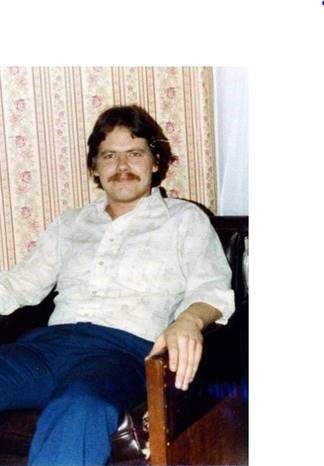
cyril--sonny--thistle-1-6084909-1664221809142

Cyril “Sonny” Thistle, who was born April 3, 1954, was last seen in 1981 in Brampton, Ontario, near McLaughlin Road and Queen Street East. At the time he went missing, he was described as having a fair complexion, light brown hair, a thick moustache, and a gap between his top two front teeth. He was 26 years old.

The Thistle family has been trying to locate Sonny for several years, without any success. Jesse and his brothers desperately want to know what happened to their father.

Anyone with information on Thistle is asked to contact investigators at 905-453-2121 ext. 2233. Anonymous information may also be submitted by calling Peel Crime Stoppers at 1-800-222-TIPS (8477) or by visiting www.peelcrimestoppers.ca.

Book of the month – March 2023

308788398_793743698620103_4237945045776654649_n


When the Moon is Low

Nadia Hashimi

9780062369611-lNadia Hashimi’s second adult novel is the gripping story of a mother and her children fleeing Afghanistan after the brutal murder of her husband by the Taliban. Their one hope is to find refuge with her sister’s family in London, England. It’s also the story of Fereiba’s teenage son, Saleem, who becomes separated from the family as they make their perilous journey into Iran, Turkey and across Europe. 

Released in 2015, this international bestseller is a riveting story of hardship, desperation, and harrowing escapes. It’s also coming-of-age story as Saleem learns to navigate the dark world of human trafficking and squalid refugee camps on his own while desperately trying to reunite with his family. I found it completely engrossing and hard to put down! 

Like her first novel, The Pearl That Broke Its Shell, and her more recent ones, A House Without Windows and Sparks Like Stars, When the Moon is Low is a work of fiction based on reality. Hashimi was born in New York to Afghani parents who emigrated in the early 1970s before the Soviet invasion and the rise of the Taliban, but she draws on the experiences of family members and others who shared the details of their sometimes heartbreaking journeys with her.

In addition to her four adult novels, Hashimi has written two novels for young readers, The Sky at Our Feet and One Half from the East, that also deal with life in modern-day Afghanistan and those who have had to flee. 

All of Hashimi’s novels give the reader a glimpse into the lives of Afghan girls and women, but When the Moon is Low also opens our eyes to the perilous journeys of the ever increasing number of refugees from a variety of backgrounds who have flooded Europe in recent years and their harrowing attempts to find asylum. It is a story of both the kindness of strangers and the harsh realities of persecution.

Nadia Hashimi is a pediatrician, the mother of four children, and a former Democratic congressional candidate for the United States House of Representatives. How she finds time in such a busy life to write, I have no idea, but I’m very glad that she does! 

Book of the month – February 2023

Before we left for Mexico, I loaded a series of four books by Pulitzer Prize winning author, Elizabeth Strout, onto my Kindle.

My Name is Lucy Barton

Elizabeth Strout

image-assetThe first book in the series, My Name is Lucy Barton, reads like a memoir to such an extent that when I finished it, I actually researched the author to find out whether or not it was autobiographical. Though there are parallels, particularly in the facts that, like Strout, Lucy Barton is a writer and both were raised in rural areas somewhat isolated from other children, the similarities end there.

When Lucy Barton spends several weeks in hospital recuperating from what should have been a simple operation, her mother, who she has not seen or spoken with for several years comes to visit. As they chat, Lucy dredges up memories from her childhood in rural Illinois; memories of growing up in abject poverty, spending the first years of her life living with her family in a one room garage, being abused by her father who suffered from PTSD as the result of his time in World War II, being told by her classmates that “your family stinks” and sitting alone in a classroom to do her homework long after everyone else had left because it was better than being at home.

Exquisitely told in the first person, this is a story of coming to terms with family trauma. Though there is much that Lucy and her mother can’t or don’t discuss, it also becomes a story of reconciliation and love between mother and daughter.

The second book in the series, Anything is Possible, isn’t really a sequel. Instead, it’s a series of connected short stories about the people of the fictional town of Amgash, Illinois where Lucy Barton grew up. Lucy, herself, appears in only one of these stories when, after being absent for seventeen years, she returns to visit the siblings she left behind. The third book, Oh William!, continues the story of her life and explores her relationship, both past and present, with her first husband, William. The final book, Lucy by the Sea, which I started reading on the plane on the way home from Mexico yesterday and haven’t finished yet, might be my favourite. Perhaps that’s because the characters have become so familiar to me or maybe it’s because the topic is so timely. When the pandemic hit New York, the city that became Lucy’s home after she left Amgash, William convinces her to escape with him to an isolated house on the coast of Maine. Not taking the threat as seriously as he does, she reluctantly agrees thinking that she’ll be there only a week or two. Weeks soon stretch into months, but I can’t tell you how the story ends because I haven’t got there yet!

Elizabeth Strout describes her writing style as that of “an embroiderer”. “I will pick it up and embroider a little green line, and come back later and embroider a leaf or something… I always write by scenes, and I never write anything from beginning to end.” In the end, however, she presents the reader with a complete and complex story written in a confiding conversational tone that creates a feeling of intimacy between character and reader. I can hardly wait to read more of her books!

Book of the month – January 2023

For several months I’ve been thinking about adding another regular feature to the blog and the beginning of a new year seems like the right time to do just that. I’ve always loved reading. As far back as I can remember, libraries and bookstores have been amongst my favourite places and I’ve almost always had a book on the go.

302476890_5349670708483334_3045306630262168656_n

From now on, at the beginning of each new month, I plan to feature one of the books that I read during the previous month. Hopefully you’ll also share what you’ve been reading in the comment section and this can become a conversation. Before I introduce this month’s book though, let me share a bit about what I like to read.

I read a mix of fiction and non-fiction. Though I occasionally enjoy what I refer to as a bit of fluff, I generally prefer a book with a bit more meat to it. That’s why, though many of the non-fiction books that I read are of the Christian variety, I don’t read many Christian novels. I find the majority of them too sweet and unrealistic; too happy ever after. I enjoy reading memoirs and novels about life in other times and places, especially novels that shed light on the lives of women. Over the past few months, I’ve read several historical novels set during World War II. Not stories about the war itself, but about the lives of the people affected by it. January’s book of the month is one of those.

The Orphan’s Tale

Pam Jenoff

orphanstale

The Orphan’s Tale is the second of Jenoff’s novels that I’ve read in recent months. The first was her more recent book, The Lost Girls of Paris. 

Jenoff has degrees in history and international affairs. Her experience working at the Pentagon and as a diplomat for the US State Department covering Holocaust issues in Poland, provide her with the background necessary to bring the events of World War II and Nazi Germany to life. She once described The Orphan’s Tale as the most difficult novel that she’d written because of the very dark subject matter and the fact that it’s based partly on true events. 

The summary inside the front cover flap introduces the story this way

A powerful novel of friendship set in a traveling circus during World War II, The Orphan’s Tale introduces two extraordinary women and their harrowing stories of sacrifice and survival. 

After being disowned by her parents for becoming pregnant by a Nazi soldier and being forced to give up her baby, sixteen-year-old Noa finds work cleaning a small rural train station. When she discovers dozens of Jewish infants in a boxcar destined for a concentration camp, she is reminded of her own child and impulsively snatches one of the babies. Fleeing into the snowy night, she almost succumbs to the bitter cold, but is rescued by members of a traveling circus residing nearby. Finding refuge with them, she meets Astrid, an older star of the show who is assigned the task of teaching Noa to perform on the flying trapeze. Rivals at first, the two learn to see past their differences and soon forge a powerful bond. Their story unfolds with moments of suspense, terror, and heartbreak but also flashes of joy. 

I don’t want to give away too much, but I will say that I found The Orphan’s Tale difficult to put down! It’s a beautifully told story about the power of friendship even in the harshest of circumstances and it led me to ponder the question, what really makes us family?

Are you a book lover too? What kind of books do you like to read? What have you been reading lately?