Wearing the poppy

logo

Today is supposed to be Fashion Friday here on Following Augustine, but publishing a typical fashion post on Remembrance Day seems frivolous, almost disrespectful. Instead, let’s take a look at how and why we wear the iconic symbol of this sombre occasion, the little red poppy.

For some of my readers, a bit of explanation may be needed. Here in Canada, as well as in the UK and other Commonwealth countries, November 11 is known as Remembrance Day. It is a solemn day for remembering and honouring those who have given their lives in war, more like Memorial Day in the US than Veterans Day.

Inspired by the World War I poem “In Flanders Fields” written by Canadian physician, Lieutenant Colonel John McCrae, the Remembrance Day poppy is an artificial flower that has been worn since 1921. Though some say that its red colour represents blood shed in war, more truthfully, it is simply the colour of the common field poppies that were the first flowers to grow on the disturbed earth of the battlefields of northern France and Belgium and on the graves of countless soldiers.

remembrance-day-poppyIn Canada, millions of poppies are distributed freely in the days leading up to Remembrance Day. Donations received by the Canadian Legion Poppy Fund are used to support veterans and their families in need. Prior to 1996, our poppies were made by veterans with disabilities in workshops in Montreal and Toronto and served as a small source of income for them and their families. In 1996, the Legion awarded a contract to a Canadian company to produce the poppies but it maintains strict control over their production .

There are many questions about how the poppy should be worn. According to Canadian tradition, the poppy is worn on the left breast or lapel symbolizing that you keep those who died close to your heart, but in Britain many say that men should wear it on the left and women on the right. This year I’ve decided to wear mine on the right because, like most right-handed women, I carry my handbag over my left shoulder. It seems to me that knocking my poppy off and leaving it lying in the dirt or covering it with my purse strap would be much more disrespectful than wearing it on the wrong side. Queen Elizabeth II, who isn’t usually hindered by a purse, wears hers on the left. Unlike most of us who wear a single poppy, she also chooses to wear a cluster of them.

queen

The British poppy has a small green leaf that is often positioned at 11 o’clock representing the eleventh hour of the eleventh day of the eleventh month, the time that World War I formally ended. The leafless Scottish poppy, like our Canadian one, is more botanically accurate and also less expensive to produce.

In spite of the fact that I have tried to convince my husband that he shouldn’t replace the pin on his poppy with something else to make it more secure, he insists on using a tiny Canadian flag or maple leaf pin to hold his in place. The Canadian Legion’s position is that nothing should be substituted for the poppy’s original straight pin. Unfortunately, redesigning the poppy to better secure it to clothing would increase production costs. There are ways to prevent it from falling off, however. The tiny plastic sleeve that is often used as a pierced earring back works perfectly. If you don’t have such a thing available, a bit of clear tape also works well.

I like what the Royal British Legion says: “There is no right or wrong way to wear a poppy. It is a matter of personal choice whether an individual chooses to wear a poppy and also how they choose to wear it. The best way to wear a poppy is to wear it with pride.”

in-flanders-fields

Let’s talk about NETS

letstalkaboutnetscartoon-1200x595

12,000 to 15,000 Canadians are estimated to have a rare cancer called neuroendocrine tumours (NETS). I am one of them. Today is the day for our voices to rise above those of all the more well known and prominent diagnoses and be heard.

November 10 is World NET Cancer Day, a day set aside to raise awareness of this little known cancer among decision makers, health professionals and the general public; to encourage more funds for research, treatments, and patient support; and to ensure equal access to care and treatment for NETS patients around the world.

Today coffee shops around the world will be raising awareness about NETS by using special coffee cups bearing the slogan “Lets talk about NETS” and handing out promotional material to help educate their customers about the disease.


lets-cup10

Perhaps you drank your morning coffee from one of these. Black and white like the zebra that is used as the symbol of our disease, our hope is that they will draw attention to and begin conversations about this increasingly common, but poorly understood cancer.

There are several key messages that we would like to highlight today. First of all, as with other cancers, early diagnosis is important. Sadly, it doesn’t happen often. If the initial tumour is found before any secondary growths occur, it can often be removed surgically and the patient is considered cured. Once it has spread, however, the disease, though slow growing, is incurable. Treatments are improving, but it is still considered terminal.

Awareness of symptoms is key to early diagnosis. Unfortunately, however, misdiagnosis is extremely common. Typical symptoms, which often include abdominal pain and cramping, diarrhea, joint pain, wheezing, fatigue and flushing of the skin, are very similar to those of more common conditions such as Irritable Bowel Syndrome, Crohn’s disease, asthma, stomach ulcers, lactose intolerance, diabetes or even menopause. As a result, the average time to proper diagnosis for a NETS patient is 5 to 7 years.

NET cancer can arise in any organ that contains neuroendocrine cells including the stomach, intestines, lungs, liver, pancreas and appendix. While most commonly found in people over the age of 60, NETS can affect both men and women of any age.

So, while you sip your coffee today, whether it be from a black and white “Lets talk about NETS” cup or your favourite mug at home or at the office, why not initiate a conversation that could save someone’s life? Why not talk about NETS?

nets

Thrifting again

logoIf you’re in North America, you are without a doubt familiar with the Jockey brand. It’s underwear. Right? But are you aware that for ten years, the company also had a women’s clothing line known as Jockey Person to Person that was available only through home parties? It was a sad day for me when Jockey announced that it was closing that branch of the company in mid March 2015. Not only was a close friend of mine one of Jockey’s top selling “Comfort Specialists”, but I loved their comfortable, affordable styles.

When I worked in our local thrift store one afternoon last week, I noticed that a number of items from Jockey’s final seasons are beginning to come through the store. I couldn’t resist adding this multicoloured polyester blouse with front ruffles and a string tie at the rounded neckline to my wardrobe.

img_3257

Though it’s preowned, like most of what I buy at the thrift store it’s in excellent condition. In fact, one would never know that it’s been worn before.

I like the wide elasticized band at the bottom and since I often push long sleeves up to my favourite 3/4 length, elastic at the wrists works well for me.

img_3259

Here I’ve paired it with a pair of dark wash Old Navy jeans that were a gift from my sister-in-law, Sue, and a comfortable pair of Natural Soul shoes by Naturalizer that are several years old.

img_3255

The anchor necklace from Nova Scotia’s Amos Pewter was made in their Mahone Bay workshop and was a birthday gift from my husband.

img_3255-version-2

Where’s that little black dot?

Now that my cancer treatments are six months apart and I feel so well in between, sometimes it’s almost possible to forget that I have that dread disease. Almost, but not quite.

Yesterday morning, we were back at the Cross Cancer Institute in Edmonton for Lutetium treatment #7 and this morning, I had the follow-up scans and met with my doctors to learn the results.

Once again, the news was good. The black marks on the screen that represent my tumours were not only significantly smaller than they were at diagnosis three years ago; they appeared to be noticeably smaller than they were six months ago. Three were still very obvious and the doctor pointed out the fourth one, but where was number 5? Gone? Was that possible?

Dr. Koumna, the newest member of my care team, explained that what we know for sure is that that tumour, one of the smallest in the first place, is no longer absorbing Lutetium, the radioactive substance that binds to my tumours and fights them on the spot. It may be gone or it may be dead or completely non-functioning. Either way, the news is definitely good!

On the other hand, the morning was also somewhat sobering as we were reminded once again that neuroendocrine cancer (NETS) is a deadly disease. We learned that a couple of things have changed in the treatment protocol since we last sat down with the doctors six months ago. First of all, I will now be having a CT scan three months after every treatment instead of after every second one. In other words, twice a year instead of only once. According to Dr. MacEwan, head of the team, they’ve discovered that leaving these tumours unchecked for six months, as they had been doing, was putting patients at too great a risk. Secondly, although I was told last year that after I’d had four treatments at six month intervals, if everything was still going well, we would try nine months between treatments, that is no longer an option. Again, leaving these tumours untreated for that long was proving to be too risky.

This type of therapy, known as Peptide Receptor Radionuclide Therapy or PRRT, is still very new. It is extending the lives of NETS patients beyond what was possible in the past and as that happens, even the specialists are still learning. I truly thank the Lord that I live so close to one of the centres where this treatment is available because there are not many of them in North America!

The most disconcerting thing that we learned this morning is that, at this point, only 12 Lutetium treatments are available per patient. For me, that means just 5 more. Two and a half years and then what? Dr. MacEwan was frank in explaining that the clinical trial that I’m part of and that is the only way to access this treatment in western Canada at this time, was set up with a maximum of 12 treatments because they didn’t actually expect to need more than that. Though they knew that in the early stages of use, Lutetium was proving to be successful in providing symptom relief, stopping or slowing tumour progression and improving overall survival, they really did not expect it to be as effective as it’s proving to be. Now that some patients are approaching the 12 treatment maximum and still doing well, Dr. MacEwan will be going back to the government to apply for further funding and permission to continue therapy beyond 12 treatments. He fully expects that to be in place before I need it.

In the meantime, I’m highly radioactive again meaning that I need to stay somewhat isolated from other people for the coming week and, as usual after a treatment, I’m feeling quite tired, but I’m home and very happy to report that one little black dot was missing from the screen today!

screen-shot-2016-11-03-at-5-05-05-pm

This is not my scan because I got so involved in discussing what I was seeing (and not seeing) on the screen that I forgot to ask if I could take a photo of it, but this gives you an idea what the scan I get after each treatment looks like. This patient has tumours that are larger than mine and located in different areas of the body.

Photo credit

Hats, hats, hats

logo

October is usually a golden month here in Alberta, but this year it’s been grey and dreary. I did my seasonal wardrobe switch earlier this week, putting away my summer clothes and bringing my winter ones out of storage. This is not something that I enjoy doing as I dread our long, cold winters, but I do like the fact that the chilly autumn air means there are some hats that can also come out of storage. We took advantage of a few moments of sunshine this afternoon to take a series of hat photos with the remaining leaves on our weeping birch as a backdrop.

A hat is a great accessory that sets you apart, whether you’re at a formal event or just running errands. This jaunty tweed cap is casual, yet chic.

IMG_3219.jpg

When I lived in Japan in 2008 and 2009, most of the older women wore bucket hats that often reminded me of upside down flower pots on their heads! It was in Japan that I found this black felt cloche, however, and I immediately fell in love with it. I was delighted that it actually fit my larger than average head.

img_3226

In addition to looking at the hats, take notice of the fact that scarves are a great way to add a bit of trendy animal print to your fall and winter wardrobe.

img_3227

Vintage hats can be a fun addition too. This “Saratoga Uncrushable” was made by Biltmore, a world-renowned hat maker, likely in the late 1960s or early 1970s. Though the hat was made in Canada, the tweed fabric, which is 55% wool and 45% cotton, was woven in Scotland. A little research online told me that this is actually a man’s hat and meant to be worn fedora style, but the soft, pliable material is easily reshaped as a cloche which is how I have always worn it.

img_3213

The “Saratoga Uncrushable” is actually on long term loan from the community theatre group that I belong to. It was part of one of my costumes several years ago, but when the production came to an end, I hated to part with it! It will go back to the group when it’s needed again, but in the meantime, I continue to enjoy wearing it.

img_3209

And finally, a real felt fedora! I’ve never actually worn this one except for for these photos. Made by the great British hat makers, Christys’, probably in the 1940s, it was my father’s. It even has his initials punched into the leather headband inside. When we were cleaning out his apartment and storage unit in preparation for his move to an assisted living facility a few years ago, I laid claim to the hat that he hadn’t worn for years. I knew that it, too, would make a great costume piece for our theatre group. It has been worn onstage several times by several different actors, but I’ve always been tempted to wear it myself.

img_3241

What do you think? Should I wear it or not?

img_3244

Packing light

logoLong before airlines started charging for checked baggage, Richard and I carried less luggage than most travellers. On our recent 17 day trip to Nova Scotia, we shared one large suitcase. Our carry-ons included a backpack which doubled as a day pack when we went hiking, my computer bag and my purse.

The first questions to ask yourself when packing for any trip include: Where am I going? What kind of weather will I likely encounter? and What is the purpose of my trip?

Average daytime temperatures in Nova Scotia in October tend to be mild, ranging between 12 and 15ºC (54 to 58ºF) while nights are cool, between 3 and 9ºC (38 to 48ºF). Though we celebrated our 40th wedding anniversary the first weekend we were there and planned to  dine at one of Halifax’s finest restaurants, most of our vacation would be spent visiting friends, sightseeing and hiking. We packed accordingly.

So, what was in my half of that one large suitcase?

  • 8 tops – 2 long sleeved, 4 three quarter sleeved, 2 short sleeved – mostly neutral colours – most were casual, but if you look closely you’ll see my black lace and my animal print, both suitable for dressier occasions

img_3193

  • 5 pairs of pants – 2 blue jeans, 1 green jeans, 1 lightweight khaki pants and one black dress pants

img_3197

Just think of all the combinations that could be created with those 13 items! To these basics, I added

  • 1 cardigan that could coordinate with many of the items shown above
  • 3 camis for layering – 1 black, 1 white, 1 khaki
  • 1 dress for that special anniversary dinner
  • 12 panties and 12 pairs of socks – I didn’t actually need that many, but I wasn’t sure exactly when we’d have access to laundry facilities (we did laundry once on the trip)
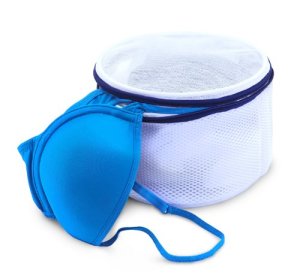
  • 3 bras – those I wash by hand so 2 really would have been enough
  • 2 pantyhose and 2 knee high hose – again, more than I needed, but they don’t take up any space and I like to have extras in case I snag them
  • 4 pairs of pyjamas
  • 1 skimpy negligee – it was our anniversary, after all!
  • 1 short, very lightweight kimono
  • 1 pair of cozy slipper socks
  • 1 swimsuit which didn’t come out of the suitcase, but I rarely travel without one
  • 1 ball cap for hiking and walking in the sun

img_2903

  • 1 toque which I didn’t actually wear until we arrived back in snowy Alberta
  • 1 scarf
  • 1 hoodie and 1 lightweight jacket that could be worn individually or layered for extra warmth

img_3040-version-2

  • 3 pairs of shoes –  I wore my Merrell walking/hiking shoes on the plane and the other 2 pairs fit into the outside pocket of our suitcase along with Richard’s dress shoes – I always stuff socks or other small items inside shoes when I pack them to save space and to help them keep their shape.

img_3204

This list actually includes what I wore as well as the change of clothes that was in the backpack in case our suitcase didn’t make it to our destination at the same time as we did. In addition to clothing, my side of the suitcase also contained toiletries, makeup, medications, sunscreen, jewelry (packed in a hard shell eyeglass case), a travel size blow dryer, a straightening iron and a travel alarm clock.

What about you? Do you travel light? What can’t you leave home without?

Meat Cove… at the end of the road

When I was young, my father’s desire to get away from it all often led us to the end of little out of the way roads in our home province of British Columbia. As a child, I didn’t always appreciate those trips to nowhere, but they eventually bred in me a yearning to take the road less traveled and see what’s at its end.

On our first weekend in Halifax, a gentleman told us that if we were going to drive the Cabot Trail, we should go into Cape North and then take the little side road to Meat Cove. Looking at the map, I discovered that Meat Cove is the northernmost community in Nova Scotia. A lone gravel road leads to a tiny dot on the map surrounded by nothing but blank space. Of course, we’d have to go!

As is often the case, the journey was as interesting as the destination. Along the way, we missed a turn and first ended up at another small fishing village, picturesque Cape St Lawrence.

img_3091

Back on the right road, the views were spectacular.

img_3121

img_3118

img_3117

img_3094

img_3099

Meat Cove, with a population of 65 people, is a remote fishing village. Apparently, it takes it’s unusual name from the fact that in days gone by, boats would stop there to reload with wild meat. There isn’t actually a lot there; just a dozen or so houses scattered around the area, a guest lodge, a tiny campground clinging to the cliff top high above the cove itself and a small community centre that also serves as a restaurant and an internet access site.

img_3110

img_3103

img_3106

img_3108

As I looked down on the crystal clear water, I was glad that we’d taken the time to drive to the end of the road and when I called my 93 year old father to tell him about it, I could hear the pride in his voice!

Colourful Cabot Trail

Nova Scotia’s Cabot Trail is a scenic roadway measuring 298 km in length that forms a loop around the northern part of Cape Breton Island and passes through Cape Breton Highlands National Park. Prior to this trip, we had driven the Cabot Trail twice before, both times doing the entire loop in one day.

The first time was in 1991. We were traveling with our young children and had the privilege of doing the drive with a colleague who is a native Cape Breton Islander. He was home on summer vacation and acted as our guide for the day. It was bright and sunny and we were awed by the beauty that surrounded us. Stops along the way to enjoy the views, eat a picnic lunch and take a swim made it a long, but very memorable day.

Our second trip around the trail seven years ago was somewhat disappointing. It poured rain much of the way and we crossed the northern highlands in dense fog barely able to see the road let alone anything else! We made very few stops.

This time we spent three days on the trail! We stopped at many viewpoints, or lookoffs as they’re known in Nova Scotia, to soak in the beauty and take a multitude of photos.

img_2962

img_2967

img_3031

That’s the little Hyundai Accent rental that’s been our wheels for this entire trip.

We enjoyed a traditional community breakfast with the locals at the Southwest Margaree Parish Hall and spent a couple of evening hours listening to local musicians in a Cheticamp pub.

We walked rocky beaches

img_3040

img_3057

img_3061

and sandy ones.

img_3166

We hiked the Skyline Trail and explored out of the way places like this one near Cheticamp where we stopped to find a geocache.

img_3051

We took side roads to places like Mary Ann Falls

img_3146

and everywhere we went, we marvelled at the amazing colours.

img_2957

img_3078

img_3087

Yes, the Cabot Trail is beautiful anytime of year, but in autumn it’s absolutely spectacular!

Hiking the Highlands

Nova Scotia’s Cape Breton Highlands National Park boasts more than 20 trails ranging from short easy walks to spectacular hiking expeditions. We chose one of the most popular, the dramatic Skyline Trail on the western side of the Cabot Trail, for Wednesday’s hike.

As we approached the trailhead, we could see the tiny silhouettes of hikers against the skyline on the ridge high above us. Soon we would join them!

img_3024

The Skyline Trail offers two options. Many choose to stay on the well groomed path that takes them directly out to the headland cliff overlooking the Gulf of St. Lawrence. This out and back route is 7.5 km long. We chose the longer 9.2 km loop.

The back side of the loop, the road less traveled, crosses a high plateau. The trail is rougher and some sections were muddy as a result of the horrendous storm that swept across Cape Breton two days earlier.

img_2972

Once we reached the far side of the plateau, the views were gorgeous.

img_2985

Sometimes we just had to sit and soak them in.

img_2982

Nothing prepared us for the spectacular views from the headland, however! There, a wooden boardwalk and a series of steps took us down the middle of the cliff. The open ocean was far below to our right and a deep ravine to our left. We watched eagles soar below us and vehicles winding their way along the Cabot Trail looked minuscule.

img_3006

Strategically placed by Parks Canada so that it isn’t visible from the highway below, the boardwalk protects the fragile headland plants from trampling and also gave me a sense of security as I crossed the ridge.

Once we tore ourselves away from the the amazing vistas spread out before us, the most used and best maintained portion of the trail took us back to the parking lot. There was a small change in elevation along this portion, but it was very gradual.

img_3018

Is it any wonder that I’m overwhelmed by the beauty of Nova Scotia?

Don’t get your knickers in a knot!

logo

If you’ve known me or followed this blog for very long, you know that I’m a self professed word nerd. It may be quirky, but I love words. Who else do you know who would watch a lecture series entitled The Secret Life of Words: English Words and Their Origins while walking on a treadmill?

So, it only makes sense (to me, at least) that a word nerd with an interest in fashion would be fascinated by some of the words used in the fashion business. Today I’m focusing on fashion words that are used differently in different countries. For me, they add to the fun of reading fashion blogs from around the world.

When I was a child, I often wore a jumper to school, but did I wear this

jumper-3

or this?

sweater

Here in Canada, as well as in the US, the first picture is a jumper, but in the UK and Australia, a jumper is what we in North America would call a sweater! The jumpers that I wore are known as a pinafores in the UK.

While we in North America understand the meaning of trousers, that’s not a word we’d likely use. Instead, we’d talk about our pants. That could be confusing if we were in the UK, however, where people would be embarrassed if anyone saw their pants. There the term is slang for underpants!

Depending on which side of the Atlantic you’re on, you might not want to get your knickers in a knot or your panties in a twist! Knickers is the British word for a lady’s underpants while here in North America, we usually call them panties.

Of course, men have different underwear words too. Some British men wear y-fronts, those old fashioned underpants with an inverted y shape in front. North American men usually refer to their underwear as briefs, shorts or boxers depending on the style they prefer.

Even babies get in on the underwear confusion. British and Australian babies wear nappies, but in North America, they wear diapers.

What do you call these?

coveralls

Here in North America, we call them coveralls, but in the UK they’re overalls. Here, overalls are bibbed pants/trousers held up by over-the-shoulder straps. In Britain, however, those are dungarees.

Are you confused yet? Can you think of any other examples?