Shopping my closet for festive attire

logoAs usual, we have a number of festive occasions to attend this Christmas season; some dressy and others more casual. I had considered buying a new dress to wear to a couple of these events, but I wear dresses so seldom that it would spend most of its life languishing in my closet. I also discovered that the dresses I liked best in the stores were very similar to one I already own that I wrote about here. The stores seem to be full of lovely lace overlay dresses, but I definitely didn’t need a second one. Instead, I decided to shop my own closet this season and see what I could come up with.

I wore the lace overlay to the first event, a dine and dance that was also a charity fundraiser. Since the dress is sleeveless and the event was held in our local community hall, an old building that can be quite chilly, I took a lovely scarf along to cover my shoulders.

The second event, last Saturday evening, was also a dance. I knew that the crowd would be largely made up of seniors and that dress would, for the most part, be conservative. I wanted to go for a classic look. After trying on a variety of items in different combinations, here’s what I came up with.

img_3368

I started with a black lace panelled skirt that I bought when we lived in Japan and added a red/black sparkly top that was purchased several Christmases ago. The skirt, though fully lined, is lightweight and drapes nicely; excellent for dancing the old time polkas, waltzes and fox trots that we so enjoy. I very seldom tuck anything in at the waist, but the top is fairly short and rather than risk a midriff baring wardrobe malfunction on the dance floor, I chose to tuck.

Again, sleeveless isn’t the best idea in wintery Alberta, so this time I added a lightweight loose-fitting jacket with a sparkly pinstripe that was also purchased for a Christmas season some years back. It did come off for a little while when the venue got warm, but I wore it most of the evening.

img_3365

With sparkle in both the top and the jacket, I chose to go with simple accessories and since black isn’t my best colour, a bright lipstick finished off the look.

To see what another Canadian blogger found on a similar foray into her closet, why not visit Sue at High Heels in the Wilderness?

And to see what I’m wearing to a couple of other Christmas events, please come back next Friday!


Cabi, clothing company with a heart

logoCabi, one of the largest direct sale women’s apparel businesses in the US, is probably already familiar to many of you, but it’s relatively new to Canada having entered the market here just last year.

I was introduced to the cabi Fashion Experience in September when I attended a party hosted by two of my friends. I immediately fell in love with some of the items in this fall’s collection, but frugal fashionista that I am, I found the prices higher than I would normally be willing to spend. When I learned that by hosting a party I might be able to get one or more items at half price, I quickly agreed and I was able to add several favourite pieces to my wardrobe!

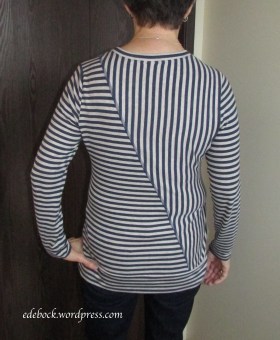
I love the comfy, casual Ernest Tee. The mix of horizontal and vertical stripes and the cross body seam line are eye catching and the unusual hemline adds additional interest. Its rayon spandex fabric is lightweight and oh so soft.

img_3314

In a colour that cabi calls Dove, the cotton and acrylic Shirttail Cardigan didn’t stand out on the hanger, but when I tried it on, I knew I had to have it! I’m sure it will quickly become a wardrobe staple.

These are just two of my new cabi garments, but watch for others in upcoming posts or view the entire collection here.

In addition to the good quality, comfortable, unique garments, another factor that led me to add cabi to my wardrobe was The Heart of cabi Foundation. The mission of the foundation is to encourage and empower women in need around the world. This is accomplished in several ways. For each new stylist, cabi funds a small business loan in her name for a woman entrepreneur in a developing country. Every woman who places a cabi order is given the option of rounding her order total up to the nearest dollar. It may only be a few cents, but together these cents become dollars that fund small business loans that empower women entrepreneurs working to create better futures for their families and communities. Also, a portion of the proceeds from the sale of one item in each collection helps fund The Heart of cabi Foundation’s efforts around the world. In this season’s collection that item is the Heartbreaker Top. Unfortunately it didn’t look good on me or I definitely would have purchased it. I’m always happy to support a company with a heart!

heartbreaker-top


On the rise

logoWhen I was young, a high-rise was an apartment building and a waist band was just that, a band that rested at the waist. Then came the demise of what later became known somewhat disparagingly as Mom jeans and we all became familiar with the terms low rise and mid rise.

So, what exactly is rise? Rise is the distance from the middle of the crotch seam to the top edge of a pair of pants.

jeansproductguide-20141215-rises

image: http://www.kohls.com/sale-event/jeans-rise-product-guide.jsp


The low rise trend started in the early 2000s with some jeans dropping so low that they exposed thong panties and butt cracks. Definitely not a pretty sight! Those jeans had a rise of between 6 and 7 inches. Most denim manufacturers settled on a low rise of between 7.75 and 8.5 inches. My lowest are a pair from Gap with an 8 inch rise.

At first, I had a tough time adjusting to wearing low or even mid rise jeans. After all, I loved my 1980s Mom jeans! Eventually, they wore out though and I had to break down and buy new ones. Of course, I adjusted, but now jeans are on the rise again with higher and higher waists becoming popular once more! Why does the fashion industry do this to us?

As much as I’ve grown accustomed to a lower rise, there are definite advantages to a higher pant. High-waisted jeans do a great job of keeping everything in place! As much as I exercise and eat healthy, a “middle age bulge” seems to have come to stay and it loves nothing better than creating a muffin top over the edge of low rise pants!

With the addition of spandex, today’s denim has a lot more stretch than it did in the 80s which will make high-waisted jeans much more comfortable than they were back then. It will be a while before I go shopping for any though as my closet is full of jeans with a mid rise of about 9 inches and being the frugal fashionista that I am, I won’t be rushing out to replace them simply to go up an inch or two in the waist.

What about you? What’s your favourite rise and why?

Not so rare after all!

November 10 was worldwide NET Cancer Day. In addition to writing my Let’s talk about NETS post, I read several other articles about neuroendocrine cancer that day and what I learned was quite astonishing.

When I was diagnosed with neuroendocrine cancer (NETS), I was told that it was rare and much of the literature about it seems to agree, but is it really? Is it actually rare, or is it just not very well-known?

You’ve heard of cystic fibrosis, right? And what about ALS (Amyotrophic lateral sclerosis), often called Lou Gehrig’s disease after a hall-of-fame baseball player for the New York Yankees who was diagnosed with ALS in the 1930s? If you hadn’t already heard of that one, I suspect that the famous Ice Bucket Challenge of July and August 2014 brought it to your attention. Unless you’re a fellow patient, however, I’m guessing that you’d never heard of NETS before you read about it here on my blog, but is that because it’s rare?

Let’s take a look at some statistics. I’m using numbers for the United States simply because they were the easiest ones to track down, but I’m assuming that the ratio would be similar elsewhere. In the US, there are

  • approximately 1000 new cases of cystic fibrosis each year
  • a little over 6000 new cases of ALS each year
  • an estimated 15 500 new cases of NETS each year

Do the math! That’s more than 15 times as many cases of neuroendocrine cancer as cystic fibrosis and more than twice as many cases as ALS! It’s also an average of more than 42 new cases a day or more than one every two hours!

So why is NETS not nearly as well-known as the other two diseases and why does that matter? It matters because doctors don’t detect what they don’t suspect and they don’t suspect NETS if they don’t know anything about it. Secondly, more research dollars go to higher profile diseases. According to the US Department of Health and Human Services, $49 million was spent on ALS research in the US in 2015 and $80 million on cystic fibrosis, but NETS wasn’t even on the report!

nets

I know you’d probably rather read about my travels or my Fashion Friday posts and they’re definitely more fun to write, but unfortunately, it falls upon patients like me to publicize and educate whenever and however we can. It might be easier if we had a Lou Gehrig, someone well-known to put a face to our disease, but that hasn’t happened yet. Our best hope so far was Steve Jobs, co-founder and former CEO of Apple Inc, but Jobs initially chose to reject his doctors’ recommendations and try alternative treatments, a decision that may have hastened his death in 2011. He was also very private about his condition which was, of course, his right, but he could have done so much good had he chosen to be a vocal spokesperson. The fact that the media, left in the dark by his silence, commonly reported that he died of pancreatic cancer rather than neuroendocrine cancer that originated in his pancreas, didn’t help our cause either.

Increasing awareness is a slow process, but I believe we’re making headway. In spite of the fact that it’s still not well-known, NETS is actually the fastest growing class of cancer worldwide! I believe that that’s because it’s being diagnosed more often and because improved treatments are allowing many of us to live longer. Our goal continues to be to raise awareness in both the medical field and the general public, so that research funds are made available that will lead to even earlier diagnosis and better treatment. It’s time for NETS to come out of the dark!

Big white shirt

logoEver since I wrote this post back in June, I’ve had purchasing a looser white shirt in the back of my mind. It wasn’t as high a priority as some other items, however, so I hadn’t seriously gone looking for one. Then, when I was doing my seasonal wardrobe switch last month, there it was hanging on my husband’s side of the rack in our storage room! Purchased over ten years ago for our son’s wedding, it’s been hanging there ever since! I pulled it out and wondered if I could make it work for me.

img_3268

On it’s own, it’s pretty big and that expanse of white doesn’t do a lot for me, so I started by rolling up the sleeves…

img_3274

Then I went to my closet to see what I could wear with it. I started with a loose fitting cardigan that I’ve had for the past couple of years, then added some bling and a touch of bright lipstick.

img_3276

I thought the necklace might be a little over the top with such a casual look, so I also tried a simpler one.

img_3285

What do you think? Does it work or should I give the shirt back to my hubby?

Wearing the poppy

logo

Today is supposed to be Fashion Friday here on Following Augustine, but publishing a typical fashion post on Remembrance Day seems frivolous, almost disrespectful. Instead, let’s take a look at how and why we wear the iconic symbol of this sombre occasion, the little red poppy.

For some of my readers, a bit of explanation may be needed. Here in Canada, as well as in the UK and other Commonwealth countries, November 11 is known as Remembrance Day. It is a solemn day for remembering and honouring those who have given their lives in war, more like Memorial Day in the US than Veterans Day.

Inspired by the World War I poem “In Flanders Fields” written by Canadian physician, Lieutenant Colonel John McCrae, the Remembrance Day poppy is an artificial flower that has been worn since 1921. Though some say that its red colour represents blood shed in war, more truthfully, it is simply the colour of the common field poppies that were the first flowers to grow on the disturbed earth of the battlefields of northern France and Belgium and on the graves of countless soldiers.

remembrance-day-poppyIn Canada, millions of poppies are distributed freely in the days leading up to Remembrance Day. Donations received by the Canadian Legion Poppy Fund are used to support veterans and their families in need. Prior to 1996, our poppies were made by veterans with disabilities in workshops in Montreal and Toronto and served as a small source of income for them and their families. In 1996, the Legion awarded a contract to a Canadian company to produce the poppies but it maintains strict control over their production .

There are many questions about how the poppy should be worn. According to Canadian tradition, the poppy is worn on the left breast or lapel symbolizing that you keep those who died close to your heart, but in Britain many say that men should wear it on the left and women on the right. This year I’ve decided to wear mine on the right because, like most right-handed women, I carry my handbag over my left shoulder. It seems to me that knocking my poppy off and leaving it lying in the dirt or covering it with my purse strap would be much more disrespectful than wearing it on the wrong side. Queen Elizabeth II, who isn’t usually hindered by a purse, wears hers on the left. Unlike most of us who wear a single poppy, she also chooses to wear a cluster of them.

queen

The British poppy has a small green leaf that is often positioned at 11 o’clock representing the eleventh hour of the eleventh day of the eleventh month, the time that World War I formally ended. The leafless Scottish poppy, like our Canadian one, is more botanically accurate and also less expensive to produce.

In spite of the fact that I have tried to convince my husband that he shouldn’t replace the pin on his poppy with something else to make it more secure, he insists on using a tiny Canadian flag or maple leaf pin to hold his in place. The Canadian Legion’s position is that nothing should be substituted for the poppy’s original straight pin. Unfortunately, redesigning the poppy to better secure it to clothing would increase production costs. There are ways to prevent it from falling off, however. The tiny plastic sleeve that is often used as a pierced earring back works perfectly. If you don’t have such a thing available, a bit of clear tape also works well.

I like what the Royal British Legion says: “There is no right or wrong way to wear a poppy. It is a matter of personal choice whether an individual chooses to wear a poppy and also how they choose to wear it. The best way to wear a poppy is to wear it with pride.”

in-flanders-fields

Let’s talk about NETS

letstalkaboutnetscartoon-1200x595

12,000 to 15,000 Canadians are estimated to have a rare cancer called neuroendocrine tumours (NETS). I am one of them. Today is the day for our voices to rise above those of all the more well known and prominent diagnoses and be heard.

November 10 is World NET Cancer Day, a day set aside to raise awareness of this little known cancer among decision makers, health professionals and the general public; to encourage more funds for research, treatments, and patient support; and to ensure equal access to care and treatment for NETS patients around the world.

Today coffee shops around the world will be raising awareness about NETS by using special coffee cups bearing the slogan “Lets talk about NETS” and handing out promotional material to help educate their customers about the disease.


lets-cup10

Perhaps you drank your morning coffee from one of these. Black and white like the zebra that is used as the symbol of our disease, our hope is that they will draw attention to and begin conversations about this increasingly common, but poorly understood cancer.

There are several key messages that we would like to highlight today. First of all, as with other cancers, early diagnosis is important. Sadly, it doesn’t happen often. If the initial tumour is found before any secondary growths occur, it can often be removed surgically and the patient is considered cured. Once it has spread, however, the disease, though slow growing, is incurable. Treatments are improving, but it is still considered terminal.

Awareness of symptoms is key to early diagnosis. Unfortunately, however, misdiagnosis is extremely common. Typical symptoms, which often include abdominal pain and cramping, diarrhea, joint pain, wheezing, fatigue and flushing of the skin, are very similar to those of more common conditions such as Irritable Bowel Syndrome, Crohn’s disease, asthma, stomach ulcers, lactose intolerance, diabetes or even menopause. As a result, the average time to proper diagnosis for a NETS patient is 5 to 7 years.

NET cancer can arise in any organ that contains neuroendocrine cells including the stomach, intestines, lungs, liver, pancreas and appendix. While most commonly found in people over the age of 60, NETS can affect both men and women of any age.

So, while you sip your coffee today, whether it be from a black and white “Lets talk about NETS” cup or your favourite mug at home or at the office, why not initiate a conversation that could save someone’s life? Why not talk about NETS?

nets

Thrifting again

logoIf you’re in North America, you are without a doubt familiar with the Jockey brand. It’s underwear. Right? But are you aware that for ten years, the company also had a women’s clothing line known as Jockey Person to Person that was available only through home parties? It was a sad day for me when Jockey announced that it was closing that branch of the company in mid March 2015. Not only was a close friend of mine one of Jockey’s top selling “Comfort Specialists”, but I loved their comfortable, affordable styles.

When I worked in our local thrift store one afternoon last week, I noticed that a number of items from Jockey’s final seasons are beginning to come through the store. I couldn’t resist adding this multicoloured polyester blouse with front ruffles and a string tie at the rounded neckline to my wardrobe.

img_3257

Though it’s preowned, like most of what I buy at the thrift store it’s in excellent condition. In fact, one would never know that it’s been worn before.

I like the wide elasticized band at the bottom and since I often push long sleeves up to my favourite 3/4 length, elastic at the wrists works well for me.

img_3259

Here I’ve paired it with a pair of dark wash Old Navy jeans that were a gift from my sister-in-law, Sue, and a comfortable pair of Natural Soul shoes by Naturalizer that are several years old.

img_3255

The anchor necklace from Nova Scotia’s Amos Pewter was made in their Mahone Bay workshop and was a birthday gift from my husband.

img_3255-version-2

Where’s that little black dot?

Now that my cancer treatments are six months apart and I feel so well in between, sometimes it’s almost possible to forget that I have that dread disease. Almost, but not quite.

Yesterday morning, we were back at the Cross Cancer Institute in Edmonton for Lutetium treatment #7 and this morning, I had the follow-up scans and met with my doctors to learn the results.

Once again, the news was good. The black marks on the screen that represent my tumours were not only significantly smaller than they were at diagnosis three years ago; they appeared to be noticeably smaller than they were six months ago. Three were still very obvious and the doctor pointed out the fourth one, but where was number 5? Gone? Was that possible?

Dr. Koumna, the newest member of my care team, explained that what we know for sure is that that tumour, one of the smallest in the first place, is no longer absorbing Lutetium, the radioactive substance that binds to my tumours and fights them on the spot. It may be gone or it may be dead or completely non-functioning. Either way, the news is definitely good!

On the other hand, the morning was also somewhat sobering as we were reminded once again that neuroendocrine cancer (NETS) is a deadly disease. We learned that a couple of things have changed in the treatment protocol since we last sat down with the doctors six months ago. First of all, I will now be having a CT scan three months after every treatment instead of after every second one. In other words, twice a year instead of only once. According to Dr. MacEwan, head of the team, they’ve discovered that leaving these tumours unchecked for six months, as they had been doing, was putting patients at too great a risk. Secondly, although I was told last year that after I’d had four treatments at six month intervals, if everything was still going well, we would try nine months between treatments, that is no longer an option. Again, leaving these tumours untreated for that long was proving to be too risky.

This type of therapy, known as Peptide Receptor Radionuclide Therapy or PRRT, is still very new. It is extending the lives of NETS patients beyond what was possible in the past and as that happens, even the specialists are still learning. I truly thank the Lord that I live so close to one of the centres where this treatment is available because there are not many of them in North America!

The most disconcerting thing that we learned this morning is that, at this point, only 12 Lutetium treatments are available per patient. For me, that means just 5 more. Two and a half years and then what? Dr. MacEwan was frank in explaining that the clinical trial that I’m part of and that is the only way to access this treatment in western Canada at this time, was set up with a maximum of 12 treatments because they didn’t actually expect to need more than that. Though they knew that in the early stages of use, Lutetium was proving to be successful in providing symptom relief, stopping or slowing tumour progression and improving overall survival, they really did not expect it to be as effective as it’s proving to be. Now that some patients are approaching the 12 treatment maximum and still doing well, Dr. MacEwan will be going back to the government to apply for further funding and permission to continue therapy beyond 12 treatments. He fully expects that to be in place before I need it.

In the meantime, I’m highly radioactive again meaning that I need to stay somewhat isolated from other people for the coming week and, as usual after a treatment, I’m feeling quite tired, but I’m home and very happy to report that one little black dot was missing from the screen today!

screen-shot-2016-11-03-at-5-05-05-pm

This is not my scan because I got so involved in discussing what I was seeing (and not seeing) on the screen that I forgot to ask if I could take a photo of it, but this gives you an idea what the scan I get after each treatment looks like. This patient has tumours that are larger than mine and located in different areas of the body.

Photo credit

Hats, hats, hats

logo

October is usually a golden month here in Alberta, but this year it’s been grey and dreary. I did my seasonal wardrobe switch earlier this week, putting away my summer clothes and bringing my winter ones out of storage. This is not something that I enjoy doing as I dread our long, cold winters, but I do like the fact that the chilly autumn air means there are some hats that can also come out of storage. We took advantage of a few moments of sunshine this afternoon to take a series of hat photos with the remaining leaves on our weeping birch as a backdrop.

A hat is a great accessory that sets you apart, whether you’re at a formal event or just running errands. This jaunty tweed cap is casual, yet chic.

IMG_3219.jpg

When I lived in Japan in 2008 and 2009, most of the older women wore bucket hats that often reminded me of upside down flower pots on their heads! It was in Japan that I found this black felt cloche, however, and I immediately fell in love with it. I was delighted that it actually fit my larger than average head.

img_3226

In addition to looking at the hats, take notice of the fact that scarves are a great way to add a bit of trendy animal print to your fall and winter wardrobe.

img_3227

Vintage hats can be a fun addition too. This “Saratoga Uncrushable” was made by Biltmore, a world-renowned hat maker, likely in the late 1960s or early 1970s. Though the hat was made in Canada, the tweed fabric, which is 55% wool and 45% cotton, was woven in Scotland. A little research online told me that this is actually a man’s hat and meant to be worn fedora style, but the soft, pliable material is easily reshaped as a cloche which is how I have always worn it.

img_3213

The “Saratoga Uncrushable” is actually on long term loan from the community theatre group that I belong to. It was part of one of my costumes several years ago, but when the production came to an end, I hated to part with it! It will go back to the group when it’s needed again, but in the meantime, I continue to enjoy wearing it.

img_3209

And finally, a real felt fedora! I’ve never actually worn this one except for for these photos. Made by the great British hat makers, Christys’, probably in the 1940s, it was my father’s. It even has his initials punched into the leather headband inside. When we were cleaning out his apartment and storage unit in preparation for his move to an assisted living facility a few years ago, I laid claim to the hat that he hadn’t worn for years. I knew that it, too, would make a great costume piece for our theatre group. It has been worn onstage several times by several different actors, but I’ve always been tempted to wear it myself.

img_3241

What do you think? Should I wear it or not?

img_3244