Languishing

Last September, six months into the current pandemic, I wrote about hitting the Covid-19 wall. I got over that wall, as I knew I probably would, but every once in awhile the feeling returns. Today I learned a new word for what I, and probably many of you, have been experiencing. Apparently, we’re languishing

The dictionary describes languishing as losing or lacking vitality, growing weak or feeble, or suffering from being forced to remain in an unpleasant place or situation. Sound familiar? I thought so!

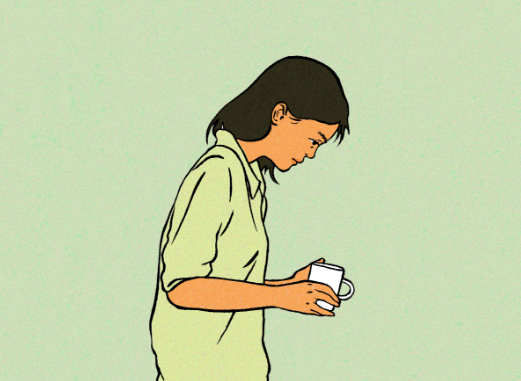
A recent article in The New York Times calls this “the neglected middle child of mental health”. We’re not depressed, but neither are we flourishing. “Languishing is a sense of stagnation and emptiness. It feels as if you’re muddling through your days, looking at your life through a foggy windshield. And it might be the dominant emotion of 2021.”

Screen Shot 2021-04-24 at 12.56.25 PM

As a lover of words, I’m glad to have found one that accurately describes how I’ve been feeling. I’m an introvert. I don’t mind solitude, but sometimes too much of a good thing is just too much. There are days when I get up in the morning and the hours seem to stretch out endlessly in front of me; days when I wonder how I’m going to fill those hours. My life hasn’t ground to a complete standstill, of course, but like everyone else’s, it looks a lot different than it did at the beginning of 2020. I’m missing many of the things that once filled my calendar. 

According to the New York Times article, “Part of the danger is that when you’re languishing, you might not notice the dulling of delight or the dwindling of drive. You don’t catch yourself slipping slowly into solitude; you’re indifferent to your indifference.” Perhaps identifying the feeling and giving it a name is an important step toward doing something about it. 

Back in January, when my online friend, Sue Burpee, who writes the blog High Heels in the Wilderness, was languishing (I don’t know if she knew that that was what she was doing) she wrote a post entitled Just One Thing… Every Day. In it, she wrote about asking herself, “What productive thing should I achieve today?” One thing a day became her plan; one that I’ve tried to adopt.

I already had a daily routine and I knew that I was accomplishing something useful every day even if it was just making sure that there were meals on the table, but I felt like I was in a rut with no end in sight. I was definitely languishing! Trying to add one different thing to my usual routine every day has helped. Yesterday it was baking four dozen muffins, today it’s writing this unplanned blog post. Thirteen months into the pandemic, it’s easy to focus on all the things we’re missing. Trying to do something outside my usual routine, especially something that feels productive, is at least a partial antidote. 

Still, if you happen to see me and ask how I’m doing, instead of saying “Great” or “Fine”, I might just say “I’m languishing!”

15 fashion stats

LogoTomorrow is the 8th anniversary of the collapse of the eight-storey Rana Plaza building in Dhaka, Bangladesh that housed five garment factories. More than 1,100 workers lost their lives that day and thousands more were injured. It was, to date, the worst industrial incident to hit the garment industry. The disaster drew attention to the human cost behind the clothes we wear and also inspired more people to start thinking about the broader topic of sustainability in the fashion industry.

unnamed

Here, in no particular order, are 15 statistics about the fashion industry.

  • 97% of the clothing sold in America is made overseas.
  • Garment workers are often forced to work 14 to 16 hours a day, 7 days a week in buildings with no ventilation.
  • 75% to 85% of the world’s garment workers are women and they are amongst the lowest paid workers in the world.
  • American women aged 35 to 44 spend an average of $960 on clothes each year, the highest among all age groups.
  • On average, an article of clothing in a woman’s closet is worn only seven times before being discarded.
  • The average American throws away approximately 81.5 pounds of clothing every year.
  • Approximately 10 million tons of clothes are sent to landfills every year.
  • Less than 11% of fashion brands have implemented recycling strategies for their products.
  • The fashion industry is responsible for 8% to 10% of carbon emissions globally, more than those emitted by all international flights and maritime shipping combined.
  • Solvents and dyes used in the manufacturing of clothing are responsible for 20% of the world’s industrial water pollution.
  • About 1,800 gallons of water are needed to produce the cotton in one pair jeans, and 400 gallons to produce the cotton in a shirt.
  • 23% of all chemicals produced in the world are used in the textile industry.
  • Nearly 70 million barrels of oil are used each year to make polyester fibre which is the most commonly used fibre in our clothing.
  • Polyester fibre takes more than 200 years to decompose.
  • Today, 400% more clothing is produced than 20 years ago.

I think that you’ll agree that many of these facts are disturbing. We all wear clothes, so in a sense, we’re all responsible. The hard question is what are we going to do about it? Do we care enough to do anything at all?

Thankfully, there is some good news on this front. A recent survey of 2,000 respondents from the US and the UK revealed that more than half want the fashion industry to be more sustainable and many are willing to pay more for sustainable clothing. Younger consumers in particular are seriously concerned with social and environmental causes. As they increasingly back up their beliefs with their shopping habits, countless brands are responding by doing their bit to transform the fashion industry for the better. We can also do our part by buying fewer, better quality items and wearing them longer. They may cost more to purchase, but their extended life will make them a more affordable option in the long run.

Am I expendable?

Cancer has been trying to defeat me for almost 8 years. Now it looks like it’s trying to recruit Covid-19 to help it out. No, I don’t have Covid and I’m trying to do everything I can to keep from getting it, but I’ve run into a dangerous roadblock that is affecting cancer patients across our country. 

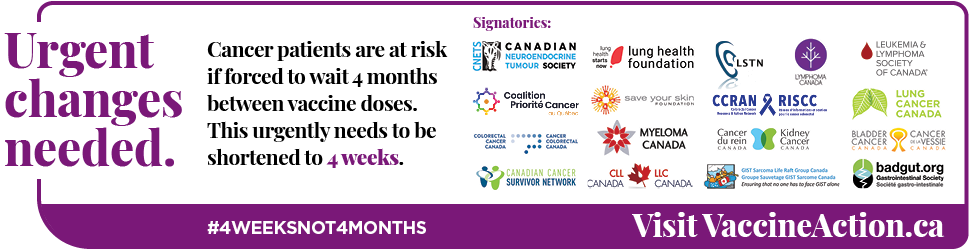
Vaccines have been touted as our way out of this pandemic and I believe that they probably are IF they’re given correctly. That’s where the problem lies. According to the product monographs and based on the trials that were performed before the vaccines were approved, the second Pfizer dose should be given 21 days after the first, Moderna 28 days, and AstraZeneca 4 to 12 weeks. Here in Canada, however, the National Advisory Committee on Immunization (NACI) has recommended that in order to maximize the number of individuals benefiting from the first dose of vaccine, the interval between doses be extended to four months or 16 weeks.

While there is no evidence to show that this is an effective way of administering these vaccines, the extended period between doses may not make a big difference to the general population, but that is not true for those of us with cancer. Research conducted in the UK has shown that while an antibody response was found in 97% of the healthy volunteers tested after their first injection, the response was less than 40% in patients with cancer. That number increased dramatically to 95% if they received their second shot at the recommended time, but only 43% if that time was extended. 

I had my first injection of the Pfizer vaccine on April 7. That means that I have 10 days until I should be getting the second one, but I feel like I’ve been beating my head against a wall trying to make that happen. I’ve called Alberta Health Services to no avail. The clinic where I received my cancer treatments was unable to help. I’ve attended a webinar with members of various patient advocacy groups across the country and I’ve contacted the media. A petition has collected more than 20,000 signatures over the past few days and news sources are coming onside, but will the government listen? Ontario and Manitoba are moving forward with the second dose for cancer patients, but here in Alberta not one word of hope has been heard from our government. It would seem that they have decided that those of us who are already fighting for our lives are expendable! 

photo-1618093877862-3630a08f737f

Photo: Spencer Davis

The third piece

LogoIn last week’s post, I mentioned wearing my new denim shirt as a third piece. Today I thought we’d talk a bit more about that. In the fashion industry, there’s what is referred to as the “third piece rule” but I tend to cringe at the word rule when it comes to fashion.

No rules

Essentially, a third piece is anything, with the exception of shoes, that goes above and beyond the basic pants and top or skirt and top look. On the old TV show, What Not to Wear, Stacy London and Clinton Kelly referred to it as the “completer piece” because it really helps to complete an outfit. Though some consider scarves, hats, or even statement jewelry as third pieces, the term is more often used to refer to an extra layer such as a jacket, a cardigan, or a vest.

Fashion retailers such as Nordstrom, Madewell, and Banana Republic know the power of the third piece. Their associates are encouraged to wear three piece outfits because the third piece helps them look pulled together and more knowledgeable about fashion.

For those of us who live in cooler climates, adding that third piece might seem like a no-brainer except in the height of summer. I was certainly dressing this way long before I knew there was a rule.

So, let’s take a look at some third pieces from my closet. There’s nothing here, except maybe the necklace, that hasn’t appeared on the blog before. I’m wearing the same striped t-shirt and jeans in every photo to show how easy it is to dress a basic pants and top up or down with a third piece.

IMG_2300

Third piece: Uniqlo ultra light down vest

IMG_2320

Third piece: 3/4 sleeve shirt

IMG_2311

Third piece: Deco Cardigan from cabi Fall 2019 Collection

IMG_2333

Third piece: basic jean jacket

IMG_2324

Third piece: grey blazer left over from my teaching days

Whether we want to call it a rule or not, it’s easy to see how the third piece provides us with an easy formula for getting dressed and looking put together. Pants, top, third piece, then add a bit of fun with shoes and accessories and we’re ready to go!

The last ten

When I sat down to write this evening, my initial plan had been to start working on this Friday’s fashion post, but something else has been weighing on my mind and I decided to go in that direction instead. I’ve written about the Christian and social media before, but tonight that’s where I found myself going again.

I’ve been using Facebook since December 2007. We were about to leave for a year-long teaching assignment in Japan and our daughter insisted that I had to have Facebook as a way of staying in touch. In fact, she actually created my account and chose my first password and profile picture! She was right. In those days, Facebook was a great way to connect with friends and family. We enjoyed exchanging news and posting photos of our families and our daily lives. I even reconnected with a few people that I had completely lost touch with over the years.

Over time, however, Facebook has morphed into something very different than it was in those early days. I don’t mind the proliferation of ads on my Newsfeed because I realize that very little in life is free and someone has to pay for this platform. No, it’s not the ads that bother me, it’s the negativity, the anger, and the misinformation. Gone are the days when people annoyed one another or flirted with one another by “poking” each other on Facebook. Now, many use social media to lash out at one another or to hurl insults at those who disagree with them. Instead of sharing our lives, we try to prove each other wrong.

So, what does the Christian do? Can we be salt and light on social media or would we be better to avoid it altogether? These were the questions that I was wrestling with in late January when I learned of a free 10-day challenge called Instagram for Jesus. Offered by an online women’s ministry called Well-Watered Women, the challenge is simply a series of 10 short emails designed to help users of Facebook, Instagram, Twitter, or TikTok examine their motives for using social media and the potential that it holds, as well as set life-giving boundaries. If this sounds like something that might be of interest to you, check it out and sign up here.

If I had to choose the one thing that impacted me most from the 10 short messages, it was this recommendation from Day 8, “Scroll through your last ten posts, and ask yourself what a follower would know about you through those images and words. Consider opportunities to shift that understanding to a clearer image of what it means to walk as a sinner saved by grace.” Even if you’re not a Christ-follower, that first sentence is worth considering. What do your last ten posts tell the world about you? Is that the image you want to portray? If you are a believer, is this how you’re called to represent Christ to the world? If not, what are you going to do about it? For me, the simple practice of looking at my last ten posts, which I’ve been doing from time to time since completing the challenge in February, has been an excellent way to ensure that I’m being the kind of online presence that I want to be. 

Shot of an unrecognizable young woman working on her laptop at home

What was in the bag?

IMG_2244

In last week’s post, I promised to share my purchases with you at a later date. There were actually three items in my bag, all from Uniqlo. One of them, an active wear bra with crossover straps that I purchased specifically for kayaking, won’t be appearing on the blog. Today’s post will feature one of the other two pieces, a basic denim shirt. 

IMG_2260 2

I had a similar Levi’s shirt several years ago that I wore until it was practically a rag. I’m really not sure why it took me so long to replace it as it was such a workhorse in my wardrobe. The 100% cotton denim in this one is so soft that it already feels like an old friend. 

IMG_2262

This particular shirt was on a sales rack and doesn’t appear on the Uniqlo website any longer, but similar shirts are available this spring in a variety of places including Gap, Eddie Bauer, and Old Navy

I’m wearing a medium in a slim fit. I might have been able to wear a small, but for a comfy, casual shirt like this one, I like a slightly oversized ‘boyfriend’ feel. In the first two photos, I’m wearing it with a pair of earrings that I bought at our local thrift shop for 25 cents! 

Although the shirt works just fine on it’s own, I especially love to wear it as a third piece. While it would look great over a plain t-shirt, I’ve elevated the look just a bit here by wearing it over a sleeveless cabi blouse from several seasons ago. 

IMG_2276

I can see this quickly becoming a go to piece in my wardrobe, one that I’ll be able to wear year round. It fits especially well into the comfy, casual wear-around-home life that we’re restricted to these days.

IMG_2289

Hubby and I had our first Covid vaccines this week, but with case numbers rising drastically in our province, I don’t see that coming to an end anytime soon. 

IMG_2288

Logo


Dressing for the in-between season

What do you wear for a day away from home in this in-between season when the weather is so unpredictable? That’s what I had to decide on Wednesday. On Monday, we had a blizzard with howling winds gusting to 90km/h (56mph), but on Wednesday the forecast was calling for sunny skies and a high of 10ºC (50ºF).

Hubby had two medical appointments in the city several hours apart. I’d be spending quite a bit of time sitting in waiting rooms, but I also planned to do some shopping. Yes, shopping! For the first time in several months, I’d be walking the malls. I wanted to be warm, but not too hot. As always, I wanted what I wore to say classy, confident, and comfortable. I wanted to be able to try things on easily, and comfortable walking shoes were definitely a must. Here’s what I decided to wear. If you’ve been following the blog for very long, you’ve seen all the pieces before.

IMG_2245

I’m a little self-conscious about having my photo taken in public places with people around, but hubby is always willing to act as my photographer and we snapped this one just outside the mall. My Checkmate Jacket from cabi’s Fall 2019 Collection feels like a cozy sweater, but it’s a bit dressier looking. I wore it over a plain black t-shirt from Uniqlo and a pair of dark wash jeans from Old Navy. A necklace would have dressed the look up a bit more, but it would have been in the way while trying on clothes, so I went without one. The white sneakers that insisted on being mine have turned out to be an excellent purchase. They’re so comfortable that I’d be able to walk for hours in them and they added a casual vibe to the outfit. Apparently stylish French women are wearing white sneakers with everything from jeans and blazers to dresses or suits, so I guess I’m in good company! 

The temperature was hovering around 0ºC (32ºF) when we left home in the morning, so I added a lightweight anorak over my outfit. I left it in the vehicle once we reached the city where the temperature climbed to a balmy 14ºC (57ºF) by mid-afternoon. 

IMG_2244

When we spotted this giant flower-covered shoe in the mall, we had to stop for another photo! I slipped my mandatory mask off for a moment and hubby snapped a quick one. I’ll share the contents of the bag with you in a future post! 

A new job!

My father, who died a year ago at almost 97 years old, always said of retirement that there is no end of things that you can do as long as you don’t need to be paid for them. I’m blessed to be able to follow in his footsteps. While we aren’t wealthy by any means, we are comfortable enough financially not to need to work. In the first few years of retirement, we did take paying jobs teaching English in Japan for a year and then China for several months. Since then, we’ve kept busy as volunteers in several capacities. In fact, at 68, I have just finished training for a brand new volunteer position that I’m very excited about!

I’ve often mentioned Kiva on the blog before. Kiva is a non-profit organization that allows a person to lend as little as $25 to a specific low-income entrepreneur in one of 77 countries around the world. When a loan is repaid, the money can be withdrawn or used to fund a new loan. Since making my first loan 11 years ago, I’ve been able to make 60 more by simply recycling the same money over and over again. When I learned that there was a need for volunteer editors, I realized that this might be an opportunity to put my skills into action and help in another way.

kivaloans-450x200

An average of about 16,000 loan profiles are posted on the Kiva website every month. Each one needs to be carefully edited to ensure that it complies with Kiva policies, that the borrower’s privacy is maintained, that details are consistent, and that the language is understandable to lenders while retaining, as much as possible, the voice of the original text. Kiva relies on over 400 volunteers, each editing approximately 40 loan descriptions a month, to complete this enormous task. That’s my new job! I’ve joined Kiva’s Review and Translation Program as a volunteer editor! 

It was back in July of last year that I first expressed an interest in volunteering. My name was added to a wait list and I was told that I would hear from Kiva staff when they were ready to bring on new volunteer editors, probably much later in the year. In late November, I was asked to submit my resumé and complete an official application that included a brief loan review exercise. In early December, I was invited to take an editing test. Kiva works with a barebones staff and, like everyone else, they’ve been somewhat hindered by Covid slowdowns, so the wheels ground slowly, but at the beginning of February I was notified that my application was approved. At the beginning of March I started training and now I’m finally an active Kiva editor! I edited my first loan yesterday. The borrower was a farmer in Uganda who requested a loan to buy more cattle to fatten and resell.

Volunteer editors are split into teams each led by a volunteer team leader. I was assigned to a group called The Write Stuff which I find very fitting as writing has always been my passion! Kiva asks for a commitment of a minimum of 2 hours a week for at least 6 months, but I foresee being able to do this for a much longer period.

If you’re interested in making a loan, just click on the banner to the right.

images

More about flats

Screen Shot 2021-03-17 at 10.15.26 AM

What a strange language English is! Take the word flat, for example. In Britain, a flat is what we in North America would call an apartment. Flat can mean smooth and even, without bumps and indentations. It can be a musical note or a piece of stage scenery. We can be flat broke, lie flat on our backs, or turn someone down flat. Today is Fashion Friday, however, so once again we’re talking about shoes, ballet flats in particular. 

LogoThe ballet flat, a timeless, polished, and quietly chic style of footwear, was inspired by the dance slippers worn by ballerinas in France in the mid-18th century. It was French film actress, Brigitte Bardot, who would ultimately transform the ballet slipper into it’s present day form. Once trained as a ballet dancer, Bardot asked French footwear designer, Rose Repetto, to design a pair of flats for her that were as flexible as ballet slippers, but softer and more comfortable. Bardot wore the now-iconic style in her 1956 film, And God Created Woman. 

Fashion trends come and go, but the ballet flat has remained a wardrobe staple for women for nearly 70 years. Other famous fans of the tried-and-true style have included Audrey Hepburn, Rita Hayworth, Jacqueline Kennedy Onassis, Princess Diana, Michelle Obama, and Meghan Markle. 

As I mentioned in last week’s post, with spring comes lighter footwear including the ubiquitous ballet flat. Though these lightweight, flexible, and comfortable shoes are traditionally rounded at the toe, square-toed and pointy pairs can also be found. Apart from highly formal, black tie events, ballet flats are suited to almost any occasion from the office to a party. They are, of course, perfect as part of an everyday casual outfit. I would not, however, suggest wearing them when you plan to do a lot of walking as they don’t provide adequate support for that.

And now for a few styling tips: 

  • Avoid tights and socks. Ballet flats look best over bare feet. 
  • Show some skin. Ballet flats look most flattering when your ankles or lower legs are showing. They look great with dresses, skirts (especially loose, flowy styles), and cropped pants. 
  • Simple ballet flats also look great with skinny jeans or leggings. 
  • If you want to create the illusion of longer legs, choose a simple nude pair. 

IMG_2237

Wearing my blue suede shoes!

Why wear flats?

LogoWell known Christian speaker, author, and Bible teacher extraordinaire, Beth Moore, recently cut ties with the Southern Baptist Convention saying that she no longer feels at home in the denomination that once saved her life. Moore, who has long endured criticism in conservative evangelical circles because of their belief that only men should be allowed to preach, felt that she could no longer identify with or be part of what she saw as a toxic mix of misogyny, nationalism, and partisan politics in the denomination. That, however, is a topic for another day.

On the topic of fashion, I was absolutely incensed when I read that within the Southern Baptist Convention, Beth Moore was expected to show deference to male leaders by wearing flats instead of heels when she served alongside a man who was shorter than she was! What? What century are we living in? How insecure must a man be to feel that his manhood is threatened by a woman who is taller than he is?

At 5’8″, I’m more than two inches taller than my husband. When we lived in Japan, where I towered over most of the women and many of the men, we were introduced to nomi no fufu, a phrase used to describe a couple like us. Nomi no fufu literally means ‘flea couple’ and is used because of the scientific fact that female fleas are bigger than males!

My husband couldn’t care less if I wear heels. He’s not even slightly intimidated by my height, nor should he be. Why, then, do I choose to wear flats most of the time? Why were they already my shoe of choice long before I met my “little flea”? I can answer that in one simple word!

Comfort!

There are actually many good reasons to choose flats over heels. Studies have shown that by limiting the natural motion of the foot during walking, high heels can cause increased stress on the knees and may even contribute to osteoarthritis later in life. Similarly, if high heels are worn constantly, the spine’s ability to absorb shock can result in continued back pain. The vertebrae of the lower back may be compressed and back muscles over stressed. Wearing high heels too frequently can also cause the calf muscle to stiffen and the Achilles tendon to shorten which can actually make wearing flatter shoes uncomfortable. By putting a great deal of pressure on the ball of the foot and forcing the toes into a small toe box, high heels can cause or worsen many foot problems including corns, hammertoe, bunions, Morton’s neuroma and plantar fasciitis. This graphic from the Florida Hospital Medical Group Spine Health Institute helps explain. 

screen-shot-2018-12-05-at-9-15-41-pm

Does this mean that women should never wear high heels? Not at all! Worn in moderation, not everyday, they’re unlikely to cause any long-term physical health problems.

Now that spring seems to be here and the snow is almost entirely gone, I’m excited to be able to start wearing my sneakers and ballet flats again! That’s because they’re comfortable, not because I might intimidate some wussy man by standing next to him in heels!

My choice of shoes is most definitely not a religious or spiritual matter!