Book of the month – June 2024

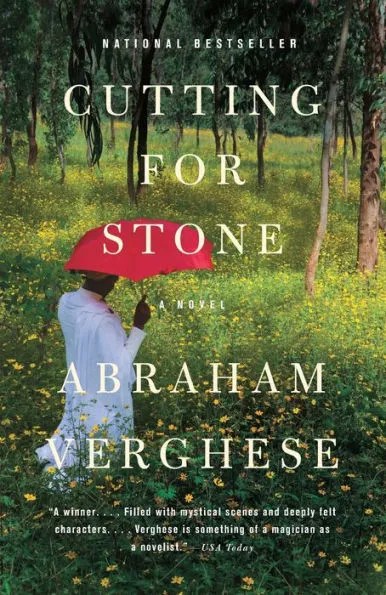
Cutting for Stone

Abraham Verghese

cutting-for-stoneFrom India to Ethiopia to America, Cutting for Stone, is an epic story that captured my attention and held it for the entire 658 pages! Although it’s a work of fiction, it reads more like a memoir.

Marion and Shiva Stone are twin boys born in a mission hospital in Addis Ababa to a nursing nun from India who dies in childbirth and a British surgeon who disappears immediately after their birth. Raised on the hospital compound by two Indian doctors, the boys grow up with a love for medicine and though their pathways are very different, both eventually become doctors.

This emotional and complex family drama combines elements of Indian and Ethiopian culture, coming of age, third world medicine, political revolution, and emigration. It’s a tale of abandonment, betrayal, loss, loneliness, love, lust, envy, friendship, disease, poverty, education, and so much more. Most of all it’s a story about home, family, and belonging.

The author, Abraham Verghese, is a physician, a professor, and Vice Chair of Education at Stanford University Medical School. Born of Indian parents who were teachers in Ethiopia, he grew up near Addis Ababa and began his medical training there before emigrating to the United States. I’m always amazed when a doctor has time to write anything other than medical papers and reports, but Verghese has authored four best-selling books; two memoirs and two novels.

Cutting for Stone contains a lot of medical detail. Other than what I’ve learned as a patient, I have no medical background or knowledge, but I found that aspect of the story quite fascinating. Verghese has a gift for describing medical procedures in such a way that they are interesting, easily understood, and while sometimes quite graphic, not gross at all.

I tend to agree with the Goodreads reviewer who wrote, “It is statistically improbable that I will read a book as good as this one anytime soon.”

To tuck or not to tuck

logo-by-samRecently, a reader commenting on one of the fashion blogs that I follow suggested that the blogger consider tucking in her blouse because, in her words, it would reduce the “frump factor”. The blogger took exception to being told that she looked frumpy and responded by devoting part of her next post to the topic. She pointed out that tucking tops in doesn’t necessarily work for everyone and that many very stylish women choose not to tuck. That post resulted in a lengthy discussion amongst her readers and inspired me to write today’s post. So, with apologies to Shakespeare, to tuck or not to tuck, that is the question!

I very rarely tuck my tops in. The quality of the photos isn’t great, but I’ll let them speak for themselves. This is just a simple jeans and t-shirt outfit that I’d wear around home, but I think it’s sufficient to make my point. 

For me, to tuck or not to tuck has a lot to do with body type. I’m tall and thin, but I have a boyish figure with a wide waist and narrow hips. To top that off, as is true of most women who are midlife or beyond, I have some extra me around the middle. Leaving my top untucked tricks the eye and makes that less noticeable. To see what I mean, look at the line between my t-shirt and pants in the photos. When my top is tucked in, your eye is drawn to my waist, the area that I don’t want to emphasize, but leaving it untucked draws your attention away from that area. An important key to making this work is to choose a top that drifts over the body instead of clinging to it and showing every bulge. 

When I do tuck in my top, I usually wear a third piece over it as I’m doing in this photo from a recent post. This actually has a narrowing effect as only a small portion of the line between my top and pants shows.

IMG_6915 

When it comes down to it though, to tuck or not to tuck is a personal choice. There is no right or wrong answer. That’s why we call it “personal” style. 

Why I write about fashion

logo-by-samLately, especially on weeks like this one when writer’s block seems to have set in and I have a hard time thinking of a topic for Friday’s post, I’ve been pondering why it is that I choose to write about fashion. After all, I was the awkward teen with zero fashion sense who, even when I stretched my babysitting and allowance dollars to buy what the “in” girls were wearing, felt self-consciously out of place and wanted to fade into the background. Fashion just wasn’t my thing and I certainly had no idea back then that there was such a thing as personal style or style adjectives

It wasn’t until about 15 years ago when fashion blogging became popular, that I began to take an interest in the topic. In those days, it was mainly seen as a hobby, a way for fashion enthusiasts to share their thoughts and ideas with the world. Eventually, after following several of these blogs for awhile, I found myself looking for a topic that would keep my blog active when I didn’t have anything more exciting (aka travel) to write about. Why not try my hand at fashion, I thought, and Fashion Friday was born!

With the passage of time, fashion blogging has changed. Some of the blogs that I originally followed eventually disappeared, but as others became more visible and gained a greater following, opportunities to monetize arose. Advertisers and brands began to recognize the value of these voices and reached out to engage with them. At first, popular bloggers were offered free merchandise in exchange for positive reviews, but as time went by they started to earn commission on items that were purchased through links on their blogs. Some even saw this as an opportunity to make fashion blogging a full-time career.  

I’ve never had any desire to move in that direction. I’m still very firmly in the blogging as a hobby camp and the more I see, the happier I am to stay there. One of the bloggers that I’ve been following for many years recently wrote about the fact that she never buys any clothing for herself that she can’t link to on her blog. As a result, her personal style has taken a hit and where she once found joy in fashion, she no longer does. On a recent trip, she visited several local boutiques and had the opportunity to buy some unique pieces, but didn’t because she couldn’t earn income from them. How sad! Others lament the fact that they no longer feel free to be their authentic selves. Instead they’ve created an image that they need to keep up and, in some cases, it’s taking a toll on their mental and emotional health. 

So why do I continue to write about fashion? I sometimes wonder if it isn’t a bit narcissistic, but I try to avoid too many “look at me” posts by also delving into a variety of fashion related topics like sustainability and shopping ethically. I’ve learned a lot about the fashion industry, but also about myself. I’ve figured out what my personal style is. I know what I want my clothing to say about me and I’ve chosen the appropriate adjectives to help me build the right wardrobe. These are the kinds of things that I want to share with you, my readers. After all, connecting with other women with a common interest and being part of this community has been the best part of writing about fashion! That’s really what keeps me doing this. 

Throughout the summer, however, I will be indulging some of my other passions… camping, hiking, kayaking, and visiting with family. I have no more medical appointments until the middle of August and I intend to take full advantage of that! For significant periods of time, I will be without internet access. I’ll blog when and where I’m able, but it will be sporadic and there will be some weeks when Fashion Friday doesn’t appear. Don’t go away though. It will be back!   


Book of the month – May 2024

The Life I Stole

Nikola Scott

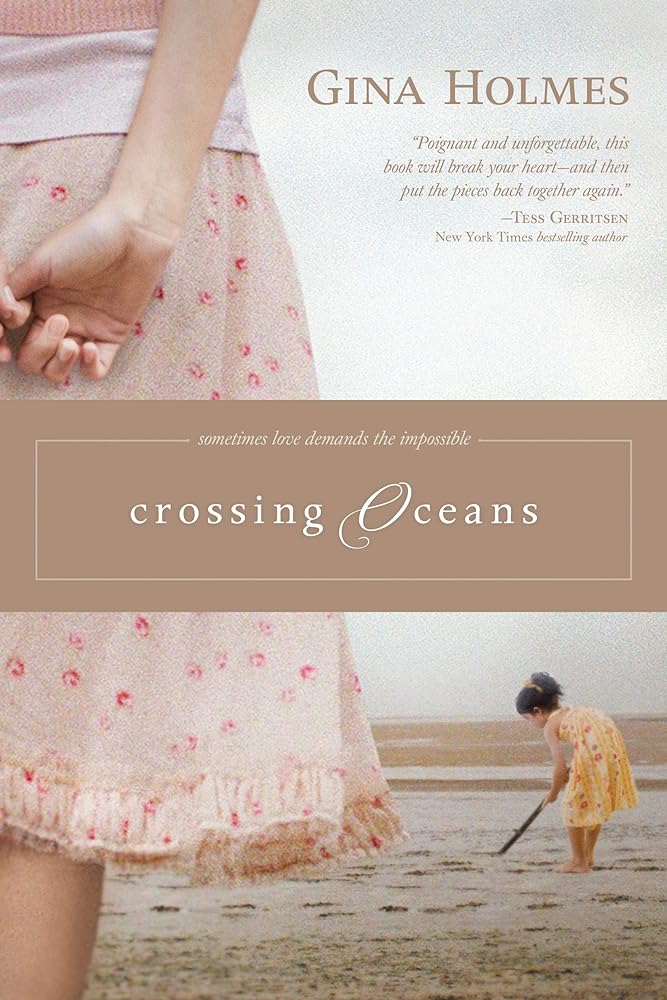
hbg-title-9781472260826-44Like many children in wartime Britain, 10-year-old Agnes Crawford was sent out of London to the safety of the countryside where she lived with the well-to-do McIntyre family. Tragically orphaned by the war, she stayed on afterward as their maid and close friend of their daughter, Isobel. When tragedy strikes again, Agnes adopts her deceased friend’s identity and with it the opportunity to become a medical student at a London university. 

The early 1950s were an exciting time for medicine in Britain as the National Health Service, in its infancy, began offering treatment to those who had previously been unable to obtain or afford it. It was also a challenging time for female medical students who faced discrimination in what was at that time a predominantly male environment. 

Agnes works hard to succeed all the while maintaining her secret, but discoveries about her family history, feelings of guilt, and a potential love interest make it increasingly difficult. Tension mounts as she tries to decide whether to continue the ruse or reveal her true identity and accept the consequences. I’m not going to tell you what she chooses to do. You’ll have to read the story yourself to find out!

I will tell you though that this novel brings post war London to life and explores issues of social class and women’s roles in a way that is both entertaining and informative. I found it hard to put down. 

How to style a tiered midi skirt

LogoAlmost every women’s fashion retailer that I’ve looked at online recently is offering at least one tiered midi skirt, but I won’t be buying one. That’s because I don’t wear skirts very often and I already have one that’s very special to me. Special because I bought it on the Pacific island of Saipan in 2011 when I hubby and I spent the summer working as short term missionaries there. 

img_7430

That’s me on the island 13 years ago. As you’ll see in the current photos, the skirt is actually greener than it appears to be in this photo. Unlike the much more colourful mass produced skirts that were very popular on Saipan that summer, mine was handmade in a tiny dressmaking shop on the island. 

Many women are put off by tiered skirts because they are so voluminous, but the key to styling any full skirt is to think about proportions. A good rule of thumb is to balance the volume of the skirt with something more fitted on top. Let me show you what I mean. 

IMG_6950

This outfit was very comfortable, but the boxy shape of the top, which you first saw on the blog here, leaves the outfit looking somewhat dowdy. 

IMG_6940

A fitted top tucked in at the waist is a much better look (although I should have ensured that it was tucked more smoothly before the picture was taken). Adding a decorative belt to cover the elastic waistband adds definition and gives the outfit a more finished look. 

Of course, you can always change the look with the addition of a third piece, but again, think of proportion and choose one that doesn’t overwhelm. 


Can I still style it?

387825232_282551964696259_7224086723056173090_n

That was me earlier this week trying to think of a topic for this week’s fashion post! Then, while I was out walking on Wednesday afternoon, the title of today’s post popped into my head. 

img_1457

This photo first appeared in a Fashion Friday post a little over eight years ago when I added the weekly feature to my blog. The classic grey blazer, leftover from my days in the classroom, was already several years old by that time. Believe it or not, even though I haven’t worn it very often since then, I still have it. It’s such a basic piece that I’ve hesitated to part with it, but can I still style it?  

Just for fun, I decided to try recreating that original photo. The porch and the siding on the house have changed and I’m 8 years older. The haircut is new, the jeans are a different wash and I chose to wear sneakers instead of flats, but the blazer is the same! 

IMG_6907

For the first look, I created a column of blue with a basic tee from Uniqlo. A column of colour creates a long, lean look and is a good way to show off the contrasting third piece; in this case the blazer. I liked this look, but decided to try some others. It’s always good to be able to style a piece at least 3 ways. 

IMG_6915

Staying with the blue/grey colour combination, I switched the blue t-shirt for a sleeveless patterned top. The top is long and loose. I often wear it untucked, but with the blazer, I thought it looked better tucked in. 

IMG_6925

Next, there’s that sleeveless animal print top again! It has appeared on the blog many times before as it’s so versatile and seems to go with almost everything in my wardrobe. 

IMG_6897 2

For the final look, I chose the long-sleeved striped top that I bought at Reitmans earlier this spring. I call it my Where’s Waldo? shirt! 

So, can I still style it? Clearly the answer is yes! The blazer is such a timeless piece that it’s worth keeping even if I only wear it occasionally. 

Cancer metaphors and an update

Patients, caregivers, fundraisers, and even medical professionals use a variety of different metaphors to describe life with cancer.

From day one, I’ve referred to my cancer experience as a journey. As a seasoned traveller, when I was diagnosed I felt as if I was embarking on a trip into the unknown. It’s been a long and tumultuous trip, but the metaphor is one that still works for me. Some patients, however, are bothered by it believing that a journey should always be fun and something that you have control over.

An even more controversial metaphor is the one that refers to life with cancer as a battle. Although it’s very common, many people take exception to using the vocabulary of violence at a time when patients are at their most vulnerable. Within the language of winning and losing, there’s also the uncomfortable implication that those who’ve died of cancer are losers and that maybe if we just fight hard enough we can win. While I realize that there are limitations to any metaphor, I think that the battle metaphor can be empowering. I am in a fight for my life and cancer is the enemy.

Thankfully, no one fights cancer alone and that’s also where the battle metaphor works well. My closest ally is my husband who accompanies me to every appointment and is involved in every decision regarding my care. An army of skilled medical professionals with a vast array of formidable weaponry (chemical, biological, and nuclear) at their disposal direct my care and they are backed up by a battalion of prayer warriors around the world. Ultimately, the commander in chief, the only one who knows the final outcome, is the Lord Himself. As we sang in church yesterday,

So when I fight, I’ll fight on my kneesWith my hands lifted highOh God, the battle belongs to YouAnd every fear I lay at Your feetI’ll sing through the nightOh God, the battle belongs to You

360_f_141399140_3bi2tlzvts4ek3a81nu6askenc8pjsnd

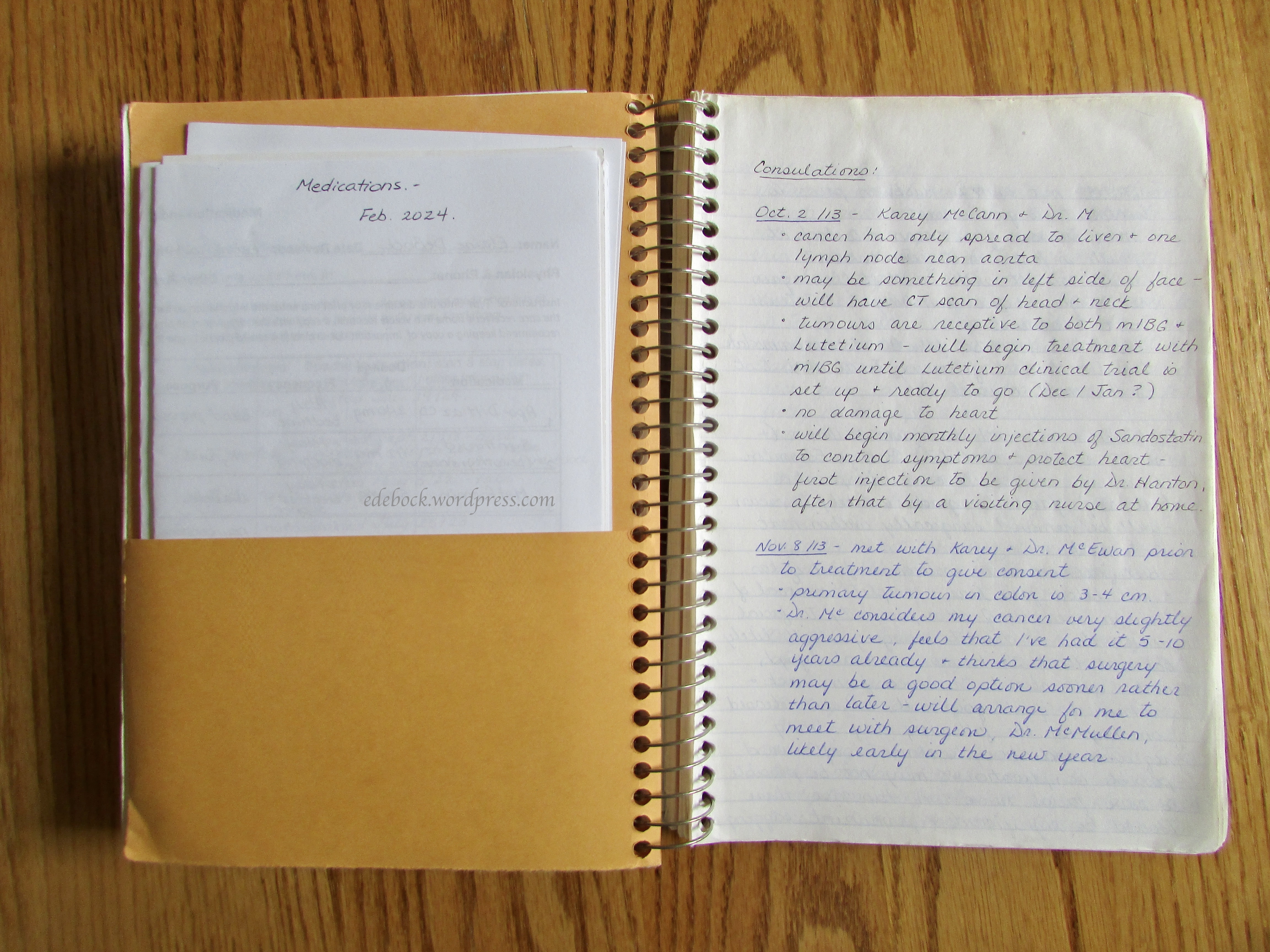
While my life with cancer is both a journey and a battle, at times it’s also a roller coaster and that brings me to the latest news that I want to share with you. After several years of stability, things began to change about 18 months ago. The first sign that my cancer was becoming active again were some changes in lab results. Two markers that are of particular significance for neuroendocrine cancer (NETS) patients had been gradually climbing and were now flagged as being higher than the normal range. Suddenly, the roller coaster went over the top and I felt like I was falling! More frequent surveillance eventually showed significant growth to the largest tumour on my liver. That led to the Therasphere treatment that I had in March of this year. The roller coaster dropped again when a post treatment CT scan showed what appeared to be a new growth in my lower abdomen raising concerns that my cancer was spreading. In mid April I met with a new oncologist. After reviewing my case, he requested a Gallium scan (the most detailed scan for NETS) and another CT scan. Last week, I met with him again to discuss the results and the news was fantastic! First of all, the Therasphere treatment was successful in destroying the large tumour on my liver. Equally exciting was the news that what had looked like a new tumour in my abdomen was nothing more than a harmless diverticulum, a bulge in the lining of my colon! There are other tiny growths that we will need to continue to keep an eye on with regular surveillance, but those don’t appear to have changed significantly. Since my cancer is incurable, this news is about as good as it gets and I’m hoping for a smooth ride for some time to come!

So, what metaphors should you use when talking to or about a cancer patient? It is, of course, valid for a person to speak about their own illness in any way they choose and their loved ones ought to adopt the same language as a way of reflecting those experiences. Simply take your cues from the patient and you won’t go wrong.

Lyrics: Battle Belongs, Phil Wickham

Mixing old and new

Logo by SamInstead of going home after church last Sunday, hubby and I set out for the little village of Donalda and the Willow Canyon trail, one of our favourite places to go hiking. Realizing that the restored train station near the trailhead would make a great backdrop for photos, I wore the outfit that I planned to share with you this week to church and changed into my hiking clothes after the photo shoot.

IMG_6895

IMG_6832

In addition to the jean jacket, thrifted several years ago, my outfit consists of one of the oldest items in my wardrobe as well as the newest. I distinctly remember buying the dark navy pinstriped pants at Uniqlo shortly after our arrival in Japan in 2008. They were a workhorse in my teaching wardrobe that year and again in 2013 when we taught in China, but after that they spent a lot of time hanging in storage. I kept them because they fit well and I really liked them and when wider legs came back in style, I started wearing them again. They’ve appeared on the blog several times in the past year or two. 

IMG_6841

Someone painted the bench in front of the station since the last time we were there, so of course I had to try it out. 

IMG_6850

The new item in this week’s outfit is the linen blend top purchased at Sweet Home on Main in Stetter on a recent retreat weekend with several ladies from our church. 

IMG_6854

It was obviously a popular item as two of us bought it and it’s presently out of stock. Simple and versatile, it can easily be dressed up or down and the soft ecru colour is more flattering to my complexion than white would be. I prefer a linen blend to pure linen as it has a similar feel and drapes just as well, but it doesn’t wrinkle as badly. 

IMG_6869

I usually wear longer tops, but I wanted to step outside my comfort zone and try this short boxy style. I just have to make sure that I wear it with high waisted pants and I won’t be raising my arms very high in the air when I’m wearing it. At 71, my midriff isn’t as attractive as it once was! 

IMG_6886 2

And finally, here I am just waiting for my train. Actually, I don’t think one has been by here in a very long time! 

IMG_6875 2


Choosing the right walking shoes

Screenshot 2024-05-09 at 7.40.11 PMAfter writing about my 150 day walking challenge earlier this week and encouraging you to consider joining me, I thought that this would be a good time for a post about how to choose the right walking shoes. If you’re walking in comfy, but well-worn sneakers, you might want to consider investing in a new pair that are dedicated to walking.

The American Podiatric Medical Association recommends replacing your walking shoes every 600 to 800 miles (approximately 950 to 1300 km). Some experts advise replacing them even more often, so be sure to check yours from time to time. If they’re becoming worn or have lost cushioning, it’s time for a new pair. Brand-new, well-fitting walking shoes might even put a bit more spring in your step and encourage you to walk a little farther.

Because feet come in various shapes and sizes, it’s impossible to recommend a specific style or brand that would suit everyone, but there are some tips that can help you find a pair that are right for you. First of all, shop late in the day. Our feet tend to expand a little throughout the day, so it’s best to try on shoes when they’ve swelled a bit. Also think about what kind of socks you’ll wear on your walks. The thickness of your socks will affect how the shoes fit, so take them shopping with you. If you wear orthotics, be sure to take those too. 

Comfort and fit go hand in hand and are by far the most important factors to consider when choosing the right walking shoes. Choose a shoe that is lightweight and breathable. You want it to fit snuggly at the heel and through to the middle of your foot, but it shouldn’t crowd your toes. The toe box should have enough wiggle room for your toes to splay out a bit, but not too much. Make sure that there’s a finger’s width or about half an inch between the end of your longest toe and the front of the shoe. Don’t hesitate to try on several different brands and styles to find the one that is right for you. 

The insole of a good walking shoe should cushion each step and it should feel like it’s adequately supporting the arch of your foot. Look for a uniform level of cushioning, rather than a higher heel cushion. The outer sole should provide adequate traction. 

Check the shoe for flexibility and stability. Hold it by the heel and bend the toe upward. It should bend at the ball of the foot. Grasp it at the heel and toe, then twist. You should feel moderate resistance. 

Finally, take a walk around the store before you decide to buy to ensure that the shoes you choose fit well and are completely comfortable. The old idea that shoes need to be broken in doesn’t apply to walking shoes. 

Good quality athletic shoes can be expensive, but your feet are worth it. You are worth it! Consider these shoes an investment in your well-being. Then get out there and enjoy walking!  

My 150 day walking goal

If you’ve been following my blog for long, you may remember that several times in the past few years I’ve challenged myself to walk or hike a specific distance over the summer months. The first time, back in 2020, I walked as part of a fundraiser for NET cancer research, but after that I recalled how good all that walking felt and how much having a specific goal kept me motivated. Last year, I challenged myself to walk 350 km between May 1 and October 31 and actually exceeded that by approximately 60 km.

Today, recognizing that I’ve been unusually lazy over the past winter and realizing how badly I need to get out and walk again, I decided that I would attempt to walk 300 km between now and my 72nd birthday on October 5, which happens to be exactly 150 days from now. (For my American friends, 300 km is equal to 186.4 miles.) Not only does having a goal motivate me, especially on those days when I’m feeling sluggish or just plain lazy, but being accountable to someone else is another driving force. That’s where you come in and the reason why I’m writing this post! 

walking-for-weight-loss-tips-1588694143-1

So why walk?

Walking has many benefits including:

  • It’s accessible, easy, safe, and free.
  • It reduces stress and decreases symptoms of depression and anxiety.
  • It improves heart health and reduces the risk of cardiovascular disease.
  • It increases blood flow and therefore improves energy levels.
  • It improves blood pressure and cholesterol levels.
  • It reduces the risk of some cancers.
  • It boosts the immune system.
  • It helps prevent the onset of Type 2 diabetes (which I already have).
  • It burns calories.
  • It promotes more restful sleep.
  • It improves flexibility and helps ease chronic pain and stiffness.
  • It improves brain function.
  • It’s a weight bearing exercise that reduces the risk of osteoporosis.
  • It has even been linked to longer life expectancy!

If you’d like to partner with me, I’d love to share this walking challenge with you. Just choose a distance that you think is reasonable for you and share it in the comment section below.

There are several ways to measure the distance that you walk. In and around town, I use MapMyWalk which allows you to create and save routes that you use regularly. All Trails gives information and distances for trails around the world and I use a handheld Garmin GPS to measure unmarked hiking trails.