Real China

There’s China that the tourists see and then, just a few metres away, there’s real China. One of our table mates on our Yangtze River cruise, who had been to Beijing and Xi’an just as we had, mentioned that he was surprised at how clean and modern China was. That’s because you haven’t seen the real China, we told him.

Toward the end of our first day in Beijing, our tour guide dropped us off at a marketplace. It turned out to be a tourist trap selling low quality, over-priced goods and souvenirs; not at all the sort of place where real Chinese people shop. It held little interest for us so after relaxing for a little while in a nearby Starbucks, we went for a walk. Down a narrow alley, less than a block from the glitzy market, I stopped to use a public bathroom. It consisted of several metal squat toilets set into a cement floor. That’s all! No cubicles, no sinks, nothing but the squatty potties! I was about to take a picture when a local lady walked in so I hastily shoved my camera back into my purse and left. She was surprised enough to see a foreigner there; I wasn’t sure she’d appreciate or understand me taking a photo! That’s real China.

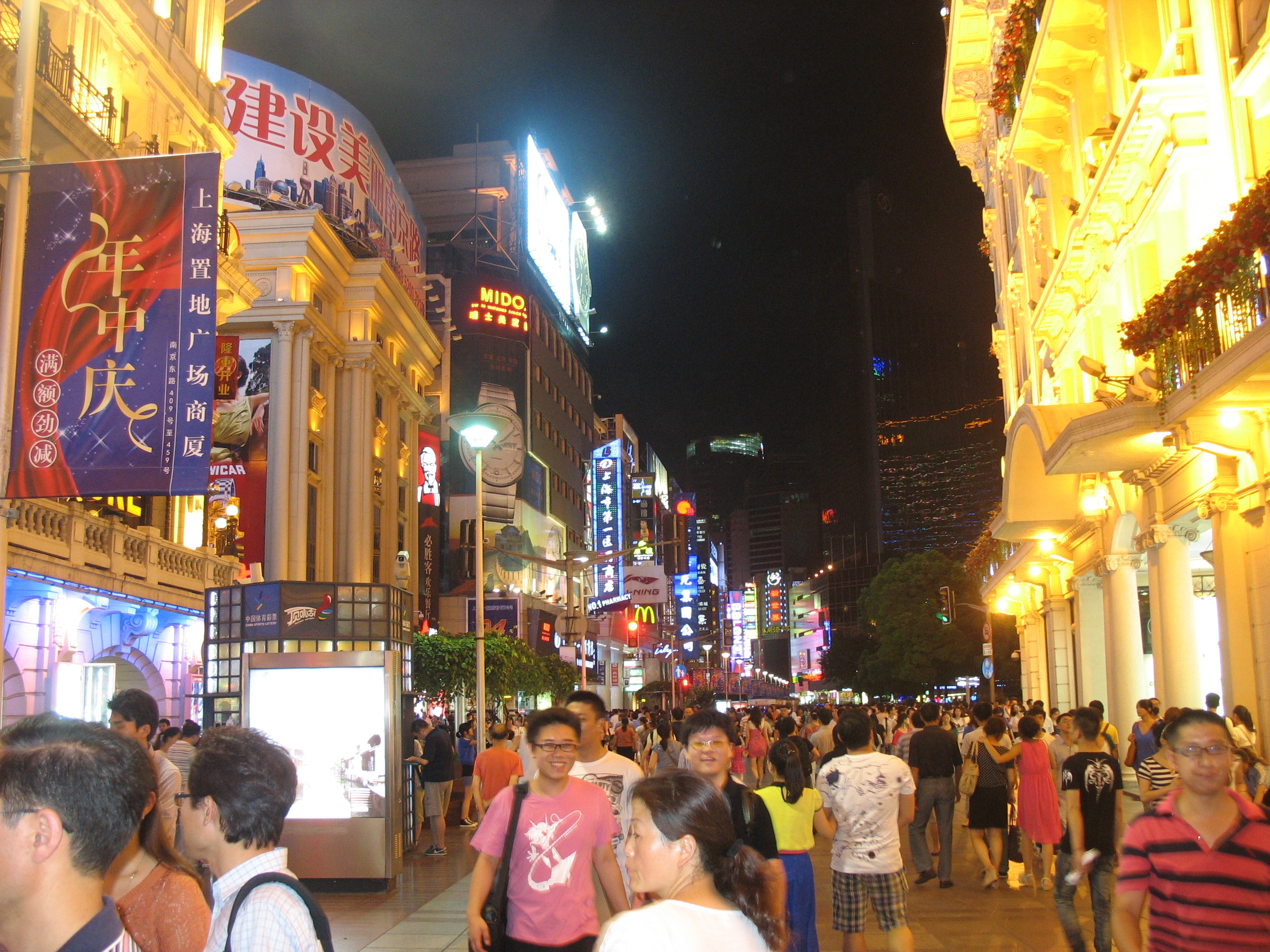
Later, as I mentioned in my last post, we spent an evening strolling East Nanjing Road, Shanghai’s famous shopping street. The crowds enjoying the music, action and glittering lights along this popular shopping strip were largely a mix of Chinese and foreign tourists. I doubt that many of the foreigners had any idea what they’d find if they wandered just one block to either side of the street they were on.

When we exited the subway, we accidentally took a wrong turn and found ourselves walking parallel to East Nanjing Road, one block over from where we intended to be. There it was dark and dirty and we had to walk around piles of old broken building material. It looked as if several places were being torn down or renovated. That didn’t bother me but the two men sleeping on the sidewalk in their underwear did! I’m pretty sure they were both breathing but I didn’t actually hang around to find out. That was the first and only time in our almost five months in China that I wasn’t entirely sure how safe we were but that’s real China.

Don’t get me wrong! We loved our time in China. It was an amazing adventure and I don’t regret one moment of the time we spent there but I wouldn’t want anyone to get the false impression that China is the shining face that it tries to put on for the rest of the world. It’s not third world but it still has a long way to go. As long as you’re willing to accept it for what it is, warts and all, it’s very easy to love though especially since its people are so warm and friendly toward its foreign guests.
Shanghai, city of contrasts!

When we went to China, Shanghai wasn’t high on our list of places to visit. As you can probably guess by now, we’re fascinated by history and culture and I viewed Shanghai, with its population of 23.5 million people, as little more than a massive modern city. The only thing that actually drew us to Shanghai as a possible place to visit was the fact that we had friends living there. We got to know the Kawabatas when we attended the same church during our year in Japan and Itoshi was transferred to Shanghai not long after we left that country in 2009.

When we discovered that the tour that included everything we most wanted to see in China ended in Shanghai, we decided to go there after all. We timed it so that we’d finish our tour on a Friday afternoon and then spend the weekend with our friends before flying back to Canada from there.

As time went by, I became more excited about seeing Shanghai. I looked forward to seeing the contrast between the old and traditional in Beijing and the new and modern in Shanghai. Little did I know that I would see both in Shanghai. It is truly a city of contrasts!

Our Lonely Planet guidebook suggests that “Shanghai is best seen as an epilogue to your China experience” and I’m glad we saw it that way. It also refers to Shanghai as “the future that China has long been waiting for”.

Our tour began at the Shanghai Urban Planning Exhibition Hall which gave us a good overview of the city both past and present before we began to explore it. With its massive model of the city and its dizzying 3D wrap around virtual tour in which we seemed to float over the metropolis, we soon felt as if we were no longer strangers there. Historic photos, maps and dioramas gave us a picture of its colourful past. Our next stop was the 88 storey Jinmao Tower for an amazing bird’s eye view of the city.

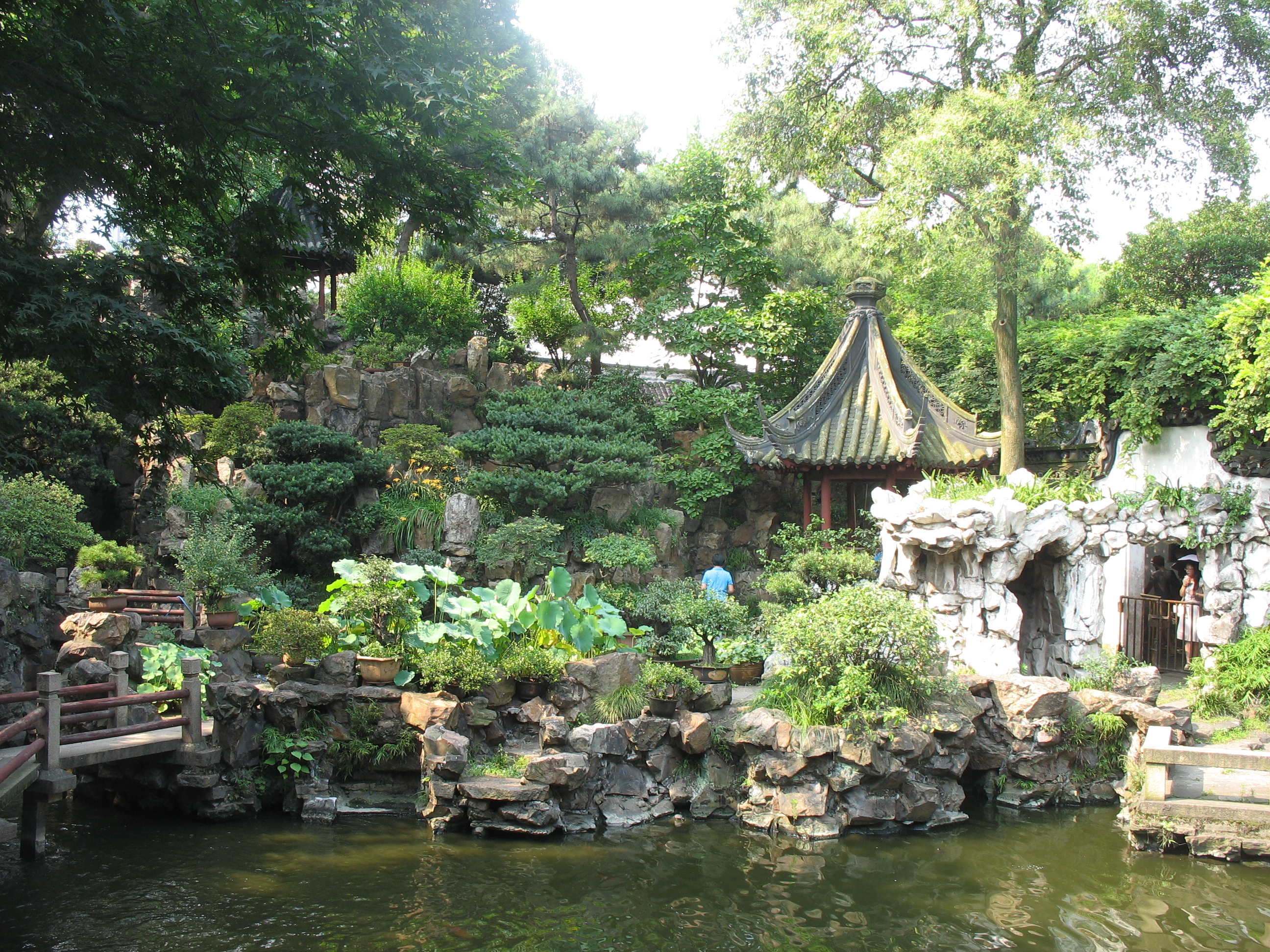
After lunch, we were off to the most traditionally Chinese part of Shanghai where we toured the classical Yu Garden, founded by the Pan family, rich Ming dynasty officials in the 1500s. Afterward, we relaxed over coffee at Starbucks in the middle of the adjacent and very crowded bazaar area with its many tacky tourist shops and outdoor vendors.
IMG_2932

IMG_2923

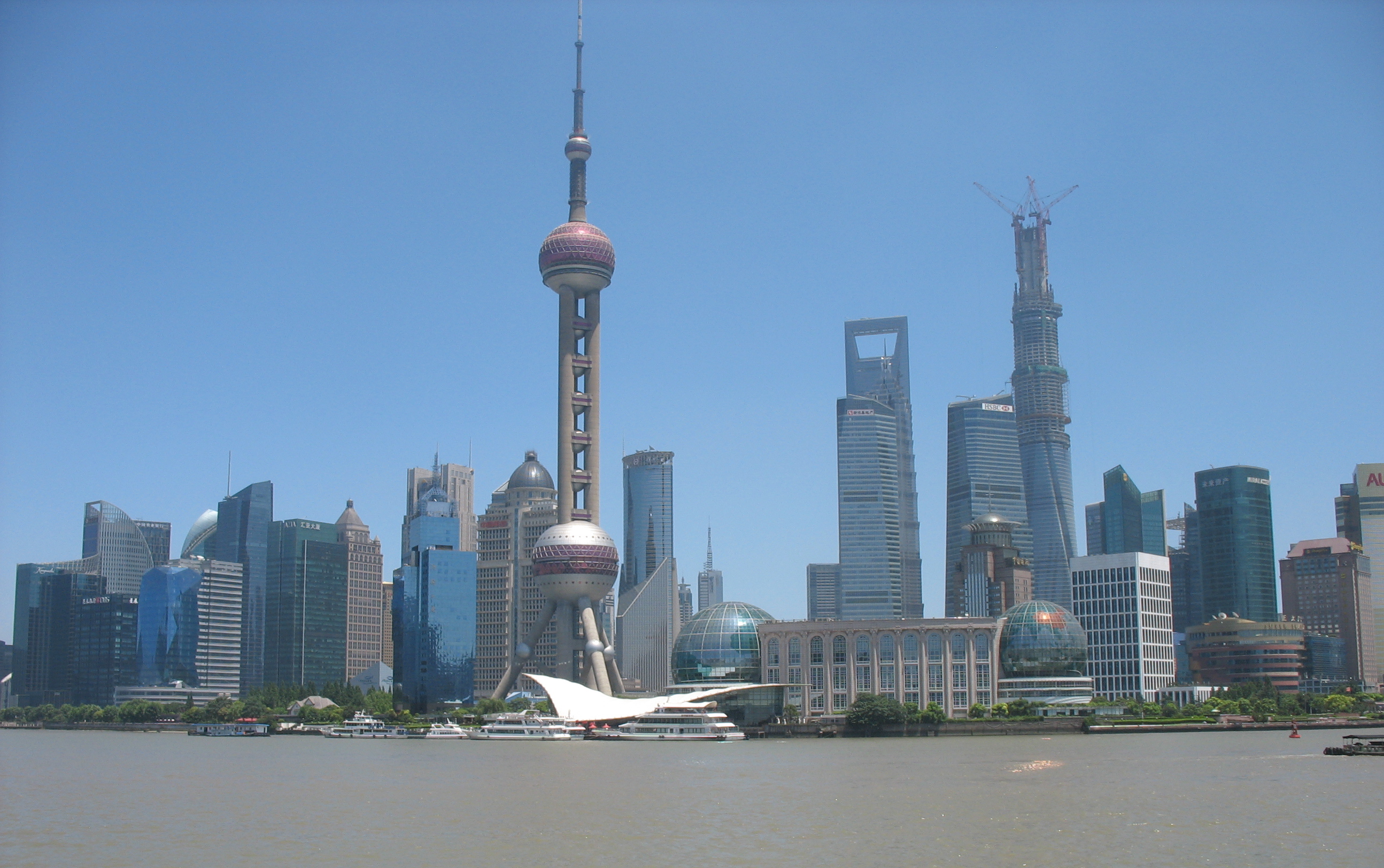
The building under construction in the background will be the world’s tallest when it’s finished.

IMG_2942

Our evening was free so we took the subway from our hotel to East Nanjing Road, one of the most famous and crowded shopping streets in China. The pedestrian street was a glowing forest of neon lights and crowded with people. It was a vibrant and noisy hub of activity with people strolling, singing, and dancing while others hawked their goods. We even joined one of the groups for an old time waltz!

IMG_2948

The next morning we were back on East Nanjing Road to see it in the daylight and do a bit of shopping. Look very closely and you’ll see the same KFC and McDonalds signs in both photos!

IMG_2950

From there, it was an easy walk to the Bund where we strolled along the riverfront in awe of the contrast between the two sides of the river. On our side stood stately very European looking buildings. Symbolic of the city’s colonial past, they once housed Shanghai’s most powerful banks and trading houses. Today, the Bund is a designer retail and dining area with some of the city’s most exclusive boutiques, restaurants and hotels. Across the river, is the futuristic skyline of the Pudong New Area looking like the set for a science fiction movie. Thirty years ago, that area was still farmland.

IMG_2958

IMG_2962

Perhaps the most amazing building we saw in Shanghai was the one where our friend, Itoshi, works where we were dropped off at the end of our tour of China!

IMG_2970

Yangtze River cruise

Other than our overnight boat trip on Halong Bay in Vietnam on Christmas Day 2009, Richard and I had never been on a cruise until our recent voyage down the Yangtze River. On July 7, we flew from Xi’an to Chongqing where we were supposed to board the MV Jenna, the largest Victoria Cruises five star luxury ship to ply the waters of the mighty Yangtze. Unfortunately, the Jenna was unable to dock at Chongqing due to unusually high water levels so we were bussed an hour and a half downstream to Fuling where we boarded shortly before dusk. After settling into our cabin and exploring the ship, we sat on our little balcony enjoying the night air until everyone was on board and the ship set sail at 11:00 p.m.

There were 380 something passengers onboard. Most were Chinese but there was also a group of Taiwanese travelling together as well as a group from the University of Virginia that included retired American astronaut, Kathryn Thornton, veteran of four space flights and now a member of the UVA faculty. We were one of four couples referred to as the “independents” because we weren’t part of a larger group. The eight of us were table mates and were together on all three shore excursions because, though we represented Switzerland, France, Portugal and Canada, we shared the ability to communicate in English.

We struck up an instant friendship with Carla and Francisco, the Portuguese couple who actually reside in Macao. We shared so many values and interests in common that we could have happily spent the entire cruise sitting on one of our adjoining balconies talking! We didn’t do that though as the ship presented us with a busy schedule for each of our three days onboard.

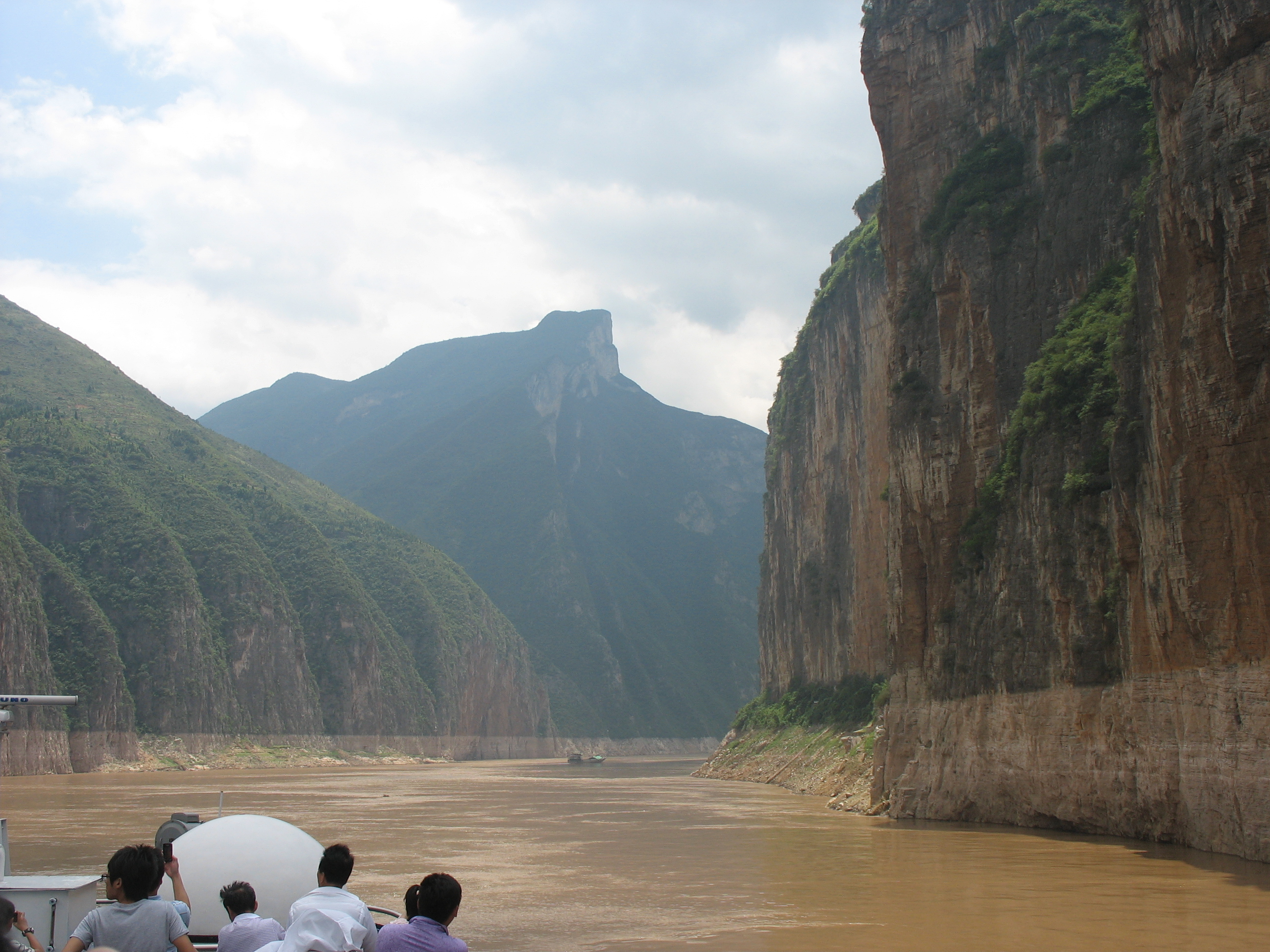
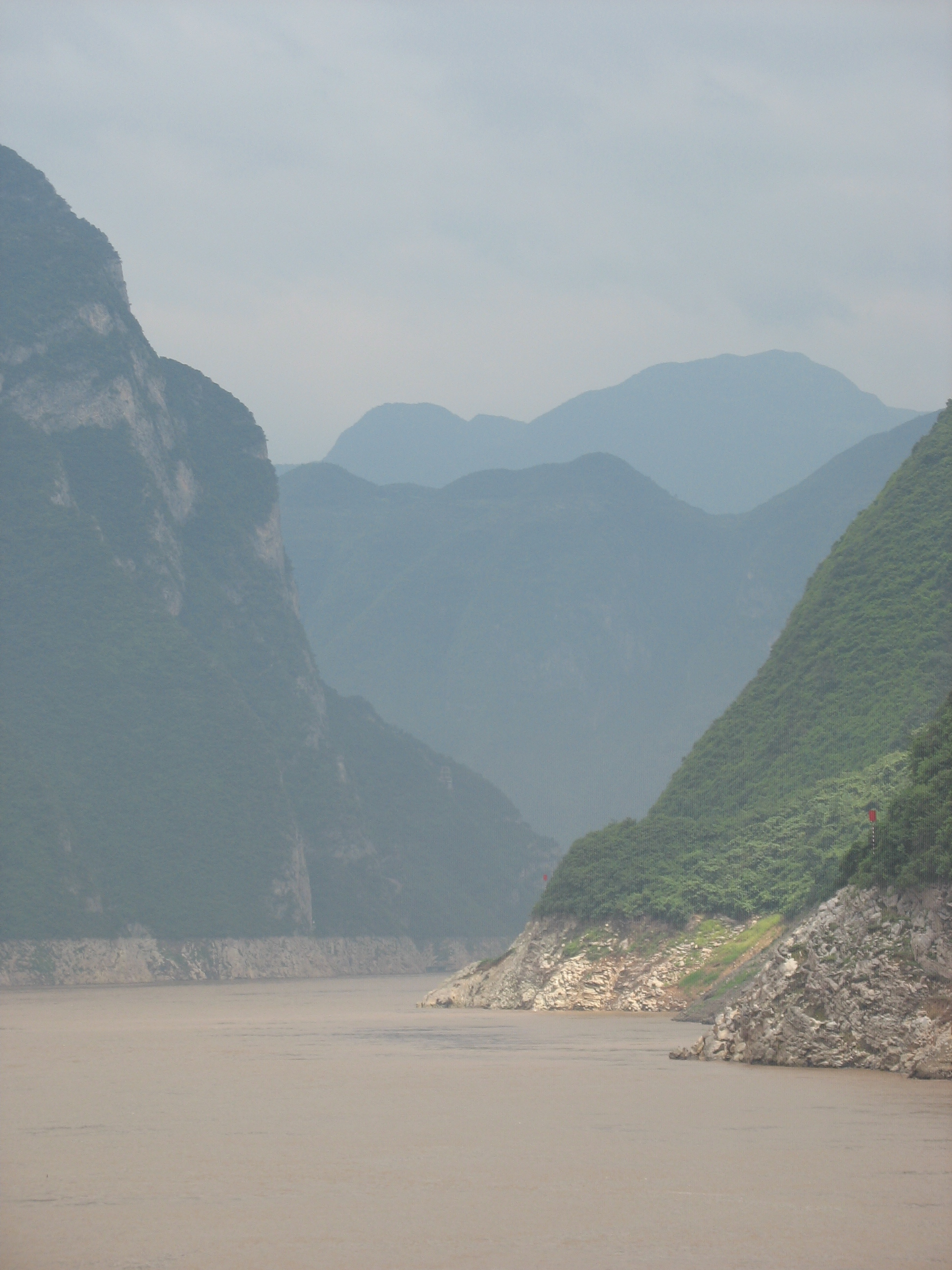
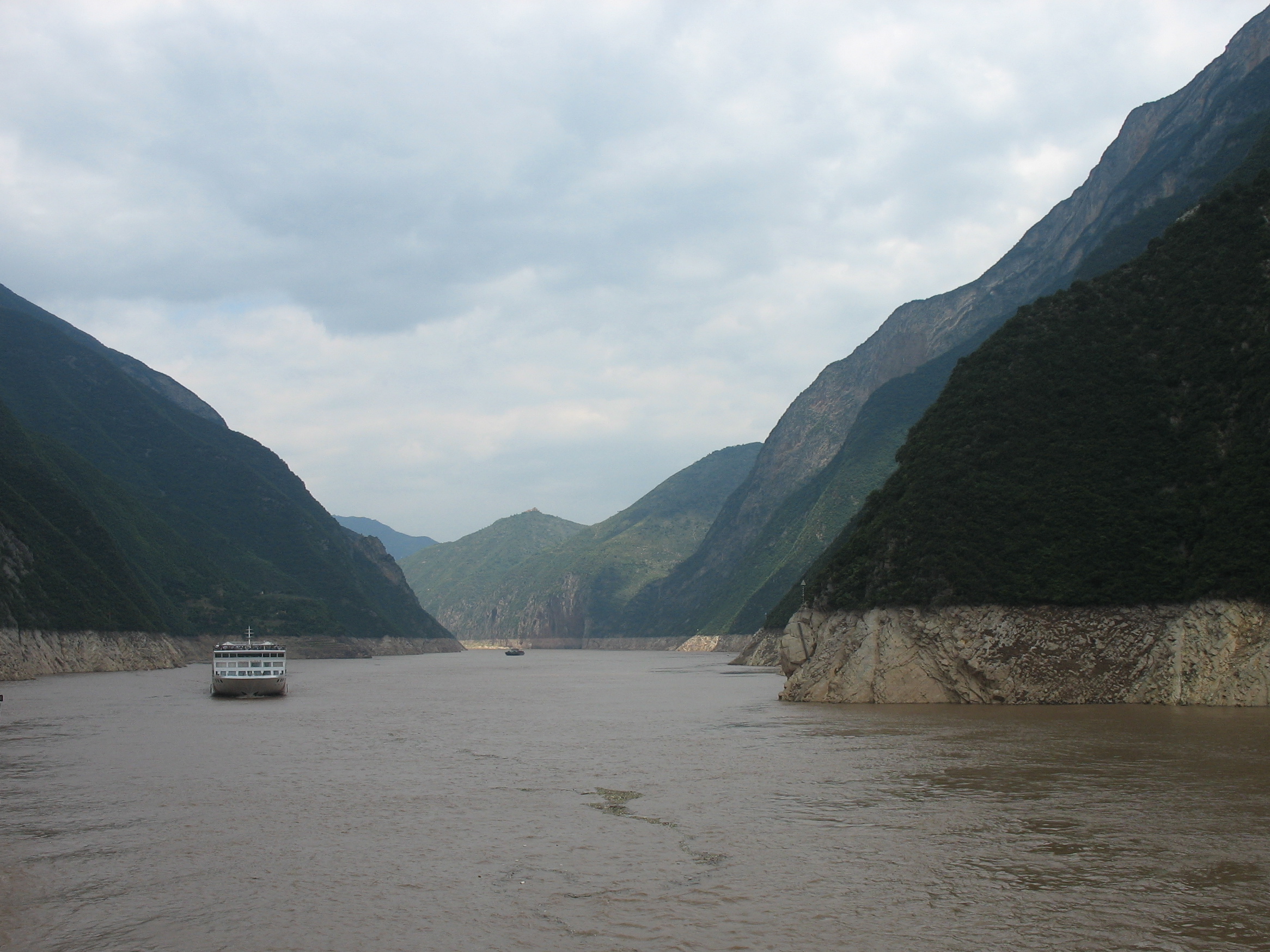
Though I thought about it, I didn’t actually make it to any of the early morning tai chi sessions and we certainly didn’t take advantage of the opportunity to watch movies in our comfortable cabin. After all, we could do that at home! We did take in two very informative sessions with our river guide, Luther Zou, who shared not only an introduction to the Yangtze and the famed Three Gorges but also a fascinating glimpse into his life as a country boy growing up on a Chinese farm. We enjoyed sumptuous meals, took in two evening shows put on by the multi-talented ship’s staff and of course, spent lots of time on deck enjoying the magnificent scenery as we passed through the gorges. We can only imagine how much more spectacular they must have been before the Three Gorges Dam caused the upstream water level to rise more than 300 feet forming a 600 km long reservoir. Above the high water line along the river’s bank, we saw many of the relocation villages built to house many of the approximately 1.24 million people whose homes were submerged by the rising water. More than 1000 archeological sites were also flooded. Some cultural and historic relics were moved to higher ground but others have been lost for all time.

The dam has had a positive impact not only as the world’s largest hydroelectric project but also providing flood control downstream and improving navigation on the river but I wonder what its long term negative impact might be. How might the astronomical weight of that much water affect the earth’s surface? We saw evidence of several landslides along the river banks and I’ve read that the dam, built in the western section of Xiling Gorge, sits on a seismic fault!

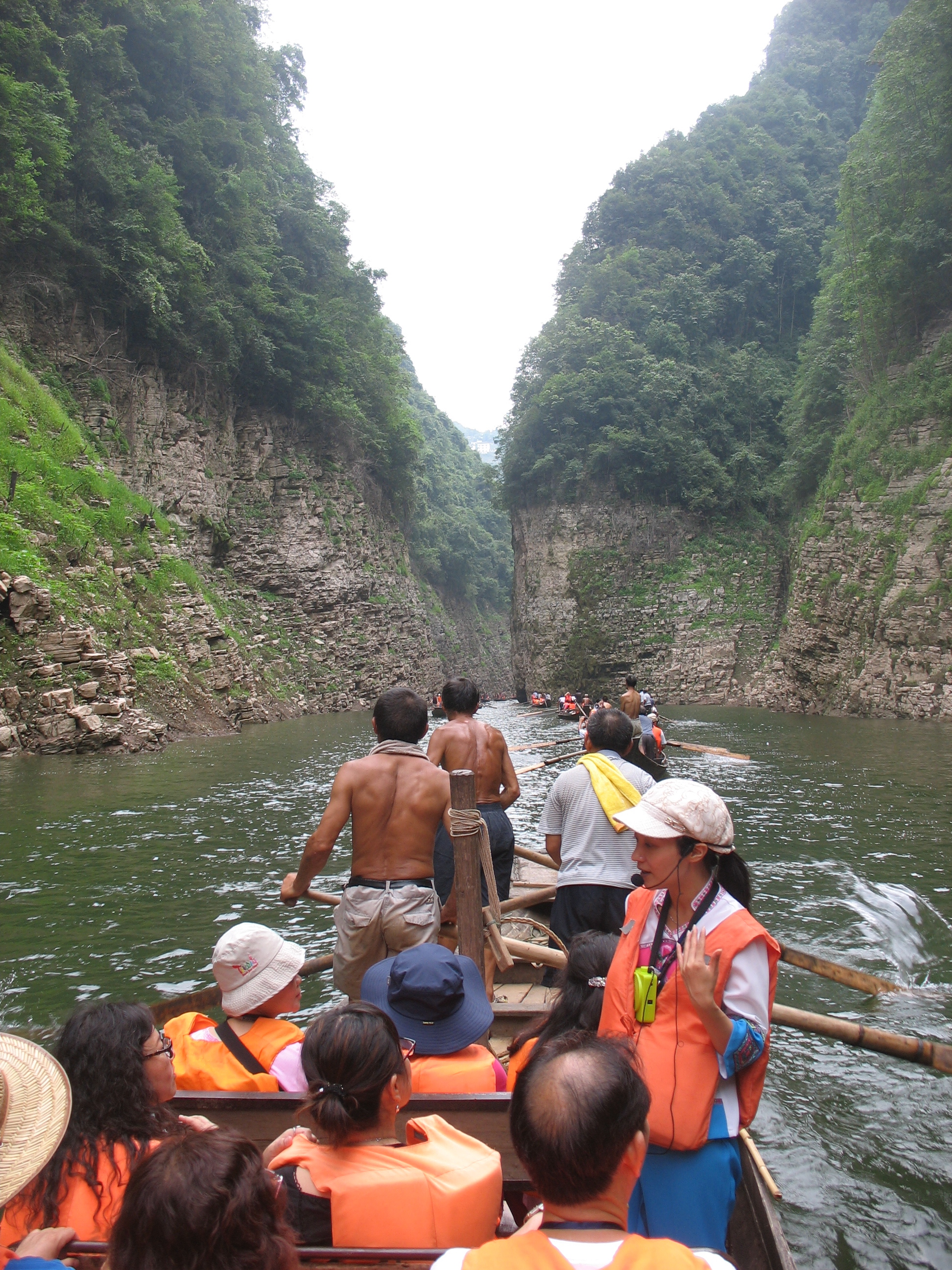
We enjoyed all three shore excursions. The first day we climbed the steep incline to the temple area on the top of Ming Mountain. Known as the City of Ghosts, it pays tribute to the King of the Underworld. Though I found that concept a bit disturbing, the outing was fun and once again I was thankful that the 67 stairs up to our fifth floor apartment in Dalian had prepared my legs well for such activities! The second day’s excursion was by far our favourite. We first boarded smaller ferries for a trip up Shennong Stream, a picturesque tributary of the Yangtze, and then downsized to smaller sampans to travel even further upstream. The scenery was truly spectacular. After staying up very late that night to watch from the deck as the Jenna passed through the first of the ship locks at the Three Gorges Dam, we rose early the next morning to visit the dam.

After returning to the ship and passing through the eastern section of the third gorge, we enjoyed a final meal onboard then disembarked at Yichang where many of us were taken to the airport to catch the same flight to Shanghai. It was there that we had to say a sad farewell to our new friends. Even when we’re surrounded by some of the world’s most stunning scenery, life is still about people and ours have definitely been enriched by our time with Carla and Fransisco!

Qutang Gorge

Qutang Gorge

Wu Gorge

Wu Gorge

Pictures hardly do justice to the beauty that surrounded us!

Pictures hardly do justice to the beauty that surrounded us!

IMG_2815

Sampan on Shennong Stream

Our new friends

Our new friends

Eastern portion of Xiling Gorge

Eastern portion of Xiling Gorge

Terracotta warriors

When we left home in February, there were only three items on my unwritten bucket list for China:

  1. Climb the Great Wall
  2. See a giant panda
  3. See the army of terracotta warriors at Xi’an

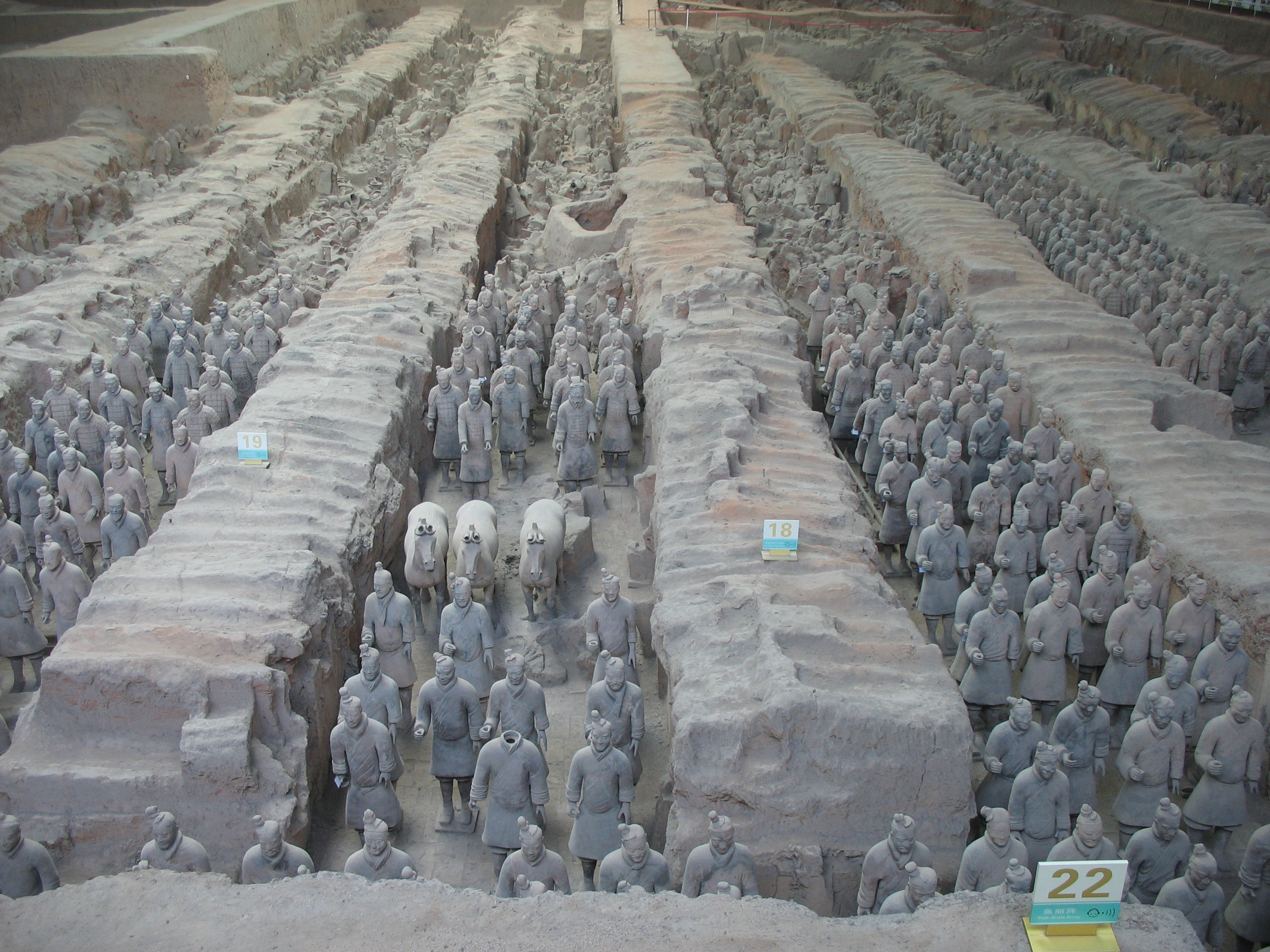
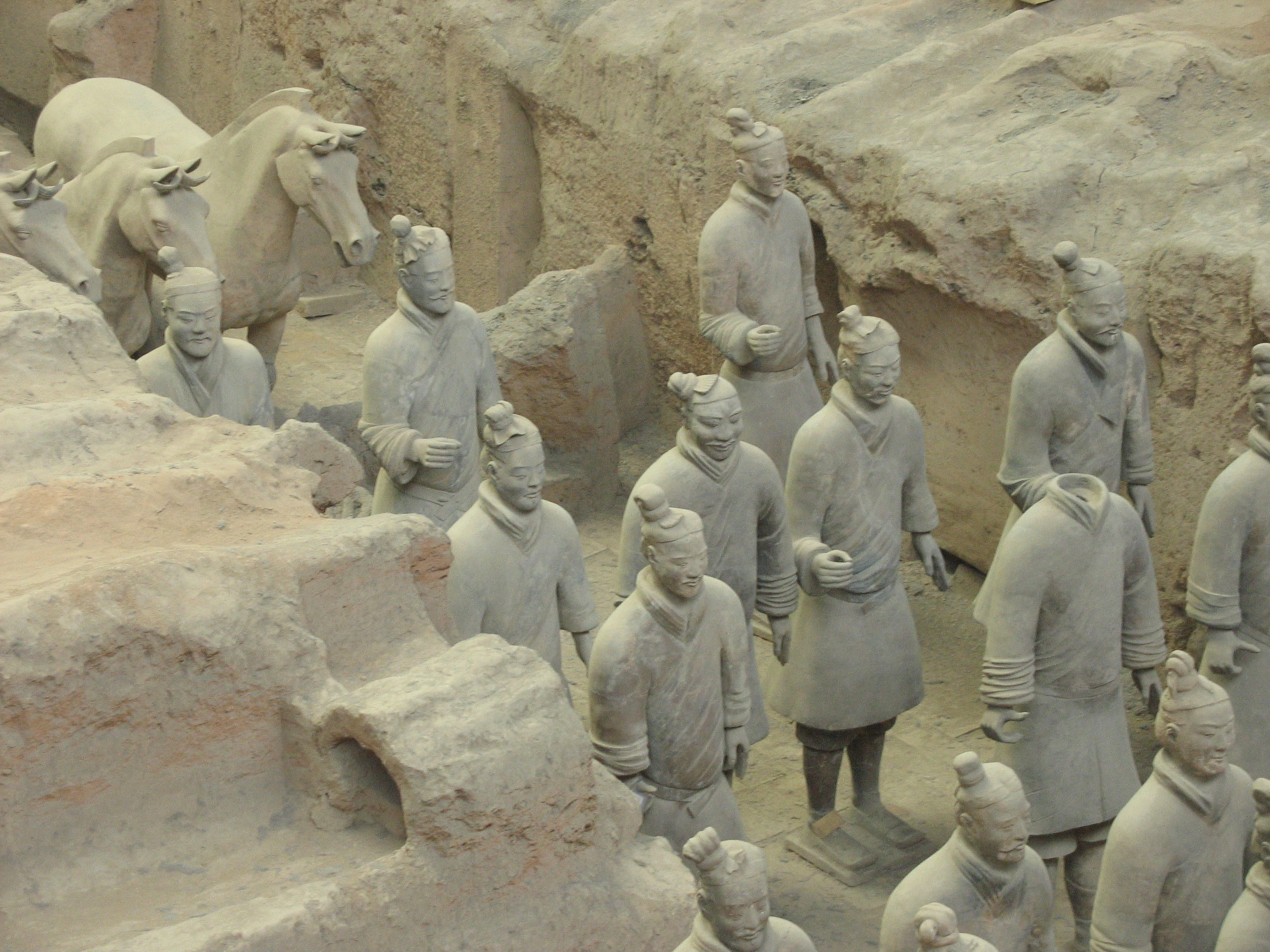
On March 29, 1974, a group of peasant farmers came upon something completely unexpected while digging a well about 1.6 km east of the burial mound containing the remains of China’s first emperor. What at first appeared to be an earthenware jar was actually the head of a life-sized terracotta warrior, one of thousands buried with Emperor Qin Shi Huang to protect him in the afterlife.

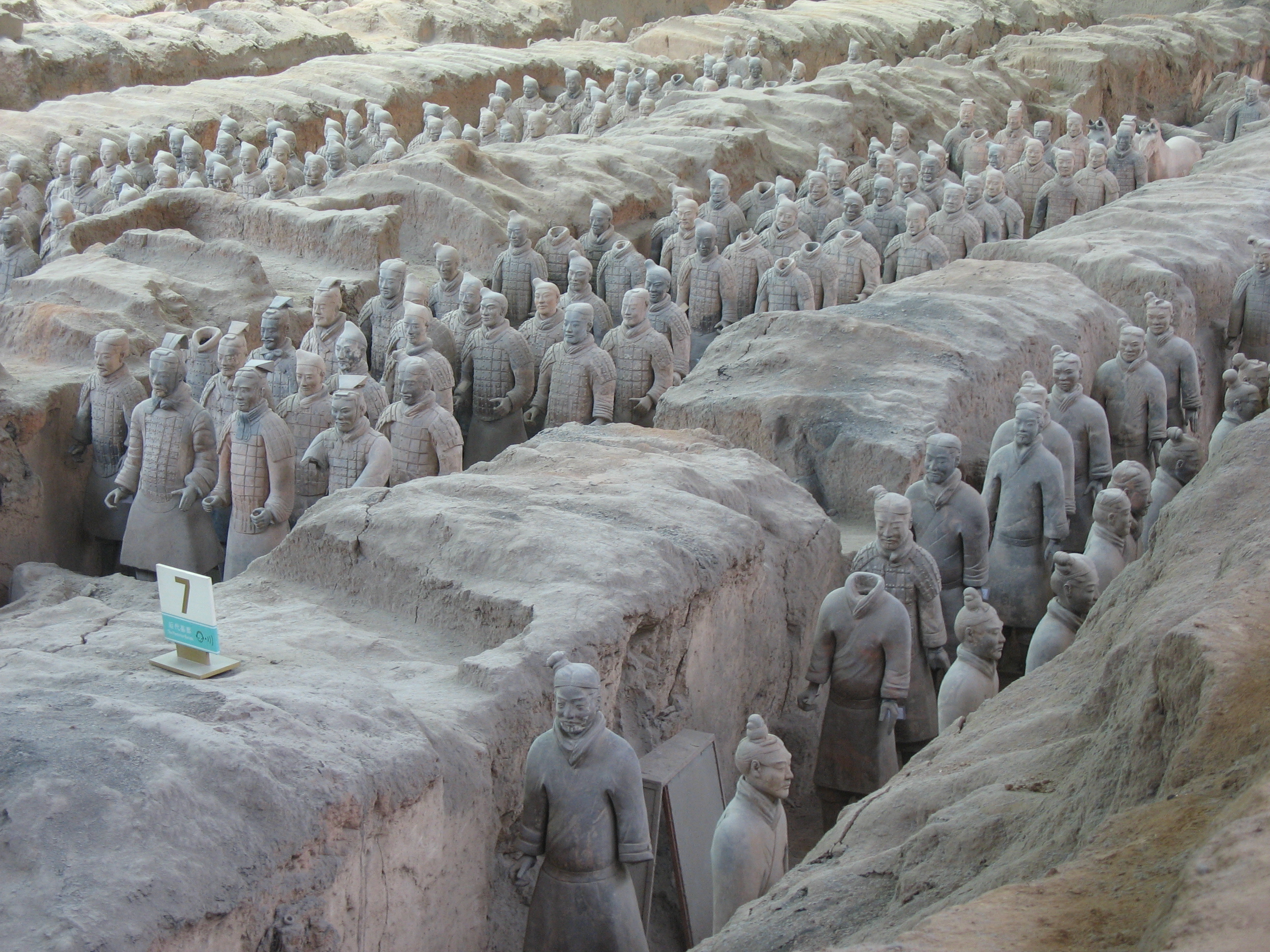
The discovery prompted Chinese archeologists to investigate and what they found was one of the greatest archeological discoveries of the 20th century shocking not only China but the entire world. The pits in which the army of an estimated 8000 soldiers, 130 chariots and 670 horses were buried more than 2000 years ago had been roofed with wood before being covered with a metre or more of earth. Over time, the wood decayed and collapsed leaving the underground army in pieces. Fragments of heads, torsos, legs and arms have been uncovered and entire statues meticulously restored, each one different from the others. Many remain beneath the ground.

I remember reading about this amazing discovery and thinking how great it would be to see it but I didn’t think that I ever would. As I approached the pit that houses the bulk of the terracotta army, I was overcome with emotion. It was hard to believe that I was really there!

As we gazed out over the vast army of statues we were amazed! Amazed at the incredible workmanship, amazed at the years of work and the number of craftsmen that must have been involved in creating such a vast array of statues, amazed that anyone would actually commission this work to be buried with him when he died! We also shared our tour guide’s concern about the future preservation of the statues. Though a building now protects them from wind and rain, there is no temperature or humidity control. The figures were originally painted and covered with a laquer finish but what remained quickly began to fade and flake off when they were exposed to the air and very little colour can now be seen.

IMG_2629

IMG_2597

IMG_2626

IMG_2602

I was also amazed at the size of the site, noting how much land that was once farmed is no longer. On the other hand, thousands of tourists visit every year significantly boosting the local economy. And what happened to the farmers who made the original discovery? Their land was confiscated by the Chinese government and one of them spends his days in the gift shop signing autographs and having his picture taken with tourists (for a fee, of course). It was a thrill to meet him but I wonder if he might have been happier living out his life on the farm.

IMG_2632

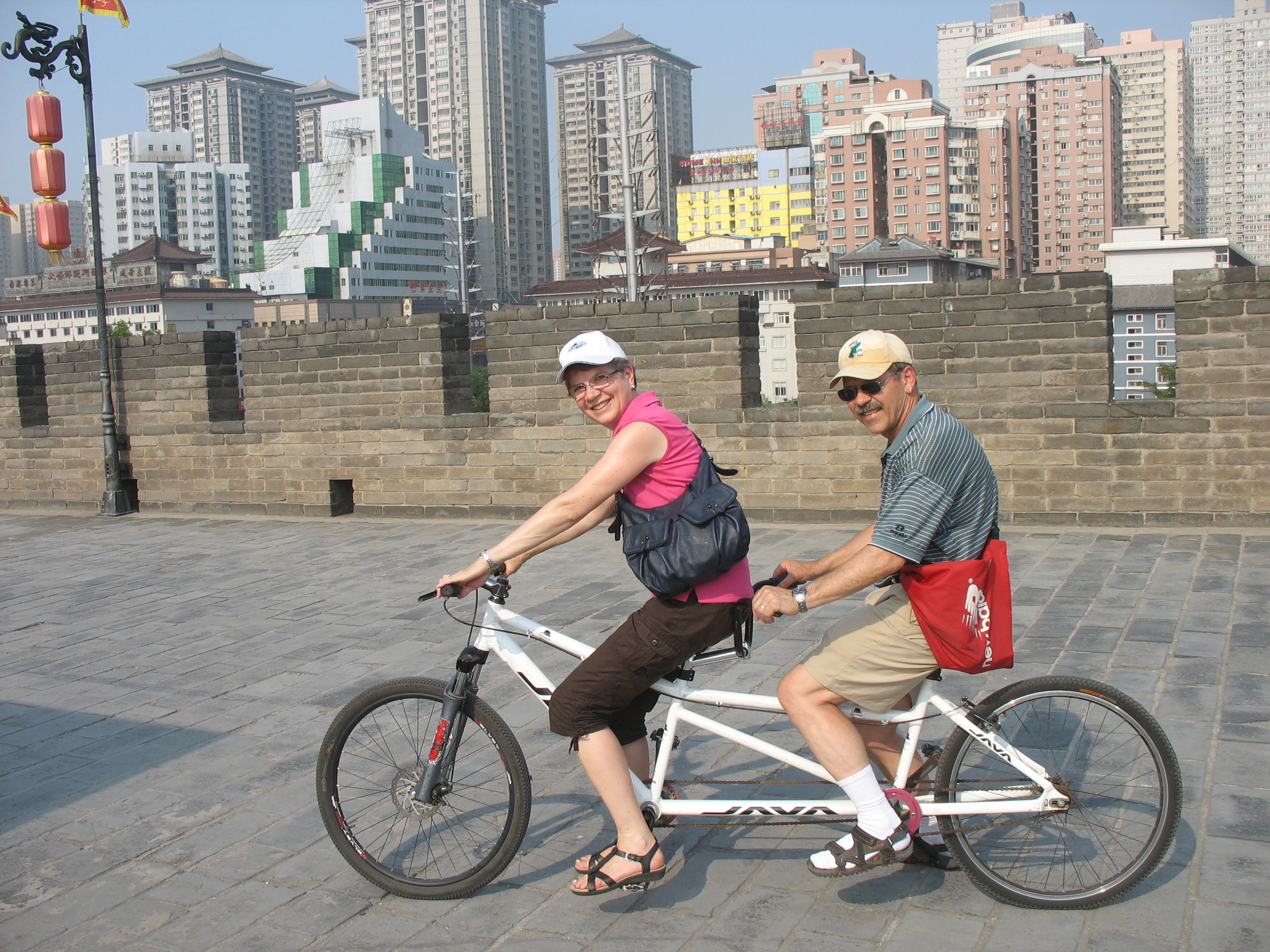
Before leaving Xi’an, we also crossed another item off my bucket list. I’ve always wanted to ride a bicycle built for two. One of my Chinese students recommended that we ride bicycles on the Xi’an city wall so we promised her we’d do that. When I saw that we had the option of renting a tanden bike instead of two individual ones, I thought there’d be no better place to fulfill that dream so this one’s for Grace!

IMG_2640

Hot nights in Xi’an

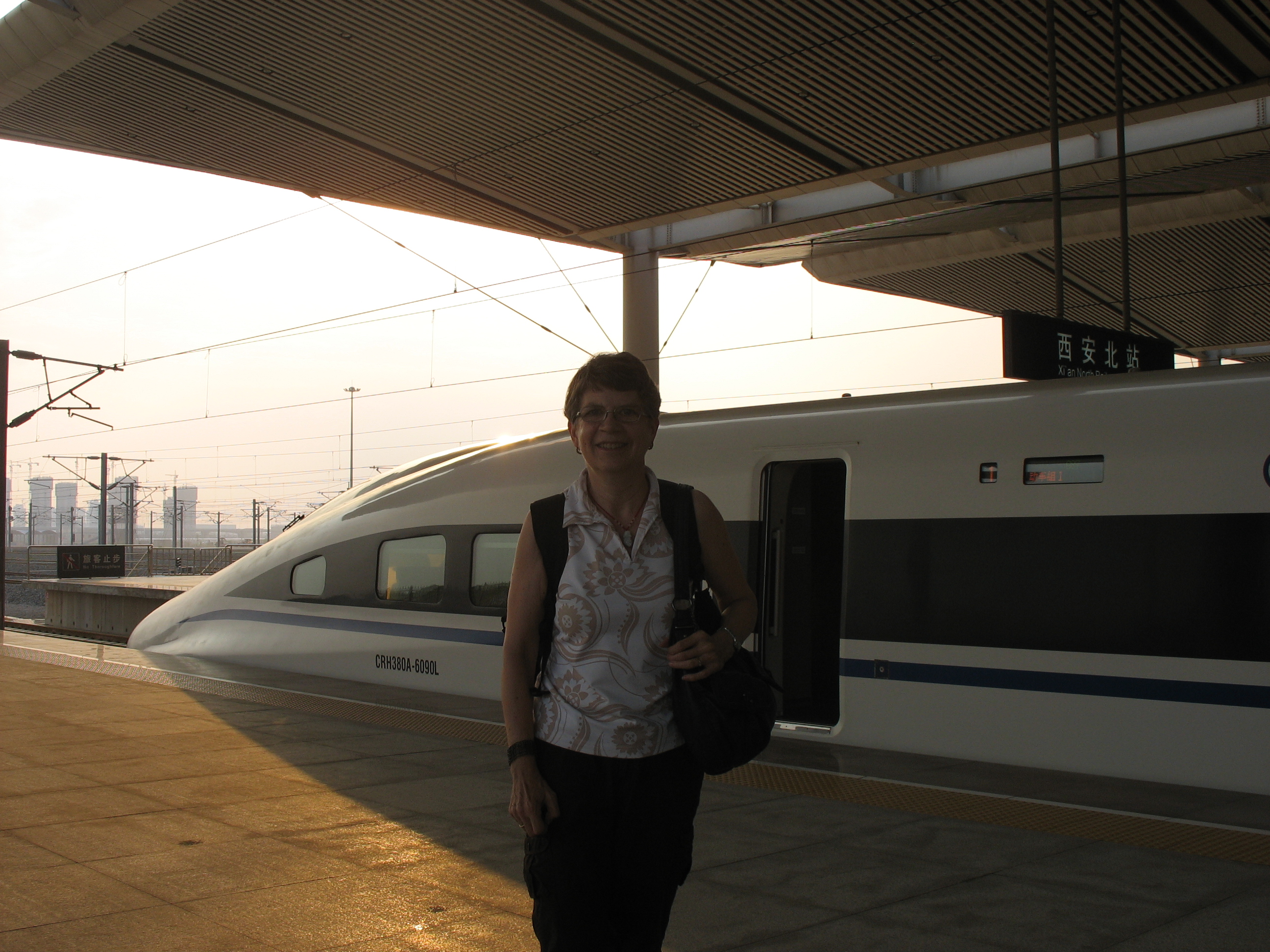
Leaving Beijing behind, we travelled southwest to Xi’an, once the eastern terminus of the Silk Road, the ancient trade route between China and the Mediterranean. We opted to travel this leg of our journey by high speed train in order to see more of the Chinese countryside. Cruising along at 300 km/hour, the ride was smooth and comfortable; like flying without ever leaving the ground.

IMG_2516

For the first part of the trip, flat farmland divided into a myriad of small fields stretched as far as we could see. At the speed we were travelling, it was difficult to identify the crops but we did see some rice and lots of corn. As we travelled further from Beijing, the flat plain gave way to more rugged terrain. The train passed through many tunnels and wherever possible, small fields were carved into the hillsides. Land that would be considered unusable here in Canada was being cultivated to help feed China’s more than 1.3 billion people.

IMG_2486

IMG_2509_2

When we reached our hotel inside the city wall in the heart of Xi’an, we were delighted to learn that we’d been upgraded to a larger room. We’re not sure if this was simply good luck or if the fact that I’d complained to our tour organizer about the Beijing guide and the unreasonable schedule that she’d planned for our first day there had something to do with us receiving special treatment. In any case, the “larger room” was actually a beautiful two room suite with a big bathroom that housed a deep soaker tub, the first bathtub I’d seen in China! As one who prefers baths to showers, I was in seventh heaven!

The hotel was within easy walking distance of both the Bell Tower and the Drum Tower which were spectacularly lit at night. As in other ancient towns across China, these structures served an important role in the days before people had clocks in their homes. The huge bell was rung at dawn while the drum marked nightfall.

Bell Tower

Bell Tower

IMG_2520

Drum Tower

It wasn’t until after we’d returned from exploring the area near our hotel and photographing the towers that we discovered that the air conditioning in our suite wasn’t working. Though someone from hotel maintenance worked on it twice and assured us both times that he’d fixed it, it never did work properly and we spent two very hot nights in Xi’an!

Hanging out in the hutongs

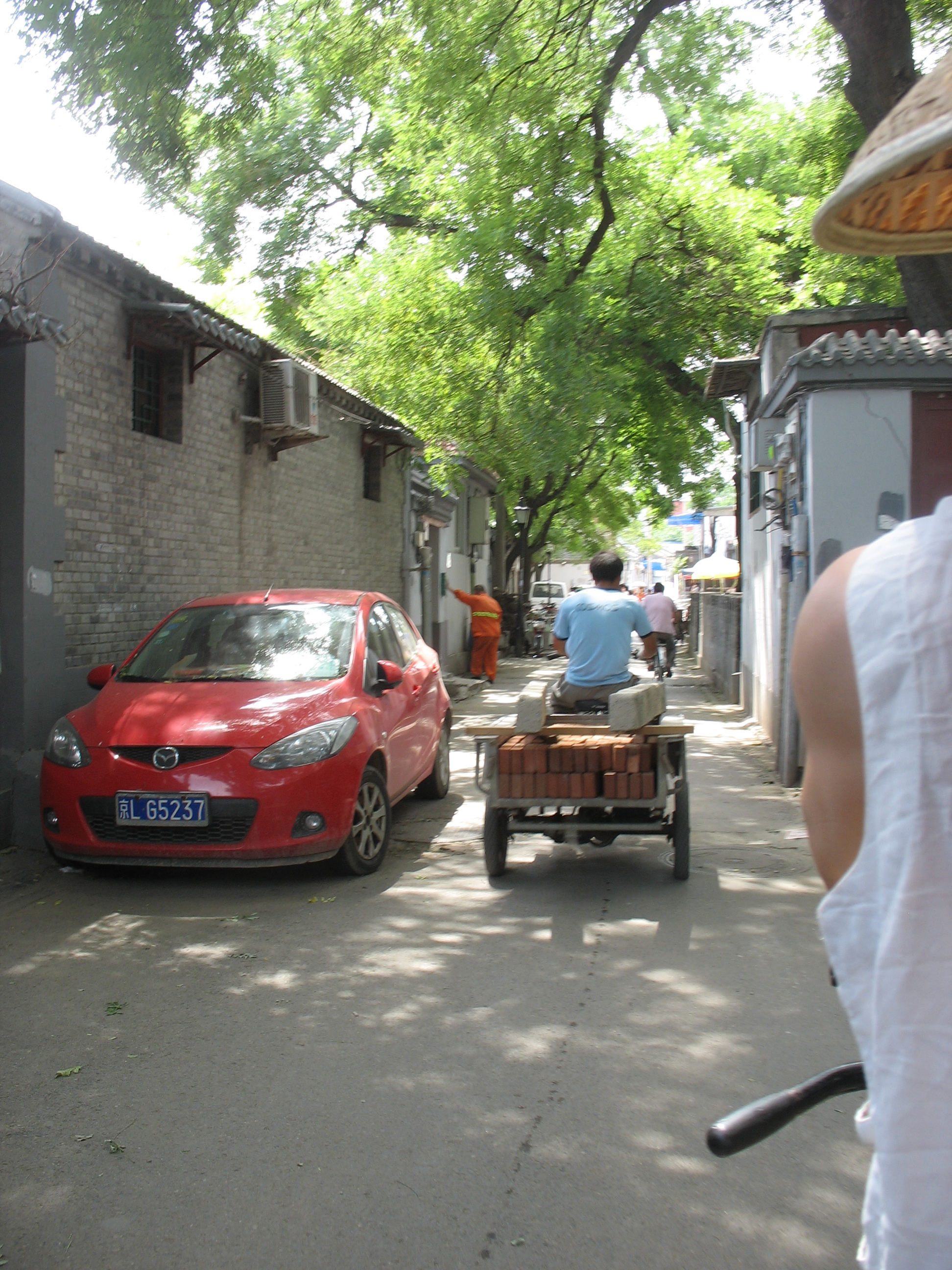
According to an old Chinese saying, “There are 3600 hutongs with names and as many without names as the hairs on an ox.” A visit to Beijing wouldn’t be complete without spending some time exploring these narrow alleyways. We spent our first evening in Beijing exploring the ones close to our hotel on foot but also enjoyed touring others by rickshaw, the most popular way for tourists to see these neighbourhoods.

IMG_2322

Some 600 years ago, while Emperor Zhu Di and his family lived in luxury within the walls of the Forbidden City, the common people of Beijing lived in the hutongs and many still do today. Hutongs are made up of rows of traditional residences, each built around a central courtyard. Joined one to another, these single storey homes form crowded but enchanting warrens where a warm sense of community abides. Though many of these residences have been modernized with the addition of electricity and plumbing, public bathrooms in each neighbourhood continue to serve the needs of those that haven’t been.

IMG_2325  IMG_2327

We had the opportunity to visit two courtyard homes, one a family dwelling and the other now a guest house. Built 300 years ago as the home of a government official, the guest house is larger than most hutong homes and its enterprising owners saw an opportunity to turn it into a thriving business when Beijing hosted the summer Olympics in 2008.

IMG_2460

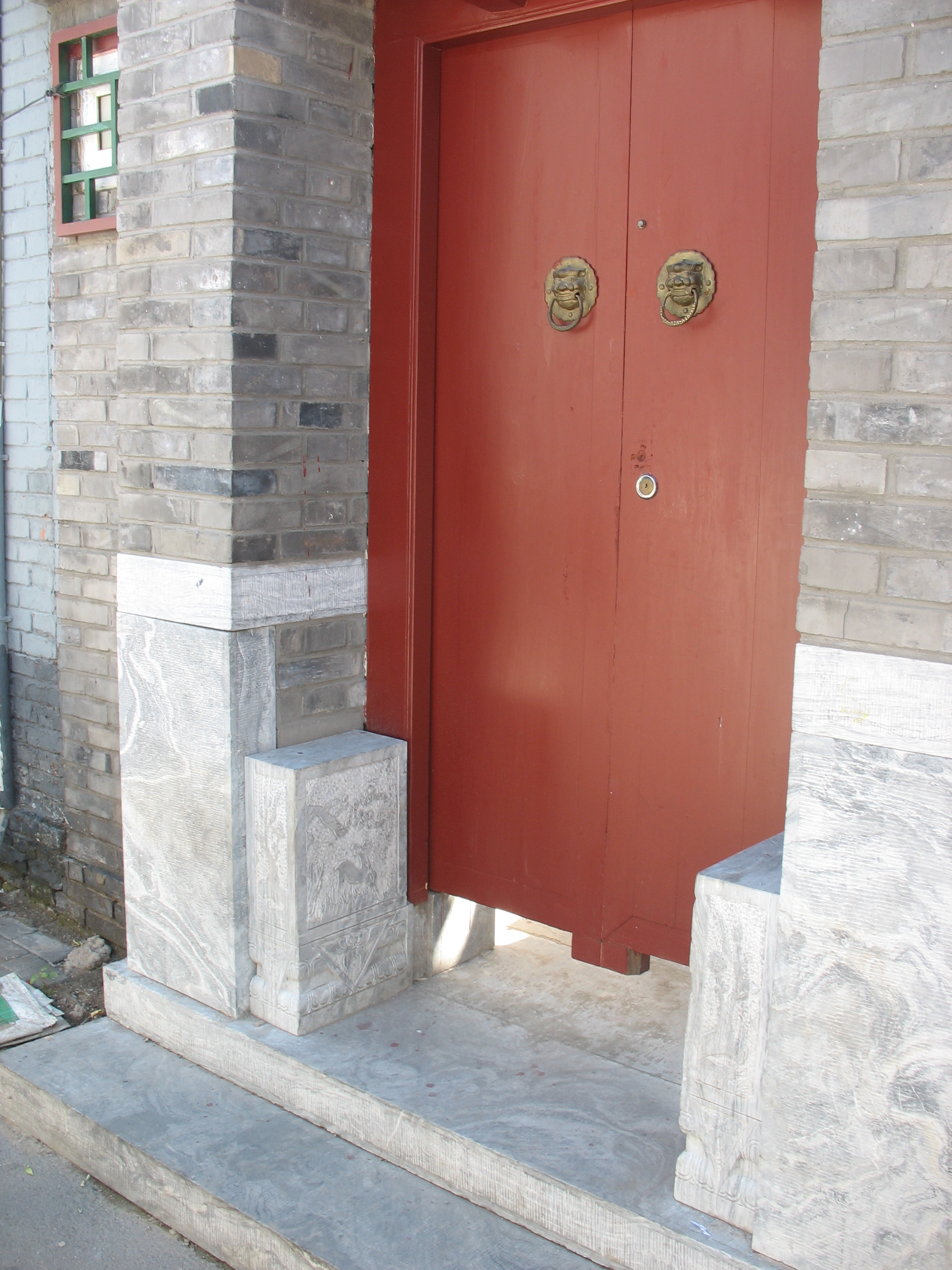
Some of the grander courtyard homes have stately looking red doors flanked by carved stones. Rectangular stones indicate that the house was originally owned by a government official while circular ones identify military homes.

IMG_2451  IMG_2466_2

Hundreds of hutongs survive but the number has dropped dramatically during recent years as Beijing rushes to become a modern city. Fortunately, some of the hutongs have been designated as protected areas by the government in an attempt to preserve this aspect of cultural history.

Burial places

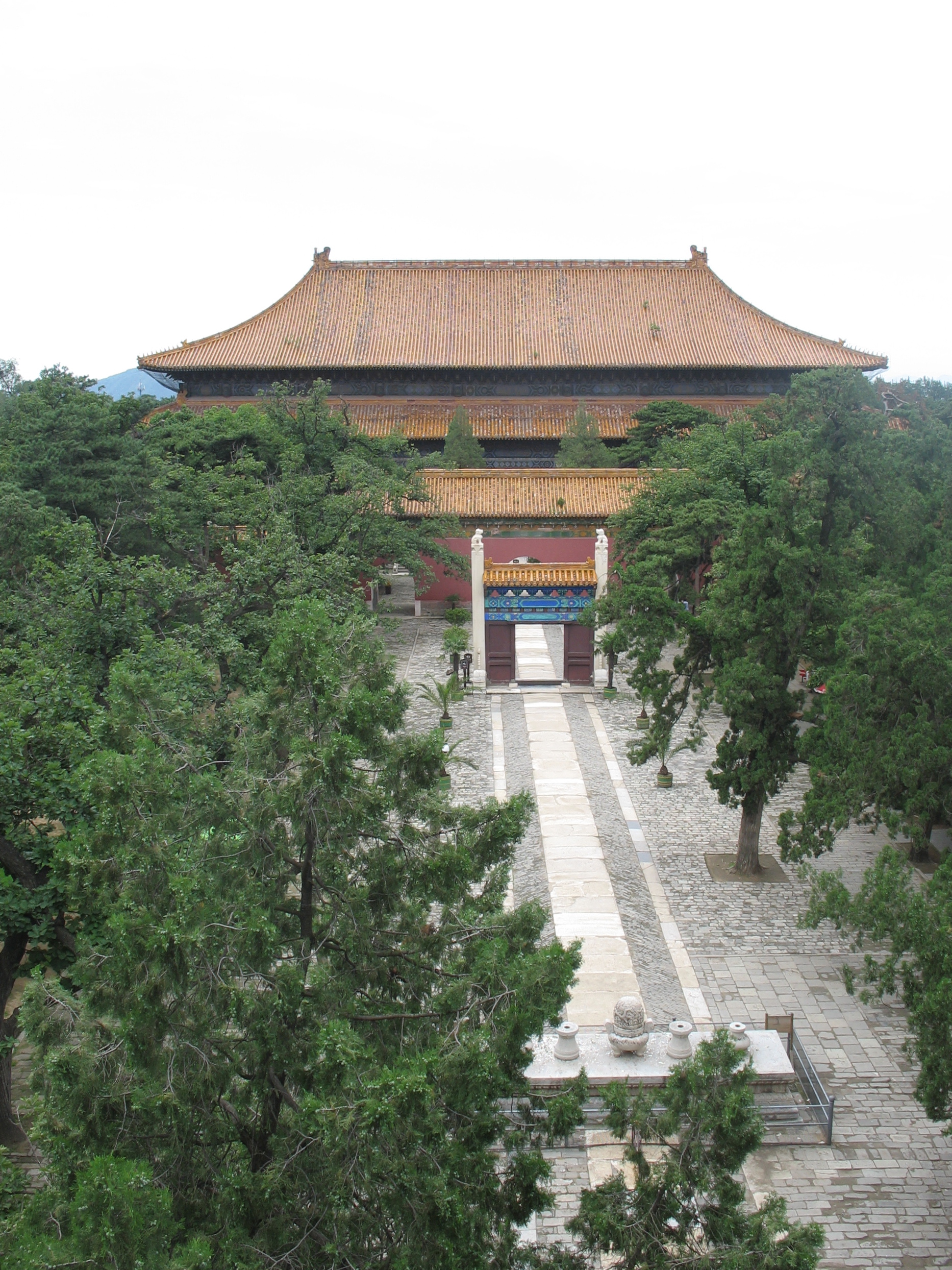
The morning following our very busy day in Beijing, we drove about 50 kilometres northwest of the city to a secluded valley that protects the burial places of thirteen emperors of the Ming Dynasty (1368 to 1644). There we walked the peaceful Sacred Way leading toward the oldest and largest of the tombs, that of emperor, Zhu Di, builder of Beijing’s Forbidden City. Twelve sets of stone animals (including the anatomically incorrect elephant pictured below) lined the first part of the road followed by enormous stone guards and officials closer to the tomb. Unlike the crowds of the previous day, we were almost alone as the Chinese tend to visit these sites only on designated days such as Tomb Sweeping Day in the early spring.

IMG_2367

IMG_2371

The tomb itself consists of a main gate, a series of courtyards, and the Hall of Eminent Favours which now houses a historical display of pictures and artifacts related to the reign of Zhu Di. Beyond the hall, through more gates and archways stands the Soul Tower which houses the largest stele in China. Much like a gigantic headstone, a stele is an upright slab of stone bearing inscriptions and serving as a monument. A well treed hill behind the Soul Tower is the actual burial mound. There the bodies of the emperor, the empress who predeceased him by several years and 16 concubines are interred.  The concubines were sacrificed at the time of Zhu Di’s death so that they would accompany him into the afterlife. It’s hard for us to get our heads around a practice like that one!

IMG_2388

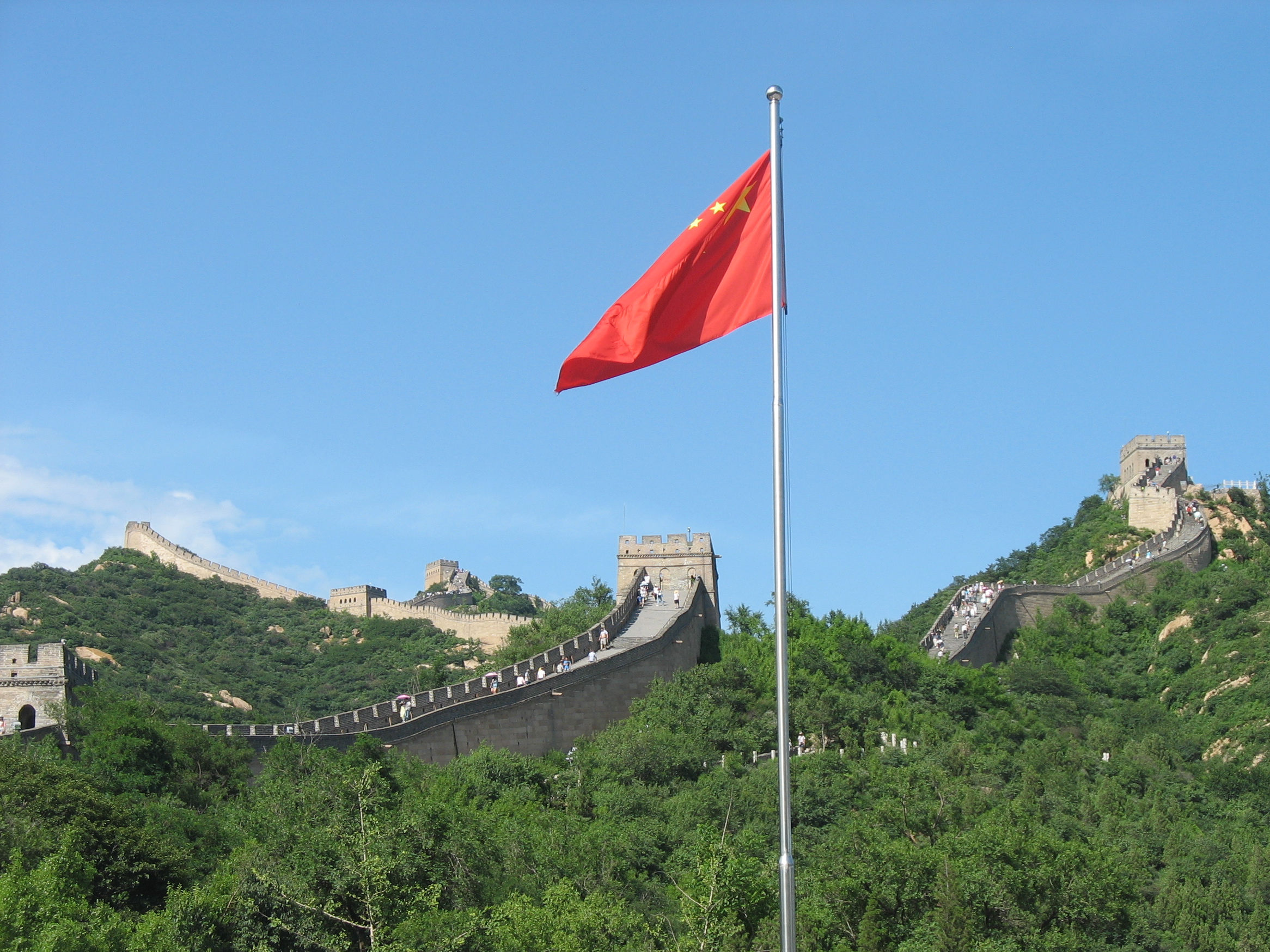
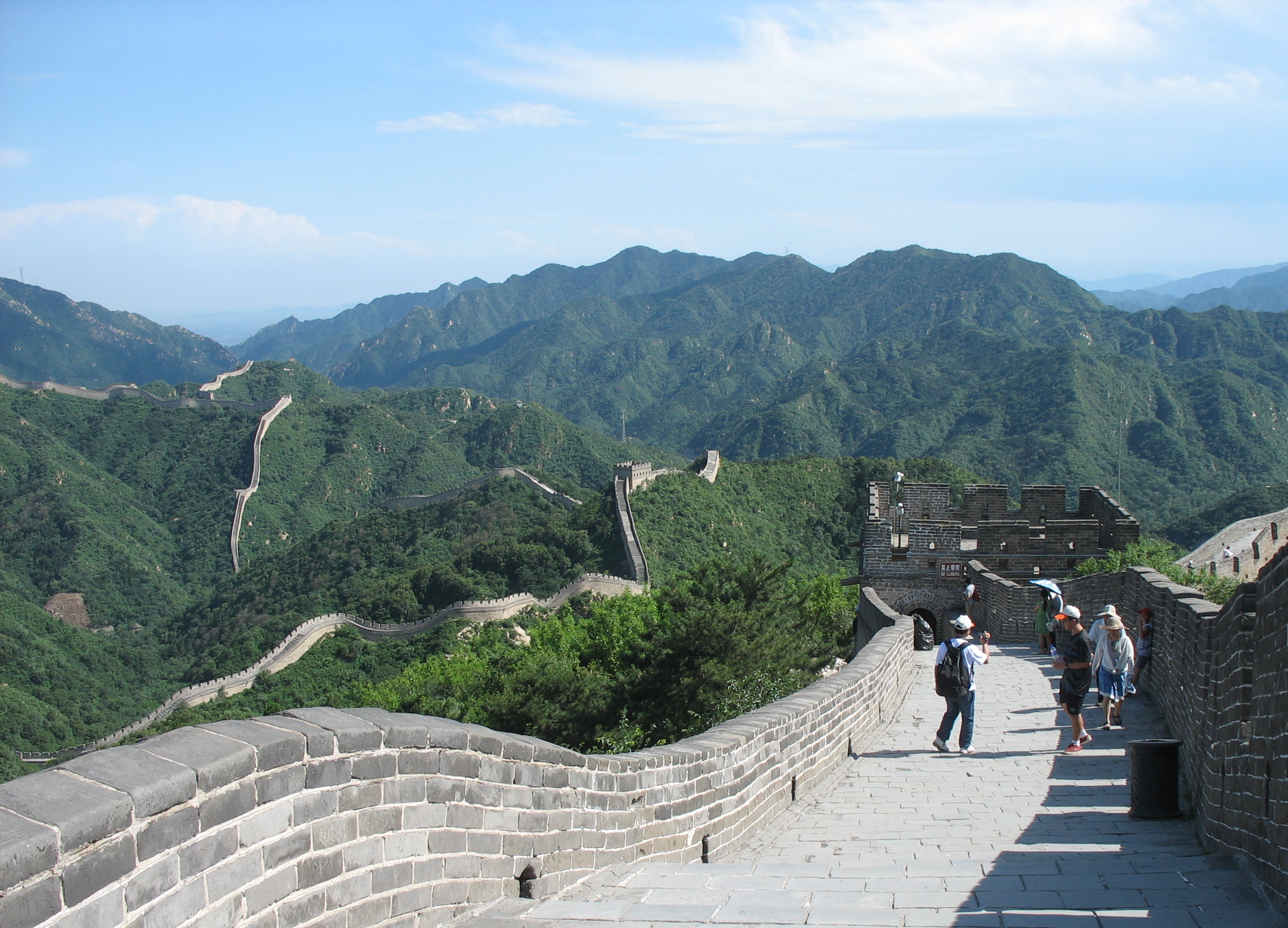
Later in the day, we continued on to Badaling, the most visited and most photographed section of China’s Great Wall which is also known as the world’s longest cemetery due to the number of lives lost during its construction. Many, many bodies are said to be buried within the wall.

After climbing a section of the wall near Dandong earlier in the year, we hadn’t planned on visiting it a second time but many of our students urged us to see the wall near Beijing as well telling us that it was much longer and much older than the portion we’d already visited. Though our climb to the eighth watchtower and highest point in the area in the hot afternoon sun lacked the Wow! factor of our first wall experience, it was definitely worth the visit if only for the fabulous views of the mountains with the wall snaking across it. Our tour package included hour long foot massages back in our hotel room when the day was over; definitely a good way to relax after the climb!

IMG_2444

IMG_2398

IMG_2426

Busy day in Beijing

I prefer to blog as I travel while the images and impressions are fresh in my mind but our whirlwind tour of China didn’t allow time for that. Now that we’re home and recuperating from jet lag, I’ll do my best to recap for you over the next few days.

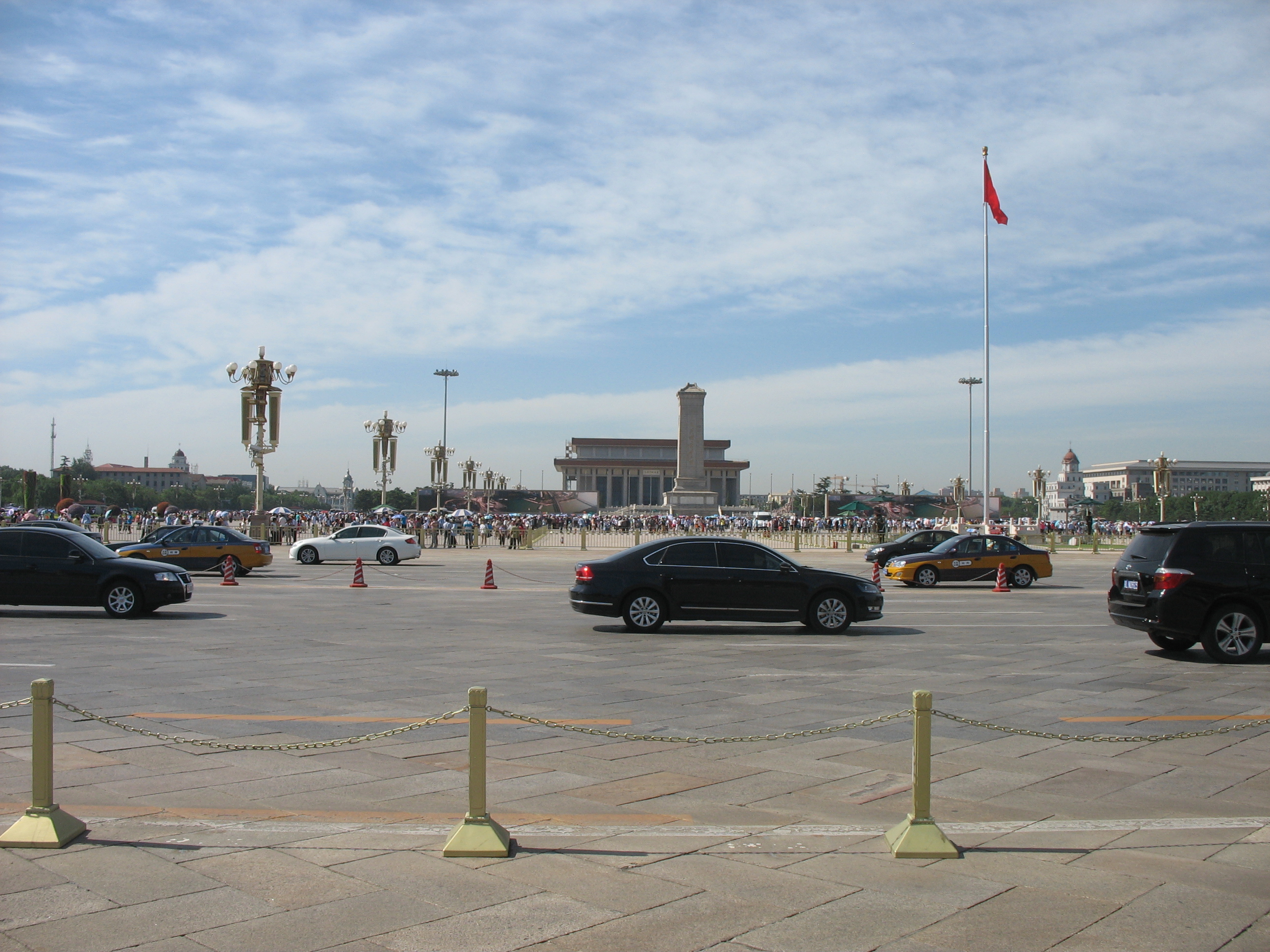
As we walked toward Tiananmen Square on our first morning in Beijing, I felt completely overwhelmed. Many times during our months in China, we commented on how surreal it felt to actually be living there but in early June of 1989 when tanks rolled into that square and mowed down hundreds of protesting students I couldn’t possibly have imagined that I might someday stand on that very spot. The exact number who died that day has never been officially confirmed. The reality of being there brought a lump to my throat and tears to my eyes. When I mentioned my feelings to our tour guide, she quickly changed the subject pointing out the Great Hall of the People where the nation’s government meets, the China National Museum, the Monument to the People’s Heroes and the Mausoleum in the centre of the square where Chairman Mao’s embalmed body has lain in state since his death in 1976. I was later told that tour guides are not allowed discuss the Tiananmen massacre with foreigners.

Image

Tiananmen Square

Joining a throng of visitors, mostly Chinese, we passed beneath the gigantic portrait of Chairman Mao and through the Gate of Heavenly Peace into the Forbidden City. It was from high on this gate that Mao proclaimed the formation of the People’s Republic of China on October 1, 1949 and we truly felt that we were at the heart of the country.

Image

The Gate of Heavenly Peace

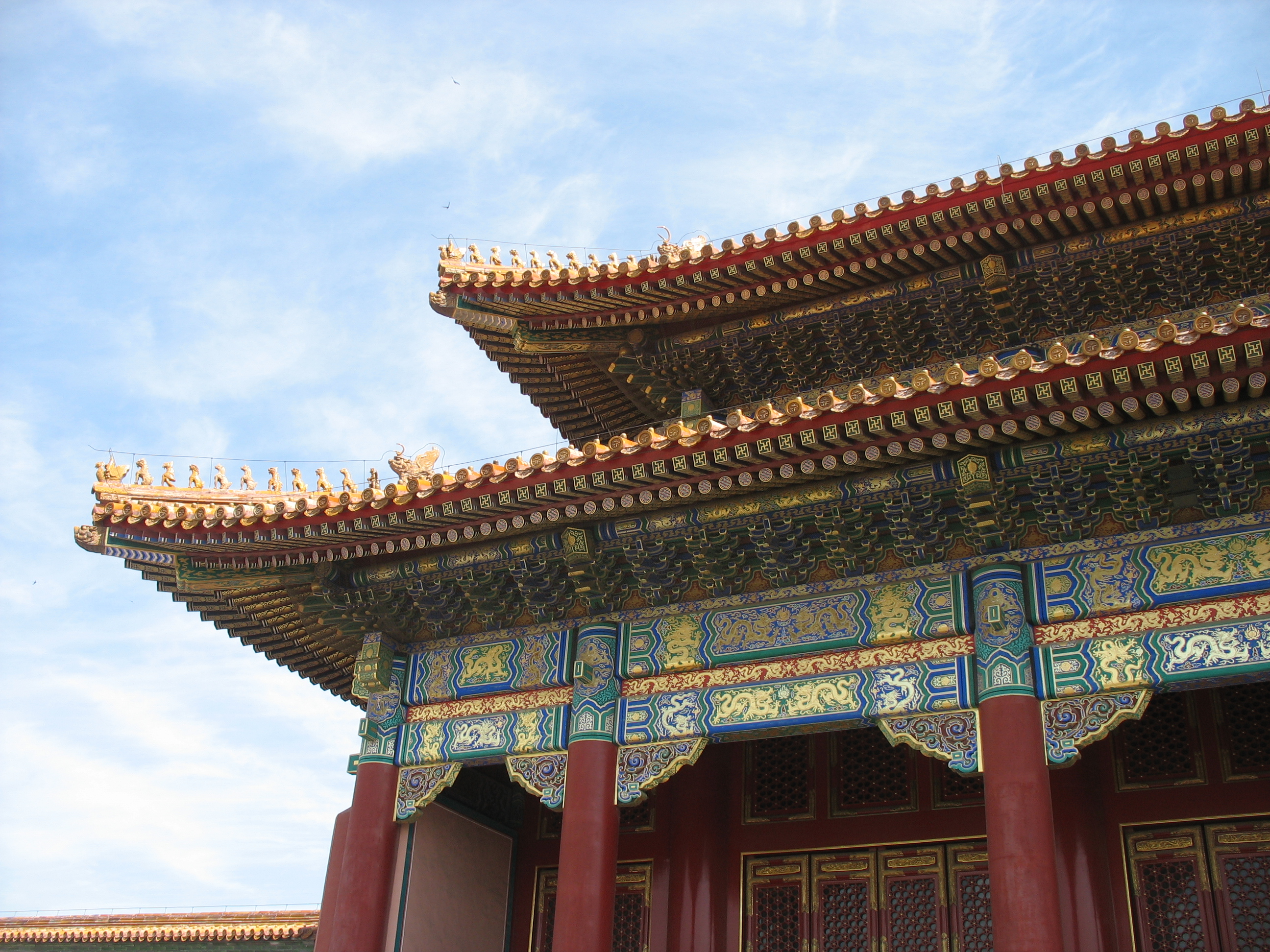
Our Beijing guide chose to pack too much into our first day there making our tour of the Forbidden City, so-called because it was off limits to the ordinary people for its first 500 years, a rushed one. Originally constructed over a 14 year period in the early 1400s when China’s third emperor, Zhu Di, moved his capital from Nanjing in the south to Beijing in the north, the Forbidden City is China’s largest and best-preserved complex of ancient buildings. We would have liked more time to explore it but fortunately, it is not unlike many other similar complexes that we’ve seen in Asia.

Image

in the Forbidden City

Image

Next on the day’s agenda was the Summer Palace, a huge park complete with gardens, pavilions, temples, bridges and man-made Kunming Lake. The soil that was excavated to form the lake was used to build Longevity Hill which overlooks it. The Summer Palace was vandalized during an Anglo-French invasion in 1860 but rebuilt in 1888 as a palatial summer resort for the Empress Dowager Cixi, also known as China’s Dragon Lady. She spared no expense even using money that was earmarked for a modern navy to build an enormous marble boat at the northern edge of the lake!

IMG_2281

Kunming Lake and Longevity Hill

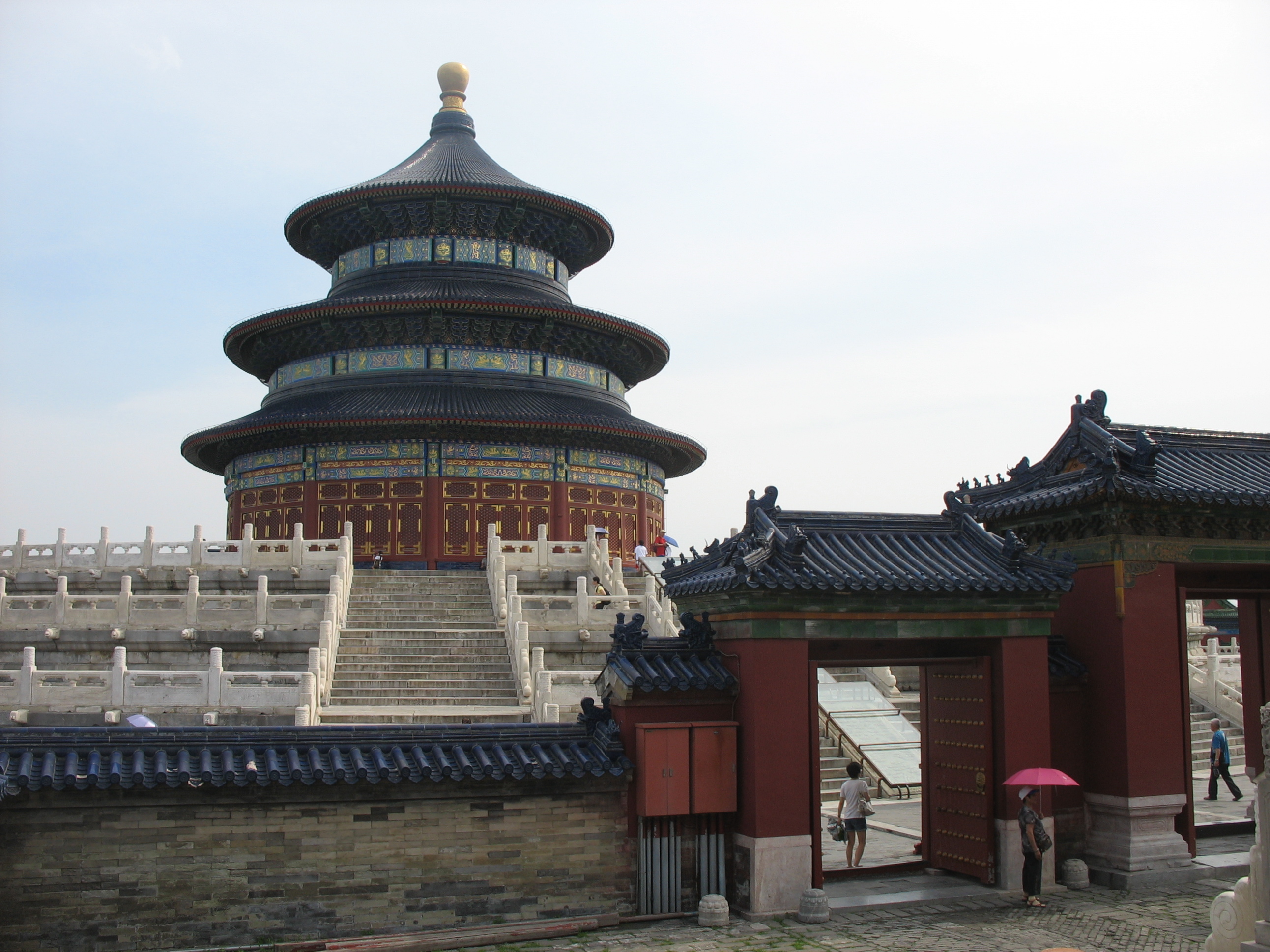
Our third historical site for the day was the circular Temple of Heaven with its three levels representing God, the emperor and the people. Sally, who we dubbed the “reluctant tour guide”, dismissed it as unimportant because “we have no God anymore”. She told us that Mao gave the Chinese people “freedom from religion”. She didn’t appear to share the hunger for something to believe in that we sensed in many of the young Chinese that we were acquainted with.

Temple of Heaven

Temple of Heaven

Again, we would have liked to have had enough time to explore the peaceful park surrounding the temple but that was not to be. These are only a few of the highlights of a very busy day that ended with a Kung Fu show that was a fantastic combination of martial arts and dance.

In one way, we were very blessed while we were in Beijing. Did you notice the sky in the photos? Beijing is usually shrouded in heavy smog. It reaches such dangerously high levels that some people actually wear gas masks outdoors but just before we arrived, the air was cleansed by heavy rain and we enjoyed clear skies and unusually fresh air!

Packing again!

If you’ve been reading my blog since we embarked on this adventure, you’ll probably remember that I wrote an entire series about packing back in February. Though I’m getting tired of my limited wardrobe choices, I’m happier than ever that we chose to bring as little as we did to China with us.

We like to travel light. We had originally hoped to leave the bulk of our luggage in Beijing while we travel through China then pick it up and fly home to Canada from there but as we began to plan our trip we realized that that wasn’t going to be an efficient use of time or money. Since we’re going to be picked up and have a driver at each destination along the way, hauling our luggage isn’t going to be as cumbersome as it would be if we had to handle it on our own but the checked baggage limit for each passenger on domestic flights in China is one piece weighing a maximum of 44 pounds. There are also rules pertaining to carry-on baggage but thankfully, the airlines are not strict about enforcing them and ours are likely to be heavier than they’re supposed to be!

Fortunately, though we’ve picked up a few mementoes and been given a few gifts, we were careful not to buy too much while we were here. Donating several of the books that we brought with us to the staff library at school and using up most of the medications and toiletries has given us space and weight for the few extra items that we’ll be taking home with us.

In addition to making sure that we meet the weight requirements, there are other challenges to packing at this end of the journey. Being somewhat anal, I like to be packed well in advance of any departure. At home, that’s easy to accomplish. Once the suitcases are packed, we simply wear clothing that we’re not taking with us. That leaves only a few last minute items to add to the suitcases just before we leave. That doesn’t work when everything you have is going with you though! I am planning on leaving a few badly worn items of clothing behind including a pair of pyjamas. Though it isn’t uncommon here to see adults walking the streets in what are obviously pyjamas, I’m not about to join them! No, a lot of our packing has to be done at the last minute this time. One suitcase is already fully packed with our winter wardrobe and other items that we won’t likely need as we travel but I won’t be able to finish packing the other one or the carry-ons until the morning we leave.

If we were flying straight home from here, I wouldn’t care if the suitcases were full of dirty laundry. In fact, they probably would be but since we’re going to be travelling for a couple of weeks, I want everything to be clean when we leave. Again, that’s more difficult to accomplish than it would be at home in Canada because we don’t have a clothes dryer here. I can’t do a load or two of laundry at the last minute unless I want to travel with wet clothes and just think what that would do to the weight of things!

Because we don’t have enough of the basics to last for the entire trip, I will have to do some hand washing in hotel sinks along the way but that’s not a problem. In fact, that’s one of the tricks to travelling light on any trip.

Graduation day!

Yesterday was graduation day for our Class A and B kids. The ceremony was short and simple but effective. Richard Guo, founder and president of EIE, was our guest speaker. He commended the students for their hard work this year and challenged them to continue learning and growing as they go abroad to study. Sissi gave an excellent speech on behalf of the students thanking the teachers and her fellow students for a great year. Diplomas were handed out and the students received their yearbooks. Filled with pictures of class times and fun times, these will be treasured mementoes of a very special year.

Following a relaxed time of signing yearbooks and taking lots of pictures, we moved to a nearby hotel for a lovely graduation dinner. It was still early evening when the festivities ended but the students weren’t ready to call it a day so most of us piled into student cars and taxis and headed off to enjoy a couple of hours of karaoke! It was loud and the room was sweltering but it was fun! We knew that several of our girls were excellent singers but some of the others surprised us with hidden talent!

Yesterday was fun but today will be more difficult. Today we say good bye. Yesterday we wondered why the graduation exercises had been scheduled for our second last day instead of the last. Today I’m glad they were. Yesterday there was celebration and laughter. Today there will be tears.

It seems we leave a little bit of our hearts wherever we go, especially when kids are involved. This time though, we may see some of them again as several are going to Canada to study. In fact, we’re almost certain to see one of them.
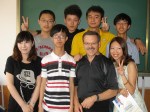
We’ve laughingly threatened to put someone in our suitcase and take them home with us before but this time we might almost do that! Sheila will be heading off to begin her studies in Windsor, Ontario in January but her college, unlike many others, doesn’t offer its international students a home stay option when they first arrive in Canada so we’ve invited her to come spend some time with us and it looks like she probably will! That’s Sheila in the pink t-shirt under my right arm below.

Okay, I’m off to school now for the very last day and I’m well armed with kleenex for those teary good byes!