How far would you go for a party?

This weekend I did something I never imagined that I would do. I flew all the way to Vancouver for a party! I left Friday morning and was back home again by supper time on Sunday! It was a whirlwind trip, but I’m so glad I went.

It was over ten years ago that I wrote this post about my older brother. More than a decade before the measles vaccine became available, Donald, an infant at the time, suffered irreversible brain damage due to encephalitis, a severe, often fatal, complication of measles. Although my parents were told that they should put him in an institution, they refused and we grew up together. He has, however, been in care all of his adult life. Since 1981, before the Community Living Society that now provides residential and personalized community-based support to individuals throughout Vancouver and the Lower Mainland of BC, came into existence, Trudy M has been one of Donald’s primary caregivers. After 43 years with CLS and even longer with Donald, Saturday’s party was a well-earned celebration of Trudy’s retirement. How could I not be there?

Over the years, Trudy has become family. Mom and Dad adored her and as I said when asked to say a few words on behalf of our family at the party, four of us became siblings by birth, she became our sibling through hard work and dedication.

The only reason that I had considered not going to the party and the reason that my stay in Vancouver was so short was the fact that this is the beginning of what we in my community theatre group call “hell week”. This Friday is opening night of our latest play and it’s all hands on deck to ensure that we’re ready to entertain our audiences. Thankfully, our director is also a close personal friend who knew how important it was to me to be able to slip away for Trudy’s party.

Although I was in Vancouver for less than 48 hours and in spite of the fact that it was a damp, drizzly weekend, I arrived in the city on Friday in time to watch one of my grandsons play a game of rugby. That was particularly meaningful to me because he attends and was playing for the same high school that I attended 60 years ago!

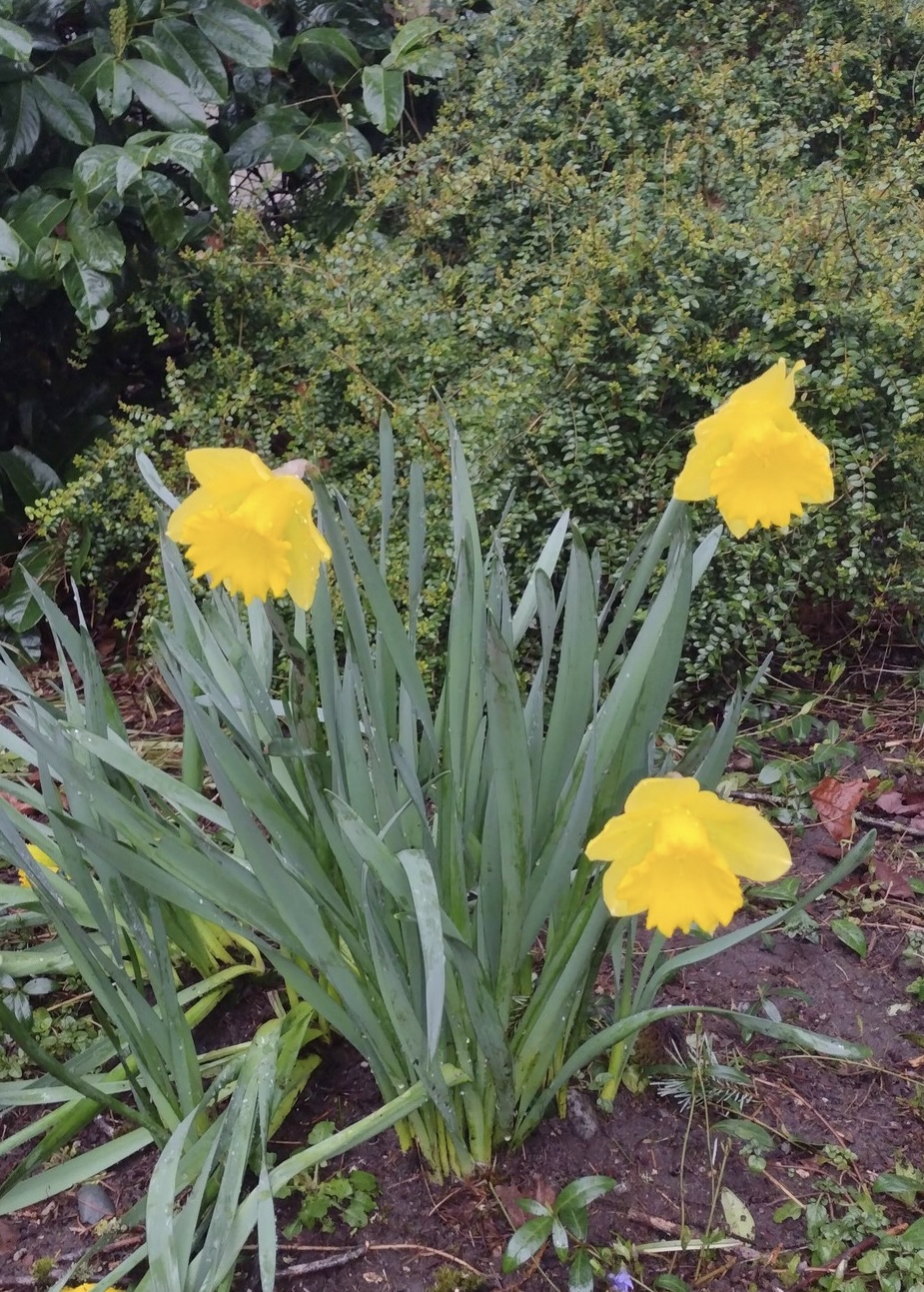
My sister and I also fit in a long walk on Saturday morning. Coming from Alberta where we still have sub zero temperatures and lots of snow, we enjoyed the humidity and the signs of spring that we won’t see here for awhile yet.

International Women’s Day 2026

March 8 is International Women’s Day and this year’s theme is one that I’m very passionate about. Give to Gain is a worldwide call to lend our support to the advancement of girls and women in the ongoing struggle for gender equality. As individuals, giving support can mean calling out stereotypes, challenging discrimination, questioning bias, celebrating women’s success, and much more.

Give to Gain can also be financial and, although there are many great organizations to choose from, I’m going to highlight two of them for your consideration. I’ve mentioned the first one many times before. Kiva is a global non-profit organization that facilitates microloans to underserved entrepreneurs around the world. With as little as $25, you can help fund one of these loans. As the borrower repays their loan, the money is returned to your Kiva account to be lent again. This is truly a gift that keeps on giving! Although Kiva lends to both men and women, 84.8% of the loans that were disbursed in 2025 went to women. This is partially due to a strategic focus on combating systemic financial inequality. Also, it has been shown that money in the hands of women tends to have a much greater impact on the welfare of their families and communities. When mothers are given the resources to provide for their families, children go to school and when children go to school, change occurs. Kiva’s International Women’s Day goal is to fully fund 5000 loans to women this week!

CARE is another organization that puts women and girls at the centre of all they do because they know that we can’t overcome poverty until all people have equal rights and equal opportunities. CARE Canada supports 50 projects and initiatives in 35 countries, working across four main pillars: her health, her safety, her livelihood, and emergency response. Every donation made to CARE during the month of March will be matched by corporate sponsors, so this would be a good time to double your impact. 

While the plight of women is much greater in many other parts of the world, we mustn’t forget that we have yet to achieve equality here in North America. As of early 2025 in Canada, women held nearly half of all jobs (47.4%), but a 13% gender wage gap continued to persist. In other words, women earned 87¢ for every dollar earned by a man. In addition, women are underrepresented in leadership, holding only 36.4% of managerial roles and less than 29% of senior management and legislative positions. Women in Canada are more likely than men to live in homes that fall below acceptable housing standards. Women are five times more likely than men to be victims of reported sexual assault. Roughly 30% of all women in Canada over the age of 15 report having been sexually assaulted at least once. Human trafficking is happening right now in communities across Canada and over 90% of the victims are women and girls. The list of inequalities goes on, but what can we do this International Women’s Day to make a difference? How can we Give to Gain in these situations?   

We can give our voice to these issues advocating for policy change by writing to local or national leaders and pushing for legislation that addresses gender inequality, such as closing the gender pay gap or combating gender-based violence. We can call out gender bias every time we see, hear or witness it, actively challenging stereotypes, discrimination, and misogyny. We can include men in discussions about gender equality and emphasize the importance of working together to achieve positive change. We can give our time to local organizations that specifically help women, such as shelters for survivors of domestic violence or mentorship programs for young girls. 

As Gloria Steinem once said, “The story of women’s struggle for equality belongs to no single feminist nor to any one organization but to the collective efforts of all who care about human rights.”

Book of the month – February 2026

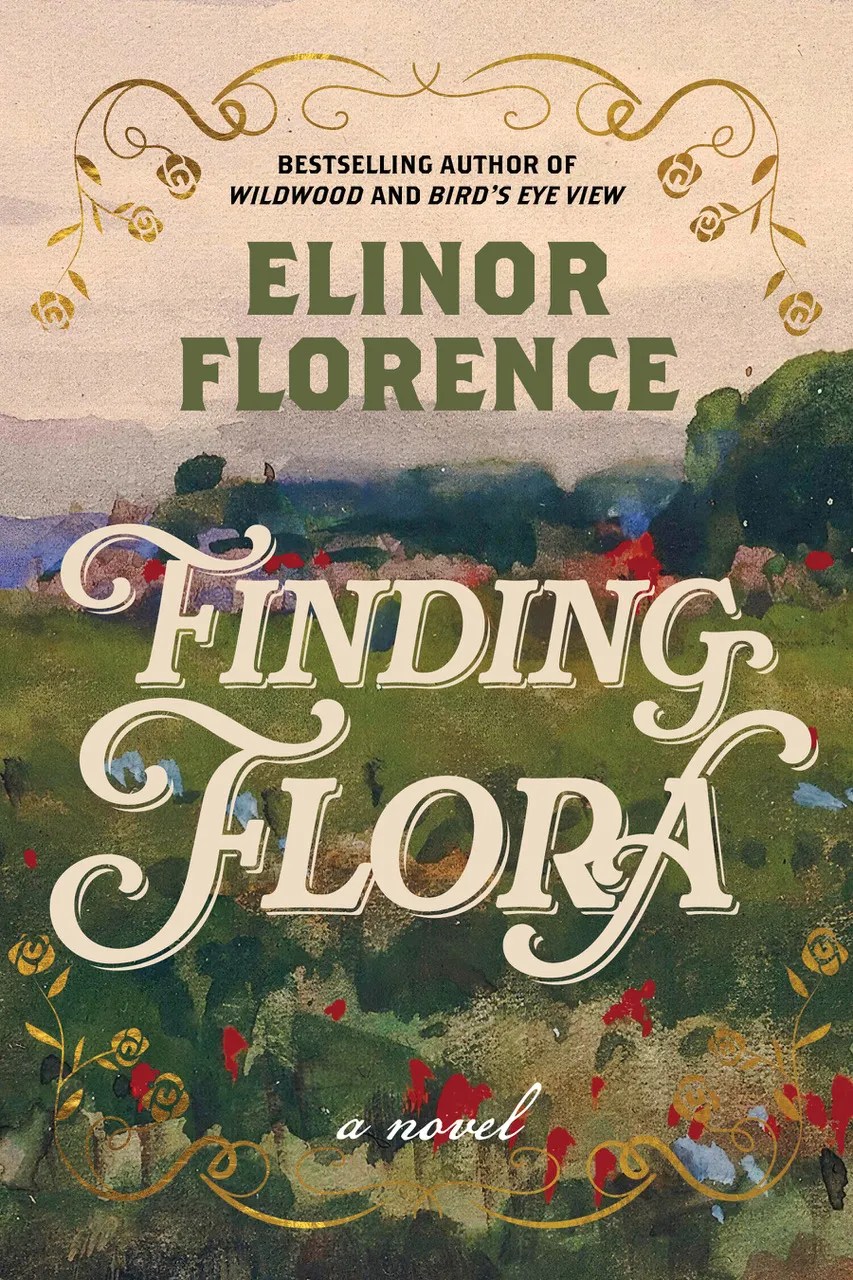
Finding Flora

Elinor Florence

When a friend recommended this historical novel I was immediately intrigued because the setting is a very familiar one. The story takes place near the location of present-day Clive, Alberta, about an hour and a half by car from where I live! The action begins in 1905 with Scottish newcomer, Flora Craigie, jumping from a moving train to escape a disastrous marriage. Depending on where you live, 1905 might seem like fairly recent history, but this was brand new country at that time. The town where I live was established as a Canadian Pacific Railway townsite in 1906 and incorporated as a village in March 1907.

In the early 1900s, the Canadian government granted 160 acres of free land to any man who met three stringent conditions: he had to live on the property for three years, build a habitable dwelling, and cultivate a required number of acres each year. That opportunity wasn’t open to single women, however. Not surprising, I suppose, if you consider the fact that women in Canada weren’t even legally declared persons until October 18, 1929!

The heroine of our very well-researched story finds a legal loophole, however. Canadian veterans of the Boer War in South Africa were granted homesteads by the federal government in appreciation for their service and there was no law against them selling these claims. Flora purchases her claim from one of the twelve Canadian nurses who served in the Boer War and who were therefore considered veterans. She is astonished to find that her nearest neighbours are also female: a Welsh widow with three children, two American women raising chickens, and a Métis woman who trains wild horses.

With strength, determination, and endless courage Flora and her neighbours battle the harsh environment as well as those who were opposed to women owning land. They endure backbreaking labour and many hardships that were common to early Canadian settlers. Hardships like the winter storm that kept us housebound one day last week. Imagine surviving a prairie blizzard in a one room cabin without insulation, indoor plumbing, electricity, and central heating! To complicate matters for Flora, there were indications that her violent husband hadn’t given up looking for her.

The kindness of strangers and the importance of community are themes that weave their way through this heartwarming story.  There’s also an element of romance and although the ending is quite predictable, I can’t help but love a story about resilient boundary-breaking women!