Although I’m not sleeping particularly well yet, I think I’ve sufficiently recovered from jet lag to begin sharing some of the things we’ve seen since arriving in Armenia.
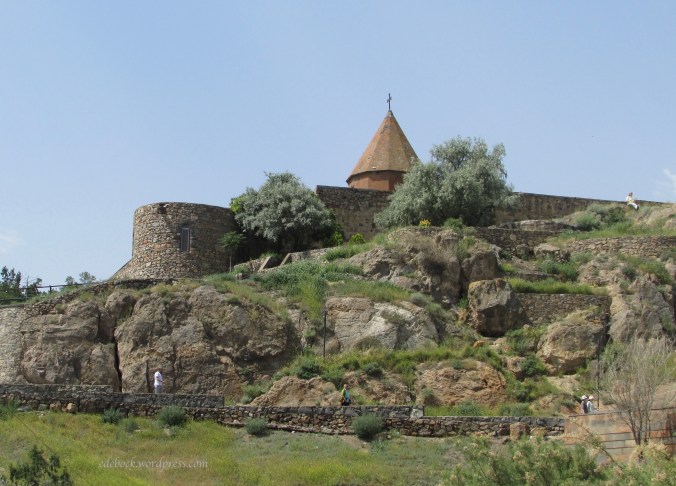

In 301 AD, Armenia became the first country in the world to officially adopt Christianity and it all started here at Khor Virap, one of the country’s most sacred and visited sites. During the reign of Tiridates III, Saint Gregory the Illuminator (originally known as Grigor Lusavorich) angered the king by refusing to participate in pagan rituals and instead preaching Christianity. The king had him imprisoned in Khor Virap which literally means “deep pit” or “dungeon” in Armenian. There in the depths of the earth, he languished for 13 years, surviving only because of the kindness of a local woman who provided him with food and water. Eventually, when Tiridates fell ill with a form of madness, his sister is said to have had a dream that the imprisoned Gregory could heal him. Pulled from the dark pit, Gregory was washed, dressed and taken to the king where he prayed urgently for his healing. When Tiridates recovered, he became a loyal and dedicated supporter of Christianity and officially declared it the state religion.
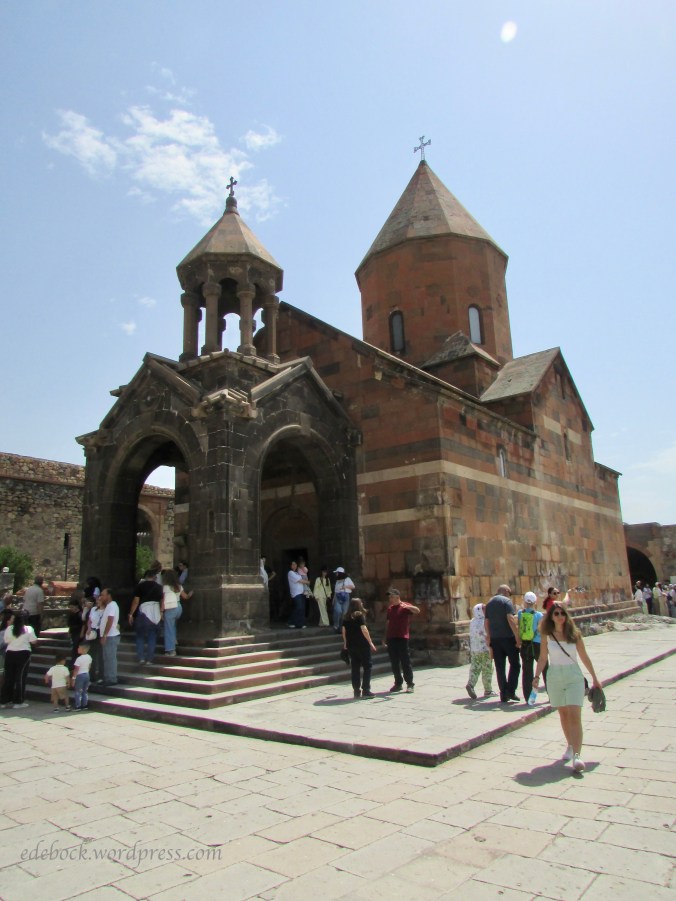
A chapel was initially built at Khor Virap in the 5th century and the present St. Astvatsatsin (Holy Mother of God) church was constructed in 1662. The 6 metre (19.7 feet) deep pit where Gregory was held is still present at Khor Virap and tourists can descend into the dungeon on a narrow ladder. While hubby was brave enough to do that, I declined!

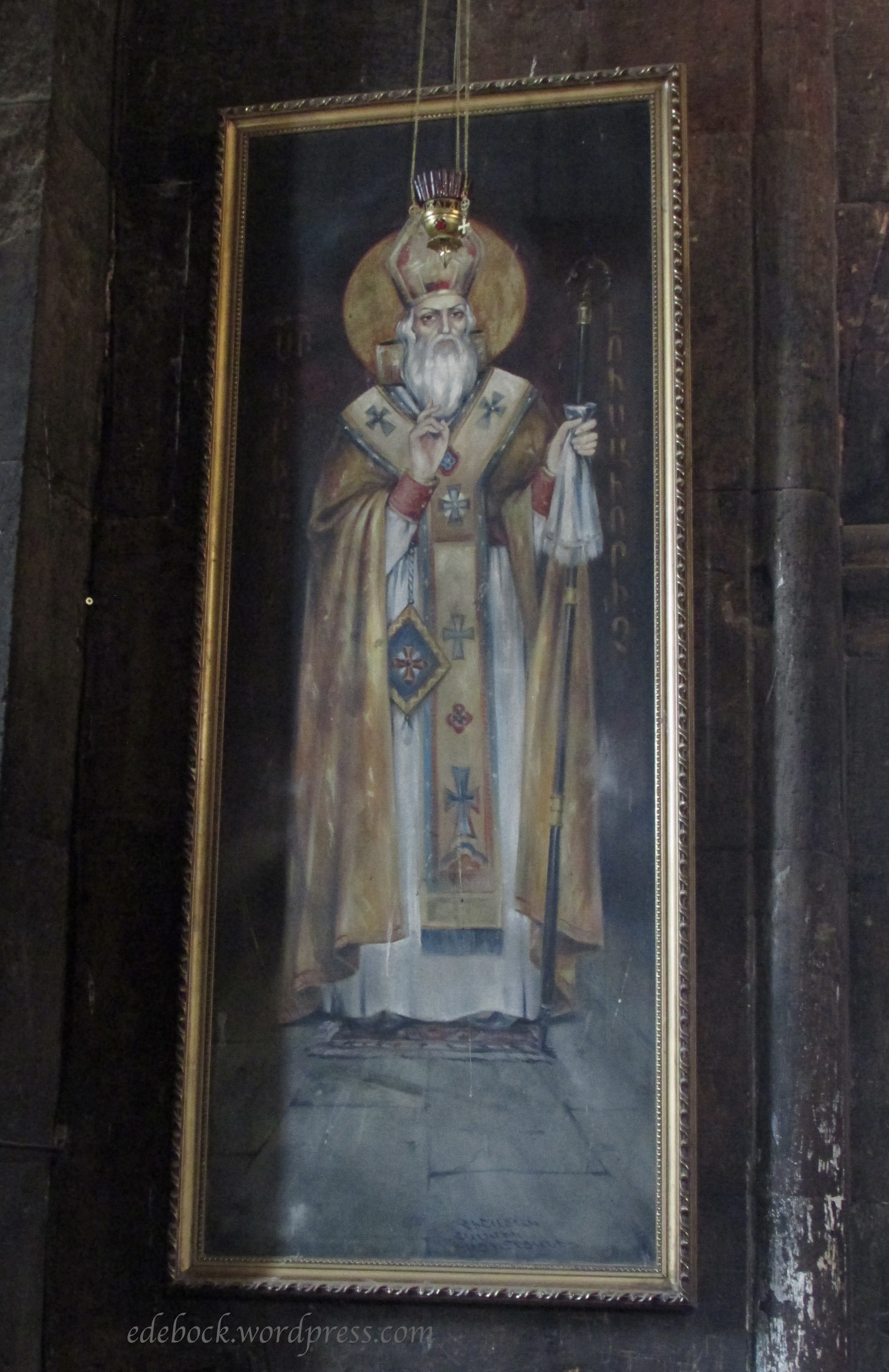
Images of Saint Gregory are found both in and outside the church.

Khor Virap is located on the Ararat plain about a 45 minute drive from Yarevan, the capital city of Armenia. While the monastery was well worth the visit, part of the excitement of being there was looking out across the border between Armenia and Turkey at Mount Ararat where Noah’s ark is said to have come to rest! There are actually two volcanic cones, Greater Ararat on the right and Little Ararat on the left. Greater Ararat, known as the “Holy Mountain” of the Armenian people was actually in Armenia until the 1921 Treaty of Moscow and Kars officially made it part of Turkey following the Turkish-Armenian war of 1920. If you look closely at the photo, you can see the fence that marks the border between the two countries.

 Following Augustine