Many of the books that I’ve read over the past year or so have been historical novels set in the days leading up to and during World War II. Many, like the two that I featured last month, are based on the experiences of actual people who lived through those dark days. I’ve read stories of women working behind the scenes in the French resistance and children being sent overseas to temporary homes in North America where they would be safe from the bombings in London. Others have been stories of life and death in the concentration camps. Still others have told of people who risked their lives hiding Jews from the Nazis or smuggling food and medicine into the Jewish ghetto in Warsaw. My librarian friend tells me that these novels of wartime heroism are a very popular genre at the moment. I find that somewhat surprising during this time of heightened antisemitism when some might even think that the Holocaust didn’t go far enough in ridding the world of its Jewish population. But perhaps it’s also a hopeful sign. It was my librarian friend who suggested that I read this month’s selection.
The Last Train to London
Meg Waite Clayton
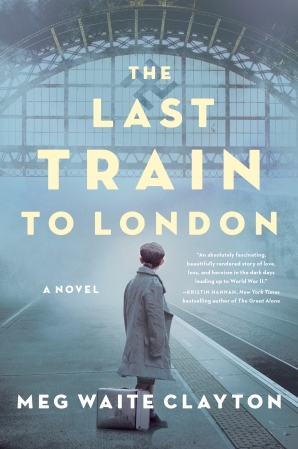 Geertruida (Truus) Wijsmuller, a childless member of the Dutch resistance, risks her life smuggling Jewish children out of Nazi Germany to the nations that will take them. It is a mission that becomes even more dangerous after Hitler’s annexation of Austria when, across Europe, countries begin to close their borders to the growing number of refugees desperate to escape. After Britain passes a measure to take in at-risk child refugees from the German Reich, Tante Truus, as she is known by the children, dares to approach Adolf Eichmann, the man who would later help devise the “Final Solution to the Jewish Question” and is granted permission to escort a trainload of 600 children (not 599 or 601, but exactly 600) out of the country. In a race against time, 600 children between the ages of 4 and 17 are registered, photographed, checked by medical doctors and put on board the train to begin a perilous journey to an uncertain future abroad. Thus begins the famous Kindertransport system that went on to transport thousands of children out of various parts of Europe during the Nazi occupation of the region in the late 1930s, immediately prior to the official start of World War II.
The Last Train to London is also the story of three fictional children, Stephan Neuman, the teenage son of a wealthy and influential Jewish family who are stripped of everything when the Germans invade Austria, his younger brother, Walter, and Stephan’s best friend, Žofie-Helene, a brilliant Christian girl whose mother edits a progressive, anti-Nazi newspaper.
Although this book really came together at the end and was well worth reading, I do admit to finding it somewhat difficult to follow, especially in the first half, because of the short, choppy chapters that bounce from one character to another.
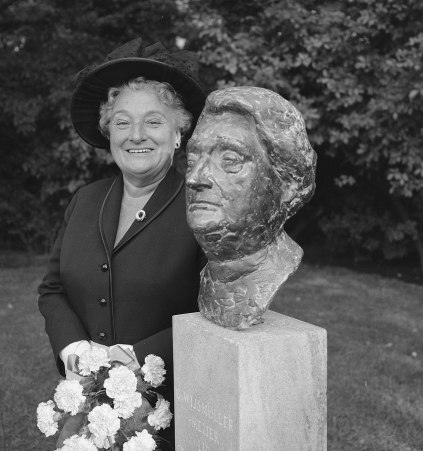
Geertruida Wijsmuller in 1965

 No, I’m not talking about a music genre or even that melancholy feeling that sometimes overtakes us. In fact, I can’t help wondering why a beautiful, soothing colour like blue is associated with sadness, but here I go waxing on about words again instead of the topic of today’s post which is the many shades of blue that are said to be on trend for spring and summer 2024.

 One of the things that I enjoy about blogging with WordPress is the stats that they show me. While I can’t actually see who you are, at any given time I can see how many people have visited the blog on a particular day, week, month, or year as well as how many posts they’ve read and where the readers are from. It’s always fun to see different countries around the world light up on the little map on the stats page!


 I didn’t do a post about what I packed for our recent trip to Mexico, but regardless of where you’re going or for how long, the key to packing successfully is to choose pieces that coordinate well with one another so that they can be combined in different ways. One easy way to do that is to choose a limited colour palette. For our recent trip, I chose mainly blues and neutrals.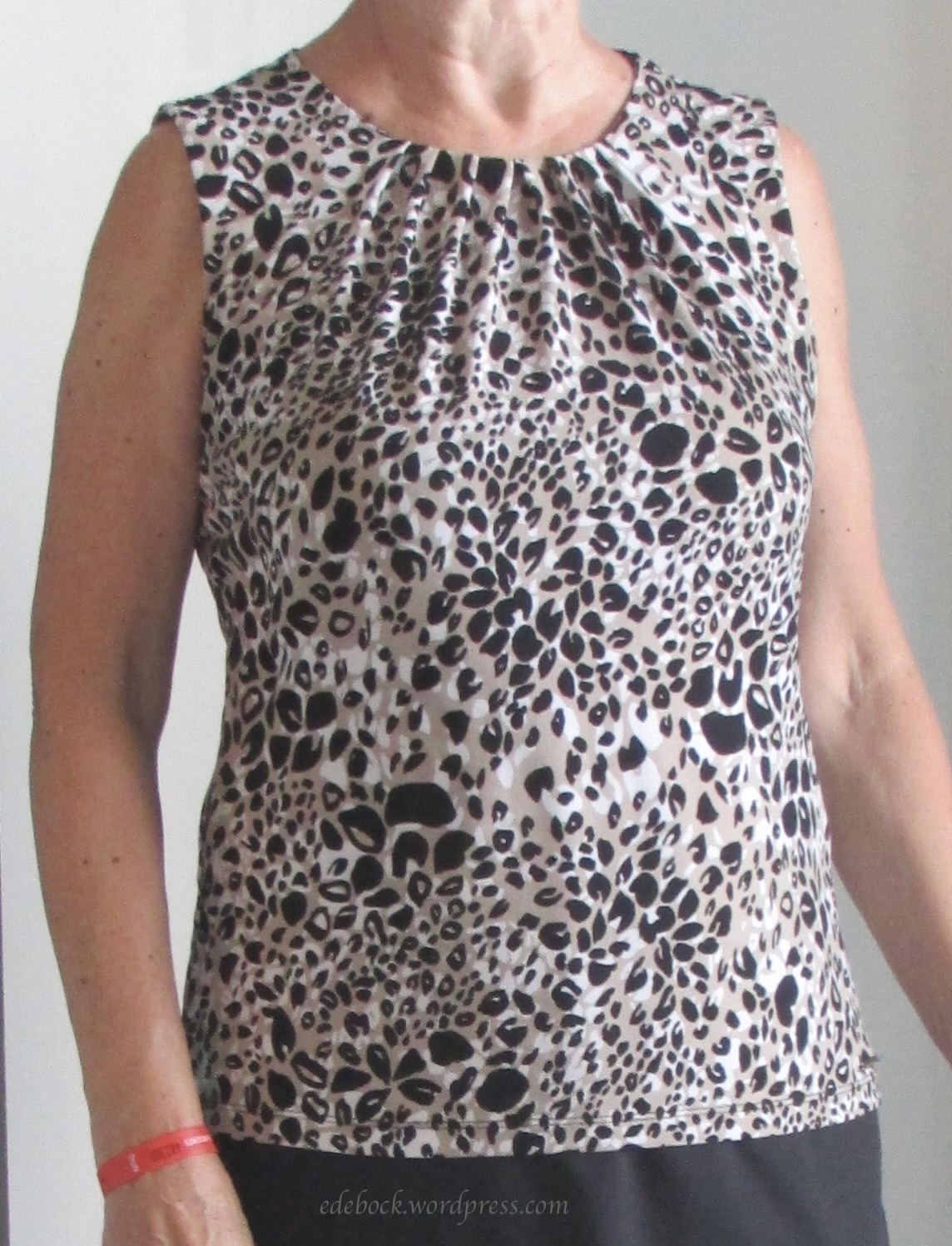











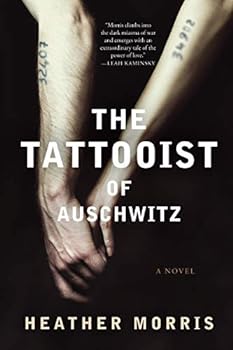 In 2003, Morris, was introduced to Lale Sokolov, an elderly gentleman who “might just have a story worth telling”. As their friendship grew, Lale entrusted her with the innermost details of his life during the Holocaust. She originally wrote his story as a screenplay before reshaping it into her debut novel, The Tattooist of Auschwitz.
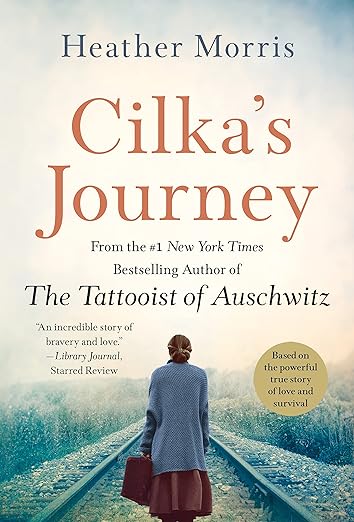 In The Tattooist of Auschwitz, we are introduced to Cilka, a beautiful young prisoner who is forcibly separated from the other women by Johann Schwarzhuber, camp commandant, for his exclusive use. Quickly learning that her survival depends on it, she does what she has to do to stay alive. Although both books are historical novels, Cilka, like Lale, was a real person and at one point, he credits her with saving his life.
 Following Augustine