On our first day in Victoria, we walked approximately 10 km. Today, our last day before heading toward home, we walked at least 7 more!
We woke to a chilly, wet morning. In fact, there was even a bit of snow in the air. Thankfully, however, the forecast promised better things to come. After a leisurely breakfast in our hotel and a little while spent relaxing back in our room, the rain stopped and we headed out. Our first destination this time was the oldest Chinatown in Canada and the second oldest in North America after San Francisco.
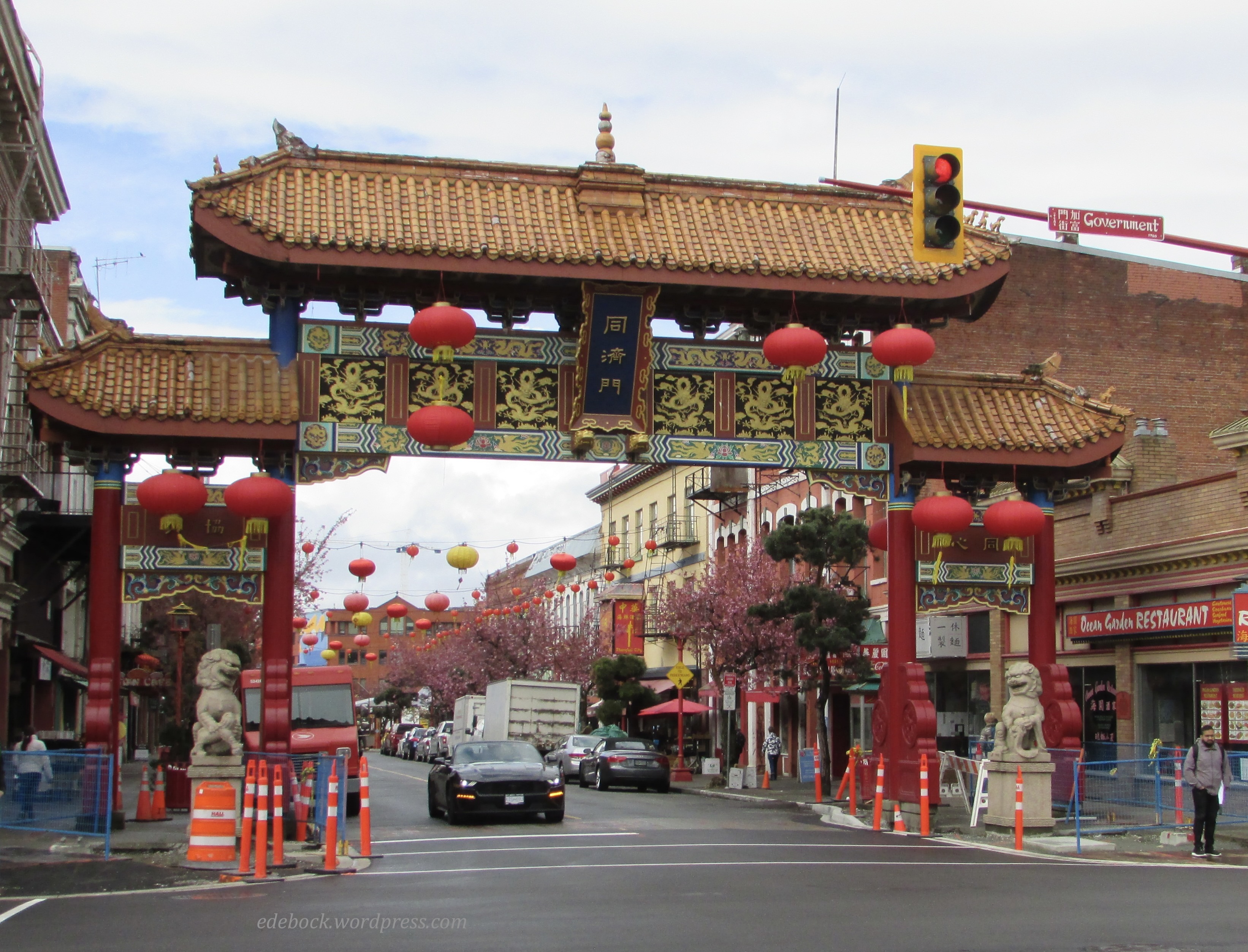
I’m thinking that it must also be one of the smallest. Barely more than two blocks in size, there are a number of authentic Chinese restaurants and businesses, but I was also surprised to see a sushi shop, a schnitzel restaurant, and a taco place!
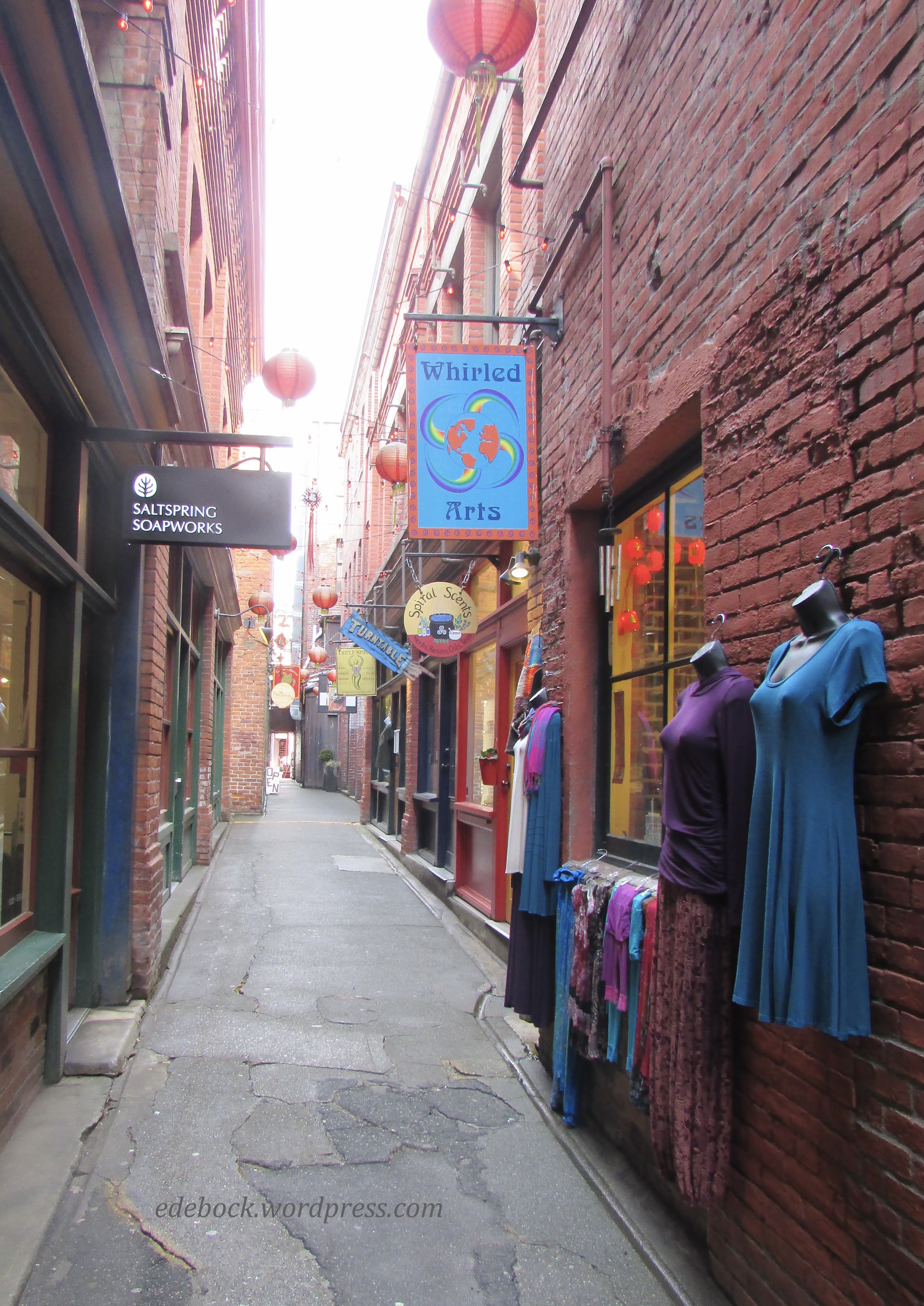
Victoria’s Chinatown is perhaps best known for Fan Tan Alley, the narrowest street in Canada. Only 0.9m wide (about 4 feet) at the narrowest point, the alley is filled with boutiques and shops selling clothing, jewelry, music, and other items to both tourists and locals. In its early days, however, it was home to a variety of less savoury places including gambling and opium dens.
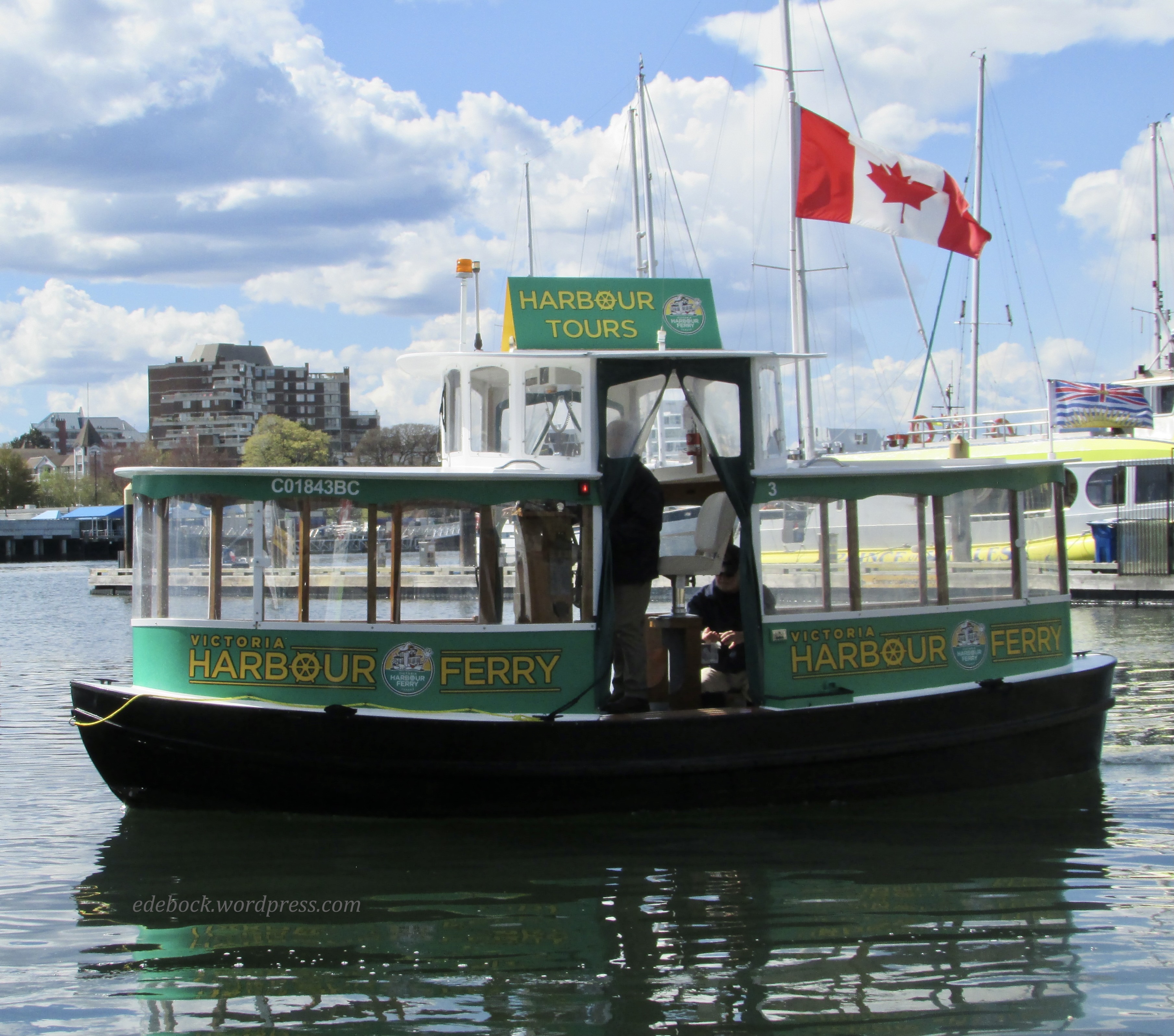
On Sunday, we walked the beach at Cordova Bay and yesterday we did a harbour tour on one of Victoria’s little green “pickle” boats, so-called because of their colour and shape, but I’m a coastal girl at heart and I wanted a bit more of the sea before heading back to the prairie.
After returning from Chinatown, we drove about 20 minutes to Fort Rodd Hill and Fisgard Lighthouse National Historic Sites. Consisting entirely of original structures, Fort Rodd Hill, a west coast artillery fortress on active duty from 1895 to 1956, is one of the world’s best preserved and most complete examples of its kind. The buildings are closed during the week, but the grounds are open and many interpretive signs make it an interesting place to explore. Until our visit, I had never really thought about how vulnerable the Victoria area must have felt after the attack on Pearl Harbour in 1941. By 1944, 17 powerful searchlights clearly lit up the Victoria-Esquimalt harbour area. One of them was housed in this building, camouflaged to look like a fisherman’s hut, complete with a ramp and boat!
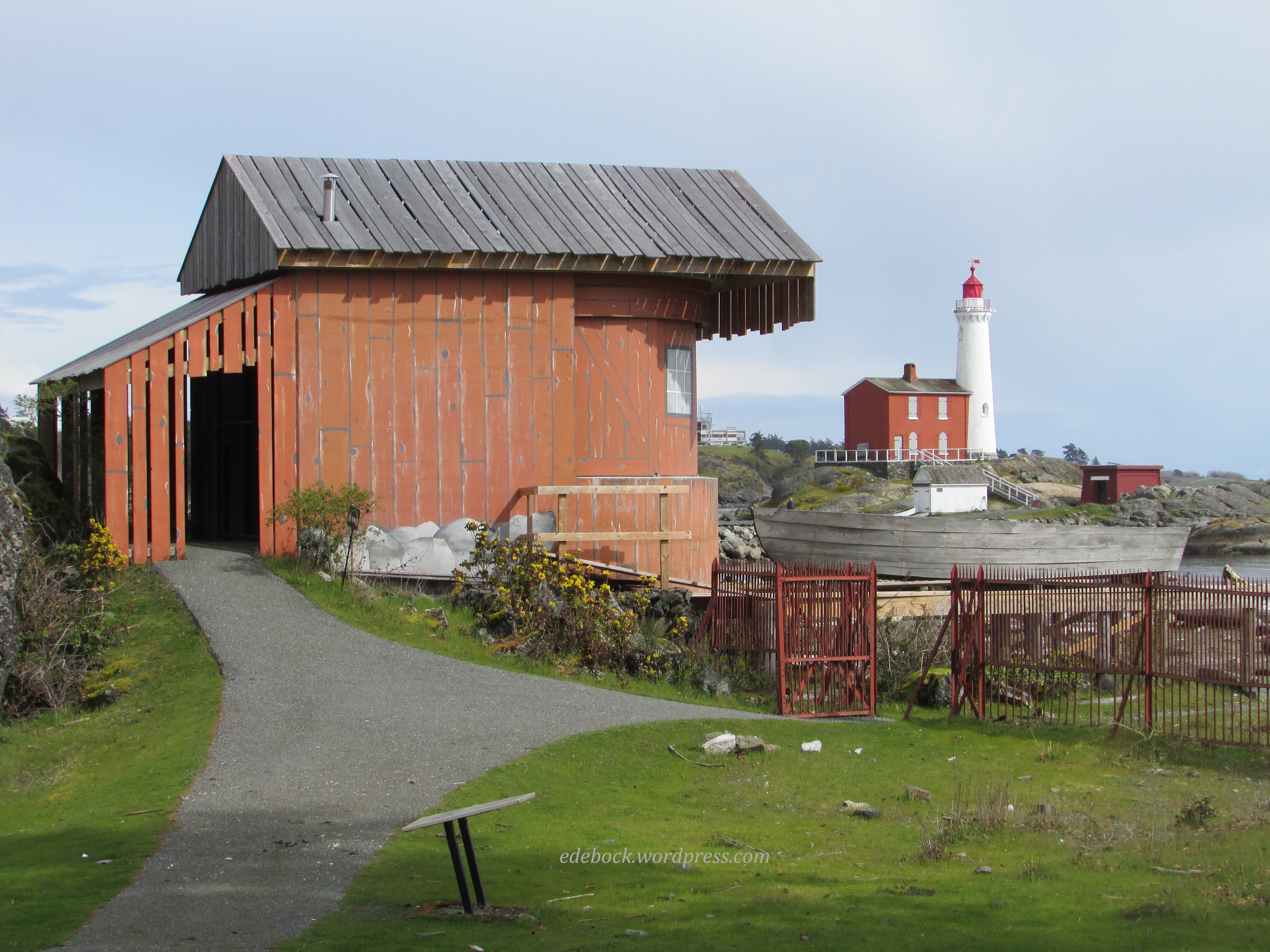
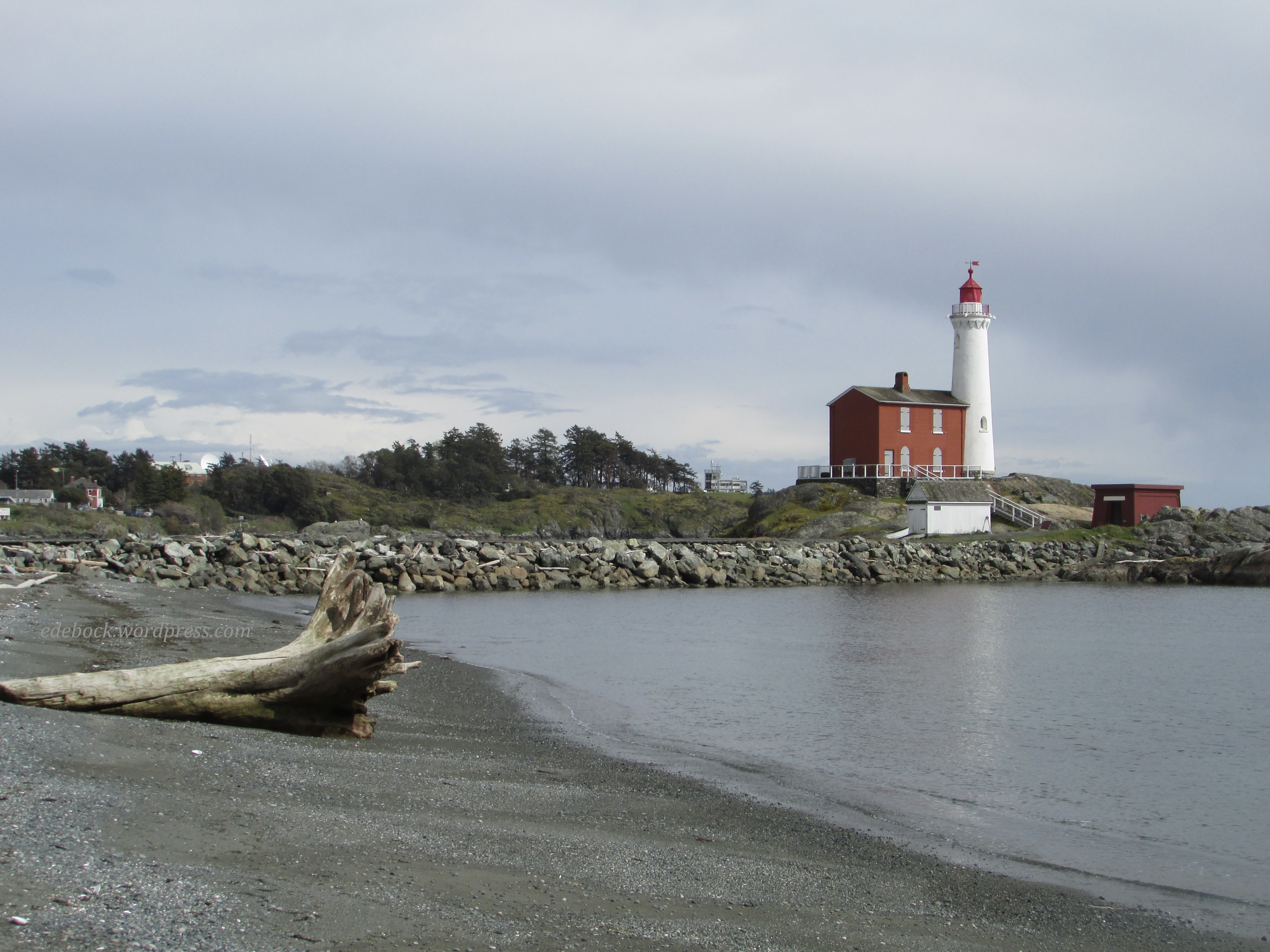
In the background, you can see the Fisgard Lighthouse which was built in 1860 as the first permanent light on the west coast of Canada. Although administered together with Fort Rodd Hill, it is a separate national historic site and there is no historical connection between the two.
I absolutely love lighthouses, but I won’t subject you to all 24 pictures that I took of this one! I’ll try to restrict myself to just a few favourites.
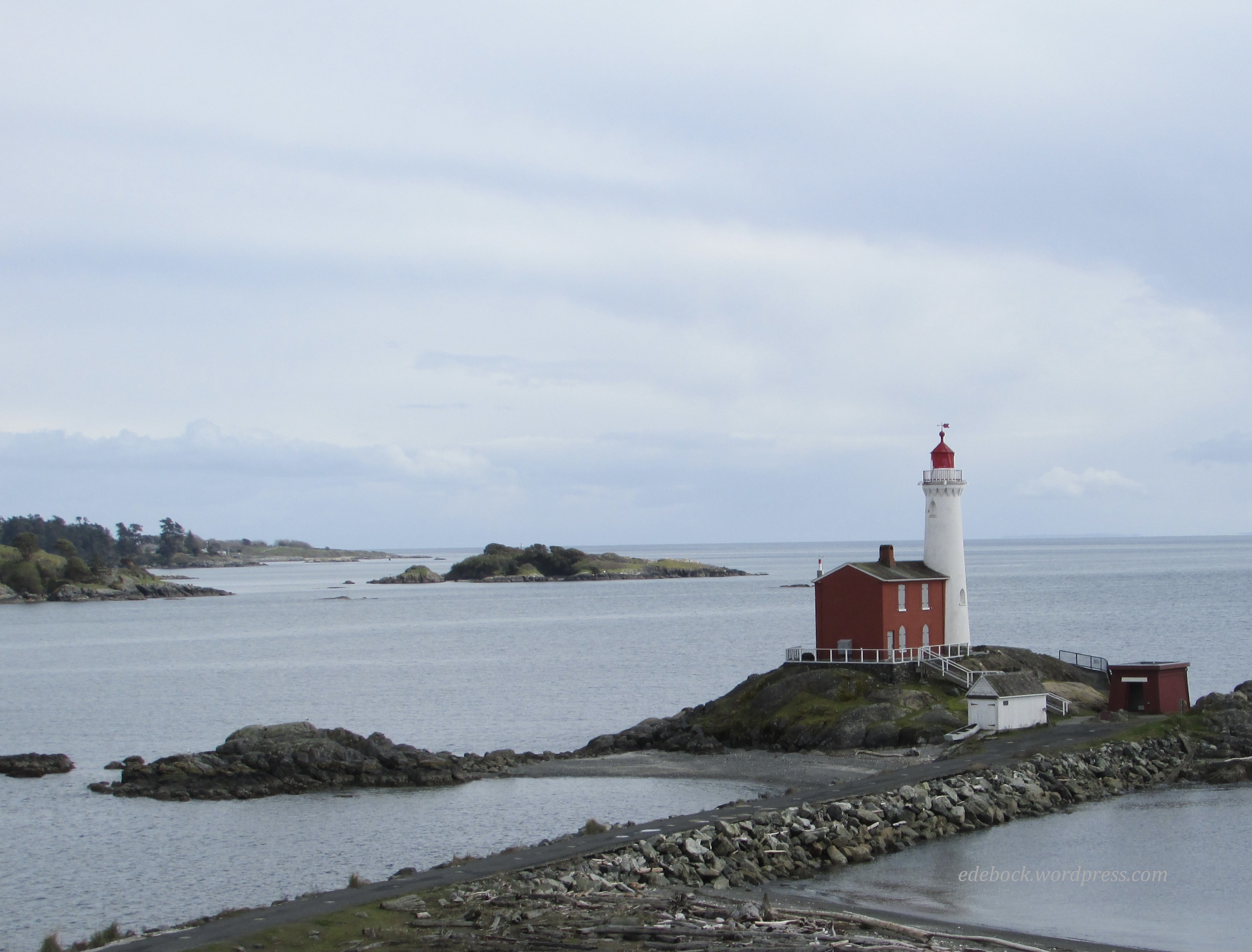
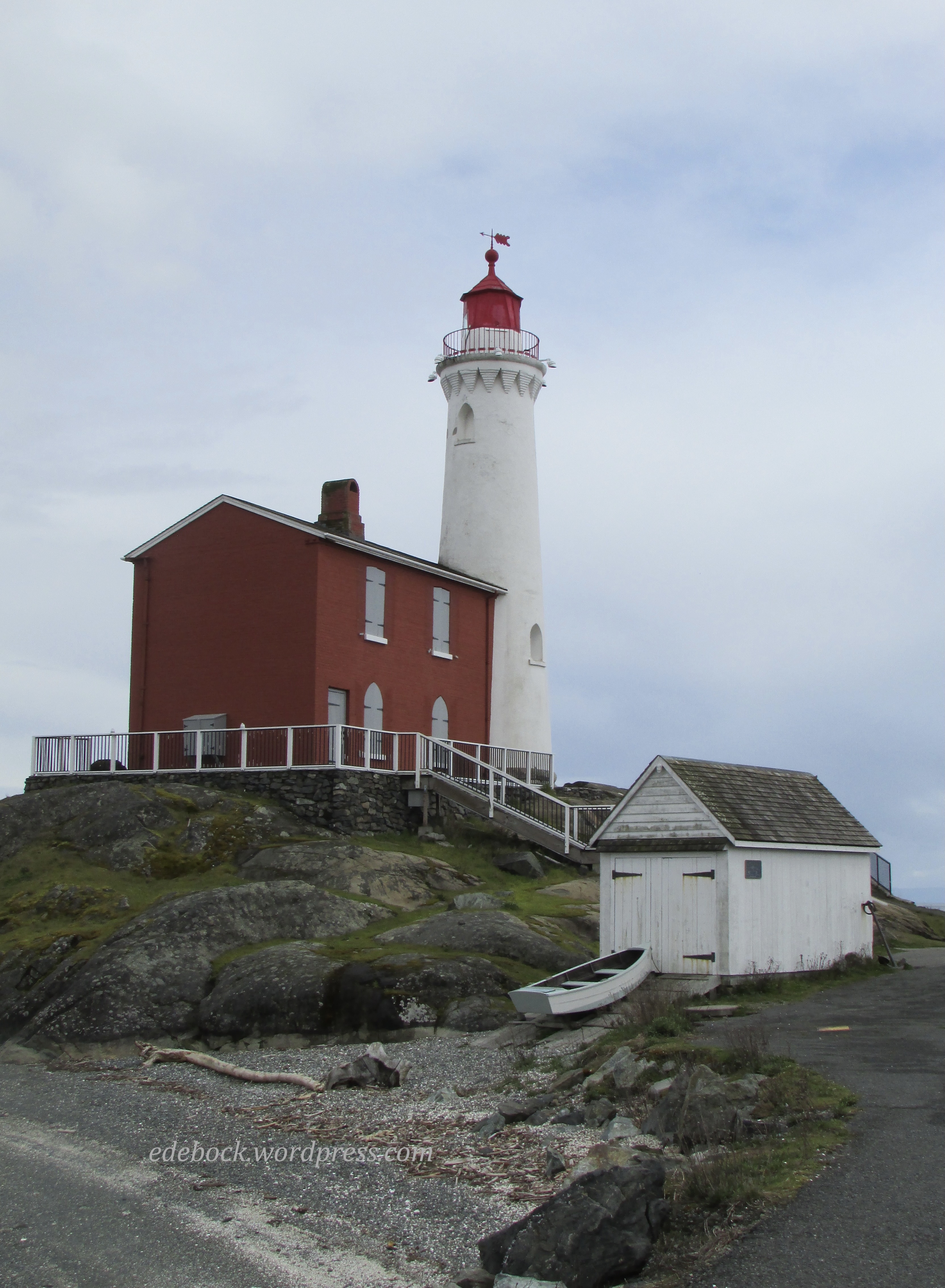
Though the light has been automatic since 1928, prior to that time it was manned.
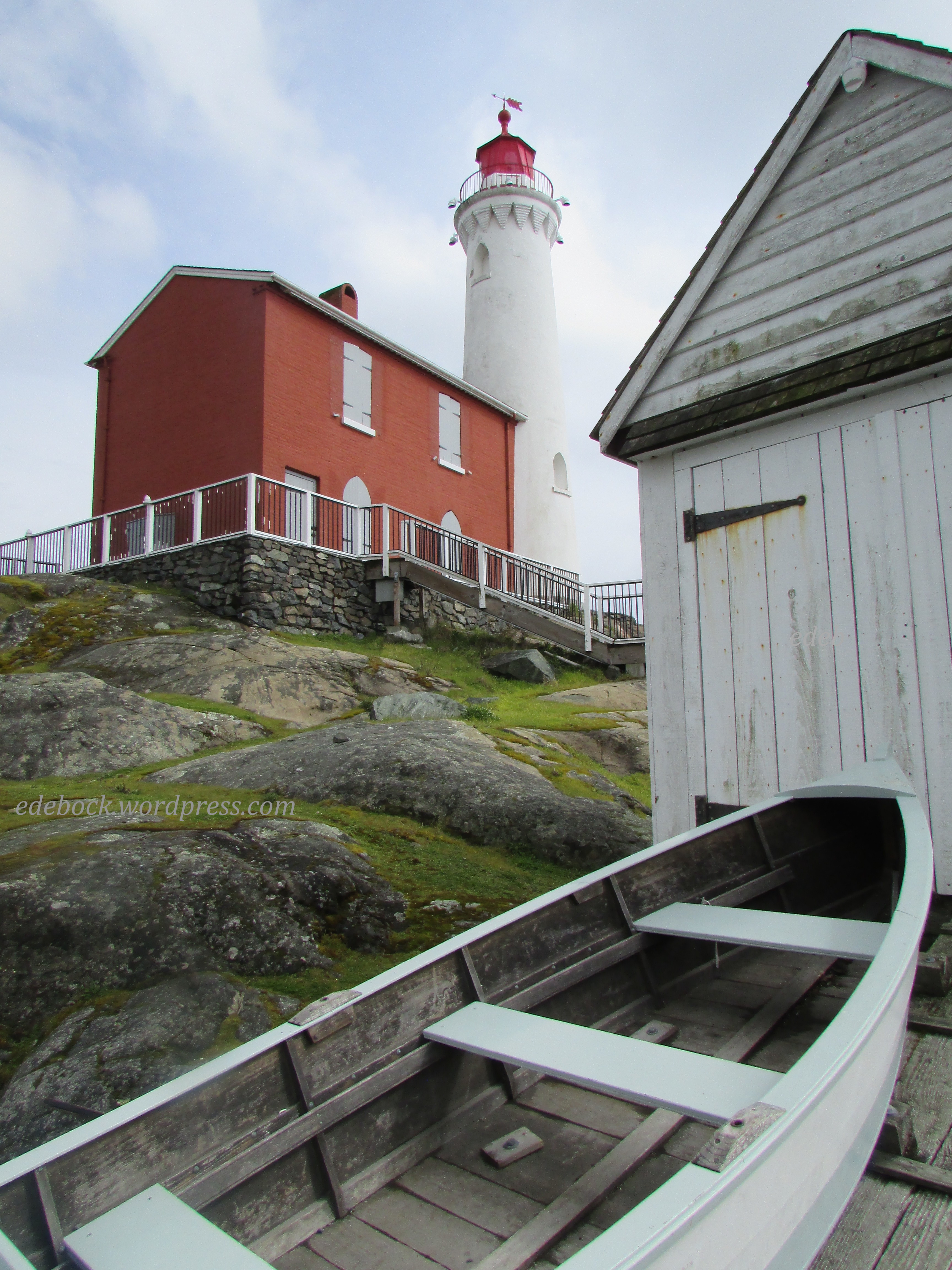
The lighthouse is now connected to land via a manmade causeway, but in those days it stood offshore on a tiny island. The only means of transportation that the lighthouse keeper had was a rowboat like this one. Every item he needed had to be rowed across the bay from Esquimalt. Unfortunately, in 1898, the unoccupied boat was found floating in the bay with just one oar still in it. Joseph Dare, the keeper at that time, had fallen overboard and drowned while trying to retrieve the other oar. Had he been wearing a life jacket, he likely would have survived.
On the rocky point beyond the lighthouse, we found a pair of the red Adirondack chairs that have been placed in National Parks and Historic Sites across Canada. Of course, we had to sit in them and enjoy the view.
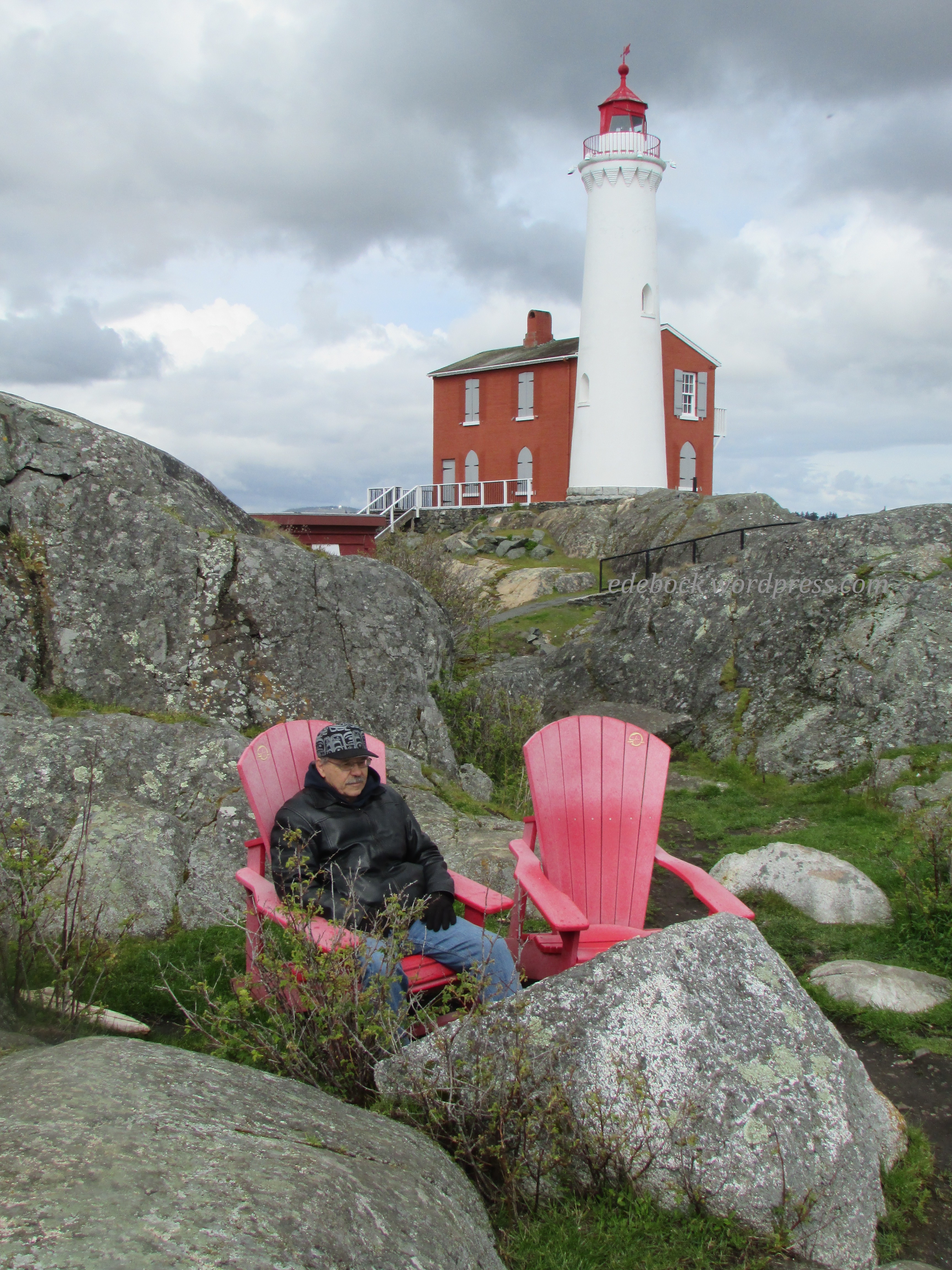
After visiting the lighthouse, we walked the long beach in front of Fort Rodd Hill and then returned to the vehicle via a well-kept nature trail.
Now that I’ve enjoyed a fix of salt water and sea air, I’m ready to return to the prairie feeling refreshed!


 Following Augustine