Tomorrow is International Women’s Day. It saddens me that we should even need to set aside a day to focus on women’s rights, to remind the world that women deserve equality. The reality, however, is that we need to do much more than simply dedicating one day a year to drawing attention to the plight of women worldwide. This needs to be addressed 365 days of the year!
The theme of International Women’s Day 2022 is #BreakTheBias. We are urged to:
Imagine a gender equal world.
A world free of bias, stereotypes, and discrimination.
A world that is diverse, equitable, and inclusive.
A world where difference is valued and celebrated.
In reality, we need to do more than just imagine that world. We need to be aware that gender bias, discrimination and stereotyping exist and actively call them out each and every time we see them. Whether deliberate or unconscious, gender bias makes it difficult for women to move ahead. Even in the developed countries of the world, disparity continues to exist in the workplace, in education, and in health care.
Globally, most women are employed in lower-wage occupations and lower paid industries than men. They are underrepresented in corporations in general and the percentage of women decreases with each step up the corporate ladder. In 2016, only 3 of the 100 highest paid CEOs in Canada were women.
A 2015 UN Human Rights report raised concerns about “the persisting inequalities between women and men” in Canada including the “high level of pay gap.” Five years later, in 2020, Statistics Canada reported that on an average, full-time working women earned 76.8 cents for every dollar made by men. The gap is even wider for women who are Indigenous, members of other visible minorities, newcomers, or living with a disability. The situation is similar in other first world nations. In the UK, for example, women earn an average of 18% less than men.
Gender bias in education is much more subtle in the western world than in countries like Pakistan where over 50% of girls receive no formal education and South Sudan where that number is closer to 75%. Here in Canada, in spite of the fact that 56% of post secondary students are female, women continue to be underrepresented in STEM majors (science, technology, engineering, and mathematics). In spite of the fact that, on average, they don’t outperform girls in high school math or physics, there continues to be a perception that boys are naturally more adept in these areas. This is the kind of stereotype that we need to call out!
Bias also affects the quality of health care that women receive. Too often, doctors view men with chronic pain as “brave” or “stoic” while women are seen as “emotional” or even “hysterical”. Her pain is much more likely to be treated as the symptom of a mental health condition, rather than a physical one.
Important biological differences between the sexes can influence how diseases, drugs, and other therapies affect people, but medical research has often been limited to male participants. They are considered better test subjects because they don’t have menstrual cycles and can’t become pregnant! This lack of inclusivity has led to gaps in knowledge that are detrimental to women’s health.
Lastly, traditional attitudes by which women are regarded as subordinate to men continue to perpetuate widespread abuse. Gender-based violence happens in all communities, cultures, and faith groups, and at every age and every income level, but some women are at higher risk than others. More than 40% of all Canadian women have experienced some form of intimate partner violence, but this number rises to 60% for Indigenous women. Every 6 days a woman in Canada is killed by her intimate partner. The homicide rate for women who identify as Indigenous is more than 5 times higher than that of all other women. Immigrant women are more vulnerable to domestic abuse often due to economic dependence, language barrier, and a lack of knowledge about community resources. In addition, when incidents of abuse within visible minority groups are reported, they are often taken less seriously by the criminal law system and the perpetrators routinely receive less harsh punishments. Younger women and women with disabilities are at much higher risk of experiencing violence. According to a 2019 report from Statistics Canada, 30% of all women over the age of 15 report the they have been assaulted sexually compared to 8% of men. The actual number is, of course, much higher as many incidents are never reported. 69% of all those who experience incidents of cybercrime are women.
On International Women’s Day and always, we need men and women to advocate for equality for all. Together, we can break the bias!
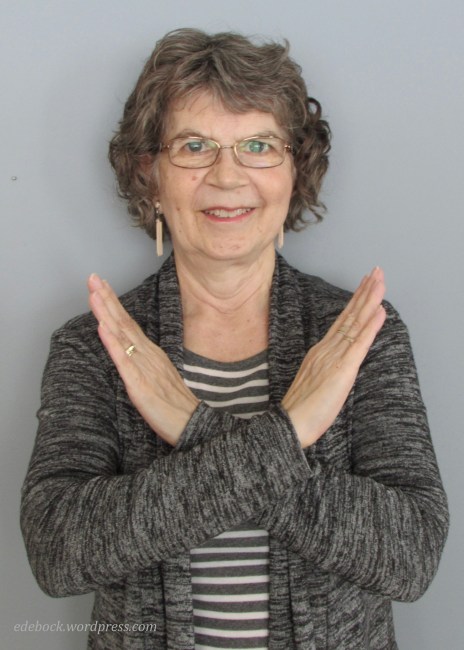
Around the world, people are crossing their arms in the International Women’s Day #BreakTheBias pose to show solidarity. Why not join the movement? Post your photo on social media using #IWD2022 and #BreakTheBias to encourage other people to commit to working toward a more inclusive world for all.


Images: internationalwomensday.com
 Following Augustine