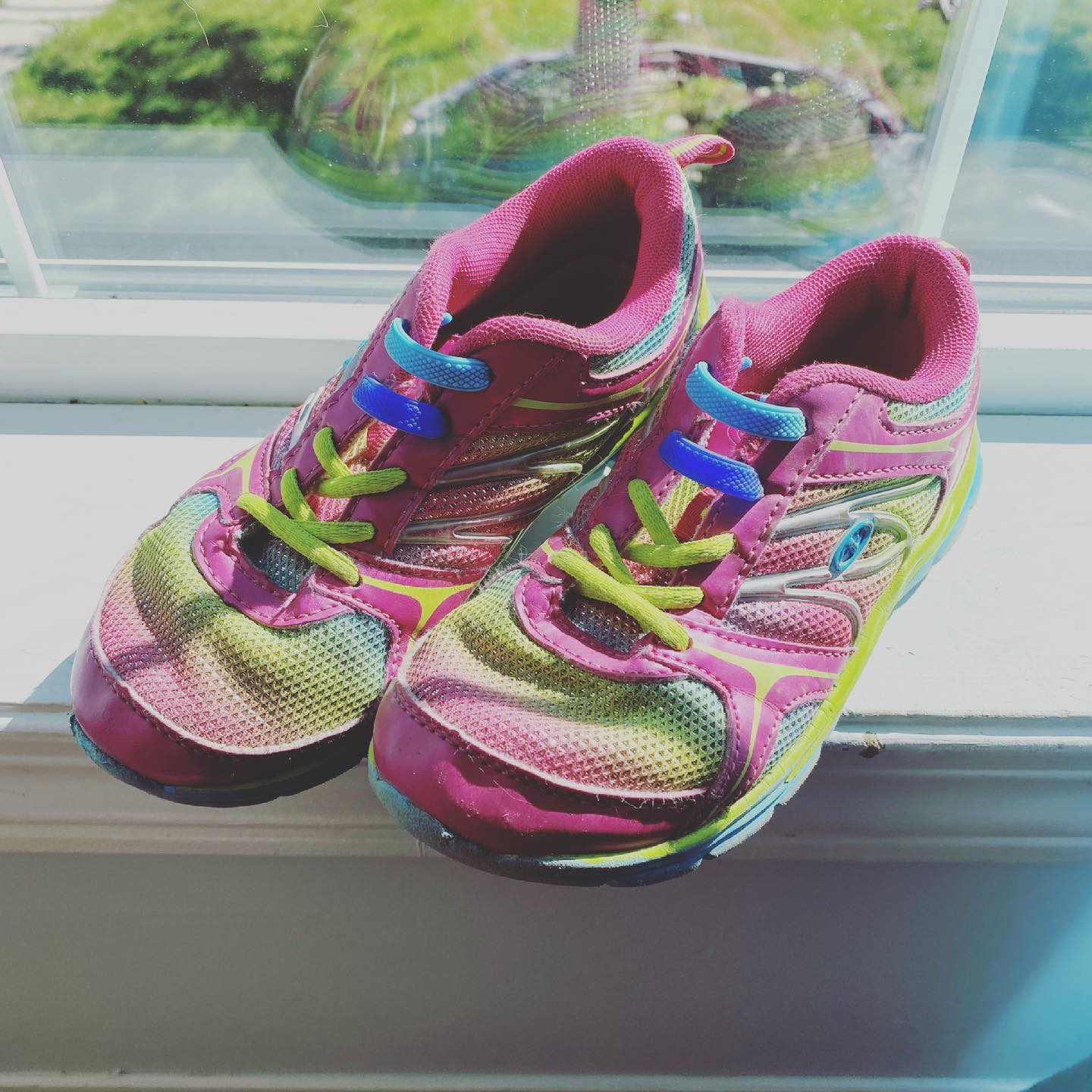
Our grandson, Simon, loves the colour pink. He always has. Last week he was so excited to have finally grown into this pair of his sister’s hand-me-down shoes. He proudly wore them to school, but only once. The next morning he sadly told his mother that he would never wear them to school again because he was picked on so badly for wearing “girl” shoes. He’s in grade one. In my opinion, there’s something seriously wrong with a world where a little boy is bullied for wearing his favourite colour to school.
So how did pink become a girls’ colour anyway? It hasn’t always been. Historically, pink was just another colour worn by men and women alike. In many parts of the world, it still is.
In the past, in both Europe and North America, most parents dressed their children, boys and girls, in white dresses until they were about six years old, which was also when they usually had their first haircut. The outfit was practical. White cotton could be bleached and dresses made diaper changes easy.

Franklin Delano Roosevelt, age 2 1/2, wearing a gender neutral outfit.
In the mid 19th century, pastels became popular for babies, but at first they weren’t gender-specific. It wasn’t until just before World War I that pink and blue emerged as indicators of gender, but you might be surprised to learn that, at that time, pink was considered a boys’ colour and blue, a girls’! An article in the June 1918 issue of the trade publication Earnshaw’s Infants’ Department said, “The generally accepted rule is pink for the boys, and blue for the girls. The reason is that pink, being a more decided and stronger color, is more suitable for the boy, while blue, which is more delicate and dainty, is prettier for the girl.”
Babies of the 1940s were the first to be dressed in the sex-specific clothing and colours that we’re familiar with today. The popularity of pink for girls and blue for boys actually waned in the 1960s and 70s during the height of the women’s liberation movement. Parents who felt that dressing their daughters in feminine or stereotypically “girly” clothes might limit their opportunities for success favoured dressing their children in neutral colours and fashions, but by the 1980s, gender oriented children’s clothing was back in style.
It seems to me, however, that there’s a big discrepancy between what’s deemed acceptable for little boys and little girls. I suspect that many of the girls in Simon’s class wear blue to school. Are they bullied? No! Does anyone question their femininity? Of course not! Then why can’t a little boy wear pink shoes to school without being harassed?
Children aren’t born with prejudices about certain colours. That’s a learned behaviour. I lay the fault at the feet of fathers and grandfathers who were raised with the idea that pink is only for little girls and that a boy should never wear pink. Only when men become bold enough and secure enough in their own masculinity to take back the colour pink will it become just another colour again. Only then will Simon be able to wear his favourite colour without fear of being tormented.

 Following Augustine