In my opinion, Facebook is a perfect example of a good thing gone very wrong. Facebook was launched on February 4, 2004 by Mark Zukerberg and his three college roommates as a social media platform meant to connect Harvard University students with one another. By the next day, over 1000 students had registered and by the end of that year, membership was open to nearly every university in the US and Canada. In September 2006, Facebook became available to anyone over the age of 13 with an email address and it rapidly ballooned into one of the most significant social media companies in history. By July 2015 half the world’s internet users were using Facebook.
On the surface, a social networking service open to everyone sounds like a wonderful idea, but people being people, it quickly morphed into something much uglier. ‘Everyone’ includes a lot of awful people who like nothing more than using the internet to be awful to as large an audience as possible. Online abuse and hate speech quickly became major issues that Facebook was ill-equipped to deal with. In no time, what was meant as a way for people to share their lives and photos with friends and family became flooded with fake news, propaganda, and false information on any and all subjects. This is particularly concerning considering the mind boggling fact that a study from the Pew Research Centre, also conducted in July 2015, found that 63% of Americans on the site were getting their news from Facebook!
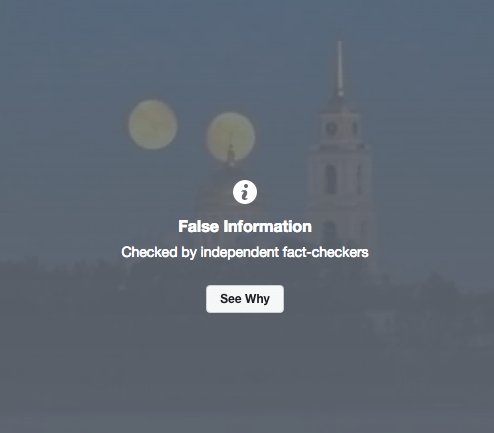
Facebook now works with third-party fact-checkers to try to identify and limit false news and I’m beginning to see more of these notifications, but so far, they’re only managing to catch the tip of the iceberg. It would help a great deal if people would do their own fact checking, but it’s a lot easier to just hit the share button than it is to do the work involved in making sure that something is accurate. The teacher in me always wants to point people toward the truth, but sadly, this sometimes gets me in trouble with those who don’t actually care if what they’re sharing is true as long as it fits their particular bias.
While there are many who are simply naive or gullible and who unintentionally share false information, there are others who are very purposeful about it. They are deliberate, sophisticated in their methods, and very devious. Take this recent post, for example.
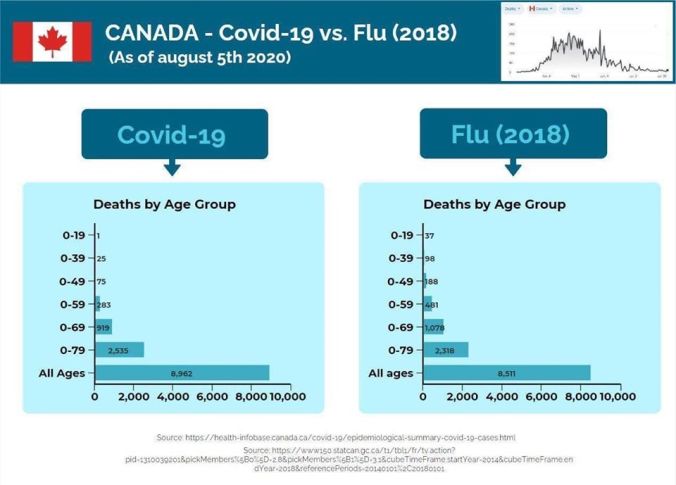 It looks legit, but it’s not. Notice that it gives sources below the graphs. They’re blurry which makes them difficult to read and they don’t actually link to the sources given, but more grievous is the fact that if a person actually checks those sites, they discover that the numbers on the graphs don’t line up with the figures that they give! Someone has gone to a great deal of effort to create a false graphic that serves their agenda, but doesn’t provide facts.
So, in light of all this, why do I still use Facebook? I use it for the purpose that it was originally created. As frustrating as it can be, it’s still a useful communication tool. The chat feature was absolutely invaluable during the many years that we dealt with the needs and care of my very elderly parents from a distance. It allowed family members scattered across North America to participate in an ongoing discussion about life and death issues and to come to some very important decisions. It also allows me to participate in the day to day lives of my grown children and grandchildren who all live some distance away. I’ve used Facebook to reconnect with some important people from my past and to keep in touch with friends in faraway places like Japan, Mexico, China, and Saipan. As a neuroendocrine cancer patient living in a rural location where I don’t have access to an in-person support group, the Facebook patient groups that I belong to have been excellent sources of information and encouragement. Linking my blog to Facebook also allows it to reach a wider audience than it would otherwise.
So what can we, who still want to use Facebook, but who care about truth, do to ensure that we don’t contribute to the spread of false information? The American Friends Service Committee (AFSC) came up with a simple four step acronym that I think is worth sharing. SCEP: Source, Confirm, Evidence, Pause.
- Consider the Source. Is it from an independent news source that is likely to use fact-checkers and editors to verify a writer’s claims or is it from a website with a stated political aim?
- Google to Confirm. Is the story being reported by more than one site or author? If you can find it in other credible sources, it has a better chance of being legit.
- Assess the Evidence. A solid news story will be supported by strong evidence: verified documents, peer-reviewed research and sound studies, and direct quotes from named, not anonymous, sources.
- Pause. Instead of instantly liking or sharing a post that hits home, pause and consider. Is the article likely real? What do I hope will happen if I share it?
Be SCEPtical! It’s Facebook, not Factbook.
 Following Augustine