Good news!!

Good news

Four years post diagnosis, there are times when I almost forget that I have an incurable cancer. It’s no longer the first thing I think of when I wake up every morning and I’m sure there are days when it doesn’t even cross my mind.

Then there are days like today; days when it jumps to the forefront again. This morning started with CT scans of my head, neck, chest, and abdomen. Several hours later, we sat down with my doctor to discuss the results. I had no reason to anticipate bad news, but we’re fully aware that at any time the treatment could stop working. New growths could appear or tumours that have shrunk could start growing again. Someday, we probably will receive that kind of news, but not today!

Today, my doctor called me a “poster child” for the PRRT treatment protocol that I’ve been on since September 2014. He’s as delighted as we are with how well it’s been working for me. The largest tumour on my liver is noticeably smaller today than it was six months ago. The other remaining tumours appear unchanged and there are no new growths!

Quality of life is an important factor in cancer treatment and Dr. MacEwan is always delighted to hear that mine continues to be superb. It’s only days like this one that remind me that I have cancer! The rest of the time I’m busy living life to the fullest and with utmost gratitude to my amazing medical team, my many faithful praying friends, and the God who promised to take care of me on this journey.

Segway adventure

IMG_20170829_134946917

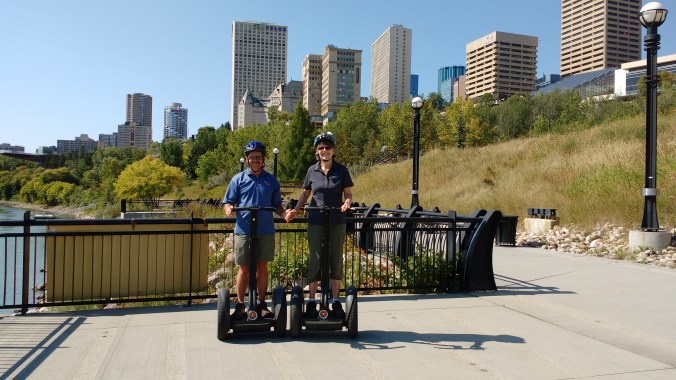
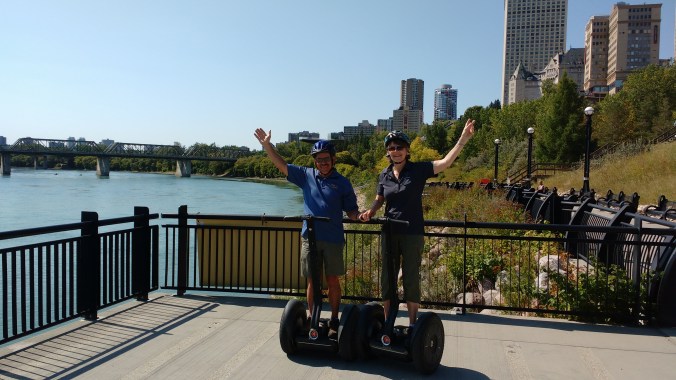
Several years ago, our youngest son started giving us experiences for Christmas instead of things. One year it was a helicopter flight, another year tickets to a dinner theatre. Last Christmas, we received gift certificates for a one hour Segway adventure in Edmonton’s beautiful river valley.

IMG_20170829_134915286 - Version 2

Though River Valley Adventure Co. operates Segway tours year round, we waited until summer for our adventure and I’m glad we did! The conditions were perfect.

Our experience began with a short safety video followed by a hands-on training session with our experienced guide. We learned how to mount and dismount the Segway, how to stand still, start, stop, turn, speed up, and slow down. Since the Segway balances automatically, it was really quite simple. Before we knew it we were riding the trails, going up and down hills, and even slaloming between trees!

IMG_20170829_135000390

To operate a Segway, you simply lean forward to make it go and backward to make it slow down or stop. Tilting the handlebar slightly to the left or right turns the machine in that direction. By standing upright and tilting the handle, you can actually turn 360º on the spot.

At the end of our tour, we received our Segway Operator’s License which allows us to skip the training session if we return for another try.

Would I do it again? Absolutely! It was a blast!

Fashion trends for fall 2107

LogoAs one who loves summer, I’m hoping that I don’t have to make my seasonal wardrobe switch to fall and winter wear for awhile yet, but it’s time to start thinking about it. Although I’ve been retired from teaching school for ten years, my many years in the classroom still have an impact. When the end of August and the beginning of a new school year approach, my mind automatically goes to fall. Of course, the stores have already been gearing up for the new season for some time.

So, what are the trends that we should be watching for this fall? Let’s take a quick peek.

Sofa Print Florals

Floral patterns never seem to go out of style, but this season I’m seeing a lot of the large floral prints that the fashion industry often refers to as “sofa print” or “couch” florals. Deep, rich colours and dark backgrounds seem to be particularly popular this year.

Red

Pink was the popular colour for summer this year, but its big sister, red, is taking over for fall and winter. Everything from shoes and boots to overcoats are being seen in red, but if you’re not sure that it’s the colour for you, try it in small doses first. Consider adding a pop of colour with red accessories.

If you plan to wear larger expanses of red, especially near your face, it’s important to choose a shade that compliments your complexion. If your skin has warm undertones, you’ll look best in an orange-based red, while those of us who have cooler, fair complexions will look better in reds with blue undertones.

Plaid 

One of the most popular looks on the runways for this season was grey plaid suiting, but brighter plaids (remember the 70s) are also popular. This plaid shirt from Cabi is on my wish list.

cabi shirt 2

Velvet

Velvet is back in many different hues and not just for formal wear. Skirts, pants, blazers, even hoodies, shoes, and booties are being seen in velvet this year!

Shoulder pads

Shoulder pads are one returning trend that I’m not sure I’m ready for! I can handle something small to give a garment structure, but no football player shoulders for me, please!

Midi skirts

Below the knee, but above the ankle, mid-calf length skirts seem to be the most popular for the upcoming season. Silhouettes vary from pencil skirts to those with more volume, but this can be a tricky length to get just right. When it comes to midi, there’s a thin line between flattering and frumpy. A skirt that hits the widest part of your calf will visually shorten your legs, so instead, you want the hemline to hit the narrower spot just below your calf muscles.

Do any of these trends appeal to you? Which ones will you consider adding to your wardrobe this fall?

Abracadabra – the Christian and social media

We spent the final week of our recent vacation with over one thousand other people at Camp Harmattan, a Church of the Nazarene camp in the valley of the Little Red Deer River. While there, I attended an afternoon session that continues to resonate with me. The topic was the Christian and social media.

We talked about whether or not we, as Christians, should be using social media and whether this is a topic that the church needs to address. I think the answer to both questions is a resounding YES!

We cannot/should not/dare not hide our heads in the sand and avoid the world around us. The Old Testament tells the story of Queen Esther who, when her people faced extermination by the Babylonians, was told by her cousin, who urged her to speak to her husband on their behalf, “Who knows but that you have come to royal position for such a time as this.” (Esther 4:14 – italics mine) We, too, have been born for such a time as this. Our place in history is not random or some accident of fate. I firmly believe that God intended each one of us to be here on earth at this exact time. In other words, we were meant to be living in the age of social media and if that’s the case, we ought to use it, but we ought to use it well.

The Bible, particularly the book of Proverbs, has much to say about how we communicate. “Reckless words pierce like a sword, but the tongue of the wise brings healing.” (Proverbs 12:18) The same might be said of the keyboard.

Though the origin of the magician’s incantation, abracadabra, is uncertain, it is thought to derive from early Aramaic or Hebrew. The Hebrew word bara means “create”, while dabar means “word” or “speak”. Together they become abracadabara, literally meaning “I create as I speak” or “I speak therefore I create”.

When we use social media, what do our words create? How do they shape the people we interact with? Whether written or spoken, our words have the power to tear down or to build up, to encourage or to destroy.

It isn’t a matter of whether we, as Christians, should use social media, but rather a matter of how. Colossians 5:6 reminds us to “Let your conversation be always full of grace”. Before we post or respond, we need to consider the possible effect of what we write. What will our words create? Will they result in conflict, pain or discouragement? Or will they be a blessing? We also need to keep in mind that the written word, which lacks the non-verbal cues of face to face conversation, such as tone of voice and facial expression, can be more easily misunderstood. What we intend to communicate and what the reader understands may be two very different things.

We should also be very careful about what we repost. Before we do, we need to ask ourselves some very important questions. How reliable is the source? What are its biases and underlying convictions? What is the motivation or purpose behind the post and why do we want to share it? Very often, we should also take the time to do some fact checking to ensure that it’s actually true.

Our session on social media also touched on its addictive nature and some of the negative effects that it can have on our lives. While there’s no official medical recognition of social networking addiction as a disease or disorder, it has become the subject of much discussion and research and some studies seem to indicate that it is as addictive as nicotine. Some suggest that spending excess time on social media networks can even trigger anxiety, depression and ironically, isolation from others. Perhaps social media addiction might simply be defined as spending so much time using Facebook, Twitter and other forms of social networking that it interferes with other aspects of daily life such as careers and relationships.

Extensive use of social media also has the tendency to place a person at the centre of their own universe. As Christians, we definitely want to guard against becoming so caught up in the “selfie” world that we find ourselves constantly wondering or checking to see how we are being admired and followed by those in our social media circles. Instead, we want to use social media to strengthen relationships and connections and to have a positive impact on our world.

Just remember, abracadabra! Our words are powerful!

powerofwords

Hidden gems

In addition to world renowned sites like some of the ones in Jasper and Banff National Parks, Canada is home to many hidden gems usually known only to local people. We also found some of those on our recent travels.

After saying good-bye to our son and his family and leaving the mountain parks behind, we spent another week in the nearby foothills where we camped at Bottrel, Alberta with our daughter’s family. There’s actually nothing at Bottrel except a general store and a small unserviced campground, but we heard about it because our son-in-law’s mother lives nearby.

The campground is only 40 minutes from our daughter’s home in northeast Calgary. As soon as we’d set up camp on the bank of the lovely little creek that runs through the campground, we drove into the city to pick up Drew, our oldest grandson, who enjoyed two days of camping with Gram and Grandpa before the rest of the family was able to join us.

One of the things that we wanted to do during that time was introduce Drew to kayaking, but the creek was too small for that and we didn’t know of any lakes in the area. Richard spoke to the storekeeper, who also runs the campground, and learned of a small fishing lake nearby that’s known only to the locals. The highlight of our outing to Winchell Lake was the rare opportunity to watch a loon and her chick close up!

IMG_5018 - Version 2

About 20 minutes from the campground, on our way into Calgary, we had also passed signs for Big Hill Springs Provincial Park. A quick online search revealed that its 2.3 km (1.4 miles) hiking trail with an elevation gain of only 20 metres (66 feet) was popular with young families. Not intending to do the hike until the rest of the family joined us, we decided to take a drive over to the park just to check it out. Drew was so enthusiastic, however, that we ended up hiking the entire trail that day! Of course, as little boys are inclined to do, he put in a few more steps than we did!

IMG_5000

Later in the week, we packed a picnic lunch and returned with the rest of the family. With Drew as our guide, we did the hike again.

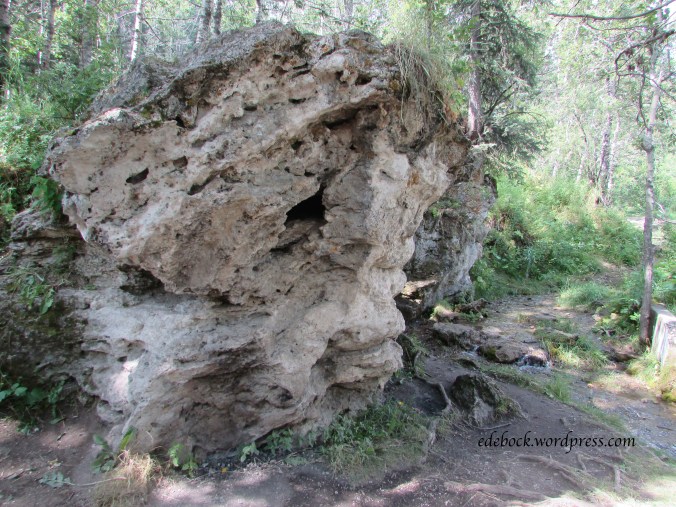
An interesting geological feature in this small park, which is located in a beautiful coulee, are the mounds of unusual rock called tufa (too-fah). Apparently tufa forms when water, rich in calcium and carbonate, emerges from the ground. As it comes to the surface, it releases carbon dioxide into the air and forms outcroppings of calcium carbonate rock.

IMG_5026

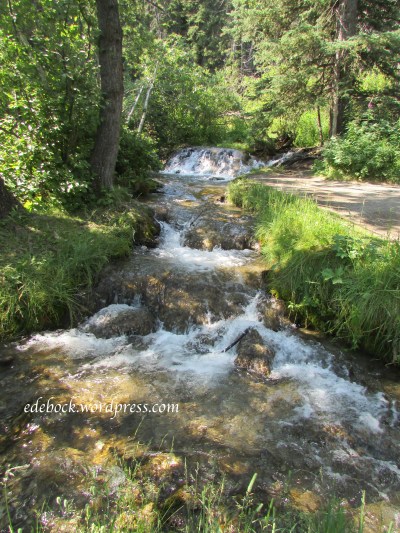
The first part of the hike was particularly pretty following a stream with lots of little waterfalls.

IMG_4998

IMG_4997

IMG_5001

IMG_5039

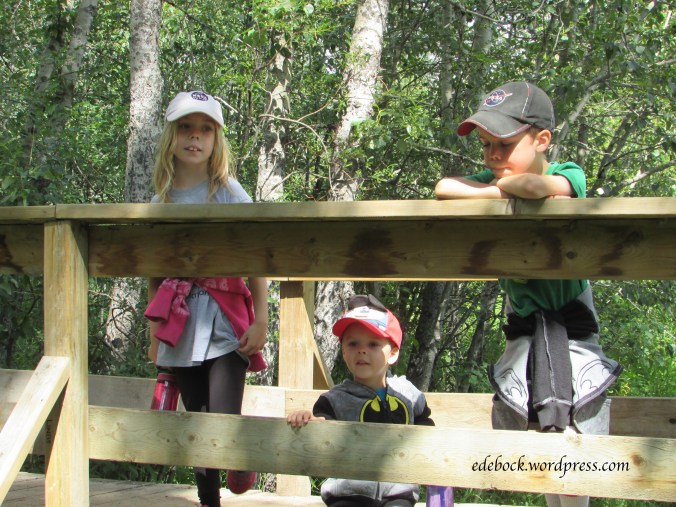
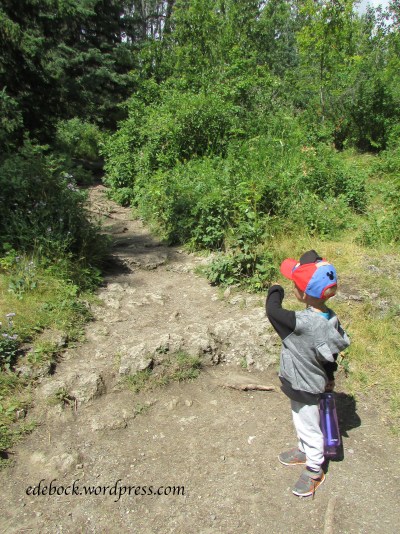
I believe this was 3-year-old Simon’s first hike, but he was very keen to go!

IMG_5035

hiking

Later in the afternoon, back at the campground, the creek was a great place to cool off!

IMG_5066

A simple solution

LogoFashion Friday is back! You may recall that we started our six weeks of travel by heading north to Dawson City, Yukon to attend our nephew’s wedding. In my grandmother’s day, it would have been considered scandalous for a woman to have shown up at a wedding with bare legs, but this is 2017 and the wedding was outdoors on a very hot, sunny day. Bare legs would have been perfectly acceptable, but on an older woman they can look terrible. Could I really thumb my nose at the current “no nylon” trend?

I chose a dress that falls just above the knee. My legs are well-toned, but I don’t tan well so they’re pasty looking and freckled and bear other signs of aging. They definitely needed help, but even the sheerest pantyhose would be hot and uncomfortable.

Prior to our trip, I experimented with leg makeup lotion in the store. It promised “flawless-looking, irresistible, sexy legs” but even the palest shade looked orangey on me. That’s definitely not my idea of sexy! Besides, reviewers advised not wearing it with sunscreen as it would smear and I definitely needed sunscreen.

Tinted sunscreen was another option, but rather than buying it, I decided to create my own. I simply mixed my regular sunscreen with some of my foundation and the results were amazing! Not only did it even out my skin tone perfectly, but it lasted for hours and didn’t rub off on my clothing. It was a simple solution that I will use often in the future!

Sunscreen + Foundation = Beautiful legs!

Driving the Icefield Parkway

Though the Icefield Parkway, the highway between Jasper and Banff in the Canadian Rockies, is only 288 km (179 miles) long, it can easily take all day or longer to travel because there are so many amazing places to see along the way. Come along with us and I’ll show you a few of the places that we stopped on our most recent trip.

Athabasca Falls

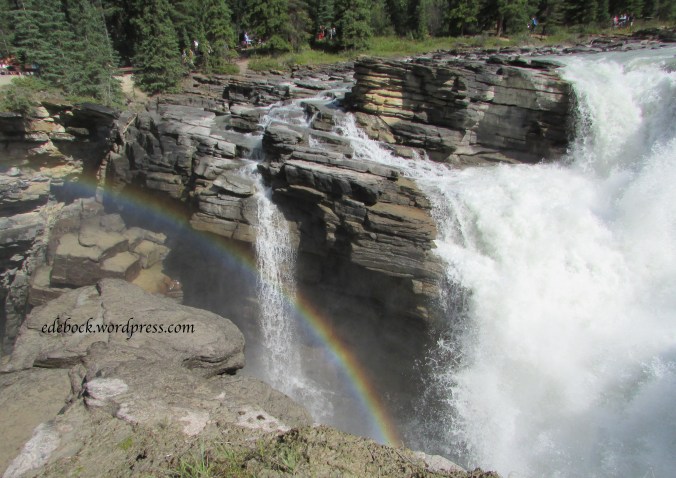
Approximately 30 km (19 miles) south of the town of Jasper, Athabasca Falls is neither the highest or the widest waterfall in the Canadian Rockies but it is thought to be the most powerful. The falls can be safely viewed and photographed from various viewpoints on both sides of the river. The parking lot is on the north side, but be sure to cross the pedestrian bridge and view the falls from the south side as well. The morning that we were there, the sun was in just the right position to create a vibrant rainbow in the gorge below the crest of the falls when viewed from that side.

IMG_4906

IMG_4918

IMG_4912

IMG_4919

Sunwapta Falls

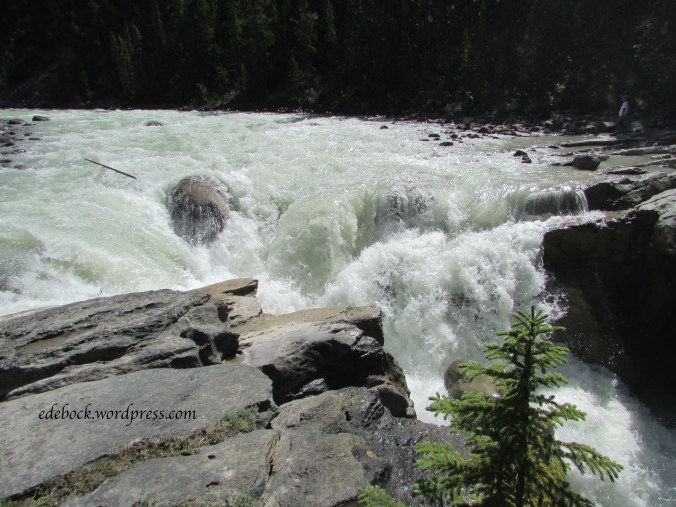
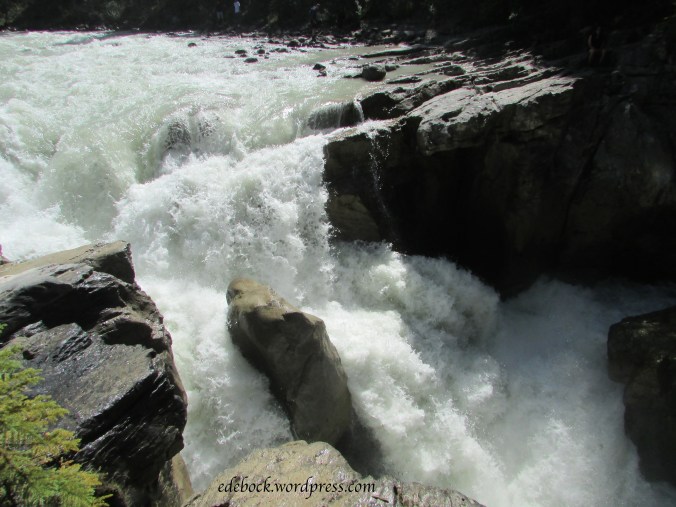
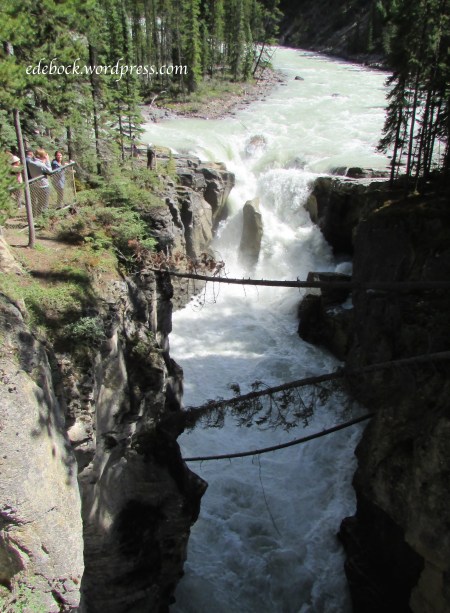
Another 25 km (15.5 miles) down the Icefield Parkway is beautiful Sunwapta Falls. Sunwapta means “turbulent water” in the language of the Stoney First Nations people.

IMG_4922

IMG_4923

IMG_4925

Columbia Icefield

Another 49 km (30 miles) southward brings you to the Columbia Icefield Discovery Centre at the foot of the Athabasca Glacier. Entering the Discovery Centre was like visiting West Edmonton Mall at Christmas time or a Tokyo subway station at rush hour as tourists from around the world crowded in to purchase tickets to the various tours and adventures in the area! If you visit, however, descend the staircase to the lower level where things are a lot quieter. There you will find a fascinating display of historical photos and a diorama that provides an excellent overview of the entire ice field.

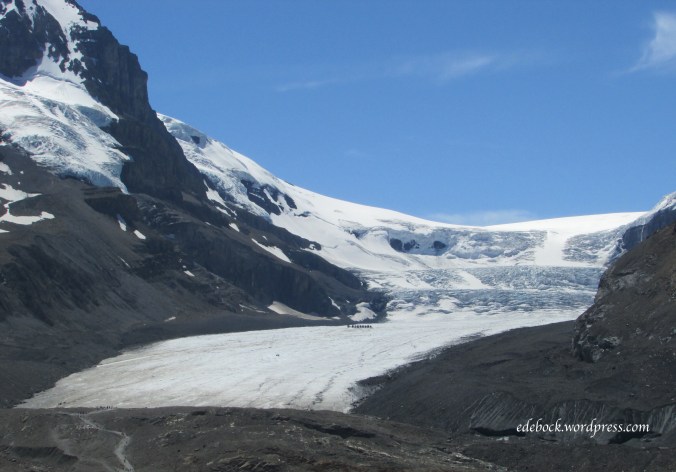
Straddling the Continental Divide along the Alberta/British Columbia border as well as Jasper and Banff National Parks, the Columbia Icefield is the largest ice field in the Rocky Mountains and one of the largest non-polar ice fields in the world. Meltwater drains to three oceans – the Atlantic, the Pacific, and the Arctic via three great river systems – the Saskatchewan, the Columbia, and the Athabasca.

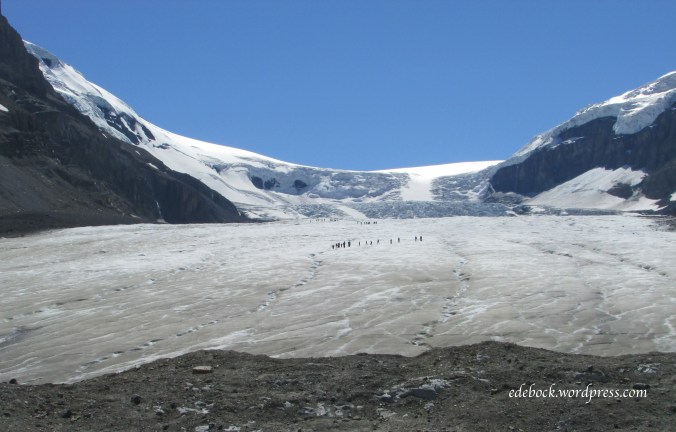
The most accessible part of the Columbia Icefield is the Athabasca Glacier. Even though it has receded significantly in recent times, this six kilometre tongue of ice flows to within one kilometre of the Icefield Parkway. During the summer months, adventurous visitors can hike out onto the glacier with a guide or explore it from the comfort of massive all-terrain vehicles. We chose simply to walk up the trail that leads to within metres of the glacier’s edge.

IMG_4931

IMG_4939

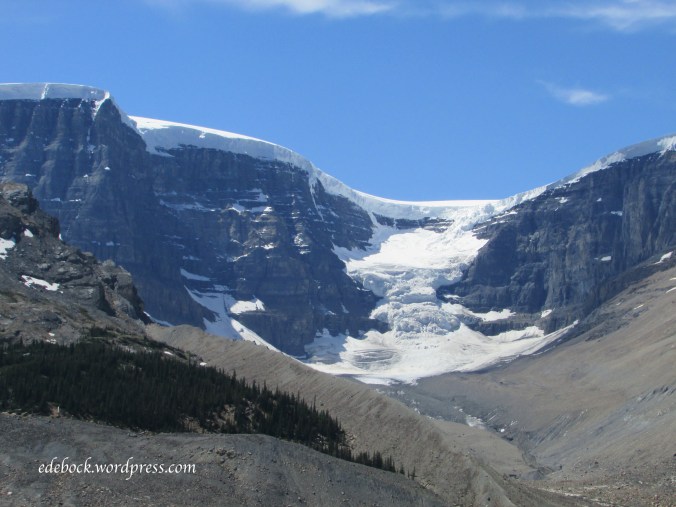
The Athabasca Glacier is only one of many tongues of ice that flow from the massive Columbia Icefield. Right next to it is the Dome Glacier, less accessible, but also impressive. Look at that amazing snow pack atop the ridge! It reminds me of icing on a cake.

IMG_4932

Lower Waterfowl Lake

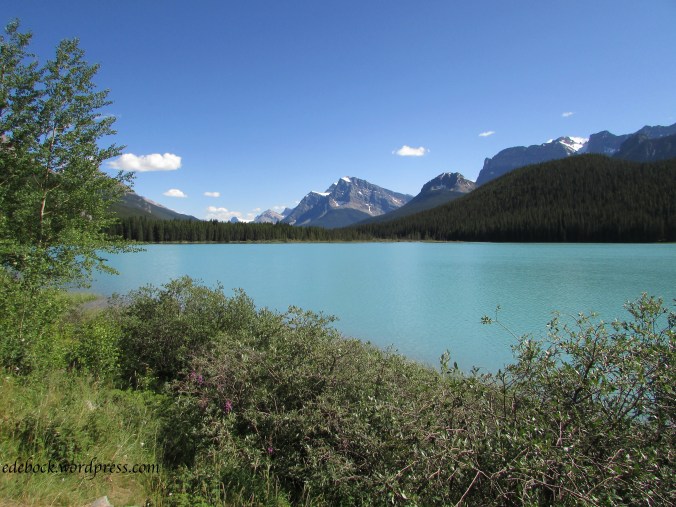
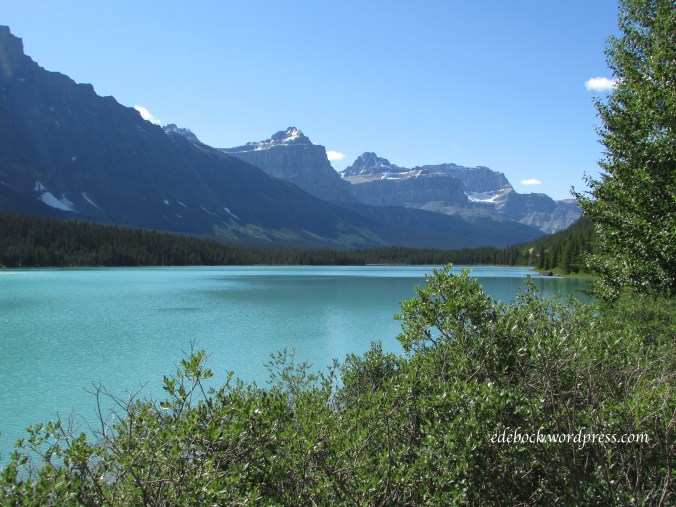
There are numerous glacier-fed lakes along the Icefield Parkway; too many to stop and photograph each one! Lower Waterfowl Lake struck me as one of the most beautiful.

IMG_4944

IMG_4947

Yes, that truly is the colour of the water! The incredible turquoise colour is the result of glaciers grinding the rock beneath them into a fine powder called rock flour. Meltwater washes this powder into the lakes where it is suspended in the water. These silty waters absorb all the colours of incoming light except the striking turquoise or vivid blue that is reflected back to our eyes.

Lake Louise

If you stopped nowhere else along the Icefield Parkway, world famous Lake Louise is an absolute must! Named for Queen Victoria’s fourth daughter, it is a truly awe-inspiring sight. With Victoria Glacier and an amphitheatre of rugged mountain peaks providing an imposing backdrop, it is a photographer’s delight.

IMG_4953

IMG_4957

IMG_4971


Two great hikes in Jasper National Park

As part of Canada’s 150th anniversary celebration, the country offered free Parks Canada passes to every Canadian and every visitor from around the world who requested one, giving each of us free admission to national parks, national historic sites and national marine conservation areas across the country. We put our pass to good use when we spent a week camping in Jasper and Banff National Parks with our son Matt, daughter-in-law Robin, and grandsons Sam and Nate, who were enjoying their first family vacation in the Beatrice, a newly restored and much loved family heirloom.

Like most mountain parks, both Jasper and Banff abound with hiking trails of varying lengths and degrees of difficulty. While at Jasper, we took advantage of two of these.

Valley of the Five Lakes

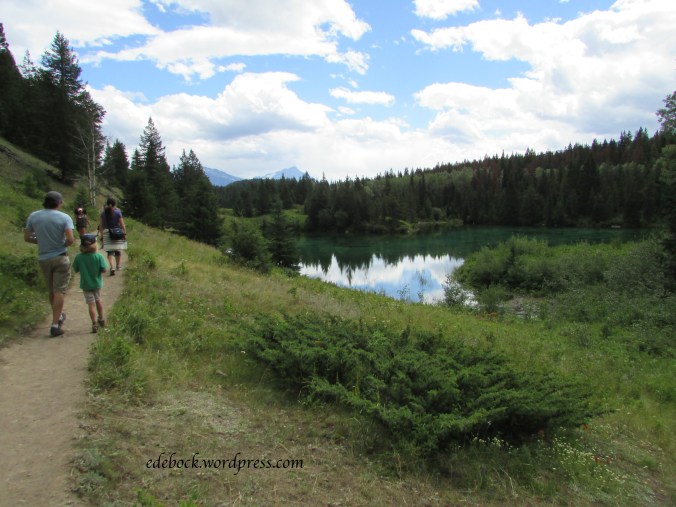
We chose this trail on the recommendation of my aunt who has lived in Jasper since 1953 and who continued to hike into her late 80s. The 4.5 km loop, located about 9 km south of Jasper, was an excellent choice. With only 66 m elevation change it was an easy hike for all of us.

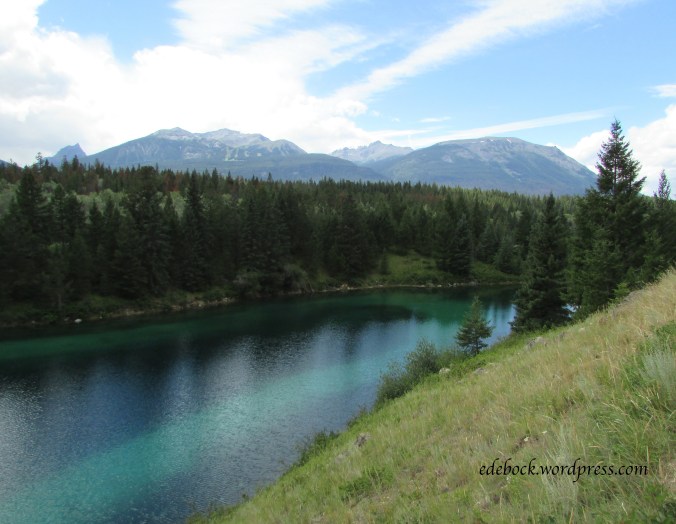
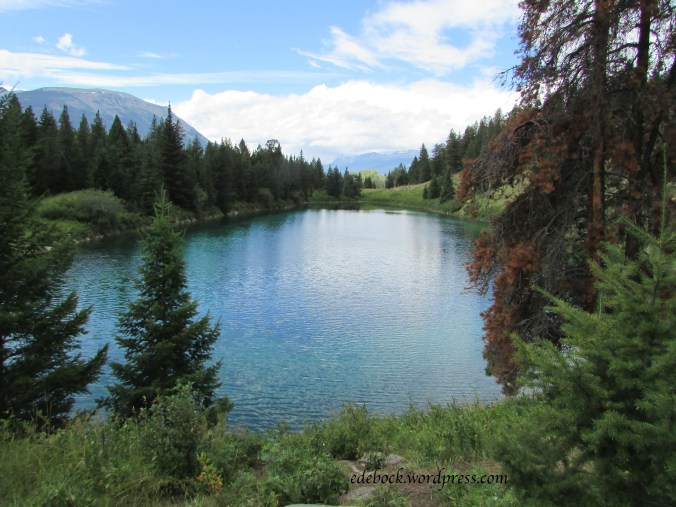
The loop takes in all five small lakes, each a different shade of blue or green, but all strikingly beautiful.

First Lake

First Lake

Second Lake

IMG_4812

Second Lake

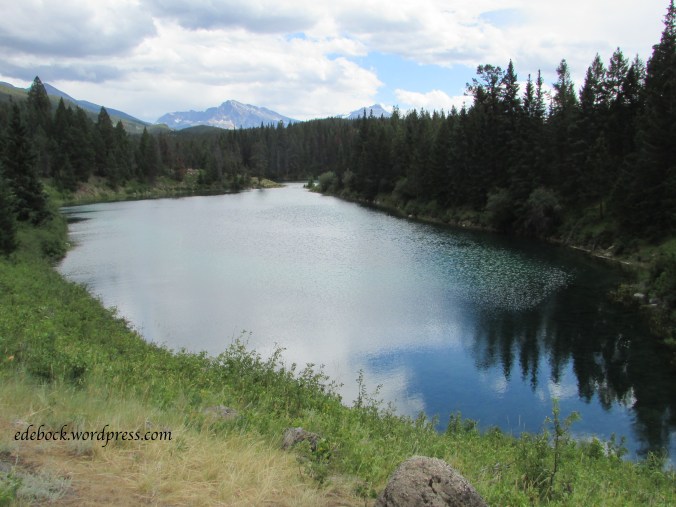
Third Lake (and in my opinion, the most beautiful)
Third Lake

IMG_4830

IMG_4832

Isn’t that just stunning?

Fourth Lake

Fourth Lake

Fifth Lake

Fifth Lake

While bears are known to frequent the Five Lakes area, especially in berry season, we saw only this frisky little chipmunk who was happy to pose for a photo.

IMG_4828

Maligne Canyon

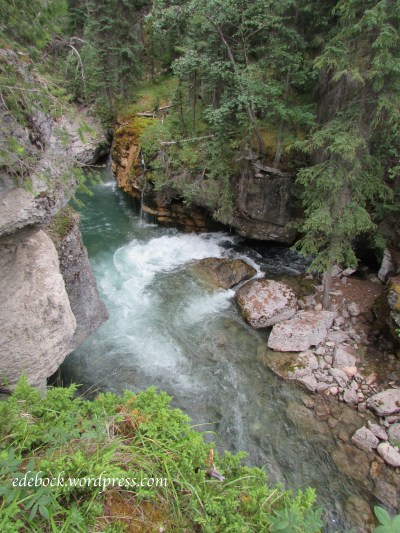
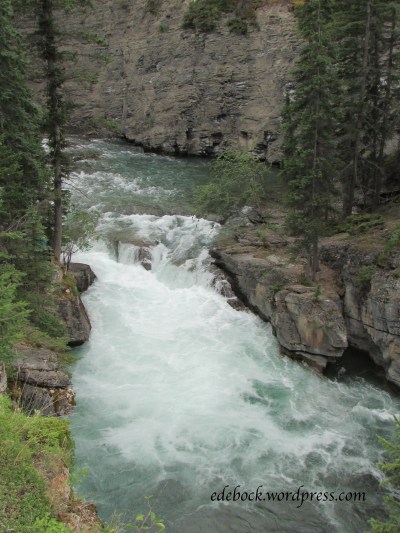
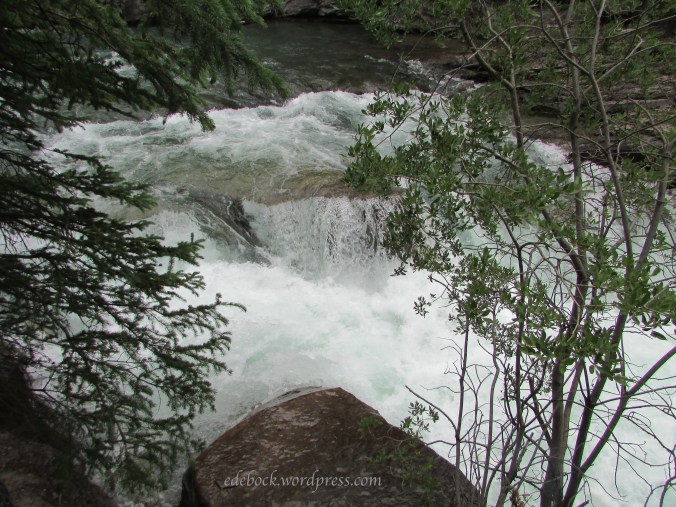
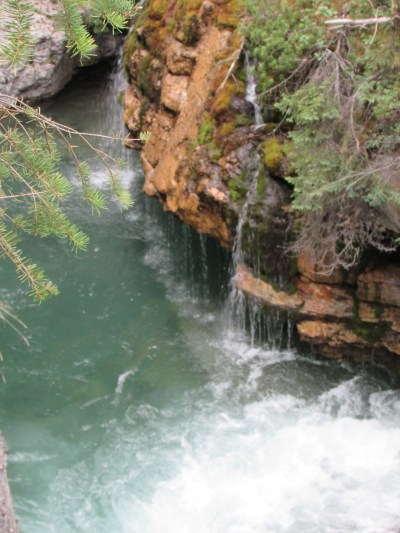
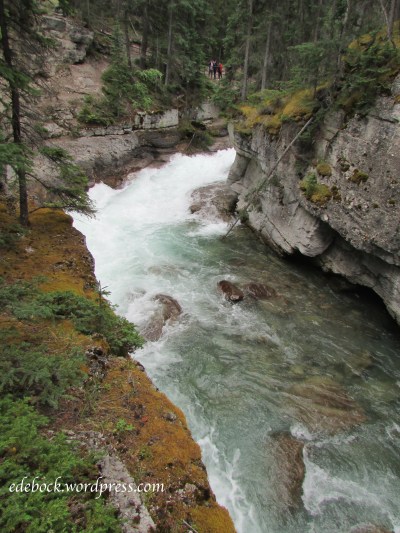
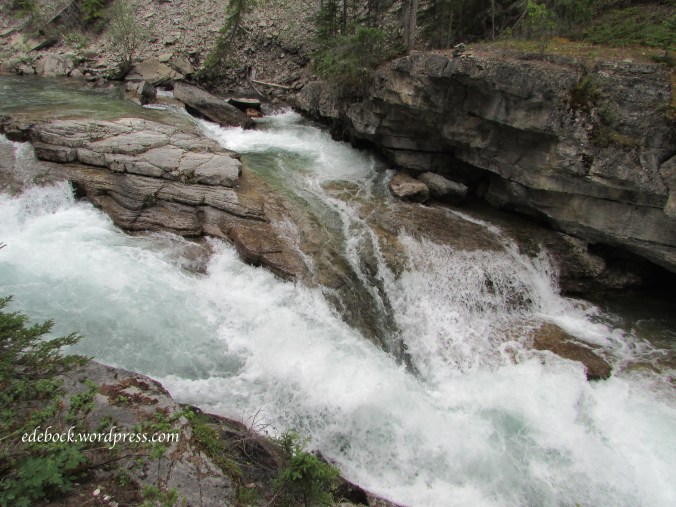
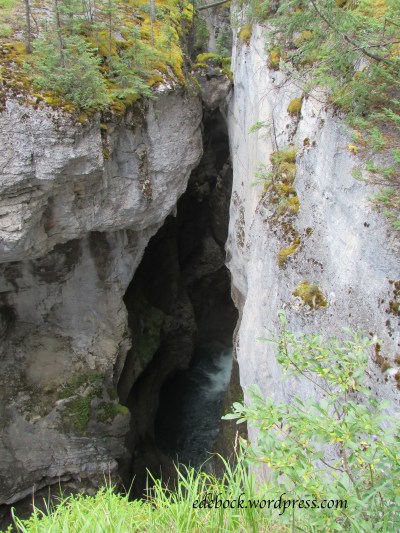
With a depth of more than 50 metres at some points, Maligne Canyon is one of the deepest in the Canadian Rockies and certainly one of the most spectacular. For our second hike in the Jasper area, we started at the 5th bridge and hiked up the canyon trail to the teahouse at the upper end.

When I first looked at my photos, I was disappointed. Somehow they just didn’t capture the magnitude of what we’d seen. Then I realized that it was the thunderous sound of the water churning through the deep, rocky canyon that was missing! Use your imagination as you follow us up the trail and try to imagine what it sounded like as the canyon walls narrowed and the rushing water echoed below.
IMG_4860

IMG_4864

Where does all that water come from? Located in the Maligne valley, Medicine Lake is formed by the Maligne River. One of the interpretive signs along the hiking trail compares Medicine Lake to a “giant leaky bathtub.” Water from the lake drains into what is thought to be the largest inaccessible cave system in the world and resurfaces downstream through springs along the canyon walls.

IMG_4869

IMG_4874

IMG_4875

The power of the moving water becomes evident when you look at the shapes of the rocky canyon walls that have been whittled away over eons.
IMG_4871

IMG_4873

IMG_4876

In some places, rocks and sand swirling around in the turbulent water wear potholes in the canyon floor or walls. Over time, as the canyon wears deeper these potholes, or bowls as we called them, are left above the water level, reminders of a previous time. You can see a pothole still being formed near the centre of this picture.

IMG_4879

Another interesting feature is the chockstone. Chockstones are giant boulders that have become wedged across portions of the canyon which narrows to only two metres at the top in some places. Over time, erosion slowly reduces the size of the chockstones until they eventually tumble to the canyon floor. There is a chockstone with moss and trees growing on it near the top of this photo.
IMG_4882

The promise of dozens of fossils preserved in the rock beneath our feet was an incentive to keep our young grandsons going as we climbed the last portion of the trail which is a bit steep. They became very good at spotting these reminders that this was once a very different looking world and enjoyed making rubbings of several of them.

IMG_4888

IMG_4889

Though this hike isn’t a long one, if you go, allow yourself lots of time as there are so many interesting things to see and photos to take!

There are many trails in the canyon area and rather than retracing our steps the entire distance, we took a higher trail from the 4th bridge back to the 5th. Though we were above the canyon walls and further from the thundering water, the views were beautiful.

IMG_4892

IMG_4895

IMG_4896


The Hazeltons

After six weeks in the trailer, we are home! Though it was our plan from the beginning to arrive home today, I really wasn’t ready to end our gypsy wandering and I would have happily extended our travels indefinitely. Real life issues beckoned, however, and so it seemed wise to follow through on our original plan. As much as I loved being away from home, I did miss having access to wifi and being able to update the blog on a regular basis. Now that I’m connected again, I’ll do my best to share the remainder of our travels with you over the next few days.

The Hazeltons, a collection of small communities, located around the confluence of the Skeena and Bulkley Rivers in northwestern British Columbia, have been home to the Gitxsan people for centuries. The Gitxsan are a matrilineal society made up of the Frog, Eagle, Wolf, and Fireweed clans. Though their territory is inland, their villages with intriguing names like Kispiox, Gitanmaax, and Hagwillget as well as Hazelton, New Hazelton, and South Hazelton, are a centre of Northwest Coast native culture and, as such, are a place that I’ve long dreamed of visiting. My love for the art and the culture of the native peoples of the Pacific Northwest began as a child growing up on the coast of British Columbia and grew as a student of anthropology during my university years.

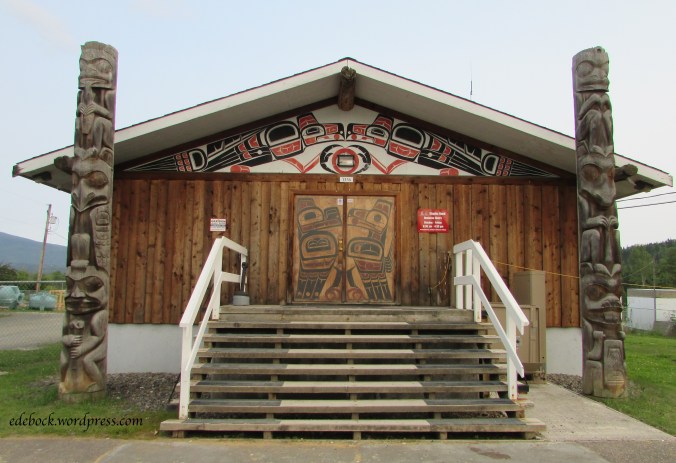
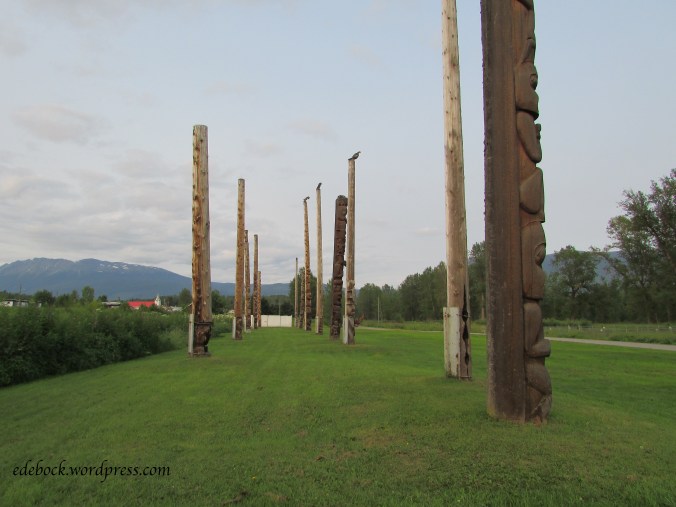
After settling into our campsite, we drove a few miles north to Kispiox, best known for the 15 totem poles, some dating back to 1880, that stand in the village alongside the Kispiox River. On the way into the village, we stopped to look at the art work decorating the band office.

IMG_4723

IMG_4732

IMG_4729

IMG_4733

IMG_4730

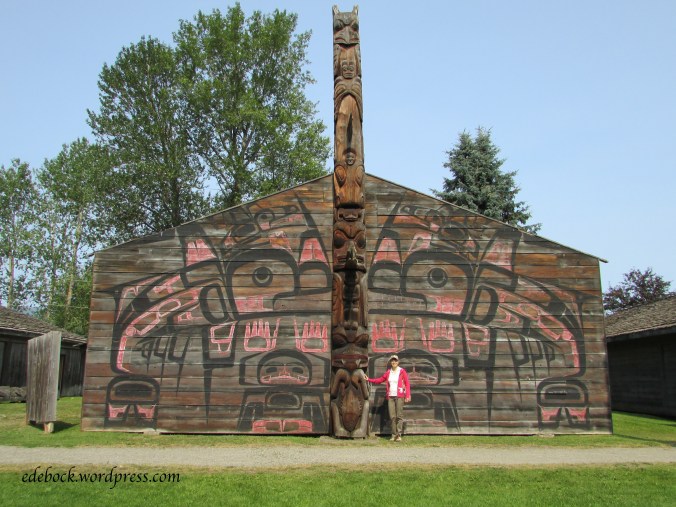
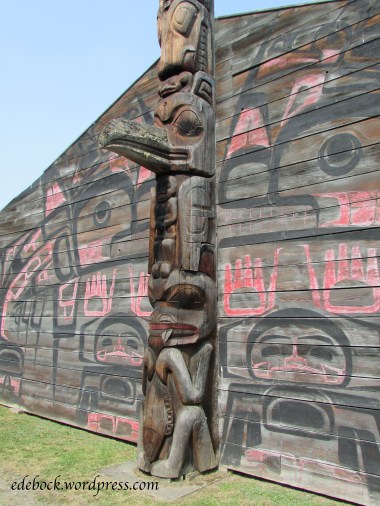
The following morning, we took a fascinating interpretive tour of the ‘Ksan Historical Village adjacent to our campground. It consists of seven replica cedar longhouses. One of the longhouses contains a small museum and a gift shop that are open to visitors who are also free to enjoy the grounds and photograph the buildings and totem poles. Only the guided tour, available in several languages, allows entrance into the three of the longhouses that contain an abundance of artifacts. The price is nominal and was well worth it! Aside from the Museum of Anthropology at the University of British Columbia in Vancouver, I have not seen such an extensive collection of Northwest Coast history anywhere! Unfortunately, photography was not allowed inside the longhouses, so I’m not able to share that part of the experience with you.

IMG_4774

IMG_4759

IMG_4763

IMG_4762

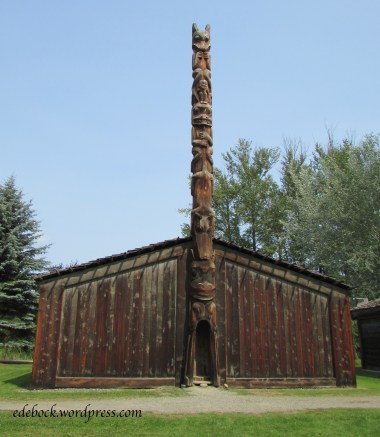
The small, narrow door in the last photo was designed to prevent enemies from entering in full armour.

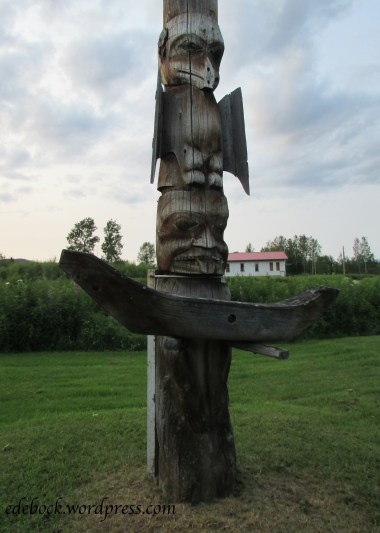
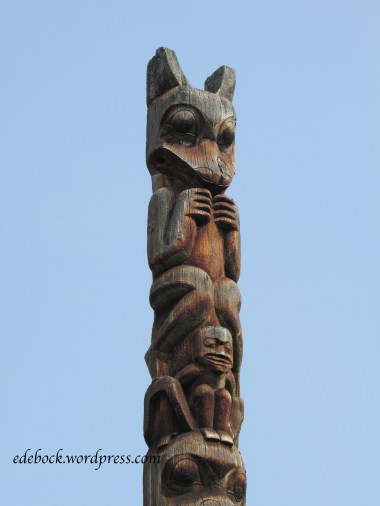
As always, the totem poles fascinated me. Here’s a closer look at a few of them.
IMG_4767

IMG_4776

IMG_4761

IMG_4760

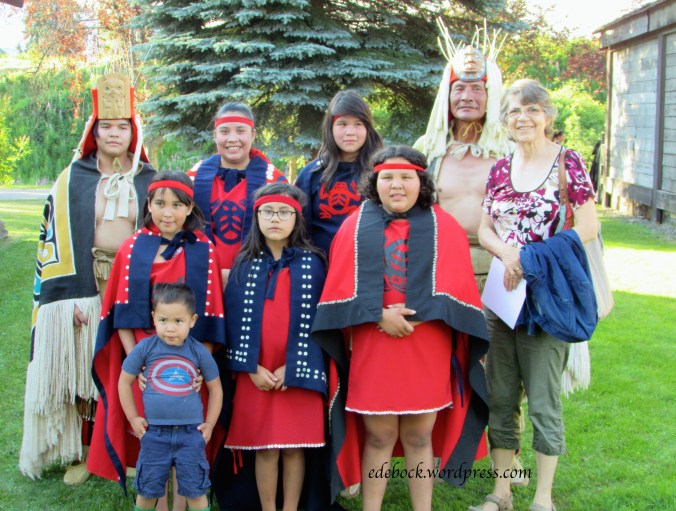
We were especially fortunate to be in the area on a Wednesday. Every Wednesday evening during the summer months, a local group offers a traditional song and dance presentation in the Wolf House, one of the historical village’s longhouses. Again, for a nominal fee, I was thrilled to have the unique opportunity to see and experience this aspect of the Northwest Coast culture. I was especially delighted to see that the group included all ages; that the traditional songs and dances are being passed on to the younger generations.
IMG_4799

As we explored the various villages that make up the Hazeltons, we were especially impressed with how welcoming the First Nations residents were. While we were strolling around the historical section of Old Hazelton a local woman stopped to chat and told us about an easy 10 minute hike from New Hazelton to a beautiful waterfall. Had she not been willing to share with us, we would never have known about it!

IMG_4792