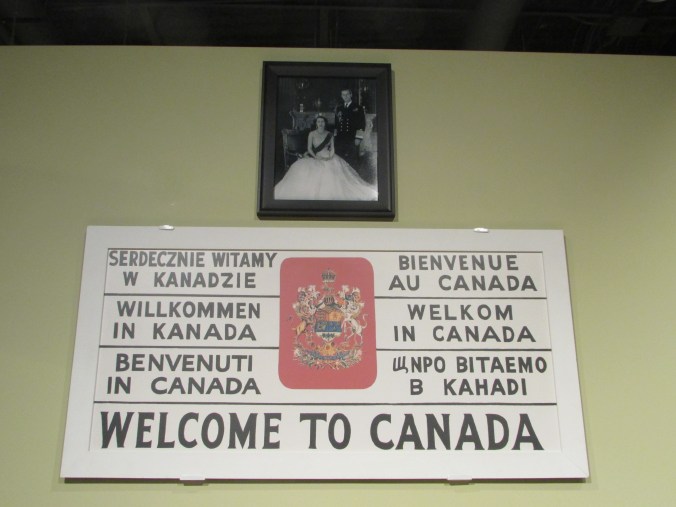
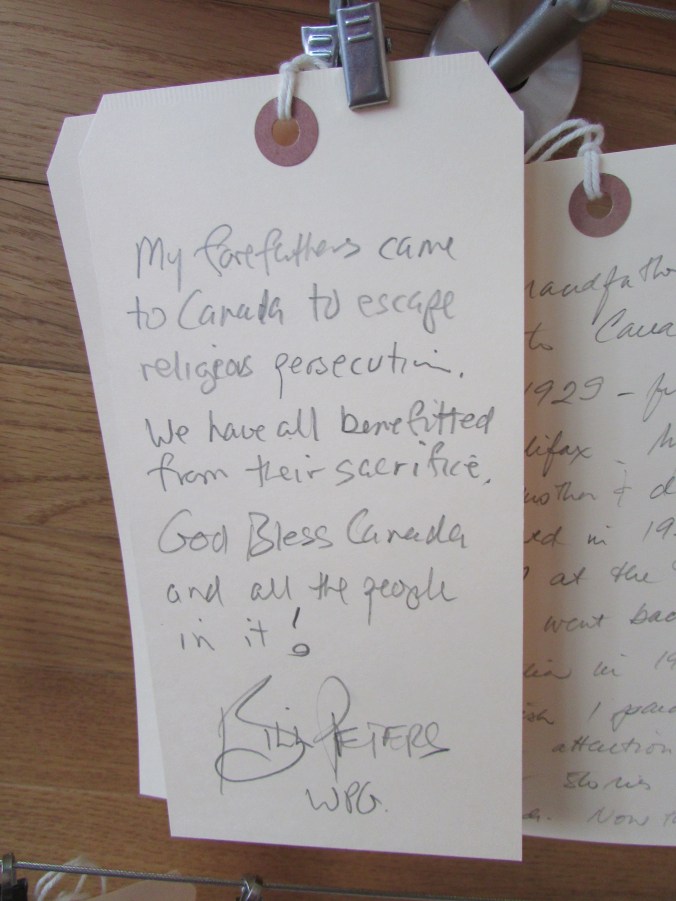
We spent most of our weekend in Halifax exploring the harbour area. Our first stop was the newly renovated Canadian Museum of Immigration at Pier 21, Canada’s last standing ocean immigration terminal. It was here that a great many of the immigrants who arrived in our country between 1928 and 1971 first stepped onto Canadian soil. As well as offering a fascinating step into the past to experience what it was like to immigrate through Pier 21, the museum showcases the vast contributions that newcomers have made to Canada’s culture, economy and way of life. I was particularly touched by the wall of testimonies written by previous visitors to the museum. Here are just a few of them.
As we explored the Halifax Seaport, a vibrant waterfront area and a popular destination for both locals and tourists, we passed “The Emigrant”, a beautiful bronze and marble monument depicting an emigrant leaving his home country to start a new life in Canada. The piece was designed, sculpted and donated by artist, Armando Barbon, himself an immigrant who wanted to say thank you to his adopted country.

In addition to being the place where many new Canadians first stepped onto our shore, the Halifax harbour was also the location where thousands of First World War soldiers last stood on Canadian soil. A trail of footprints burned into the wooden boardwalk traces the path of the long-gone fighters to a memorial arch bearing the words “The Last Steps”.
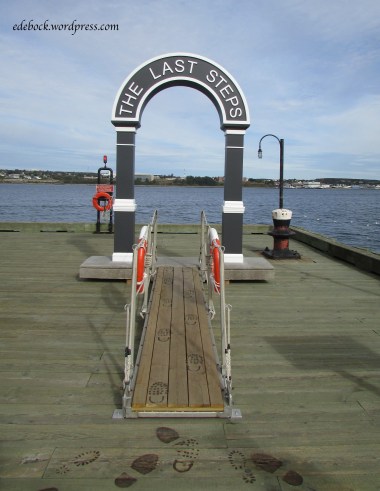
The Seaport is also home to the Maritime Museum of the Atlantic. There, I found the exhibit devoted to the 1917 Halifax Explosion most interesting. On that darkest day in Halifax’s history, at 9:06 a.m. on December 6, a dreadful miscommunication between two ships in the harbour resulted in an explosion of cataclysmic proportions. 2,000 people were killed and 9,000 more injured. It was the largest man-made explosion in history prior to the first nuclear blast.
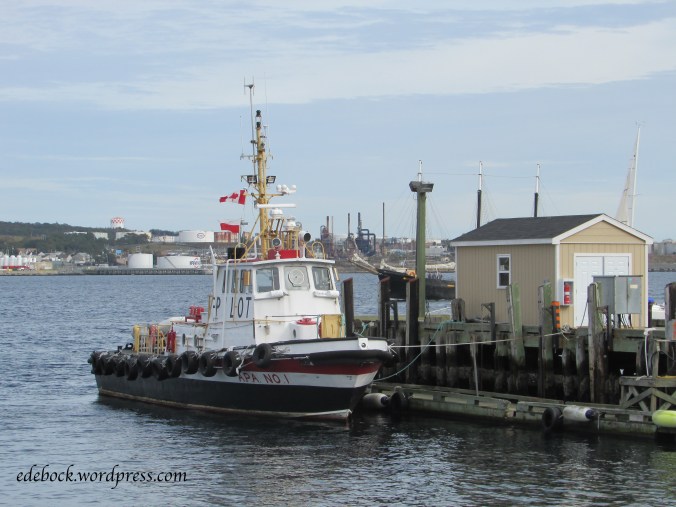
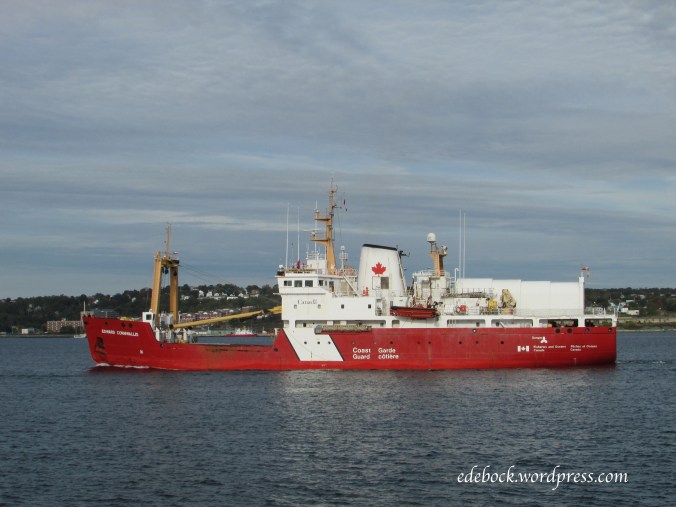
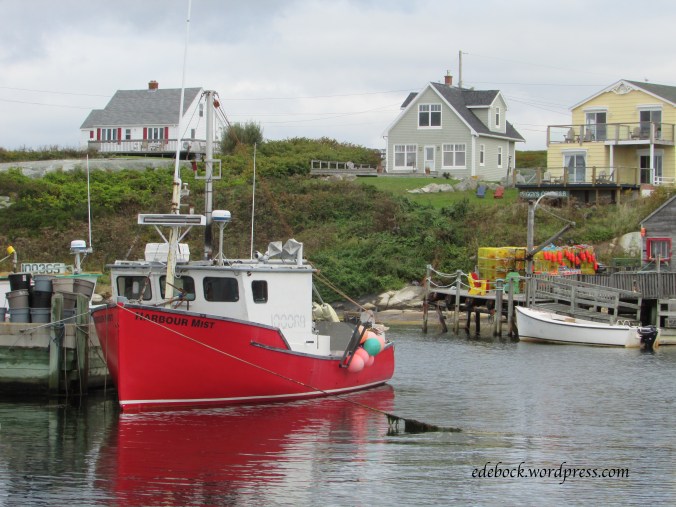
In addition to exploring local history, I loved just walking the boardwalk and enjoying the harbour sights.











 Following Augustine