Caesarea by the Sea

IMG_0229 - Version 2

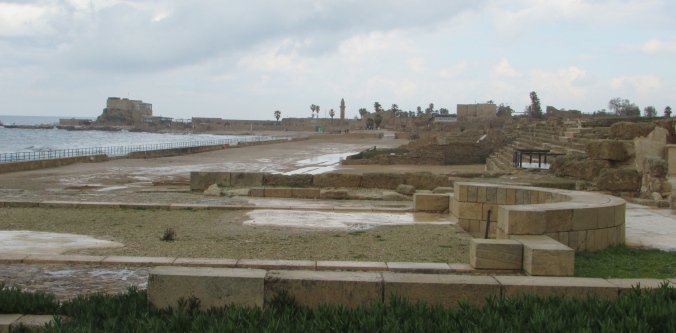
Traveling north from Tel Aviv, we came to Caesarea Martima or Caesarea by the Sea, not to be confused with Caesarea Philippi which we visited a couple of days later. Once an amazing complex overlooking the Mediterranean Sea, Caesarea Martima was one of the great architectural achievements of King Herod the Great. Described as both the greatest builder in Jewish history and a madman who murdered his father-in-law, several of his own wives and two of his sons, it was this same Herod who ordered the massacre of all the baby boys aged two years old and under in Bethlehem and its vicinity after he was outwitted by the wise men who came from the east to visit the baby Jesus. (Matthew 2:1-17)

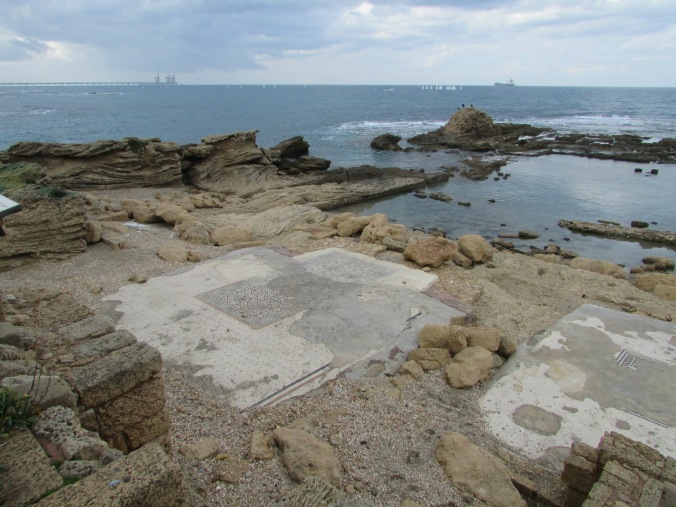
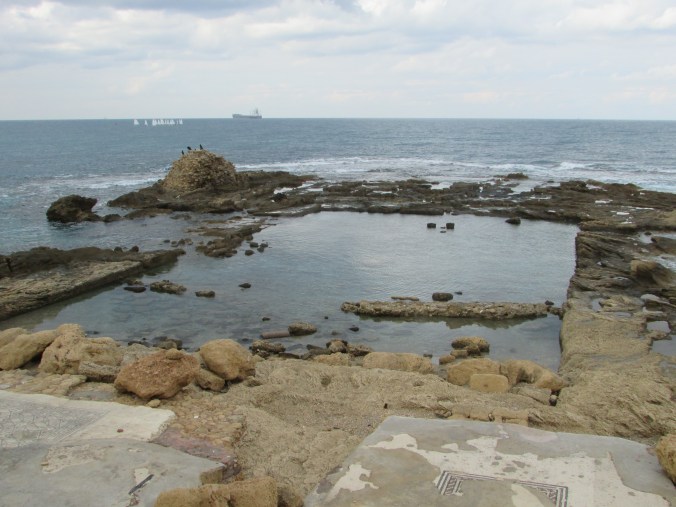
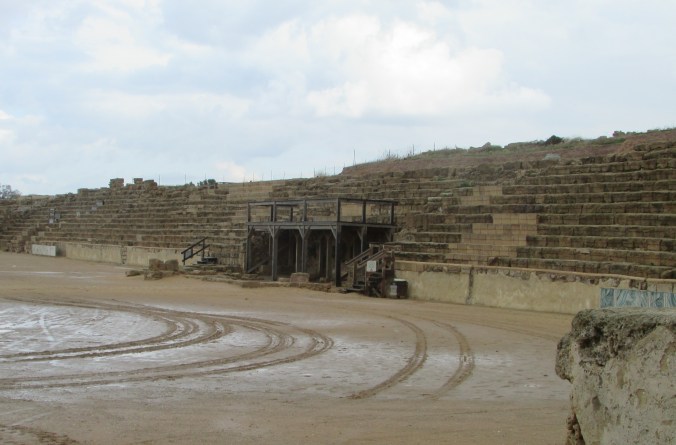
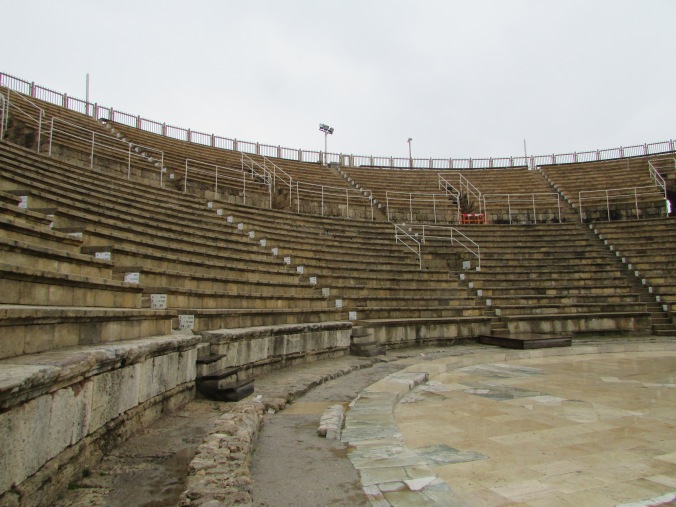
At Caesarea, named after his Roman patron, Caesar Augustus, Herod built himself a magnificent palace, complete with a freshwater pool, on a promontory jutting out into the waters of the Mediterranean. The site also included a harbour that would accommodate 300 ships, a theatre that would seat 3500 and the massive Hippodrome where horse races and other special events were held.
IMG_0195

Theatre

IMG_0219

Remains of Herod’s palace

IMG_0218

The pool

IMG_0219 - Version 2

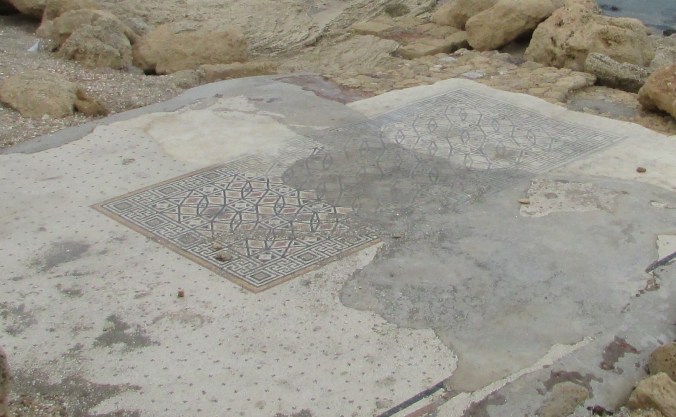
Mosaic floor

IMG_0225 - Version 2

Hippodrome

The Hippodrome originally sat some 10 000 people, but the seating on the sea side is missing. Large sections of it have been found in the sea some distance from their original location. It is thought that they might have been dragged out to sea by a tsunami. A major geological rift runs the entire length of Israel making it an earthquake zone.

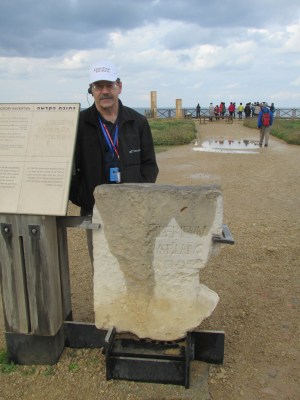
From a Biblical perspective, perhaps the most significant find at Caesarea thus far has been the Pilate stone, a damaged block of engraved limestone with an authentic 1st-century Roman inscription mentioning the name of Pontius Pilate, the Roman governor who sentenced Jesus to death. (Matthew 23:1-25) It provides non-Biblical evidence proving the existence of this man. It is likely that he made his base here at Caesarea Maritima.
IMG_0213

The Pilate stone

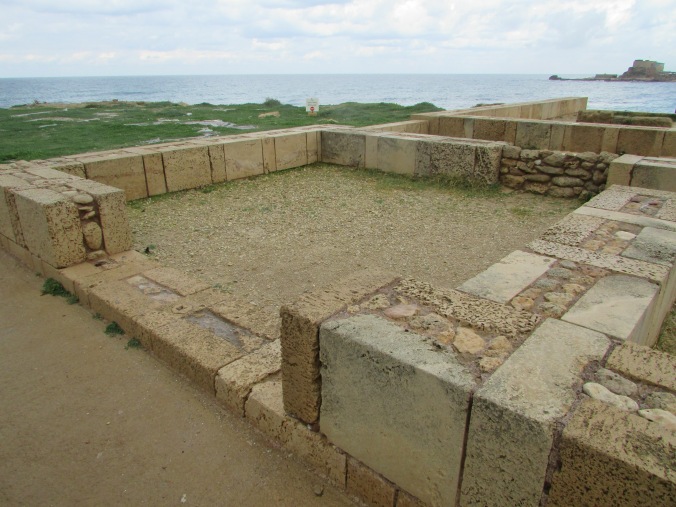
It was also at Caesarea that the apostle Paul was imprisoned for two years while he awaited transfer to Rome. (Acts 23:23-26:32) It may have been in this small room or one just like it that he was held.
IMG_0221

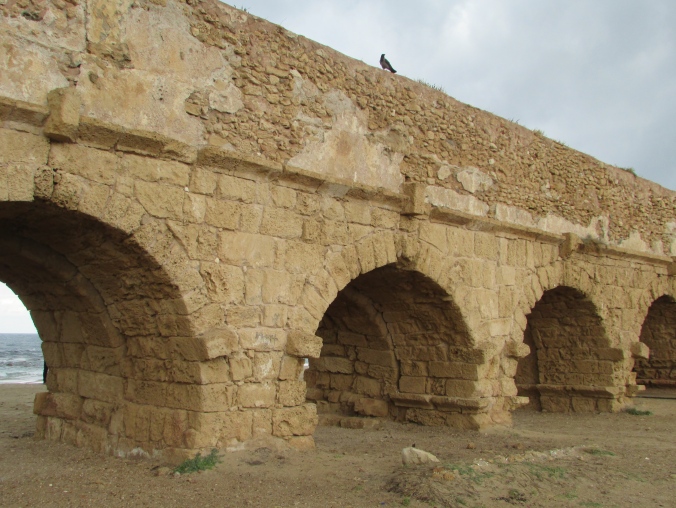
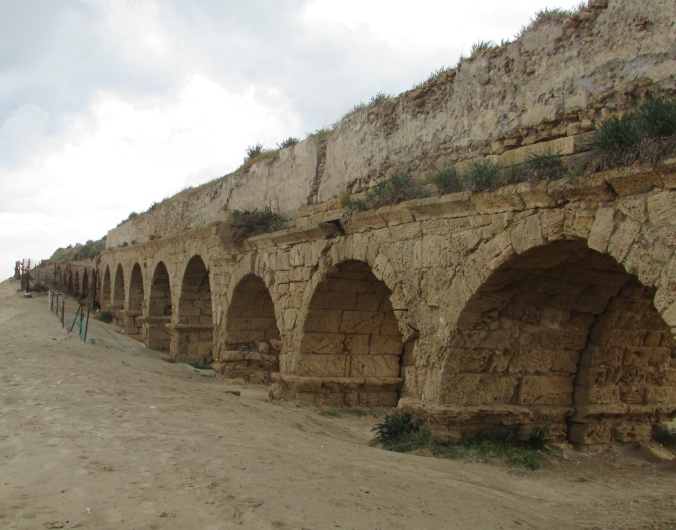
Lack of fresh water at Herod’s complex required it to be brought from springs at the base of Mount Carmel nearly ten miles away. That posed little problem for the great builder, however, who simply had his labourers build an aqueduct. An amazing engineering feat, the aqueduct was built on arches and the gradient carefully measured so that the water would flow by the pull of gravity.
IMG_0237

IMG_0238 - Version 2

Shalom Israel!

As I begin to process and share all that we saw and experienced on our pilgrimage to Israel, I am reminded that there is a fine line between worshipping at a place and worshipping the place itself. There is no holy magic to any of the sites that we visited, but I have no doubt that being there and seeing them with our own eyes will give greater context to scripture as we continue to read and study it; to make it come alive or, as Richard says, to help us see it in 3D. As we traveled the length and breadth of this small country, I think everyone in our group gained a greater appreciation for the land that our Saviour traversed and for the ways in which He used His environment in His teachings.

We arrived in Israel on January 22nd via a direct ten hour flight from Toronto to Tel Aviv. The ultra modern Ben Gurion International Airport, named after the country’s first prime minister, is the world’s gateway to Israel.

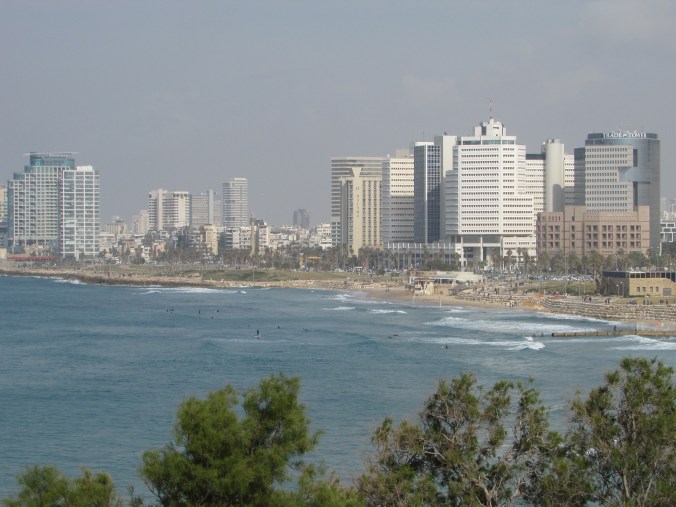
Tel Aviv is a vibrant, modern and very liberal city located on the eastern shore of the Mediterranean Sea. Its next door neighbour is the ancient port city of Jaffa (Joppa). The two cities have grown together to form one metropolitan area with no line of distinction between them.

IMG_0138

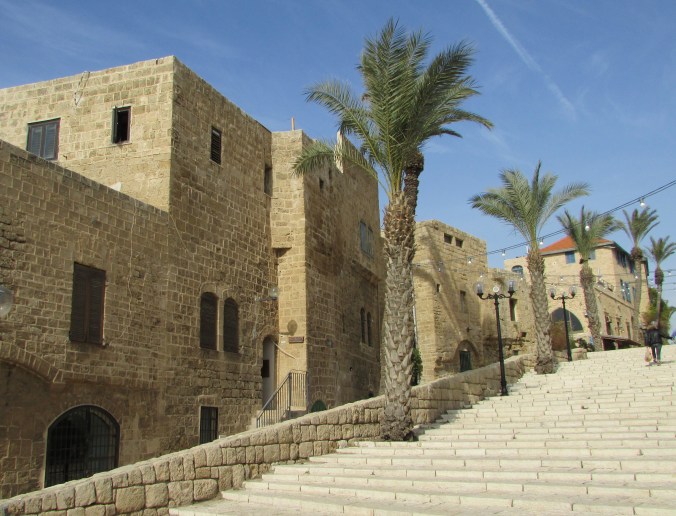
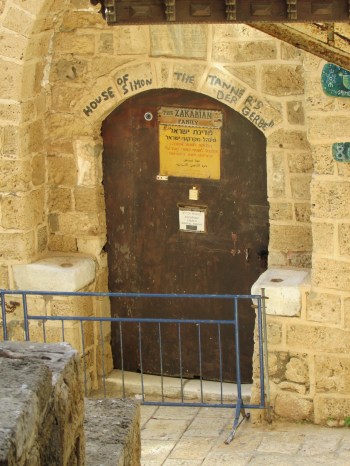
Jaffa is of both Old and New Testament significance. It was here that Jonah boarded a ship headed for Tarshish in an attempt to flee from the mission that the Lord had given him. (Jonah 1:3) Much later, in the book of Acts, we are told that Peter was staying in Joppa with a tanner named Simon when he was summoned by Cornelius, a Roman centurion in Caesarea, to come and share the good news of Christ with him and those who had gathered in his home. (Acts 9:43-10:48) We were reminded that we can choose to be like Jonah and stand in God’s way or like Peter who cooperated with God. (Acts 11:17)

IMG_0128

IMG_0151  IMG_0150

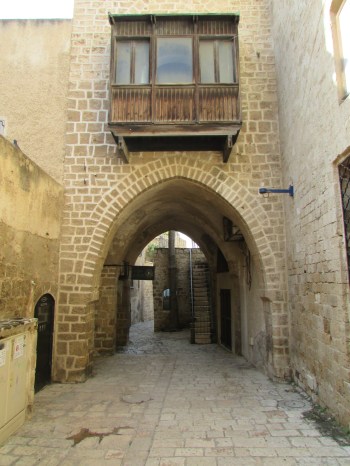
Walking through the narrow stone alleyways of historical Jaffa, we came to the purported house of Simon the Tanner. There we were reminded that there are, in Israel, two types of Biblical sites; those that may be/might be/ are traditionally thought to be the original sites and those that definitely are. Simon’s house clearly falls into the first category. The present house simply doesn’t date back to the first century AD, but it is in the approximate location of the original home.

IMG_0146

Returning to Tel Aviv proper, we spent about an hour exploring the colourful Friday market which reminded Richard and I of similar marketplaces in Korea and Cambodia.

IMG_0160

After checking into the lovely Dan Tel Aviv Hotel where every room has a view of the Mediterranean Sea, Richard and I went for a stroll along the promenade overlooking the rocky shore to a sandy beach where, in spite of the coolness of the day, I shed my shoes and socks, rolled up my pant legs and fulfilled my dream of wading in the Mediterranean Sea!

IMG_0181

IMG_0177