Losing my mother and finding her again

One night last week, my 92 year old mother went to sleep and didn’t wake up.

When the phone call came the following morning, my initial reaction was shock. It wasn’t completely unexpected but when I’d talked to Dad a couple of days earlier, there were no warning signs; nothing to indicate that the end was so near.

I went through the motions that day, showing up for my treatment and shedding a few tears behind my radiation mask, but as I thought about it, I couldn’t help believing that it was for the best. Mom died in her own bed in the building next to Dad’s in the care complex where they’ve lived for the past few months. She didn’t linger in a hospital bed and we didn’t have to sit helplessly by and watch her suffer.

The timing bothered me because, in the middle of radiation treatments, I couldn’t simply drop everything and fly out to Vancouver. The family has been wonderful, however, agreeing to postpone gathering for a memorial service until my treatments are complete. Dad, ever the stoic, put my needs before his own, feeling it was important to ensure that everyone who wanted to attend would be able to.

And so we wait. I don’t know about the rest of the family, but in the past few days, I’ve begun to experience a sense of closure. In a way, my Mom has already been gone for a very long time. She started to sink into the depths of dementia a long time ago. In fact, I don’t remember the last time I had a real conversation with her, one where she was fully cognizant and engaged, one where she truly knew who I was. In recent years, she’s been trapped in a body that was blind, incontinent and confined to a wheelchair. More recently, she’d started to lose her ability to swallow and could only consume pureed food and thickened liquids. In spite of it all, she managed to retain her sweet spirit, but that’s no way to have to live.

Dad burned himself out trying to care for her before finally recognizing that he couldn’t do it any longer and worrying about the two of them was hugely stressful for the rest of us. Now it’s over. She is at peace and we have only Dad to worry about. As I work on writing her eulogy, I can begin to put aside the agony of watching her mind fade into the mist of confusion and her body fail. I can dig deeper and revive some of my earlier memories, the warm and funny memories of a mother and grandmother who loved her family above all else. It’s actually a pleasant way to mourn.

In preparation for the memorial service later this month, I’ve been digging through boxes of old family photographs that are stored at my place and flipping through my photo albums putting together a pictorial display of Mom’s life. In the process, I’ve been finding more than pictures; I’ve been finding memories. Stories that Mom told us about her early life have been coming back to me and I’ve been reliving births, graduations and weddings as well as the day to day events recorded in the pictures. I even found a photo that I don’t ever remember seeing before. Here we are, Mom and I, when I was under two!
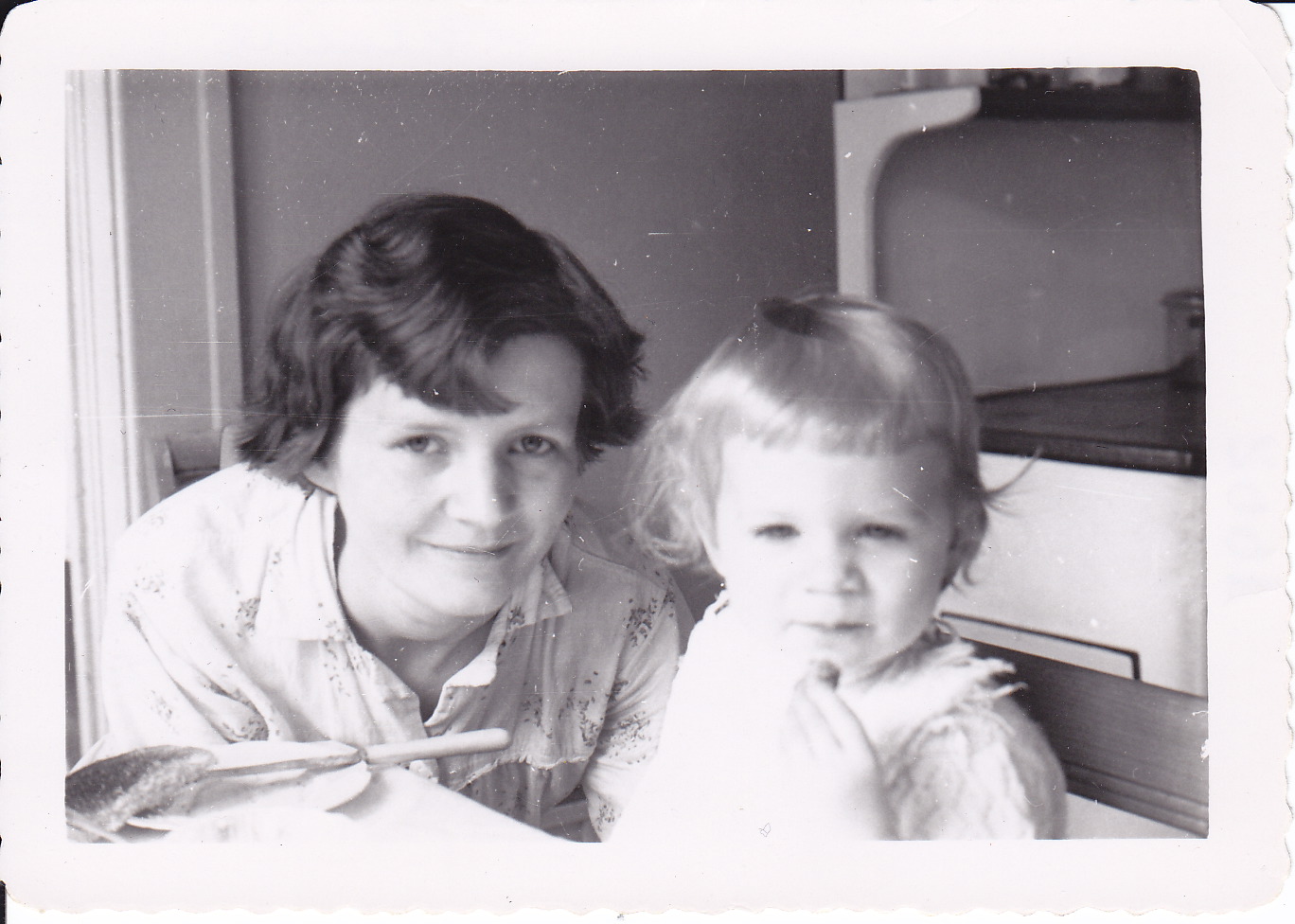
Mom & I

In losing my mother, I think I’m beginning to find her again!
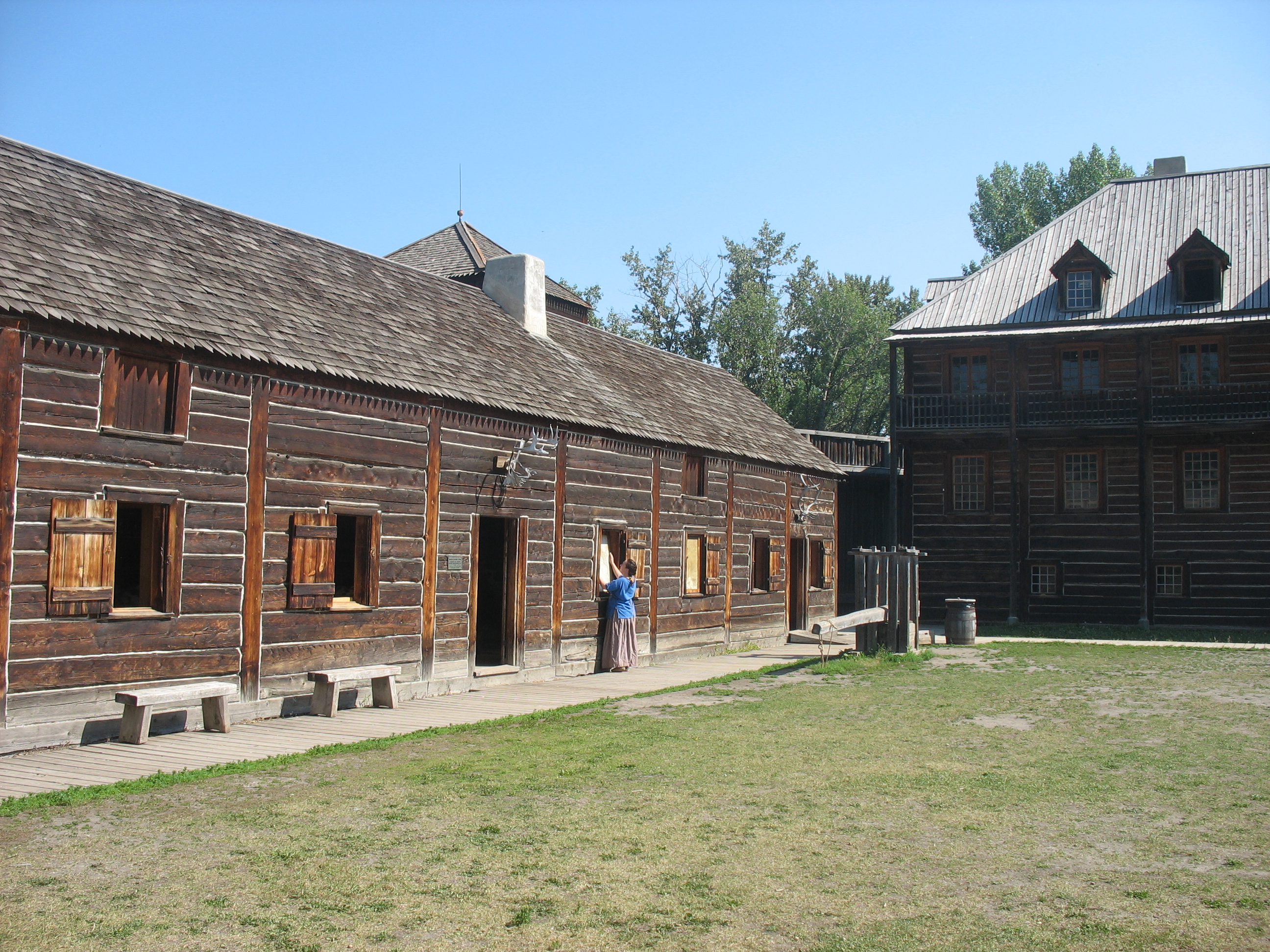
Fort Edmonton, a walk through time

Richard and I have been to Fort Edmonton numerous times in the past, but always with a class of students, usually 5th graders, in tow. Yesterday, we thoroughly enjoyed taking a more leisurely stroll through time without having to constantly count heads and make sure we hadn’t left anyone behind!

When we were teaching, a visit to Fort Edmonton fit perfectly with the grade 5 Social Studies curriculum which was largely a study of Canadian history. We liked to prepare our students for the field trip by reading Alberta author, Brenda Bellingham’s novel, Storm Child, to them. The story of Isobel, daughter of a Scottish fur trading father and a Peigan First Nations mother living in Fort Edmonton in the 1830s, the book never failed to capture their imaginations and bring the history alive for them.

The best way to see Fort Edmonton, Canada’s largest living-history museum, is to begin your visit by climbing aboard the steam train and riding it back to 1846 and The Fort, an exact replica of the original fur trading fort which once stood on a bluff on the opposite side of the North Saskatchewan River close to where the Alberta Legislature Buildings stand today. The Hudson Bay Company fort, where natives brought their furs to trade for a wide variety of goods from Europe and other far away places, is presided over by enormous Rowand House. Built to house Chief Factor John Rowand, his wife and their seven children, it was often referred to as Rowand’s Folly due to it’s sheer size; a mansion in the middle of nowhere!

IMG_3875

IMG_3879

Rowand's Folly

Rowand’s Folly

IMG_3894_2

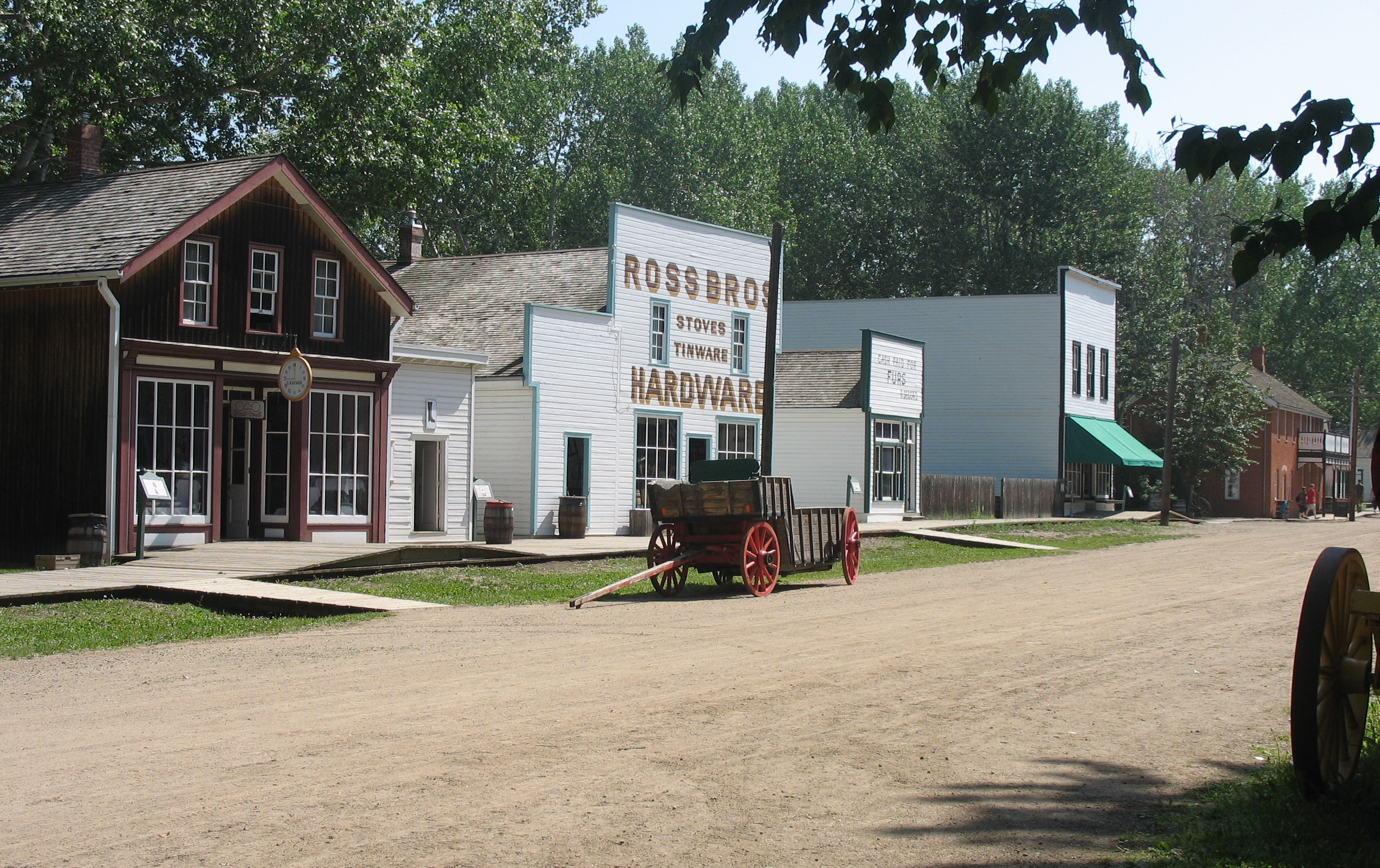
After touring the fort and the Cree encampment outside it’s walls, we left the fur trading era behind and wandered down 1885 street visiting homes, school, church and businesses of those hardy souls who made Edmonton home during it’s early settlement days.


IMG_3899

1885 Street

Rounding the corner onto 1905 Street, we stopped for lunch and dined on bison burgers in bannock, the traditional biscuit-like bread that sustained hungry voyageurs, settlers, and First Nations people in the early days of our country. Then it was time to take a jump forward in time and head for the Cross Cancer Institute for my radiation treatment. Our plan was to catch the streetcar in front of our eating establishment and ride it back to the park entrance but unbeknownst to us, the streetcar driver had also stopped for lunch! A brisk walk got us back to the vehicle just in time to make it to my appointment without a moment to spare!

1905 Street Where was that streetcar when we needed it?

1905 Street
Where was that streetcar when we needed it?

Within an hour, we were back at Fort Edmonton. This time, we caught the streetcar back to our stopping point and resumed our walk through time where costumed interpreters help bring history alive for visitors. We enjoyed sipping iced tea with Alexander Rutherford, Alberta’s first premier, on the front porch of his large and comfortable home that even boasted hot and cold running water! Not everyone lived in such comfort, however. In the early years of the twentieth century, Edmonton was growing at such a rapid pace that some families lived in tents for up to two years waiting for houses to be built. Not too bad in the summer perhaps, but much more challenging when the winter temperatures dipped to -40º!

No, I didn't apply for the job!

No, I didn’t apply for the job!

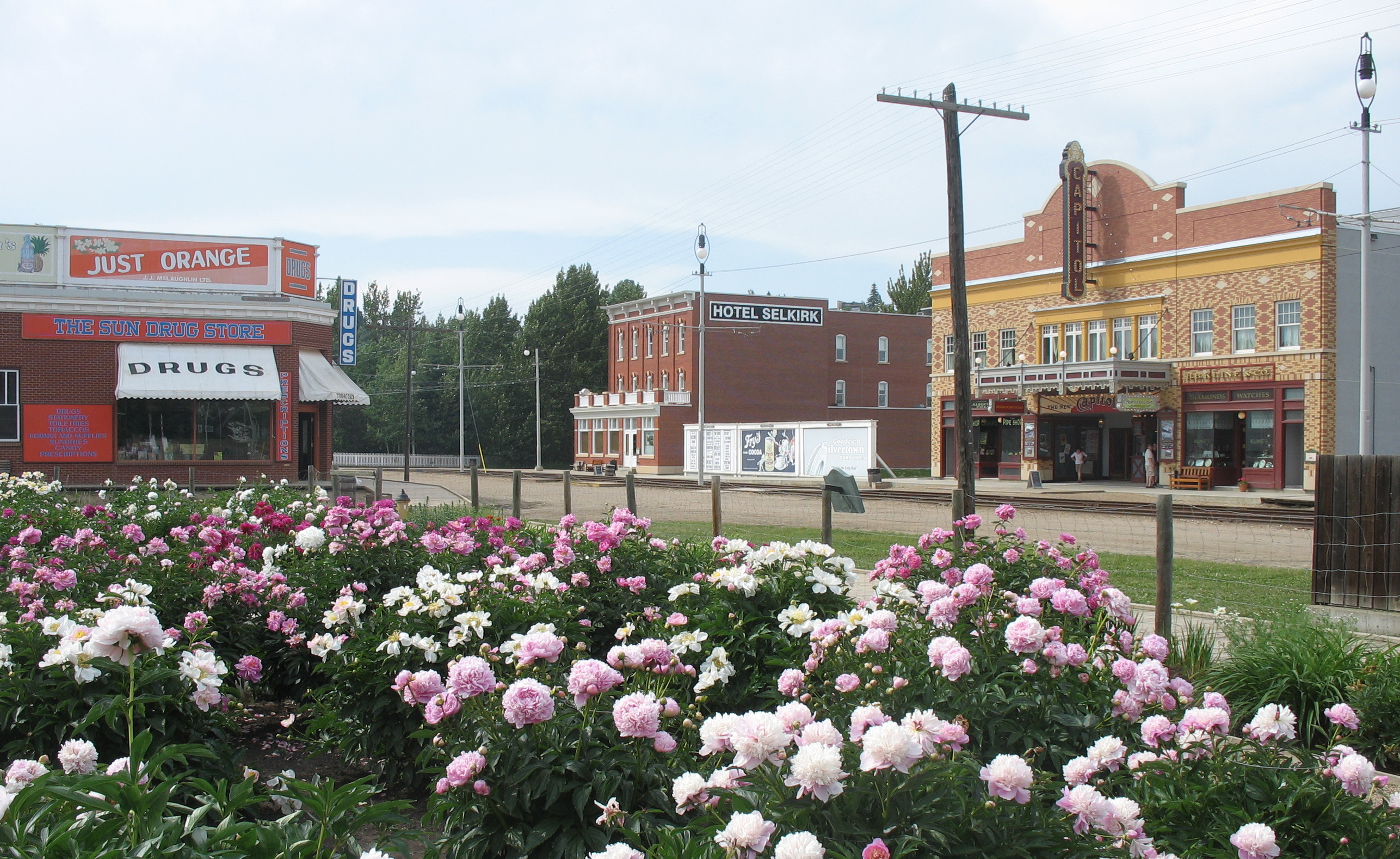
By the time we reached 1920 Street, we were ready to stop at Bill’s Confectionery for ice-cream cones. After all, it was the hottest day that Edmonton has seen so far this summer! Crossing the street to the Capitol Theatre, we took in an excellent 15 minute interactive movie about the early history of the area and the city. A walk through the beautiful peony garden, which is in full bloom at this time of year, and a visit to the Motordome, where we were able to indulge our love of antique cars, brought our day to a close.

1920 Street with the peony garden in the foreground

1920 Street with the peony garden in the foreground

The only part of the park that we didn’t take in was the 1920s Midway, a fairly recent addition with games and rides that would likely be a hit if you visited Fort Edmonton with some of the younger set.

I’ve been told that fatigue is one of the most common and expected side effects of radiation. After spending a total of six hours walking through time in the hot sun, I was tired but I saw a lot of others dragging their feet back to the parking lot looking no more done in than I was and after a good night’s sleep, I feel fine!