The job that never ends!

We loved our jobs in China! By far the most fun was the time we spent with the students who were preparing to come to North America to study but this is definitely the first time we’ve brought a student home with us!

Three of my former students are now in Ontario enrolled in ESL programs at their colleges of choice and preparing to enter regular studies there in January. Since they arrived in Canada, I’ve spent lots of time communicating with them via email, Facebook and Skype, consoling and encouraging the one who is having a very difficult time adjusting, cheering on the other two, answering questions and helping them find information on everything from yoga classes to how to make healthy bagged lunches!

Sheila is my fourth student to arrive in Canada and she’s presently sound asleep in our guest bedroom! We picked her up at the Edmonton airport last night after her long flight from China and she’ll be with us for just over five weeks. On January 2, she’ll fly to Windsor, Ontario to begin her studies at St. Clair College.

We encouraged all of our students to spend their first month or two in Canada in a home stay setting to help them adjust to Canadian life and to allow them to practice their English in a home where they would be immersed in the language. Sadly, both girls who chose that option found themselves in homes that didn’t meet our expectations; homes where they were left to fend for themselves and not incorporated into a family atmosphere. They probably would have done just as well or better living in a dorm. That’s not the sort of experience we want to give Sheila!

I’ve waited to start decorating the house and doing my Christmas baking until Sheila’s arrival so that she can join in all the fun. After all, this will be her very first Christmas! The whole family is coming home this year so she’ll experience all the noise and fun of a family celebration.

In the meantime, there are lots of other things we want to show her; simple things like a typical Canadian grocery store and things we take for granted such as how to use the myriad of small appliances on my kitchen counter. There are places we want to take her like West Edmonton Mall and sights we want her to see like the spectacular Rocky Mountains. We’ve also arranged for her to be able to visit our local high school to see and experience how different it is from schools in China.

Before we embark on a whirlwind of activity, however, we’d better let her sleep awhile longer and give her a chance to start getting over her jet lag!

with Sheila in China

with Sheila in China

Beauty after the storm

I’m in a somewhat better frame of mind than I was when I wrote my last post. There are a couple of reasons for that. First, I read this in my devotions earlier in the week.

“When faced with challenging trials we have two options: to cower and travel down the unproductive road of fear or to walk forward, believing that our risen King is fully in control of our lives.”          Kirsten Rose

It brought me up short and reminded me that while I can’t necessarily choose my circumstances, I can choose how I react to them. We all have a limited amount of time on this earth and I can choose to waste whatever time I have trembling in fear or I can be thankful that I’m feeling well and get on with living. It may not always be easy but it’s obviously the better choice.

Secondly, I had a chat with Karey, the nurse at the Cross who is the “go to” person for neuroendocrine cancer patients when we have questions or concerns. She explained that Sandostatin, the drug that I receive monthly injections of, is a “cold” or non-radioactive form of Octreotide while Lutetium, the new treatment that we’re awaiting government approval for, is radioactive Octreotide. I was under the impression that Sandostatin was only meant to control my symptoms but she assured me that it also has an effect on the tumours themselves and that though my facial tumour isn’t receptive to the mIBG that I received recently, the Sandostatin should be helping keep it under control. I may have been told that before, but there’s been so much to learn, so much information to absorb, that it obviously didn’t sink in. This time, it was reassuring.

Today was already the tenth day since my mIBG treatment. Only four more days of avoiding close contact with other people to protect them from my radioactivity! The time has passed quickly and it hasn’t been as difficult as I imagined it might be though not being able to even hug my hubby has been tough. The past three days have been particularly quiet as I sent him off to Calgary to spend a few days at our daughter’s. I had several projects around the house and a couple of good library books to keep me busy.

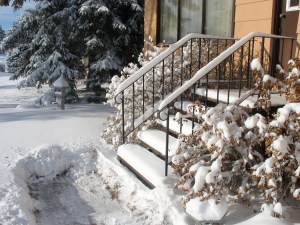
Yesterday, a winter storm covered most of our province with a heavy blanket of snow and very few people ventured out but this morning we woke to blue sky and glorious sunshine. Since I couldn’t go to church, I bundled up and took my camera out to capture the beauty that the storm left behind.

IMG_3281

A friend loaded up his snow blower and brought it across town to clear my driveway before going to church himself! When I looked out and saw him, I felt the arms of God wrapped around me!

IMG_3283
IMG_3284
IMG_3286
IMG_3294

Riding the roller coaster

I saw my tumours yesterday. I drove myself to Edmonton for a post therapy scan and a follow up consultation with one of the doctors. He showed me the results of the scan and there they were, lit up on the screen like mini suns; one in my colon, two on my liver and a little one in a lymph node in the middle of my abdomen. That was the good news. It meant that the mIBG that I was given on Friday had, in fact, adhered to the tumours and was beginning to do battle with them.

Unfortunately, there was also bad news. A CT scan of my head and neck, done prior to my treatment on Friday, shows that I also have a growth in the left side of my face. They were unsure about that one after the initial diagnostic tests. Unfortunately, it did not light up on yesterday’s scan which means that, unlike my other growths, it’s not receptive to mIBG and it isn’t presently being treated.

It does appear to be receptive to Lutetium, however, but that’s a newer radioisotope treatment that isn’t presently being funded by the government. The Cross is in the process of setting up a clinical trial that will give them funding for Lutetium but it takes time to wade through the red tape involved in that. It should be available for use early in the new year but it would have been so much better if my facial tumour had been receptive to both medications. That would have given us more in the arsenal to fight with. Apparently, due to it’s location, it isn’t a good candidate for surgical removal either.

I’ve heard it said that having cancer is like riding a roller coaster and now I understand. I had crawled to the top of a hill and was feeling great; then came the sudden drop!

Perhaps today is a good day to remind myself of the things that cancer cannot do.

What Cancer Cannot Do

Cancer is so limited…

It cannot cripple
LOVE

It cannot shatter
HOPE

It cannot corrode
FAITH

It cannot destroy
PEACE

It cannot kill
FRIENDSHIP

It cannot suppress
MEMORIES

It cannot silence
COURAGE

It cannot invade the
SOUL

It cannot steal
ETERNAL LIFE

It cannot conquer
THE SPIRIT

Author Unknown

Remembrance

Imagine looking out the window of the family farmhouse at Seba Beach, Alberta and seeing the military vehicle pull into the yard. Pearl’s heart must have pounded as the men in uniform came up the walk with a telegram in hand. It was 1944 and three of her sons were in the midst of battle in Europe. Which one was it? Had she lost one of them?

telegram

Glen was my father-in-law. He enrolled in the army in October of 1943 and was deployed in early January of the following year. He was just 18 years old.

We don’t know a lot about his wartime experiences. Like many who saw the gruesome face of war firsthand, he didn’t talk much about what he went through over there. We’ve only been able to piece together bits and pieces from the few things he did say and more recently, from his military record which our son requested from the Canadian Archives in Ottawa. We do know that he once spent several days in a foxhole behind enemy lines waiting to be rescued and we know that he probably suffered from what is now known as post traumatic stress disorder. According to Mother, for the rest of his life he would occasionally wake up cowering on the floor beside the bed. He was back in that foxhole terrified that, at any moment, an enemy soldier would find him and his life would be over.

Father had been in Europe for only nine months when he was seriously wounded and unable to return to action. A second telegram dated October 19, 1944 brought the incorrect news that the nature of his injury was “bomb fragment wounds to face and head.” A letter dated November 27, 1944 contained more accurate information.

“I am directed to inform you that official information has now been received from Canadian Military Headquarters Overseas advising that when your son, M-8247 Pte. Glen Marion DeBock, was wounded in action on the 6th October 1944, he suffered a bullet wound to the right orbit into the sphenoid sinus resulting in the loss of the right eye.”

He was lucky to be alive. Imagine taking a bullet to the head and surviving! He spent the remainder of 1944 in hospitals in the UK followed by another three months in Shaughnessy Hospital in Vancouver before finally being discharged with a prosthetic eye.  Life would never be the same for this young farm boy, however. He often suffered excruciating headaches and like many of his compatriots, he took to drowning his vivid memories in alcohol. It wasn’t until the final years of his life that he gave up drinking and found peace in a personal relationship with Jesus Christ.

On November 11, as we pause to remember, we give thanks for so many young boys who went off to war with high ideals and ended up paying for our freedoms with their lives; many making the ultimate sacrifice and others, like Father, surviving with shattered dreams and broken bodies. In reality, these are the men who gave us freedom of religion, freedom of speech, and all the other freedoms that we take for granted in this great land.

Let us never glorify war but let us remember those who were willing to go and fight on our behalf and those who continue to do so.

shortly after discharge      Picture 1

Behind the lead wall

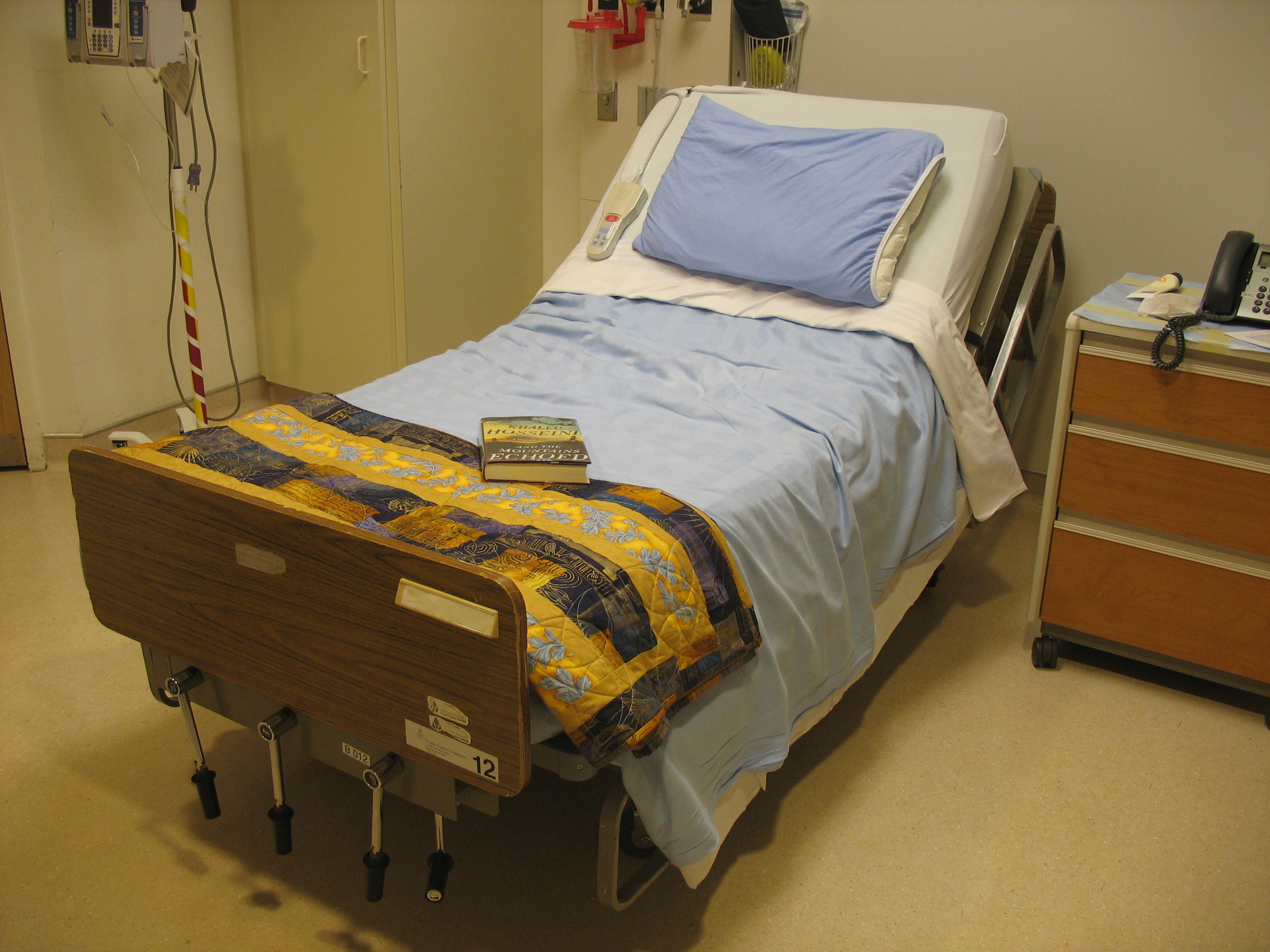
For those of you who might be wondering about my time behind the lead wall, my room looked much like any other hospital room.IMG_3270

My Victoria’s Quilt added colour to the otherwise bland decor and a great library book, And the Mountains Echoed by Khaled Hosseini, author of The Kite Runner and A Thousand Splendid Suns, kept me occupied.

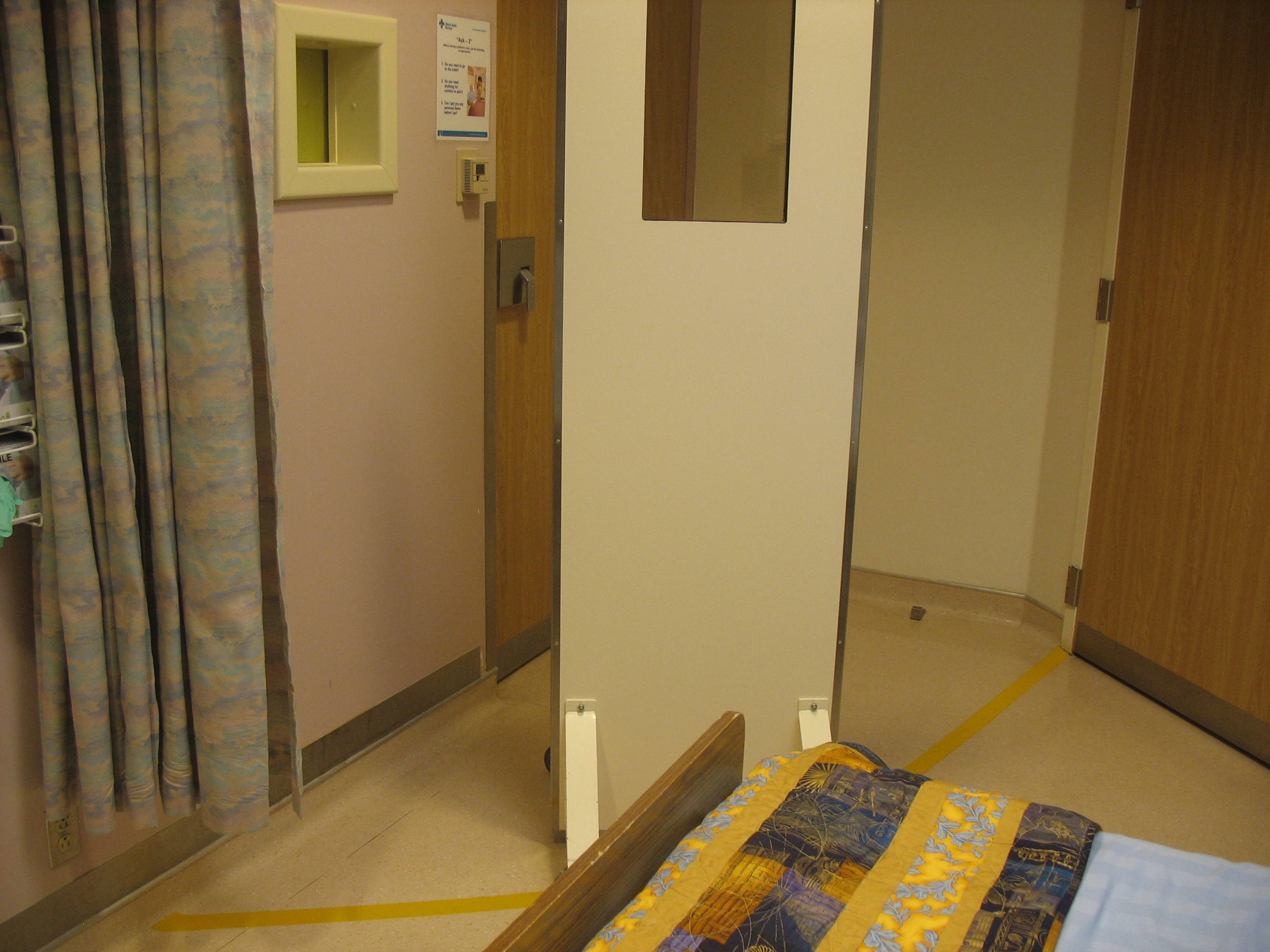
It wasn’t just like any other hospital room though. There’s the yellow line on the floor that I wasn’t allowed to cross, the shield that the nursing staff stood behind when they entered the room and the teeny tiny window out into the hallway.

IMG_3271

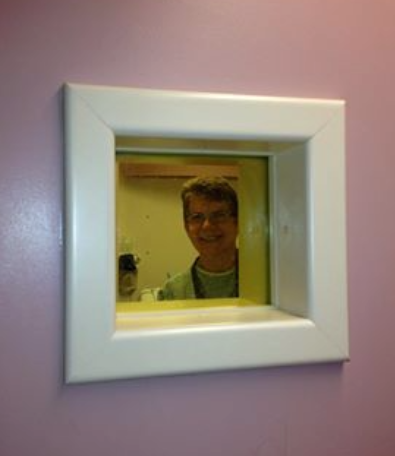
Fortunately, the wall on the other side of the room was a bank of windows looking out over the busy street or I might have gone completely nuts. It was through those windows that I spotted my crazy and wonderful girlfriends after dark on Friday evening as they waved and danced a cancan in the parking lot for my benefit! They were in the city for our annual Christmas shopping trip which I, unfortunately, had to miss out on this year. When they took time out of their evening to come see me, here’s what they saw.

Picture 1

They also brought chocolate! That tells you both how well they know me and what good friends they really are! The care at the Cross was absolutely fabulous but the food was bad. Really bad! Chocolate helped a lot. In addition to what the girls brought, my husband and son dropped off a Dairy Queen chocolate sundae. I was indeed spoiled!

Water was the essential element in getting me out from behind the lead wall though. Immediately after my IV injection  of mIBG on Friday, my radiation level was 53 µSv/h at two metres distance. I really don’t know what that means but it had to be below 18 before I could be released. While approximately 20% of the radioactive iodine that I was injected with would hopefully adhere to my tumours and begin fighting them, the remainder needed to be flushed from my system. That’s where the water came in. While I was warned not to drink enough to make myself sick, the more I drank and the more I urinated, the sooner I’d go home. I went through several jugs of water and exactly 24 hours after my infusion began, I was down to 14 µSv/h!

I felt no immediate effects of the treatment but the doctor knew what he was talking about when he said that I’d be tired for a few days. Today I feel like I’m suffering from jet lag! Oh well, since I have to keep my distance from people anyway, my calendar is clear and I can nap as much as I need to.

Zzzzz

The battle begins

It’s been almost a month since I posted anything about cancer. After the flurry of appointments and tests in late September and the first week of October, it’s been nice to have a break in the action, but now it’s time to get down to the business of fighting this thing. I’ll be having my first radioisotope treatment tomorrow. It’s definitely been a long time coming. We were camping when I received the phone call telling me that I had cancer and now there’s snow on the ground! Fortunately, NETS are very slow growing tumours so there hasn’t been the same urgency to begin treatment that there is with many other kinds of cancer.

Early tomorrow afternoon, I will be injected with iodine-metaiodobenzylgaunidine, a radioactive substance better known as mIBG. It will be absorbed by my tumour cells and, if effective, will control some or all of the symptoms and inhibit the cancer’s growth, basically rendering it dormant. It may also make the tumours shrink.

Radioactive mIBG will remain in my body in diminishing amounts for up to 14 weeks. Most that is not taken up by the tumour cells will be eliminated within the first few days but, in order to protect other people, I will be isolated in a lead lined hospital room until my radioactive exposure rate drops below a certain level (likely 24 to 48 hours) and then I will be required to live a somewhat restricted life until 14 days have passed. While in hospital, I will have to stay behind a boundary line in the room. A tray table will be placed near the door so that meals, medications, water, linens, etc. can be placed on it for me to access without hospital staff having to come all the way into the room. I will not be allowed any visitors but there will be a small window into the room that people can see me through and a phone in the hallway that they can use to talk to me! Sounds a bit like jail, doesn’t it?

What will I do to keep from going stir crazy? I’ve packed library books, magazines, my Bible study book, a cross stitch project that I haven’t touched in ages, a deck of cards to play Solitaire with and a notebook in case I feel like writing. I’m not really a TV watcher but if there’s one in the room, I’ll probably see if I can find something worth watching.

Here are a few of the instructions that I’ve been given to follow after I go home:

  • drink plenty of fluids and urinate frequently to help flush any excess mIBG out of your system
  • use extra careful hygiene habits (followed by very detailed instructions for using the bathroom that I won’t go into here!)
  • shower once or twice daily and keep your facecloths and towels separate from others
  • wash your clothes, towels and bed linens separately from those belonging to anyone else
  • wear socks, slippers or shoes at all times
  • sleep in a separate bed (I’m moving into the guest room)
  • if possible, use a separate bathroom from others in the house
  • starting from 8:00 AM, you may have 8 hours of social contact no closer than 3 metres (10 feet) with your primary caregiver/spouse
  • each day, you may have 2 hours of social contact no closer than 1 metre (3 feet) with your primary caregiver/spouse

Though these rules sound pretty rigid, I’ve been told not to become a hermit. For example, I’m allowed to go grocery shopping because that won’t require prolonged contact with anyone in the store and Richard was delighted to learn that I can safely prepare his meals!

So, how am I feeling about all this? I’ve heard it said that a positive attitude is a mighty weapon in a battle like this one and I figure that if I have to go through this, I might as well have a bit of fun with it! In spite of the seriousness of the situation, there’s been lots of teasing and laughter about whether or not I’ll glow in the dark (I won’t!) and whether the radiation will give me super powers! Now, that would definitely be fun, but I haven’t decided what my super hero identity should be. Any suggestions anyone?

Letters from the past, final installment

As I continue to read through the letters from my father’s university classmates, I feel as though I’m getting to know some of “the boys” personally. They’re becoming real to me through the words they wrote more than 60 years ago!

I especially love John’s wacky sense of humour. Like many of “the boys”, he obviously enjoyed teasing my Dad about his height. Shortly after my oldest brother’s birth, he wrote “Congratulations Old Man! (Dad was all of 27 at the time.) Please share these best wishes with your wife. The few minutes of thought I have had time for since receiving your announcement have made me realize what a brave girl your wife is – why the chance that she might be the mother of an almost infinite length of child – I can almost see her wondering if when he leaves her for his first day of school if the roles will not be in the somewhat reversed position of CHILD looking lovingly down on her and patting her on the head. Ah! Well! since I was not able to get to your wedding and warn her of these things I suppose I must carry my guilt with me these long years.”

A few months later, Oz, who was by that time living on the island of Curacao in what was then known as the Netherlands West Indies, wrote “Our congratulations on your recent expansion from partnership to company. I know without asking that Don Jr. is the best six-month old baby that you have ever seen. When he gets to the walking stage, may I suggest a small weight on his head lest he have any notions of growing taller than his ‘old man.'”

As time went by, wives, children and family vacations began to crop up more and more often in the letters. In August 1951, Gordon wrote “The only ‘big’ news, at least from my point of view, is that I am going to be married at Christmas to a girl I met at Oxford. From your letter, I see that you and most of our classmates are miles ahead of me in this sort of activity but better late than never.”

In 1955, shortly after the birth of my younger sister, we moved into a waterfront house in Powell River. The beach became our playground and I could hear the sound of the surf from my bedroom window at night. My father must have shared this news with his classmates as John comments “The new house sounds most intriguing – view, beach, swimming in April – even if it is salt water. When we visit you I will join you in a dip as long as you can provide a good garden sprinkler to wash away the crystals of NaCl.” (They were chemical engineers, after all!) John and his family did make that promised visit but not until the summer of 1959. A letter written in April of that year fills my father in on their holiday plans. I vaguely remember a family with two children visiting us but I was only six and I didn’t recall who they were until I read this letter.

I’ve learned more about my father through these letters too. In September 1950, John congratulated him on achieving “the status of professional engineer – the first of Chem ’46 and the second of Science ’46, I believe – very good.” Dad didn’t talk much about his work while we were growing up so I was completely unaware of the fact that he published research papers but in August 1951, Gordon wrote “Congratulations on your publication. I can see that you are thriving in this Engineering business.” and a short note from Norm in 1958 says “Many thanks for your gift of a copy of your paper on groundwood from sawdust.” That shows how little I really know about my father’s work; I had to look up the meaning of the word, groundwood!

The final letter in the packet was written in January 1963, almost 17 years after my father and “the boys” graduated from UBC. Though letters became fewer and further between as years went by, I’m sure that some of them continued to correspond for many more years but those letters have been forever lost. How thankful I am that, as I sorted through everything in my parents’ apartment, this little pile of correspondence caught my eye and I decided to set it aside for a closer look when the job was done!

More letters from the past

Though I’m not sure if I ever met him, I remember the unusual name Oz from my childhood days. His Italian surname had a musical ring to it. His early letters to my Dad were fascinating. On July 20, 1947, he wrote “I’m just writing a short note to tell you that I’m on the move again, this time to jolly old England. The okay to hire me came over last week and before I knew it, they had reservations for me on the Empress of Canada, sailing this Saturday. In case Dorothy didn’t mention it in her letter, its Shell Oil that I’m to work for. I’ll train for a year in England and then go out to various refineries in the far corners of the world. I think that I’ll enjoy the work because the more I learn about oil, the better I like it. We certainly have not enjoyed our brief stay in the ‘fair’ city of Toronto. In fact, our opinion of it is quite unprintable. Vancouver has grown in our estimation by leaps and bounds. We have decided to retire in Sechelt as there is obviously nowhere on earth half as nice. Dorothy is returning there now, because Shell has a nasty rule that says wives cannot accompany newly-hired husbands for approximately 3 months. Therefore we must part till about October. However, we decided that the job was worth a little inconvenience, so Dorothy leaves for home on Thursday.”

A second letter written from London two months later told of an upcoming move to a refinery near Liverpool and gave a fascinating glimpse into life in post war England. “One of the poor features was that Dorothy couldn’t come with me when I came over, but the company will bring her to me as soon as I get settled at the refinery, i.e. about the end of November if all goes smoothly. Actually, it’s just as well because it will give us a chance to get fully prepared for what will probably be a very tough winter. I keep Dorothy posted on all shortages here so that when she comes, she can bring along whatever can’t be obtained here, and believe me it makes a good-sized list. The clothing ration is pitifully small, and what one can get is poor quality and high priced. No doubt you’ve been reading about our crisis. It’s been going on for some time now without any noticeable improvement and from what I can see, the people here are in for a hell of a tough time for years to come.” All was not woe, however. He went on to say “In the meantime, I’m enjoying myself and making full use of my opportunity to be in a huge place like London, although so far its the country around L that has impressed me most. You just can’t imagine the orderly beauty of it.”

Comments about my father’s love life continued to crop up in the letters from his classmates. In December 1947, Gordon wrote “You probably also know that the Dowdings now have a son. This sort of thing will probably become more frequent now.” and a little later in the letter, “Furthermore, how deep are your roots in Powell River now? Nobody is supposed to be able to stay single there that long you know.”

The letters provide other glimpses into my father’s life before I knew him. In February 1948, Rhys wrote “You really seem to be enjoying things. I can just see Skip Stewart at the helm putting up and down the coast – god it sounds interesting.” Some of my earliest memories are of being out on my father’s boat. In the early days of their marriage, my parents spent lots of time touring the coast on it but they sold it when I was about six. By that time, the family had grown to include four children and there wasn’t time or money to keep it up.

I laughed out loud when I read the opening of John’s letter to my father written on October 25, 1948, less than a month before my parents’ wedding. You may remember that it was John who threatened to sue my father if he left his bachelor state behind. “Goodbye forever! Donald Stewart, Bachelor of Applied Science. Welcome! Donald Stewart, married and in Enforced Silence. Seriously – Congratulations old man. I am very happy for you.” He went on to express his regret that he would not be able to get time off work to attend the wedding and act as my father’s best man. Another classmate, who was also working in Powell River at the time, took his place.

Over a year went by before the next letter arrived. “The boys” were obviously settling into their careers. Some were marrying and starting families. Regular contact with their university buddies began to dwindle but I do know that Dad kept in touch with a few of them for many, many years and that he attended a reunion of his few remaining classmates last year.

This seems like a good place to take a break as there are other things I must attend to around here but there are still more than a dozen letters to be read so you can expect a final installment sometime soon!

Letters from the past

IMG_3262

Among the many interesting and strange things that we found as we cleaned out my parents’ apartment in Vancouver was a little pile of handwritten letters addressed to my father. The earliest ones dated back to 1946, the year he graduated from the University of British Columbia as a chemical engineer and moved to Powell River to begin his career working in the research lab at the local pulp and paper mill.

stampI first decided to keep the letters because I knew that the postage stamps would interest my brother, an avid stamp collector. Many of them are 4 cent stamps bearing the image of King George VI. Later letters, written in the 1950s, bear 5 cent stamps with the picture of a very young Queen Elizabeth II on them. A few, written on thin air mail paper, have foreign stamps.stamp 2

After looking at the stamps and the postmarked dates, I began to wonder about the letters themselves. Who wrote them? What did they say and what glimpses might they give of life in a different time? Some people might not approve of me reading my father’s mail but I couldn’t help myself!

This evening, I opened the first letter. “Dear Lofty,” it began. I hadn’t heard my father’s university nickname for years! As a six foot six inch bean pole, it suited him well. The letters started shortly after his college graduation and came from his classmates who had scattered across the country in search of employment. They were obviously a close knit group who referred to one another as “the boys”. They contain lots of job talk that only a fellow engineer would understand but in between there are fascinating glimpses into life in the late 1940s. Come along and snoop with me!

On June 2, 1946, George, who went to work at B.C. Plywoods in Vancouver, wrote “My salary will be $175 to start. ” On August 20, he wrote that the men in the plant were receiving raises as the result of a strike and his monthly salary was going up to $190. Others reported similar incomes. Of course, the cost of living was similarly low compared to today’s prices. On July 3, Rhys wrote from Hamilton, Ontario saying that he hoped to move to a cheaper boarding house soon. “At present I am paying $1.50 per day for room alone,” he complained.

In early August of that same year, Steve described the butyl (synthetic rubber) plant in Sarnia, Ontario where he landed a job doing research. “The plant is the real McCoy. It’s a 50 million dollar, 185 acre affair. It turns out about 1 000 000 pounds a month of various types of G.R.S. and is one of the 3 butyl plants in existence. It’s design and construction is the best, and you can get any equipment you want for research. The boys taking their Masters would be green with envy if they could see some of it. Control of temperature to 1/50 of a degree is commonplace, and absolutely essential in this field.”

John, who went to Trail, BC wrote, “I am in the Zinc Plant research lab on steady day shift with Saturday afternoon and Sundays off – the hours are 8 to 4:30 with lunch from 12 to 1.” In a later letter, he complained about “some guy from the Central Research who got his job by marrying the right person’s daughter.”

I chuckled when Rhys asked in his second letter, “How is your love life progressing? I hear Powell River is quite the place for an old wolf like you.” My father was 23 years old at the time and if I’m not mistaken, the letter was written the week he met my mother as it was dated October 30 and they met at a Halloween party!

Less than three months later another letter from John said, “Your statement about finding PR not so entirely devoid of young women as at first you thought has me worried – steady old man – who will be left in our bachelor league if you fail me now? You can’t do this to me, Stewart! I’ll sue you for breach of promise – that’s what I’ll do.” I wish John’s letters included his last name. I wonder if this is the same John who later built a cabin on the shore just north of Powell River; a cabin where we stayed several times and made many wonderful memories.

Not all of “the boys” wrote as intimately as John did. Though Norm wrote three pages all about his job at the Development Lab of the Paint and Varnish Division of CIL in Toronto, he slipped in just one sentence of a more personal nature. “About myself, I suppose you know that I was married on June 1st.” No details; not even her name!

Jim wrote a long and interesting letter shortly after the New Year. He was at the University of Toronto “instructing in Chemistry, first year general and second year organic.” He was working 19 hours a week for $180 a month and though he didn’t plan to stay there permanently, he clearly enjoyed what he was doing. “The organic lab is Home Ec – 60 girls!” he reported. I was surprised to learn that there were that many girls studying science in the 1940s.

In the same letter, writing about a visit to Princeton University, Jim says, “I also had the great pleasure of seeing (at very close quarters) our good friend Albert Einstein of Relativity fame. He looks just like his pictures. I recognized him first about two blocks away by the terrific halo of white hair.”

Jim clearly got around as he also wrote about a visit to New York, a city that obviously didn’t impress him. “What a complete nuthouse,” he wrote. “There’s no real life there, just pure existence if the taxis don’t hit you, and just pure existentialism if they do hit you. The civil engineers certainly had a heyday in putting New York together. What a city! Nothing but city! It cost me $1.20 to go to the top of the Empire State Building. Reminded me of being on Crown Mountain back home. The subways are an engineer’s nightmare, but still very efficient; you can disappear from sunlight all day for just 5 cents!”

There are 35 letters in all, carefully numbered in my father’s hand. Most of them were written in the late 1940s and early 1950s but the last one was postmarked January 4, 1963. It’s clearly going to take me more than one evening to sift through them all and more than one post to share their secrets. I hope you’ll come back for more!