Halloween

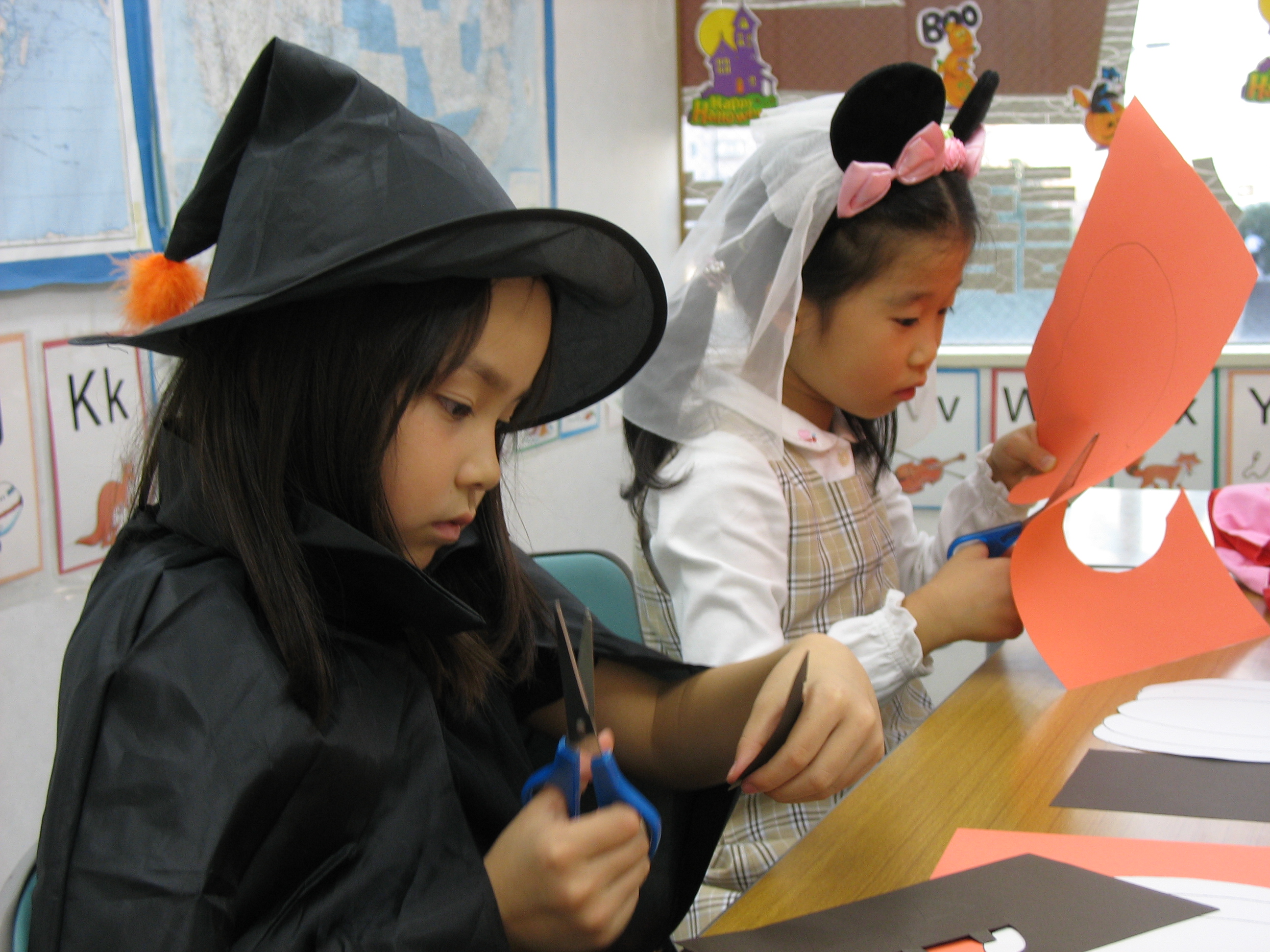
Halloween has come to Japan in recent years but more as a commercial and decorative event than anything else. I suspect that Tokyo Disneyland, which isn’t actually located in Tokyo but right here in Chiba, has had a lot to do with introducing the celebration to this part of the country.  Disneyland has a Halloween theme throughout October each year. Some larger stores and malls also advertise Halloween events which promise candy to children in costumes and English language schools have promoted Halloween by decorating and holding children’s costume parties. Masquerade is definitely something that appeals to Japanese people but trick-or-treating hasn’t caught on yet and though pictures of jack-o-lanterns and plastic replicas abound, there aren’t any real ones here.

Some Japanese, having been taught that the origins of Halloween date back to the ancient Celtic festival of Samhain during which ghosts of the dead were believed to return to earth, have equated it with their own Obon celebrations which take place during the summer. Obon is a Japanese Buddhist holiday. Families gather to honour the spirits of their dead ancestors by visiting and cleaning the family graves and the spirits of the ancestors are thought to visit the household altars during this time. Personally, I think we do the Japanese a disservice if we teach them that this is what Halloween is all about.

As a child growing up in Powell River on the coast of British Columbia, I loved Halloween. In our home, costumes were never decided on until after school on Halloween day. At that time, with my mother’s help, we dug through old clothes and came out dressed like hobos, gypsies or pirates. As soon as supper was over, we gathered with the other children from the houses closest to our own and trick-or-treated up and down our street collecting a wonderful bag of goodies. In those days, it was safe to accept homemade treats and my mother was known for her delicious popcorn balls. The only way my siblings and I got to taste them was if we trick-or-treated at our own door. My mother would, of course, pretend not to know who we were! Such silly fun and such good memories. The only year that mom didn’t make popcorn balls was the year that I was six. She was in hospital following the birth of my baby brother. I remember helping my father fill bags of candy for the trick-or-treaters and I also remember the hideous looking rubber mask that he bought for me! Incidentally, that baby brother turned fifty a few days ago!

When we kids returned from trick-or-treating, our families gathered across the street from our house in the parking lot behind Bowes Hardware for a giant bonfire. Mr. Bowes always saved some big packing boxes to feed the fire. Hot chocolate was served and as the fire died down, we had our own fireworks show! What a wonderful and exciting evening!

Unfortunately, as a young teacher living in Sedgewick, I learned to hate Halloween. What had once been a time for harmless pranks in rural Alberta had, in our community at least, become a night of vandalism which was directed mainly at schools, churches, businesses and the homes of teachers and RCMP officers. Large groups of teens prowled the streets creating havoc. Year after year, our home was pelted with eggs and other nasty substances. The paint job was totally destroyed but there was no point in repainting when we knew that the new surface would only last until the next Halloween. Fortunately, the generation that celebrated Halloween in this manner has grown past that sort of thing and in recent years, Halloween has once again become a night for the younger children to enjoy. A couple of years ago, we finally had the house repainted.

After dreading Halloween for so many years, it’s been difficult to recapture the delight that it once held for me. As a teacher, I participated in many classroom Halloween parties but I found it difficult to enjoy them knowing what the later hours of the day would hold. Now, I’m teaching at a Japanese English school and my job description includes an entire week of Halloween parties! Because the classes meet only once a week, the event goes on all week so that every children’s class has a party. Teachers are required to wear costumes. Awhile ago, while shopping in a nearby mall, I came across a costume that I couldn’t resist so for the first time in my life, I have a store bought costume! Each day this week, I appear as a big fuzzy jack-o-lantern! Richard was being a bit of a grinch about having to dress up but I dug through a bin of old costumes that have been left behind by previous teachers and found him a clown costume complete with big red squeaky nose! The kids, of course, think our costumes are great and we think they are adorable. Minnie Mouse and Disney heroines such as Cinderella, Sleeping Beauty and Belle from Beauty and the Beast are popular amongst the little girls and we’ve seen witches and pirates of every description. We teach them a few Halloween words, play some games, have some fun without cracking the textbooks and send them home with a bag of candy. Halloween really is for children!

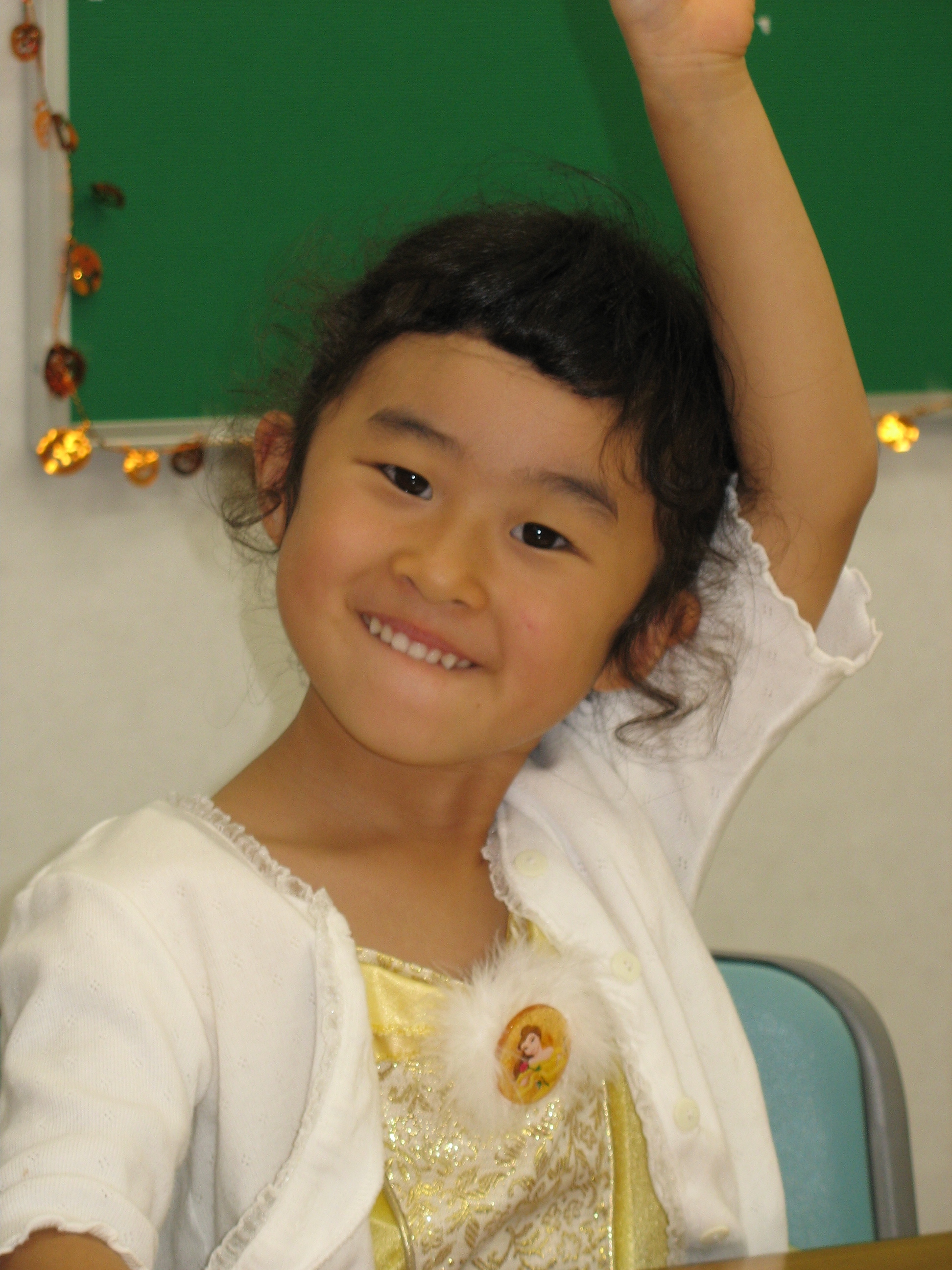
Here’s my favourite costume of the week.  Isn’t he just adorable?

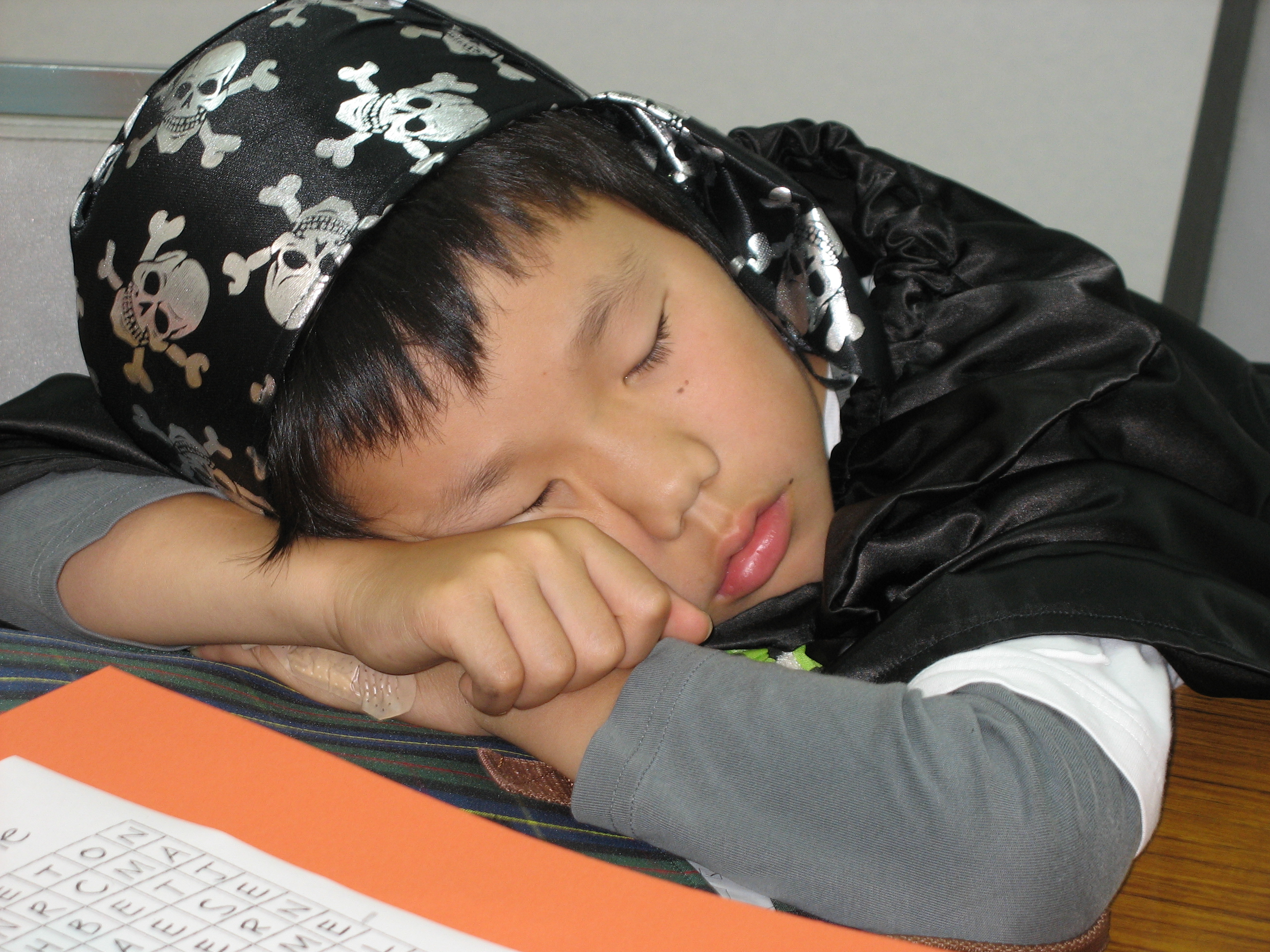
And here’s one little guy who wasn’t feeling well but didn’t want to miss the party.  He slept through most of it!
Japan goes bananas

The latest craze to hit Japan is known as the Morning Banana Diet. This simple weight loss program involves eating only bananas for breakfast and drinking only room temperature water. With the exception of desserts, the dieter can then eat whatever they choose for lunch and dinner and may also have a snack at three o’clock in the afternoon. Dinner must be eaten before 8:00 pm and the dieter is advised to go to bed before midnight. Exercise is not emphasized as this diet is meant to be stress-free.

Obesity is rare in Japan. It seems to me, however, that Japanese people in general have a rather distorted body image. The majority of them are quite thin. In Canada, I am considered thin, maybe even skinny, but here I’m a giant of a woman! Even the young girls who are as tall as I am are much thinner. They simply have a much more delicate frame. It’s amazing how many of them consider themselves fat, however.

The society as a whole seems to be overly weight conscious. We’ve been told by several businessmen that after a certain age they are required to have an annual medical check-up which is usually performed by their company doctor. If they are found to have a waist measurement greater than 85 cm, they are diagnosed with what is known as a ‘metabolic syndrome’ and are required to go on a weight loss program.

Is it any wonder then that the banana diet has caught on to such an extent that there is actually a banana shortage in Japan? Grocery stores simply can’t keep them on their shelves. In recent weeks, Dole Japan, one of the country’s leading banana importers has increased it’s imports by more than 25% and still cannot keep up with the demand. The phenomenon leaves companies like Dole in a quandary. Fads like the banana diet tend to be short lived. Even if they could find a supplier that is able to handle the present demand, would they want to increase their orders to such an extent that they end up with a huge surplus when the demand dries up?

We have eaten a lot of bananas since coming to Japan. In general, fruit is a lot more expensive here than it is at home in Canada but bananas are one of the few exceptions. Until the diet came on the scene, we were able to buy four or five small bananas for 97 yen, less than a dollar. Interestingly, though, I had stopped eating many bananas just about the time that the diet craze began to catch on. My finicky stomach has been giving me grief again lately so I decided to cut out or down on a few of the foods that I had been eating in large quantities in case any of them were causing me problems. Fortunately, there are many other fruits available at this time of year. Oranges are ripening on the trees all around us and the deliciously sweet mandarins are back in the stores. Since they’re locally grown, they are sold at reasonable prices and with them to satisfy our need for fruit, I don’t think we’ll miss the bananas when we can’t get them.

Engrish.com

If you enjoyed my last blog entry, be sure to check out http://www.engrish.com.  It’s a hilarious compilation of bizarre English found in Japan as well as other Asian countries and it appears to be updated almost daily.  Take the time to check out some of the Engrish categories listed on the left side of the main page.  We all need a good laugh once in awhile and anyone who can wander through this site without enjoying a hearty laugh is taking life much too seriously.

Thank you, Janis, for bringing this site to my attention!

Is it really English?

At first glance, it would often seem that we’re surrounded by English here in Japan.  Sometimes referred to as Japlish or Engrish, a term which arose from the ambiguity between the “l” and “r” sounds in spoken Japanese, it appears on everything from poorly translated signs to bizarre t-shirt slogans.  Looking for examples can be hugely entertaining and I’ve been known to whip out pen and paper on the train, at school and even in church to write down some of the best ones!

Examples can be found even at home.  The bottom of one of my frying pans has this interesting quote, “The wonderful time where there are a wonderful cooking and a pleasant conversation and peaceful music.”   The bags from our local bakery are really quite poetic.  They say, “Women baking bread on Sunday  With flour dusted cheeks  They push up their sleeves  And at the breadboard knead  With strong fingers, hands and bodies.  Warm and yeasty, the kitchen is Filled with promise.”

T-shirts are the most entertaining, though, and they are absolutely everywhere.  Sometimes, even though the message seems rather garbled, it’s possible to find some meaning in what they say.  For example, “Float a ship on the sea and the foreign country which wants to go” and “Love is walking hand in hand  We is sharing your popcorn” caught my fancy and “BePunctual  A special delivery mailbox  Set one’s watch” seemed to be trying to say something.  T-shirts worn by little girls and grown women often sport sayings such as “Shine of Treasure” and “Special Love Magic” but I wonder what message the wearers are trying to give when they wear things like “The secret of deliciousness” and “Delicious Flavor Source” blazed across their bosoms!   I suspect that they often have no idea what the slogan means.  After all, did the young lady wearing the “Little Miss Jailbait” t-shirt really mean to give that impression of herself?  Some are much worse.  In fact, when Matt and Robin were here, they saw one that Matt wouldn’t repeat in my presence and Richard has seen at least one that I wouldn’t print here!

Spelling mistakes are not uncommon.  For example, one of the children at church was seen wearing “Texas Burguer Favorite Cheese” across the back of his shirt and I had to write down “Right Shine in the Nught for you to tell you that dream” when I saw it on the back of a sweatshirt on the train platform!

Perhaps the funniest examples are the ones where it seems like someone has just opened a dictionary, chosen words at random and strung them together in no particular order.  “Love You Message to Keep Brilliant My Head” is one such example but my absolute favourite is “fascinating nude makes a stomach sold presently”!  What do you make of that?

Signs are fun too.  Here a few of my favourites.  The first one is in our local train station and, after looking at it many times, I actually do understand what it’s trying to say!

This one’s in Yoyogi Park in Tokyo.  We never did figure out whether or not it was okay to walk down that path!

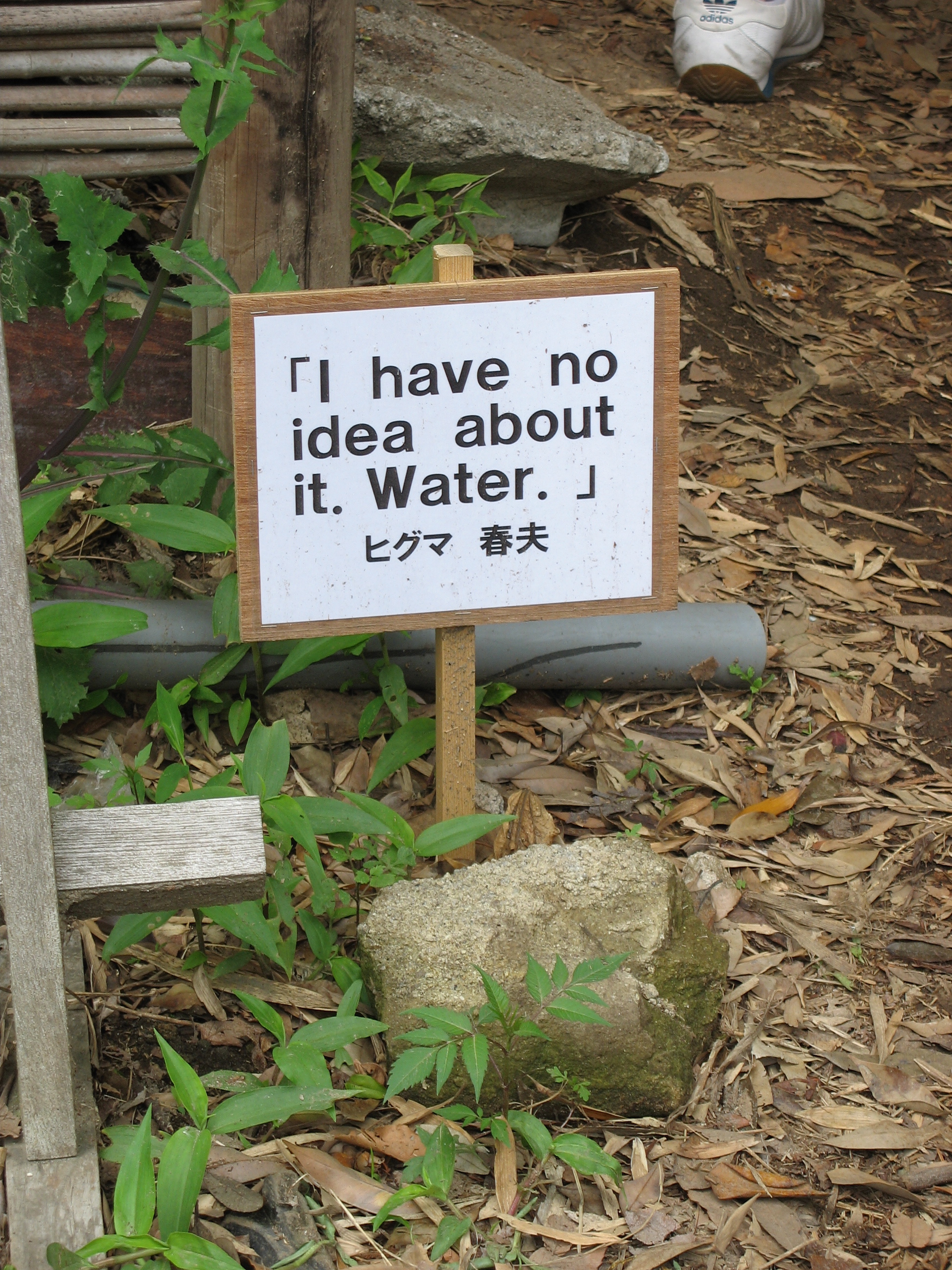
This one, on the grounds of a temple at Kamakura, is my all time favorite.  I have no idea about it either!  There was no water anywhere in the vicinity!

Oh, how I love Japan!

Sawara

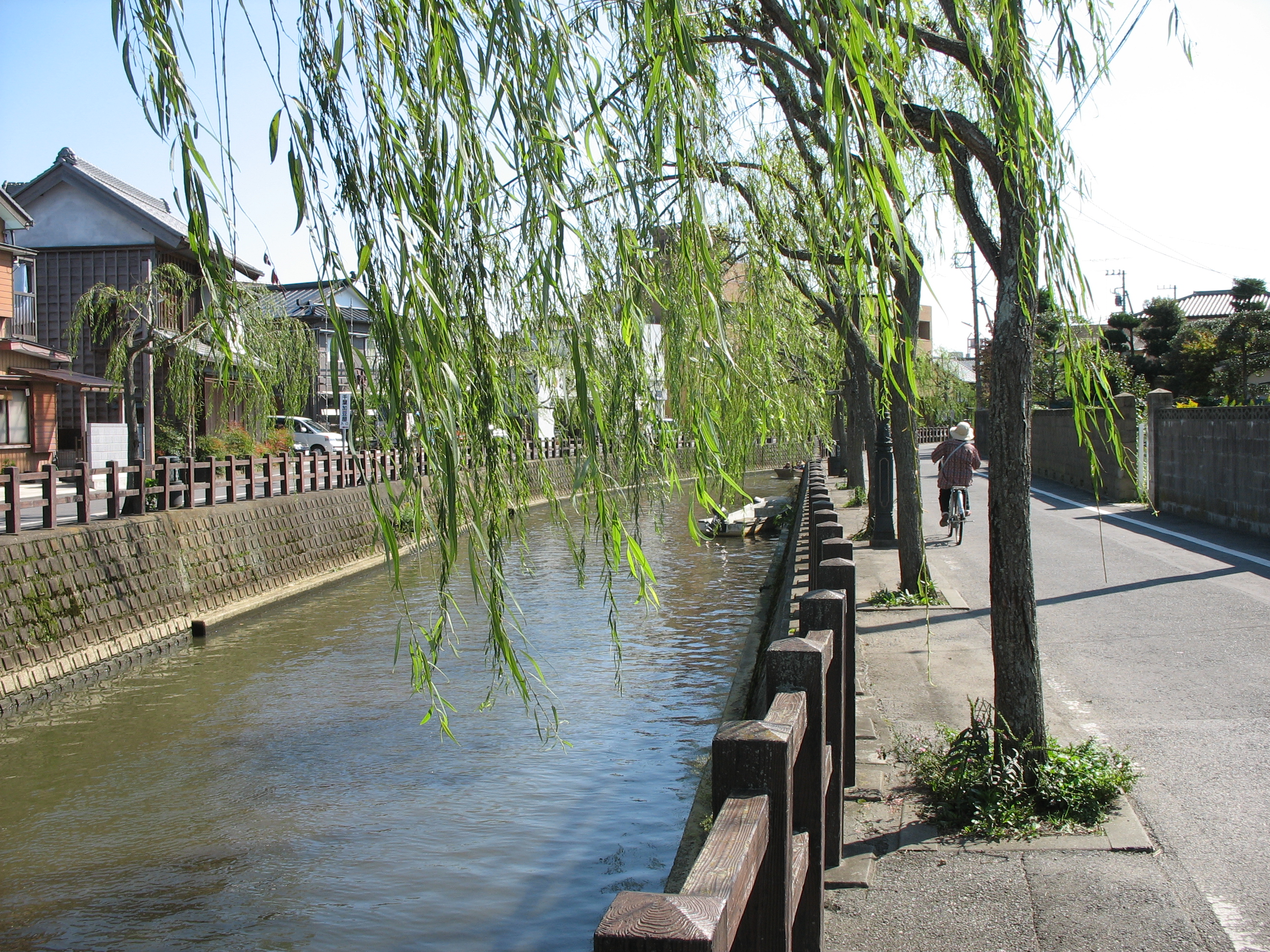
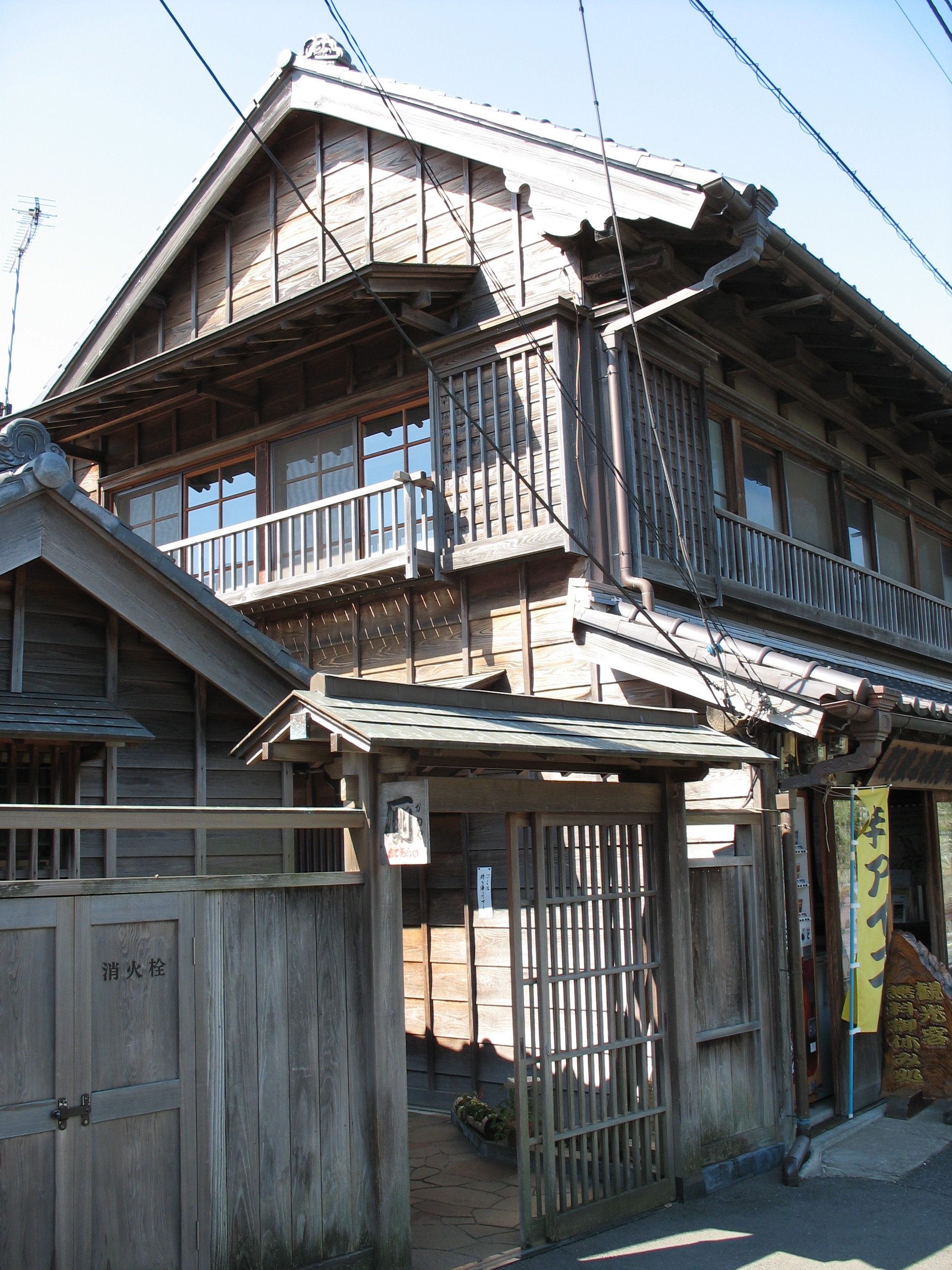
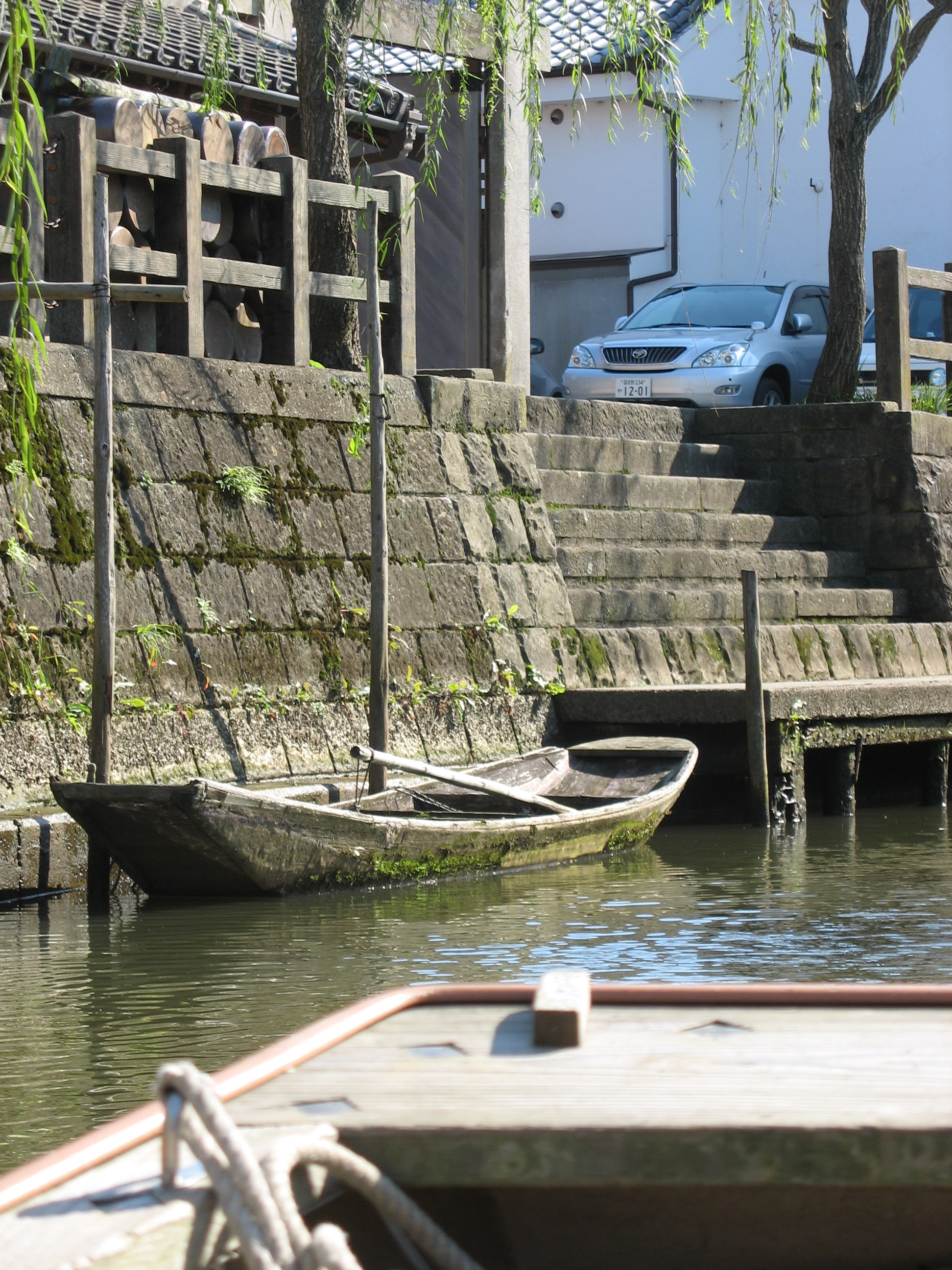
Yesterday was another beautiful October Thursday so we took a day trip to Sawara, a small town located about half an hour north of Narita by train. Sawara is considered one of the most charming towns in the greater Tokyo area. Designated a Historic District by the National Government, the central area of town, located along the Ono River, has many well-preserved merchant houses built between the early 1700’s and the 1940’s. Others that sat in a state of disrepair for many years are now in the process of being restored.

We spent the afternoon exploring this quaint district on foot and also enjoyed a 40 minute boat tour along the river. Just outside town, the Ono River feeds into the much larger Tone River. The tour took us out into the larger river before turning back toward town. From there we were able to look out across the wide open countryside that surrounds Sawara. We also enjoyed the countryside from the train. It was a delight to look out on open fields and to enjoy a big prairie sky on a beautiful sunny day!

Different places in Japan are known for certain foods and Sawara is no exception. Unagi (eel) is it’s specialty so, of course, that’s what we had for lunch. Even had we not tried it last Sunday and discovered how much we liked it, we would have had to try it in Sawara. Fortunately, we enjoyed it just as much the second time around. That still surprises us because, for some reason, we both had the mistaken impression that it would be rubbery and unpleasant. Not true at all! Grilled eel is a rich oily fish but it’s melt in your mouth tender as well as delicious.

A very different Thanksgiving!

Today could have been a day for missing home and family but instead it was absolutely wonderful and we are just as happy and stuffed as if we’d sat down to a traditional Thanksgiving dinner! Though they had no idea that it was a special weekend for Canadians, our friends Koji and Etsuko had invited us to their home for dinner.

After our usual lunch at church, we accompanied them to their house where the feasting began almost at once. First, Etsuko served coffee and a delicious ‘western’ cake stuffed with fruit and cream. That was followed immediately by Japanese cake and green tea. Shortly after that they informed us that, rather than preparing supper at home, they’d decided to take us to a nearby restaurant for sushi so back into the vehicle we piled and off we went! The highlight of supper for Richard and I turned out to be the unagi! Who would ever have thought that eel would be part of our Thanksgiving dinner or that we would enjoy it so much! It was absolutely delicious. The eating wasn’t over yet though. Once we finished at the restaurant, we went back to the house where we were served a dessert of fresh grapes and Japanese sweets along with more green tea! Wow! As much as I love turkey and pumpkin pie, I didn’t miss it a bit!

Of course, Thanksgiving isn’t only about the food. The fellowship around the table is just as important and oh, did we enjoy that today too! Koji and Etsuko were two of the first people we met when we started attending Hope Church. They’re about our age with grown children and several young grandchildren. Koji speaks English fairly well but Etsuko knows only a few words. In spite of that, she and I hit it off right away and it’s amazing how often I can understand the gist of what she’s said before Koji even translates! It’s hard to explain but there’s an understanding and a bond there that seems to go beyond words. What a wonderful visit we had today, getting to know one another better as we shared some of the joys and heartaches of our lives.

We had anticipated that once the visit was over, Koji would drive us to the nearest station and we’d take the train back home but, in spite of the fact that it meant an hour’s round trip for them, they insisted on delivering us to our door. Chances are that we’ll visit them at home again but our big hope is that they’ll visit us someday, not here in Japan, but in Canada!

Missing the wide open spaces

People here think they live in the countryside because we’re about an hour outside Tokyo but, in actual fact, it’s very urban.  Though I really like it here, by yesterday I was beginning to feel very hemmed in by the city.  It was definitely time to find some open space.

Even though it was our day off, I had to attend a one hour staff meeting at noon.  I could have attended the Wednesday meeting instead but I chose to spend that morning at the twice monthly ladies meeting at church.  Richard spent yesterday morning at the building site helping with the construction of our pastor’s new home.  We met back here for lunch then headed off to Sakura, a smaller town a little ways east of here.  Located fairly close to Narita, where the big international airport is located, Sakura has a number of interesting historical sites to offer but we chose to spend a couple of hours strolling through the Sakura Castle Park.  Very little of the original castle structure remains but the park is quiet and spacious, a good place to get away from the bustle of city living.  I’m very glad that so many areas of this kind have been preserved and once again, I was impressed with how green everything was.  Green will definitely be one of my lasting impressions of Japan.

After leaving the park, we wandered through part of town and as the sun set, we enjoyed the colourful lanterns that lined many of the streets.  We stopped for a relaxing supper then, ready to face the city again, we boarded the train and headed for home.

Weekend fathers

When we rode the crowded train home from Tokyo on Thursday evening we witnessed first hand large numbers of tired businessmen making their way home after a long day at work and I was once again reminded of a phenomenon known as the weekend father. When I taught a Japan unit in junior high Social Studies back in Canada, I remember asking the students what they thought this term meant. Based on their own cultural experience, they assumed that I was referring to divorced fathers who only saw their children on the weekends. In Japan, however, the term has a completely different meaning.

Many people living in our area work in Tokyo. They spend an hour or more on the train every morning and every evening. Their workday is a long one and when it’s officially over, the men are often expected to socialize with their coworkers before heading for home. These are the the weekend fathers; men who leave the house every morning before their children are awake and who get back home long after they’re in bed.

Toshikazu, one of my students from last term, is a perfect example. He has a six-year-old son that he adores. Hobbies are very important to the Japanese people. Everybody has at least one. When you ask Toshikazu what his hobby is, he tells you it’s playing with his son. If you ask him what he would most like to do if he had more time, he says he would spend more time talking with his son. He only sees him on Saturdays and Sundays. Somehow that seems very sad.

As I saw the tired men standing on the platform waiting for Thursday evening’s train, some with their eyes closed because they were so tired, I couldn’t imagine doing that every day year in, year out and I wondered how many children yearned to spend more time with them and how many lonely wives waited at home.

Asakusa anniversary

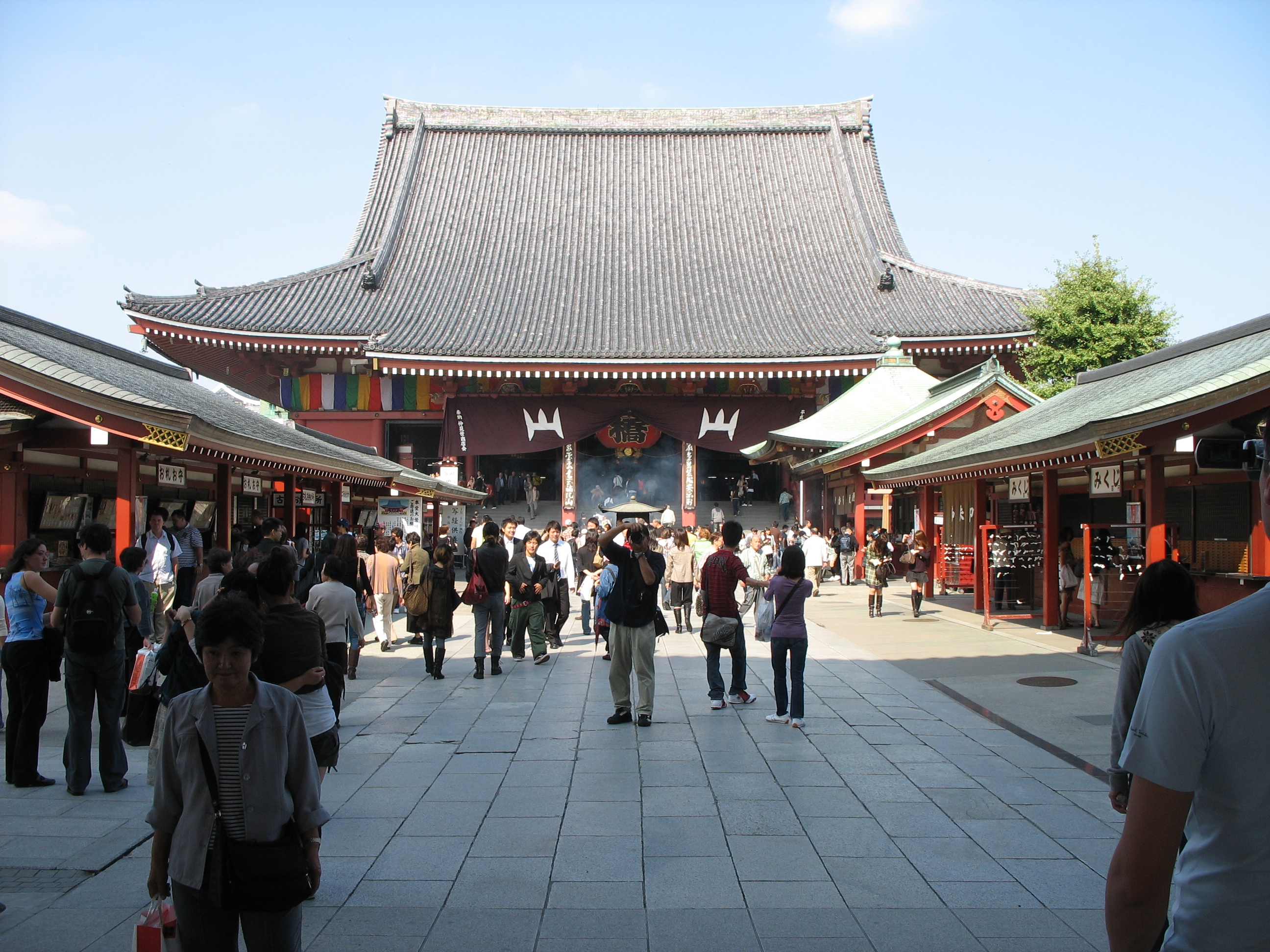
Yesterday was our 32nd wedding anniversary as well as our first weekday off together. After several days of cool rainy weather, we woke to warm sun and bright blue sky. Several of our students had urged us to visit Asakusa, said to be the heart of Tokyo’s old downtown, so after a leisurely breakfast we headed off. The main attraction in Asakusa is Senso-ji, the city’s largest temple. After having seen the temples of Kyoto, Nara and Nikko, I guess it would take an awful lot to impress us now. The temple itself, was no different from many of the others that we’ve seen but the atmosphere of the place definitely was. Clogged with tourists, a fairground spirit prevailed. Leading up to the temple is Nakamise-dori, a narrow and crowded shopping street where everything from tourist trinkets to genuine crafts are sold. Within the temple compound itself, there were more little shops and places to eat as well as a few booths with games of chance! The smell of incense permeates the place. Directly in front of the temple itself, there’s a huge incense cauldron. The smoke is said to bestow good health so visitors, worshippers and tourists alike, crowd around it and rub the smoke into their bodies through their clothes.

The main part of the temple is closed to tourists. Though it would have been nice to take a closer look, I respect that. I wouldn’t want tourists traipsing through my place of worship and in spite of the carnival like atmosphere, there are those for whom the place has great spiritual significance.

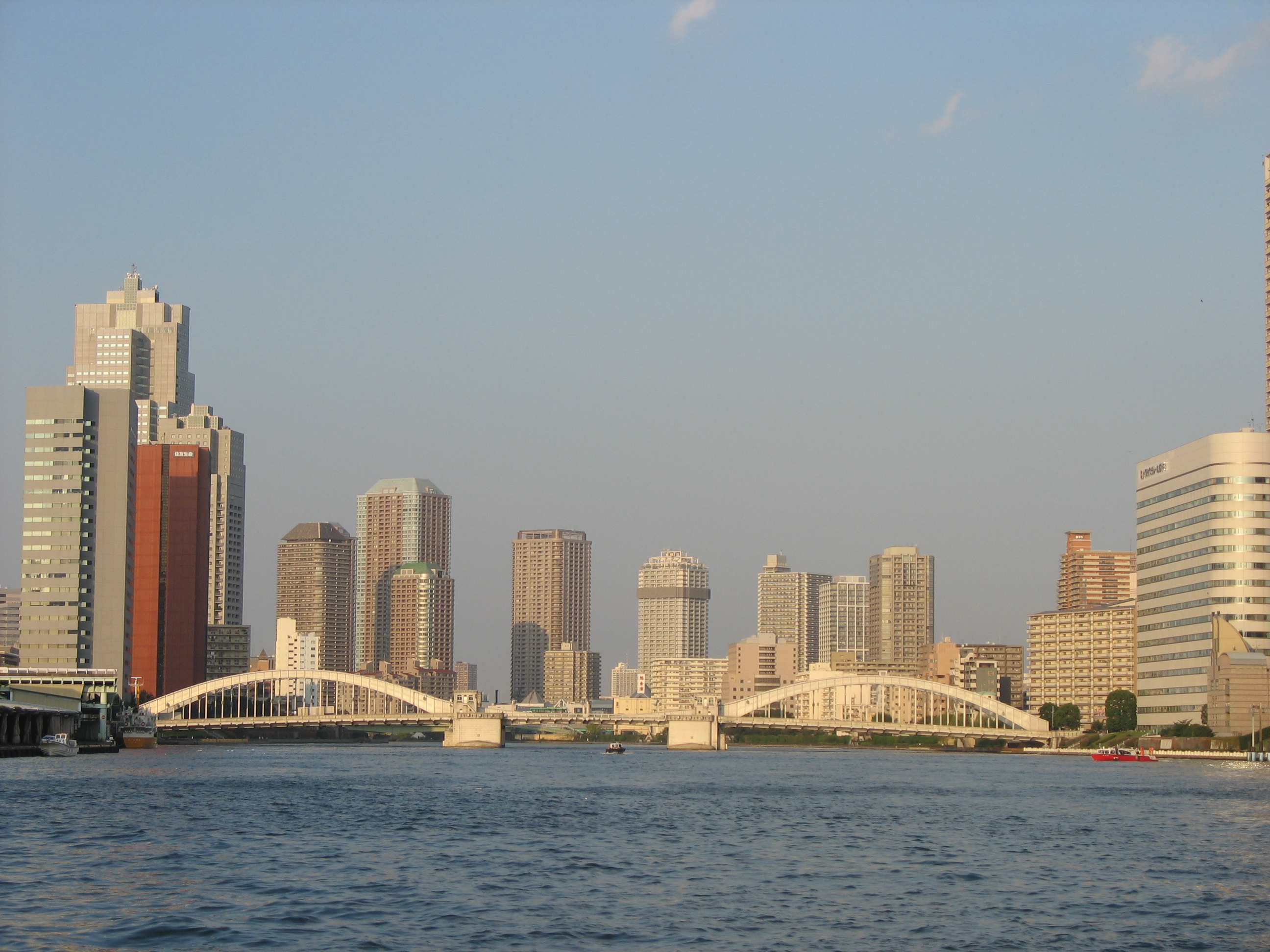
After leaving the temple, we wandered a few of Asakusa’s side streets where we found some interesting little shops and had a delicious lunch. After strolling the promenade along the Sumida River and observing that this is obviously where some of Tokyo’s homeless hang out, we took a water bus to Hamarikyu gardens. The 35 minute boat ride wasn’t the most scenic of cruises but it was a relaxing way to travel from one part of the city to another and it allowed us to enjoy some different views of the city.

We spent the late afternoon strolling through beautiful Hamarikyu-teien, also known as the Detached Palace Garden. Historically it belonged the ruling family. I may have seen enough temples to last me a lifetime, but I don’t think I’ll ever tire of beautiful Japanese gardens!

The garden is about a 10 minute walk from Ginza. Rather than catching a crowded train toward home as the workday came to an end, we decided to spend some time wandering around that area again and hopefully catch a less crowded train a little later. Sounds wise, but it wasn’t! A couple of hours later, the trains were still packed. We had to stand all the way back from Tokyo and were literally packed in like sardines. It didn’t help that we were given wrong directions at the Ginza station and ended up taking a bit of a roundabout way home!

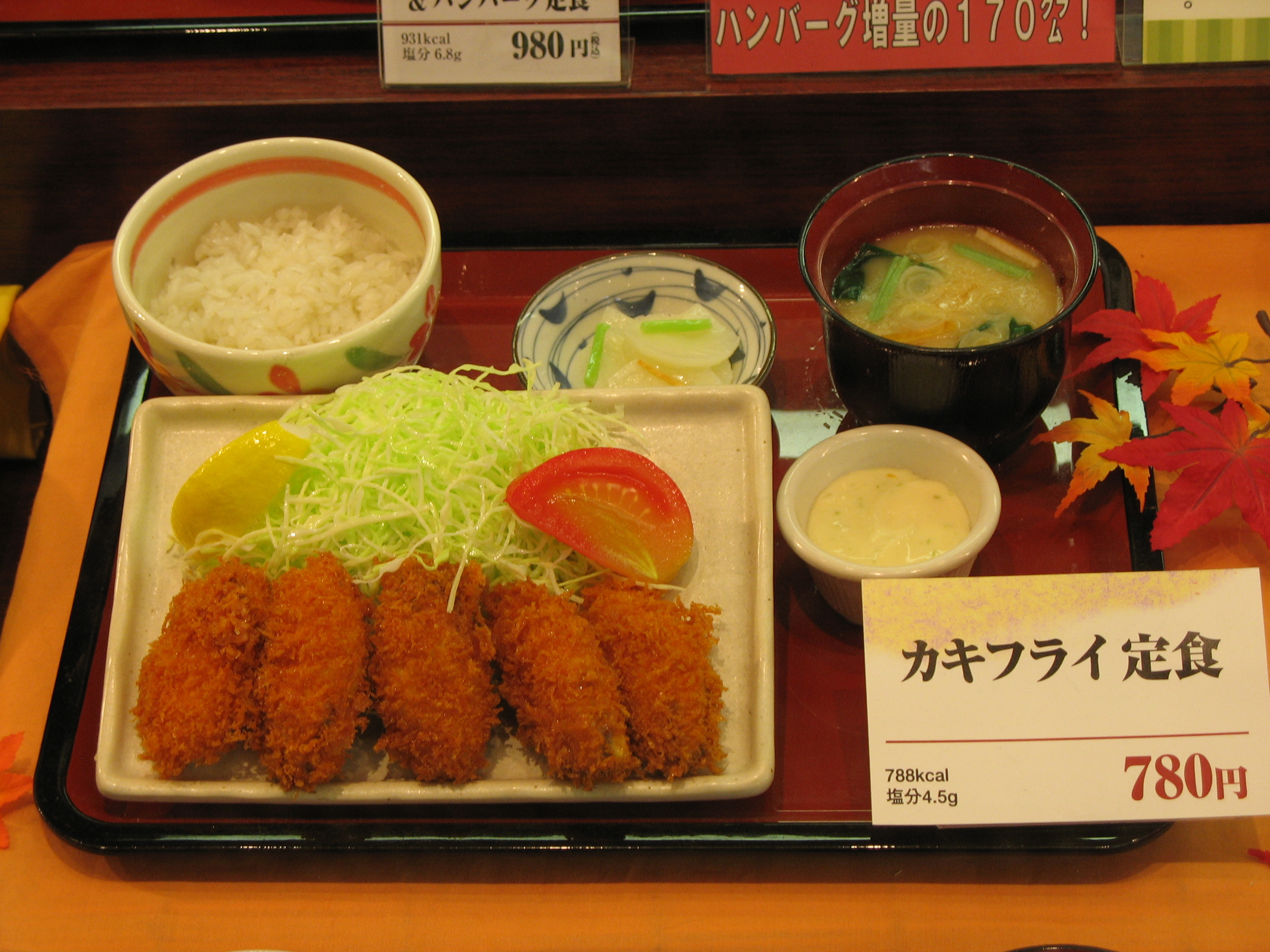
Once we were back in familiar territory, we stopped for dinner. Even though many restaurants have plastic replicas of their dishes on display, there are sometimes surprises when you can’t read the menu. What I thought was fish because I could see that it was served with tartar sauce, turned out to be breaded oysters! I have studiously avoided eating oysters since my father introduced me to eating them raw on the beach in front of our oceanside home some fifty years ago, but I was pleasantly surprised to find that these were delicious!