Lovin’ my toe socks!

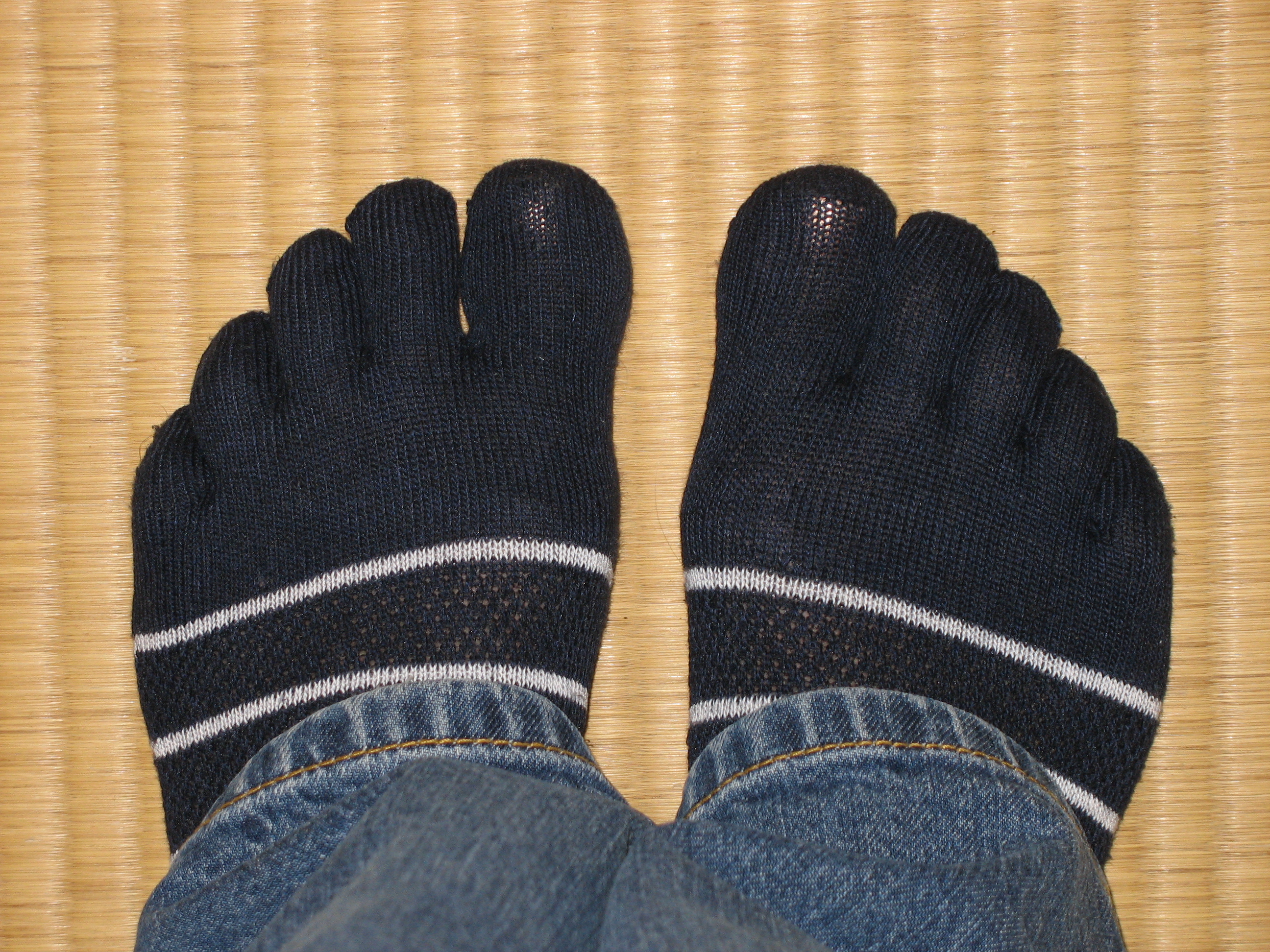
In keeping with my desire to try all things Japanese, it was essential that I buy a pair of toe socks. These are very popular here and I’d been assured by my kids, who were introduced to them when Matt and Robin lived in Japan, that they are very comfortable. I recently found a cute pair in the 100 yen department of one of our local stores and decided that that was a good opportunity to give them a try. If I didn’t like them, I’d only be out a dollar. After wearing them for the past several hours, I can only say that I’ll be shopping for more! They are indeed comfortable as well as warm which will be especially nice as the days get cooler.

I assume that the style is an adaptation of the traditional tabi, ankle socks with a separation between the big toe and the other toes that are worn with the thonged footwear that both men and women wear with kimono and other traditional clothing.

In addition to both types of split toe socks, we often see jika-tabi which are heavy duty rubber soled shoes with a separation between the big toe and the other toes. These are most commonly navy blue and are usually worn by workmen but Matthew was able to buy a colourful designer pair on his recent trip to Japan.

Who would have thought?

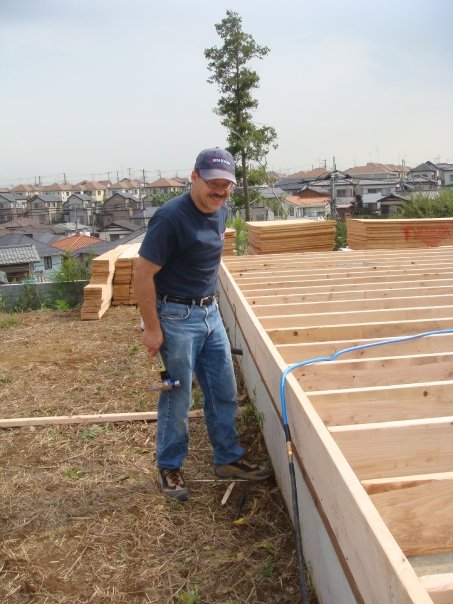
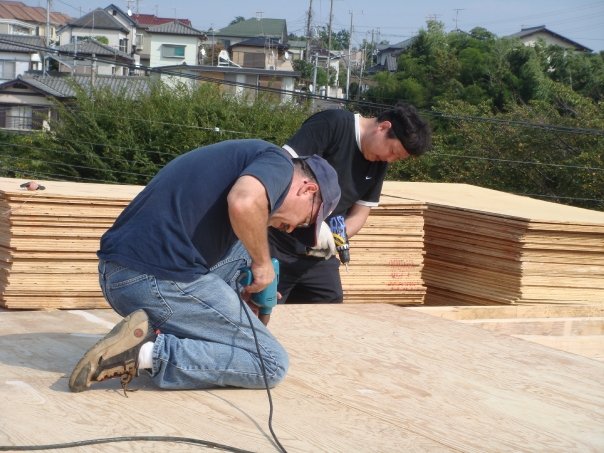
Richard certainly wouldn’t have thought that he might have the chance to help build a house while he was in Japan but that’s exactly how he spent his day off yesterday!

Pastor Steve and Shelley’s house is an amazing & exciting project to be involved in. The entire house package – precut lumber, windows, siding, even doorknobs – was put together in the US, loaded into a container & shipped to Japan. Apparently that’s more cost effective than buying the materials here. I understand that Shelley’s brother, who works in construction in the States, had a lot to do with putting the whole thing together. Not only did all the building materials arrive from overseas but two carpenters from the the US also arrived this week and under their very capable direction, the work is progressing rapidly. Apparently they’re very good at making use of the unskilled labour provided by volunteers from our church.

Perched on a hilltop, the building site itself is also an amazing story. Originally they were dealing on a different piece of land lower on the hillside but it was decided that building the retaining walls that would be needed to make it usable would be too expensive. For whatever reason (obviously a God reason) the landowner ended up offering them the lot on top of the hill for the same price as the lower land even though it’s actually worth a lot more. It’s bigger than most Japanese lots and looks out over the rooftops of an entire neighbourhood below.

Richard is delighted to have the opportunity to take part in this project and would happily be back there again next Thursday except that it’s our first weekday off together as well as our anniversary and I have other ideas!

Term change

A new term begins next week and with it comes a new schedule. We’re pretty happy with the changes. From now on both Richard and I will have Thursday and Sunday as our days off. That means being able to spend a weekday together sightseeing and enjoying more of this fascinating country.

In addition to being delighted with shared days off, we’re also pleased that there are less changes to our existing schedule than we had anticipated. For the most part, we’re keeping the same classes and students that we’ve had this term. That hasn’t always been the case with MIL. In fact, it appears that in the past a term change has usually meant a huge reshuffling of teachers. Of course, that hasn’t resulted in much continuity for the students. For example, I have one adult student who’s been studying at MIL for ten years and has had 18 different teachers! Needless to say, his English hasn’t progressed the way it ought to have.

There are several classes and individual students that I’m especially pleased to be able to continue working with. I’d have been quite heartbroken if I’d lost my Saturday morning playgroup – four adorable little preschoolers. Then there’s Rie, one of my Monday afternoon ladies. She and I have hit it off so well that she actually wrote a letter to the school owner requesting that I continue to be her teacher! Unfortunately, Richard is losing the adult student that he’s developed the best rapport with but overall, the changes are good and neither of us is picking up too many new classes.

Another concern was whether or not I’d be able to continue attending the ladies meetings at the church two Wednesday mornings a month if I didn’t have Wednesday as my day off anymore. Fortunately, I’m not scheduled to begin teaching until 4 o’clock that day so that won’t usually be a problem. It will mean that I’ll sometimes have to attend a staff meeting on our day off as they are held at noon most Wednesdays and Thursdays and I wouldn’t make it back from the church in time for the Wednesday meeting. I think we can manage to plan around that though.

Helping friends

When we came to Japan, it was to experience the culture by living and working here.  We want to see the tourist sights and enjoy the rich history, of course, but that can be done in a much shorter time.   Though we still have a list of places we want to see and things that must be experienced before we leave this fascinating land, in many ways, life has settled into the routines of going to work and keeping house much like it would anywhere else.

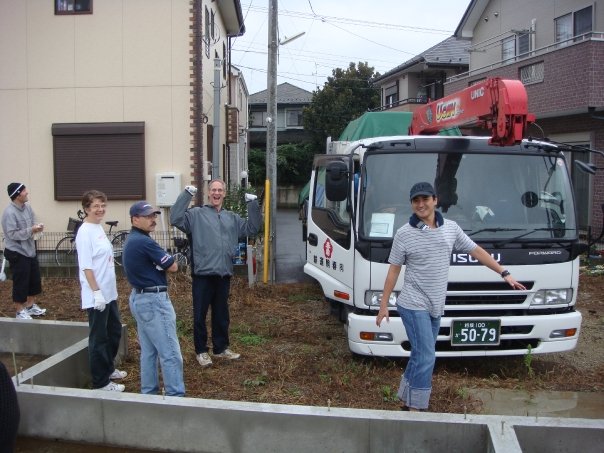
One of the pluses of living in a place for awhile is making friends.  Friends help one another and so it was that we got up early today and spent the morning with several others from our church unloading two truckloads of building materials at the site where our pastor’s new home will soon stand.

The call from the pulpit yesterday asked for men who were willing and able to lift and carry.  Though I knew that it might be difficult to put together a sizable crew on a Monday, I wasn’t sure how the Japanese men would respond if I volunteered to help.  When you’re living in a foreign culture, it’s very important to be sensitive to such things.  I talked to Pastor Steve’s wife, Shelley, who told me that she’d be helping and that I’d be welcome to join her.   It was no different from working with the men of my church at home.  At first, they were inclined to treat Shelley and I like china teacups that might break but they soon discovered that I’m stronger than I look and stubborn too!   The job was done much quicker than any of us would have anticipated and even though it was raining and we got thoroughly drenched, we all had fun.  Rich and I had to teach this afternoon so we weren’t able to wait around for the trucks to return with their second loads but we’ll likely be back out to help another day.

Pastor Steve and Shelley Kaylor

Pastor Steve and Shelley Kaylor

A different sort of day

We woke with a jolt at exactly 7:17 this morning. It was yet another earthquake! Though this one was only 4.9 on the Richter scale, the epicentre was just 35 km ESE of Tokyo, much closer to us than the others have been. It didn’t last long but it gave us a couple of very good shakes!

I really wasn’t looking forward to today. Sunday is usually a day off but Richard and I were both scheduled to work. According to our contract, we’re obligated to work three of our regular days off during the year. Most MIL schools are closed on Sundays so there are usually very few teachers working that day. A new term begins on Oct. 1, however, and the school is actively recruiting new students this month. For this reason, all the schools are manned on Sundays in order to accommodate students who want trial lessons.

When we do work on Sunday, we’re usually required to be at the school from noon until 6:00 pm but the schedule at both of the main schools showed that I had a 2 hour private lesson beginning at 4:30. For that reason, I was told that I didn’t have to be there until 12:30. Since the school I was spending the day at is only 17 minutes by train from the station closest to our church, I decided I’d go for the first part of this morning’s service. Since there’s always a short break just before the sermon, it would be easy to slip out then and make it to school on time.

I am so thankful that I made the decision to go. When I got to church, I discovered that my wee Japanese “grandson” was being dedicated this morning! Fortunately, the ceremony took place shortly before I had to leave. It was truly a beautiful dedication. Before taking wee Ayumu from his father’s arms, Pastor Steve asked Atsuo to pray for his son. It was very moving to hear a young father publicly ask God’s blessing upon his son and say to his Lord, “I place him in your hands.”

When I arrived at school, I discovered that the 2 hour lesson was actually only an hour and a half, ending at 6:00 pm. Had I known that in advance, I would have felt obligated to be at the school by noon and likely would not have gone to church! I have no doubt that God intervened and allowed me to be there.

Though the day was to be a fairly easy one, I was concerned about the lesson mentioned above. All I knew about the student was that he’d had a few introductory level lessons about a year ago and that he had signed on for a one time lesson today because he’s going on an overseas business trip and wanted to learn “table manners and over-dinner conversation.” How does one plan for that? We do have a textbook that was designed specifically for Japanese students going abroad so I chose a number of things from it that I hoped would be useful. As it turns out, I had nothing to worry about. The student knew exactly what he wanted and came prepared and so it was that I taught a 38-year-old police officer who has never eaten with anything but hashi (chopsticks) how to eat with a knife, fork and spoon! He literally brought dishes, cutlery and food to class! He really wasn’t looking for English at all. He’s never travelled outside Japan and was terrified that he wouldn’t know what to do or how to behave appropriately at a foreign dinner table. We practiced everything from how to summon a waitress – in a Japanese restaurant you shout sumimasen! (excuse me) – to what to do with the napkin and where to put your silverware after you’ve used it. It was the most fun I’ve had in a classroom in a very long time and I definitely appreciated the table manners that my father drilled into me as a young child!

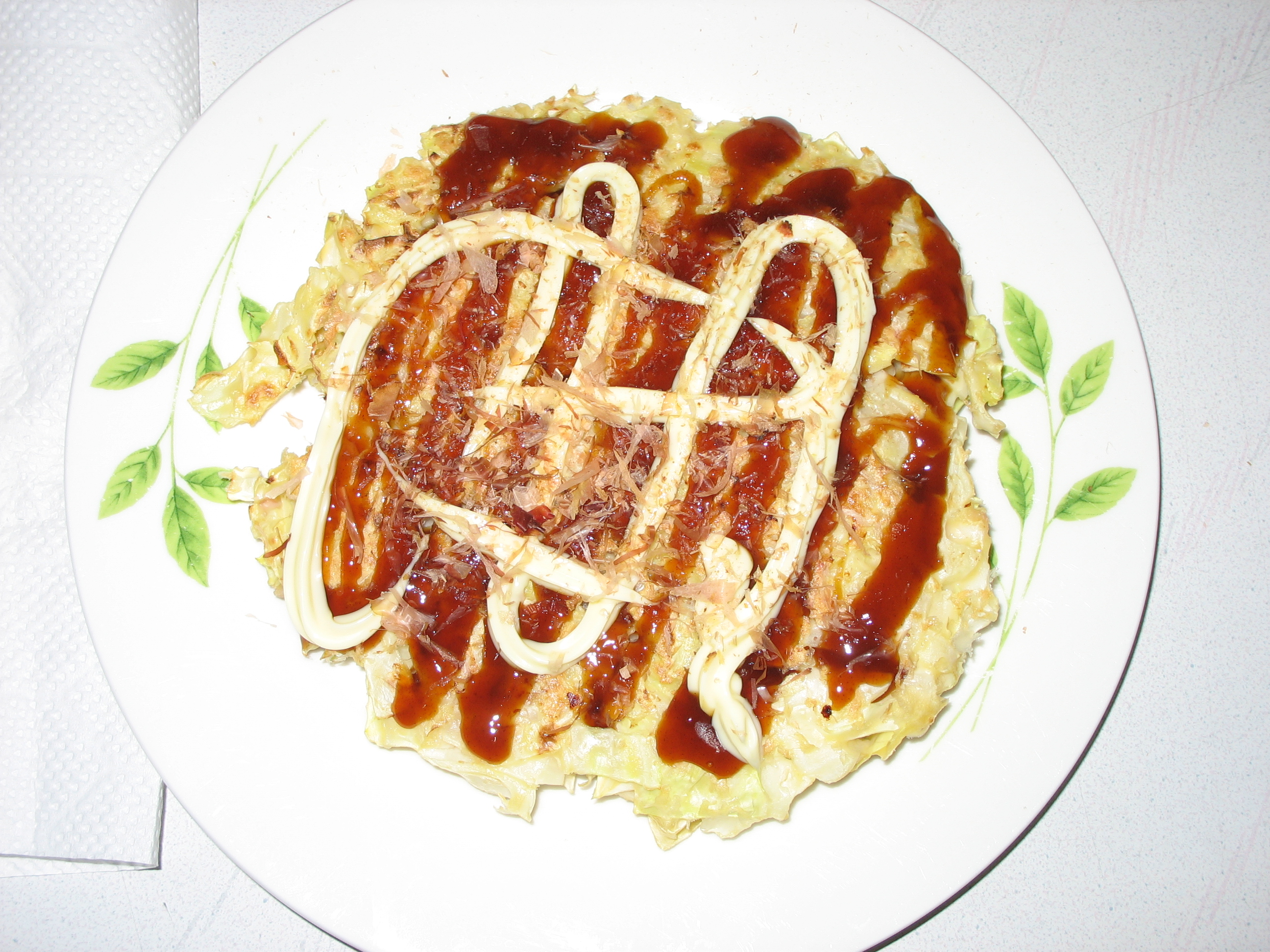
Okonomiyaki

Hours after landing arriving in Japan the first time, back in 2005, we were introduced to okonomiyaki, a delicious Japanese pancake-like meal. Kansai is the geographic region surrounding the cities of Kyoto and Osaka and okonomiyaki is a Kansai area specialty. We were visiting Matt and Robin at the time and ate it in a tiny restaurant in their Osaka neighbourhood. We live in the Kanto region, however, where good okonomiyaki is not easily found. Hence, the need to learn to make it.

Recently, the students in one of Richard’s adult classes had a homework assignment that required them to translate favourite recipes into English and bring them to class. Two ladies brought recipes for okonomiyaki! I also had a cookbook recipe. Using these three recipes, I created one of my own and tried it out yesterday.

The first challenge was shopping for the ingredients. Okonomiyaki calls for flour. Since I don’t have an oven here, I can’t bake and hadn’t looked for flour before. I hoped I wouldn’t have to buy a big bag as the recipe only calls for half a cup. Silly me! I should know by now that nothing, except rice, comes in big packages in Japan! Milk is sold in 1 litre cartons, carrots 3 to a bag, potatoes 4 or 5 to a bag, and the biggest package of cereal on the Seiyu shelves is 435 g. After searching and finally locating the flour, I was delighted to find that it only comes in 1 kg bags!

I was very excited to learn that, while most okonomiyaki recipes call for Chinese yam, a potato makes a good substitute. I could probably get Chinese yam here if I was able to identify it from amongst the many unknown items in the produce department but I definitely want to be able to make okonomiyaki back home in Canada and I can easily get potatoes in the Sedgewick Coop! Whether using yam or potato, the secret is to use a grater that turns it to mush.

I am very happy to report that my first attempt at making okonomiyaki in Japan was a great success! It was simple and delicious. And so, without further ado, here’s my recipe:

Ingredients (serves 2)

  • 1 small potato, peeled and grated
  • 2 eggs
  • 100 g (1/2 Japanese cup or 2/5 American cup) flour
  • 1/4 cabbage, chopped
  • 100 g pork, thinly sliced
  • red pickled ginger to taste, chopped fine

Directions

Place the potato, eggs and flour in a large bowl and mix well to form a thick batter. Cut some of the pork into small pieces keeping 4 slices aside. Add the cabbage, cut pork and ginger to the batter. Mix until ingredients are well coated. Form 2 large pancakes. Top each with two slices of pork and cook in a hot pan or on a griddle. Turn over after 3 minutes and cook for 5 minutes. Turn again and cook for 5 more minutes. Turn once more, cooking for 3 minutes. Spread with okonomiyaki sauce (thick Japanese style Worcester sauce) and mayonnaise and sprinkle with dried bonito (fish) flakes.

Variations

Additional fillings such as shrimp or cheese may be added.

Okonomiyaki before toppings

Okonomiyaki before toppings

with toppings

with toppings

Keiro no hi

Today is a national holiday in Japan known as Keiro no hi or Respect for the Aged day. Regular schools and many businesses close but it’s work as usual for us. Because our schedule is designed to ensure that each class meets the same number of times over the course of a year, we’ll have a different day off in lieu.

I suppose I should have done my research sooner and been in touch with our wee grandson to let him know that this is a day when children present their grandparents with gifts! Sometimes they just send them messages, however, wishing them good health and long life. We did receive a message from Drew a few days ago. I had a little difficulty interpreting it but maybe that’s what he meant! It looked like this:

z7dc0orbov ccccccccccccccccccccpksxVvvvvvvvvvvvvvvvvvvvvvpcpoJc09 //.;;;;B VRD5GGGGGGGGGGGGGGG

As you can see below, the little man loves the computer. His training began early.

Schools sometimes host special events in honour of the students’ grandparents for Keiro ni ho. I’m assuming that our local elementary school did something of that nature yesterday as we noticed many neighbours of grandparent age heading in that direction between 9:30 and 10:00 in the morning.

How I became a baseball fan

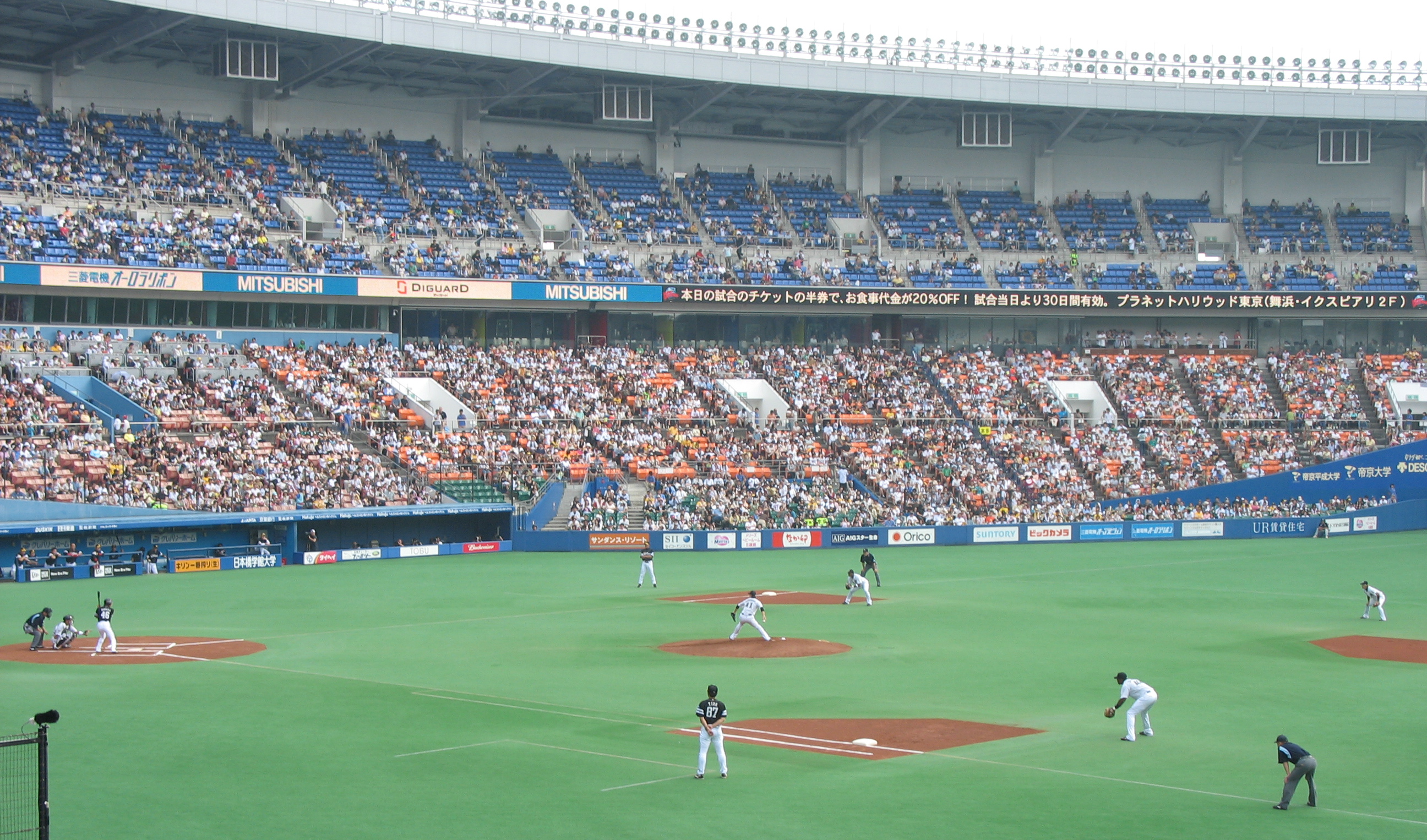
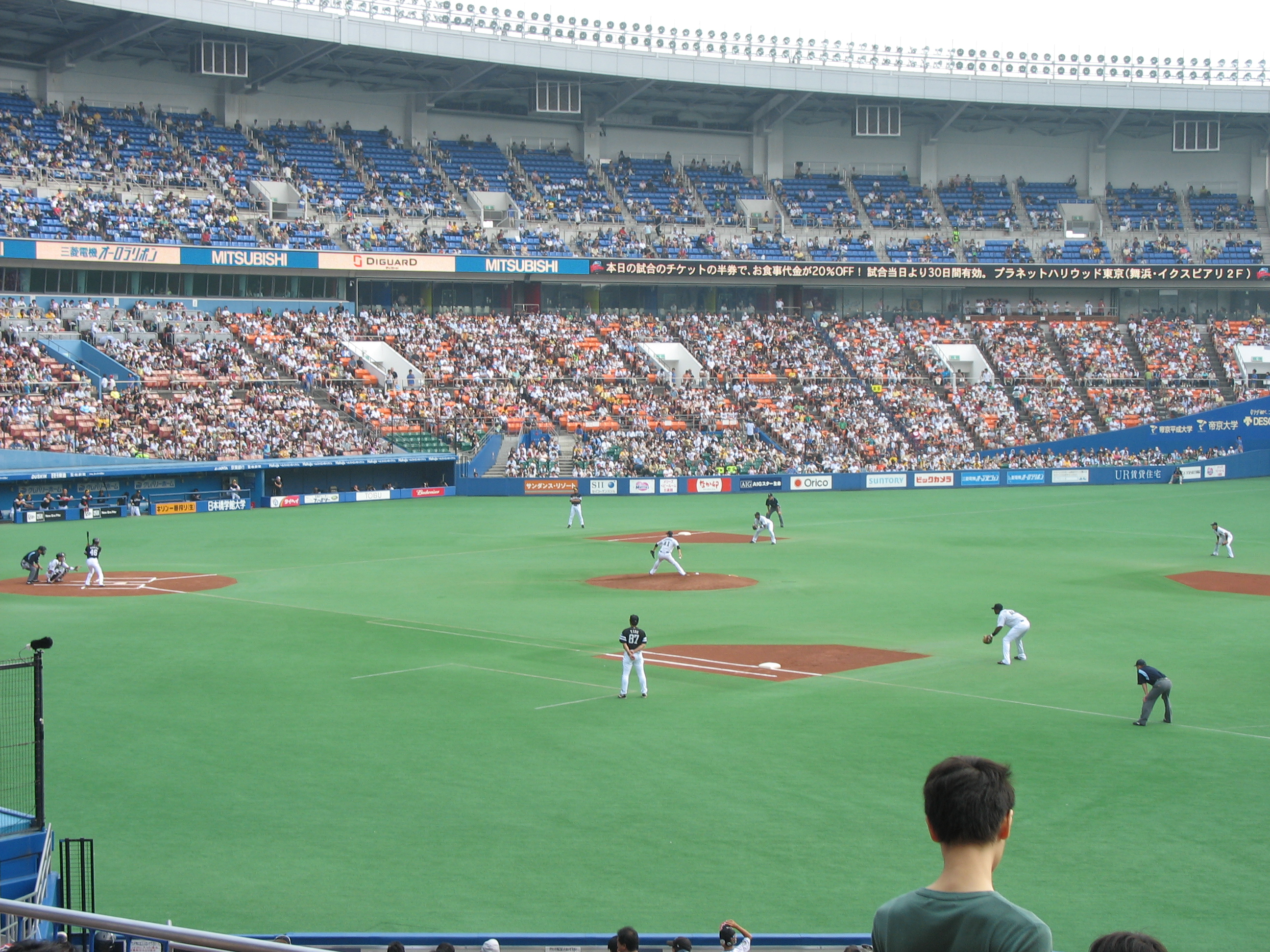
Baseball is hugely popular in Japan so Richard and I decided that we should attend a Chiba Lotte Marines home game. Since we live in Chiba Prefecture, the Marines are our home team and today they played the Fukuoka SoftBank Hawks from Japan’s southern island of Kyushu.

We woke to a misty sky and a few drops of rain this morning so I packed our rain capes but by game time the mist had burned off and the day was glorious. By late afternoon, when the sun was low enough that our side of the stadium was in shade, we were happy for the respite.

Richard purchased our tickets electronically at one of our local convenience stores a few weeks ago. Unfortunately, the young clerk who assisted him entered his request for two tickets as two separate transactions and so, while our seats were in the same section and the same row, they were numbers 157 and 172! Both were excellent seats overlooking first base. Obviously, though, we would have preferred to sit together and hoped that we might be able to find a way to do that when we got to the stadium. When the young usher who helped us find our seats realized that though we were together, our seats weren’t, he took it upon himself to contact some other members of the stadium staff and try to resolve the situation. After much deliberation, they were able to offer us two seats together but the location wasn’t as good as the ones we had so we thanked them and declined the offer. Before game time, we loaded up on a typical stadium lunch of burgers, fries and pop and prepared to settle into our separate seats. Seat 172 was just one seat away from an aisle and it was obvious that the man occupying that seat had come to the game alone. When I sat down and Richard passed me my food, it became obvious to the man that though we were together, we weren’t sitting together. He watched with curiosity as Richard made his way to seat 157, down the row from us. When Richard returned a short time later, showed the man his ticket and indicated that he was interested in trading seats, it was no surprise to me that the man swapped tickets willingly and we were able to watch the game together after all.

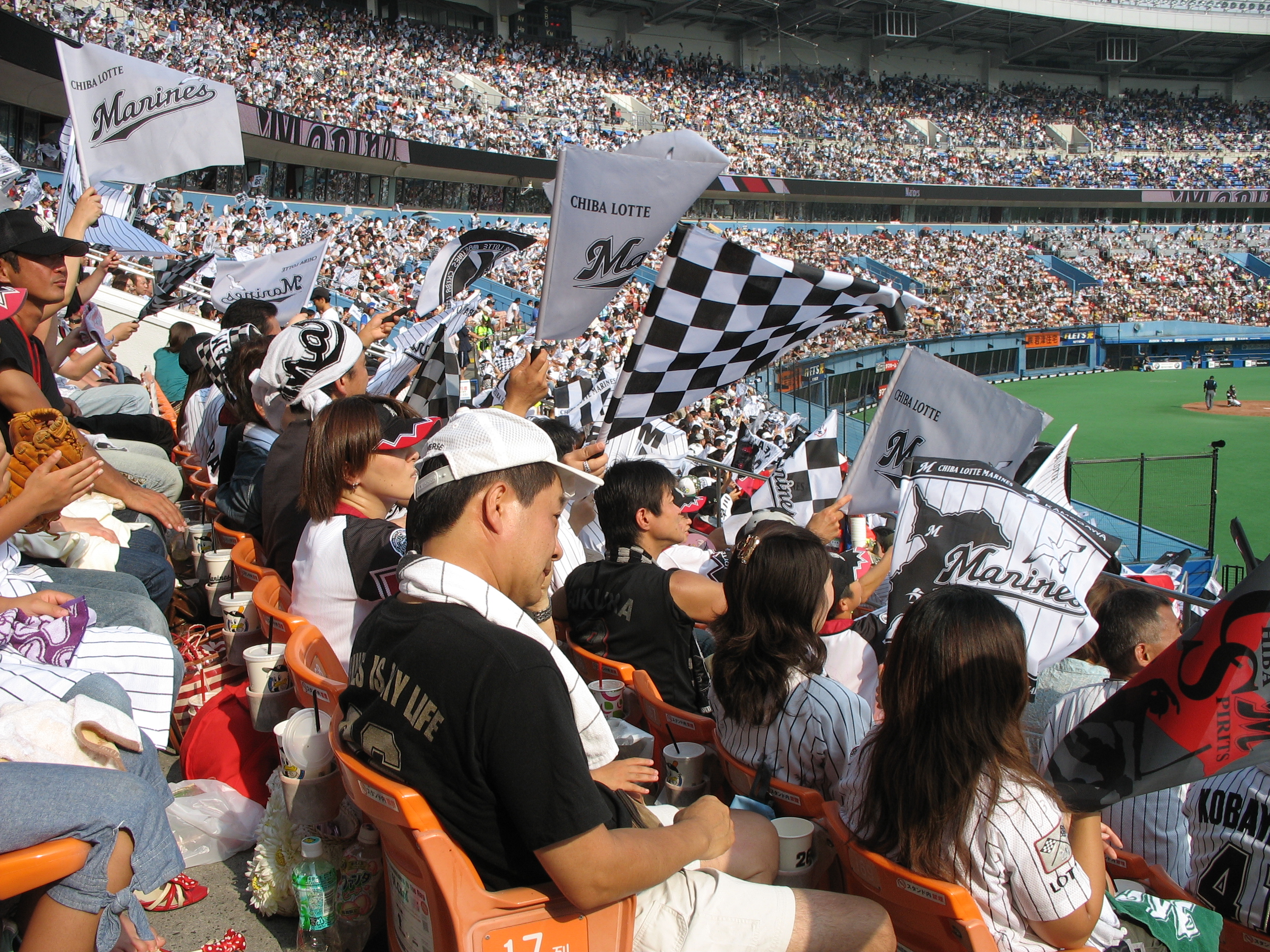
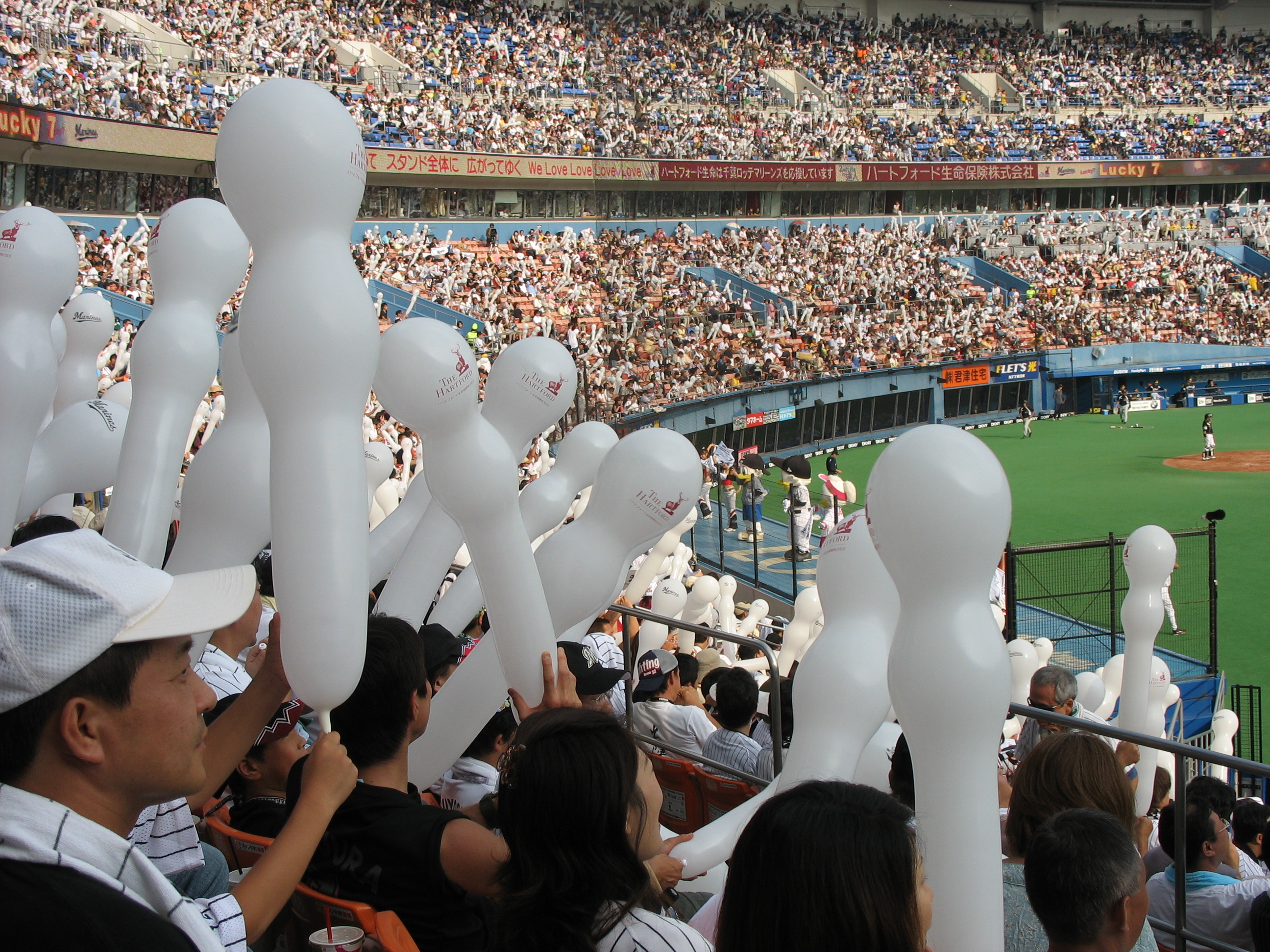
Since I’ve never been much of a sports fan and have never attended a professional ball game in Canada, or anywhere else for that matter, I have nothing to compare today’s experience with but it was definitely fun. The locals are obviously passionate about their team and watching them was sometimes as much fun as watching the game. Lots of them were dressed in team jerseys, t-shirts and hats. Like pretty much everything else in Japan, the cheering was very organized. Led by loudspeaker, the fans clapped, cheered and sometimes sang in unison. Before long, we were joining in. Unlike in North America, where a hush would fall over the crowd during a pitch, the noise continued regardless of what was happening on the field. It made no difference which team was up to bat so it was obviously a cultural difference and not a sign of poor sportsmanship. When either team changed pitchers, which they both did several times, the replacement pitcher was driven onto the field in a little silver convertible! During the seventh inning stretch which took place midway through the seventh inning rather than at the end, hundreds of long whistling balloons were released into the air and stadium staff quickly ran onto the field to gather up any that landed there.


The game itself was quite exciting. The Marines scored runs in the first and fourth innings but the Hawks came back with three runs in the top of the fifth. The Marines responded with four runs in the bottom of that inning and so it went with the Marines finally winning 9 to 5.

Saying that I’ve become a baseball fan is probably stretching it a little but I’m very glad that had the opportunity to attend today’s game. Sharing the fun with thousands of Japanese fans was definitely a great experience.
Waterworks

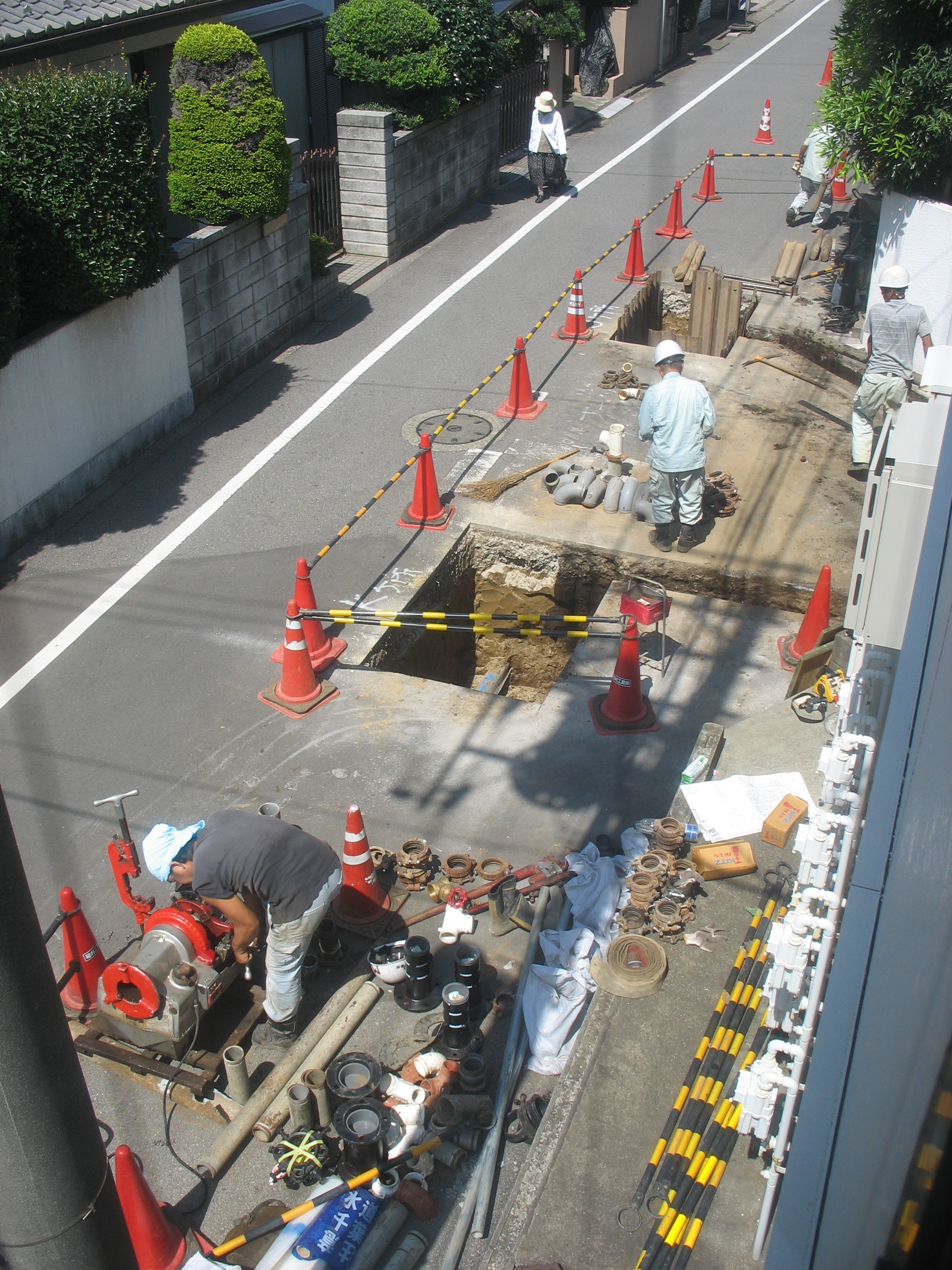
This is the scene outside our window this morning.  Work began sometime around 8 o’clock and, as you can imagine, it’s been quite noisy!  We did have some advance warning that this would be happening.  Work has been going on around the neighbourhood for several days and markings on the pavement seemed to indicate that our corner was one of the spots that would be dug up.

We received a notice in our mailbox yesterday that was written entirely in Japanese.  Of course, we had no way of knowing what it said or that it was related to the work going on around us.  For all we knew, it could have been an ad for an upcoming sale at a local store.  It didn’t have any pictures though and looked somewhat official so we did what we always do in such cases.  Richard took it to school with him and had one of the receptionists translate it.  They’re very helpful that way.  It turns out that it was a notice informing us that our water will be off from 1:00 to 5:00 pm today.  Since we’ll both be at work the entire time, it won’t be any inconvenience to us at all.

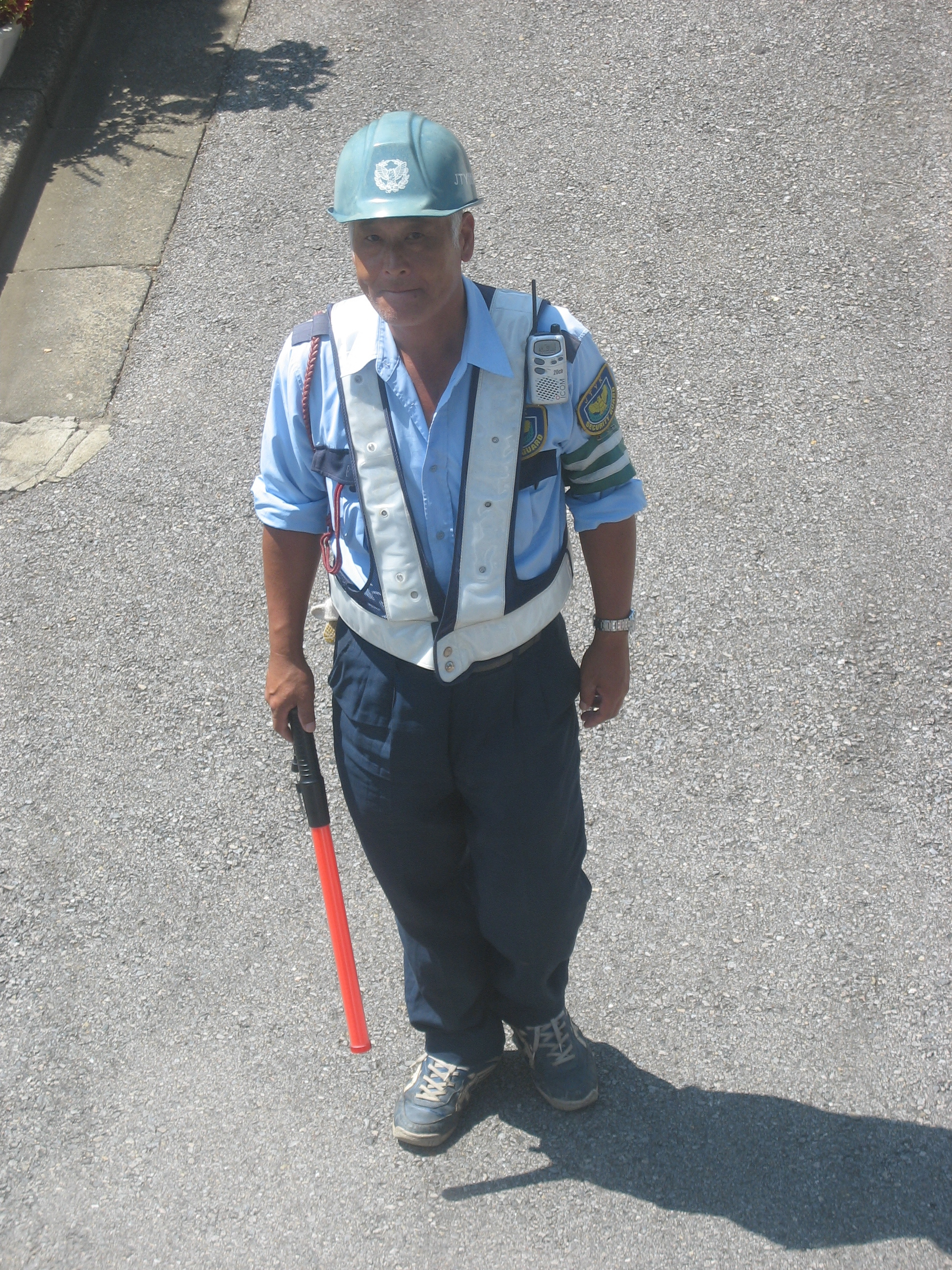
At every construction site that might in any way interfere with traffic, either vehicle or pedestrian, there is one person whose sole responsibility is to direct traffic.  On our quiet street, at this time of day, there might be a vehicle every 15 minutes but this poor man is standing out in the broiling sun waiting to ensure that they’re able to navigate the street safely.  When we leave for work, he’ll ensure that our path is clear and will likely bow to us as we pass by.

By the time we return from school this evening, the work will be completely finished, the pavement patched and the area clean.  But for the darker patches of pavement, we’ll hardly know that anything has been done.  By tomorrow morning, the crew will have moved on to another spot.

Fires, earthquakes and typhoons

September is safety awareness month in Japan so the focus of this week’s staff meeting was school safety. As Richard says, it looks like our best bet in terms of fire or serious earthquake is to pray that we don’t experience either one! Like most buildings in Japan, neither our schools nor our apartment are equipped with smoke detectors. None of the classrooms are at ground level. Most are on the third or fourth floor, often accessed by very narrow stairways, and none have proper fire escapes. There are rope ladders to use in the case of an emergency but I don’t want to be the teacher who has to convince a class of frightened five or six years olds to climb down one of those to the pavement below!

The instructions in case of a fire are much the same as they would be at home. Remain calm, account for all students, leave personal belongings behind, close doors and windows if possible, and relocate to a designated meeting area away from the school. Earthquake instructions are much the same but also include turning off gas and electrical appliances to prevent fire and watching out for falling objects and broken glass. While the building is still shaking, it’s advisable to take cover under a table or to stand inside a door frame. Bathrooms are also sturdier than most other rooms so they are considered good places to wait out a quake. Opening a door or window is recommended as once a building shifts, people are sometimes trapped inside because they can’t get the doors open. Fortunately, Japanese schools conduct earthquake drills, much like the fire drills that we’re familiar with at home, so the students are well acquainted with what to do should one occur.

At this time of year, the biggest safety concern is typhoons. A typhoon is the same thing as a hurricane. These are strong tropical cyclones with winds of up to 180 miles an hour and heavy rainfall. Typhoons that hit Japan are often accompanied by damaging high tides and landslides are also a serious concern. Schools generally close during a typhoon but our general manager doesn’t see fit to close MIL. Of course, teachers cannot always get there because trains often stop running and traffic comes to a standstill. Does this sound familiar to any of you Battle River teachers?

The good thing about typhoons is that they move slowly and there is always plenty of warning when one is on it’s way. When we see our neighbours securing or taking in all the movable objects from their yards and balconies, we’ll know there’s a typhoon coming. Our apartment is equipped with metal shutters to cover our large windows and keep them from shattering and the glass in the smaller windows is reinforced with wire. Some of our classrooms have large windows that don’t have shutters but there are places within each school where we could move the students during a severe storm so that they would be safe from flying glass. Japanese buildings are not well sealed (which helps explain how the insects get in) so leakage around windows and doors is also common during a typhoon.

So, does all this have me shaking with fright?  Not at all.  We knew that Japan was a land of earthquakes and typhoons before we left the relative safety of the Canadian prairie but I believe that this is where we’re meant to be and that we will weather whatever storms may lie ahead.  Just think of the stories we might have to tell!