Travel planning – Hope Church style

Our school is closed this Wednesday.  By me taking Thursday, which is Richard’s regular day off, as one of the five yukyu (personal leave days) that I’m entitled to over the course of the year, we get a two day break together.  We decided to use it for a seaside getaway.  Funabashi is located at the upper end of the Boso Peninsula across the bay from Tokyo.  After asking around, we decided to go out to the far end of the peninsula but since that isn’t a usual destination for foreign tourists, finding hotel information in English was a problem.

I mentioned this to my friend, Minako, at the regular ladies meeting at church on Wednesday morning and she offered to help.  She promised to seek out a nice, inexpensive place for us to stay and bring the information to me at church this morning.   She chose what appears to be the perfect spot, a beach front hotel at the very end of the peninsula.  After church, she used one of the church computers to go online and make our reservation.  We’ll have a traditional Japanese room with bath, most likely with an ocean view.  The price of 12 100 yen (about $120) includes a Japanese buffet supper as well as breakfast the next morning and free bicycle rental to explore the area!  The hotel also has an onsen so we’ll probably enjoy the public bath experience again.  In addition to hotel information, Minako also brought us information on both bus and train transportation to and from the resort.

There’s every likelihood that the staff at the hotel won’t speak any English but I’m not worried.  My comfort zone is getting bigger and bigger every day and if something does go seriously wrong, I have Minako’s cell phone number.   We are so blessed to have friends like her.  I can’t quite imagine what our Japan experience would have been like if we hadn’t found Hope Church!
Summer?

In spite of the fact that it’s definitely warm enough, it doesn’t really feel like summer to me. I think there are two main reasons for that. The first is year round schooling. While our compatriots at home are rejoicing over the end of the school year and the long summer holiday stretching out before them, we will continue to teach.

The Japanese school year begins in early April and ends in late March with only a week or two between. They have a few days off in early May for Golden Week, a summer vacation in August during which many students attend cram school and a two week winter vacation over Christmas and New Years, much like the one we get at home. In addition, there are several one day national holidays. Though ours is a private language school, it follows the regular school schedule quite closely except that we only have a one week vacation in August. We work some of the national holidays but two compensation days were added to our Golden Week vacation and we get other days off in lieu that adjust the schedule so that each of our regular classes occurs the same number of times over the course of a year.

The other reason that this doesn’t feel like summer is because there are no long summer evenings like the ones we’re accustomed to in Canada. Since our latitude is between that of San Fransisco and Los Angeles and Japan doesn’t practice daylight savings time, the sun rose this morning at 4:26 a.m. and set at exactly 7:00 p.m. On Saturdays we only work until 7:00 p.m. so I actually walked home in twilight tonight but we usually work until 8:30 or 9:00 and come home after dark. I understand that the Prime Minister of Japan is in favour of instituting daylight savings time which I think is an excellent idea.

Though this really doesn’t seem like summer, it also doesn’t seem to be the rainy season that we’d been told to expect. In fact, there was more rain in May which is supposed to be one of the nicest months here than there has been in June, the first month of the rainy season. I’m not complaining though! We’ve seen enough rain to last us a very long time!

Different beginnings

There are two very special little boys in my life, Andrew and Ayumu, but I have yet to meet either one of them. Andrew, my first grandchild, was born in Canada on May 1st and I knew that I wouldn’t meet him until my year in Japan is over. Ayumu, on the other hand, was born here in Japan on June 14th, just in time to make his father the newest and possibly the proudest Daddy in church on Father’s Day morning.

I went to church this past Sunday hoping that my friend, Seiko, and her wee son might be there. It was then that I began to learn about the differences between giving birth in Canada and in Japan.

My daughter, Melaina, gave birth to Andrew at 4:21 in the morning and took him home around noon the following day. Because he was her first baby, she was required to stay in the hospital for his first 24 hours. Had he not been her first, she would probably have gone home later the day that he was born. Japanese women are absolutely astonished to learn this. Here, the mother and baby stay in the hospital for about a week.

Andrew was born on a Thursday and was in church that Sunday morning, hence my expectation that I might see Ayumu this past Sunday. He was, after all, eight days old by that time. It was then that I learned that after leaving the hospital, the Japanese mother retires, often to the home of her parents, where she spends the next couple of weeks resting in bed while family members care for the baby. She doesn’t usually go anywhere for the first month of her baby’s life. Wow! Personally, I think that sending new mothers and babies home within the first 48 hours is too hasty but a month of going nowhere! I’d have gone absolutely mad!

Even though he arrived two weeks before his due date, Andrew was a robust 8 pounds 1/2 ounce at birth. Japanese babies are only measured in grams but if I’ve done my math correctly, Ayumu, who arrived a week after his due date, weighed about 6 pounds 11 ounces. That’s considered an average birth weight here. Japanese mothers are encouraged not to gain much weight during pregnancy and low birth weights are preferred.

The naming of babies is another interesting cultural difference. Japanese babies are given only one name so Ayumu is Ayumu, plain and simple. Andrew, on the other hand, has three given names. He is Andrew David Richard. Like our oldest son, his middle names were given in honour of his two grandfathers. The Japanese find this custom very peculiar. The meaning of the Chinese characters used to spell a baby’s name are very important here. Ayumu’s name means “a walk with God”. How wonderful! I find this especially interesting because when Seiko and I talked about names before she and her husband, Atsuo, had chosen one for their son, I told her that though the meaning of names doesn’t have much significance to most North Americans, Janina, Matthew, Nathan and Melaina’s middle name, Jean, all mean “gift of God”.

When I finally do meet Ayumu, I’ll have the chance to use my newest Japanese word, kawai. Sounding almost like Hawaii except beginning with a k, it means cute. As I proudly showed off photos of Andrew, as all good grandmas do, I heard the word over and over again. It didn’t take long to figure out what it meant!

Deuteronomy 29:5

Before we came to Japan, I was under the impression that I wouldn’t be able to find clothes to fit so I was careful to make sure that I had enough to last the year if necessary.  As it happens, however, I’ve already bought a pair of pants, a skirt, two tops and a couple of hats!  Imagine that.  Hats!  I come from a family of big-headed people and I can’t usually find ladies hats to fit in Canada but here I’ve bought two; one for winter and one for summer!

Shoes are another matter, however.  I would have to search far and wide to find a pair to fit me.  It’s really quite unfortunate as there are so many cute shoes here.  Shopping could be such fun!  On the other hand, it’s easier on the budget this way and I do have to think about how much I can carry home.

I brought five pairs of shoes, a pair of sandals and a pair of flip flops with me.  That sounds like enough to last a year but considering how much walking we have to do and the fact that it’s all on pavement, I wonder if it will be.  I have two pairs of dressy flats that are suitable for wearing to school with skirts and capris.   The dress code doesn’t allow me to wear sandals.

After just a few trips to school and back, the heels of my black flats were completely worn down so today I paid a visit to the shoemaker in the corner of one of the local department stores.   Once again, I discovered how easy it can be to communicate my needs without a common language.  I indicated what I wanted done, he wrote down the time that I should come back and within an hour, my shoes had new heels and he’d even polished them for me!   The funny part of the whole thing is that I paid more to have the heels replaced than the original cost of the shoes!  Replacing the heels cost 1155 yen (approximately $11.50) which doesn’t seem at all unreasonable but I distinctly remember buying the shoes on sale at Zellers for only $9.00!

I’m more concerned about my other black shoes, the ones I wear most often because they’re very comfortable and look good with dress slacks.  They have thick rubber soles that will never wear out but I hope the shoes themselves stand up to a year of pavement pounding, especially considering how often they get wet.  They’re an inexpensive Payless purchase but I’ve had wonderful success with Payless shoes in the past so I have high expectations for these ones too.

I’m often reminded, as I wonder whether or not my shoes will last, that during the forty years that the Israelites wandered in the wilderness, their sandals never wore out.  I’m not wandering in the wilderness but, like the Israelites, I’m definitely in a place where I can’t replace my footwear so I’m counting on the same care from above!

No more pineapple

I’ve been bothered by some kind of irritation in my mouth for the past month or so and was beginning to get quite concerned about it because I really don’t want to have to go looking for a dentist or a doctor while I’m here. I tried rinsing twice a day with a mouthwash which seemed to help a bit at first but it definitely didn’t get rid of the problem.  I finally started to wonder if it was caused by something I’ve been eating.  Yesterday, the light bulb finally went on!  We’ve been eating pineapple for breakfast almost every day. Could that be the culprit?  Considering the fact that my daughter is allergic to pineapple, I’m surprised I didn’t think of it sooner.  Last night I did a Google search on mouth sores & pineapple.  The results were quite amazing. Article after article mentioned the relationship between acidic fruits and mouth sores and pineapple was almost always first on the list!

This is definitely an unfortunate development because not only do I really like pineapple but it’s also one of the cheapest fruits available to us here.  In fact, we’ve recently been able to buy a whole pineapple for approximately the same price as a single apple.  I’m quite delighted to buy a pineapple for 198 yen (less than $2) but I’m definitely not willing to pay that much for an apple!   Fortunately, both oranges and kiwis have come down in price recently.  I’ll have to be careful about the number of oranges I consume, however, as they’re also very acidic.

Apparently it’s possible to neutralize the acid in pineapple by soaking it in water with a very small amount of vinegar but I’m not that desperate and the pineapples that we’ve been buying recently haven’t been nearly as sweet as the ones that were available when we first arrived.   Those would have been much harder to give up.

Of course, it’s too soon to know for sure that pineapple is, in fact, the cause of my mouth sores but since mouths tend to heal quickly, I’m hoping to have a definitive answer within a few days.   In the meantime, no more pineapple!

Re-entry permit

Today I went to the closest immigration office, which is located in the nearby city of Chiba, to apply for and receive a re-entry permit so that I can leave Japan on vacation. This is extremely important because if I left the country without one, my work visa would be automatically canceled and I’d be unable to return! Richard will be making a similar trek on one of his upcoming days off.

There are two types of re-entry permits – single or multiple. A single allows you to leave the country once and costs 3000 yen (approximately $30) while a multiple allows any number of trips and costs 6000 yen so anyone who is reasonably sure that they’ll leave at least twice during their stay is advised to apply for a multiple. It also saves making a second rather boring trip to the immigration office.

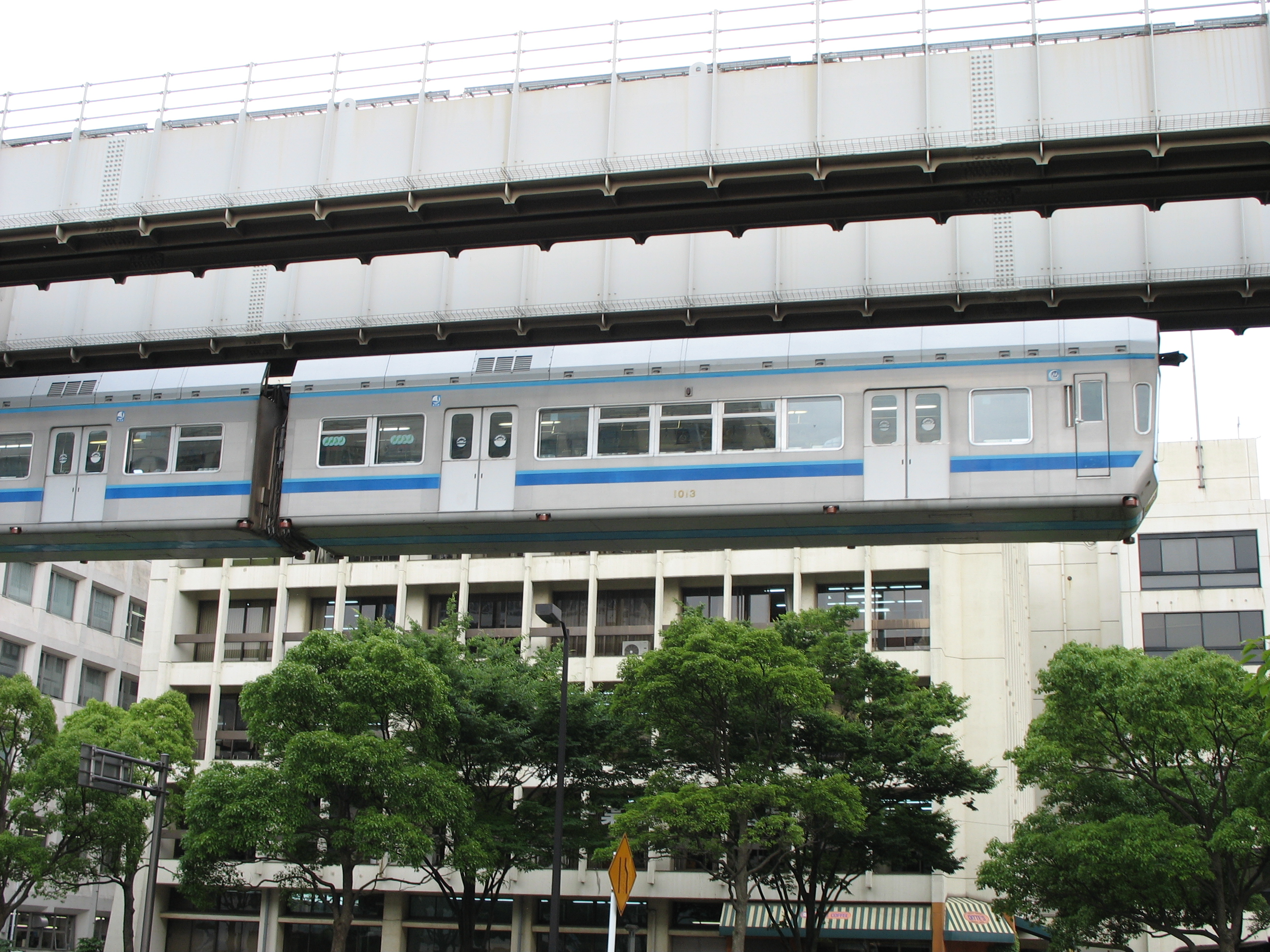
By far the most interesting part of the trip was a short ride on the Chiba city monorail. Suspended from an overhead track, it winds its way above the city traffic, in some places several stories from the ground.

The actual application procedure was relatively simple. First, I had to go to a post office and purchase a 6000 yen revenue stamp which looks like a postage stamp and is affixed to a payment form that accompanies the re-entry permit application. There’s a post office in the basement of the building where the immigration office is located. I decided to go there instead of our local one because I was pretty sure they’d be more accustomed to dealing with foreigners and would more easily understand what I was looking for. Once I had the revenue stamp and had filled out the application form, I simply had to take a number, wait my turn and present them along with my passport and my alien registration card. The waiting room was definitely a multicultural gathering place with some people looking quite stressed and others simply bored. Once I’d waited half an hour or so, processing the application and affixing the permit to my passport took only a few minutes.

So, why do we need the re-entry permits? We’re planning to spend our nine day summer vacation in South Korea. We fly to Seoul on August 9th. After three days and four nights there, we’ll travel by train to Busan and fly back to Japan from there on August 17th. We also plan to leave Japan a second time for our Christmas/winter vacation. Those plans are pretty sketchy at this point but we’re thinking about Cambodia, Thailand and possibly Vietnam.

We’re okay

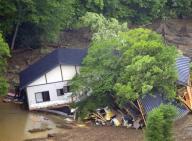
While we were eating breakfast this morning, the building began to rock again. It felt as though the ground was rolling beneath us but it was not particularly frightening. We later learned, however, that a powerful earthquake had hit northeastern Honshu, Japan’s main island and the one we call home. The quake, which measured approximately 7.0 on the Richter scale, was centred about 100 km north of the city of Sendai in a mountainous rural area. While there were several casualties, the outcome might have been much worse had it hit a more highly populated area.

The following are a few photos of the quake area borrowed from various online news sources.

Umbrellas, parasols and fans

Umbrellas are absolutely essential here. We’ve already seen far more rain in the three and a half months that we’ve been here than we would see in a year or two back home on the Canadian prairie. Rich and I each have two umbrellas, one small telescoping one that slips easily into a book bag and goes to school with us each day and one full sized one that goes with us if it’s already raining when we leave home. There are two choices when it comes to purchasing an umbrella – buy a cheap one and replace it every time the wind blows or pay more for a better quality one that has a chance of lasting. We see many of the cheap variety abandoned beside the road on rainy days. We opted for better quality umbrellas but we bought both our full sized ones at the recycle store. Richard was determined to find a BIG umbrella as he really doesn’t like being wet so his is actually a very large golf umbrella! It’s even vented in such a way that the wind can pass through it. Otherwise I’d fear that it might pick him up and carry him away like Mary Poppins!

Umbrellas on rainy days I can understand but it’s quite another thing to get used to seeing them on sunny ones. These aren’t actually umbrellas, of course; they’re parasols. While a parasol looks like an umbrella, it’s generally a little smaller and is made of lightweight UV protective material. Many of them are very pretty, edged in lace or ruffles. Fair skin is considered beautiful in Japan so parasols are a common sight. Many of the women who don’t carry parasols wear hats or visors that would put our North American golf visors to shame. These ones have huge brims that completely shade the face. I’m sure that many who see me out and about are appalled that I don’t protect my coveted pale skin from the sun and when the topic comes up in conversation, people here are astonished that North Americans actually try to get suntans. Obviously, this would not be the place to open a tanning salon!

Like the parasol, the folding hand fan is still very much a part of Japanese life. I have one that I carry in my book bag and another that usually stays at home unless I’m on my way to church, in which case, I slip it into the bag with my Bible. Even though many buildings are air conditioned, there are plenty of occasions when these provide much needed relief from the oppressive, muggy heat which we are really just beginning to experience.

Kaleidescope

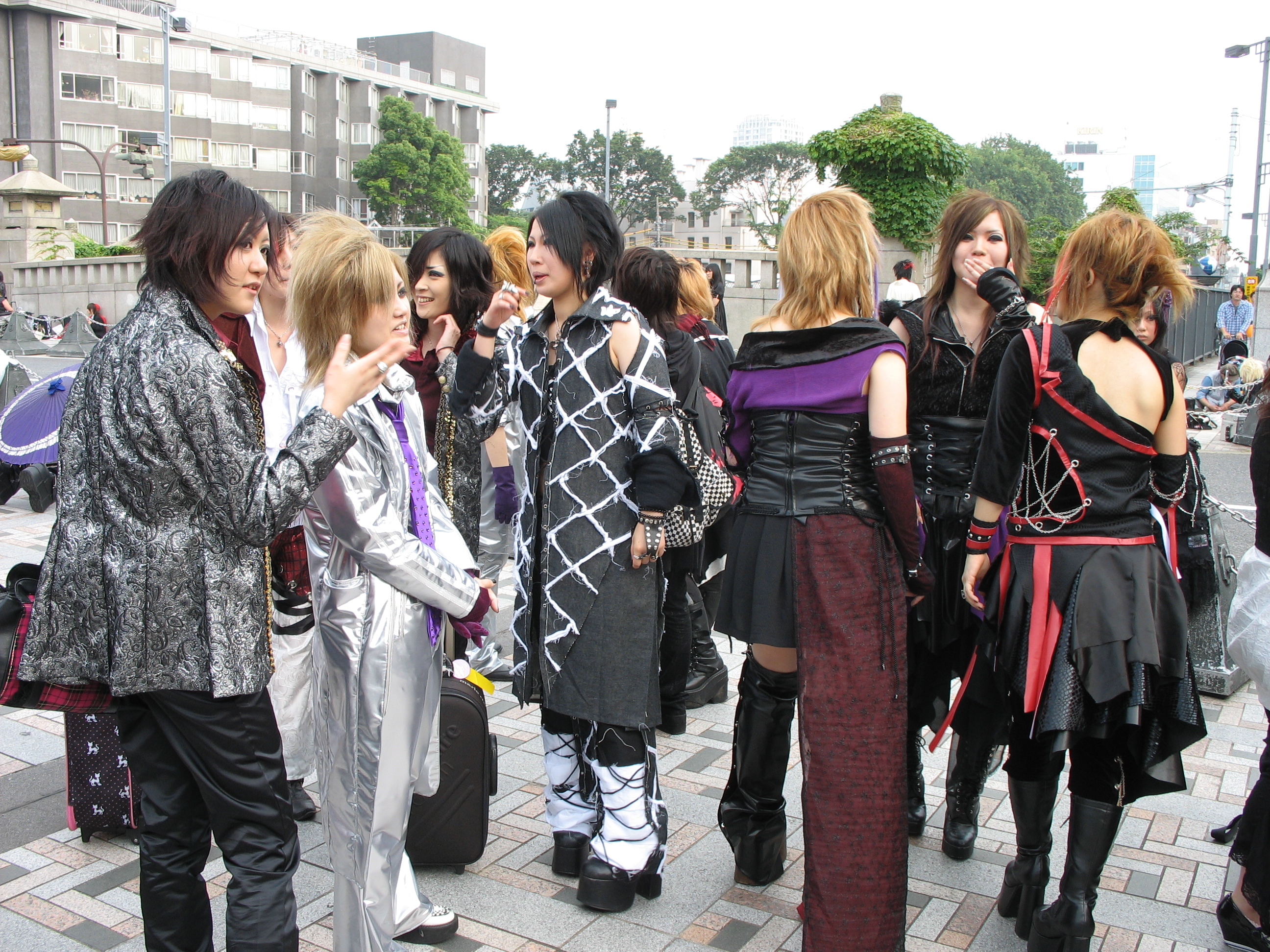
After church yesterday afternoon we went into Tokyo again to Harajuku and nearby Yoyogi Park. What a kaleidescope of images! We emerged from the train station into a small area outside the park that is a gathering area every Sunday afternoon for the cos-play-zoku, the costume play gang! These are teenage girls, many from the outlying suburbs, who leave behind their high pressure, often bullied, high school lives for a few hours and find release in their temporary weekend identities. Decked out in elaborate and outlandish costumes ranging from the very dark gothic to virginal little girl frills, they mix and mingle while hordes of tourists try to get pictures. Some primp and pose while others clearly try to avoid the cameras.

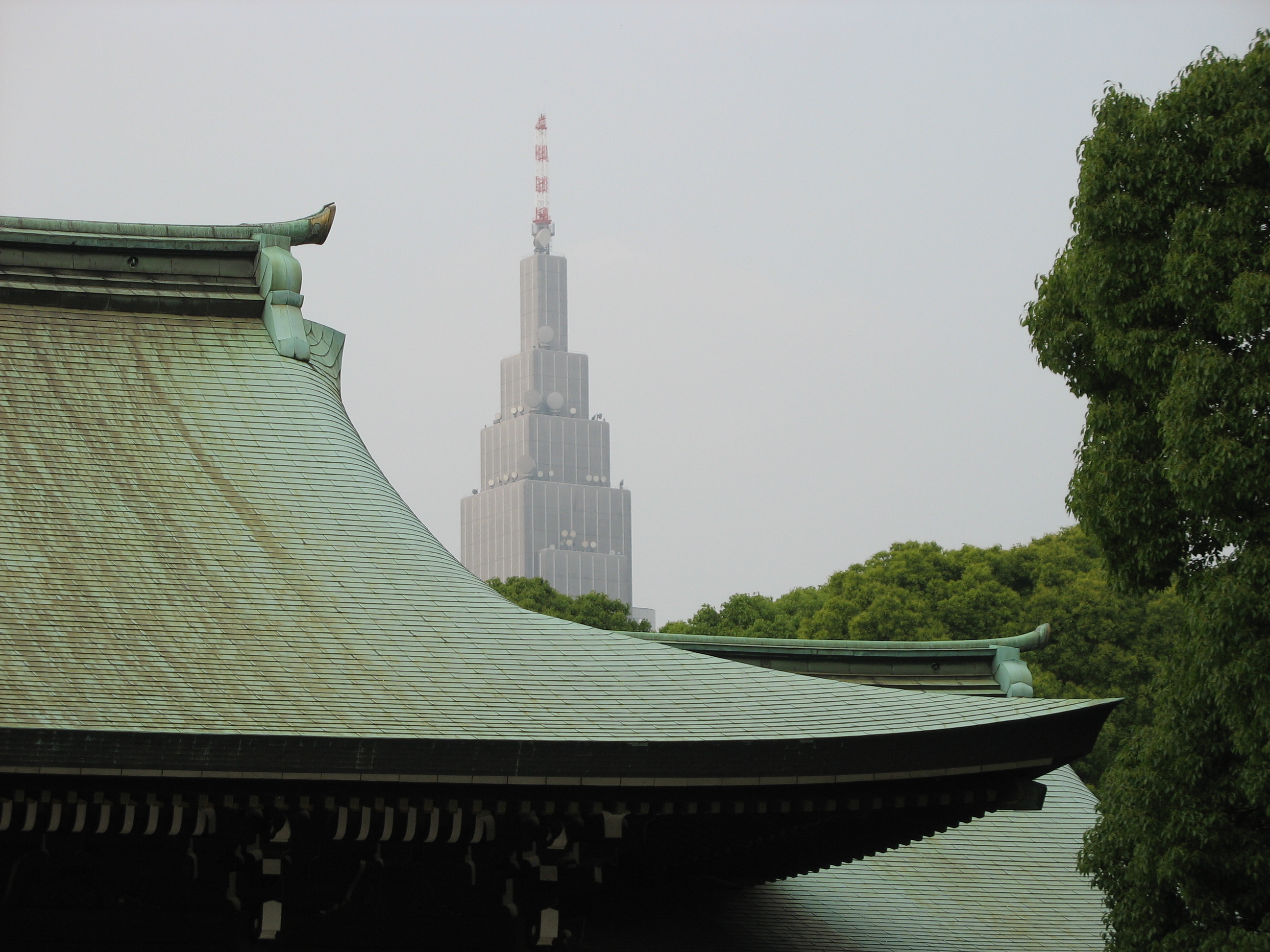
Upon entering the park, we walked through dark forest to the Meiji Shrine, an authentic reconstruction of the original which was destroyed in the bombing at the end of World War II. The shrine was built in memory of Emperor Meiji and Empress Shoken, great-grandparents of the present emperor. Emperor Meiji was known for promoting friendship with other countries and introducing western civilization and modern technology to Japan while at the same time preserving it’s unique identity.

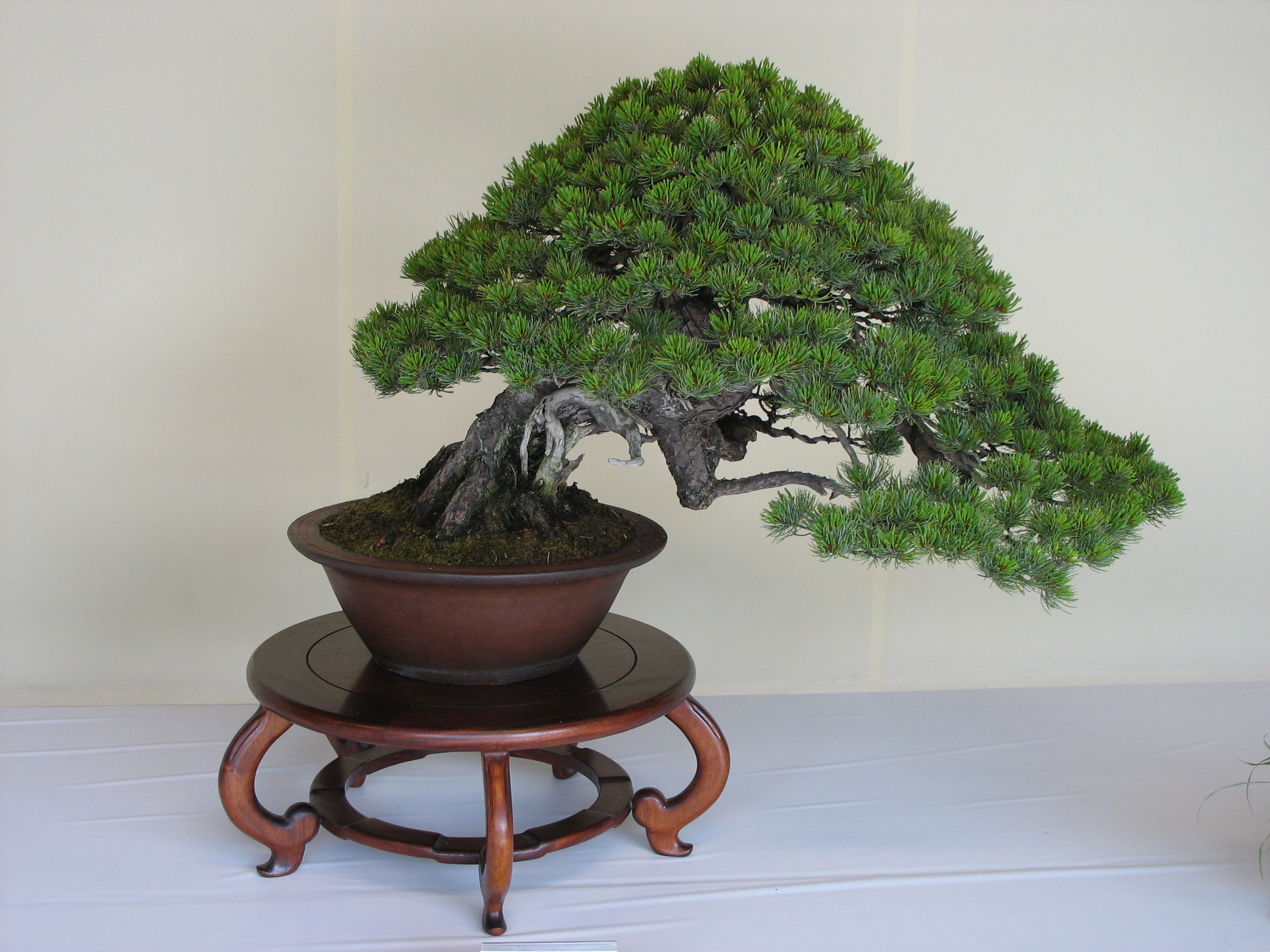
We arrived at the shrine just in time to watch a traditionally clad bridal party having their pictures taken. From outside a cordoned off area, we were also allowed to take photographs, something we considered a rare privilege. Also, within the shrine area, we discovered a display of Japanese bonsai, miniature trees grown in containers using techniques that result in full grown trees only inches in height.

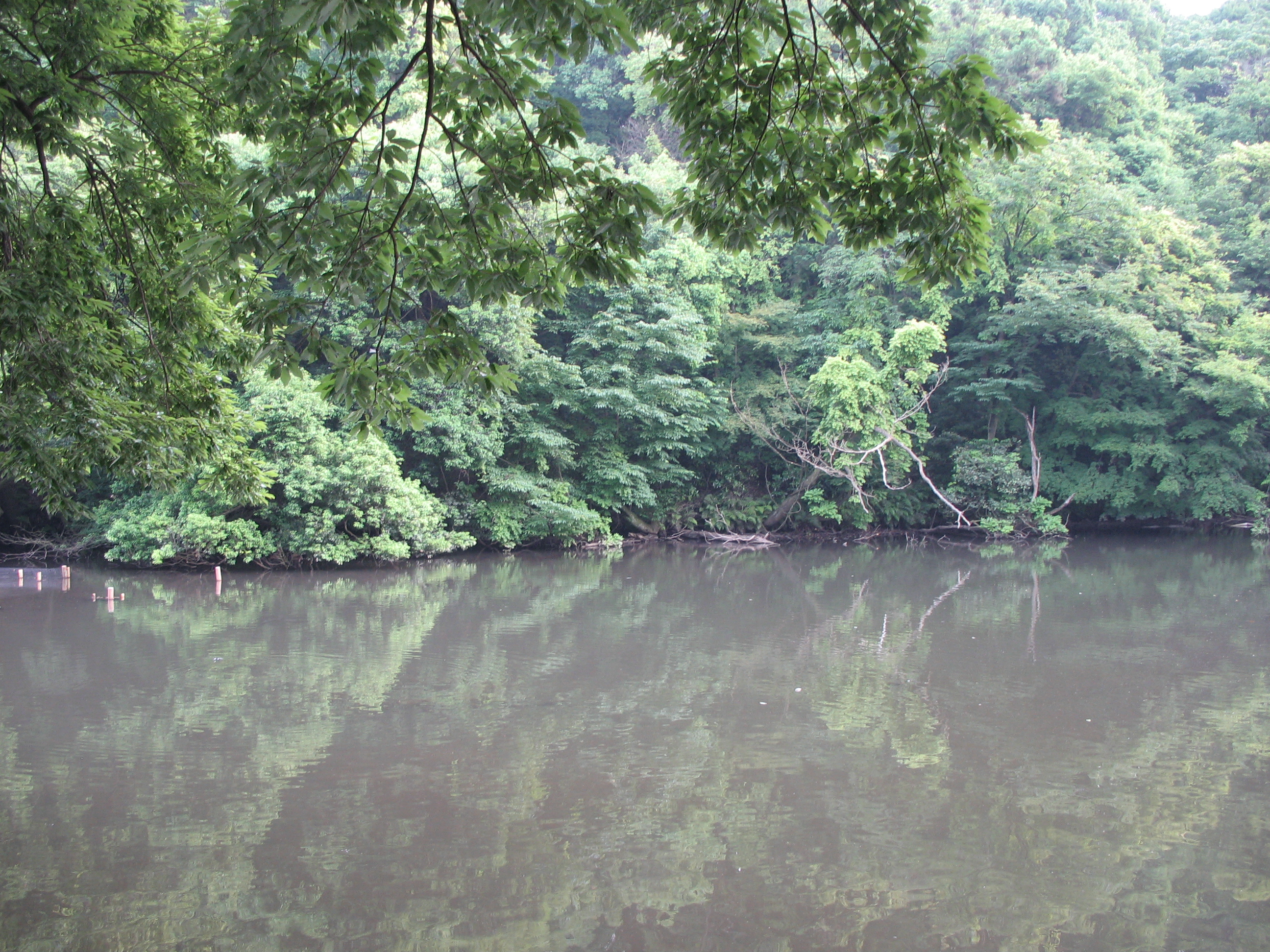
Within Yoyogi Park, we also took a quiet pathway through a peaceful garden area where we sat for a few minutes beside a beautiful pond watching the carp swim by.  It absolutely amazes me that such a tranquil oasis can be found in the middle of a bustling city like Tokyo.  In one part of the garden irises, known as a rainy season flower, were just coming into bloom.

Constant contrast - old and new

Constant contrast – old and new

Hmm…. ?

Disposal of Household Garbage

Very few people here have room to store a full week’s trash so garbage collection happens much more frequently than it does at home.  When we moved into the apartment, we were presented with a large sheet of instructions entitled Disposal of Household Garbage which I keep posted on the kitchen wall.  It explains how to correctly sort garbage and when to put various types out for collection.

The majority of our garbage falls into the burnable category which is collected three times a week on Mondays, Wednesdays and Fridays.  This includes kitchen refuse, plastics and waste paper as well as rubber and leather products such as old shoes.  This must be put out in special bags with green writing on them that are specified by the Funabashi municipal government.  They are available at the grocery stores and convenience stores.  The garbage is supposed to be taken out to specified collection areas by 8:30 a.m. on collection days only.  We’re fortunate to have a collection area at the side of our building.  Some of the people in the little side streets have to bring their garbage out to our street for collection but no one has to go far.  At the collection site, the trash is put under green netting to keep the large black birds that share the neighbourhood with us from scattering it around.  The bright blue and yellow garbage truck comes by around 9:30 a.m. with an electronic bell jangling and a recorded message blaring, presumably to remind those who’ve forgotten to take their garbage out.  The only word I recognize is kudasai, or please.

Non-burnable garbage is collected once a month.  According to the instruction sheet, this happens on “the very first week of Wed”.  Interpreting Japanese English can be fun!  I presume that this means the first Wed. of each month but, since I haven’t had to take advantage of this yet, I’m not entirely sure.  Non-burnable garbage includes things like china and glass, batteries, light bulbs, items with metal parts and small household electronic appliances.

Recyclable garbage is collected every Tuesday.  This is mainly glass bottles and steel or aluminum cans.  These are deposited in sacks at the same collection sites as the burnable garbage.  They are also supposed to be placed there by 8:30 a.m. but the Japanese rise early and we’ve heard them banging and clanging below our window as early as 5:00!

Garbage with value is collected every Thursday.  This includes newspapers, magazines and cardboard boxes which must be tied in bundles, old clothes which must be in plastic bags to keep moisture out and milk cartons which must be washed, unfolded and bundled.  Since milk is only sold in 1 litre cardboard cartons, we go through lots of those.

Fortunately, we use very few plastic recyclable bottles such as pop bottles as there are only a few places to dispose of these and a lot of them end up in the burnable garbage.  They can be taken to compressor-equipped recycling boxes at municipal halls and other designated spots or dropped off at some liquor stores.

Pick up can be arranged for some large items such as furniture by calling the municipal government information centre but service is only available in Japanese.  Fortunately, the only piece of furniture that we actually own is the small computer desk that we bought at the nearby recycle store.  When our time here is done, we’ll either pass it on to one of our colleagues or take it back there.  We do see a little truck pass by now and then with old televisions, bicycles and whatnot in the back.  It slowly cruises the streets with a recorded message blaring so I presume it’s picking up discarded items but I understand that this is not a city service.

Also, on Friday mornings, a team of young mentally disabled adults makes their way through the neighbourhood picking up bundles that appear to be magazines and catalogues.  They are accompanied by a truck and at least one supervisor walks with them.  I love watching them as they are such a happy bunch!  Rain or shine, we hear them coming as they laugh and shout to one another.  As this isn’t listed on the instruction sheet, I’m assuming that it’s also a separate service.

As you can see, figuring out how to dispose of trash is no simple feat and the instruction sheet that we were provided with is very helpful!  In a country with this many people and so little space, disposing of garbage efficiently is of major importance.