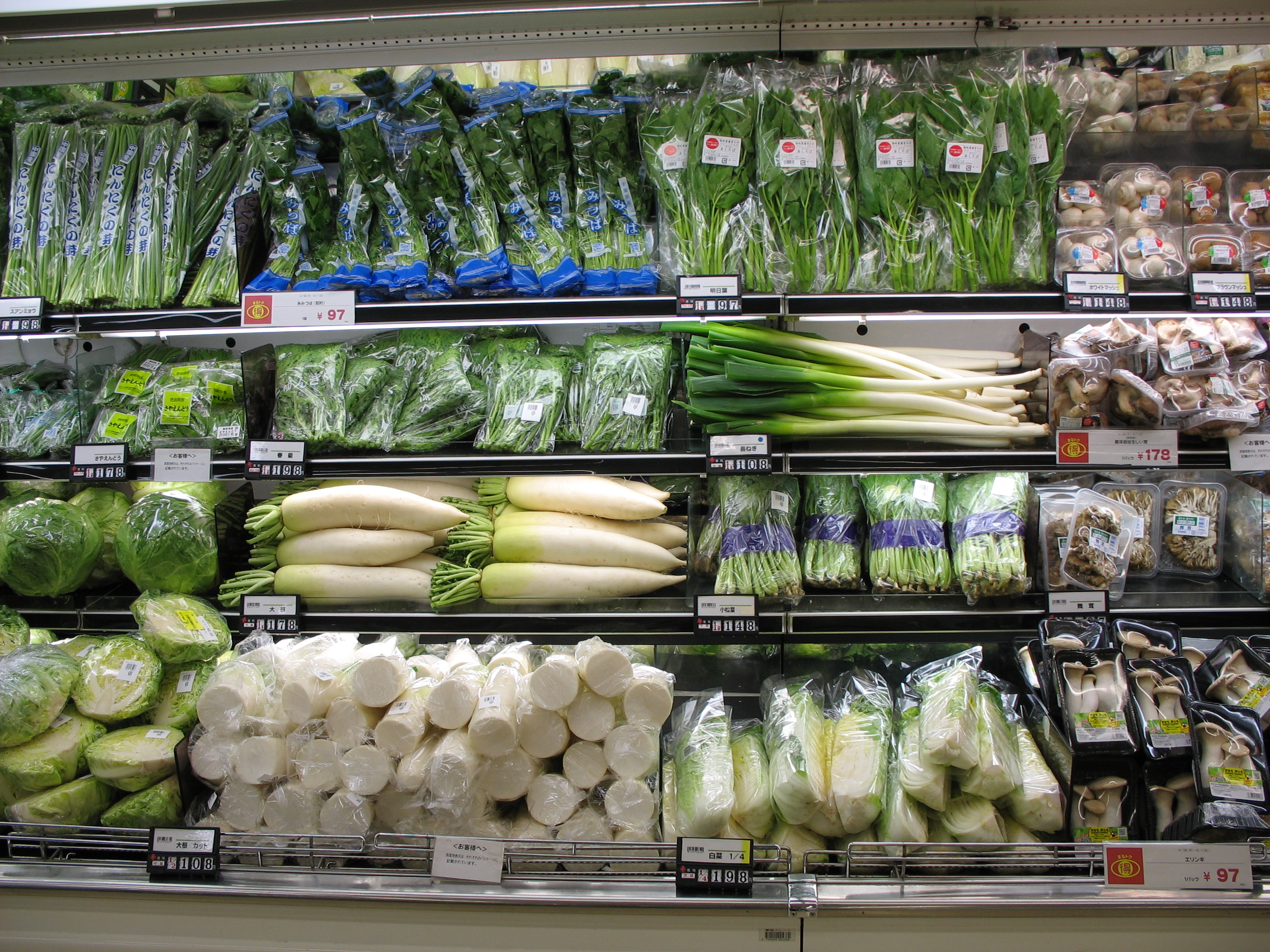
 We do most of our grocery shopping at Seiyu, one of the two department stores within easy walking distance of home. Jusco actually has a bigger grocery department but, after shopping in the Sedgewick Coop for over thirty years, I don’t need big. It’s actually easier to find what I need at Seiyu and produce tends to be cheaper there. Since we eat lots of fresh fruit and vegetables, that’s an important consideration. I’m quite proud to say that I haven’t used the can opener since we moved in over two months ago! Okay, I have opened a couple of cans of tuna but they had pull off lids that didn’t require the can opener.
The grocery store is filled with things I don’t recognize, either because I can’t read the label or because they’re actually things I’ve never seen before. Shopping for staples like sugar and vegetable oil were quite a challenge when we first arrived! How do you know which white powder is sugar or which yellowish liquid is oil when you can’t read the label? Pictures sometimes help. For example, when I found the section of yellowish liquids sporting pictures of corn, sunflowers and canola in bloom, I knew I’d found what I was looking for and the picture of a cup and saucer on the bag of sugar was a clear giveaway that it wasn’t salt!
When we first arrived, I determined to try at least one new thing each time I shopped. I’m not still doing that but as a result of keeping that up for the first few weeks, we’ve eaten new kinds of vegetables and fish as well as several different kinds of mushrooms. I don’t always know what it is that I’m buying but so far, there hasn’t been anything we haven’t enjoyed.
We explored the possibility of doing some of our grocery shopping at Costco but decided against it. As the crow flies, it’s probably not all that far from here and if we had a vehicle, it might be worth considering. By public transit, however, it’s a costly trip involving two or three trains and either a bus or a long walk. Since we’re only able to carry a limited amount and have very little storage space, shopping in bulk really doesn’t work here. Instead, we shop locally every day or two. In addition to Seiyu, we occasionally buy produce at one of the many little green grocers in the area and we also make good use of the wonderful bakery nearby.
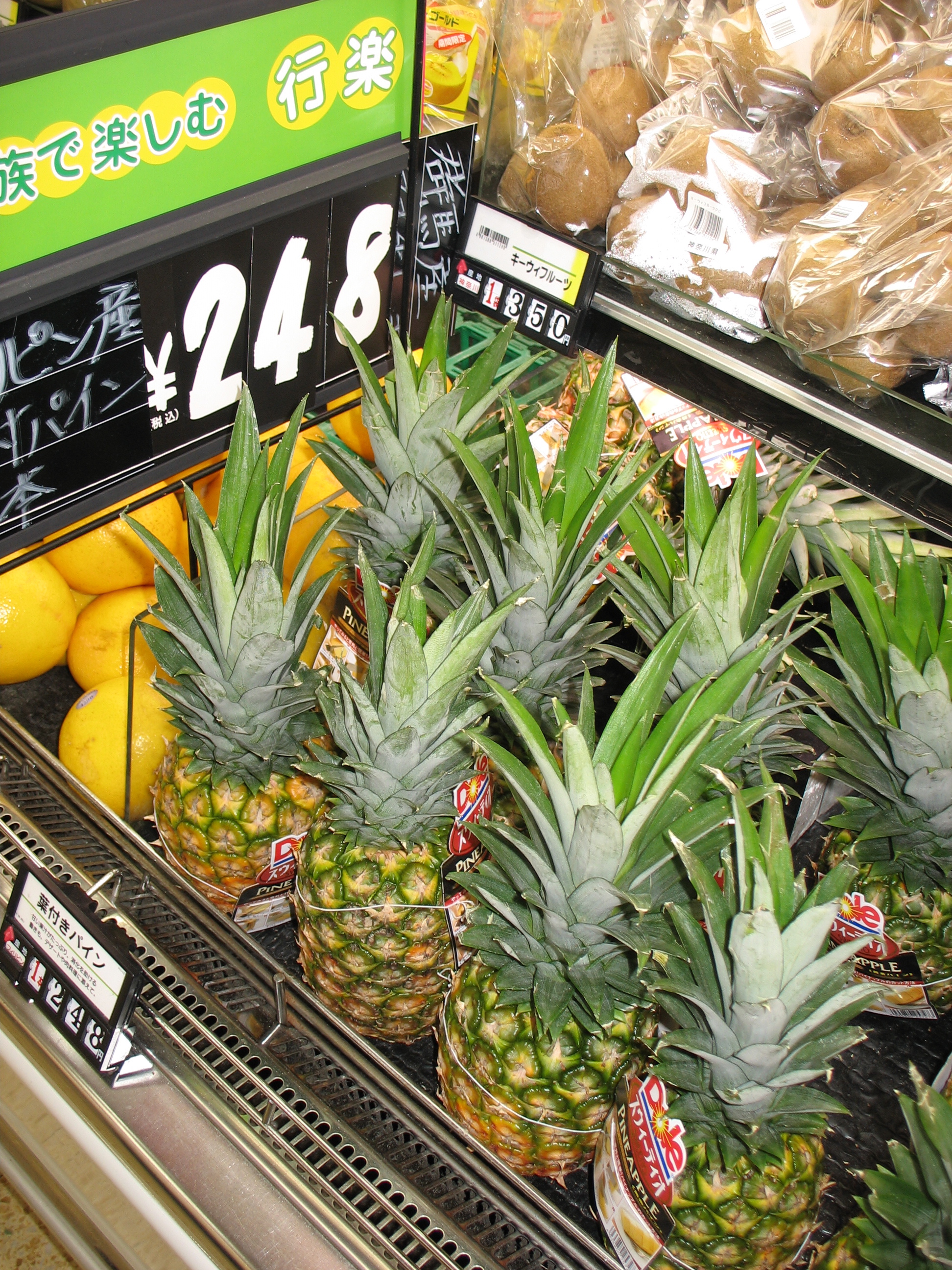
Because of our work schedule, mealtimes are quite different from what we were accustomed to before coming here. Breakfast usually consists of either cereal or eggs but occasionally cinnamon buns or bagels from the bakery find their way to our breakfast table. Cereal choices are very limited. Most of what’s available comes in very small packages and is both highly sweetened and very expensive. We have, however, found a couple of choices that work for us. We usually eat them with sliced banana or strawberries on top and we eat fresh pineapple with almost every breakfast because it’s both delicious and inexpensive. A whole pineapple usually sells for 295 yen (approximately $2.95). Some fruits are terribly expensive, however. Apples, while large and delicious, are a rare treat as they sell for 97 to 148 yen apiece and we probably won’t eat cantaloupe while we’re here as it sometimes sells for as much as 3 000 yen! Yes, that’s really $30!

Because we get home from work so late, we often eat supper at about 10:00 p.m. Obviously, with a schedule like that, lunch at noon wouldn’t work well so we generally have a snack before leaving for work and eat lunch sometime in the middle of the afternoon. It has to be something that can be eaten on the run because we often have only 5 or 10 minute breaks between classes. I pack lunches for us six days a week; five schooldays as well as a lunch to eat after the church service on Sundays. Lunches most often consist of sandwiches, raw veggies and fruit just as they did in Canada. Bread, though not part of a traditional Japanese diet, has become quite common here in recent years. A loaf of bread consists of either 4, 6 or 8 slices, though,  depending on the thickness of each slice! We buy the 8 slice loaf. Each slice is large, square and about the thickness of sliced bread at home. I don’t know what happens to the loaf end crusts as there aren’t ever any in the packages. The bread is all white which is a big change for us as we ate 100% whole wheat at home. It’s very tasty though and we’re quite enjoying it. For variety, we occasionally take onigiri instead of sandwiches. Onigiri are
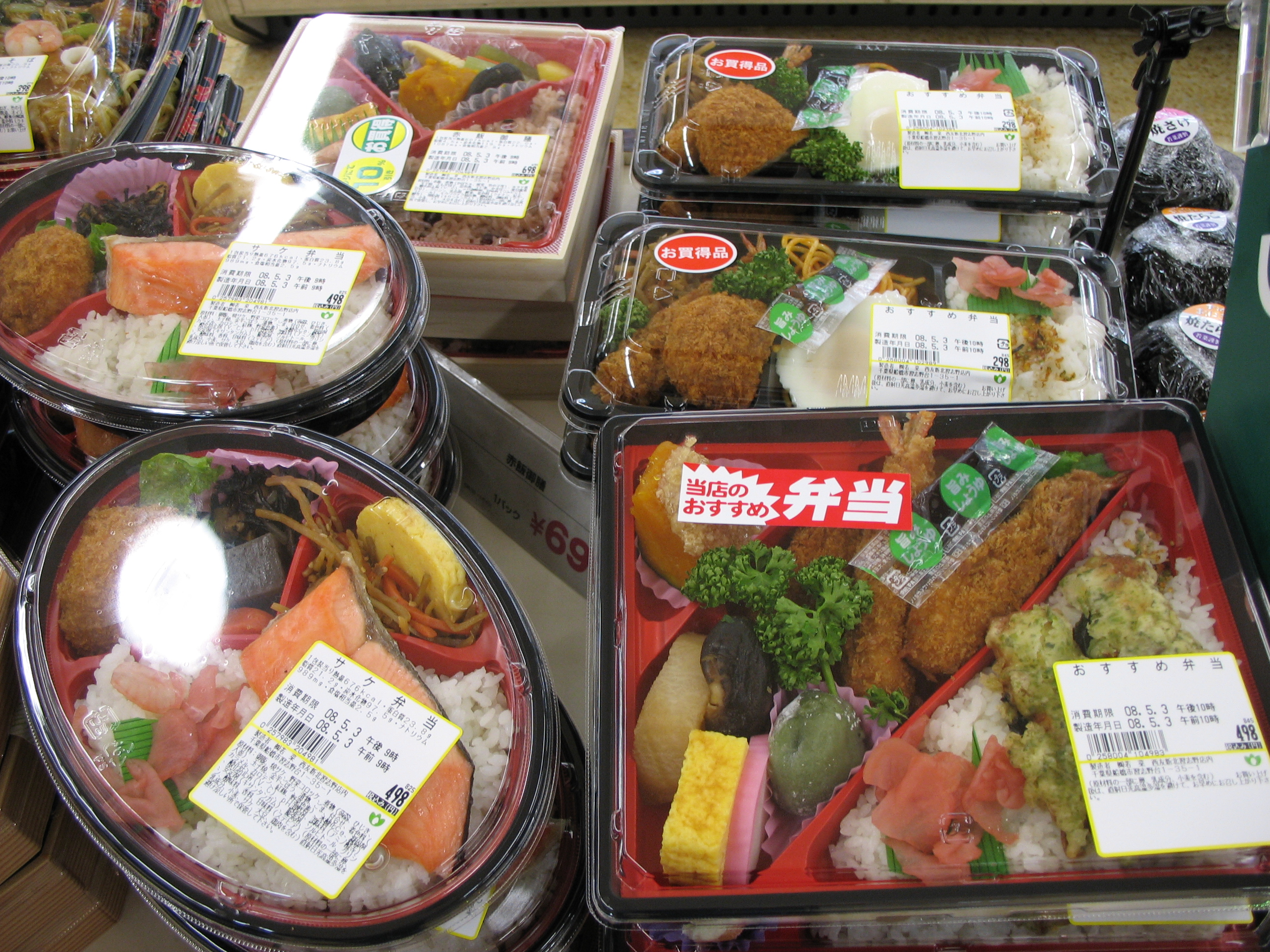 seaweed wrapped rice triangles with fish centres. The grocery store also sells great pizza buns which make a nice change and we occasionally buy bento boxes for Sunday. A bento is a complete lunch consisting of a variety of Japanese foods.
While some of our suppers are not much different from what we ate in Canada, most are at least quasi Japanese. Though we do have potatoes occasionally, we usually eat either rice or noodles. The most common types of noodles are soba and udon. Soba are made of buckwheat and udon of wheat. Our meat dishes include fish, beef, pork and chicken. Since cooking is limited to the stove top or the little grilling drawer, many of our meals are some type of stir fry. As already mentioned, we’ve tried a variety of fish. 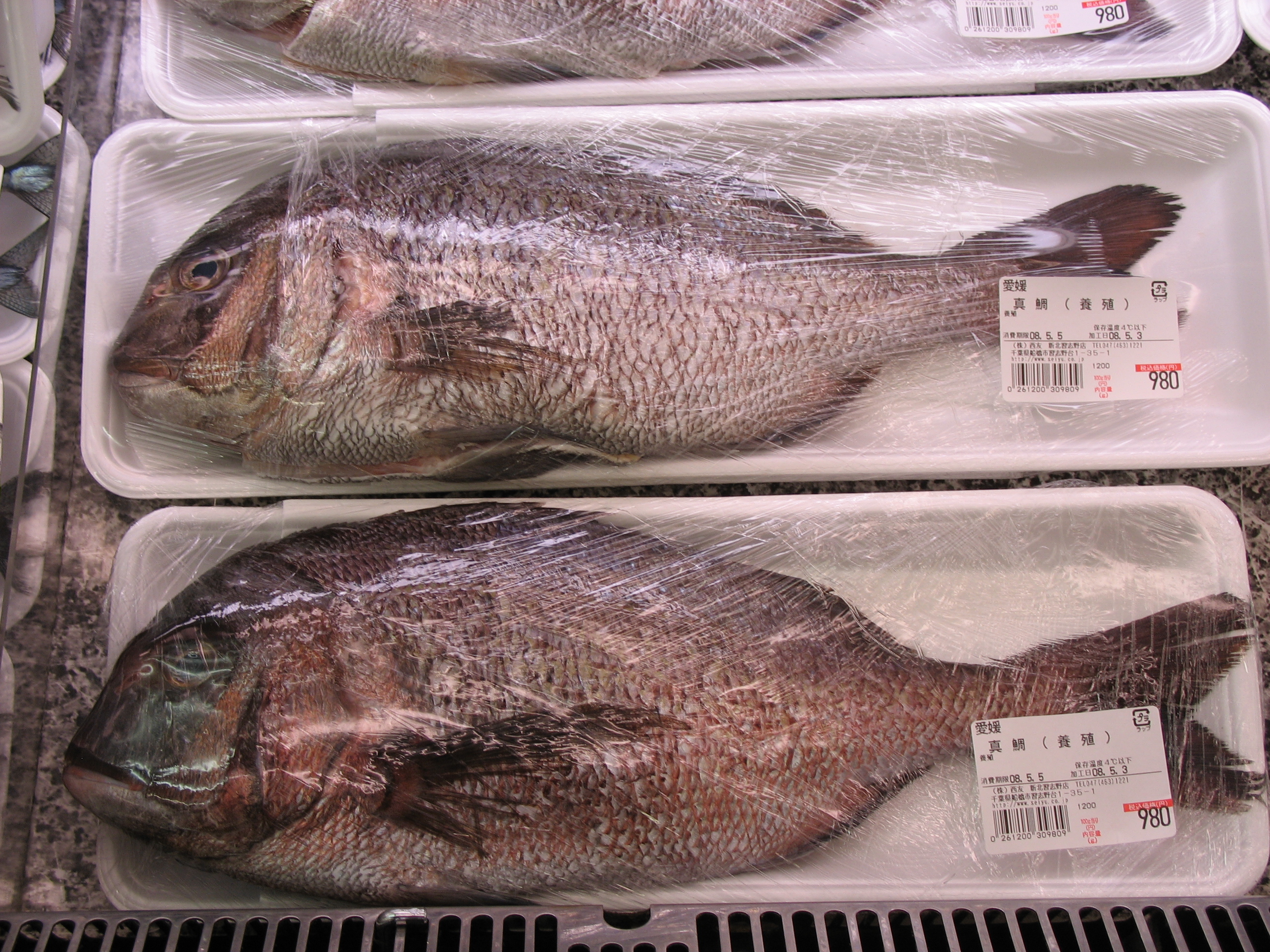 With the exception of salmon, which is easy to identify, I’m not sure what the others are because I can’t read the labels! So far, I haven’t bought anything with eyes looking back at me nor do I buy seafood with suckers
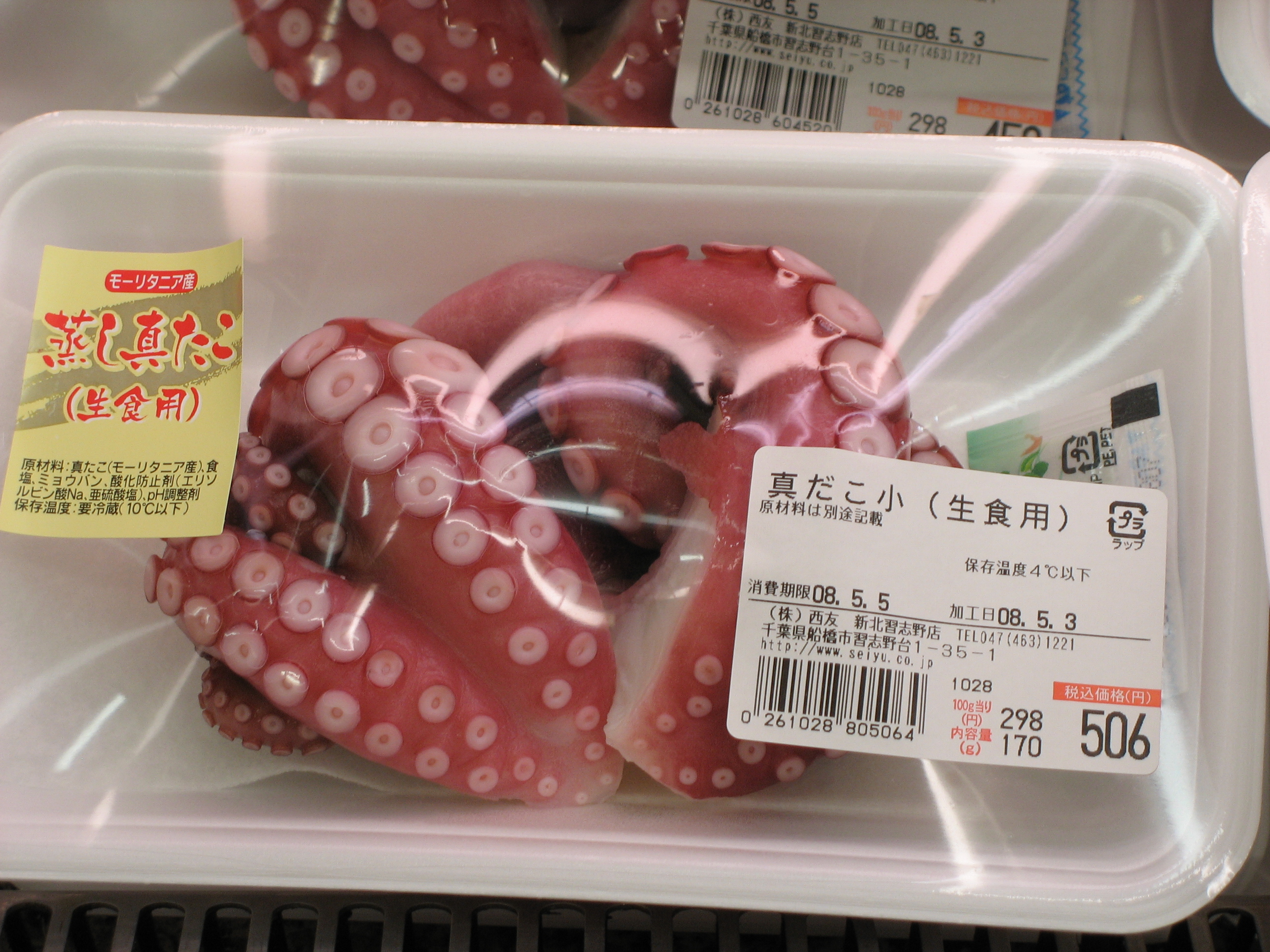 attached! I really like the almost paper thin sliced pork and beef that is so readily available. Not only is it quick and easy to cook but it’s so tender and tasty. They tend to do unusual things with eggs here. I haven’t managed to convince Richard that dipping cooked beef into raw egg is actually very tasty but he does like the beef dish with egg added that I’ve made several times now.
Perhaps the oddest thing about grocery shopping here is the packaging; the sheer amount of it! We don’t buy a lot of things like cookies but if we did, it wouldn’t be unusual for each cookie to be individually wrapped inside the larger package. For someone who is used to buying five pound bags of carrots, three carrots per bag seems quite hilarious. On the other hand, I’m going to miss the carrots when we leave. They’re so sweet and tasty.
Of course, we’ve only been here two months so I’m sure as seasons change, so will some of the produce that’s available and the prices that it sells for. We had always been told that living in Japan is terribly expensive so I decided to keep track of what we spent on groceries in April just to see for myself. I was pleasantly surprised when I totaled it up, to learn that we’d spent less than 50 000 yen ($500)! I’m quite sure that that’s not anymore than we were spending back in Sedgewick. So, now that I know that we’re losing weight and not overspending, watch out bakery… here I come!









 Following Augustine